Italy Guide  |
|---|
|
| | Top Italian Cities |
|---|
|
| | Italian Regions |
|---|
|
| | Europe Guide |
|---|
|
| | Travel Tools |
|---|
|
|
|
|
 Monastery of Santa Caterina, Lago Maggiore, Lombardy. Monastery of Santa Caterina, Lago Maggiore, Lombardy.
Introduction

Land of mountains, lakes and fine gastronomy, Lombardy (Lombardia in Italian) was named after the Lombards, a Germanic tribe that settled in North Italy in the 6th century and rule Italy for the next 200 years.
Lombardy is the most populous of the 20 Italian regions, with nearly 10 million inhabitants, a sixth of the Italian population (approximately as much as Sweden, Portugal or the Czech Republic). If it was an independent country, Lombardy would be the most densely populated in Europe (420 inhabitants per km², slightly more than the Netherlands).
Lombardy's largest city, Milano is the country's financial and fashion capital, two sectors that have contributed in making it the wealthiest Italian region in terms of GDP per capita, and one of the richest in Europe.
Approximately 36% of the population speaks the local Lombard language (a Romance language unrelated to the ancient Germanic tribe of the same name), including 9% who do not speak any other language.
Famous people from Lombardy include (chronologically): the Roman philosopher Pliny the Elder, the painter Caravaggio, the luthier Antonio Stradivari, the physicist Alessandro Volta (inventor of the battery), the novelist Alessandro Manzoni, the playwright Dario Fo (Nobel Prize), the conductor Claudio Abbado, the media tycoon and former Prime Minister Silvio Berlusconi, the fashion designer Gianfranco Ferré, the fashion designer Mario Prada, and the Prime Minister Mario Monti.
Cuisine
Lombardy is one of Italy's culinary hub, famous for its risotto, osso bucco, polenta, scaloppina milanese and minestrone. The Gorgonzola cheese also comes from the region, as does the panettone, a sweet bread loaf eaten around Christmas and New Year.
Milan is the city that boasts the highest number of Michelin stars in Italy (along with Rome) and the 9th highest of any European city. Bergamo and the Lago di Garda area also rank among the best places to wine and dine in Italy.
San Pellegrino, Italy's most famous brand of sparkling water, is bottled in the Alps of Lombardy.
Attractions
Attractions are listed geographically, from west to east (left to right) and north to south (top to bottom).
|
West
|
Lake Maggiore |
|---|

 Lake Maggiore, Italy's second-largest lake and the largest alpine lake in the country, spans an impressive 64 kilometres in length and 212 square kilometres in area, straddling the Italian-Swiss border. The lake's crown jewels are the Borromean Islands, featuring the baroque splendour of Isola Bella with its 17th-century palace and terraced gardens, the botanical paradise of Isola Madre with its exotic plant collection, and the charming Isola dei Pescatori, the only permanently inhabited island known for its fishing heritage and local cuisine. The lake's shores are dotted with magnificent Liberty-style palaces and cultural attractions, including the fascinating Landscape Museum in Verbania and some rather unique institutions such as the Hat Museum in Ghiffa and the Umbrella Museum in Gignese. One of the lake's most striking features is the Colossus of St Carlo Borromeo in Arona, standing at an impressive height of over 35 metres, making it one of the world's largest statues. Read more |
|
Monza |
|---|

 Monza is home to one of Europe's largest urban parks, spanning 700 hectares and boasting centuries-old trees known as the Green Giants, including majestic oaks, beeches and a monumental cedar of Lebanon. The city's crown jewel is the Royal Villa, designed by Giuseppe Piermarini who also created Milan's La Scala Theatre, which served as a residence for the Royal House of Savoy until 1900. The historic centre features the elegant red-brick Arengario building and the Tower of Teodolinda, named after the beloved Lombard queen who converted the local population to Catholicism. Along the Lambro river, visitors can discover medieval buildings and the picturesque Ponte dei Leoni, adorned with four marble lions. The city's former quarry site, Parco delle Cave, has been transformed into a thriving ecological paradise, showcasing the stone that was used to build many of Monza's iconic structures. Read more |
| Milan (Milano) ※ |
|---|

 Milan stands as Italy's bustling financial and fashion capital, where ancient splendour meets modern sophistication. The city's crown jewel is the magnificent Gothic Duomo (cathedral), which took nearly six centuries to complete and features 135 spires adorning its marble facade. Art enthusiasts can marvel at Leonardo da Vinci's masterpiece 'The Last Supper', a 5x9-metre mural housed in Santa Maria delle Grazie. The majestic Sforza Castle, a 15th-century fortress, now houses multiple museums including Michelangelo's final work, the Pietà Rondanini. The elegant Galleria Vittorio Emanuele II, Italy's oldest shopping centre, showcases a stunning glass-roofed arcade where luxury boutiques and cafés reside. The city's cultural prowess is exemplified by the prestigious Teatro alla Scala opera house, which traditionally opens its season on 7th December. The city boasts impressive green spaces, including Parco Sempione with its grand Arco della Pace, whilst the vibrant I Navigli district charms visitors with its picturesque canals, artisan shops, and lively restaurants. For science buffs, the Leonardo da Vinci Science Museum houses fascinating models based on the polymath's original sketches, including submarines and aircraft. The innovative spirit of Milan continues in the Porta Nuova district, where the remarkable Bosco Verticale (Vertical Forest) towers feature trees and plants growing on their terraces, representing a unique blend of architecture and nature. |
| Vigevano |
|---|

 Vigevano is home to one of Europe's largest fortified castles and the stunning Piazza Ducale, considered one of Italy's most harmonious Renaissance squares. The town flourished under Ludovico Sforza (Il Moro), who brought Leonardo da Vinci and Bramante to transform it into an 'ideal city', with da Vinci designing innovative irrigation canals for rice cultivation. Today, Vigevano is renowned for its shoe-making heritage, housing the fascinating International Museum of Footwear, whilst the surrounding Lomellina region produces some of Europe's finest rice. Visitors can explore the magnificent 55-metre-high Bramante Tower, stroll along the unique covered road that protected ducal passages, and savour local delicacies such as creamy risotto, goose-based dishes, and the traditional dolceriso del Moro cake made with rose water following a 15th-century recipe. |
|
Certosa di Pavia |
|---|

The magnificent Certosa di Pavia, a stunning monastery located halfway between Milan and Pavia, showcases an extraordinary blend of Gothic and Renaissance architecture that took over a century to complete. Built from 1396 as both a monastery and family mausoleum for the ambitious Duke Gian Galeazzo Visconti, its exuberant façade features intricate marble decorations, reliefs, and statues crafted by renowned sculptors like Giovanni Antonio Amadeo. The monastery complex holds historical significance beyond its architectural splendour, having briefly housed Mussolini's illegally exhumed body in 1946. Read more |
| Pavia |
|---|

Pavia was once the capital of the Kingdom of the Lombards and began as a Roman settlement called Ticinum in 220 BCE. The city is home to one of Europe's oldest universities, founded in 1361, where Christopher Columbus studied and Alessandro Volta lectured. The iconic Ponte Coperto, a covered bridge spanning the Ticino River, features a church at its centre and stands as a symbol of the city. Nature enthusiasts can explore the UNESCO-recognised Ticino River Park, whilst the surrounding province boasts over 80,000 acres of picturesque rice paddies. The local cuisine is a delightful mix of unique specialities, including Pavese soup (made with broth, eggs, and cheese), distinctive duck and goose salami, and notable DOC wines such as Pinot Noir and Moscato. The city's rich agricultural heritage is evident in its production of wine, rice, cereals, and dairy products. For culture enthusiasts, Pavia offers numerous museums, including an International Shoe Museum housed in the Sforza Castle, which displays centuries of footwear design. |
Other attractions
 Alps around Chiavenna
Busto Arsizio
Lake Lugano
Lake Varese
Montevecchia & Curone Valley Park
Tornavento
Central
|
Lake Como |
|---|

 Lake Como, Italy's third-largest and deepest lake, was formed by glacial activity during the last Ice Age, creating its distinctive Y-shape with a shoreline extending 160 km. This ancient "Lario" (meaning "deep place") has drawn visitors since Roman times and boasts an astounding six trillion gallons of water. The area features the elegant town of Bellagio at its centre, the 14th-century Villa del Balbianello (featured in James Bond and Star Wars films), and numerous historic villas dating back to Roman times. Read more |
| Monte Isola |
|---|

Monte Isola, the largest lake island in Italy and one of Europe's largest, rises majestically from Lake Iseo with its peak reaching 600 metres above sea level. This car-free haven, home to approximately 1,800 residents across eleven picturesque villages, earned third place in European Best Destinations 2019. The island's 9.4-kilometre perimeter can be explored by foot, bicycle, or local bus, winding through ancient fishing villages and olive groves. Monte Isola's rich culinary heritage includes its renowned dried lake sardines (a Slow Food presidium), locally-produced salami, and extra virgin olive oil. Every five years, the village of Carzano transforms into a spectacular display when thousands of handmade paper flowers adorn its alleys during the Feast of the Holy Cross. The island's historical significance is evident in its Martinengo Fortress and traditional craftsmanship, particularly in boat building and fishing net production. Visitors can discover the island's fishing heritage at the Net and Memories Museum, housed in Monte Isola's oldest netting factory. |
| Bergamo ※ |
|---|

Bergamo, a captivating city in Italy's Lombardy region, is uniquely divided into two distinct parts: the medieval Città Alta (Upper Town) perched on a hill and the modern Città Bassa (Lower Town). The city is encircled by impressive 16th-century Venetian walls, now a UNESCO World Heritage site, which were built to protect it from Milan and France. Every evening for the past 360 years, the Bell Tower has chimed 100 times at 10 pm, originally marking the city's closure. Nature enthusiasts can explore the surrounding Orobian Alps or visit Italy's highest waterfall, the 300-metre Serio Falls in Valbondione. The area is renowned for its culinary delights, including casoncelli (stuffed pasta), polenta taragna (a special cornmeal and buckwheat porridge), and the precious Moscato di Scanzo wine, which was once served to Russian Empress Catherine II. The city also houses the prestigious Accademia Carrara, showcasing an impressive collection of Renaissance and Baroque masterpieces by artists like Botticelli, Raphael, and Titian. |
| Brescia ※ |
|---|

 Brescia, a captivating city in Lombardy with over 3,200 years of history, boasts several UNESCO World Heritage sites, including remarkably preserved Roman ruins and the monastic complex of San Salvatore-Santa Giulia. The city's skyline is dominated by the medieval Brescia Castle, perched atop Colle Cidneo, offering panoramic views of the cityscape. Nature enthusiasts can explore the fascinating Buco del Frate cave with its 53-metre height and impressive fossil remains, or visit the Torbiere del Sebino Nature Reserve, home to red herons and marsh harriers. The local cuisine reflects the region's rich heritage, with specialities like casoncelli (meat-filled pasta) and polenta taragna enriched with bagoss cheese, whilst the surrounding Franciacorta region produces sparkling wines that rival Champagne. The city's cultural significance was recently highlighted when it served as the Italian Capital of Culture alongside Bergamo in 2023, and visitors can experience its vibrant heritage through events like Brescia con Gusto, an annual slow food festival that celebrates the region's culinary traditions. |
|
Crespi d'Adda ※ |
|---|

The village of Crespi d'Adda, just outside in Capriate San Gervasio, is an outstanding example of the 19th and early 20th-century "company towns" built by enlightened industrialists to meet the workers' needs. It was the first village in Italy to have modern public lighting. Still inhabited today, the site remains partly used for industrial purposes. Read more |
| Cremona |
|---|

Cremona is a city steeped in musical heritage and gastronomic delights. The city's skyline is dominated by the Torrazzo, one of Europe's tallest brick towers at 112 metres, which stands proudly alongside the magnificent Romanesque-Gothic Cathedral in the medieval Piazza del Comune. Cremona earned worldwide fame as the birthplace of master luthiers Stradivari and Amati, whose legacy lives on in the Museo del Violino and the city's numerous violin-making workshops. The local cuisine is equally noteworthy, with specialities including marubini (meat-filled pasta served in three different broths), the celebrated Salame di Cremona IGP, and the city's beloved torrone (nougat) - which legend claims was first presented at the 1441 wedding of Bianca Maria Visconti and Francesco Sforza. The surrounding countryside produces exceptional dairy products, including Grana Padano DOP and Provolone Valpadana DOP, whilst the local mostarda (fruit preserved in mustard syrup) serves as a unique condiment that was reportedly favoured by Giuseppe Verdi and Garibaldi. |
Other attractions
Alps around Livigno
Lake Iseo
 San Pellegrino
Soncino
Tirano
East
|
Stelvio National Park |
|---|
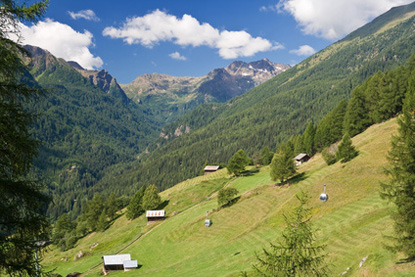
Extending over an area of 1,307 km² (505 sq mi), Stelvio National Park is the largest national park in Northern Italy. It was founded in 1935, making it one of the oldest in the country. The park is divided between Lombardy and South Tyrol and borders the Swiss National Park. The park has a rich a variety of wildlife including chamois, ibex, deer, wild boar, foxes, badgers, mountain hares, marmots, stoats, pine martens, lammergeiers, golden eagles, buzzards, eagle-owls, rock partridges and woodpeckers. On the Lombard side are the mountain lakes of Cancano, San Giacomo and Livigno, as well as the famous ski and hot springs resort of Bormio. Read more |
|
Val Camonica ※ |
|---|

The Camonica Valley is one of the largest valleys of the central Alps. It is home to the greatest complex of rock drawings in Europe, with approximately 300,000 petroglyphs, ranging from the Mesolithic to the Iron Age, an amazing timespan of 8,000 years. The area is also noted for its beautiful medieval villages, castles, two Roman archeological sites and two spas. Read more |
| Limone sul Garda |
|---|

Nestled between mountains and Lake Garda's western shore, Limone sul Garda is a picturesque medieval village renowned for its historic lemon houses (limonaie) dating back to the 1700s. Once an isolated fishing settlement, the town transformed after Venetian rule in the 15th century and remained accessible only by boat or mountain paths until 1932, when the Gardesana West road finally connected it to the world. The town boasts a stunning suspended cycle path hovering 50 metres above the water, and gained international attention when it featured in the James Bond film 'Quantum of Solace'. The German poet Goethe immortalised Limone's terraced gardens in his 'Italian Journey'. Today, visitors can explore the charming old harbour, wander through narrow flower-filled alleyways, and savour local delicacies including lake fish, DOP olive oil, and the famous limoncino liqueur. The town's culinary heritage showcases a delightful blend of lake-to-table fare and Mediterranean influences, whilst its traditional lemon houses, still in operation, offer fascinating glimpses into centuries-old citrus cultivation methods. |
| Sirmione |
|---|

Situated on a slender peninsula jutting into Lake Garda's azure waters, Sirmione is a captivating medieval town guarded by the remarkably preserved 14th-century Scaligero Castle, complete with crenellated towers and a proper moat. Beyond the castle lies a charming pedestrianised old town with winding cobblestone streets, leading to the impressive Grotte di Catullo, the ruins of a vast Roman villa that, despite its name, was neither a grotto nor home to the poet Catullus. The town's thermal springs, bubbling up at a toasty 70°C and rich in minerals, have been soothing visitors since Roman times. Local cuisine celebrates the bounty of Lake Garda, featuring fresh lake fish, often served with bigoli (traditional Venetian pasta) and paired with prestigious Amarone della Valpolicella wine. |
| Mantua (Mantova) ※ |
|---|

 Mantua, known to Italians as 'La Bella Addormentata' (The Sleeping Beauty), is a UNESCO World Heritage Site that flourished during the Renaissance under the Gonzaga family's 400-year rule. The city is uniquely surrounded by three artificial lakes created in the 12th century as defensive barriers. Home to the second-largest residence in Italy after the Vatican, the magnificent Palazzo Ducale boasts 500 rooms. The city's cultural significance extends to literature and arts, being the birthplace of the Roman poet Virgil and the setting for Shakespeare's Romeo and Juliet. Mantua's gastronomic excellence earned it the title of European Capital of Gastronomy in 2017, with signature dishes including tortelli di zucca (pumpkin-filled pasta), risotto alla pilota (made with local rice and pork sausage), and the traditional stracotto d'asino (donkey stew). The city's remarkable preservation and lack of urban development have helped it maintain its Renaissance-era charm, making it one of Italy's most liveable cities. |
| Sabbioneta ※ |
|---|

Sabbioneta, a perfectly preserved Renaissance gem in Lombardy's Po Valley, was built as an ideal city by the visionary Duke Vespasiano Gonzaga in the 16th century and has been a UNESCO World Heritage Site since 2008. This miniature 'Athens of the Renaissance' is laid out in a fascinating six-pointed star pattern, with its urban planning incorporating alchemical elements based on the numbers 6 and 12. The town's architectural marvels include the Teatro all'Antica (Europe's first purpose-built theatre), the magnificent Palazzo Ducale, and the 97-metre-long Galleria degli Antichi, which has served as a filming location for the 'Medici' series. The town's name rather charmingly derives from the Latin word for sand, reflecting its location between the Po and Oglio rivers. Read more |
Other attractions
Bormio
Lake Garda
Desenzano del Garda
Gardone Riviera
Salò
Lake Idro
Montichiari
|


 : Local interest
 : Moderately interesting
 : Outstanding place
 : Must-see in the country
 : Top cities in Europe