


| Contents |
|---|
Introduction
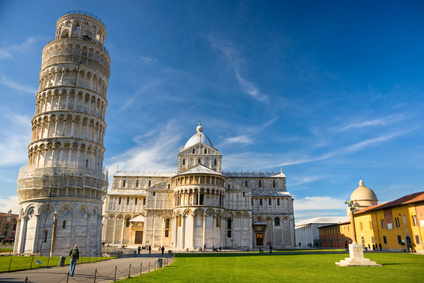
Pisa, once a powerful Mediterranean maritime republic from the eleventh to the thirteenth century, is a city renowned for its iconic landmarks, rich history, and vibrant culture. Located just southwest of Florence, it now lies on the alluvial plain of the Arno River, about 10km from the Liguria Sea. Whilst the Leaning Tower often comes to most visitors' minds, Pisa offers much more within the city itself and its surrounding areas. The Piazza dei Miracoli (Square of Miracles), a UNESCO World Heritage site, is home not only to the famous Leaning Tower but also to the stunning Pisa Cathedral, the Baptistery (the largest in Italy), and the Camposanto Monumentale, collectively making Pisa a hub of Romanesque art and architecture. Beyond these magnificent structures, the city maintains a youthful and vibrant ambiance thanks to The University of Pisa, where Galileo was once a professor.
Interesting Facts about Pisa
- Pisa was a formidable maritime republic in the Middle Ages, rivalling cities like Venice and Genoa for Mediterranean dominance.
- The iconic Leaning Tower of Pisa began tilting unintentionally during construction due to soft, unstable ground beneath its foundations.
- The Piazza dei Miracoli (Square of Miracles), a UNESCO World Heritage Site, houses the cathedral, baptistery, leaning tower, and monumental cemetery.
- The University of Pisa, founded in 1343, is one of Europe’s oldest universities and counts Galileo Galilei among its alumni.
- Galileo Galilei, the father of modern physics, was born in Pisa and baptised in the city’s historic baptistery.
- The Arno River, flowing through Pisa, served as a vital medieval trade route but has caused significant flooding over the centuries.
- Pisa hosts the annual Gioco del Ponte, where teams compete to push a cart across the Ponte di Mezzo bridge in a historic tradition.
- The city’s Orto Botanico, established in 1544, is Europe’s oldest university botanical garden.
- The Leaning Tower contains seven bells, including the 3.5-tonne L’Assunta, each tuned to a musical note.
- Pisa’s origins trace back to Roman times, with archaeological evidence showing it was a significant colony by the 2nd century BCE.
- The Regatta di San Ranieri sees teams rowing traditional boats along the Arno River in a vibrant annual competition.
- Piazza dei Cavalieri, redesigned by Giorgio Vasari, was the political heart of medieval Pisa and now hosts a prestigious university.
- The Mercato delle Vettovaglie remains a bustling hub for fresh Tuscan produce and local delicacies.
- Pisa’s name likely derives from an ancient Greek word meaning “marshy land,” referencing its flood-prone location.
- Climbing the Leaning Tower’s 294 spiral stairs creates a disorienting effect due to its 3.9-degree tilt.
- The Camposanto Monumentale cemetery contains soil reportedly brought from Jerusalem during the Crusades.
- Several other Pisan structures lean, including the bell towers of St. Michele dei Scalzi and St. Nicola.
History
Pisa flourished as a maritime power in the Mediterranean until 1284, when it was defeated by Genoa in a sea battle, marking the beginning of Pisa's decline as a dominant force. This once-powerful city later fell under Florentine occupation in 1406, and despite continuing as a trade hub for some time, the silting of the Arno River in the 15th century made navigation for laden galleys nearly impossible, further diminishing its prominence.
The city's most famous landmark, the Leaning Tower, has a fascinating history of its own. Construction began in 1173 as a bell tower for the nearby cathedral, but by 1178, when builders reached the third tier, the foundation began to sink, causing the tower to tilt. Work was halted and resumed multiple times over a remarkable 200-year construction period, with architects making adjustments to compensate for the lean. The tower was finally completed in 1372 when the seven bells were placed atop the structure. In modern times, the tower underwent extensive restoration between 1990 and 2001, reducing its lean by over 40 cm and securing its stability for future generations.
Today, Pisa is home to numerous historical sites beyond the famous Leaning Tower. The Piazza del Duomo, recognised as a UNESCO World Heritage Site in 1987, houses four major attractions: the Leaning Tower, Pisa Cathedral, the Baptistery of St. John, and Camposanto Monumentale. The square is also known as the "Square of Miracles" for its stunning white marble buildings set against green lawns and blue skies. Other notable historical sites include the Knight's Square (Piazza dei Cavalieri), once the political centre during Pisa's maritime republic glory, and the Church of Santa Maria della Spina, showcasing the city's rich architectural heritage.
Main Attractions
Piazza del Duomo (Square of Miracles)
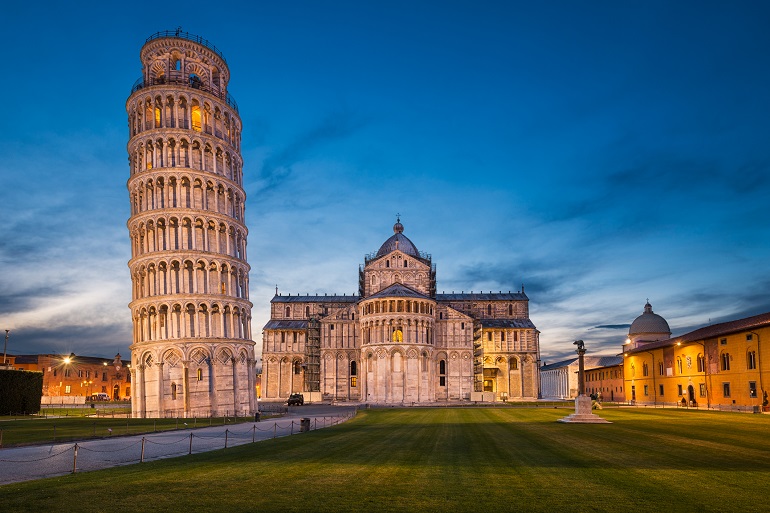
The Piazza del Duomo, also known as Piazza dei Miracoli (Square of Miracles), is located north of the Arno River and covers nearly nine square hectares. Unlike the typical paved piazzas of Italy, this expansive green grassy field is dominated by four monumental architectural works constructed in luminous dressed stone and white marble. The site comprises the renowned cathedral, baptistery, campanile (bell tower), and monumental cemetery, all built over the 11th, 12th, and 13th centuries.
The Leaning Tower of Pisa (Campanile)
The Leaning Tower of Pisa, or 'Torre pendente di Pisa' in Italian, stands as one of the world's most famous buildings due to its distinctive lean. Construction began in 1174 as a freestanding bell tower for Pisa's cathedral. The tower began to lean early in its construction, around the time of the third floor's completion, due to the sandy, unstable ground beneath its insufficient foundations.
Construction was interrupted several times, partly because Pisans were preoccupied with a succession of wars, such as conflicts with Florence. Giovanni di Simone continued work on the tower in 1260, and despite further pauses, it was finally completed in 1360. The tower's lean continued to increase over centuries, causing concerns about its stability. Today, following extensive engineering work, the tower stands securely at its famous angle.
The tower features Romanesque arcading as its basic architectural motif. Blind arcades ornament the top and bottom stories, which are taller than the others. Arcaded loggias without balustrades ring the cylindrical tower on the six levels in between. Inside, a spiral staircase provides access to the balconies.
Pisa Cathedral (Duomo)
The body of Pisa Cathedral was constructed between 1063 and 1118, with the façade begun in the early 12th century and completed in 1165. The cathedral's proportions resemble those of an Early Christian basilica, particularly evident in the interior with its timber-truss roof and columnar supports.
A notable feature of the cathedral's design is the use of apses at the ends of the transept arms as well as at the traditional end opposite the entrance. Both engaged columns and pilasters articulate the walls of the lower level, with the selection based on a correspondence between the planes of the ornamental column form and the wall being ornamented. Half-round engaged columns face half-round apses, and flat pilasters face flat walls.
The cathedral features a striking striped pattern of dark and light marble encrustation decorating parts of both the exterior and interior. The contrast between the dark and light stone is less distinct on the exterior than in the interior because the darker stone has faded and the lighter stone has yellowed over time.
The Baptistery
The Baptistery of Pisa, one of the largest in Italy, displays a fascinating blend of architectural styles. The lower two stories, featuring simple arcading with round-headed arches and minimal ornamentation, are distinctly Romanesque in style. In contrast, the ornate upper section is Gothic, largely the work of Nicola Pisano, who was assisted by his son Giovanni Pisano.
In the early 1260s, the Pisanos increased the height of the upper two stories and added a network of carved ornamentation. Lines of steeply pointed gables surround the upper two stories, with delicately carved tracery further enriching the lower band of gables. The circular plan was based on that of the Church of the Holy Sepulchre in Jerusalem, with annular vaults on two stories of the interior surrounding the conical-shaped rotunda.
The Baptistery is renowned for its remarkable acoustics, which have fascinated both scholars and visitors. The unique sound properties of this space create distinctive reverberations that enhance musical performances and vocal demonstrations.
Camposanto Monumentale
The Camposanto Monumentale, situated on the northern corner of the Piazza, is considered by many to be one of Pisa's most beautiful landmarks. The building itself dates from the 13th century, with construction of its large cloister beginning in 1278 under architect Giovanni di Simone. The cemetery was finally completed in 1464.
The exterior wall consists of 43 blind arches with two doors. Most graves lie beneath these arcades or along a central path within its courtyard. The Camposanto once housed a large collection of Roman statues and sarcophagi; many remain today.
Originally adorned with frescoes depicting religious themes such as "The Triumph of Death," much artwork was damaged during World War II bombings but has been carefully restored since then.
Piazza dei Cavalieri (Knights' Square)
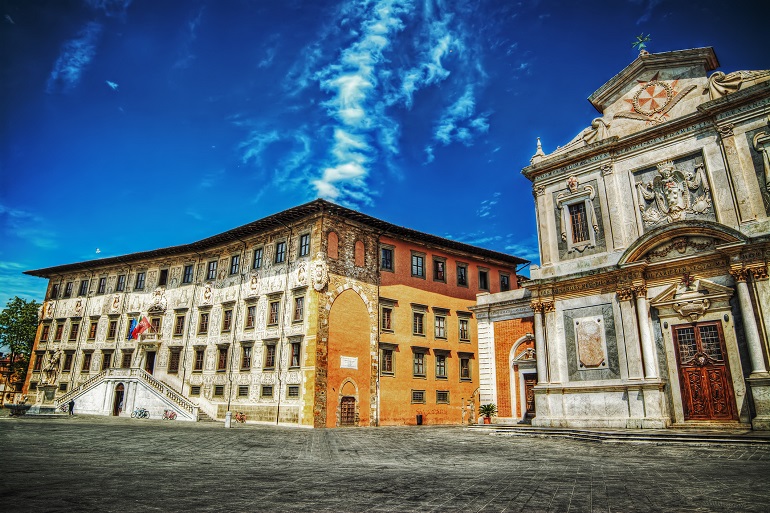
Piazza dei Cavalieri, also known as Knights' Square, is a significant landmark in Pisa. During medieval times, it served as a political centre and later became the headquarters of the Order of the Knights of St. Stephen, established in the mid-16th century. The square was formerly known as Piazza delle sette vie (The Square of the seven streets) and was situated in the forum of Portus Pisanus.
In 1558, the buildings around the square were redesigned in Renaissance style by the renowned architect Giorgio Vasari, who had previously designed works for Cosimo I de' Medici. Between 1556 and 1569, Vasari, along with other architects, designed and constructed two of the square's most fascinating buildings: the Church of the Knights of the Holy and Military Order of St. Stephen and the Palazzo della Carovana.
The Palazzo della Carovana, previously known as the Palace of the Elders, later became the palace for the Knights of St. Stephen. Vasari gave it a more contemporary look with an eye-catching façade covered in sgraffito, featuring layers of colourful plaster. Busts of Grand Dukes of Tuscany add to the grandeur of the place.
Santa Maria della Spina Church
Santa Maria della Spina is a small Gothic church situated alongside the Arno River. Initially named Santa Maria di Pontenovo when constructed in 1230, it was later renamed "Spina" (thorn) after receiving a thorn believed to be from Christ's crown in 1333.
The church was rebuilt on a higher level in 1871 to prevent flooding from the Arno River. Despite some alterations to its architecture and design during this process, the church remains one of the most magnificent Gothic edifices in Italy. The exterior walls feature a rectangular structure built with polychrome marble bands, adorned with cups, tympani, and tabernacles.
The intricate exterior design includes rose windows and statues created by notable Pisan artists of the 14th century, including Lupo di Francesco, Andrea Pisano, Nino Pisano, Tommaso Pisano, and Giovanni di Balduccio. The façade has two gates with a tabernacle containing a striking statue of Madonna and Child surrounded by two angels, sculpted by Giovanni Pisano.

The Arno River
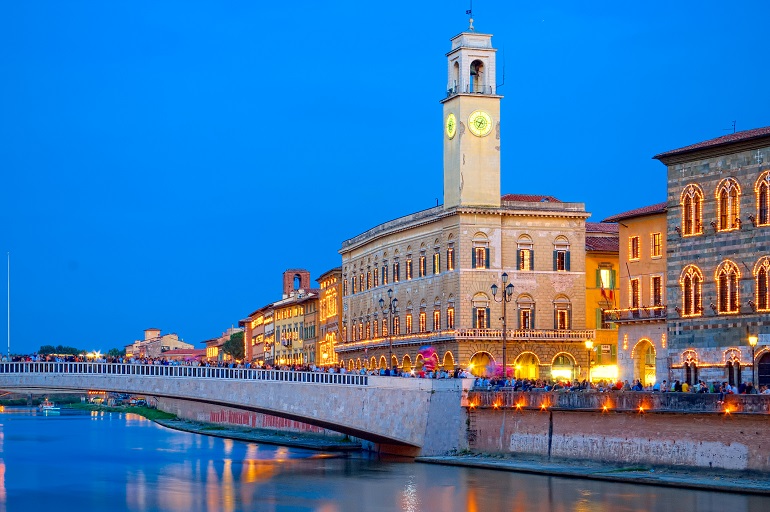
The Arno River flows through Pisa, creating picturesque views along its banks. The areas along the river, known as Lungarni, form a charming backdrop with their historical buildings and detailed façades that face directly onto the water. The river has crossed all of Tuscany before reaching Pisa and eventually flowing into the sea.
A walk along the Arno offers views of many beautiful spots in Pisa, including the church of San Michele degli Scalzi with one of the city's three leaning bell towers, and Bar Salvini, a popular meeting place for students. The Ponte di Mezzo (Middle Bridge) connects the two parts of the city and is the site of the historical Gioco del Ponte event held annually in June.
Other points of interest along the river include the Palazzo Blu with its impressive art collection, several churches of art-historical importance, and the Naval Museum where ships from Roman times are displayed.
Top Museums
Art and History Museums
Palazzo Blu
Occupying a prime position on the banks of the Arno River, Palazzo Blu is instantly recognisable by its distinctive blue façade. This cultural hub serves as Pisa's premier art gallery, hosting a dynamic programme of temporary exhibitions that have showcased the works of art world giants such as Dalí, Picasso, and Modigliani. Alongside these blockbuster shows, the palazzo boasts a permanent collection featuring a carefully curated selection of Flemish and Italian paintings dating from the 16th to 18th centuries, offering a glimpse into the artistic tastes and styles of the period. The palace itself is a work of art, offering a beautiful backdrop for the masterpieces within.
National Museum of San Matteo
Housed in a former Benedictine monastery, the National Museum of San Matteo provides an unparalleled journey through Pisan art from the late Middle Ages and the Romanesque period, up to the 16th century. The collection is particularly strong in panel paintings and sculptures, reflecting the artistic traditions of the Pisan school. Among the museum's most prized possessions is the Calci's Bible, a remarkable set of illustrated manuscripts dating back to 1168. Its intricate illuminations and vibrant colours offer valuable insights into medieval book production and artistic styles. Sculptures by Andrea Pisano, a key figure in the development of Gothic sculpture in Italy, also feature prominently. The building itself is a masterpiece of monastic architecture.
National Museum of the Royal Palace
Step back in time at the National Museum of the Royal Palace, once the residence of the powerful Medici family and later the Lorraine dynasty. This opulent setting showcases the lavish lifestyle of these ruling families through a collection of regal tapestries, exquisite oil paintings, and impressive displays of armour. The museum's portrait gallery is particularly noteworthy, featuring likenesses of the Medici and Lorraine families painted by renowned artists such as Bronzino and Tempesti. These portraits offer a fascinating look into the personalities and political strategies of these influential figures. The palace's beautifully preserved interiors, with their ornate decorations and period furnishings, further enhance the visitor's experience.
Science and Natural History Museums
Museum of Human Anatomy "Filippo Civinini"
Part of the prestigious University of Pisa, the Museum of Human Anatomy "Filippo Civinini" offers a unique and often unsettling glimpse into the intricacies of the human body. The museum's extensive collection comprises approximately 3,400 anatomical models, skeletons, and embryology preparations, meticulously crafted to aid in the study of anatomy. Beyond its anatomical specimens, the museum holds a surprising collection of archaeological artefacts, including Pre-Columbian grave goods and Egyptian mummies, reflecting the diverse interests and research activities of the university over the centuries.
Natural History Museum of the University of Pisa
Located in the breathtaking setting of the Certosa di Calci, a former Carthusian monastery, the Natural History Museum of the University of Pisa offers a fascinating journey through the natural world. The museum's star attractions are its impressive dinosaur skeletons and its collection of large cetaceans, including whale skeletons. The juxtaposition of these ancient creatures within the serene and architecturally stunning Cistercian monastery creates a truly unforgettable experience. The museum also features exhibits on mineralogy, zoology, and botany, showcasing the incredible diversity of life on Earth.

Specialised Museums
Museum of Ancient Ships
One of Pisa's newest cultural attractions, the Museum of Ancient Ships, opened its doors in the Arsenali Medicei, a historic shipyard. The museum's centrepiece is its collection of remarkably well-preserved Roman and Medieval ships, discovered during excavations in 1998. These ships provide invaluable insights into maritime technology, trade routes, and daily life during these periods. The museum also showcases a wide range of artefacts recovered from within the ships, including amphorae still containing remnants of their original contents, such as olives, cherries, and wine.
Sinopie Museum
The Sinopie Museum offers a unique glimpse into the artistic process behind the magnificent frescoes of the Camposanto, Pisa's monumental cemetery. The museum displays the "sinopie," or preliminary sketches, that were drawn onto the wall before the final frescoes were painted. These draft etchings, blueprints, and recovered frescoes reveal the techniques and creative decisions of the medieval fresco painters, providing a fascinating behind-the-scenes look at the creation of these iconic works of art.
Museo dell'Opera del Duomo
Situated in close proximity to the Leaning Tower, the Museo dell'Opera del Duomo houses a treasure trove of artworks that were originally created for the Duomo (cathedral) and Baptistery. The museum's collection includes masterpieces by renowned sculptors such as Tino di Camaino and Giovanni Pisano, showcasing the rich artistic heritage of Pisa's religious institutions. These sculptures, reliefs, and other artworks provide a deeper understanding of the artistic styles and religious beliefs of the medieval period.
Other Notable Museums
Domus Galilaeana
This institution is dedicated to the life, work, and legacy of the renowned scientist Galileo Galilei, who spent a significant part of his life in Pisa. It contains documents and instruments related to his scientific pursuits.
Museo della Grafica
This museum focuses on the art of printmaking and graphic arts, showcasing a wide range of techniques and styles.
Piaggio Museum
While located in nearby Pontedera, the Piaggio Museum is a must-visit for fans of Italian design and engineering. The museum celebrates the history of the iconic Vespa scooter and other Piaggio vehicles, offering a nostalgic journey through Italian transportation history.
Local Cuisine
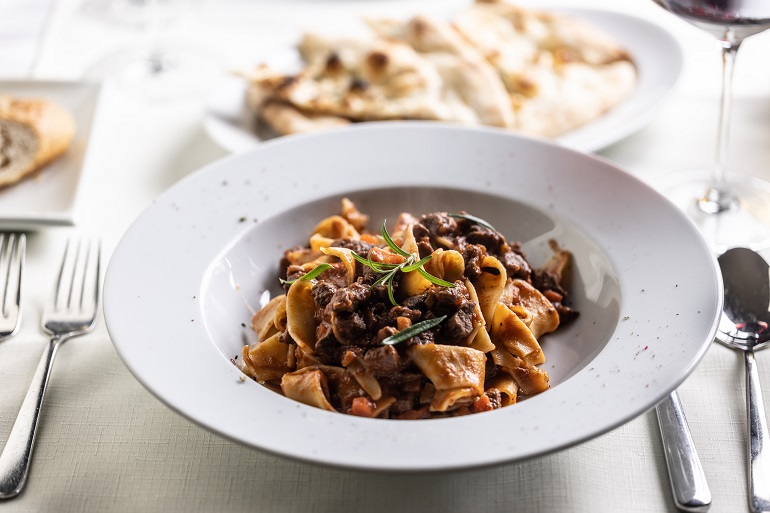
Pisa's cuisine is a delightful reflection of Tuscany's diverse landscape, incorporating ingredients from the sea, hills, and forests. Visitors should sample Cecina, a crispy chickpea flour focaccia that's soft inside and perfect as a quick snack. For main courses, try the hearty Bordatino alla Pisana, a traditional bean soup, or Pasta e Ceci, a short pasta dish with chickpeas and tomato. Game features prominently in Pisan cooking, with Cinghiale (wild boar) often served as a ragù with pappardelle pasta. Seafood lovers will appreciate Spaghetti con le Arselle (with clams) and Stoccafisso (dried cod) prepared with potatoes. The city's signature dessert is Torta coi Bischeri, a shortcrust pastry tart filled with rice, pine nuts, raisins and chocolate, recognisable by its decorative pastry tips. Finish your meal in true Pisan style with Cantucci (almond biscuits) dipped in Vinsanto dessert wine for an authentic taste of this remarkable culinary tradition.
Shopping
The main shopping thoroughfares include Via Borgo Stretto and Corso Italia, with the former featuring more fashion-oriented shops while both host a variety of stores. Via Oberdan is another notable shopping street, home to Bianco Nero and Emporio Armani. For markets, Piazza dei Cavalieri hosts a monthly Antiques Market (Fiera dell'Antiquariato) every second weekend except during July and August, showcasing Pisa's renowned furniture craftsmanship. The Marina di Pisa Market specialises in second-hand clothing and miscellaneous items, while Via Buonarroti features a market every Wednesday and Saturday. Pisa is known for its leather goods, terracotta, wooden furniture, traditional Tuscan foodstuffs and wines. When shopping near Piazza dei Miracoli, be aware that prices tend to increase the closer you get to the Leaning Tower.
Nature in and around Pisa
Pisa and its surrounding areas offer a wealth of natural attractions for outdoor enthusiasts. Just 10 kilometres from the city centre, visitors can explore the Marina di Pisa, a charming seaside resort with beautiful bays perfect for swimming and relaxation. The nearby Migliarino San Rossore Natural Park, spanning 24,000 hectares, is a true natural jewel featuring diverse landscapes, cycling and hiking routes, and some of the few undeveloped natural beaches along the Tuscan coast. The park is home to various wildlife, including red foxes, deer, and wild boars. Within the city, the Arno River provides opportunities for canoeing and scenic walks along its banks. The Pisan Hills feature captivating trekking trails suitable for all levels, offering breathtaking views of the Tuscan countryside.
Botanical Garden
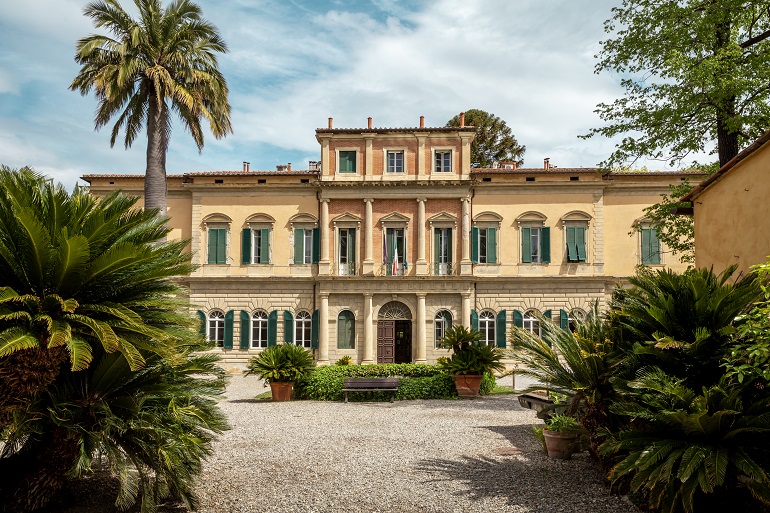
The Botanical Garden of Pisa, founded in 1543 by Luca Ghini at the behest of Cosimo I de' Medici, holds the distinction of being the oldest university botanical garden in Europe. Located near the iconic Piazza dei Miracoli, this verdant oasis spans approximately two hectares and houses over 3,000 plant species from across the globe. The garden is meticulously organised into seven sectors, each showcasing thematic collections of scientific importance. Visitors can explore the lush grounds, which feature centuries-old trees, endangered species, and a variety of habitats. The adjacent Botanical Museum, housed in the 'Palazzo delle Conchiglie', offers a fascinating glimpse into botanical history with its collection of portraits, wax models, and teaching materials. With its rich heritage and diverse flora, the Botanical Garden of Pisa provides a tranquil retreat for nature enthusiasts and a valuable resource for scientific study.
Migliarino San Rossore Natural Park
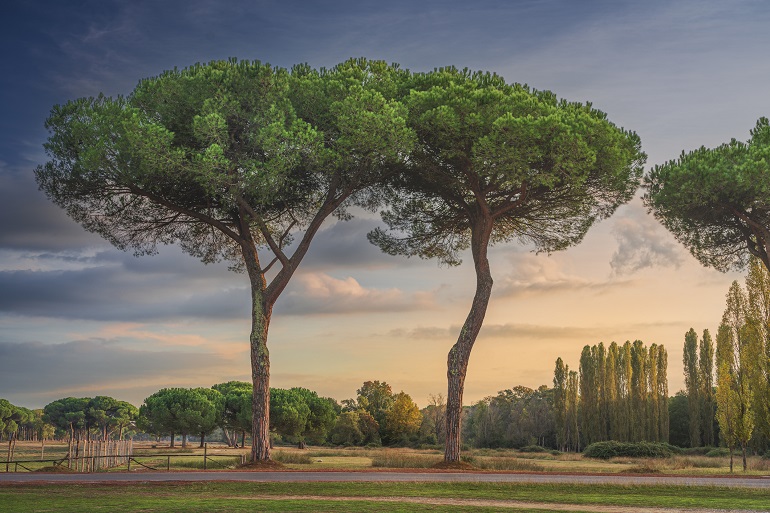
The Migliarino San Rossore Massaciuccoli Natural Park is a stunning protected area along the Tuscan coast, encompassing a diverse mosaic of ecosystems. This natural paradise, established in 1979, spans the coastal strip between Pisa and Lucca, featuring sand dunes, lush pine forests, marshlands, and the picturesque Lake Massaciuccoli. Visitors can explore the park's rich biodiversity through various means, including hiking, cycling, boat tours, and even eco-friendly train rides. The park is home to an array of flora and fauna, with rare plants like the carnivorous sundew and animals such as wild boar and fallow deer roaming freely. At its heart lies the San Rossore Estate, once a presidential property and now the largest pine forest in Europe. With its blend of natural beauty, historical significance, and outdoor activities, the Migliarino San Rossore Natural Park offers a captivating experience for nature enthusiasts and casual visitors alike.
Getting There & Around
Pisa is a compact city where many attractions are within walking distance, making it easy to explore on foot. From Pisa Airport, the Pisa Mover shuttle provides a convenient connection to Pisa Centrale Station in just 5 minutes for €6.50 one-way, running daily from 6:00 am to midnight (extended to 1:00 am from June to September). The city has an extensive bus network operated by Compagnia Pisana Trasporti (CPT), including faster LAM (Linee ad Alta Mobilità) routes—the LAMrossa connects the station to the Leaning Tower area. Tickets can be purchased at newsstands, via mobile text message (for Italian SIM cards), or at ticket offices. Pisa Centrale Station serves as a major railway junction with connections to Florence (1 hour), Rome, Siena, and other Tuscan destinations. For eco-friendly transport, bicycle rentals are available throughout the city centre with dedicated bike lanes. Taxis operate on a metered system and can be hailed on the street or booked via app. If driving, consider using the park-and-ride facilities at Via Aurelia or Via Goletta car parks, which offer parking and shuttle service to the city centre at reasonable rates.
Best Time to Visit
The best time to visit Pisa, Italy, is during the spring and autumn seasons. Spring, which spans from March to May, offers pleasant weather with temperatures ranging from 18°C to 24°C, making it ideal for exploring the city's vibrant landscapes. Autumn, from September to November, also provides comfortable temperatures, typically between 21°C and 24°C, with fewer tourists compared to the peak summer months. These periods are perfect for sightseeing and enjoying the city's attractions without the crowds. If you prefer warmer weather, June is a good option, as it often has pleasant temperatures before the peak tourist season begins. However, if you wish to avoid the crowds altogether, visiting during the week, particularly on Tuesdays and Wednesdays, is advisable.