


| Contents |
|---|
Introduction
Nestled in the heart of northern Italy's Emilia-Romagna region, Parma stands as a captivating city that masterfully blends culinary excellence, artistic heritage, and cultural sophistication. This charming destination, founded in 183 BCE, has evolved from its ancient Roman origins into a refined small capital, where cobblestone streets and elegant architecture tell stories of its rich past. Today, Parma enchants visitors with its walkable historic centre, world-renowned gastronomy—including the famous Parmigiano-Reggiano cheese and Prosciutto di Parma—and remarkable cultural institutions such as the magnificent Cathedral, the unique Baptistery, and the historic Teatro Regio.
Interesting Facts about Parma
- Parma was founded by the Romans in 183 BCE along the Via Aemilia, serving as a key trade hub.
- It became the first Italian city designated as a UNESCO Creative City for Gastronomy in 2015.
- The iconic Teatro Farnese features a unique 17th-century wooden theatre with a stage-flooding system for naval battle reenactments.
- Parma Cathedral’s dome houses Antonio da Correggio’s mesmerising Renaissance fresco of the Assumption of the Virgin.
- The city was governed by Napoleon’s second wife, Maria Luigia of Austria, who commissioned major cultural projects like the Teatro Regio.
- Parma’s Baptistery, constructed entirely from pink Verona marble, is considered a masterpiece of Romanesque-Gothic transition.
- It lies at the heart of Italy’s "Food Valley", producing globally renowned Parma ham and Parmigiano Reggiano cheese.
- The Palazzo della Pilotta complex houses three museums, including the world’s first printing museum dedicated to Giambattista Bodoni.
- Parco Cittadella, a pentagonal 16th-century fortress-turned-park, retains its original military architecture.
- Parma’s University, founded in 962 CE, ranks among the oldest continuously operating universities globally.

History
Parma, an ancient city in northern Italy's Emilia-Romagna region, was established as a Roman colony in 183 BCE along the Via Aemilia, where it flourished as a vital commercial centre. After the fall of the Roman Empire, the city experienced tumultuous times, being conquered by various powers including the Huns and Langobards, whilst the medieval period saw the city flourish under the guidance of count-bishops until the establishment of the Comune.
The city's most significant transformation began in the sixteenth century when Pope Paul III established the Duchy of Parma and Piacenza in 1545, installing his son Pier Luigi Farnese as duke. The Farnese family's two-century reign brought tremendous wealth and artistic development to Parma, resulting in the construction of magnificent buildings such as the Ducal Palace and Palazzo Pilotta. Following the Farnese dynasty's extinction in 1731, the duchy passed through various hands until Napoleon's second wife, Maria Luisa of Habsburg-Lorraine, assumed governance from 1816 to 1847, during which she significantly contributed to the city's cultural development, including the establishment of the Teatro Regio.
Today's Parma stands as a testament to its rich history, despite suffering extensive damage during World War II. The city has been lovingly restored and is now renowned not only for its architectural splendour and artistic heritage but also for its gastronomic treasures, particularly Parmigiano Reggiano cheese and Parma ham. The city boasts an impressive cultural legacy, having been home to notable figures such as the painter Correggio and the composer Giuseppe Verdi.
Main Attractions
Palazzo della Pilotta
The magnificent Palazzo della Pilotta, situated in the heart of Parma's historical centre, is a vast complex of buildings constructed in the late 16th century under the Farnese family's rule. The palace, which derives its name from the noble game of 'pelota' once played in its courtyards by Spanish soldiers, was originally designed as a service building for the Ducal Court. Today, this monumental complex houses several prestigious cultural institutions, including the National Gallery, the Palatine Library, the National Archaeological Museum, and the remarkable Farnese Theatre. Despite suffering severe damage during World War II bombardments in 1944, the palace was meticulously restored and now stands as a testament to Renaissance architecture, featuring three grand courtyards and an impressive Imperial staircase—the first of its kind in Italy. Visitors can explore this cultural treasure Tuesday through Sunday from 10:30 to 19:00, with the last entry at 18:00.
Teatro Farnese
Located within the Palazzo della Pilotta, the Teatro Farnese stands as one of the most remarkable wooden theatres in the world. Though technically part of the palace complex, this architectural marvel deserves its own mention. Built in 1618, it was the first permanent proscenium arch theatre ever constructed. The theatre's elegant wooden structure, completely reconstructed after World War II bombing, showcases the grandeur of Baroque theatre architecture. The horseshoe-shaped auditorium, adorned with classical statuary and architectural details, creates an atmosphere of theatrical magic even when empty. The space continues to inspire awe in visitors, offering a glimpse into the spectacular entertainment of Renaissance court life.

Piazza Garibaldi
Standing proudly as the beating heart of Parma, Piazza Garibaldi captivates visitors with its magnificent medieval architecture and vibrant atmosphere. The square's centrepiece, the Palazzo del Governatore, commands attention with its striking baroque façade and astronomical clock that has kept time since 1829. Local cafés and restaurants spill onto the cobblestones, their outdoor seating areas offering perfect vantage points for people-watching whilst enjoying a traditional aperitivo. The square regularly hosts markets, festivals, and cultural events, making it a dynamic space where history meets contemporary life. The surrounding buildings, with their ochre-coloured walls and traditional shutters, create a quintessentially Italian backdrop that's particularly enchanting during the golden hours of sunrise and sunset.

Cathedral Square (Piazza del Duomo)
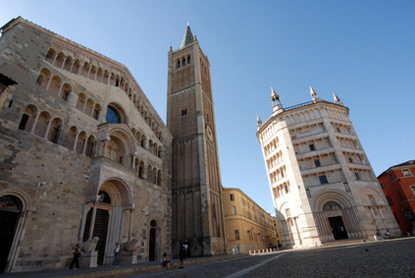
Cathedral Square represents the spiritual and architectural pinnacle of Parma's heritage. The magnificent Duomo, dating back to 1074, dominates the square with its imposing Romanesque façade and slightly leaning bell tower that reaches 63 metres into the sky. Inside, visitors are treated to some of Italy's most remarkable frescoes, including Correggio's revolutionary "Assumption of the Virgin" in the central cupola. The square's harmonious composition is completed by the surrounding historic buildings, creating an open-air museum of architectural styles spanning nearly a millennium. The peaceful atmosphere of the square provides a stark contrast to the bustling commercial areas nearby, making it a perfect spot for quiet contemplation.
The Baptistery
Adjacent to the Cathedral, the pink Veronese marble Baptistery stands as one of the most important medieval monuments in Europe. This octagonal structure bridges the gap between Romanesque and Gothic architectural styles, showcasing the artistic evolution of its time. The interior is a masterpiece of medieval craftsmanship, with its dome adorned by a mesmerising starry-sky fresco that seems to transport visitors to another realm. The building's sixteen arched niches, elaborate sculptural decorations, and the remarkable font at its centre tell stories of faith and artistry that have captivated visitors for centuries. The play of light through the ancient windows creates an ever-changing atmosphere throughout the day.
Sanctuary of Santa Maria della Steccata
This Renaissance masterpiece stands as a testament to Parma's architectural grandeur, with its Greek cross plan and magnificent central dome. The church's name, "della Steccata," derives from the wooden fence that once protected a miraculous image of the Madonna. The interior is adorned with spectacular frescoes, including Parmigianino's famous work in the vault of the presbytery. The harmonious proportions of the building, combined with the richness of its decorative elements, make it one of the finest examples of Renaissance architecture in Northern Italy. The church also serves as the chapel of the Sacred Military Constantinian Order of Saint George, adding another layer of historical significance to this remarkable building.
Monastery of San Giovanni Evangelista
This sprawling 10th-century complex represents one of Parma's most significant religious establishments. The monastery's multiple cloisters provide peaceful havens where time seems to stand still, each featuring elegant arcades and well-maintained gardens. The complex's architecture spans several periods, from Romanesque to Baroque, creating a fascinating architectural journey through time. The monastery's library once housed one of Italy's most important collections of manuscripts, and today, the restored spaces continue to emanate an atmosphere of scholarly tranquillity. The beautiful gardens, with their ancient trees and carefully tended flowerbeds, offer visitors a serene escape from urban life.
Top Museums
Art Museums
National Gallery (Galleria Nazionale)
Housed in the magnificent Palazzo della Pilotta, the National Gallery of Parma stands as a testament to the city's commitment to preserving its artistic legacy. Established in 1839, this gallery has been at the forefront of Parma's cultural scene for nearly two centuries. The collection spans a vast timeline, featuring works from the Renaissance period to more recent artistic movements.
The gallery's archaeological section is particularly noteworthy, showcasing artefacts from prehistoric, Etruscan, and Roman periods. These exhibits provide a tangible connection to the region's ancient past, featuring an array of funerary urns, inscriptions, and architectural relics that offer insights into the evolution and lifestyle of these civilisations.

Pinacoteca Stuard
Opened in 2002, the Pinacoteca Stuard is housed in a wing of the ancient Benedictine monastery of St. Paolo, a structure whose origins date back to the 10th century. The gallery takes its name from Giuseppe Stuard, a philanthropist and collector from Parma who lived from 1790 to 1834.
The museum's collection is diverse and extensive, spanning from the 14th to the 20th century. It includes valuable religious works from the Tuscan 14th-15th century, originally part of Marquis A. Tacoli Canacci's collection. The symbol of the Pinacoteca has become a drawing of a greyhound attributed to Parmigianino, donated to the institution in 1926.
Visitors can explore 22 rooms across two floors, showcasing paintings, portraits, relics, period furniture, tapestries, and various documentary evidence of Parma's artistic history. The exhibition path is thoughtfully organised around the small central twin cloister of the St. Paolo complex, offering a chronological journey through art history.
Glauco Lombardi Museum
Located near Piazzale della Pace, the Glauco Lombardi Museum is dedicated to preserving Parma's history and art. Named after Professor Glauco Lombardi (1881-1970), who devoted his life to studying and preserving documents, objects, and artworks relating to the Duchy of Parma, the museum offers a unique glimpse into the city's past.
The museum's collection is particularly rich in items related to Marie Louise of Austria (1791-1847), Duchess of Parma and former Empress of France. In 1934, Lombardi acquired a significant portion of Marie Louise's heritage, including many items referencing Napoleon Bonaparte, which now forms the core of the museum's collection.
The museum features several themed rooms, including:
- The Grand Ballroom
- The Gold Room
- The Toschi Room
- The Watercolour Room
- The French Room
- The Petitot Room
- The Affetti Room
- The Maria Luigia Room
Each room offers a unique perspective on Parma's history and artistic heritage.
Specialised Museums
Bodoni Museum
Situated within the Palazzo della Pilotta, the Bodoni Museum is a tribute to Giambattista Bodoni (1740-1813), a renowned typographer, type-designer, and printer. The museum's collection comprises thousands of volumes, rich correspondence, and various typographic tools from Bodoni's Printing Office.
One of the museum's most prestigious sections is dedicated to the history of the book, featuring both manuscripts and printed editions. The concept of this museum dates back to 1940, but it wasn't until 1963 that the material, rescued from World War II bombardments, was finally assembled and displayed.
Museum of Chinese Art and Ethnography
Founded in 1901 by Guido M. Conforti, the founder of the Xaverian Missionaries, this museum houses an exceptional collection of Chinese art and ethnographic artefacts. The initial collection began with valuable pieces donated by Senator Fedele Lampertico following the Universal Exhibit of Turin in 1898.
For decades, Xaverian missionaries working in China contributed to the museum's collection, sending cultural and ethnological elements back to Parma. The last input of objects from China arrived in 1947, shortly before the Xaverian mission presence in China ended.
Castello dei Burattini - Museo Giordano Ferrari
This unique museum, located within the historic complex of the Monastery of San Paolo, is dedicated to puppets, marionettes, and other stage objects. The museum showcases about 1,500 pieces from Giordano Ferrari's collection, accumulated over more than 60 years of activity in the field of puppetry.
The collection includes not only puppets and marionettes but also scripts, photographs, posters, and various other objects related to the art of puppetry. The museum's location offers visitors the added bonus of enjoying views of the monastery's secret garden.

Food Museums
Parmigiano Reggiano Museum
Located in Soragna, this museum is part of the Food Museums circuit and is dedicated to the world-famous Parmigiano Reggiano cheese. Housed in the 19th-century Corte Castellazzi farmhouse, the museum presents material collected from all five provinces where Parmigiano-Reggiano is produced.
The museum complex includes a farmhouse with a stable and barn, as well as a dairy containing tools and implements used in the production of Parmigiano Reggiano. It offers visitors a comprehensive look at the history and production process of this prestigious Italian cheese.
Parma Ham Museum
Situated in Langhirano, the recognised capital of ham production, the Parma Ham Museum is housed in the restored complex of the former Foro Boario, a splendid example of early 20th-century rural architecture.
The museum tells the comprehensive story of Parma ham, including the history of salt as a crucial food preservation tool. Exhibits cover various aspects of ham production, from pig breeds to the history of pork butchery. The museum also features historical documents on pig slaughtering activities over the centuries and a large collection of ancient objects related to ham production.
Langhirano itself offers visitors a peaceful setting characterised by mild climate, picturesque vineyards, and the extraordinary Torrechiara Castle, adding to the overall experience of visiting the museum.
Local Cuisine
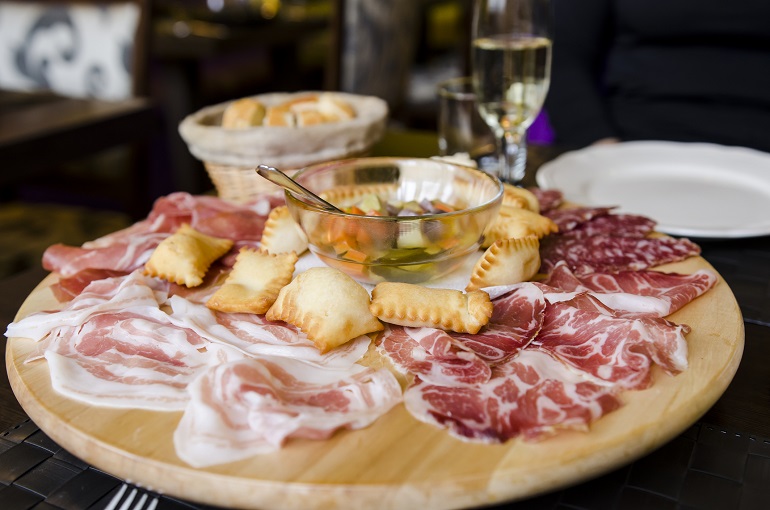
Parma, a UNESCO Creative City for Gastronomy, stands as a testament to Italy's finest culinary traditions. The city's gastronomic treasures include the world-renowned Prosciutto di Parma and Parmigiano Reggiano cheese, whilst local specialities showcase the region's rich heritage. A quintessential Parmesan meal often begins with torta fritta, a savoury fried bread served piping hot with cured meats. The city's pasta dishes are equally remarkable, featuring anolini (small stuffed pasta served in broth) and tortelli d'erbetta (pasta filled with ricotta and spinach). For the more adventurous, caval pist (horse meat tartare) represents a bold local delicacy. The culinary journey concludes with delightful treats such as candied violets, a favourite of Maria Luigia d'Austria, or the shoe-shaped biscuits called Scarpette di Sant'Ilario, traditionally enjoyed during the patron saint's celebration in January.
Shopping
Parma offers a delightful shopping experience that perfectly balances high-end boutiques with traditional Italian merchants. The city's main shopping thoroughfare, Strada della Repubblica, is lined with elegant fashion stores, artisanal food shops, and charming boutiques selling locally-made products. Food enthusiasts shouldn't miss the small speciality shops selling the region's famed Parmigiano-Reggiano cheese, Prosciutto di Parma, and traditional balsamic vinegar. The area around Via Cavour and Via Farini presents an array of designer boutiques and antique shops, whilst the bustling Via D'Azeglio features a mix of contemporary fashion retailers and historic establishments. For a truly authentic experience, the Oltretorrente district offers charming independent shops and local artisans selling handcrafted goods.

Nature in and around Parma
Parma offers several natural attractions both within and around the city. The Parco Ducale, situated in the heart of the city centre, features restored French and Italian-style gardens with parterres and fountains. The city is bisected by the Parma River, with a scenic walking path connecting Parco Ducale to the Cittadella, a star-shaped park popular with runners. Just outside the city, the Boschi di Carrega Park serves as a protected nature reserve, encompassing lush forests, meadows, cultivated fields, streams and artificial ponds. The park is home to diverse wildlife, including various bird species, and features cycling paths throughout. The surrounding countryside also houses the unique geological formations known as the Barboj of Rivalta, where small mud volcanoes emit methane gas, creating an unusual natural spectacle.
Parco Ducale
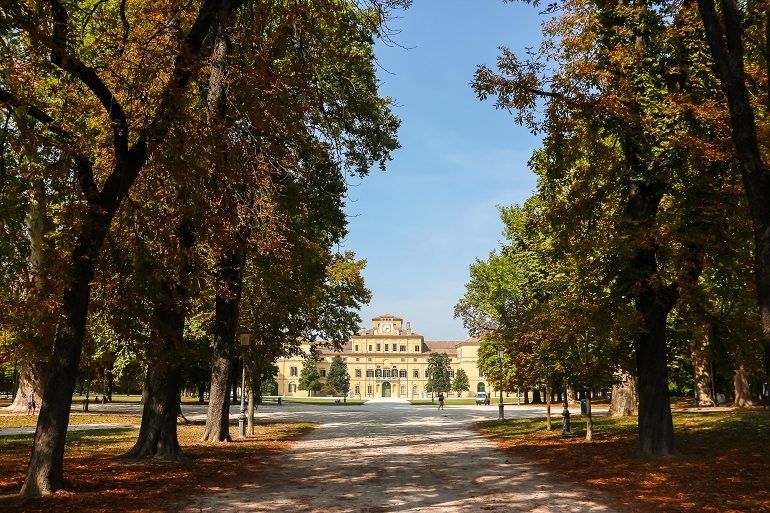
Dating back to 1560, the Parco Ducale stands as a magnificent example of aristocratic garden design, blending French formal gardens with Italian Renaissance elements. The park's tree-lined avenues, carefully trimmed into perfect geometrical shapes, lead visitors through a series of enchanting spaces. The sculptures by J.B. Boudard add classical elegance to the landscape, while the Ducal Palace, though now serving as military police headquarters, provides a grand architectural backdrop. The Palazzetto Eucherio Sanvitale, a jewel of Renaissance architecture within the park, houses beautiful frescoes and temporary exhibitions. Modern additions include well-maintained sports facilities, playgrounds, and fountains that make the park a beloved recreational space for both locals and tourists.
Cittadella Park
This unique park, set within a perfectly preserved 16th-century pentagonal fortress, offers visitors an extraordinary combination of historical architecture and natural beauty. The impressive defensive walls, rising 10 metres high, provide a 1.6-kilometre elevated walking path with panoramic views over the city and surrounding countryside. The vast green spaces within the fortress walls host various recreational facilities, including a popular trampoline area, children's playgrounds, and numerous picnic spots under ancient trees. The fortress's bastions and ramparts tell tales of military architecture and strategic defence, while the peaceful atmosphere of the park today creates a striking contrast to its martial past. Regular cultural events and open-air concerts make the Cittadella a vibrant centre of community life.
Getting Around
Parma, situated between Bologna and Milan in northern Italy, is easily accessible by train from major Italian cities, with the railway station conveniently located just a 10-minute walk from the historic centre. The most practical way to reach Parma is by train from nearby airports, including Bologna (1.5 hours away) and Milan's Linate and Malpensa airports. Once in Parma, the compact city centre is perfectly suited for exploring on foot, with most attractions within walking distance. For those preferring alternative transport, the city offers an extensive bus network with tickets costing €1.60 for an 80-minute journey. Cycling is another popular option, with bike rentals available at "La cicletteria di Parma" near the train station for €5 for two hours or €15 for a full day. While cars are restricted in the historic centre, the city maintains a well-organised transport infrastructure. For visitors planning to venture beyond the centre, local buses run every 10-15 minutes, and tickets can be purchased at tobacconists or using contactless payment when boarding.
Best Time to Visit
The best time to visit Parma, Italy, is during the spring months of April and May or the autumn months of September and October. During these periods, the weather is pleasantly mild, with daytime temperatures ranging from 15°C to 25°C, making it ideal for outdoor activities and exploring the city's attractions. Spring brings blooming landscapes and fewer crowds, whilst autumn offers beautiful foliage and the opportunity to enjoy seasonal culinary delights. These shoulder seasons provide a perfect balance of comfortable temperatures, lower rainfall, and a more authentic experience of the city's culture. Summer can be quite warm, with temperatures reaching up to 30°C, whilst winter months are cool and occasionally foggy, which may not be as conducive to sightseeing.