


| Contents |
|---|

Introduction
Orvieto, a medieval hill town in central Italy's Umbria region, sits atop a dramatic volcanic plateau of tufa rock, rising 300 metres above the valley floor. Located 90 minutes from Rome and strategically positioned between Florence and the capital, this historic settlement boasts over 3,000 years of history dating back to Etruscan times. The town is divided between the old hilltop centre and the modern lower town, with the historic area accessible via a convenient funicular from the train station. At its heart stands the remarkable Gothic cathedral, renowned for its ornate façade adorned with mosaics and sculptures. Beneath the surface lies an extensive network of Etruscan-era caves, wells, and tunnels, including the engineering marvel of St. Patrick's Well with its innovative double-helix design. Today, with approximately 21,000 residents, Orvieto is celebrated for its architectural heritage, local cuisine, and the prestigious Orvieto Classico wine produced in the surrounding hills.
Interesting Facts about Orvieto
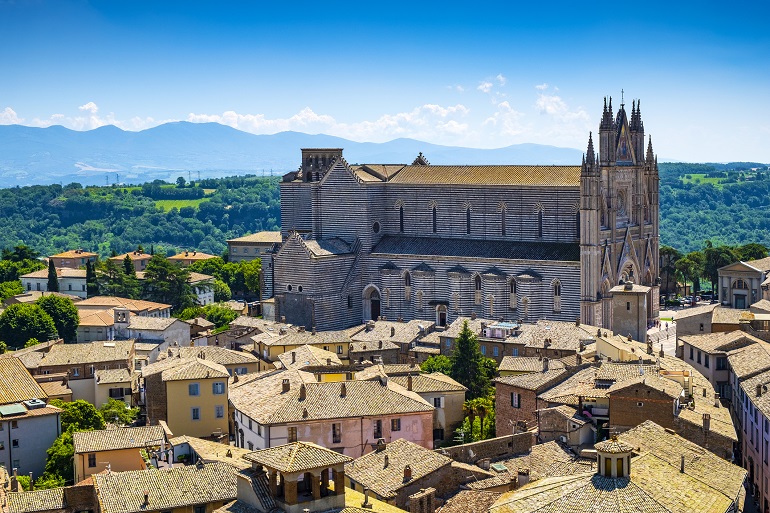
- Orvieto's Cathedral boasts a striking Gothic façade adorned with vibrant 14th-century mosaics and intricate bas-reliefs.
- The town sits atop a volcanic tuff plateau, making it naturally fortified and visible from miles away.
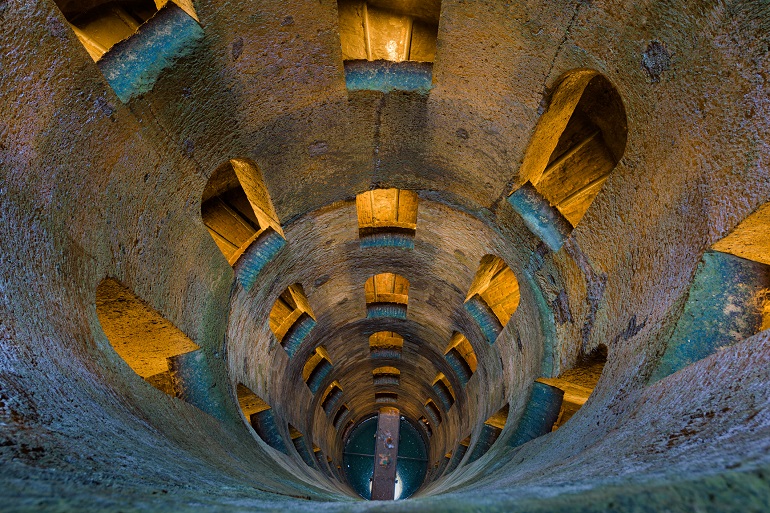
- St Patrick's Well features a unique double-helix staircase design, allowing donkeys to descend and ascend without crossing paths.
- Orvieto's underground network includes over 1,200 Etruscan-era tunnels, caves and wells carved into soft volcanic rock.
- It was designated a Cittaslow (Slow City) for preserving traditional culture and sustainable living practices.
- The town served as a papal refuge during the 16th century, with Pope Clement VII sheltering here after the Sack of Rome.
- Local cuisine features pigeon dishes, a tradition dating back to medieval underground columbaria used for breeding birds.
- Orvieto Classico, the region's crisp white wine, has been produced from volcanic soil vineyards since Etruscan times.
- A historic funicular railway has connected the upper medieval town to the lower modern district since 1888.
- The Pozzo della Cava complex reveals nine underground chambers showcasing 2,500 years of continuous human habitation.

History
Orvieto's rich history began in the 9th-8th century BCE when the Etruscans first settled on the impressive tuff cliff where the city now stands. Known as Velzna, it flourished as a significant Etruscan settlement, renowned for its ceramic and bronze production. The city's natural fortress-like position, with cliffs on all sides and an intricate network of caves and wells, made it nearly impregnable, though it ultimately fell to the Romans in 264 BCE following a servant revolt and a brutal siege.
The Middle Ages marked a golden era for Orvieto, now known as 'Urbs Vetus'. The city reached its zenith of power and prosperity during the 13th and 14th centuries, controlling vast territories from Orbetello to the Tyrrhenian Sea. The city's prominence was further enhanced by frequent papal visits, with Pope Urban IV residing there from 1262 to 1264, during which time he commissioned the construction of the magnificent Duomo. The city was organised into four distinct districts: Serancia, San Giovenale, Postierla and Santa Pace, and boasted a population of approximately 30,000 by the late 13th century.
However, the city's autonomy and prosperity faced significant challenges. The devastating plague of 1348, coupled with intense political rivalries between noble families, particularly the Monaldeschi and Filippeschi, led to the end of Orvieto's status as a free municipality. The city later found renewed prosperity under papal patronage from 1600 to 1700, serving as a peaceful retreat for popes and cardinals. In 1860, Orvieto became part of the newly formed Kingdom of Italy, marking a new chapter in its history as a frontier point between the Savoy State and the Papal State.
Main Attractions
Above-Ground Attractions
Duomo di Orvieto
The breathtaking Duomo di Orvieto stands as one of Italy's most spectacular Gothic cathedrals, commanding attention with its striking black and white striped marble façade. Construction began in 1290, and the cathedral showcases an extraordinary blend of architectural styles, from Romanesque to Gothic and Renaissance elements. The façade is particularly remarkable, featuring intricate mosaics that glitter in the sunlight, elaborate sculptures, and delicate bas-reliefs that tell biblical stories. Four pillars, adorned with detailed bronze sculptures and magnificent rose windows, create a mesmerising visual symphony that draws visitors from around the world. The cathedral's position in Piazza del Duomo creates a perfect setting for visitors to sit on the steps, enjoy a gelato, and marvel at this architectural masterpiece whilst soaking in the lively atmosphere of Orvieto's main square.
Piazza della Repubblica
The beating heart of Orvieto's social life, Piazza della Repubblica represents the town's historical centre of civic power. This elegant square, paved with smooth stones worn by centuries of footsteps, is surrounded by important historical buildings and serves as a gathering place for locals and tourists alike. The square comes alive during the evening passeggiata, when residents take their traditional evening stroll, stopping to chat with neighbours or enjoy an aperitivo at one of the many cafés that line the plaza. The square's central location makes it an ideal starting point for exploring the town's narrow medieval streets and discovering hidden corners of Orvieto.
Torre del Moro
Standing proudly in the heart of Orvieto, the Torre del Moro rises 47 metres into the sky, offering visitors an unparalleled vantage point over the medieval town and the surrounding Umbrian countryside. This 13th-century clock tower, with its distinctive red brick structure and striking black-and-white clock face, serves as both a historical landmark and a crucial orientation point for visitors navigating the town's winding streets. While a modern lift assists with the initial ascent, the final climb requires navigating several flights of stairs, but the effort is richly rewarded with a 360-degree panorama that encompasses the entire town, the magnificent Duomo, and the rolling hills beyond. On clear days, visitors can see as far as Monte Amiata in Tuscany, making it particularly spectacular during sunset when the surrounding landscape is bathed in golden light.
Chiesa di Sant'Andrea
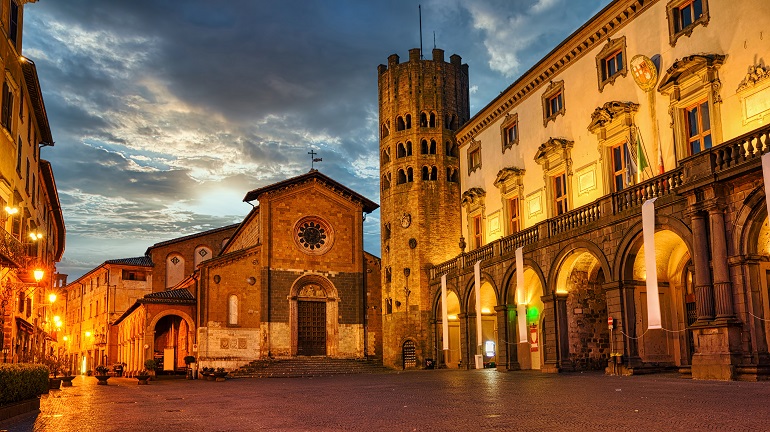
The Chiesa di Sant'Andrea stands as one of Orvieto's most distinctive churches, immediately recognisable by its unique twelve-sided bell tower. Built in the 12th century, the church represents a fascinating blend of Romanesque and Gothic architectural styles. The façade features a magnificent rose window and an ornately decorated main portal, while the interior houses several important artworks and frescoes. The bell tower, added in the 13th century, provides a unique silhouette to Orvieto's skyline and serves as an important landmark for orientation within the medieval street layout. The church's position near one of the city's main streets makes it a natural stopping point during any walking tour of Orvieto.
Piazza del Popolo
Piazza del Popolo transforms into a vibrant marketplace every Thursday and Saturday, hosting one of Umbria's most authentic local markets. The square buzzes with activity as vendors set up stalls selling everything from fresh local produce and regional specialities to clothing and artisanal crafts. The market provides an excellent opportunity to observe local life and culture, with residents haggling over prices and catching up on local news. Even on non-market days, the piazza serves as a peaceful spot to relax and observe daily life in Orvieto, surrounded by beautiful medieval buildings and traditional shops selling local products.
Palazzo del Capitano del Popolo
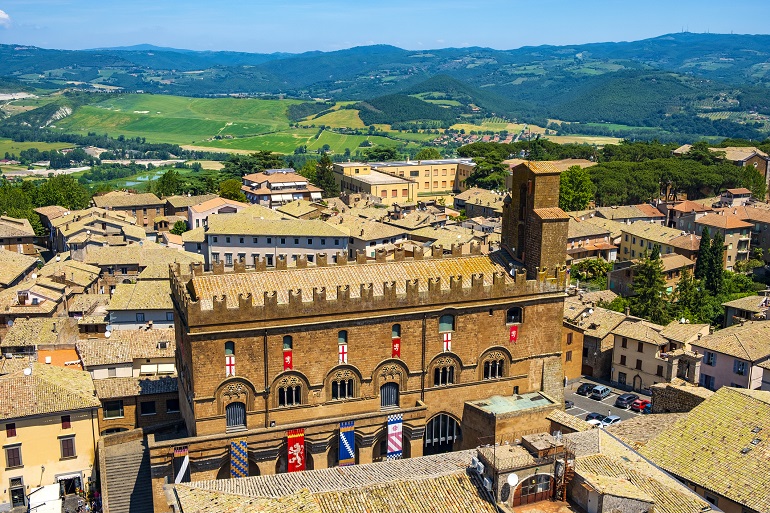
The Palazzo del Capitano del Popolo stands as a testament to Orvieto's medieval glory, its imposing façade dominating Piazza del Popolo. Built in the late 13th century, this palace served as the seat of the Captain of the People, a powerful political figure in medieval Italy. The building's architecture exemplifies the perfect balance between military strength and aesthetic beauty, with its massive stone walls punctuated by elegant Gothic windows and adorned with intricate decorative elements. Though now primarily used as a conference centre, the palace's exterior remains one of Orvieto's most photographed landmarks, particularly impressive when illuminated at night. The square in front of the palace often hosts cultural events and provides a perfect spot for people-watching whilst enjoying a traditional Umbrian meal at one of the nearby restaurants.
Underground Marvels
Orvieto Underground
Beneath the surface of Orvieto lies an extraordinary network of over 1,200 caves, tunnels, and wells, creating a fascinating underground city that tells the story of more than 2,500 years of human history. These subterranean passages, carved from volcanic rock, served various purposes throughout the centuries, from Etruscan times to the present day. Visitors can explore ancient olive oil mills, where massive millstones still stand in their original positions, and discover medieval wine cellars where the region's famous wines were once stored. The network also includes World War II bomb shelters, providing a sobering reminder of more recent history. Perhaps most intriguing are the columbarium rooms, where thousands of small niches were carved into the walls for breeding pigeons, an important food source during medieval times. The guided tours offer fascinating insights into how successive generations of Orvietani adapted these underground spaces to meet their changing needs.
St Patrick's Well (Pozzo di San Patrizio)
The remarkable Pozzo di San Patrizio represents one of the most impressive examples of Renaissance engineering in Italy. Commissioned by Pope Clement VII following the sack of Rome in 1527, this 62-metre-deep well was designed to ensure Orvieto's water supply during times of siege. The well's most ingenious feature is its double helix design, with two separate spiral staircases that never intersect, allowing donkeys carrying water vessels to descend and ascend simultaneously without crossing paths. The 248 steps on each staircase are illuminated by 72 windows cut into the central shaft, creating a mesmerising play of natural light that reflects off the moisture-laden walls. The well's construction was a remarkable feat of engineering for its time, and today visitors can descend to the bottom, following in the footsteps of countless others who have marvelled at this unique structure over the centuries.
Pozzo della Cava
The Pozzo della Cava offers visitors a fascinating journey through Orvieto's layered history. This privately-owned well complex, discovered and restored in recent decades, provides a self-guided tour through multiple levels of historical significance. Visitors can explore Etruscan caves dating back to the 5th century BCE, complete with original water collection systems and storage areas. The medieval section features perfectly preserved pottery kilns, where local artisans once created the ceramics for which Orvieto was renowned. The well itself, dating from the Middle Ages, demonstrates the sophisticated water management systems that allowed the city to thrive atop its plateau. Perhaps most intriguing are the ancient waste disposal systems, which provide fascinating insights into medieval urban planning and daily life.
Scenic Spots
City Walls
Orvieto's medieval fortress walls encircle the city, providing a continuous walkway that offers spectacular views of the surrounding countryside. These defensive walls, built from local volcanic stone, tell the story of the city's military history while providing numerous vantage points for photographers and nature enthusiasts. The walls are particularly magical during sunset, when the declining sun bathes the Umbrian landscape in warm, golden light, creating perfect photo opportunities. Walking the entire circuit of the walls takes approximately two hours, offering different perspectives of the city and countryside at every turn. Several benches along the way provide perfect spots for picnicking or simply taking in the panoramic views.

Fortezza dell'Albornoz
The Fortezza dell'Albornoz, a 14th-century fortress, occupies a strategic position at the edge of Orvieto's plateau. Built under the direction of Spanish Cardinal Gil Alvarez de Albornoz, the fortress originally served as a papal stronghold to maintain control over the region. Today, the fortress grounds have been transformed into a public park, offering some of the most spectacular views over the Umbrian valley. The park features well-maintained gardens, perfect for picnicking or simply relaxing in the shade of ancient trees. The fortress's remaining structures provide excellent examples of medieval military architecture, while the surrounding area offers numerous walking paths and viewpoints for photography enthusiasts.
Top Museums
Museo Civico-Archeologico Faina di Orvieto
The Museo Civico-Archeologico Faina di Orvieto, also known as the Faina Museum, is a treasure trove of Etruscan artefacts and antiquities. This museum showcases the most significant Etruscan objects discovered in the Orvieto area, providing visitors with a comprehensive insight into the region's ancient past.
Upon entering the museum, visitors are greeted by an impressive coin room, setting the stage for the remarkable collection that follows. The exhibition continues with an array of Chiusi vases and Attic-style vases adorned with black and red figures. Among the highlights are three unique amphoras crafted by Exekias, renowned as the finest Attic pottery designer specialising in the black-figure technique.
The museum's collection is thoughtfully arranged across two floors. The ground floor houses the Civic Museum, which comprises three expansive areas dedicated to antiquities collected during the 19th century by the town hall of Orvieto. As visitors ascend to the second floor, they encounter a chronological display of artefacts, beginning with prehistoric and protohistoric materials, followed by sections devoted to bucchero, Attic pieces, and Etruscan bronzes.
One of the most captivating features of the Faina Museum is its second-floor gallery, which offers visitors a breathtaking view of Orvieto's magnificent Duomo. This vantage point provides a unique opportunity to appreciate the town's architectural splendour while exploring its rich archaeological heritage.
Museo Archeologico Nazionale di Orvieto
The Museo Archeologico Nazionale di Orvieto, or National Archaeological Museum of Orvieto, is another significant institution that contributes to the town's cultural landscape. This museum houses an extensive collection of archaeological finds from Orvieto and its surrounding areas, offering visitors a comprehensive overview of the region's ancient history.
MODO - Museo dell'Opera del Duomo
The MODO, or Museo dell'Opera del Duomo, is a must-visit destination for art enthusiasts. This museum showcases an impressive array of artworks from Orvieto's cathedral and other churches in the area. Visitors can admire masterpieces that span several centuries, providing a visual journey through the town's religious and artistic heritage.
Museo Emilio Greco
Located on the ground floor of Palazzo Soliano, the Museo Emilio Greco is dedicated to the works of the renowned Sicilian sculptor Emilio Greco. The museum's collection comprises pieces donated by the artist to the city of Orvieto, with whom he shared a special connection.
Greco's relationship with Orvieto began in 1964 when he was commissioned to create the bronze doors for the cathedral. These doors now serve as a magnificent introduction to the architectural masterpiece that is Orvieto's Duomo. The museum's exhibits span from 1947 to 1990, showcasing the most significant stages of Greco's illustrious career.
Among the notable works on display is the Wrestler, which was exhibited in London for the 1948 Olympic Games. Another highlight is the famous plaster cast of the Monument to Pope John XXIII, created between 1965 and 1967. These pieces, along with many others, offer visitors a comprehensive view of Greco's artistic evolution and his contributions to modern sculpture.
One of the most intriguing exhibits in the Museo Emilio Greco is the model for the doors of Orvieto Cathedral. This bronze maquette, measuring 153 x 75 x 3.4 cm, provides a fascinating glimpse into the creative process behind the monumental doors. The theme chosen for the doors, the Seven Corporal Works of Mercy, is powerfully interpreted in this preliminary model, showcasing Greco's artistic vision and skill.
Local Cuisine
Orvieto's cuisine reflects its rich Umbrian heritage, featuring hearty dishes that showcase the region's abundant local ingredients. Game meats feature prominently, with wild boar, pigeon, and dove prepared in various traditional ways. The city's signature pasta, umbrichelli, is a simple yet delightful creation made from water and flour, often served with black truffles, porcini mushrooms, or arrabbiata sauce. Local specialities include the unique lumachelle, a snail-shaped savoury pastry made with flour, water, and cheese, and the palomba alla leccarda, a classic pigeon dish. The region is particularly renowned for its wines, especially the Orvieto Classico, and its premium DOP-certified extra virgin olive oil from the Colli Orvietani area. Sweet treats include ciambelline flavoured with aniseed and ciambellone made with wine instead of milk, whilst local delicacies such as the rare Pera di Monteleone d'Orvieto (a special variety of pear) showcase the area's agricultural bounty.
Shopping
Orvieto, the charming hilltop town in Umbria, offers a delightful shopping experience along its main thoroughfares, Via Duomo and Corso Cavour. The town is particularly renowned for its exquisite ceramics, featuring both contemporary pieces and Etruscan-inspired reproductions, crafted by local artisans. Visitors can explore boutique clothing shops, speciality food stores stocking local wines, cheeses, and cured meats, and artisanal workshops selling unique olive wood carvings. The town's jewellery shops showcase remarkable craftsmanship, with local goldsmiths creating bespoke pieces adorned with precious stones. For those seeking traditional Italian products, numerous small markets and shops offer authentic Umbrian delicacies, including the region's celebrated wines such as Orvieto Classico, alongside locally produced olive oils and artisanal pasta.
Nature around Orvieto
Around Orvieto, you'll find several stunning natural attractions nestled in the Umbrian countryside. The Tiber River Fluvial Park stretches between Todi and Orvieto, featuring the dramatic Forello Gorge and Corbara Lake, which is particularly popular with sport fishermen. Nature enthusiasts can explore the Monte Peglia Park and Selva di Meana, located just 30 minutes from town, where well-marked hiking trails and picnic areas await visitors amidst the verdant hills. Monte Peglia holds the prestigious UNESCO Man and Biosphere Reserve status. For bird-watching enthusiasts, the WWF-managed Oasi di Alviano provides a protected sanctuary where numerous bird species can be observed through guided tours, offering a peaceful retreat into nature.
Getting There & Around
Orvieto, perched atop a hill in Italy's Umbria region, is easily accessible by train from both Rome (1 hour) and Florence (2 hours). Upon arriving at Orvieto's railway station, the most scenic way to reach the historic centre is via the funicular railway, which departs every 10 minutes from Piazza Matteotti (opposite the train station) to Piazza Cahen, costing €1.30 per journey or €2.60 return. The funicular ticket includes a free shuttle bus service to Piazza Duomo, though the historic centre is quite walkable. If arriving by car, it's advisable to use the free car park at the base of the funicular rather than attempting to park in the limited spaces in the historic centre, which is largely pedestrianised. For those who prefer not to walk, local buses (Circolare A, B, and C) connect key points within the town, including Piazza Cahen, Piazza Repubblica, and the Cathedral.
Best Time to Visit
The ideal time to visit Orvieto is during the spring months of April and May or autumn months of September and October when the weather is pleasantly mild and the tourist crowds are thinner. Spring temperatures range from 15°C to 21°C, offering perfect conditions for exploring the medieval streets and visiting the famous Duomo, whilst autumn sees temperatures between 15°C and 25°C, making it splendid for wine tasting during the harvest season. Summer months from June to August can be quite hot with temperatures soaring to 31°C and larger tourist crowds, whilst winter brings chilly temperatures around 10°C with occasional snowfall. The shoulder seasons not only provide comfortable weather for sightseeing but also offer better accommodation rates and a more relaxed atmosphere to truly appreciate this charming Umbrian town.