


Crespi d'Adda
Introduction
Nestled along the Adda River in Lombardy, Crespi d'Adda stands as a remarkable testament to Italy's industrial past. This UNESCO World Heritage Site offers visitors a unique glimpse into the life of 19th-century workers and the visionary ideals of enlightened industrialists.
History and Significance
Founded in 1878 by textile entrepreneur Cristoforo Benigno Crespi, Crespi d'Adda was conceived as an ideal workers' village. This company town, built around a cotton mill, represented a pioneering model of sustainable development and corporate welfare, far ahead of its time. In 1995, UNESCO recognised Crespi d'Adda's universal value, designating it as a World Heritage Site.
Attractions and Points of Interest
The Textile Factory
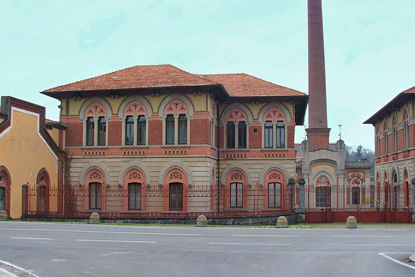
At the heart of Crespi d'Adda lies the textile factory, an architectural marvel combining Art Nouveau, eclecticism, and elements of Renaissance and Gothic styles. This building, designed by Ernesto Pirovano, serves as a testament to the village's industrial heritage.
Workers' Houses
Stroll through the meticulously planned streets to observe the workers' houses, each with its own garden and vegetable plot. The uniformity of these dwellings, punctuated by the varying styles of managers' residences, offers insight into the social hierarchy of the time.
The Crespi Castle
Overlooking the village is the medieval-style Crespi Castle, a symbol of the family's influence. This grand residence, completed in 1897, blends Neo-Gothic Lombard elements with Moorish influences.
The Church
The village church, a scaled-down replica of the Sanctuary of Santa Maria di Piazza in Busto Arsizio (the Crespi family's hometown), stands as the spiritual centre of the community.
The Cemetery
Perhaps the most intriguing site is the monumental cemetery, dominated by the Crespi family mausoleum. This Art Nouveau structure, reminiscent of ancient temples, offers a unique perspective on the village's social dynamics.
Nature and Recreatio
The village is surrounded by linden and black locust trees, with the picturesque Adda River just a short walk away. Visitors can enjoy scenic pedestrian paths along the riverbank, offering a perfect blend of industrial heritage and natural beauty.
Local Cuisine
While Crespi d'Adda itself doesn't boast a distinctive culinary tradition, visitors can savour the rich flavours of Lombardy in nearby towns. The region is known for its hearty dishes like risotto alla milanese, ossobuco, and the creamy polenta.
Crespi d'Adda offers a fascinating journey through time, allowing visitors to experience the utopian vision of a 19th-century industrialist. Its well-preserved architecture, thoughtful urban planning, and rich history make it a must-visit destination for those interested in industrial heritage and social history.
Interesting Facts
Crespi d'Adda was the first village in Italy to have modern public lighting, thanks to the Edison system.
The factory provided free education for workers' children, supplying everything from handbooks to teachers' salaries.
An indoor swimming pool with warm water was available to workers in the early 20th century, a luxurious amenity for the time.
Despite being in the province of Bergamo, Crespi d'Adda shares Milan's telephone prefix (02) due to a private line installed by the Crespi family.
Silvio Benigno Crespi, son of the village's founder, represented Italy at the Treaty of Versailles following World War I.
Please visit the official website for more information.
Travel Community
Ask your travel questions on the Italy Travel Forum