


| Contents |
|---|

Introduction
Valladolid (pop. 300,000), the de facto capital of the autonomous community of Castile and León, is a city rich in history and culture. Located in the northern half of the Iberian Peninsula at the confluence of the Pisuerga and Esgueva rivers, this compact city boasts one of Spain's oldest universities, founded in 1241. Once a royal seat during Spain's golden century and briefly the capital of Habsburg Spain between 1601 and 1606, Valladolid's historic significance is evident in its monumental Plaza Mayor (the first of its kind in Spain), numerous palaces, churches and museums, including the National Museum of Sculpture. The city is renowned for its gastronomy, wine tourism (being surrounded by wine-growing regions), and annual events such as Holy Week celebrations, the Valladolid International Film Festival (Seminci), and the Festival of Theatre and Street Arts. Just one hour from Madrid by high-speed train, Valladolid serves as a strategic communications node on the northwest economic axis between Galicia, The Basque Country and Madrid, making it an accessible destination for travellers seeking to explore Spain's cultural heritage.
Interesting Facts about Valladolid
- Valladolid in Spain was briefly the capital of Habsburg Spain between 1601 and 1606.
- Christopher Columbus died in Valladolid in 1506, and there is a museum dedicated to him located in his grandson's former house.
- Valladolid's Plaza Mayor was the first of its kind in Spain, dating back to the thirteenth century and later served as a model for similar plazas such as the one in Madrid.
- The city hosts the World Jigsaw Puzzle Championships and the Valladolid International Film Festival (Seminci) each year.
- Valladolid was recognised as a City of Film as part of UNESCO's Creative Cities Network in 2019.
- The Mexican city of Valladolid was founded in 1543 by Spanish colonisers and was later relocated to its current location in 1545 on the site of the Zaci Mayan village.
- Valladolid was the location of Europe's first moral debate on the treatment of indigenous people.
- Miguel de Cervantes, author of Don Quixote, lived in Valladolid between 1604 and 1606, coinciding with the publication of his famous novel.
- The Palacio de Santa Cruz in Valladolid, built in 1491, became the first Renaissance building in Spain.

History
Valladolid's history begins with the Celtic Vaccaei tribe who first settled the area, followed by Roman occupation that left its cultural imprint on the region. The city as we know it today was officially founded around 1072 by Count Pedro Ansúrez, growing steadily in importance throughout the medieval period. Under the patronage of Ferdinand III and Alfonso X in the 13th century, Valladolid flourished as a centre of culture and governance within the Crown of Castile, establishing foundations for what would become one of Spain's most historically significant cities.
The 15th and 16th centuries marked Valladolid's golden age, reaching its zenith when the Catholic Monarchs, Ferdinand and Isabella, married there in 1469—a union that would ultimately forge the Spanish nation. The city's prominence continued to grow, becoming intimately connected with pivotal historical figures; Christopher Columbus breathed his last in Valladolid in 1506, King Philip II was born within its walls, and the celebrated author Miguel de Cervantes resided there whilst crafting parts of his masterworks. Valladolid's status was further elevated when it briefly served as Spain's capital from 1601 to 1606 under Philip III, boasting a population of 100,000 that reflected its political and cultural significance.
Following the royal court's relocation to Madrid, Valladolid experienced a period of decline, with its population dwindling to merely 20,000 by the 18th century. However, the 19th century brought revival with the advent of railways, whilst the 20th century heralded significant growth through industrial development, particularly in automotive manufacturing. Today, Valladolid stands as a modern city of approximately 300,000 residents and serves as the de facto capital of Castile and León. Visitors can explore its illustrious past through remarkably preserved historical monuments, including the Gothic-Renaissance Cathedral, the Plaza Mayor—Spain's first great public square—and the Palacio de Santa Cruz, the country's first Renaissance building constructed in 1491.
Main Attractions
Plaza Mayor
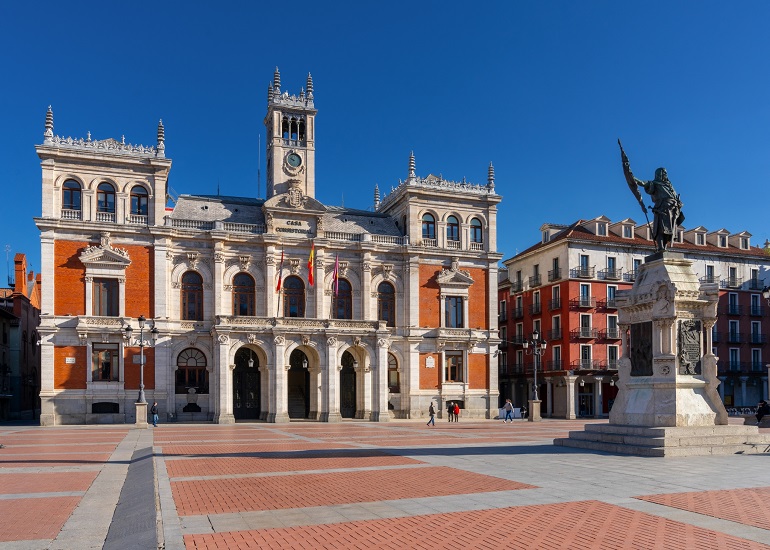
The Plaza Mayor of Valladolid stands as the oldest main square in Spain, dating back to the 13th century. This rectangular plaza is surrounded by impressive Renaissance and Baroque architecture with red brick façades and traditional balconies. The square has served as the heart of the city for centuries, hosting markets, celebrations, and even bullfights in earlier times. The impressive Town Hall (Ayuntamiento) dominates one side of the plaza, featuring a notable clock tower that chimes on the hour. The square transforms throughout the year, hosting seasonal events including Christmas markets and summer festivals. Local cafés with outdoor seating line the perimeter, offering the perfect vantage point to observe daily life in Valladolid.
Plaza de San Pablo
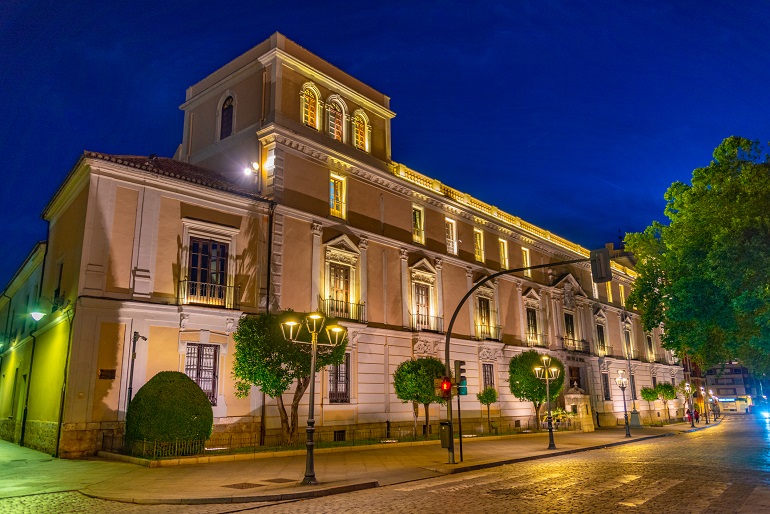
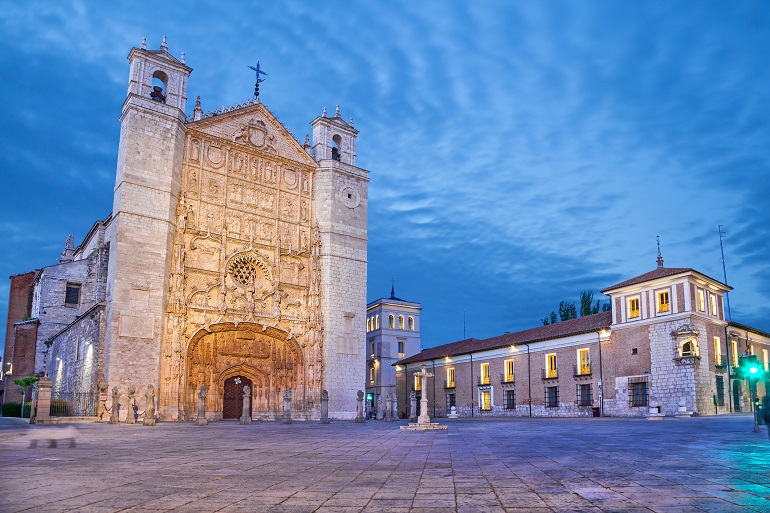
This historically significant square is framed by some of Valladolid's most important buildings, creating an architectural ensemble of remarkable coherence. The Palacio de Pimentel, with its distinctive corner balcony, marks the birthplace of King Felipe II in 1527. The ornate façade features intricate stonework and the coat of arms of the Pimentel family. Across the square, the Palacio Real (Royal Palace) presents its stately façade. The plaza itself offers an unobstructed view of the elaborate front of Iglesia de San Pablo, allowing visitors to appreciate the intricacy of its Gothic stonework. The open space has witnessed numerous historical events and royal processions throughout the centuries. The square's cobblestones and traditional lampposts enhance its historical atmosphere, making it one of the most photogenic locations in Valladolid.
Royal Palace of Valladolid
The Royal Palace served as the seat of the Spanish Court between 1601 and 1606 under Philip III, marking a brief period when Valladolid was effectively the capital of Spain. The palace features a blend of architectural styles reflecting various renovations throughout its history. Its façade displays classical proportions with an elegant entrance portal. The interior courtyard (patio) exemplifies Renaissance design with symmetrical arches and columns. Within these walls, significant historical events unfolded, including the birth of Philip IV in 1605. The palace gardens, though modest in size, provide a peaceful retreat with formal plantings and fountains. The throne room and royal chambers reflect the opulence of Spain's Golden Age, with period furnishings and decorative elements. The palace's location near other historical buildings creates an impressive architectural ensemble in this part of the city.
Iglesia de San Pablo
The Iglesia de San Pablo represents one of the finest examples of Isabelline Gothic architecture in Spain. Commissioned by Cardinal Juan de Torquemada between 1445 and 1468, the church features an extraordinarily elaborate façade that serves as a stone tapestry of religious imagery. This façade is considered one of the masterpieces of late Gothic art in Spain, with intricate carvings depicting saints, biblical scenes, and heraldic symbols. The church holds significant historical importance as the baptismal site of two Spanish monarchs: Philip II and Philip IV. The interior, though more restrained than the exterior, contains several notable chapels and religious artworks. The church's bell tower offers a distinctive silhouette on the Valladolid skyline, whilst its location in Plaza de San Pablo places it amongst other significant historical buildings.
Plaza de Zorrilla
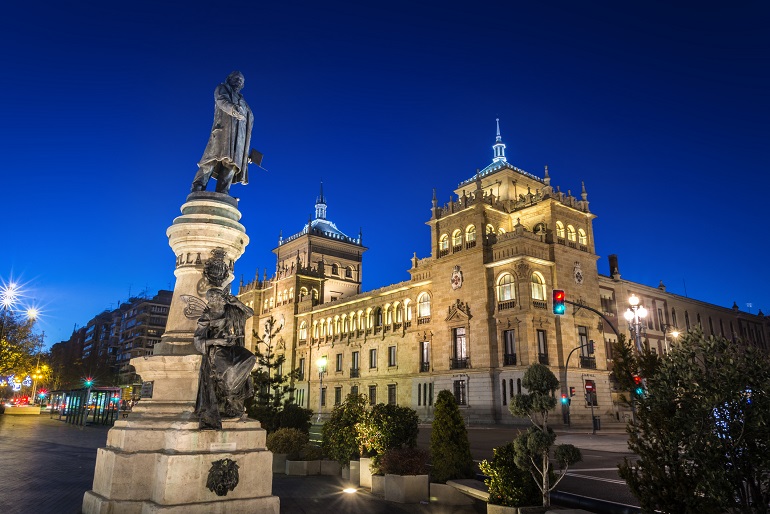
Named after José Zorrilla, one of Spain's most celebrated Romantic poets who was born in Valladolid, this plaza serves as an important junction in the city. The square features a prominent statue of Zorrilla himself, depicted in contemplative pose with pen in hand. The plaza connects several major thoroughfares and serves as a meeting point for locals. Surrounding buildings showcase a mix of architectural styles from different periods, reflecting the city's evolution. The square buzzes with activity throughout the day and evening, with street performers often entertaining passersby. During festivals, the plaza becomes a focal point for celebrations, with temporary installations and decorations transforming the space.
Academy of Cavalry
The Academia de Caballería (Academy of Cavalry) is one of the city's most emblematic and majestic buildings, located opposite the Campo Grande park in Plaza Zorrilla. Originally established in 1852 in an octagonal building that was initially intended to be a prison, the academy suffered a devastating fire in 1915. The current Renaissance-inspired structure, designed by military engineer Adolfo Pierrad, began construction in 1921 and was inaugurated by the Spanish royalty in 1924. Built with granite and golden sandstone from Salamanca, the building features beautiful polychromy and was modelled after the Palace of Monterrey in Salamanca. Today, it houses a museum created in 1975 that displays an impressive collection of paintings, sculptures (including works by Mariano Benlliure), banners, lead soldiers, 16th-century arms, trophies, photographs, and equestrian equipment. At the entrance stands the 'Regimiento de Cazadores de Alcántara' monument by Mariano Benlliure, installed in 1931.
Around Plaza de la Universidad
Plaza de la Universidad is one of the main squares in the centre of Valladolid, Spain. Historically known as Plaza de Santa María, it was renamed in the early 20th century due to the presence of the university façade, now the Faculty of Law of the University of Valladolid. The square features a statue of Miguel de Cervantes, installed in 1889, and is dominated by the majestic Baroque façade of the Faculty of Law, constructed in 1715 and considered one of the most beautiful Baroque buildings in Valladolid. The square is conveniently located just behind the Cathedral and near La Antigua, making it an essential stop in the old town.
Cathedral of Valladolid
This imposing Gothic and Renaissance cathedral was designed by renowned architect Juan de Herrera, who also designed El Escorial near Madrid. Construction began in the 16th century, though the cathedral remains technically unfinished as the original plans were never fully realised. The interior features soaring columns and ribbed vaults that create a sense of vertical grandeur. Particularly notable is the bold altarpiece crafted by Juan de Juní, depicting religious scenes with dramatic emotion and movement. The cathedral houses a magnificent processional monstrance by Juan de Arfe, considered one of the finest examples of Spanish silverwork. The choir stalls display intricate woodcarving, whilst the sacristy contains valuable religious artefacts and vestments. The cathedral's façade, though austere compared to more ornate Spanish cathedrals, exemplifies the restrained elegance of Herrera's architectural vision.

Palacio de Santa Cruz
This Early Renaissance palace is considered to be one of the first Renaissance buildings in Spain. Founded by Cardinal Pedro González de Mendoza in 1479, construction began in 1486 and was completed in 1491 under the supervision of architect Lorenzo Vázquez de Segovia. Originally built as a college for students without financial resources, it now serves as the headquarters of the University of Valladolid's Rector and staff. The palace features a magnificent façade with intricate stonework and beautiful arched doorways, along with a square courtyard with characteristic twisted columns and a decorated first floor. Inside, visitors can find the University Historical Library housing the Valcavado Beatus manuscript, the Christ of Light Chapel by Gregorio Fernández, and two university museums, including one of African art. The building underwent Neoclassical reforms by Ventura Rodríguez in the 18th century, adding to its architectural significance.
Church of Santa María de La Antigua
This church represents one of the oldest religious buildings in Valladolid, with origins dating back to the 11th century, though the current structure primarily dates from the 14th century. The most distinctive feature is the elegant Romanesque tower, rising in four sections with increasingly elaborate arched windows at each level. The slender spire creates a striking silhouette visible from many parts of the city. The church's exterior combines Romanesque and Gothic elements, with flying buttresses supporting the main structure. Inside, the nave features Gothic ribbed vaults and houses several notable altarpieces from different periods. The church is surrounded by carefully maintained gardens that provide a tranquil setting for this historical monument. Archaeological remains near the church offer glimpses into Valladolid's medieval past.
Pasaje Gutiérrez
This covered shopping arcade represents one of Spain's best-preserved 19th-century commercial passages. Built in 1886, it connects Calle Fray Luis de León with Calle Castelar, creating a sheltered shopping environment inspired by similar passages in Paris. The arcade features an impressive iron and glass roof that floods the interior with natural light while protecting shoppers from the elements. Decorative elements include ornate ironwork, sculptural details, and mosaic flooring that create a distinctly elegant atmosphere. The passage houses boutique shops, cafés, and cultural spaces that blend historical charm with contemporary offerings. The entrance portals are particularly noteworthy, with elaborate façades that announce this unique commercial space. The passage represents an important example of late 19th-century urban planning and commercial architecture.

Campo Grande
Campo Grande stands as Valladolid's premier green space, covering an expansive 115,000 square metres in the heart of the city. This English-style garden dates back to the 19th century and features winding paths that meander through diverse landscapes. Over 100 species of trees create a botanical collection that changes character with the seasons, from spring blossoms to autumn colours. The park is renowned for its free-roaming peacocks, which have become symbolic of Campo Grande, along with pheasants, ducks, and other birds that inhabit the space. Several ornate fountains punctuate the landscape, including the Fountain of Fame and the Fountain of the Four Seasons, each with distinctive sculptural elements. The central lake offers boating opportunities during warmer months, whilst ornamental bridges cross smaller water features throughout the park. Historical monuments and sculptures are scattered throughout the grounds, including tributes to notable figures from Valladolid's past.
Pisuerga River and Riverbanks
The Pisuerga River flows through Valladolid, providing a natural corridor of blue and green space. The riverbanks have been thoughtfully developed with extensive walking and cycling paths that extend for several kilometres through the city. Landscaped areas along the river feature native plantings, seating areas, and viewing points that frame picturesque vistas of the water and city skyline. Several bridges span the river, ranging from historical stone structures to modern architectural statements, each offering different perspectives of the waterway. The river path connects various parks and recreational areas, creating an extended green network through the urban environment. Water sports enthusiasts can be seen rowing and kayaking on calmer stretches of the river. During summer evenings, the riverbanks become a popular spot for locals to stroll and socialise, particularly as the setting sun casts a golden light across the water.
Millennium Dome
This modern architectural landmark, officially known as the Cúpula del Milenio, stands on the banks of the Pisuerga River. Designed by architect Emilio Tuñón and completed in 2011, this striking dome structure measures 21 metres in height and spans 50 metres in diameter. The dome consists of a wooden lattice structure covered with a translucent material that allows natural light to filter through during the day and glows with illumination at night. The interior space hosts cultural events, exhibitions, and performances throughout the year. The surrounding plaza features contemporary landscaping with water features and seating areas. This modern addition to Valladolid's architectural landscape represents the city's commitment to contemporary cultural spaces while maintaining its historical heritage.
Top Museums
Art & Sculpture Museums
Museo Nacional de Escultura
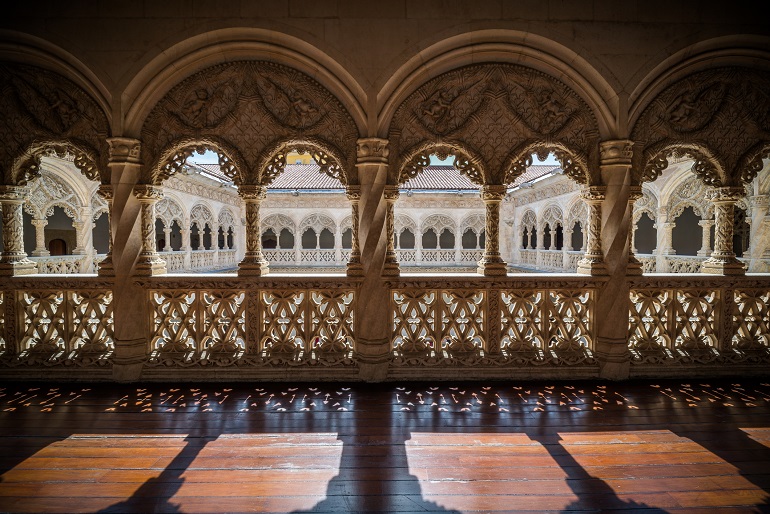
The Museo Nacional de Escultura (National Museum of Sculpture) in Valladolid is one of Europe's most unique museums, housing the continent's most important collection of polychrome wooden sculptures. Located in the historic heart of the city, the museum's main building is the magnificent 15th-century Colegio de San Gregorio, a jewel of Spanish Gothic architecture recognised as a Heritage of Cultural Interest. The museum's extensive collection spans from the Middle Ages to the 19th century, featuring over 6,000 pieces that include masterworks by renowned Spanish sculptors such as Alonso Berruguete, Juan de Juni and Gregorio Fernández. Particularly notable are the religious sculptures in polychrome wood from the 15th to 18th centuries, as well as processional statues that are still used during Holy Week celebrations. Since 2011, the museum has also incorporated the collection from the National Museum of Artistic Reproductions, adding thousands of sculptural and architectural replicas. Beyond sculptures, visitors can also appreciate significant paintings by masters including Pedro Berruguete, Rubens and Zurbarán.
Museo Patio Herreriano
Situated in a former monastery, this contemporary art museum focuses on post-World War II Spanish art. Visitors can admire works by artists such as Joan Miró, Salvador Dalí, Antoni Tàpies, and Jorge Oteiza. The museum is a must-see for fans of modern art.
Historical Museums
Casa de Cervantes
This 16th-century house served as the residence of Miguel de Cervantes between 1604 and 1606, a period that coincided with the publication of his masterpiece "Don Quijote de La Mancha." The building exemplifies domestic architecture of Golden Age Spain, with rooms arranged around a central courtyard typical of the period. The façade maintains its historical character with traditional elements including a stone entrance portal and period-appropriate windows. Inside, the rooms are furnished to reflect the domestic life of Cervantes' time, with period furniture, household items, and decorative elements that create an authentic atmosphere. The writer's study contains a collection of early editions of his works, including "Don Quijote." The house provides insight not only into Cervantes' life but also into the domestic arrangements of middle-class Spanish households during this pivotal period in Spanish literary history.
Casa-Museo de Colón
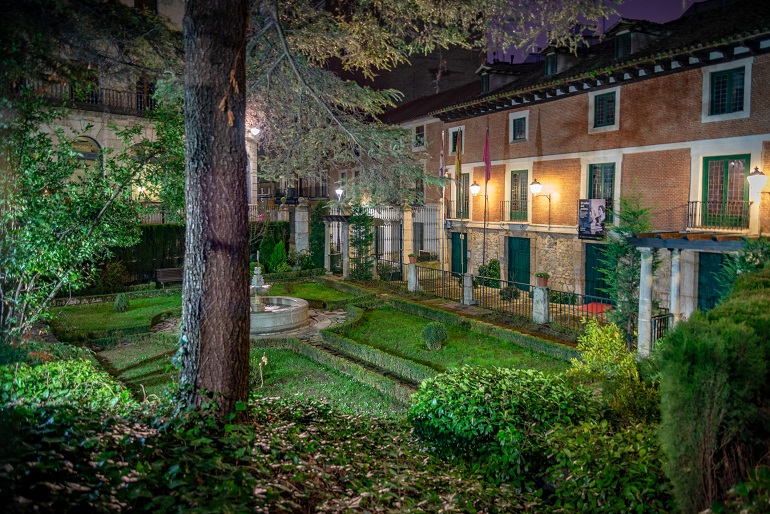
Dedicated to Christopher Columbus, this museum is located in the former house of his grandson, Diego Columbus. It explores the life and achievements of the iconic explorer through interactive exhibits, original maps, and models of his ships. A tombstone in the courtyard marks the spot where Columbus passed away in Valladolid in 1506.
Palacio de Santa Cruz
The first Renaissance building in Spain, this palace offers visitors an opportunity to explore its stunning inner courtyard and historical artefacts. It also serves as a cultural hub with exhibitions showcasing Valladolid's artistic heritage.
Academia de Caballería
This military museum is dedicated to cavalry history and features uniforms, weapons, and historical artefacts related to Spain's armed forces. The building itself is an architectural gem worth admiring.
Casa Museo José Zorrilla
This museum celebrates José Zorrilla, one of Valladolid’s most famous writers. It is located in his birthplace and offers insight into his literary contributions through manuscripts and personal belongings.
Science Museum
Valladolid Science Museum
Located on the banks of the River Pisuerga, this museum blends history with modernity. Designed by architects Rafael Moneo and Enrique de Teresa, it occupies a former flour mill. Highlights include a permanent exhibition on neurons (honouring local neuroscientist Pío del Río Hortega), a Foucault pendulum, interactive displays on electricity generation, and the River House section featuring aquariums and terrariums that explore local ecosystems.
Local Cuisine
Valladolid's culinary specialties include Lechazo Asado (wood-fired suckling lamb) and Cochinillo Asado (roasted suckling pig), both renowned for their tender, flavourful meat. As Spain's self-proclaimed Tapas Capital, Valladolid offers spectacular small plates in the bustling Plaza del Mercado, perfectly complemented by exceptional wines from the region's five Designations of Origin. Food enthusiasts should also savour the local sheep's cheese, hearty Terracampina lentil stew, seasonal milkcap mushrooms, and traditional sweets like rosquillas and mantecados. From farmers' markets brimming with fresh produce to historic taverns serving time-honoured recipes, Valladolid promises an unforgettable gastronomic journey through Castilian cuisine.
Getting There & Around
Valladolid boasts excellent transport connections with a small international airport serving European destinations, whilst high-speed AVE trains connect to Madrid in just 65 minutes. Coach services by Alsa link the city to major Spanish and European locations, and well-maintained motorways make driving straightforward. Within the city, the flat, compact centre is ideal for walking, though AUVASA buses provide comprehensive coverage with real-time information at stops. Tourists can enjoy a panoramic double-decker bus tour for about €5 on weekends and holidays. Taxis are affordable at approximately €15 from the airport, and cyclists benefit from the city's e-bike scheme and dedicated lanes. For a unique experience, boat trips along the Pisuerga river are also available.