Introduction
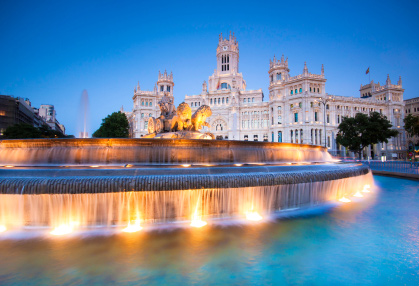
Madrid, Spain's capital and largest city, lies in the heart of the Iberian Peninsula at 650 meters above sea level. With a population of approximately 3.4 million in the city proper and 7 million in the metropolitan area, it stands as the second-largest city in the European Union. The city experiences hot, dry summers and cool winters with occasional rain and snow. As Spain's political, economic, and cultural center, Madrid offers world-class museums including the Prado, Reina Sofía, and Thyssen-Bornemisza, forming the Golden Triangle of Art. The city features impressive landmarks such as the Royal Palace, Plaza Mayor dating to the 15th century, and the sprawling Retiro Park. Madrid's vibrant lifestyle is characterized by late dinners around 9-10 pm and a nightlife that extends until dawn, while its central location makes it an excellent base for exploring other parts of Spain.
From the majestic Royal Palace, the largest in Western Europe, to the verdant expanse of El Retiro Park, Madrid presents a perfect balance of architectural splendor and natural beauty. The city comes alive through its bustling streets like Gran Vía, historic markets, and countless tapas bars, where visitors can immerse themselves in the authentic Spanish way of life while exploring a metropolis that masterfully preserves its rich heritage while embracing contemporary culture.
Interesting Facts about Madrid
- Madrid, Europe's highest capital city, sits at an elevation of approximately 657 metres above sea level.
- The city boasts more cloudless days than virtually any other European metropolis.
- Madrid is home to the world's oldest restaurant, Sobrino de Botín, which opened its doors in 1725.
- Despite being a bustling metropolis, Madrid has more trees than residents, making it one of Europe's greenest cities.
- The Puerta del Sol square marks the precise centre of Spain, serving as 'Kilometre Zero' for all major Spanish roads
- Madrid's Gran Vía street, nicknamed 'Spanish Broadway', hosts numerous theatres and is a hub for musical productions.
- The city's official symbol is a bear rearing up on its hind legs, feasting on berries from a madroño tree.
- Madrid houses the largest royal palace in Western Europe, spanning 135,000 square metres with 3,418 rooms.
- The Retiro Park in Madrid features the world's only monument dedicated to the Devil, curiously situated at 666 metres above sea level.
- Madrid's extensive metro system, opened in 1919, is the third largest in Europe, boasting 302 stations and spanning 295 kilometres.
History
Ancient Origins and Muslim Foundation
Madrid's documented history begins in the 9th century, though the area has been inhabited since prehistoric times. The city's origins trace back to the Arab Emir Muhammad I of Córdoba (852-886), who constructed a fortress called "Mayrit" or "Magerit" on the left bank of the River Manzanares. The name derives from Arabic meaning "place of water," reflecting the area's abundant water sources that would prove crucial to the settlement's development. This strategic fortress was built where Madrid's Royal Palace now stands, positioned on a hill with commanding views over the Sierra de Guadarrama. The citadel served as one of many fortresses ordered by Muhammad I along the border between Al-Andalus and the Christian kingdoms of León and Castile, protecting Toledo from northern Christian attacks whilst serving as a launching point for Muslim offensives. Before the Moorish occupation, Romans had invaded the Iberian Peninsula from the late 3rd century BCE but paid little attention to this modest settlement, being more interested in larger prizes such as Cádiz. The Visigoths later integrated the area into their kingdom of Toledo in the 6th century CE, though it remained an insignificant outpost.
Christian Conquest and Medieval Development
Madrid was conquered by Christian forces in 1083 or 1085 during Alfonso VI of León and Castile's wider campaign to capture the Taifa of Toledo. Following the conquest, Christians occupied the city centre whilst Muslims and Jews were displaced to the suburbs. The city was confirmed as a "villa de realengo" (linked to the Crown) in 1123 during Alfonso VII's reign, with the Charter of Otorgamiento establishing the first explicit boundaries between Madrid and Segovia. Beginning in 1188, Madrid gained the right to representation in the courts of Castile. In 1202, Alfonso VIII granted Madrid its first charter to regulate the municipal council, which was expanded in 1222 by Ferdinand III. The government system evolved to a regimiento of 12 regidores under Alfonso XI in January 1346. Madrid hosted the Courts of Castile for the first time in 1309 under Ferdinand IV, and subsequently in 1329, 1339, 1391, 1393, 1419, and twice in 1435. During the revolt of the Comuneros, Madrid joined the rebellion against Charles, Holy Roman Emperor, but after defeat at the Battle of Villalar, the city was besieged and occupied by imperial troops, though it was later granted the titles of "Coronada" (Crowned) and "Imperial". Throughout the medieval period, Madrid remained a middle to upper-middle rank town of the Crown of Castile.
Capital City and Imperial Growth
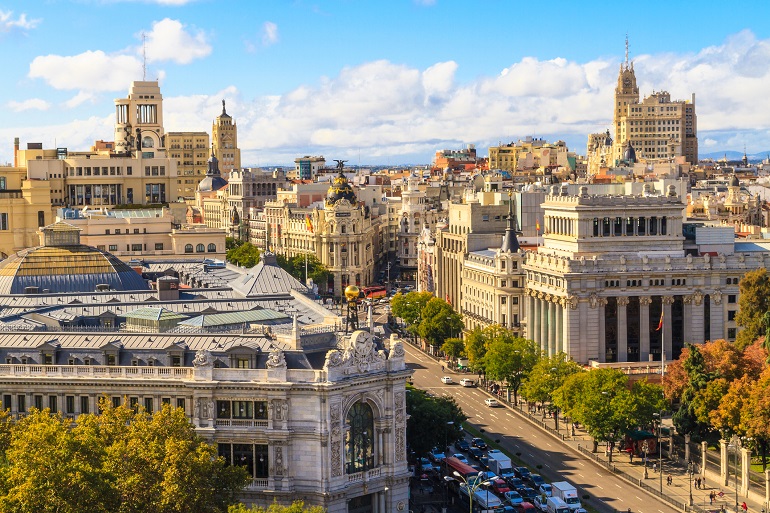
Madrid's transformation into a major city began when Philip II established his court there in June 1561, installing it in the old alcázar and making Madrid the political centre of the Spanish monarchy. This decision proved decisive for the city's evolution, as the population exploded from approximately 4,060 inhabitants in 1530 to 18,000 in 1561, and then to 80,000 by 1598. The capital status attracted Spanish and foreign artists, making Madrid the artistic and literary hub of Spain, with impressive buildings from the Madrid de los Austrias period including the Plaza Mayor, the Town Hall, churches, and the court jail. Madrid remained the capital of Spain except for a brief period between 1601 and 1606 when the court was relocated to Valladolid, causing the Madrid population to temporarily plummet. During the Napoleonic Wars, Madrid was occupied by French troops and Napoleon's brother Joseph was installed on the throne. The revolt of 2 May 1808 began in the Puerta del Sol, marking the start of the War of Independence. In the 19th century, Joseph Bonaparte initiated reformation of the Puerta del Sol and vicinity, constructing the east-west avenue known as Gran Vía. By the 18th century, Carlos III had designed major arteries like Paseo del Prado and Paseo las Acacias. In 1835, the renowned University of Alcalá de Henares was transferred to Madrid, and by the 1950s, the Paseo de la Castellana was extended as a north-south corridor with modern buildings housing major financial institutions.
Main Attractions
Plaza Mayor
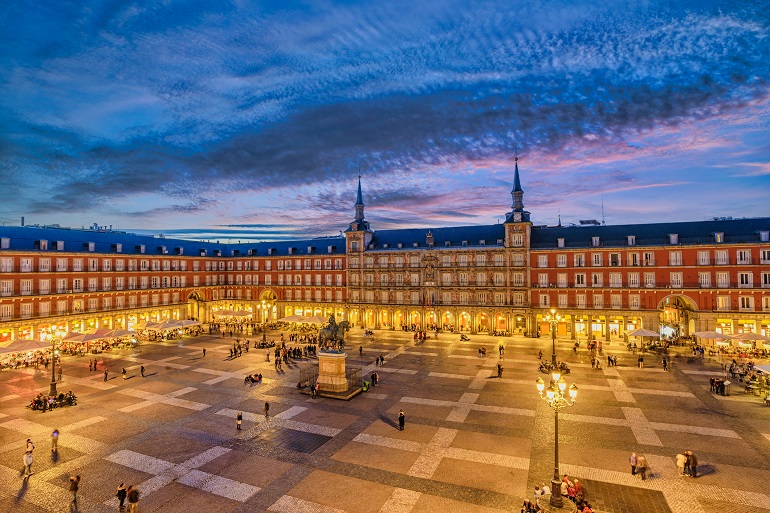
Nestled in the heart of Madrid, the Plaza Mayor stands as one of Spain's most iconic squares, blending centuries of history with vibrant modern life. This grand rectangular plaza, measuring 129 by 94 metres, was completed in 1619 during the reign of Philip III, whose bronze equestrian statue now graces its centre. The square is surrounded by elegant three-storey buildings featuring 237 balconies and nine ornate entrance gates, all unified by stunning baroque architecture. The most notable building is the Casa de la Panadería, adorned with beautiful frescoes depicting mythological figures. Throughout its rich history, the plaza has survived three major fires and served various purposes, from hosting bullfights and public executions to today's more peaceful activities such as Christmas markets and outdoor cafés. Visitors can now enjoy traditional Spanish cuisine, including the famous bocadillo de calamares (calamari sandwich), whilst soaking in the atmosphere under the covered arcades that house numerous shops, restaurants and bars.
Gran Vía
Madrid's Gran Vía, often dubbed the "Spanish Broadway" or "the street that never sleeps," is a magnificent 1.3-kilometre boulevard that serves as the vibrant heart of Spain's capital. Constructed between 1910 and 1929, this architectural marvel required the demolition of over 300 buildings and 50 streets to create what would become Madrid's most famous thoroughfare. The street showcases stunning early 20th-century architecture, ranging from Art Nouveau to Art Deco, with iconic landmarks such as the Metropolis Building, the Telefónica Building (one of Europe's first skyscrapers), and the Capitol Building. Today, Gran Vía is a bustling hub of activity, offering visitors an array of shopping opportunities from international brands to local boutiques, numerous theatres and cinemas, fashionable restaurants, and vibrant nightlife venues. The street connects several major landmarks, including Plaza de España and Puerta del Sol, making it an essential destination for any visitor to Madrid.

Gran Vía at night
Royal Palace of Madrid
The Royal Palace of Madrid, a magnificent architectural marvel, stands as a testament to Spain's rich royal heritage. Situated in the heart of Madrid, this colossal structure boasts 135,000 square metres of floor space and an astounding 3,418 rooms, making it the largest royal palace in Western Europe. Although no longer the residence of the Spanish royal family, who now reside in the more modest Zarzuela Palace, it remains the official royal residence and is used for state ceremonies. Visitors can explore its opulent interiors, including the stunning Throne Room with its Tiepolo frescoes, the dazzling Hall of Mirrors, and the impressive Royal Armoury. The palace grounds also feature beautiful gardens, such as the Sabatini Gardens and Campo del Moro, offering a serene retreat from the bustling city. With its blend of Baroque and Neoclassical styles, exquisite art collections, and historical significance, the Royal Palace of Madrid is an essential stop for any traveller seeking to immerse themselves in Spanish culture and history.

Royal Palace of Madrid
Sabatini Gardens
The Sabatini Gardens, located on the northern façade of Madrid's Royal Palace, offer visitors a serene retreat amidst the bustling city. These exquisite neoclassical-style gardens, opened to the public in 1978 by King Juan Carlos I, are named after the 18th-century Italian architect Francesco Sabatini, who designed the royal stables that once stood on this site. Covering an area of two hectares, the gardens feature meticulously manicured hedges, symmetrical geometric patterns, and a large rectangular pond that serves as a mirror, reflecting the majestic north face of the Royal Palace. Adorned with fountains, statues of Spanish kings, and well-placed benches, the Sabatini Gardens provide a tranquil atmosphere for both locals and tourists to relax and enjoy spectacular views. During the summer months, the gardens come alive with 'Los Veranos de la Villa', a cultural festival featuring live music and various events, making it a must-visit destination for anyone exploring Madrid's rich historical and cultural landscape.
Campo del Moro
Campo del Moro is a stunning 20-hectare park nestled at the foot of Madrid's Royal Palace, offering visitors a tranquil escape from the bustling city centre. This verdant oasis, designed in the 19th century under Queen Maria Cristina's rule, boasts a romantic English-style landscape with winding paths, lush lawns, and ornamental pools. The park's name, meaning "Moor's Field", harks back to its historical significance as the site where Muslim forces camped during an unsuccessful attempt to recapture Madrid in 1109. Today, Campo del Moro enchants visitors with its meticulously maintained grounds, featuring two magnificent fountains—Las Conchas (The Shells) and Los Tritones (The Tritons)—and provides breathtaking views of the Royal Palace. Despite its central location, this hidden gem remains relatively undiscovered by tourists, making it an ideal spot for a peaceful stroll or a moment of quiet contemplation amidst Madrid's grandeur.
Almudena Cathedral
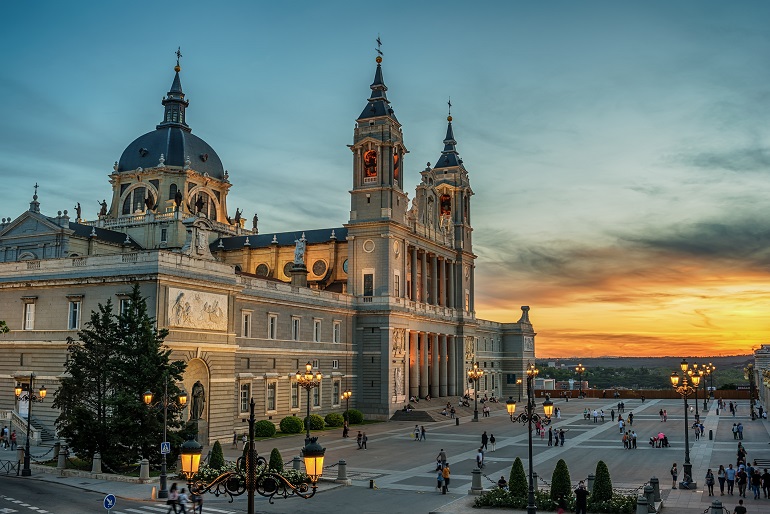
The Almudena Cathedral, officially known as Santa María la Real de La Almudena, is Madrid's most important religious building and a must-visit landmark for travellers. The cathedral's construction began in 1883 but took over a century to complete due to various delays, including the Spanish Civil War. Its unique architecture blends Neo-Gothic interiors with a Neoclassical exterior, designed to harmonize with the adjacent Royal Palace. Inside, visitors can admire the cathedral's vibrant stained-glass windows, ornate chapels, and a striking combination of modern and traditional religious art. The cathedral also features a museum and a crypt, which houses over 400 columns with unique capitals. For panoramic views of Madrid, visitors can ascend to the cathedral's dome.
Iconic Landmarks
- Plaza de Cibeles: Home to the iconic Cibeles Fountain and the impressive Palacio de Cibeles.
- Puerta del Sol: The bustling heart of Madrid, known for its famous Bear and Strawberry Tree statue and as the center point of Spain's radial road network.
- Puerta de Alcalá: An iconic arch that predates the Arc de Triomphe in Paris.
- Templo de Debod: An ancient Egyptian temple gifted to Spain, offering beautiful sunset views over the city.

Plaza de Cibeles
Neighborhoods to Explore
Madrid's diverse neighbourhoods each offer a unique flavour of Spanish life, from historic quarters to trendy districts. Here's your essential guide to the capital's most noteworthy areas.
Central Districts
Sol (Centro)
The beating heart of Madrid, Sol serves as the city's kilometre zero and main meeting point. The bustling Puerta del Sol square features the iconic Bear and Strawberry Tree statue. This area brims with shops, historic landmarks, and the magnificent Plaza Mayor, making it perfect for first-time visitors.
Retiro
Named after the magnificent Retiro Park, this elegant district offers a peaceful retreat from city life. The park itself features a stunning Crystal Palace, ornate gardens, and a serene lake perfect for rowing. Along its western edge lies the prestigious Paseo del Prado, home to Madrid's renowned art museums.
Trendy Areas
Malasaña
This hip neighbourhood pulses with creative energy, featuring vintage shops, independent boutiques, and vibrant street art. Plaza del Dos de Mayo serves as its social hub, surrounded by trendy cafés and bars that come alive at night.
Chueca
Known as Madrid's LGBTQ+ heart, Chueca combines modern flair with traditional charm. The area boasts the excellent Mercado de San Antón, fashionable shops, and some of the city's best nightlife venues.
Traditional Quarters
La Latina
One of Madrid's oldest quarters, La Latina charms visitors with its narrow medieval streets and traditional tapas bars. On Sundays, it hosts the famous El Rastro flea market, whilst its squares buzz with locals enjoying cañas (small beers) and tapas.
Salamanca
Madrid's most upscale district features elegant boulevards lined with designer boutiques. Known for its 'Golden Mile' along Calle Serrano, this area combines luxury shopping with refined dining and impressive architecture.
Up-and-Coming Areas
Lavapiés
This multicultural hub offers a vibrant mix of international restaurants, independent theatres, and street art. Its steep streets host an eclectic array of shops and cafés, reflecting Madrid's diverse population.
Chamberí
A authentic residential area, Chamberí provides a glimpse into local Madrid life. The neighbourhood is famous for its traditional taverns, particularly along Calle Ponzano, and houses the delightful Sorolla Museum.
Top Museums
Museo Nacional del Prado
The Prado Museum stands as Spain's premier national art museum and one of the world's most prestigious cultural institutions. Located in a magnificent Neoclassical building designed by Juan de Villanueva in 1785, the museum first opened its doors to the public in 1819. The Prado houses an extraordinary collection of European art from the 12th to the early 20th century, with its crown jewel being the world's most comprehensive collection of Spanish paintings. The museum's collection comprises over 8,200 drawings, 7,600 paintings, and 1,000 sculptures, though only a portion is on display at any given time. Visitors can marvel at masterpieces by Spanish artists like Velázquez, Goya, and El Greco, alongside works by European masters such as Bosch, Titian, and Rubens. The museum underwent a significant expansion in 2007 with a new wing designed by Rafael Moneo, adding modern facilities whilst preserving its historic charm. Today, the Prado forms part of Madrid's Golden Triangle of Art, alongside the Thyssen-Bornemisza Museum and the Museo Reina Sofía, and welcomes millions of visitors annually who come to experience its unparalleled artistic treasures..

Prado Museum
Museo Nacional Centro de Arte Reina Sofía
The Museo Nacional Centro de Arte Reina Sofía stands as one of Madrid's most prestigious cultural institutions, forming part of the city's renowned Golden Triangle of Art alongside the Prado and Thyssen-Bornemisza museums. Housed in an 18th-century former hospital building designed by Francesco Sabatini, this national museum opened its doors in 1992 and showcases an exceptional collection of 20th-century and contemporary art. The museum's crown jewel is Pablo Picasso's masterpiece "Guernica", whilst also featuring significant works by other Spanish masters such as Salvador Dalí and Joan Miró. In 2005, the museum expanded with a modern wing designed by Jean Nouvel, bringing its total collection space to over 84,000 square metres. With more than 21,000 works on display, including paintings, sculptures, photographs, and multimedia installations, the Reina Sofía offers visitors a comprehensive journey through modern Spanish art whilst maintaining its position as one of the world's largest museums for contemporary art.
Museo Nacional Thyssen-Bornemisza
The Museo Nacional Thyssen-Bornemisza, often simply called the Thyssen, stands as a cornerstone of Madrid's prestigious "Golden Triangle of Art" alongside the Prado and Reina Sofía museums. Housed in the neoclassical Villahermosa Palace, this world-class institution boasts nearly 1,000 masterpieces spanning from the 13th to the 20th century, offering visitors a comprehensive journey through Western art history. The museum's collection, which began as a private assemblage by Baron Heinrich Thyssen-Bornemisza in the 1920s, showcases an impressive array of artistic movements and schools, including rare examples of Italian primitives, Dutch masters, German Expressionists, and American paintings not found elsewhere in Europe. The museum particularly excels in its representation of Impressionism, Expressionism, and 20th-century European and American art, complementing the collections of its neighbouring institutions. Today, visitors can explore works by renowned artists such as Van Eyck, Dürer, Titian, Caravaggio, Rubens, Monet, Van Gogh, Picasso, and Dalí, making it an essential destination for art enthusiasts in Madrid.
Museo Arqueológico Nacional
Located in Madrid's Salamanca neighbourhood, the National Archaeological Museum (Museo Arqueológico Nacional) is a magnificent institution housed in a 19th-century neoclassical building shared with the National Library. Founded in 1867 by Queen Isabella II, this museum offers visitors a fascinating journey through Spanish history, from prehistoric times to the 19th century. The museum underwent extensive renovation between 2008 and 2014, resulting in modernised facilities that now attract over half a million visitors annually. Its impressive collection includes remarkable artefacts such as the iconic Lady of Elche, Egyptian sarcophagi, Greek antiquities, Roman decorative arts, and medieval treasures like the Treasure of Guarrazar. The museum is particularly noted for its comprehensive collection of Iberian Peninsula artefacts, displayed across four floors in chronologically arranged exhibits. Open Tuesday through Saturday from 9:30 to 20:00 and Sundays until 15:00, the museum offers excellent value with modest entrance fees and free admission at certain times..

National Archaeological Museum
Museo Sorolla
The Museo Sorolla in Madrid is a charming single-artist museum housed in the former residence and studio of the renowned Spanish painter Joaquín Sorolla. Located at Paseo del General Martínez Campos 37, this intimate museum preserves the original atmosphere of both the artist's home and workspace, featuring over 1,200 paintings alongside personal artefacts, furniture, and ceramics. The museum is particularly notable for its beautiful Andalusian-style garden with ornate fountains and peaceful courtyards. Inside, visitors can explore period-furnished rooms including Sorolla's well-lit studio, where his masterful paintings capturing Mediterranean light and daily Spanish life are displayed. Whilst the museum is temporarily closed for refurbishment until 2026, it typically charges a modest entrance fee of €3, with free admission on Saturday afternoons and Sundays. The museum offers a more personal and intimate experience compared to Madrid's larger art institutions, making it a hidden gem for art enthusiasts seeking to discover the work of Spain's master of light.
Local Cuisine
Madrid's culinary scene is a delightful blend of hearty stews, flavourful tapas and comforting classics that reflect the city's rich gastronomic heritage. The capital's signature dish is the robust cocido madrileño, a three-course stew featuring chickpeas, vegetables and various meats served in distinct stages. Local specialities include the flavoursome callos a la madrileña (tripe stew with chorizo and morcilla), crispy patatas bravas drizzled with spicy tomato sauce and aioli, and the beloved tortilla española made with eggs and potatoes. For a quintessential Madrid breakfast or afternoon treat, one mustn't miss churros con chocolate, perfectly crispy churros served with thick hot chocolate for dipping. The city's tapas culture shines through dishes like gambas al ajillo (garlic shrimp) and croquetas filled with various savoury ingredients, best enjoyed in traditional taverns and historic restaurants, some dating back centuries.

Mercado de San Miguel
Shopping
Madrid is a shopper's paradise, offering a diverse array of retail experiences to suit every taste and budget. The Spanish capital boasts several distinct shopping districts, each with its own unique character. For high-end luxury brands, head to the elegant Salamanca neighbourhood, particularly Calle Serrano, often referred to as Madrid's 'Golden Mile'. Those seeking more affordable high street fashion should explore Gran Vía, a bustling thoroughfare lined with popular retailers like Zara, H&M, and Primark. For a more eclectic shopping experience, venture into the trendy Malasaña district, where you'll find an array of vintage shops, independent boutiques, and quirky concept stores. Foodies will head to the Mercado San Miguel, bustling food market in a beautiful art nouveau building, perfect for sampling Spanish cuisine. No shopping trip to Madrid would be complete without a visit to El Corte Inglés, Spain's largest department store chain, which offers a comprehensive range of local and international brands under one roof. Bargain hunters should time their visit to coincide with the city's bi-annual sales periods, typically in January-March and July-September, when significant discounts are available across most shops.
Nature in and around Madrid
Madrid offers a remarkable array of natural attractions both within and beyond its urban boundaries. The city centre boasts the magnificent El Retiro Park, a 125-hectare green oasis that features a serene boating lake and has earned UNESCO World Heritage status. Just west of the city centre spreads the massive Casa de Campo, a park five times larger than New York's Central Park, offering hiking, cycling, and even a zoo and amusement park. Immediately south of the centre is the Madrid Río Park, modern riverside park built over a former highway, great for walks and outdoor activities.
Just outside the city, the Sierra de Guadarrama mountain range presents countless opportunities for outdoor adventures, from hiking and rock climbing to paragliding. Notable highlights include La Pedriza Natural Park, renowned for its distinctive granite formations and popular amongst climbers and hikers. The Peñalara Natural Park, with its glacial lagoons and pine forests, provides a perfect escape from the city bustle, whilst the stunning Waterfalls of Purgatorio near Rascafría offer picturesque walking trails. For those seeking unique landscapes, the Hayedo de Montejo beech forest, a UNESCO World Heritage site, displays particularly spectacular colours during autumn. These natural treasures, all within 100 kilometres of Madrid's centre, make the Spanish capital an unexpected haven for nature enthusiasts.

Crystal Palace in El Retiro Park
Getting to Madrid & Around
Getting to Madrid
Air, train, and coach are the most straightforward ways to reach Madrid, with extensive links from across Spain, Europe, and intercontinental gateways converging on the Spanish capital.
By air
Adolfo Suárez Madrid–Barajas Airport (IATA: MAD) is Madrid’s main international gateway, located roughly 13 km northeast of the historic centre and serving as a major hub between Europe and Latin America.
The airport has five passenger terminals—T1, T2, T3, T4 and the satellite T4S—supporting a very large network of global routes and acting as the primary hub for Iberia and other carriers.
Terminals are organised by flight type (Schengen, non‑Schengen EU, and other international), with T4 and T4S linked by an automated people mover, and frequent onward public transport into the city available from the airport complex.
By train
Madrid’s high‑speed and long‑distance trains arrive principally at two stations: Madrid Puerta de Atocha–Almudena Grandes (central and south‑east) and Madrid Chamartín (north), which are now linked by a standard‑gauge tunnel allowing cross‑city through services without changing trains.
Atocha handles a large share of AVE and long‑distance services and is open from 05:00 to 01:00, with a full range of passenger facilities and a central location that eases onward travel within the city.
- Frequent AVE links connect Madrid with Barcelona and Zaragoza to the northeast, and with Seville, Málaga, Córdoba, and Granada to the south.
- High‑speed routes also run towards Valencia, Alicante–Murcia, Valladolid–León, Burgos, and Ourense, with services distributed between Atocha and Chamartín depending on line and direction.
By coach
Long‑distance and international coaches predominantly use Estación Sur de Autobuses (Méndez Álvaro), which sits south‑east of the centre with direct connections to Metro and Cercanías suburban rail at Méndez Álvaro.
Estación Sur’s address is Avenida/Calle Méndez Álvaro 83, and it supports nationwide and international routes operated by multiple carriers, making it the primary coach hub for arrivals to Madrid.
Additional major interchanges such as Avenida de América and Moncloa also handle significant regional and intercity coach flows on the northeast and northwest sides of the city respectively.
By car
Madrid sits at the centre of Spain’s radial road network and is encircled by several ring roads—M‑30 (inner), M‑40, and M‑50—that help distribute traffic and route arrivals from all directions around the urban area.
These beltways are heavily used, especially at peak times, so planning extra time for approaches and choosing the appropriate ring road for the final sector can ease city entry and onward driving.
Getting around Madrid
Getting around Madrid is straightforward thanks to its modern, efficient, and fully integrated public transport network, which includes the Metro, city buses, and commuter trains.
Metro
The Madrid Metro is one of the most extensive and efficient underground systems in Europe, with 12 lines that cover the entire city and many of its suburbs. It is often the quickest way to travel between different districts.
- Network: The Metro provides access to all of Madrid's main attractions and neighbourhoods, from the historic centre to business districts. Maps are available at all stations and online.
- Operating Hours: Services run daily from 6:00 a.m. until 1:30 a.m., with trains arriving frequently, especially during peak hours.
- Tickets: To use the Metro, you will need a rechargeable Multi Card, which can be purchased from ticket machines in any station. This card can be topped up with single journey tickets, 10-journey passes, or tourist passes for unlimited travel over a set number of days.
Buses
Madrid's extensive network of bright red city buses (EMT) complements the Metro system perfectly, serving areas that the underground does not reach and offering a scenic way to see the city.
- Integration: The same Multi Card used for the Metro is also valid on all EMT bus routes, making transfers between the two systems seamless.
- Routes: The network consists of over 200 lines, including a night bus service known as 'Búhos' (owls), which operates from Plaza de Cibeles after the Metro has closed. Route information is clearly displayed at bus stops.
Cercanías (Commuter Trains)
The Cercanías is Madrid's commuter rail service, which connects the city centre with towns and suburbs across the wider Community of Madrid. It can also be a very fast option for travelling between major transport hubs within the city, such as Atocha and Chamartín stations. The Cercanías network is integrated with key Metro stations, allowing for easy transfers.
Other Ways to Get Around
- Walking: Central Madrid is compact and very pedestrian-friendly. Exploring neighbourhoods like Malasaña, Chueca, and the area around Plaza Mayor and the Royal Palace on foot is highly recommended.
- BiciMAD: For a fun and eco-friendly option, the BiciMAD electric bike-sharing scheme offers a great way to make short journeys. Docking stations are located throughout the city centre, and you can rent bikes for single trips or with a daily pass.
Best Time to Visit
The optimal time to visit Madrid is during autumn, particularly from mid-September through October, when the weather is most pleasant for sightseeing with temperatures ranging from the low 20s to mid-20s Celsius. During this period, you'll encounter fewer tourists compared to the peak summer season, and the city maintains a more authentic atmosphere as locals return from their summer holidays. The second-best period is spring, specifically late April and May, when temperatures are mild and the city's parks burst into bloom. It's best to avoid the summer months of July and August, when temperatures can soar above 40°C, making sightseeing uncomfortable, and many local businesses close for holidays. Winter months from November to February offer the advantage of lower accommodation rates and fewer crowds, though you'll need to brave chillier temperatures.