Introduction
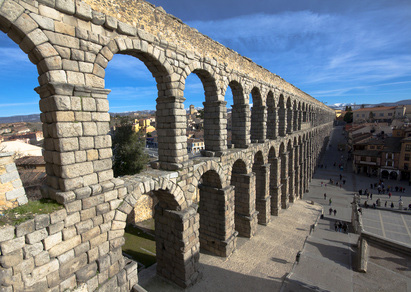
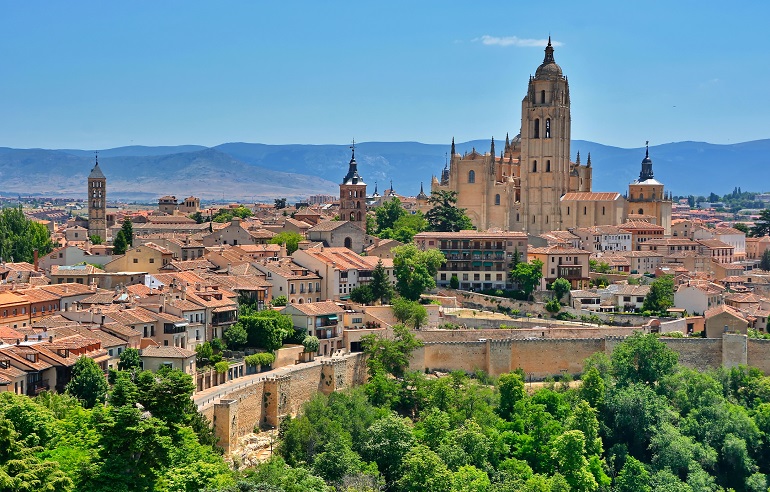
Segovia (pop. 51,500) sits majestically on a steep promontory at the confluence of the Eresma and Clamores Rivers. Located northwest of Madrid, the city is renowned for three remarkable landmarks: the Roman aqueduct with 166 arches, considered one of the finest and best-preserved examples of its kind; the imposing Alcázar, a fortified palace originally built by Alfonso VI; and the 16th-century Gothic cathedral, which was the last cathedral built in the late Gothic style in Spain. The city's rich history spans from its Iberian settlement around 700 BCE, through Roman occupation around 80 BCE, Moorish rule beginning in the 8th century, and its recapture by Christian forces in 1079. Today, Segovia's well-preserved medieval streets, Romanesque churches, and ochre-toned buildings reflect its complex historical reality and the coexistence of diverse cultural traditions throughout time.
Interesting Facts about Segovia
- Segovia's Roman aqueduct, built without mortar around the 1st century CE, features 167 arches and spans 818 metres, remaining one of the best-preserved ancient engineering marvels.
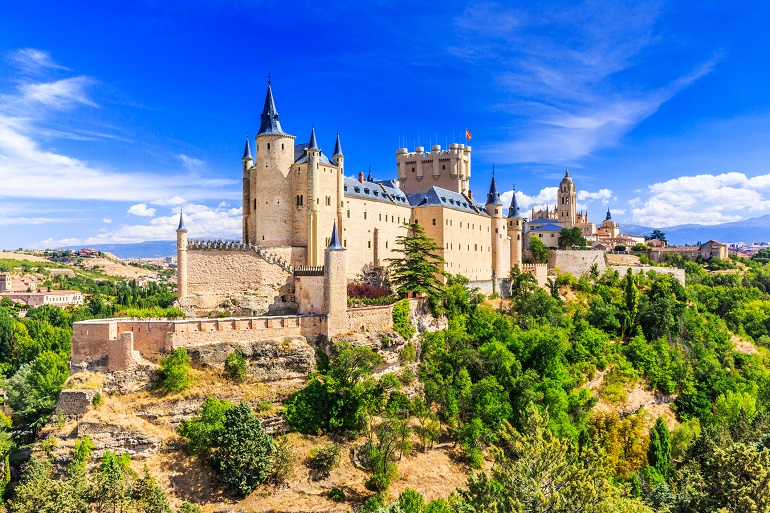
- The Alcázar of Segovia, a fairy-tale medieval castle perched on a rocky outcrop, inspired Walt Disney's Cinderella Castle.
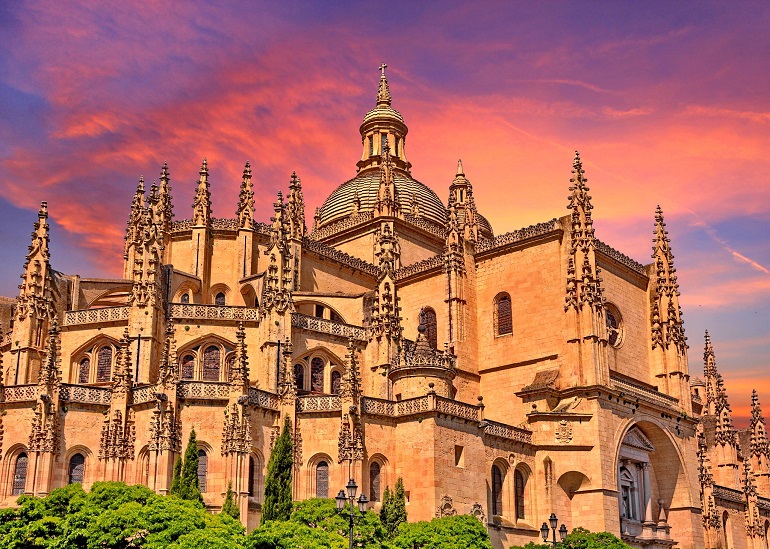
- Segovia Cathedral, constructed between 1525-1577 under Charles V, was the last major Gothic-style cathedral built in Europe.
- The city's signature dish, cochinillo asado (roast suckling pig), draws food enthusiasts from across Spain.
- Segovia's entire old town, including its iconic monuments, became a UNESCO World Heritage Site in 1985.
- The 16th-century Casa de la Moneda, recognised as Spain's oldest surviving mint, pioneered industrial-scale coin production.
- Medieval walls dating from Alfonso VI's 11th-century reign still encircle Segovia's historic centre.
- The 13th-century Iglesia de la Vera Cruz, originally a Knights Templar church, features a unique 12-sided design symbolising the Holy Sepulchre.
- Segovia's annual summer festival transforms the city with open-air concerts in the Alcázar courtyards and Romanesque churches.
- The Plaza Mayor, dominated by the cathedral's 90-metre tower, serves as the bustling heart of Segovia's social and cultural life.
History
Segovia's rich history begins with its Celtic origins around 700 BCE, before passing into Roman hands around 80 BCE. The Romans left their indelible mark on the city with the construction of the magnificent aqueduct, which still stands today as one of Spain's most remarkable works of civil engineering. Following the Islamic invasion in the 8th century, the city was largely abandoned until Alfonso VI recaptured it in 1079 (some sources say 1088) and began repopulating it with Christians from the north of the Iberian Peninsula.
The Middle Ages heralded a golden age for Segovia, establishing it as a centre of significant importance in medieval Castile. The city flourished as a hub for wool trade and textile production, which led to considerable prosperity and the construction of splendid Gothic architecture. Segovia's strategic importance was further cemented when Isabella I was proclaimed Queen of Castile in the church of San Miguel on 13th December 1474. The Alcázar, originally built in the 12th century as a small Moorish fortress, served as a royal residence and stands as a testament to the city's regal history.
By the 16th century, Segovia's population had swelled to 27,000, but like many Castilian cities, it subsequently entered a period of decline. An outbreak of plague at the end of the 16th century further contributed to this downturn, and by 1694, the population had dwindled to just 8,000 inhabitants. Despite attempts to revitalise the textile industry in the 18th century, including the establishment of the Royal Segovian Wool Manufacturing Company in 1763, these efforts met with limited success. Today, Segovia's historic centre is recognised as a UNESCO World Heritage site, preserving its remarkable blend of Roman, Moorish, Gothic and Renaissance influences that reflect its complex and diverse cultural history.
Main Attractions
Roman Aqueduct
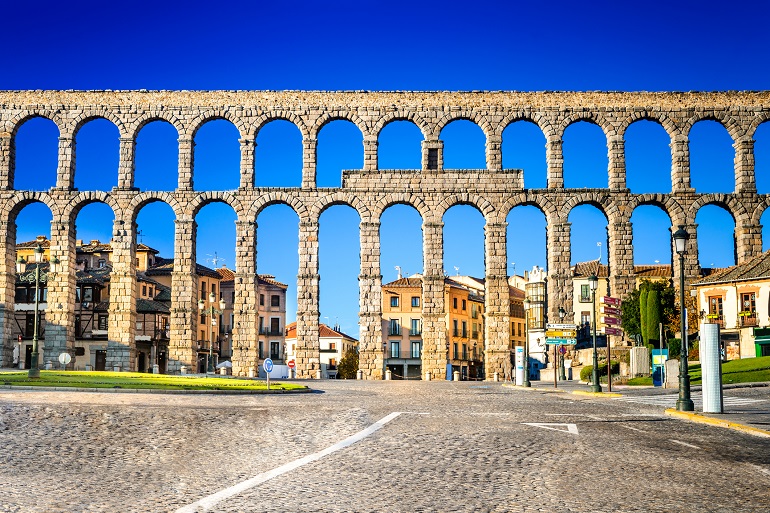
The Aqueduct of Segovia stands as one of the most remarkable examples of Roman civil engineering in the world. Constructed during the reign of Emperor Trajan in the 1st century CE, this monumental structure has defied time for nearly two millennia. The aqueduct stretches 813 metres through the city, featuring 167 arches arranged in two tiers, with the highest point reaching an impressive 28.5 metres above the Plaza del Azoguejo.
What makes this structure particularly fascinating is its construction technique—over 20,000 massive granite blocks were fitted together with such precision that no mortar was required to hold them in place. Despite earthquakes, wars, and the passage of time, the aqueduct has remained largely intact, a testament to Roman engineering prowess.
The aqueduct originally served a vital practical purpose, carrying water from the Frío River in the nearby mountains, some 17 kilometres away, to supply Segovia's residents. The water flowed along a gentle gradient through a channel atop the structure, feeding the city's fountains, public baths, and private homes. Remarkably, this ancient waterworks system continued to function until the mid-20th century, serving the city for nearly 2,000 years.
The aqueduct's presence has shaped Segovia's identity and urban development throughout history. It marks the entrance to the old town and has become the city's most recognisable symbol, earning UNESCO World Heritage status as part of Segovia's old town designation in 1985.
Alcázar of Segovia
Perched dramatically on a rocky crag at the confluence of the Eresma and Clamores rivers, the Alcázar of Segovia presents one of the most distinctive castle silhouettes in Europe. With its soaring towers, slate spires, and dramatic position, it's easy to understand why this fortress is often cited as an inspiration for Walt Disney's Cinderella Castle.
The site's strategic value was recognised as far back as Roman times, but the current structure began taking shape in the 12th century under Alfonso VIII. Throughout the medieval period, successive monarchs expanded and embellished the fortress, transforming it from a military stronghold into a lavish royal residence. The Alcázar reached its architectural zenith during the 15th century under the Trastámara dynasty.
The castle's historical significance extends beyond its architectural splendour. It was here that Queen Isabella I was proclaimed Queen of Castile in 1474, a pivotal moment that would eventually lead to the unification of Spain. The Alcázar also served as a favourite residence for the Castilian monarchs until Philip II established Madrid as the permanent capital.
Inside, visitors encounter a succession of richly decorated chambers that reflect the castle's royal heritage. The Hall of Kings features a frieze with detailed sculptures of 52 Spanish monarchs, while the Throne Room showcases an ornate Mudéjar ceiling with intricate geometric patterns. The Armoury Room houses historical weapons, and the opulent Royal Chamber offers a glimpse into royal life centuries ago.
Perhaps the most impressive feature is the Tower of Juan II, which rises 80 metres above the surrounding landscape. Those who climb its 152 steps are rewarded with panoramic views extending across the city to the distant Guadarrama mountains—a vista that has remained largely unchanged for centuries.
Plaza Mayor
The Plaza Mayor forms the beating heart of Segovia's social and civic life. Unlike the rigid rectangular plazas found in many Spanish cities, Segovia's main square has an irregular shape that evolved organically over centuries, lending it a distinctive character and intimate atmosphere.
This historic space has witnessed countless markets, festivals, public announcements, and celebrations throughout the centuries. Originally serving as the main marketplace where farmers and merchants would gather to sell their goods, the plaza was formally constructed in the 17th century, though the area had served as the town's central gathering place long before.
The square is framed by a collection of historic buildings with traditional Castilian architecture, featuring colonnaded walkways that provide shelter from both summer sun and winter snow. The town hall, dating from the 17th century, displays a classical façade with symmetrical balconies from which important proclamations were once announced to the gathered citizenry.
The Juan Bravo Theatre, named after the local hero who led the Comuneros Revolt against Charles V in the 16th century, adds cultural significance to the square. This 19th-century neoclassical building continues to host performances, maintaining the plaza's role as a centre for both entertainment and civic engagement.
Today, Plaza Mayor remains a social nucleus of Segovia. Cafés and restaurants spill onto the square, their outdoor terraces filling with locals and visitors alike. During festivals, it transforms with decorations and music while continuing centuries-old traditions in this timeless urban space.
Calle Real (Royal Street)
Calle Real isn't a single street but rather a sequence of interconnected pedestrian thoroughfares that form the main artery through Segovia's historic centre. This winding route extends from the foot of the aqueduct to the Plaza Mayor, serving as both a commercial hub and a living museum of architectural styles spanning several centuries.
The street's name—"Royal Street"—hints at its historical importance as the main processional route through the city, used by monarchs and dignitaries during ceremonial visits. Today, it remains the principal axis along which daily life in Segovia unfolds, lined with shops, cafés, and businesses housed in buildings that tell the story of the city's evolution.
As visitors stroll along Calle Real, they encounter a remarkable variety of architectural styles. Renaissance palaces belonging to noble families stand alongside more modest medieval structures, their façades often adorned with sgraffito decorations—geometric patterns etched into plaster that are characteristic of Segovian architecture. Particularly notable are the Casa de los Picos, distinguished by its diamond-shaped stone projections, and the Torreón de Lozoya, a medieval tower house that now serves as a cultural centre.
The street changes names several times along its course—becoming Calle Cervantes, Calle Juan Bravo, and Calle Infanta Isabel at different points—reflecting the organic way in which it developed over centuries. Each section has its own character, from the bustling commercial areas near the aqueduct to the more stately approach to the Plaza Mayor.
Beyond its architectural interest, Calle Real offers a glimpse into contemporary Segovian life. Local residents shop at traditional family-owned businesses that have operated for generations, while street performers often entertain crowds at wider sections of the route. During evening paseos (traditional evening walks), the street fills with locals socialising and enjoying the cooler air, continuing a centuries-old Spanish tradition.
Jewish Quarter (La Judería)
Segovia's Jewish Quarter represents an important chapter in the city's multicultural history. Located in the southeastern part of the old town, this neighbourhood was home to a thriving Jewish community from the 12th century until the expulsion of Jews from Spain in 1492.
The quarter is characterised by narrow, winding streets that follow a medieval layout, distinctly different from the more orderly Christian sections of the city. This labyrinthine design served both practical and defensive purposes, providing natural cooling in summer and protection during times of conflict. Many streets retain their original cobblestones, worn smooth by centuries of foot traffic.
At the heart of the Jewish Quarter once stood the Main Synagogue, which was converted into the Church of Corpus Christi following the expulsion. Though largely rebuilt after a fire in 1899, some original elements remain, including Mudéjar arches that reflect the cultural fusion characteristic of medieval Spain.
The quarter contains numerous examples of traditional Segovian architecture, including houses with interior courtyards and distinctive wooden balconies. Many buildings feature the region's characteristic sgraffito decorations on their façades, though with motifs that sometimes subtly differ from those in other parts of the city.
Archaeological evidence suggests that the Jewish community in Segovia was particularly known for its craftspeople, especially silversmiths and textile workers. The quarter contained workshops, small factories, and commercial establishments that contributed significantly to the city's economic life.
Today, small plaques and informational panels throughout the neighbourhood help visitors understand the historical significance of specific sites. The quarter's atmosphere remains distinct from other parts of Segovia, offering a tangible connection to a community that played a crucial role in the city's development before their forced departure altered the cultural fabric of the region.
Mirador del Alcázar y los Dos Valles
The Mirador del Alcázar y los Dos Valles (Viewpoint of the Alcázar and the Two Valleys) offers what many consider to be the definitive vista of Segovia. Located across the valley from the Alcázar, this viewpoint provides a spectacular panorama that captures the dramatic setting of the fortress and the natural landscape that has shaped the city's development.
From this vantage point, the Alcázar appears to jut forward like the prow of a stone ship, perched on its rocky promontory between the converging valleys of the Eresma and Clamores rivers. The fortress's towers and turrets rise dramatically against the sky, their slate spires catching the light differently throughout the day. This perspective reveals why the Alcázar's position was so strategically valuable, commanding views in all directions and protected by natural defences on three sides.
The mirador is particularly renowned for sunset views when the golden light bathes the limestone walls of the Alcázar, creating a warm glow that contrasts with the deepening shadows in the valleys below. In winter months, the scene is often enhanced by snow-capped peaks of the Sierra de Guadarrama mountains visible in the distance, adding another dimension to an already impressive landscape.
The viewpoint is reached via a path that winds down from the old city and across the Eresma valley, a journey that offers changing perspectives of the cityscape. The route passes through an area once dotted with fulling mills and tanneries that utilised the river's water, remnants of which can still be seen along the banks.
Beyond its aesthetic appeal, this viewpoint helps visitors understand Segovia's geographical context—how the city developed on its elevated plateau, protected by rivers and steep slopes, yet connected to fertile valleys that provided agricultural resources. The panorama encompasses not just the monumental architecture but also the natural features that have influenced human settlement in this area for millennia.
Casa de los Picos
The Casa de los Picos (House of the Peaks) stands as one of the most distinctive civil buildings in Segovia, immediately recognisable by its unusual façade covered with 617 granite blocks carved into pyramid-shaped points or "peaks." This striking architectural feature gives the building its name and makes it an unmistakable landmark on Calle Juan Bravo, part of the Calle Real thoroughfare.
Built in the 15th century, the house belonged to the noble Arias Dávila family, who commissioned its unique exterior. The pointed stone decoration served both aesthetic and symbolic purposes—creating a visually impressive statement of wealth and power while also giving the building a fortress-like appearance during a time when noble families often engaged in urban power struggles.
The building represents the transition between Gothic and Renaissance styles that characterised Spanish architecture during this period. While the defensive appearance and overall structure reflect medieval traditions, the systematic decoration and emphasis on symmetry point toward Renaissance influences beginning to reach Spain from Italy.
Beyond its distinctive exterior, the Casa de los Picos features an interior courtyard typical of Castilian noble houses, with a colonnaded gallery and a central well. The upper floors contain grand rooms with coffered ceilings that once hosted the social and political gatherings of one of Segovia's most influential families.
Today, the building houses the Segovia Art School, continuing its connection to creativity and craftsmanship. The ground floor occasionally hosts temporary exhibitions open to the public, allowing visitors to appreciate both the exterior decoration and elements of the interior architecture that have been preserved through centuries of use.
The Casa de los Picos exemplifies how Segovia's wealthy families expressed their status through architectural innovation, creating buildings that were both functional residences and public displays of prominence. Its enduring visual impact demonstrates how effectively they achieved this goal, as the building remains one of the most photographed and remembered structures in the city.
Mirador de la Pradera de San Marcos
The Mirador de la Pradera de San Marcos offers one of the most comprehensive panoramic views of Segovia's northern profile. Located on the opposite bank of the Eresma River from the old city, this spacious viewpoint provides an uninterrupted vista that encompasses the Alcázar, the cathedral, and the city walls, all dramatically positioned atop their rocky plateau.
The viewpoint is situated in a large meadow (pradera) that has served as a recreational area for Segovians since medieval times. Historically, this area hosted fairs, markets, and festivals that were too large to be contained within the city walls. Today, it remains a popular spot for local families to gather, particularly on weekends and holidays.
What makes this mirador particularly special is the way it reveals Segovia's relationship with its landscape. From this perspective, visitors can clearly see how the city occupies a naturally defensive position, with steep slopes falling away to the river valley. The view demonstrates how the medieval builders incorporated these natural features into their defensive systems, with the city walls following the contours of the plateau's edge.
The panorama is especially striking in late afternoon and early evening when the western sun illuminates the honey-coloured stone of the Alcázar and cathedral. This golden light accentuates the texture of the ancient walls and creates a dramatic contrast with the deep green of the surrounding countryside. In spring, the meadow itself becomes part of the view's appeal, as it fills with wildflowers that frame the historic cityscape.
The mirador is accessible via a pleasant walking path that follows the Eresma River, passing several historic structures including the former Royal Mint (Casa de la Moneda) and the Monastery of El Parral. This approach allows visitors to experience the gradual revelation of the cityscape, building anticipation before the full panorama comes into view.
For photographers, the Pradera de San Marcos offers perhaps the best opportunity to capture Segovia's most iconic monuments in a single frame, with natural foreground elements that add depth and scale to images of the historic skyline.
Top Museums
Historical and Architectural Marvels
Alcázar of Segovia
Rising dramatically from a rocky crag at the meeting point of two rivers, the Alcázar of Segovia is more than just a castle; it's a symbol of the city's historical significance. This iconic fortress, said to have inspired Walt Disney's Cinderella castle, is home to two distinctive museums that offer a comprehensive exploration of its history and contents:
Museum of Royal Artillery College
This museum provides insights into Spain's military evolution, highlighting the role of the Alcázar as a strategic stronghold and a centre for military education. Through displays of weaponry, uniforms, and historical documents, visitors gain a deep appreciation for the Alcázar's importance in Spanish military history.
Museum of Segovia
This museum showcases the broader historical context of Segovia and its surrounding region. Exhibits delve into the city's Roman origins, its medieval prosperity, and its role in Spanish history, offering a rich understanding of Segovia's cultural heritage.
Beyond these museums, the Alcázar itself is a museum of architectural grandeur. The interior is divided into themed rooms, each telling a story of the castle's past. The Throne Room exudes regal splendour, while Queen Isabella's dressing room offers a glimpse into royal life with its intricate Mudejar decorations. The Hall of Kings, adorned with an impressive stone frieze depicting 52 Spanish monarchs, is a testament to the power and lineage of the Spanish crown.
Cathedral of Segovia
Dominating the Segovian skyline, the Cathedral of Segovia, also known as "The Lady of Cathedrals", is the last Gothic cathedral to be built in Spain. This architectural marvel, a UNESCO World Heritage site, is home to a treasure trove of religious art and historical artefacts. The cathedral's collection includes:
- 'Crying over the Dead Christ' by Juan de Juni: This sculpture, a powerful depiction of grief and sorrow, is a masterpiece of Spanish Renaissance art.
- A triptych by Flemish painter Ambrosius Benson: This artwork exemplifies the rich artistic exchange between Spain and Flanders during the Renaissance period.
- The altarpiece by José de Churriguera: A stunning example of Baroque craftsmanship, the altarpiece is a visual spectacle of gilded wood and intricate detailing.
The cathedral's Chapter House, with its stunning coffered ceiling carved in 1559, and a collection of Flemish tapestries provide further evidence of the cathedral's artistic richness. The cathedral museum displays one of the first printed books in Spain.
Cultural and Educational Experiences
Didactic Center of the Jewish Quarter
Located in the former residence of Abraham Senior, a prominent rabbi and accountant of Castile, this educational centre provides an insightful look into Jewish heritage. Opened in 2004, the centre strives to disseminate knowledge about Jewish culture, including history, religion, language, philosophy, holidays, and migrations. Using exhibits and virtual tools, the centre provides an educational journey through Jewish history and culture.
Antonio Machado House-Museum
This modest but evocative museum is located in the boarding house where the renowned poet Antonio Machado lived from 1919 to 1932. The museum serves as a time capsule, preserving Machado's living space and personal belongings. Visitors can step into his original iron kitchen, common dining room, and see the furniture and oil stove gifted by his brother Manuel. The museum offers a glimpse into the daily life and creative environment of one of Spain's most beloved poets.
The Coining House
Once a royal mint, The Coining House is now a museum dedicated to coins, industrial heritage, and Segovia's famous aqueduct. Ordered to be built by Philip II in 1580, it became the first mechanised factory in Spain. The museum traces the history of coinage, highlighting the innovative technologies used in the mint and its economic impact on Segovia.
Gastronomic Museum of Segovia
This unique museum explores the wonderful world of Spanish cuisine, with a special focus on Segovian delicacies. It showcases local specialities, including cheeses, wines, cured meats, and the famous ponche segoviano. The museum also dedicates space to the local whisky, DYC.
Museum of Segovia
Housed in the Casa del Sol, this museum boasts a vast collection of around 1,500 pieces, primarily from the province of Segovia. The collection includes a wide range of archaeological, ethnological, and fine art pieces, offering a comprehensive overview of the region's rich history and cultural heritage.
Local Cuisine
Segovia boasts some of the finest cuisine in Spain. The city is renowned for its hearty Castilian dishes, most notably cochinillo asado (roast suckling pig), a delicacy so tender it's traditionally cut with a plate rather than a knife. This iconic dish features crispy skin and melt-in-your-mouth meat, served without sauces to enhance its natural flavours. Another local favourite is cordero asado (roast lamb), cooked slowly in wood-fired clay ovens until the meat slides effortlessly off the bone. No visit would be complete without sampling judiones de la Granja, enormous white beans from the nearby town of La Granja, typically prepared in a stew with chorizo and bacon. Seafood enthusiasts might enjoy trucha a la Segoviana, local trout often cooked with Serrano ham. For a warming starter, try sopa Castellana, a traditional soup made with broth, garlic, bread, egg and ham. Complete your culinary journey with ponche Segoviano, the city's signature dessert—a luscious sponge cake filled with custard, wrapped in marzipan and elegantly decorated with a distinctive diamond pattern.
Shopping
The historic centre houses most commercial premises, particularly along Calle Real, Gran Vía de Colón, Reyes Católicos and Calle Zacatín, where you'll find family-owned boutiques selling fashion, jewellery, gifts and gourmet foods. For local artisanal products, Segovia is known for its glass, crystal, ironwork, lace, basketry and embroidery. The province is Castile's second most important area for traditional craftsmanship after Toledo. Visitors can explore vibrant open-air markets held on different days: Mondays at Plaza de Tirso de Molina, Tuesdays at Calle de Berlín, Thursdays at Plaza Mayor, and Saturdays at Plaza de Toros, all operating from 9:00 to 14:00. There's also an eco-friendly organic market on the first Saturday of each month at Plaza del Doctor Laguna. For a modern shopping experience, the Luz de Castilla shopping centre on the outskirts of town offers supermarkets, fashion retailers, and entertainment options.
Nature in and around Segovia
Segovia boasts a rich array of natural attractions both within and around the city. The Green Belt, formed by the Eresma and Clamores rivers, encircles the city and offers a network of accessible trails through parks, gardens, and rough ground. Just south of Segovia, the Sierra de Guadarrama National Park provides opportunities for hiking, wildlife spotting, and winter sports. An hour's drive north leads to the Hoces del Rio Duraton Natural Park, featuring a dramatic river gorge and large colonies of griffon vultures. Within the city, the Mirador de la Pradera de San Marcos offers stunning views of the Alcázar and surrounding countryside. For those seeking more diverse landscapes, the region of Castile and Leon, where Segovia is located, boasts ten Biosphere Reserves, including the Arribes del Duero Natural Park and the Sierra de Gredos.
Getting There & Around
Getting to Segovia from Madrid is straightforward with several convenient options available. The high-speed train is the fastest method, taking just 27-30 minutes from Madrid Chamartín station to Segovia Guiomar station, with tickets costing around €9-22 depending on when you book. Once at Segovia Guiomar, take Bus #11 (Acueducto) for €2.25 to reach the historic centre. Alternatively, regular buses depart from Madrid's Moncloa station, taking approximately 1 hour 20 minutes to arrive near the famous Aqueduct, with fares around €6-11. These buses run frequently throughout the day. For those preferring more flexibility, driving takes about 1 hour 15 minutes, covering roughly 92 km, though you'll need to navigate partial toll roads. The most economical option is rideshare services, costing €3-5 and taking about 1 hour 34 minutes. Whichever method you choose, it's best to arrive early to fully appreciate Segovia's magnificent Aqueduct, Alcázar castle and Cathedral.
Best Time to Visit
The best time to visit Segovia, Spain is during the spring (April to May) and autumn (September to October) months. During these seasons, you'll enjoy pleasant temperatures, typically ranging from 15°C to 25°C, which are ideal for exploring the city's historic sites and charming streets. These shoulder seasons also offer the advantage of fewer tourists compared to the busy summer months, allowing for a more relaxed experience. Spring brings blooming flowers and lush greenery, whilst autumn paints the city in warm hues. Whilst summer can be quite hot with temperatures often exceeding 30°C, and winter can be quite cold with occasional snowfall, the milder weather of spring and autumn provides the perfect balance for sightseeing and outdoor activities. Moreover, these periods often feature local festivals and events, adding a vibrant cultural dimension to your visit.