Introduction
Granada (pop. 235,000) sits at the foot of the Sierra Nevada mountains. The city uniquely offers three distinct landscapes: snowy mountain peaks, Mediterranean beaches along the Costa Tropical, and an urban centre rich in historical architecture. As the last Moorish stronghold in Spain, Granada's most significant attraction is the Alhambra, a hilltop palace complex from the 13th and 14th centuries that stands as Spain's most visited monument. The city's architectural heritage reflects its diverse history, from Islamic rule to Christian conquest, particularly visible in its UNESCO World Heritage Sites and historic neighbourhoods such as the Albaicín and Sacromonte. With 250 days of annual sunshine, Granada offers visitors a combination of cultural attractions, including flamenco shows, museums, and a renowned culinary scene famous for its tapas.
Interesting Facts about Granada
- Granada’s breathtaking Alhambra is a UNESCO-listed Moorish palace complex famed for its intricate stucco, serene courtyards, and poetic water features.
- The city’s name and coat of arms feature the pomegranate, a fruit also called “granada” in Spanish.
- Free tapas traditionally accompany drinks in many Granada bars, making it a beloved foodie custom.
- Set at about 738 metres above sea level, Granada sits between the snowy Sierra Nevada and the warm Mediterranean coast.
- The Catholic Monarchs, Ferdinand and Isabella, are entombed in Granada’s Royal Chapel, cementing the city’s role in Spain’s unification story.
- Granada was the last Muslim-ruled stronghold in Iberia, falling to the Catholic Monarchs in 1492.
- In spring, it’s possible to ski in Sierra Nevada and swim on the Costa Tropical on the same day.
- The Albaicín quarter preserves winding lanes, whitewashed houses, and panoramic viewpoints over the Alhambra.
- Sacromonte’s hillside caves are famed for intimate flamenco shows, particularly the expressive Zambra style.
- The University of Granada, founded in 1526, keeps the city energetic with a large student population.
- Granada Cathedral was built over the former Great Mosque site, blending Gothic foundations with Renaissance and Baroque elements.
- The Generalife gardens, once the Nasrid sultans’ summer retreat, showcase exquisite Islamic landscaping and tranquil fountains.
- Granada enjoys abundant sunshine yet experiences crisp winters and hot summers due to its inland altitude.
- The Alcazaba, the Alhambra’s oldest fortress area, offers commanding views across the city and the Vega plain.
- Poet Federico García Lorca, a towering figure of Spanish literature, is closely associated with Granada’s cultural identity.
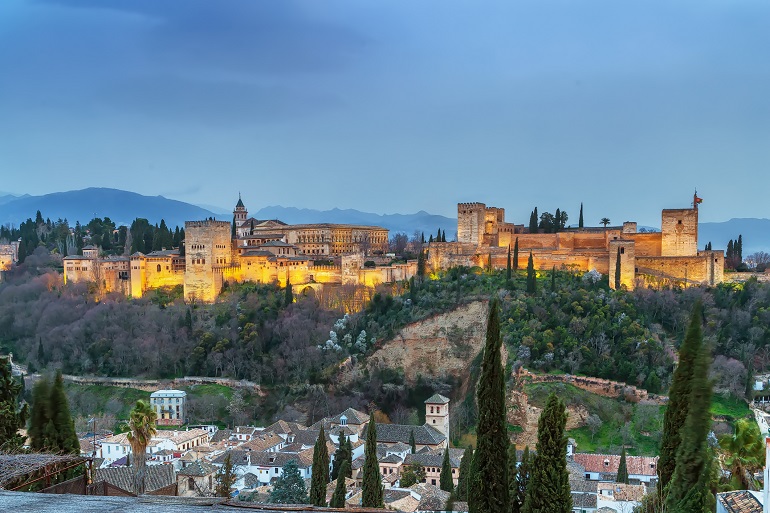
Panoramic view of the Alhambra
History
The first recorded settlement was established by the Iberians in the 7th century BCE, later becoming the Roman city of Iliberis in 180 BCE. The Romans developed the area significantly before the Visigoths took control following the fall of the Roman Empire. An important early Jewish community called Garnata existed here prior to the Muslim conquest, and when the Arabs arrived in 711 CE, they named it Garnata al-yahud, meaning "Granada of the Jews".
The Islamic period, lasting nearly eight centuries from 711 to 1492, represents Granada's most magnificent era. Initially part of the Córdoba Caliphate, Granada became relatively uninhabited during this early period. The city's fortunes changed dramatically after the Caliphate's dissolution, when the Zirid dynasty established their court in the Albayzín neighbourhood between 1013 and 1090, building part of the old city walls and the Al Qasbah Qadima. Subsequently, the Almoravids controlled the city from 1090, constructing the Bermejas Towers and the Puerta de las Pesas, before the Almohads seized power in 1154 and walled the area now known as the Realejo neighbourhood. The most glorious chapter began in 1238 when Muhammad Ibn al-Ahmar conquered the city and founded the Nasrid Kingdom of Granada, which extended from Tarifa to Murcia. Under the Nasrid dynasty, particularly during the reigns of Yusuf I and Muhammad V in the 14th century, the magnificent Alhambra and Generalife palaces were constructed, creating what became known as the Alhambra's Golden Age.
The Christian conquest of Granada on 2nd January 1492 by the Catholic Monarchs Ferdinand and Isabella marked the end of nearly eight centuries of Islamic rule and completed the Reconquista. The city's population of 50,000 at surrender, which included only a handful of Christians, was transformed as over 30,000 Christian immigrants arrived by 1561, whilst approximately 15,000 Moriscos remained. Charles V founded the University of Granada in 1531 on the site of a former Islamic madrasa, and numerous mosques were converted into churches following the mass conversions of 1500. The final expulsion of the Morisco population occurred between 1609 and 1614, fundamentally altering the city's character. Granada's Christian period saw the construction of many religious buildings, with the Catholic Monarchs choosing it as their burial place and Charles V beginning construction of his Royal Palace within the Alhambra itself, symbolically intermingling Christian and Muslim architectural heritage. Though Charles V initially intended Granada to become Spain's capital, his successor Philip II ultimately chose Madrid due to its more central location.
Main Attractions
The Alhambra
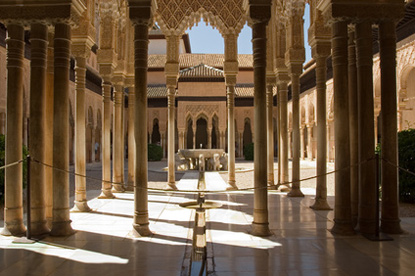
The Alhambra, Granada's crown jewel and Spain's most visited historical attraction, is a magnificent UNESCO World Heritage site perched atop Sabika hill. Originally constructed in 1232 by the Nasrid Dynasty, this sprawling 26-acre complex served as both a fortress and palace, encircled by 1,730 metres of walls and thirty towers. The complex encompasses several architectural marvels, including the stunning Nasrid Palaces, the ancient Alcazaba fortress, and the Renaissance-style Charles V Palace. The site's most celebrated features include the Court of the Lions with its iconic fountains, the summer palace of Generalife with its paradisiacal gardens, and the historic Medina. The complex showcases exemplary Islamic architecture adorned with intricate geometric patterns, serene courtyards, and innovative water features. The grounds are beautifully landscaped with leafy tree-lined walkways, flowing streams, and ornamental gardens that provide a cool respite from Granada's warmth. Whilst the complex can be accessed by various routes from the city centre, visitors must book tickets well in advance, particularly for the coveted Nasrid Palaces tour.
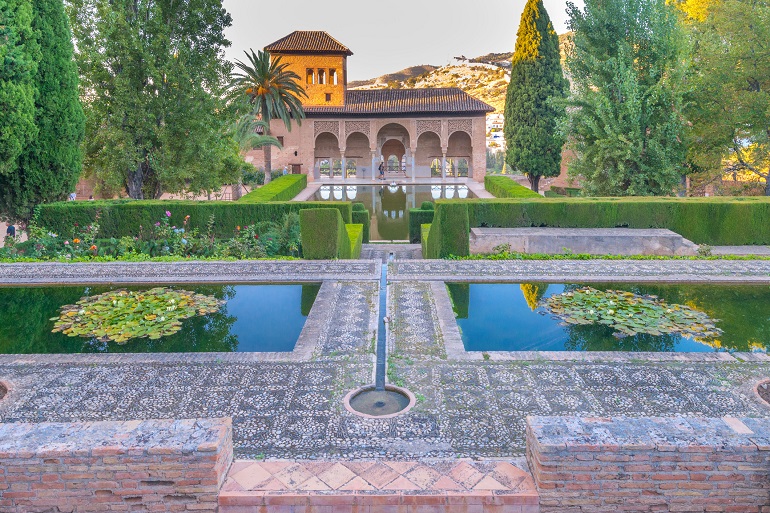
Gardens of the Partal Palace in the Alhambra
Generalife Gardens
The Generalife, a stunning summer palace and country estate located adjacent to the Alhambra in Granada, Spain, stands as a remarkable testament to 13th-century Islamic garden design. Originally built as a private retreat for the Nasrid rulers to escape the official duties of the Alhambra, this UNESCO World Heritage site features meticulously landscaped gardens spread across three terraces. The complex showcases innovative water features, including the famous Escalera del Agua (Water Staircase) with its unique water-channel handrails. Visitors can explore the Lower Gardens, the Palacio del Generalife, and the High Gardens, each offering distinct architectural and horticultural delights. The gardens blend Islamic architectural elements with lush vegetation, featuring cypress-lined walkways, ornate fountains, tranquil courtyards, and the renowned Patio de la Acequia (Court of the Water Channel). The name 'Generalife', derived from the Arabic 'Yannat al-Arif', translates to 'Garden of the Architect', and truly embodies the harmonious relationship between architectural design and natural beauty that characterises this magnificent medieval garden complex.
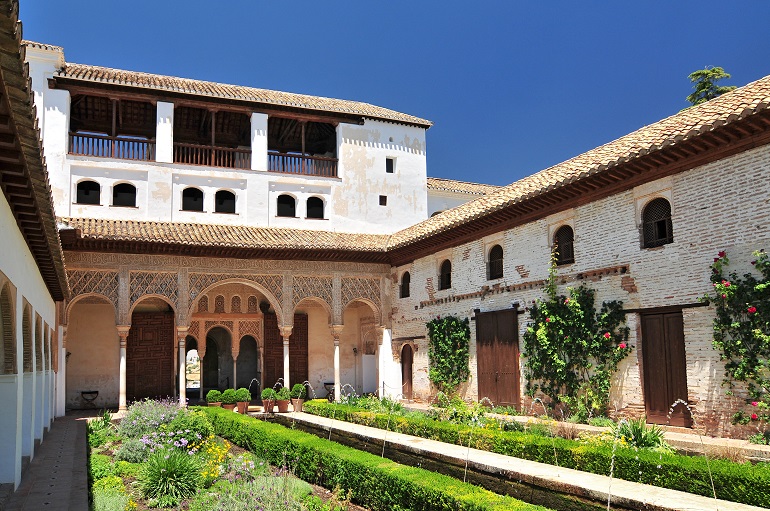
Generalife Gardens
Granada Cathedral
The Granada Cathedral, officially known as the Metropolitan Cathedral-Basilica of the Incarnation, is a magnificent Renaissance masterpiece situated in the heart of Granada. This grand 16th-century church, measuring 115 metres in length and 67 metres in width, was built atop the city's former main mosque following the Christian reconquest in 1492. Construction began in 1523 under architect Enrique Egas, but it was Diego de Siloé who transformed the original Gothic design into a stunning Renaissance cathedral, innovatively combining a Renaissance dome with a Gothic floor plan. The cathedral features five naves, fifteen chapels, and a spectacular Baroque façade designed by Alonso Cano in the mid-17th century. Though the original plans included two 81-metre towers, only one was completed, reaching 50 metres in height. The interior is particularly noteworthy for its impressive main chapel, beautiful stained glass windows, and remarkable collection of religious artworks, including paintings and sculptures by local artists. The cathedral stands as a testament to Spain's transformation from its Moorish past to its Christian present, making it an essential stop for visitors to Granada.
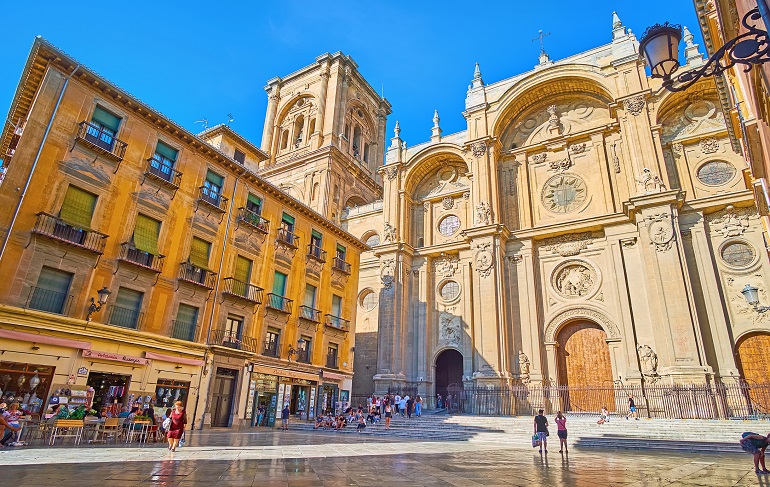
Granada Cathedral
Royal Chapel
Adjacent to the cathedral, the Royal Chapel houses the tombs of the Catholic Monarchs, Ferdinand and Isabella. The chapel is a masterpiece of Gothic architecture and a must-visit for history enthusiasts.
Palace of Charles V
The Palace of Charles V stands as a remarkable Renaissance masterpiece within Granada's Alhambra complex. Commissioned by Emperor Charles V in 1527, this unique architectural marvel features a distinctive square exterior measuring 63 metres per side, with a striking circular courtyard at its centre. The palace, designed by Pedro Machuca who trained under Michelangelo in Rome, represents Spain's first major Italian Classical building. Despite its grand design, the structure remained unfinished and roofless for centuries until its completion in 1957. Today, the palace houses two significant cultural institutions: the Alhambra Museum on the ground floor and the Fine Arts Museum of Granada on the upper floor. The building's most notable features include its 17-metre-high façade, a magnificent courtyard surrounded by 32 Doric columns, and its harmonious blend of Renaissance elements, making it a must-visit destination for those exploring the Alhambra complex..
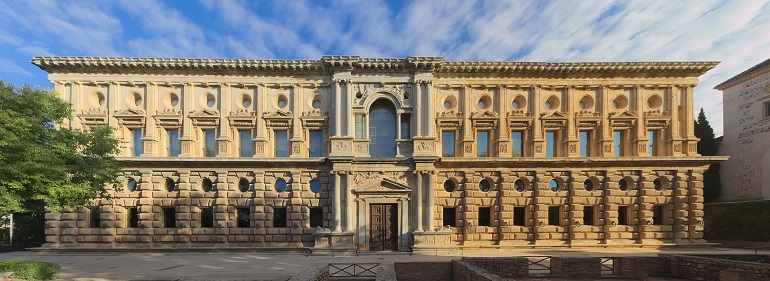
Palace of Charles V
Albaicín District
This historic district is the oldest Arab quarter in Granada, offering a maze of narrow cobblestone streets and picturesque squares. It is a perfect place to explore and enjoy the city's Moorish heritage. The Mirador de San Nicolas, located within the Albaicín, provides breathtaking views of the Alhambra.
Carrera del Darro
This scenic street runs along the Darro River and offers stunning views of the Alhambra. It is lined with shops, cafes, and historic buildings, making it a great place to stroll and soak up the city's atmosphere.
Corral del Carbón
Dating back to the 14th century, Corral del Carbón is the last remaining Nazarid granary in Spain. It provides a glimpse into Granada's medieval past and is a unique architectural landmark.
Alcaicería
Once a bustling Arab market, Alcaicería is now a charming area filled with narrow streets and shops selling traditional crafts and souvenirs. It is an excellent place to experience the city's vibrant culture.
Sacromonte Caves
Located in the Sacromonte district, these caves are famous for their flamenco performances and offer a glimpse into the city's gypsy culture. They are a must-visit for anyone interested in music and dance.
Dar-al-Horra Palace
Built in the 15th century, this palace is a significant historical site and offers insights into the life of the Nasrid dynasty. It is a lesser-known gem that provides a deeper understanding of Granada's past.
Royal Quarter of Santo Domingo
This historic quarter was once a retreat for the Nasrid monarchs during Ramadan. It is one of the few preserved areas within the city walls and offers a glimpse into Granada's Islamic past.
Cordova Palace
This 16th-century palace combines Renaissance and Mudejar styles, creating a unique architectural blend. It is surrounded by beautiful gardens and orchards, making it a serene escape from the city.
Church of Santa Ana
Built on the site of a former mosque, this church is a blend of Islamic and Christian architectural styles. It is situated near the Darro River and offers a peaceful atmosphere.
Banuelo (Arab Baths)
Dating back to the 11th century, these Arab baths are among the oldest and best-preserved in Spain. They provide a fascinating insight into the city's Islamic heritage and are a must-visit for history enthusiasts.
Mirador de San Nicolas
Located in the Albaicín district, this viewpoint offers breathtaking views of the Alhambra, especially during sunset. It is a popular spot for both locals and tourists.
Paseo de los Tristes
This picturesque street runs along the Darro River and offers stunning views of the Alhambra. It is a great place to enjoy a leisurely walk and soak up the city's atmosphere.
Sacromonte Abbey
Perched atop Mount Valparaíso in Granada, the Sacromonte Abbey is a magnificent 17th-century religious complex that stands as one of the city's most remarkable yet lesser-known monuments. The abbey was built following the discovery of the remains of Saint Cecilio, Granada's patron saint and first Roman-era bishop, in ancient Roman ovens in 1595. This architectural ensemble comprises the Holy Caves (catacombs), the abbey proper, a collegiate church, and a seminary. The complex houses a splendid museum featuring an impressive collection of artworks, including the only Goya painting in Granada, ancient manuscripts, and religious artefacts. Visitors can explore the underground caves where Saint Cecilio's remains and the mysterious Lead Books were discovered, admire the baroque church with its Latin cross layout, and enjoy breathtaking panoramic views of Granada. The abbey is open year-round, with different visiting hours for summer and winter seasons, making it an essential stop for those seeking to understand Granada's rich religious and cultural heritage.
Top Museums
Museum of Fine Arts
The Museum of Fine Arts in Granada, housed on the first floor of the magnificent Palace of Charles V within the Alhambra complex since 1958, stands as one of Spain's oldest public museums, having first opened its doors in 1839. The museum showcases an impressive collection of over 2,000 pieces spanning from the 15th to the 20th century, with a particular emphasis on religious artwork acquired during the Mendizábal disentailment of 1836. Spread across nine exhibition halls, visitors can explore a diverse array of oil paintings, sculptures, altarpieces and triptychs, with notable works by renowned artists such as Alonso Cano, Pedro Machuca and José de Mora. The museum offers free admission to EU citizens and charges a nominal fee of 1.50€ for others, making it an accessible cultural treasure that provides a comprehensive overview of Granada's rich artistic heritage through the centuries.
Archaeological Museum
The Archaeological Museum of Granada, housed in the stunning 16th-century Casa de Castril on Carrera del Darro in the historic Albaicín quarter, stands as one of Spain's oldest archaeological institutions. This Renaissance palace, featuring a beautiful Moorish-style courtyard and an exquisite façade from 1593, showcases a remarkable collection across seven exhibition halls. Visitors can explore artefacts spanning from the Palaeolithic era through to the Moorish period, including notable pieces such as esparto sandals, a rare gold diadem, Iberian animal sculptures, Roman statuary, and an impressive collection of Islamic art. The museum's collections brilliantly illustrate the rich cultural heritage of Granada, from prehistoric tools to sophisticated Arab astrolabes. Whilst the collection may be somewhat limited in size, the museum offers free admission to EU citizens and remains an enlightening destination for history enthusiasts, particularly those interested in the archaeological evolution of southern Spain.
Sacromonte Caves Museum
The Sacromonte Caves Museum in Granada offers visitors a fascinating glimpse into the unique cave-dwelling culture of the city's historic Roma community. Set against the hillside with stunning views of the Alhambra, this ethnographic museum features eleven whitewashed caves that have been carefully preserved and themed to showcase different aspects of traditional life. Each cave serves a distinct purpose, from displaying living quarters and kitchens to demonstrating traditional crafts such as pottery, weaving, and metalwork. The museum, which maintains a pleasant temperature of around 20°C year-round due to its cave structure, provides audio guides in multiple languages and informative displays in both Spanish and English. For a modest entrance fee of 5 euros, visitors can explore this remarkable testament to Granada's diverse cultural heritage, complete with exhibits on flamenco origins and the history of the Roma people, whilst enjoying some of the most spectacular views of the Darro Valley.
Literary Museums
Federico García Lorca House Museum
Located in the poet's summer home from 1926-1936, this museum displays period furnishings and personal manuscripts.
Manuel de Falla House Museum
Preserves the residence where the famous composer lived and worked for nearly two decades.
Religious and Royal Heritage
Casa de los Tiros
A 16th-century house featuring historical paintings, sculptures, and a distinctive facade decorated with Trojan heroes.
Saint John of God Museum
Located in Casa de los Pisa, this museum presents religious art and personal effects of the saint through three floors of exhibits.
Local Cuisine
Granada's culinary heritage is a delightful fusion of Andalusian and Moorish influences, creating a unique gastronomic landscape that reflects the city's rich history. The local cuisine makes excellent use of produce from the surrounding meadows, with signature dishes including the hearty plato alpujarreño (a mountain dish featuring eggs, potatoes, blood sausage and cured ham), the refreshing remojón granaíno (a vibrant salad combining oranges with cod and black olives), and the traditional habas con jamón (broad beans sautéed with local ham). During winter months, locals warm up with the traditional olla de San Antón, a robust stew made with beans and various cuts of pork, whilst summer brings cooling dishes like gazpacho and ajoblanco. The city is particularly renowned for its Trevélez ham, which is cured in the highest village of the Iberian Peninsula, as well as its local asparagus, olive oils, and the celebrated Alhambra beer that has been brewed in Granada since 1925.
Shopping
Granada offers a delightful mix of traditional and modern shopping experiences, from its bustling Arabic-style bazaars to sleek commercial centres. The heart of shopping lies along Calle Reyes Católicos, the city's main commercial thoroughfare, where you'll find familiar high-street brands alongside upscale Spanish boutiques. For a more authentic experience, venture into the atmospheric Alcaicería, a reconstructed Moorish silk market where narrow passageways are filled with shops selling traditional crafts, ceramics, and spices. The historic Albaicín quarter houses charming independent boutiques and artisan workshops, whilst the modern Nevada Shopping Centre, Andalusia's largest mall, provides a contemporary retail experience with over 240 shops. Most small shops observe traditional Spanish hours, opening from 10:00 to 13:30 and 17:00 to 20:00 on weekdays, with limited hours on Saturday and general closure on Sundays, though larger stores and shopping centres maintain longer hours.
Nature in and around Granada
Granada's natural landscape is a stunning tapestry of diverse environments, from the towering peaks of Sierra Nevada National Park, home to mainland Spain's highest mountains, to the dramatic coastal cliffs of Cerro Gordo Natural Park. The region boasts several remarkable natural areas, including the Sierra de Huétor, a beautiful park near Granada city featuring limestone cliffs and vast pine forests. Just eight kilometres from Granada, the Los Cahorros trail in Monachil offers adventurous hiking through narrow canyons and limestone formations, whilst the UNESCO Global Geoparque Granada showcases extraordinary geological features formed by river erosion over half a million years. The area's varied terrain supports rich biodiversity, from mountain goats and wild boar in the higher elevations to golden eagles soaring overhead, whilst the coastal regions feature valuable Posidonia grass prairies beneath the Mediterranean waters.
Getting Around
Granada boasts an efficient public transport network that makes navigating the city a breeze. The primary mode of transport is the distinctive red urban bus system, operated by Transportes Rober, which runs from 6:00 to 23:00 daily with frequencies between 4 to 10 minutes depending on the route. A single bus ticket costs €1.40 and allows transfers within 60 minutes. For better value, travellers can purchase a Credibús card for €2 deposit, which offers discounted fares when topped up with €5, €10, or €20. The city also features special minibuses that service the narrow streets of historic neighbourhoods like Albaicín and Sacromonte, whilst a modern metro line runs north to south with extended hours until 2:00 on weekends. The transport network is particularly useful for reaching popular attractions such as the Alhambra, with dedicated bus lines C30 and C32 serving this iconic monument.
Best Time to Visit
The ideal time to visit Granada is during the spring months of May to June or autumn months of September to October when the weather is most pleasant. These periods offer mild temperatures ranging between 15-25°C, making it perfect for exploring the city's attractions, particularly the stunning Alhambra Palace and its gardens. Spring brings blooming flowers and vibrant colours to the Generalife gardens, whilst autumn treats visitors to beautiful foliage against the backdrop of the Sierra Nevada mountains. It's best to avoid July and August, as temperatures can soar above 35°C, making sightseeing rather uncomfortable. Winter months from November to February can be quite chilly with temperatures occasionally dropping below freezing at night, though the city is less crowded during this period. Do note that if you're planning a visit during Semana Santa (Holy Week) in late March or early April, you'll need to book well in advance as the city becomes extremely busy with religious processions and festivities.