Introduction
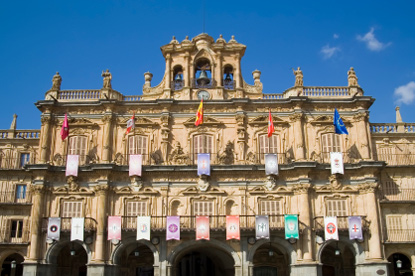
Salamanca (pop. 145,000), a UNESCO World Heritage Site since 1988, is a historic city located approximately two hours west from Madrid. Home to Spain's oldest university, founded between 1425 and 1433, the city is renowned for its beautiful sandstone architecture and authentic Spanish charm. The compact historic centre features Spain's grandest plaza, Plaza Mayor, completed in 1755 and considered one of the most beautiful squares in the country. Visitors can explore numerous architectural treasures including the Old and New Cathedrals, the ornate Casa de las Conchas, and the Roman Bridge dating back to the first century CE. Salamanca experiences cold, windy winters and warm, sunny summers, with an average yearly temperature of 11.6°C. The city combines a rich academic atmosphere with vibrant street life, where locals and international students contribute to its lively ambience.
Interesting Facts about Salamanca
- Salamanca's sandstone buildings transform colour throughout the day, earning the city the nickname "La Dorada" (The Golden City).
- The University of Salamanca, founded in 1218, is Europe's third-oldest university and features a hidden frog carving on its façade said to bring good luck.
- Its Plaza Mayor, designed by Baroque architect Alberto Churriguera, served as a bullring before becoming one of Spain's grandest public squares.
- The New Cathedral boasts a whimsical 1992 restoration addition: a stone astronaut carving amidst traditional religious figures.
- Visitors can climb medieval cathedral towers for panoramic views or night tours showcasing illuminated Renaissance architecture.
- Salamanca's Roman bridge, partially dating to the 1st century BCE, survived Hannibal's attacks and remains a key crossing over the Tormes River.
- Nearly 20% of its 160,000 residents are students, maintaining a vibrant atmosphere in this UNESCO World Heritage City since 1988.
- Local delicacies include cochinillo (suckling pig) and farinatos, a fried sausage dish unique to the region.
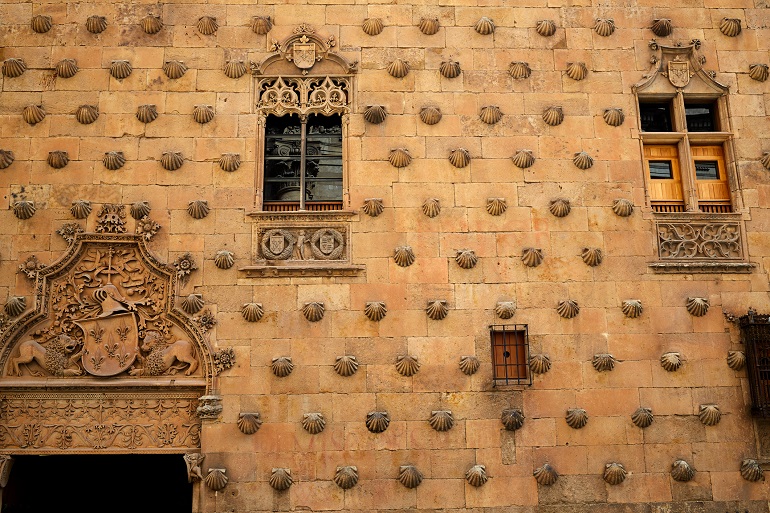
- The Casa de las Conchas displays over 300 scallop shells symbolising the Order of Santiago on its plateresque façade.
- Spanish spoken here is considered the country's purest form, attracting language learners worldwide.
History
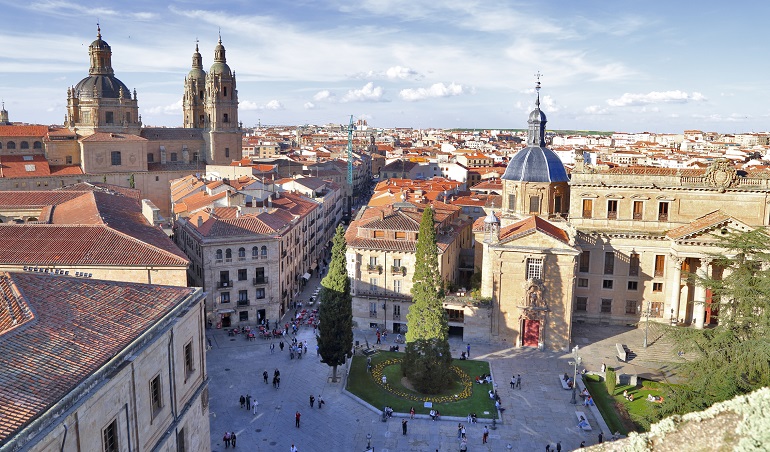
Salamanca, nestled in western Spain, boasts a rich history dating back approximately 2,700 years. Originally settled by Celtic tribes around 400 BCE, the city was known as "Helmantika" before being conquered by Hannibal's Carthaginian forces in 217 BCE. The Romans later established it as an important settlement called Salmantica, creating a strategic link along the Vía de la Plata (Silver Road) that crossed the Iberian Peninsula. The impressive Roman bridge over the Tormes River, parts of which still stand today, serves as a testament to this era.
Following the fall of the Roman Empire, Salamanca experienced various conquests, including occupation by the Visigoths and later by Muslim forces under Musa ibn Nusayr in 712. The city remained largely depopulated during the early Middle Ages due to frequent conflicts between Christians and Muslims. A significant turning point came with the Christian reconquest, completed between 1087 and 1102 under Alfonso VI. The 13th century marked the beginning of Salamanca's golden age when King Alfonso IX founded the University of Salamanca in 1218, one of the oldest universities in Europe, which was officially ratified by Pope Alexander in 1255.
The 16th century represented Salamanca's period of greatest splendour, both demographically and intellectually. The university flourished with the renowned School of Salamanca, which made significant contributions to law, human rights, and international relations. The city's magnificent Plaza Mayor was designed in the 18th century, and many of its stunning buildings date from this prosperous era. Salamanca played various roles throughout modern Spanish history, including serving as a temporary headquarters for Nationalist forces during the Spanish Civil War. In recognition of its outstanding architectural and historical significance, UNESCO declared Salamanca's historic centre a World Heritage Site in 1988, cementing its status as one of Spain's most culturally important cities.
Main Attractions
Plaza Mayor
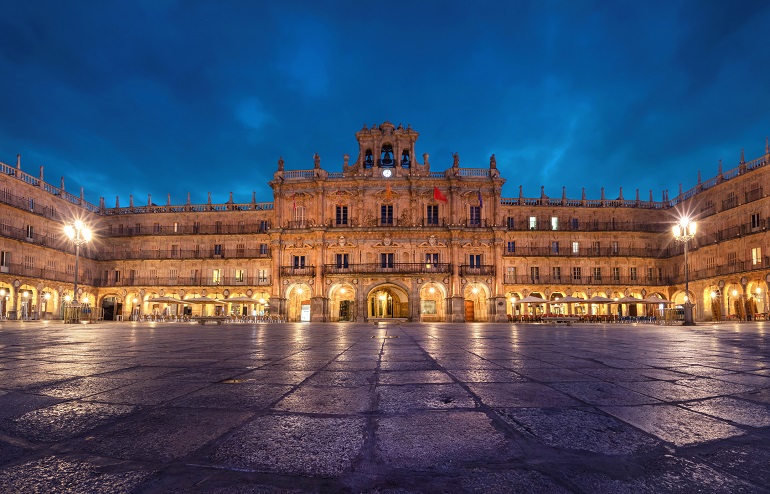
The Plaza Mayor in Salamanca, dating from the 18th century, is considered one of the most beautiful urban monumental squares in Europe. Construction began in 1729 at the behest of the corregidor Rodrigo Caballero Llanes. The project was carried out by the architect Alberto de Churriguera, who was followed by his nephew Manuel de Lara Churriguera and was completed by Andrés García de Quiñones in 1755.
Located in the centre of the city, it forms an irregular supported quadrilateral, with three floors in each facade, presided over by the City Council. In the Royal Pavilion, the effigy of King Fernando III El Santo stands out, and the medallions of the spandrels on its arches represent Spanish monarchs. In the south pavilion, or of San Martín, the medallions depict illustrious soldiers or conquerors, while in the petrineros pavilion, the figures of the medallions are characters of culture.
Old Cathedral
The Old Cathedral of Salamanca began construction in the first third of the 12th century and was finished at the end of the 14th century. It was founded by Bishop Jerome of Périgord after the restoration of the diocese of Salamanca by King Alfonso VI of León.
The cathedral is a basilica-shaped building with a Latin cross and three naves, a marked transept and a chevet formed by three semicircular apses. Given the frontier character of Salamanca, it was also designed as a fortress, a quality now not so visible since the battlements of the Mocha Tower have disappeared. For this reason, it was popularly known as "fortis salmantina".
The most outstanding element of the monument is the considerable dome that rises over the transept supported by four impressive pendentives, dating from around 1150. On the inside, it is shaped like an open orange with sixteen segments, while on the outside it is almost conical in shape, decorated with scales, and is popularly known as the "Torre del Gallo" (Tower of the Rooster), since this animal appears on the weathervane that crowns it.
New Cathedral
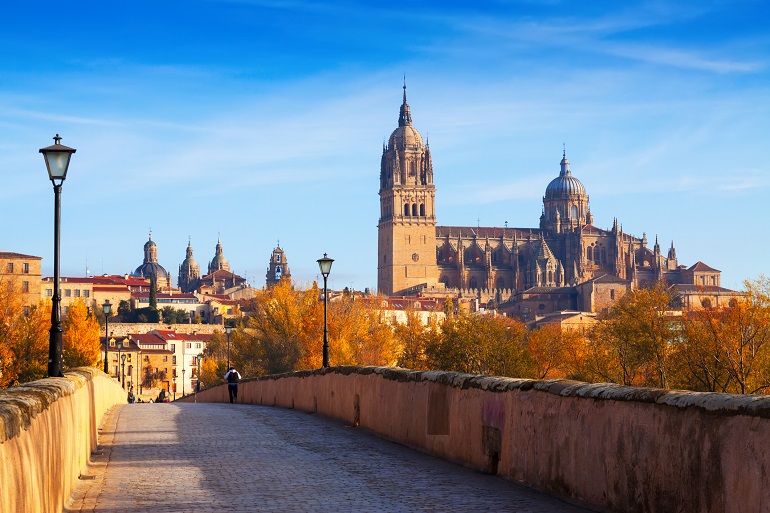
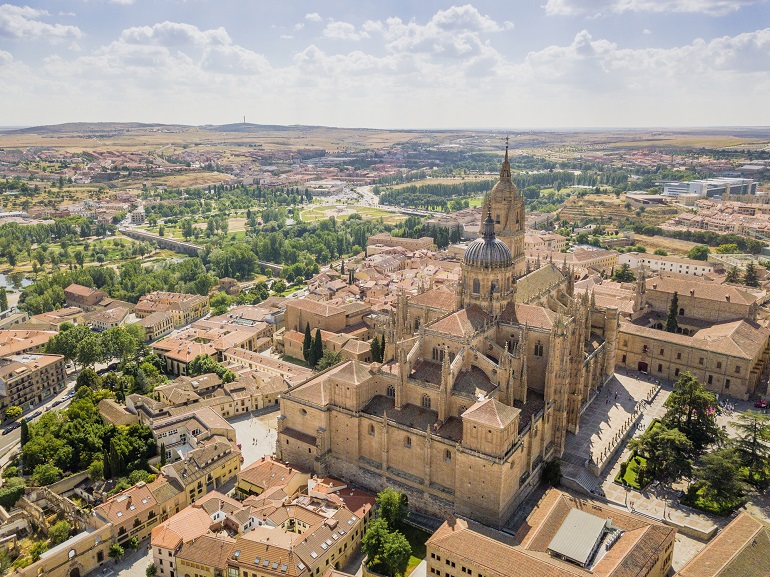
The New Cathedral of Salamanca displays a beautiful blend of Romanesque, Gothic, Renaissance, and Baroque influences. The main façade, which faces the Plaza de Anaya, is an exquisite example of the Plateresque style, adorned with intricate sculptural details including religious figures, saints, and biblical scenes.
The cathedral boasts two majestic towers of different heights and styles, as they were constructed at different periods, giving a unique charm to the structure. Step inside, and you'll be awed by the grandeur of the interior with soaring Gothic vaulted ceilings and beautiful stained glass windows creating an ethereal atmosphere.
University of Salamanca
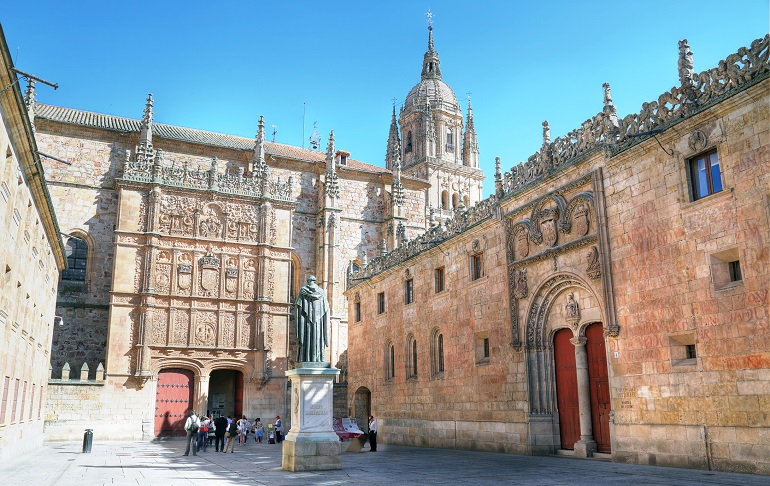
The University of Salamanca is the oldest university in Spain and one of the oldest in Europe, dating back to 1218 when it was founded under orders from King Alfonso IX of León.
The university reached its peak in 1584 with nearly 7,000 students. Its historic Escuelas Mayores building features a stunning Plateresque façade adorned with intricate carvings. A popular tradition involves identifying a hidden frog within these carvings for good luck.
La Clerecía
La Clerecía refers to what was once known as Real Colegio del Espíritu Santo (Royal College of Holy Spirit), built between 1617 and 1754 under Queen Margaret's patronage. This Baroque building features an impressive twin-towered façade designed by Juan Gómez de Mora.
Its interior includes a grand cloister and church that exemplify Baroque architecture. Today it serves as part of Salamanca’s Pontifical University headquarters.
Convento de San Esteban
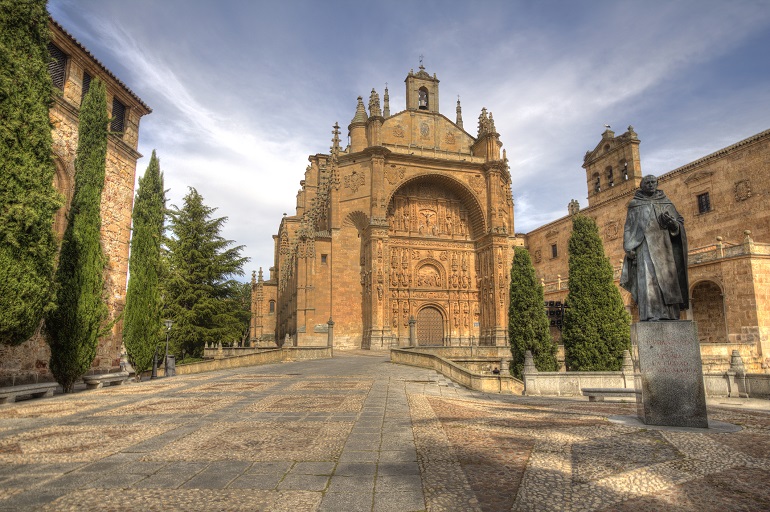
The Convent of San Esteban is an important religious construction famous for its impressive architecture blending late Gothic, Renaissance and Plateresque elements. Built by Dominicans between 1524 and 1610 on a former 13th-century convent site, it represents centuries of architectural evolution.
The main façade features an entrance flanked by statues of St. Peter and St. Paul. Inside are notable spaces such as its tall-naved church with an altarpiece by José de Churriguera and its main cloister known as Cloister of Kings.
Convento de las Dueñas
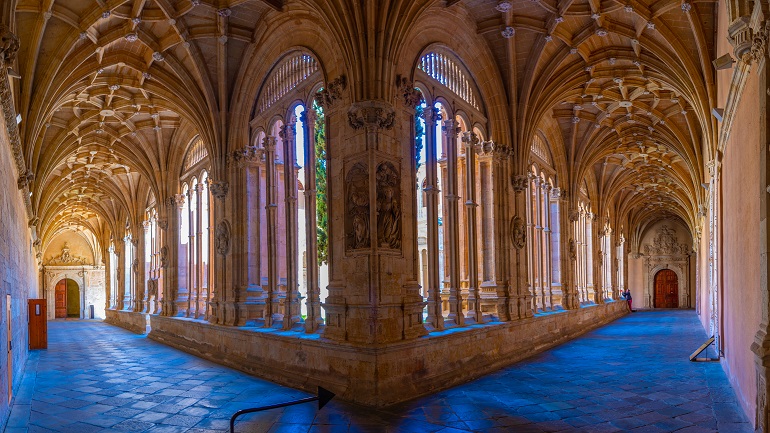
The Convent of Santa María de las Dueñas was founded in 1419 to host Dominican nuns. Its architecture combines Gothic elements with Renaissance influences and Mudejar (Moorish-Christian) styles.
The highlight is its two-story cloister built in 1533. The lower floor features arcades decorated with medallions while its upper columns are adorned with sculptures depicting plants, humans and fantastical creatures.
Casa de las Conchas
The Casa de las Conchas (House of Shells) is a late-Gothic palace built between 1493-1517 by Chancellor Talavera Maldonado. Its façade is decorated with over three hundred scallop shells symbolising pilgrims on their journey to Santiago de Compostela.
This historic building also incorporates Mudejar elements typical to Isabelline art. It originally had two towers but one was partially demolished during political conflicts in Spain’s history.
Top Museums
Art & History Museums
Salamanca Museum (Museum of Fine Arts)
Housed in the 16th-century Casa de los Álvarez Abarca, this museum offers a comprehensive collection organised into three sections: Archaeology, Fine Arts, and Ethnology. Visitors can explore a range of works from Flemish panels and altarpieces to archaeological pieces and local ethnological exhibits. The building itself, a fine example of civil architecture from the Catholic Monarchs era, adds to the museum's allure.
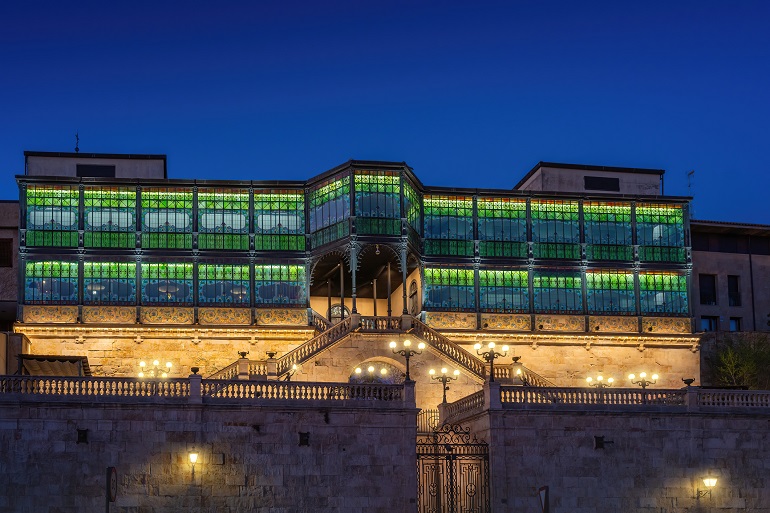
Art Nouveau and Art Deco Museum (Casa Lis)
Located in Salamanca's earliest Modernist building, the Casa Lis, this museum showcases decorative arts from the late 19th century through to the interwar period. The collection includes an impressive array of furniture, jewellery, fans, textiles, bronzes, and porcelain pieces. Of particular note are the chryselephantine statuettes and glasswork, offering insight into the artistic preferences of the bourgeois society of the time.
Contemporary Art
DA2 Domus Artium 2002
This contemporary art centre, inaugurated in 2002, is housed in the renovated building of the old provincial prison. The museum preserves original elements such as cell doors and the iron gate, creating a unique backdrop for its modern art exhibitions. It's an essential visit for those interested in contemporary artistic expressions.
Specialised Museums
Museum of Commerce and Industry
Opened in 2006, this unique institution is dedicated to preserving and showcasing the history of economic, industrial, and commercial activity in Salamanca and its province. Located in carefully restored old cisterns, the museum houses a collection of inventions and innovations that once addressed challenges faced by manufacturers, sellers, and consumers.
Unamuno House Museum
Nestled in the historic heart of Salamanca, this museum pays homage to the esteemed writer and philosopher Miguel de Unamuno. Housed in Unamuno's former residence, it offers a glimpse into the author's personal and professional life, displaying original manuscripts, personal belongings, and photographs.
Salamanca Motor Museum (MHAS)
As the first automobile museum in Spain open to the public, MHAS offers a fascinating journey through automotive history. With about 150 cars on display, visitors can trace the evolution of automobile design from its origins to the present day. The collection includes prestigious brands like Rolls Royce and Mercedes, as well as more popular makes such as Ford and Fiat.
University Museum
While its collection of clerical robes and artwork is intriguing, the real draw is the building itself. The museum features a ceiling fresco depicting the zodiac and two fascinating ceilings in the Mudejar and Renaissance styles.
Local Cuisine
Nestled in the heart of old Castilla, Salamanca boasts a rich culinary heritage that reflects its diverse landscape. The city's gastronomy is predominantly meat-based, with Jamón Ibérico and chorizo standing as proud ambassadors of the region's excellent cured meats. The crown jewel of Salamanca's cuisine is undoubtedly the hornazo, a savoury pastry filled with chorizo, pork loin, ham and egg that was traditionally eaten during Easter but is now available year-round. Visitors should also sample cochinillo asado (roast suckling pig), celebrated for its crispy skin and tender meat, and farinato, a white sausage made with breadcrumbs and lard. For a uniquely Salamancan experience, try the paloma, a fried wheat crust topped with Russian salad that can only be found in this city. The local cuisine is complemented by robust wines known for their fruity taste, and finished with sweet treats like yema tarts made from egg yolks and sugar. With its tapas culture still thriving, Salamanca offers visitors an authentic taste of traditional Castilian cuisine at remarkably good value.
Shopping
Shopping in Salamanca offers a diverse experience with over 4,000 establishments throughout the city. The main shopping district extends north from Plaza Mayor along Calle Toro and Calle Zamora, featuring popular brands like Zara, Pull & Bear, H&M, and local boutiques in pedestrianised streets lined with golden sandstone buildings. For souvenirs and traditional crafts, the area between Plaza Mayor and the Cathedrals houses shops selling jewellery, leather goods, and regional delicacies including PDO Guijuelo cured ham. The Central Market, set in a beautiful modernist building, is bustling throughout the morning and offers local products. Shoppers can also visit the Zara store in Plaza del Liceo, uniquely situated within the remains of an 18th-century Baroque convent. For those preferring shopping centres, El Tormes and Vialia offer additional retail options, restaurants and cinemas. Local handicrafts from the region include silver, leather, handmade lace, wickerwork, ceramics and woodwork, which can be found in specialty shops along Calle Toro and Calle Zamora.
Nature in and around Salamanca
Salamanca and its surrounding area offer several notable natural attractions for visitors to explore. Just outside the city, the Arribes del Duero Natural Park spans 106.5 hectares, forming a natural border between Spain and Portugal. This park features one of Europe's largest inland lakes, steep mountains, and the stunning Pozo de los Humos waterfall. Within Salamanca itself, the Huerto de Calixto y Melibea garden provides a peaceful retreat with views of the River Tormes and the city's Roman Bridge. For those seeking a riverside experience, a walk along the River Tormes offers scenic views and interesting sights, including a sculpture commemorating 100 years of Scouts in Salamanca. The Parque de los Jesuitas is a traditional, enclosed park in the city centre, featuring various zones, a pond with ducks, and exercise equipment. Nature enthusiasts may also appreciate the Sierra de Francia mountain range, which is part of the wider Sistema Central mountain system in the region.
Getting There & Around
Salamanca, a beautiful city in western Spain, is most easily reached by flying into Madrid-Barajas Airport and then taking onward transport. From Madrid, you can catch a direct bus with MonBus, which departs from Terminal 1 and takes approximately 2 hours 45 minutes, costing around €30 one-way or €55 return. Alternatively, trains run from Madrid's Chamartín station to Salamanca, taking between 1 hour 40 minutes and 3 hours depending on whether you choose the express or regional service, with tickets priced at about €17-30 each way. If you're driving, take the A-50 motorway from Madrid or the A-62 and A-66 from other directions. Whilst Salamanca does have its own small airport in Matacán, it only handles limited domestic flights, making Madrid the preferred gateway for international travellers. Once in Salamanca, you'll find the city centre is compact and largely pedestrianised, with most attractions within a 30-minute walk of each other.
Best Time to Visit
The best time to visit Salamanca, Spain, is during late spring and early autumn, specifically from mid-May to mid-June and mid-September to mid-October. During these periods, the weather is pleasantly warm and sunny, with temperatures ranging from 15°C to 25°C, making it ideal for exploring the city's UNESCO World Heritage sites and stunning architecture. These months also offer a perfect balance between comfortable temperatures and fewer crowds, as they fall outside the peak summer tourist season. Whilst summer can be scorching hot with temperatures soaring above 35°C, winters are quite cold, often dropping below freezing. Spring and autumn provide the most agreeable climate for sightseeing, allowing visitors to fully appreciate Salamanca's outdoor attractions and vibrant student atmosphere without the extremes of summer heat or winter chill.