Spain Guide  |
|---|
|
| | Top Spanish Cities |
|---|
|
| | Spanish Regions |
|---|
|
| | Europe Guide |
|---|
|
| | Travel Tools |
|---|
|
|
|
|
Community of Madrid Travel Guide
 Plaza de Cibeles, Madrid. Plaza de Cibeles, Madrid.
Introduction

Centred around the Spanish capital, the Community of Madrid is an autonomous region of its own totalling nearly 6.4 million inhabitants, making it the third most populous autonomous community in Spain after Andalusia and Catalonia. Most of the population lives in the Madrid metropolitan area, the European Union's third largest metropolitan area after the Greater London and the Parisian region, comprising the city of Madrid and twenty surrounding municipalities.
The Community of Madrid's gross regional product per capita at purchasing power parity is 30% above the national average and is similar to that of Germany.
The Community of Madrid was only created in 1983 from the province of Madrid, which until then belonged to CastileLa Mancha (or New Castile).
Famous people from the Community of Madrid include (chronologically): the writers Miguel de Cervantes and Lope de Vega, the statesman and dramatist José Echegaray (Nobel Prize in Literature), the dramatist Jacinto Benavente (Nobel Prize in Literature), the philosopher José Ortega y Gasset, the opera tenor Plácido Domingo, the politician Javier Solana (former Secretary General of NATO and EU HR) the singer Julio Iglesias, the former Prime Minister José María Aznar, the singer Enrique Iglesias, and the actress Penélope Cruz.
Cuisine
The Madrilenian cuisine is an amalgamation of the cuisines of various regions of Spain. For breakfast it is popular to eat churros con chocolate, a tubular doughnut dipped in hot chocolate or café con leche. The region's most emblematic main dish is the cocido madrileño, a chickpea-based stew with vegetables, potatoes, and various meats such as beef, chicken, pork belly, morcilla and chorizo. Among other local specialties are the besugo a la madrileña (baked sea bream), carne al desarreglo (beef stew with white wine) and callos (beef tripe with chorizo, morcilla, serrano ham, bell peppers and/or chickpeas).
Some of the best tapas bars in the country are found in the Spanish capital. Popular tapas include bocadillos de calamares (battered squid ring sandwich), calamares a la romana (battered squid rings), caracoles a la madrileña (snails cooked in a spicy sauce), gambas/setas al ajillo (prawns/mushrooms with garlic), gallinejas (sheep chitterlings), huevos estrellados (fried eggs served with fried potatoes), oreja a la plancha (grilled pig'sear), patatas bravas (fried potato dices served with spicy tomato sauce or mayonnaise), and tortilla de patatas (omelette with potatoes).
If you are looking for a sweet treat, try the rosquillas tontas y listas, glazed or dusted doughnut-shaped pastries traditionally eaten for the Feast of Isidore the Labourer (San Isidro Labrador) in May, and found almost exclusively around Madrid. The anise-flavoured variant is rosquillas de anís. Another Madrilenian specialty are the bartolillos con crema, a small custard-filled pie eaten around Easter. Other popular desserts, not particularly specific of the Community of Madrid, include barquillos (crispy biscuit roll), buñuelos (fried dough balls filled with custard whipped cream), and torrijas (French toast).
Attractions
| Madrid ※ |
|---|
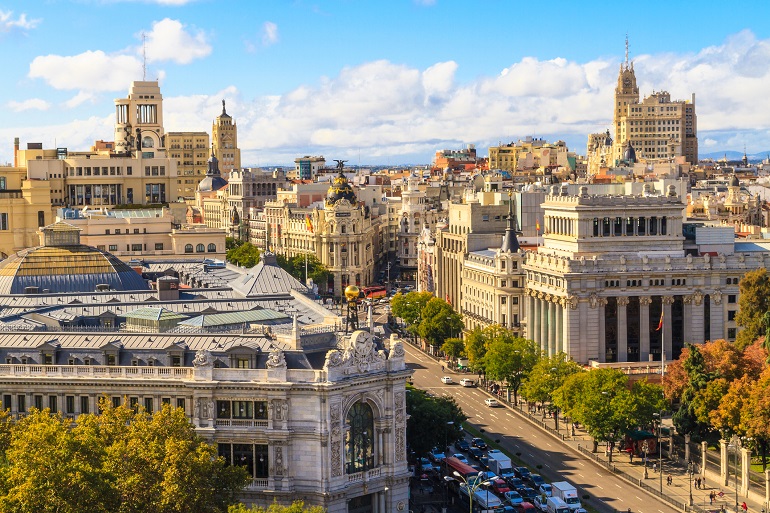
 Madrid, Europe's highest capital city, features the world's oldest operating restaurant, Sobrino de Botín, which opened in 1725. The city's cultural heart, known as the 'Landscape of Light', became Europe's first historic urban landscape to receive UNESCO World Heritage status in 2021, encompassing the Paseo del Prado, El Retiro Park, and the Jerónimos neighbourhood. The area boasts 190 hectares, with 75% being green space, and houses world-renowned institutions like the Prado Museum with its collection of 8,000 artworks. The city's culinary scene features distinctive dishes such as callos a la madrileña (a traditional tripe stew) and cocido madrileño (a hearty chickpea-based stew served in three stages). Notable landmarks include the Temple of Debod, an ancient Egyptian temple gifted to Spain, the iconic Puerta del Sol with its famous bear statue nibbling on a strawberry tree, and the Gran Vía, often compared to Broadway for its theatrical venues. |
|
Sierra de Guadarrama National Park |
|---|
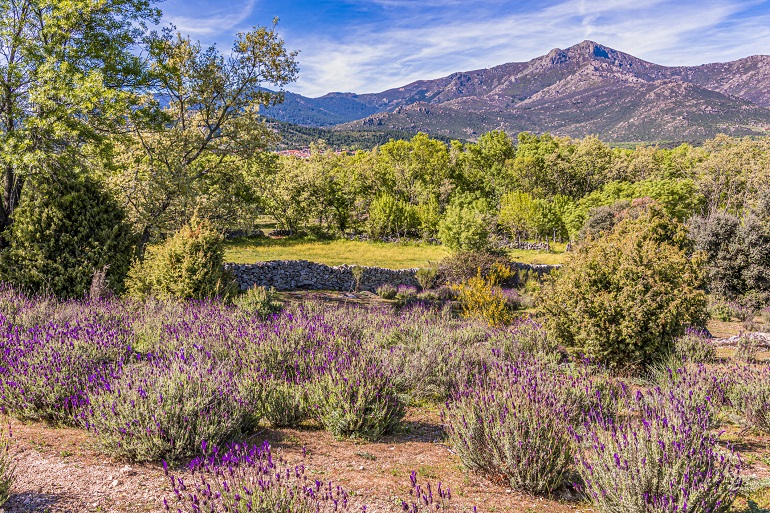
 Sierra de Guadarrama National Park offers a captivating blend of natural beauty and rich cultural heritage. Declared a National Park in 2013, it boasts diverse landscapes including iconic peaks like Peñalara, ancient forests, granite formations such as La Pedriza, and glacial lagoons. The park's historical significance spans centuries, having served as a natural barrier between Christian and Muslim kingdoms during the Reconquest and later as a battleground during the Peninsular War and Spanish Civil War. Visitors can enjoy a variety of activities throughout the seasons, from hiking and mountain biking to winter sports on snow-covered slopes and swimming in natural pools during warmer months. The area has inspired Spanish artists and writers throughout history, with figures like Velázquez painting these mountains and the Marquis of Santillana writing his Serranillas here. Its ecological importance is evident in its rich biodiversity, providing habitat for numerous plant and animal species including golden eagles and deer. |
| Buitrago del Lozoya |
|---|

 This medieval town is encircled by an 800-metre-long 11th-century Moorish wall, which remains the best-preserved fortification in the region. The town features a Gothic-Mudéjar castle from the 14th-15th centuries, fortified by seven unique towers with horseshoe arches. A fascinating cultural connection exists through the Picasso Museum, which houses over 60 works that Pablo Picasso gifted to his barber and friend Eugenio Arias. The town sits on a promontory surrounded by the Lozoya River, and its local cuisine specialises in T-bone steaks and beans with black pudding cooked over a slow fire. Two major annual events draw significant crowds: the Medieval Fair in September, featuring over 100 market stalls and period performances, and the Living Nativity Scene (Belén Viviente), which involves more than 200 actors performing across 39 scenes along a 1,300-metre route. |
| El Escorial ※ |
|---|
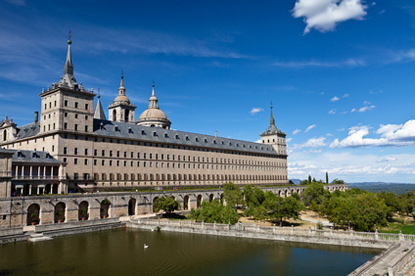
 El Escorial is a colossal Renaissance complex built between 1563 and 1584, originally serving as a monastery, royal palace, and mausoleum. The site encompasses roughly 4,000 rooms, 2,675 windows, and 1,200 doors, making it the world's largest Renaissance building. Its remarkable library houses over 75,000 ancient books, including texts on Dark Science and Esotericism, whilst its architecture showcases the austere Herrerian style, named after its architect Juan de Herrera. The complex features a vast art collection with works by Titian, Tintoretto, and Veronese, whilst its Royal Pantheon serves as the burial place for Spanish monarchs. A curious architectural detail is its grill-like layout when viewed from above, which some attribute to honouring St Lawrence, though historians consider this a coincidence. The surrounding Herrería forest offers hiking trails and houses the Cocheras del Rey, which displays an extensive collection of royal carriages. |
| Royal Palace of Aranjuez ※ |
|---|

 Aranjuez, a UNESCO World Heritage site since 2001, grew from a 16th-century royal hunting lodge into an elegant palace town under Philip II. The Royal Palace features ornate rooms and three distinct gardens, including the intimate Parterre Garden and the vast 150-hectare Prince's Garden with its Chinese Pond. The town's unique landscape was shaped by the convergence of three rivers, leading to complex waterworks dating back to Roman times that are still functional today. The palace grounds house extensive botanical collections and served as inspiration for Joaquín Rodrigo's famous 1939 musical piece 'Concierto de Aranjuez'. The town boasts one of Spain's oldest bullrings, opened in 1797 with a remarkable capacity of 9,000 spectators when the local population was merely 4,226. Aranjuez is renowned for its strawberries and asparagus, with a historic 'strawberry train' running from Madrid during spring and summer. Several significant historical events occurred here, including the 1808 Mutiny of Aranjuez, which led to King Charles's abdication. |
| Alcalá de Henares ※ |
|---|
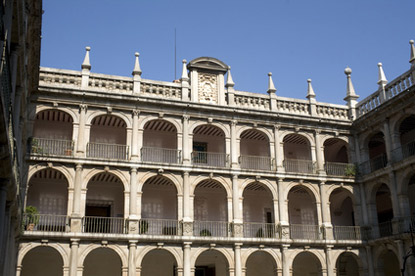
This UNESCO World Heritage city, located just 40 kilometres from Madrid, is renowned as the birthplace of Miguel de Cervantes, author of Don Quixote. The city features Spain's longest surviving medieval street, Calle Mayor, lined with porticos and 18th-century pillars. Home to one of Europe's oldest universities, founded in 1499, Alcalá de Henares boasts 58 modern art sculptures scattered throughout its streets as part of its Open Air Sculpture Museum. The city originated as the Roman settlement of Complutum and later became a Moorish citadel called Al-Qalat. Today, it's known for its vibrant tapas culture and local delicacies, including migas (sautéed breadcrumbs with garlic and chorizo), torreznos (crispy pork belly), and rosquillas, traditional glazed pastries. The city also hosts Alcine, Spain's most important short film festival, every November. Interestingly, Alcalá de Henares is twinned with Peterborough, England, as it's the birthplace of Catherine of Aragon, first wife of Henry VIII. |
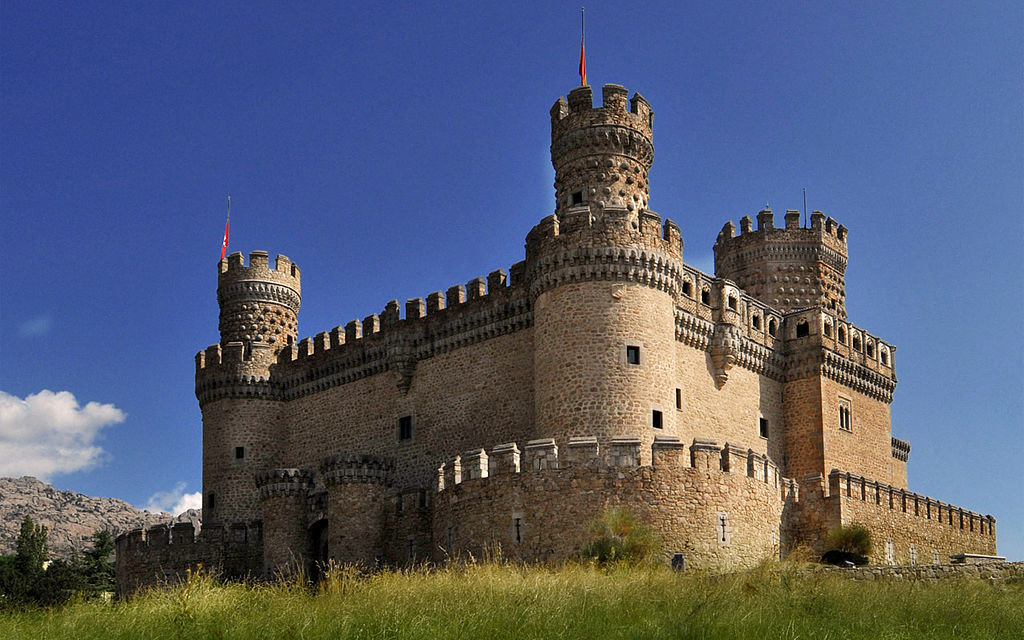
| New Castle of Manzanares el Real |
|---|

This 15th-century palace-fortress, built in 1475 for the powerful House of Mendoza, showcases a remarkable blend of Late Gothic architecture with Castilian, Flemish and Mudéjar influences. The castle features six floors, a basement, and four towers, with its most striking elements being the hexagonal keep and a Gothic gallery considered amongst the finest in Spanish military architecture. The structure served both defensive and residential purposes, housing grand halls, a library and a courtyard with intricate stone carvings by Juan Guas, the architect of Catholic monarchs Isabella and Ferdinand. Visitors can explore the castle museum and tapestry collection for a £4.30 entrance fee, with tours typically lasting 45 minutes. The castle sits in a picturesque setting next to the Santillana reservoir, offering splendid views of La Pedriza's rocky formations and providing access to numerous hiking trails. The defensive features include an innovative artillery battlement with embrasures for cannons, multiple defensive walls, and a barbican with distinctive cross-shaped arrow slits. |
|


 : Local interest
 : Moderately interesting
 : Outstanding place
 : Must-see in the country
 : Top cities in Europe