


| Contents |
|---|

Introduction
Oviedo (pop. 42,000), the capital city of the Principality of Asturias, is a historic gem located approximately 24 km southwest of Gijón and 23 km southeast of Avilés. Founded as a monastery by King Fruela I in 757, it became the capital of the Kingdom of Asturias in 810 and holds the distinction of being one of the few Spanish towns never conquered by the Moors during the Middle Ages. This charming city boasts several UNESCO World Heritage Sites, including pre-Romanesque churches such as San Julián de los Prados, Santa María del Naranco, and San Miguel de Lillo. The city's architectural treasures include the Gothic Cathedral of San Salvador, begun in 1388, which houses the Holy Chamber with precious relics like the Cross of Los Ángeles. With a population of about 220,000, Oviedo serves as the administrative and commercial centre of the region, offering visitors a rich cultural experience through its museums, public sculptures, historic markets, and the second oldest opera season in Spain after Barcelona.
Interesting Facts about Oviedo
- Oviedo was founded as a monastery by King Fruela I in 757 and later became the capital of the Kingdom of Asturias in 810.
- It is one of the few Spanish towns that was never conquered by the Moors during the Middle Ages.
- The city boasts several UNESCO World Heritage Sites, including pre-Romanesque churches and La Foncalada, a 9th-century fountain.
- Oviedo serves as the starting point for the Camino Primitivo route of the Camino de Santiago pilgrimage.
- The city is renowned for its refreshing cider, traditionally poured from a height to aerate it and give it a sweeter taste.
- Campo San Francisco, one of Oviedo's largest green spaces, was built on an old vegetable plot that belonged to the San Francisco Convent.
- The Mercado El Fontán, with its striking 19th-century façade featuring a greenish iron structure and stunning glass windows, hosts a famous flea market three times a week.
- Oviedo's Museum of Fine Arts houses one of the best art collections in Spain, featuring works by Dalí, Ribera, Miró, Picasso, El Greco, and Goya.
- The city is known for having more outdoor sculptures than many other cities, adding to its cultural and artistic appeal.
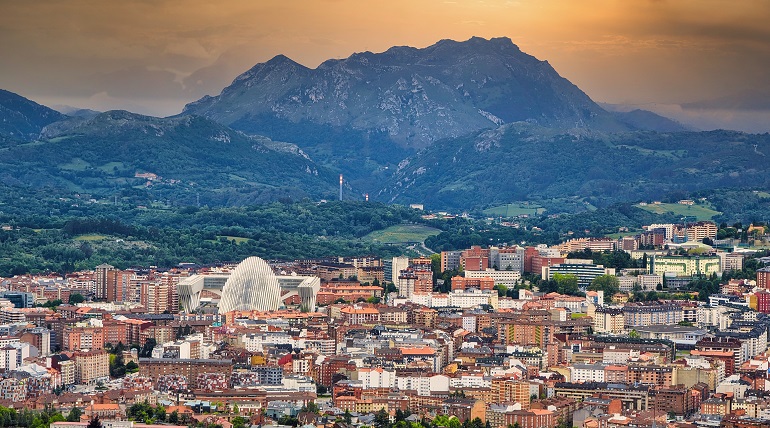
History
Oviedo's history dates back to 761 CE when two monks, Máximo and Fromestano, established a monastery on a hill known as Oveto. The settlement gained considerable prominence when King Alfonso II "the Chaste" moved his court to Oviedo in 812, elevating it to the capital of the Kingdom of Asturias and a centre of Spanish Christendom. During this golden age, the city flourished with the construction of numerous religious buildings, including the original San Salvador Cathedral, solidifying Oviedo's position as a significant religious and political stronghold against Moorish influence in the Iberian Peninsula.
Following the relocation of the capital to León in 924, Oviedo transformed into a predominantly religious city, renowned for its sacred relics and becoming an essential stop on the pilgrimage route to Santiago de Compostela. Its fortunes were revived in 1388 when King Juan I established the Principality of Asturias with Oviedo as its capital. The city's development faced a significant setback in 1521 when a devastating fire on New Year's Eve destroyed much of the inner city, sparing only the cathedral. Despite this calamity, Oviedo entered a period of cultural renaissance with the founding of the University of Oviedo in 1608, which catalysed further urban expansion and intellectual growth throughout the subsequent centuries.
The modern history of Oviedo has been marked by both turbulence and renewal. During the Spanish Civil War, the city gained distinction as the only northern Spanish city under Nationalist control, enduring a lengthy siege before being relieved by Franco's forces. The post-war period saw ambitious reconstruction efforts to restore the city's historic centre. The establishment of the Prince of Asturias Foundation in 1981 represented a significant cultural milestone, with the annual Princess of Asturias Awards (formerly Prince of Asturias Awards) celebrating excellence in arts, sciences, letters, and sports. Since 2000, Oviedo has dedicated itself to enhancing liveability, successfully transforming into one of Europe's most pedestrian-friendly cities and earning recognition for being amongst the safest and cleanest in Spain.
Main Attractions
Old Town
The historic old town of Oviedo, known locally as "El Antiguo", features several remarkable secular buildings that showcase the city's rich architectural heritage. The Oviedo Town Hall, completed in 1671 and rebuilt in 1940 after suffering damage during the Spanish Civil War, boasts a beautiful gallery with 13 arches and a central clock tower built over the remains of the ancient city walls and Cimadevilla Gate. The Palace of the Counts of Toreno, constructed between 1673 and 1675 in Baroque style, displays an asymmetrical ashlar façade with distinctive columns and blazons, and currently houses the Royal Institute of Asturian Studies. The Camposagrado Palace, built in the mid-18th century and declared a Historic-Artistic Monument in 1943, now serves as the site of the Supreme Court of Asturias, featuring two monumental façades including a Rococo structure facing Porlier Square. Other notable buildings include the modernist Casa del Deán Payarinos from 1900, which now houses the Oviedo Professional Conservatory of Music, and the Palace of the Marquis de Santa Cruz del Marcenado, all set amongst charming plazas including the spacious Constitution Plaza in the city centre.
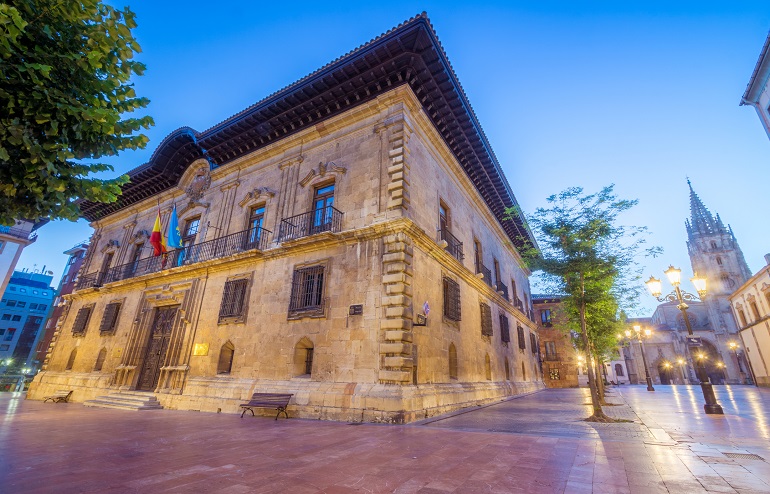
Plaza de la Constitucion
Located in the heart of the city's historic centre, Plaza de la Constitución is one of the two most important squares in Oviedo. Originally designed by architect Marcos de Velasco Agüero in 1659, this broad stone-paved square has changed names numerous times throughout history to reflect political changes, being variously known as Plaza de la Ciudad, Plaza Mayor, Plaza Real, and Plaza de la República. The square is bordered by the 17th-century Town Hall, designed by Juan de Naveda in 1622, and the elegant Baroque Saint Isidor Church, consecrated in 1681. As a central gathering place for centuries, the plaza serves as a nexus of fascinating streets and byways, with remnants of the city's medieval wall visible on Weight Street. Today, it remains a vibrant public space surrounded by cafés and shops, making it an essential stop for visitors exploring Oviedo.
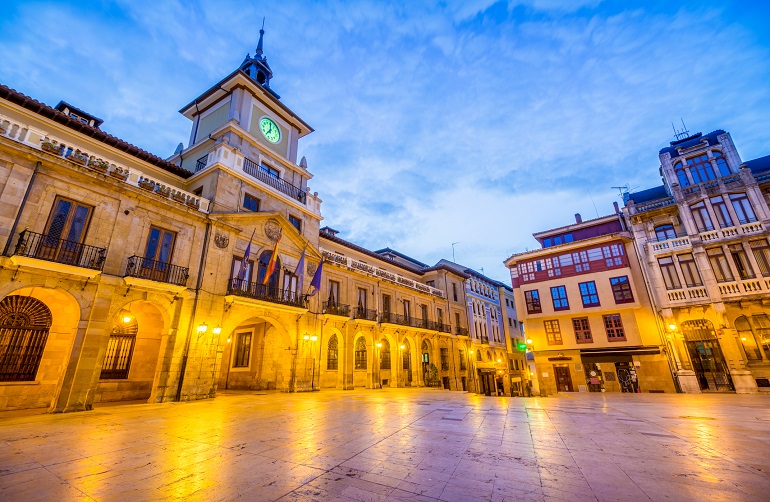
Plaza del Fontán
Plaza del Fontán embodies the commercial and social spirit of traditional Oviedo. This historic square has served as a marketplace since the 16th century, evolving from its origins as a waterfront area (fontán means "fountain" or "spring" in Asturian) to become one of the city's most characteristic public spaces. The plaza is surrounded by arcaded buildings with distinctive wooden balconies, creating an architectural ensemble that transports visitors to earlier centuries.
The centrepiece of the plaza is the 19th-century Mercado El Fontán, a distinctive structure with a greenish iron framework and large glass windows that allow natural light to flood the interior. This covered market represents an excellent example of iron architecture from the industrial era, similar in concept to other European markets of the period but with its own regional character. Inside, traditional commerce continues as it has for generations, with vendors offering local specialities that showcase Asturian gastronomy.
The square has witnessed centuries of daily life in Oviedo, from medieval water carriers to contemporary café-goers. Its authentic atmosphere makes it a favourite spot for both locals and visitors seeking to experience the genuine character of the city. The surrounding streets, with their traditional shops and taverns, extend the commercial character of the plaza into a broader district known for its preservation of local traditions.
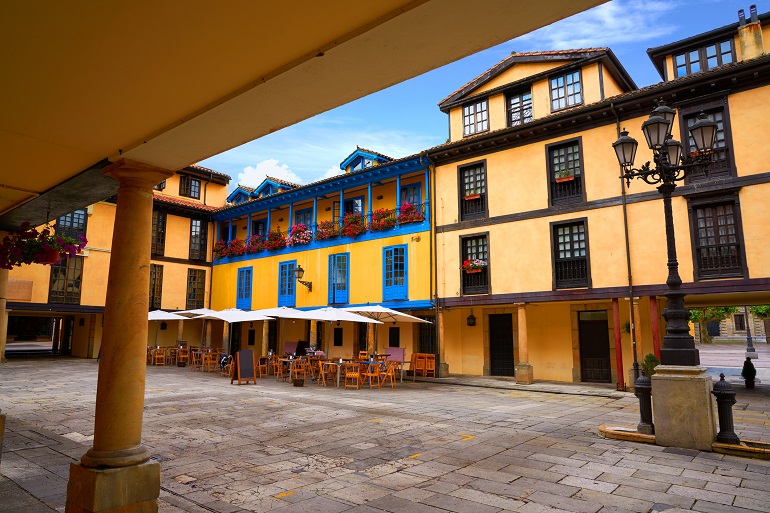
Catedral de San Salvador (Oviedo Cathedral)
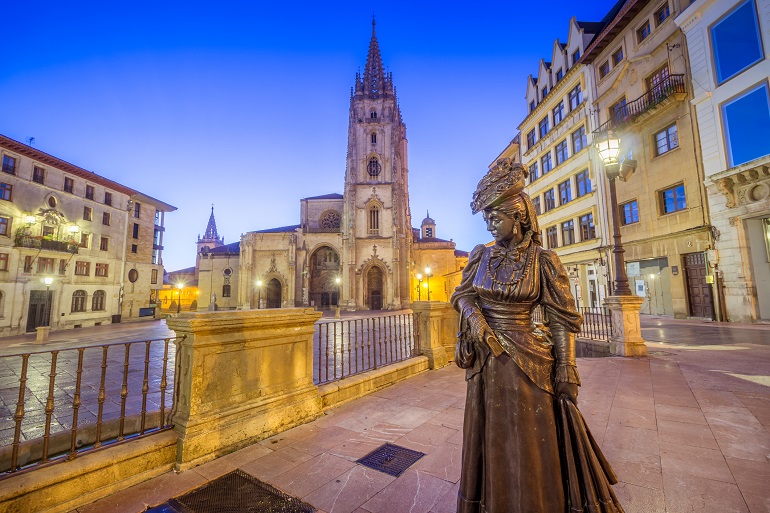
The magnificent Catedral de San Salvador stands as the spiritual and architectural heart of Oviedo. Construction began in the 13th century and continued until the 16th century, resulting in a predominantly Gothic structure with elements of Renaissance, Baroque and Neoclassical styles. The cathedral's most striking feature is its elegant 82-metre-high tower, widely regarded as one of the most beautiful in Spain. The impressive façade showcases a Baroque relief depicting the Transfiguration, creating a dramatic entrance to this sacred space.
Inside, visitors are greeted by a sense of solemn grandeur. The Capilla Mayor (Main Chapel) houses a remarkable 16th-century tomb and an exquisite main altarpiece that demonstrates masterful craftsmanship. The cathedral's most treasured space is the Cámara Santa (Holy Chamber), recognised by UNESCO as a World Heritage site. This chamber safeguards the Arca Santa (Holy Chest), a reliquary containing precious religious artefacts believed to have been brought from Jerusalem. The Gothic cloister, constructed between the 14th and 15th centuries, offers a peaceful retreat with its elegant arches and detailed stone carvings that tell biblical stories and depict medieval life.
The cathedral also houses the Cruz de los Ángeles (Cross of Angels) and the Cruz de la Victoria (Cross of Victory), both symbols of Asturias that date back to the 9th and 10th centuries respectively. These crosses represent the region's historical significance during the early Reconquista period. The cathedral's stained glass windows filter light into the interior, creating an atmosphere of reverence and contemplation that has endured for centuries.
Pre-Romanesque Monuments ※
Oviedo's collection of pre-Romanesque buildings represents one of Spain's most distinctive architectural legacies. These structures, dating from the 8th to 10th centuries during the Asturian monarchy (718-910), have been recognised by UNESCO for their unique artistic and historical significance. They stand as rare surviving examples of European architecture from this period, showcasing a fascinating blend of Visigothic, Carolingian and Byzantine influences.
San Julián de los Prados
San Julián de los Prados (also known as Santullano) is the largest and most complete of these monuments. This functioning church features an extraordinary collection of interior murals that rank among the most important examples of early medieval painting in Europe. The frescoes depict architectural motifs and geometric patterns that reflect Byzantine influences, offering a glimpse into the artistic sensibilities of the era. The church's basilica layout with three naves separated by arches demonstrates the sophisticated architectural understanding of the period.
Santa María del Naranco
Santa María del Naranco, originally constructed as a royal palace for King Ramiro I, represents a remarkable achievement in early medieval civil architecture. The two-storey structure sits majestically on the slopes of Monte Naranco, offering panoramic views of Oviedo. Its elegant arches, decorative columns and sculptural details demonstrate an artistic refinement that was exceptional for its time. The building's balanced proportions and harmonious design make it a masterpiece of pre-Romanesque architecture.
San Miguel de Lillo
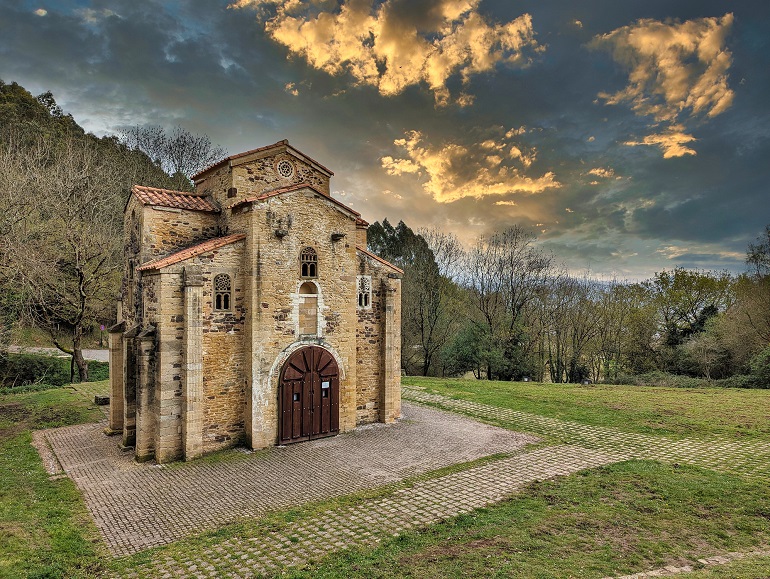
San Miguel de Lillo, located near Santa María del Naranco, was originally part of a larger church complex. Despite only a third of the original structure remaining, it continues to impress visitors with its architectural innovation and decorative elements. The building features distinctive latticed windows, intricate stone reliefs depicting human and animal figures, and carved capitals that showcase the skilled craftsmanship of Asturian artisans.
La Foncalada
La Foncalada, a 9th-century fountain house, stands as the only surviving civil hydraulic work from the early medieval period in Europe. This stone structure, built during the reign of Alfonso III, features a triangular pediment decorated with the Victory Cross, symbolising Asturian identity. The fountain continues to channel water as it has done for over a millennium, testifying to the engineering capabilities of the Asturian kingdom.
Esculturas de Oviedo (Oviedo's Sculptures)
Oviedo has earned renown for its remarkable collection of public sculptures that transform the city into an open-air gallery. This artistic initiative, which began in the 1990s, has resulted in over one hundred sculptures being installed throughout the urban landscape. These works, created by both Spanish and international artists, range from classical to avant-garde styles, adding a contemporary cultural dimension to the historic city.
Colombian artist Fernando Botero's contribution, "Maternity", exemplifies his distinctive style with its voluminous, rounded forms. This bronze sculpture, depicting a mother and child with Botero's characteristic exaggerated proportions, has become one of the most photographed artworks in the city. Its smooth surfaces and gentle curves create a sense of tenderness that resonates with viewers regardless of their artistic background.
"The Return of Williams B Arrensberg" pays homage to filmmaker Woody Allen, who featured Oviedo prominently in his film "Vicky Cristina Barcelona" and has expressed great affection for the city. This life-sized bronze depicts Allen in a characteristic pose, creating a point of interest for film enthusiasts and casual visitors alike. The sculpture reflects the city's appreciation for cultural figures who have helped promote Oviedo internationally.
"La Bailarina" (The Dancer) captures the grace and movement of dance in static bronze. The sculpture's dynamic pose suggests motion frozen in time, with the figure's limbs extended in an expression of artistic freedom. Its placement in an urban setting creates an interesting dialogue between the fluidity of the human form and the structured environment of the city.
The statue of Mafalda, the beloved character created by Argentine cartoonist Quino, sits cheerfully on a bench in Campo San Francisco. This sculpture allows visitors to sit alongside the famous cartoon character known for her precocious social commentary. The approachable nature of this artwork makes it particularly popular with families and those familiar with the character's thoughtful observations on life and society.
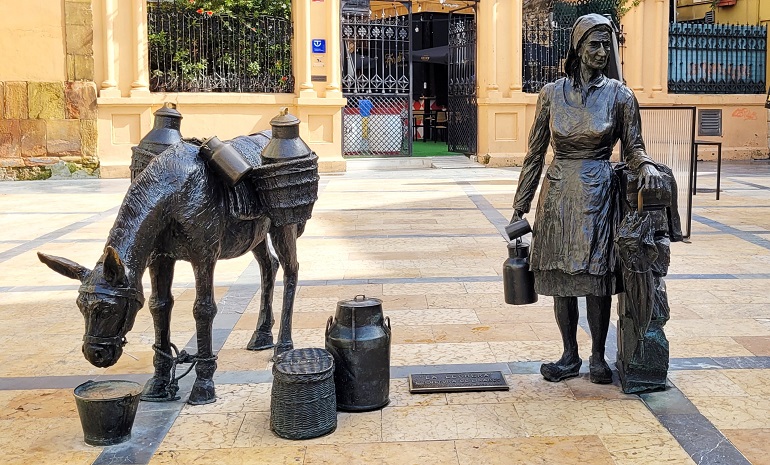
Other notable sculptures include Eduardo Úrculo's "The Traveller" at the train station, Manuel Arenas' "Asturcones" (depicting the indigenous Asturian ponies), Manuel Garcia Linares's "La Lechera" (the milkmaid) on Plaza de Trascorrales, and Sebastián Miranda's "The Fish Seller", which celebrates traditional local occupations. Each sculpture contributes to the city's artistic landscape while often reflecting aspects of Asturian culture and history.
Top Museums
Museum of Fine Arts of Asturias
The Museum of Fine Arts of Asturias, located on Santa Ana Street next to the Cathedral, is Oviedo's major museum. It houses one of the best public art collections in Spain, comprising more than 15,000 works from the 14th to the 21st century. The collection features outstanding artists such as El Greco, Zurbarán, Ribera, Murillo, Goya, Sorolla, Picasso, Dalí, Miró, Tàpies and Barceló.
The museum is spread across three connected buildings: the Palace of Velarde (18th century), the House of Oviedo-Portal (displaying 19th century art), and the House of Solis-Carbajal (housing contemporary collections). The latter serves as an extension on Cathedral Square, featuring white walls and sharp, clean lines, making the building itself a work of art.
One of the museum's most notable treasures is one of only three apostolates by El Greco that can be seen in the world. The collection also includes works by Titian, Rubens, Juan Carreño Miranda, and many other European masters.
The Church Museum
Located on the top floor of the cathedral cloister, the Church Museum opened in 1990. The museum is housed in the baroque-style upper floor, built over the Gothic-style ground floor. Visitors access the museum through the Cathedral's La Perdonanza Door in Santa Barbara Lane, which leads to the museum lobby in what was originally a pre-Romanesque room.
The visit includes the Cathedral's Holy Chamber, which houses treasures of immense historical and cultural significance: the Cruz de la Victoria (Victory Cross) and the Cruz de los Ángeles (Cross of the Angels), which are symbols of Asturias and Oviedo respectively. The chamber also contains the Caja de las Ágatas (Box of Agate) and the Arca Santa (Holy Ark), which holds numerous relics, including the Santo Sudario (Holy Shroud).
Archaeological Museum of Asturias
The Archaeological Museum of Asturias is housed in the former cloister of the convent of San Vicente, a building with a rich history connected to the origin of the city. The building was declared a national monument in 1934 and was expanded in 2011. The museum occupies the site where the monastery of St. Vincent was located, which is related in ancient documents to the founding of Oviedo in 761 by Maximo and Fromestano.
The museum offers a journey through an exceptionally long historical period, from the Neolithic (about 4,500 years ago) to the Middle Ages, including the Roman occupation of Asturias during Emperor Augustus's time. The permanent exhibition is divided into five thematic areas: Prehistoric Times, Neolithic and Metal Ages, the Time of the Castros, Romans in Asturias, and Medieval Asturias.
Particularly noteworthy displays include the Sidrón Cave—the richest deposit in the world for studying Neanderthal DNA—and exhibits on the villages of the hill-fort culture. The cloister features heraldic pieces, remains of previous constructions, and sarcophagi, including one belonging to Doña Gontrodo (from 1186), a concubine of King Alfonso VII.
Pre-Romanesque Reception and Interpretation Centre
Located near the pre-Romanesque monuments of Santa Maria del Naranco and San Miguel de Lillo, this centre takes visitors on a tour through the different stages of pre-Romanesque art, linked to the political evolution of the Astur Kingdom between the 8th and 10th centuries.
Local Cuisine
Oviedo's cuisine offers a delightful taste of Asturias, with its blending of mountain and coastal influences. The city is renowned for fabada Asturiana, a hearty bean stew with chorizo and morcilla, and cachopo, breaded veal fillets filled with ham and cheese. Seafood lovers should try hake a la sidra, cooked in the region's famous cider, which is traditionally poured from a height. Don't miss the exquisite local cheeses like Cabrales and Gamonedo, or sweet treats such as carbayones (almond pastries) and frixuelos (Asturian crêpes). Festival foods include bollos preñaos (bread rolls with chorizo) and the special El Desarme menu in October featuring chickpeas with cod, tripe and rice pudding. With over 40 varieties of cheese and seasonal delicacies, Oviedo is truly a foodie's paradise where traditional recipes are treasured alongside innovative cooking techniques.
Shopping
Shopping in Oviedo combines traditional Spanish retail with contemporary options across several distinct areas. The elegant Calle Uría forms the main commercial thoroughfare, housing both accessible brands like Zara and H&M alongside luxury retailers such as Carolina Herrera. In the Old Quarter, shoppers will find traditional establishments around El Fontán Market, a historic wrought-iron building where local Asturian products including cheeses, cold cuts and cider can be purchased. Modern shopping centres include Centro Comercial Salesas in the city centre and Los Prados in the northern district. Most shops operate Monday to Saturday from 9:30 to 20:00, with traditional shops often closing during midday, while department stores maintain continuous hours from 10:00 until 21:00. Oviedo is particularly noted for quality clothing and accessories, with the city maintaining a reputation for well-dressed residents and personalised customer service.
Nature in and around Oviedo
Oviedo and its surroundings offer a variety of natural attractions that cater to outdoor enthusiasts and nature lovers. Within the city, the Campo de San Francisco is a sprawling park featuring ancient trees, sculptures, and tranquil walking paths. Overlooking the city is Monte Naranco, a popular destination for hiking and enjoying panoramic views of Oviedo and its surroundings. A short drive away, the Ruta de las Xanas provides a scenic hiking experience through a gorge with waterfalls and lush vegetation. For those willing to venture further, the Picos de Europa National Park, with its dramatic mountains and the iconic Lakes of Covadonga, offers breathtaking landscapes and opportunities for wildlife spotting.
Campo de San Francisco (San Francisco Park)
Campo de San Francisco serves as Oviedo's verdant heart, a sprawling 90,000 square metre park that offers respite from urban life. Originally part of the gardens belonging to the Franciscan monastery (hence its name), the park was converted to public use in the 19th century following the Ecclesiastical Confiscations of Mendizábal. Today, it stands as a beloved green space where locals and visitors alike come to stroll, relax and socialise.
The park boasts an impressive arboreal collection, with ancient specimens of chestnuts, plane trees, oaks, and English elms creating a lush canopy overhead. Seasonal blooms add splashes of colour throughout the year, from spring flowers to autumn foliage. Wide, formal avenues intersect with more intimate winding paths, creating varied spaces for different activities and moods. Benches placed strategically throughout the park invite contemplation and people-watching.
One of the park's most charming features is its resident peacock population. These majestic birds roam freely, often displaying their spectacular plumage to the delight of visitors. A serene duck pond adds to the park's natural appeal, creating a miniature ecosystem in the heart of the city. The park also houses numerous monuments and sculptures that reflect Oviedo's cultural heritage, including a notable tribute to Leopoldo Alas "Clarín", the renowned 19th-century writer who set his masterpiece "La Regenta" in Oviedo.
Perhaps the most historically significant feature within the park is the preserved Romanesque façade of the old San Isidoro Church. These ancient stone remnants stand as a testament to the city's medieval past, creating a poignant juxtaposition with the living greenery that surrounds them. The park's central location makes it a natural gathering place and a green corridor connecting different parts of the historic centre.

Parque de Invierno (Winter Park)
Parque de Invierno extends across 171,368 square metres on the southern edge of Oviedo, making it the city's second-largest green space. Created more recently than Campo de San Francisco, this expansive park offers a more modern approach to urban recreation while maintaining a strong connection to the natural environment. Its hillside location provides visitors with sweeping views of the city and the mountains beyond, creating a sense of escape despite its proximity to the urban centre.
The park boasts an impressive diversity of botanical species, with both native Asturian trees and ornamental varieties creating varied landscapes throughout the grounds. Seasonal changes transform the park dramatically, from the fresh greens of spring to the rich golden hues of autumn. Carefully designed pathways wind through these different environments, offering visitors the opportunity to experience changing vistas and natural settings.
Recreational facilities abound in Parque de Invierno, reflecting its conception as a modern space for active enjoyment. A skating track winds through portions of the park, while a climbing wall offers challenges for those seeking vertical adventure. Outdoor gym equipment stations are positioned at intervals, creating an accessible circuit for fitness enthusiasts. Sports areas cater to various activities, from traditional games to contemporary workouts, making the park a hub for physical wellbeing.
Children find special delight in the park's extensive play areas, which feature modern equipment designed for different age groups. Ping-pong tables scattered throughout the grounds provide opportunities for friendly competition. These recreational elements are thoughtfully integrated into the natural setting, creating a harmonious balance between structured activities and natural enjoyment.
Perhaps most significantly, Parque de Invierno serves as the starting point for the Senda Verde (Green Route), a popular walking and cycling path that follows an old railway line to Fuso de la Reina. This connection to the wider landscape emphasises the park's role as a gateway between urban Oviedo and the natural beauty of Asturias. The park thus serves not only as a destination in itself but also as a transition point to the region's broader outdoor offerings.
Getting There & Around
Oviedo is accessible via Asturias Airport (OVD), located about 45 minutes away, with ALSA buses running hourly from 08:00 to 20:00 for approximately €9, or taxis for around €60. Alternatively, travellers can reach the city by Renfe trains from Madrid, Barcelona and other major Spanish cities. Once in Oviedo, the historic centre is best explored on foot, as motor traffic is limited in many areas. The city offers an efficient local bus system (Autobuses Urbanos de Oviedo) with real-time arrival information at stops and a single fare of €1.20. For those preferring other options, Bolt e-scooters are available, and taxis can be hailed from ranks or booked through Radio Taxi Ciudad de Oviedo (☏ +34 985250000) or Radio Taxi Principado (☏ +34 985252500), though they are not inexpensive with a minimum charge of €4 during non-peak hours.
Best Time to Visit
The best time to visit Oviedo is between May and September when the weather is most pleasant for exploring the city. During these months, temperatures are comfortably warm, ranging from 20°C to 22°C, with August being the hottest month. This period also sees less rainfall compared to the rest of the year, making it ideal for outdoor activities and sightseeing. June, July, and August are considered the high tourist season, with August being the peak month for visitors. However, if you prefer a quieter experience whilst still enjoying favourable weather, consider visiting in May or September. The latter is particularly appealing as it coincides with the Fiestas de San Mateo, offering a lively atmosphere with concerts and theatre shows. Keep in mind that Oviedo's climate is generally milder than other Spanish cities, so even during summer, it remains comfortably warm rather than scorching hot.