Introduction

Located between Andalusia and the Valencian Community, the Region of Murcia consists of a single province. Both are named after their capital city, Murcia. Nearly half of the region's 1.5 million inhabitants live in the Murcia metropolitan area.
The Murcian region is almost entirely made of mountains (Baetic Ranges), intramountainous depressions and plateaux. It is the only part of Spain that has a semiarid Mediterrarean climate. The exceptional 330 days of sunshine that the region enjoys, combined with modern drip irrigation techniques, have contributed to make of Murcia the Huerta de Europa ('orchard and vegetable garden of Europe', as the region likes to dub itself), producing up to five harvests in a year. Nearly 15% of Europe's vegetables and 30% of Spain's fruits come from Murcia. The region's top produces are lettuce, artichokes, peppers, tomatoes, lemons, peaches, grapes, melons and plums.
The Costa Cálida ('Warm Coast'), Murcia's 250 km of coastline, is appropriately named for the region's hot and dry climate. The main seaside resorts are Cartagena, Mazarrón and Águilas.
Cuisine
Like in Valencia and Catalonia, rice dishes and seafood are an essential part of Murcian cuisine. Local specialties include arroz caldero (rice with fish from the Mar Menor), arroz con habichuela (rice with beans), arroz y conejo (rice with rabbit), arroz y costillejas (rice with ribs), ensalada murciana (salad of cooked tomatoes, boiled eggs, tuna, sweet onions, black olives and olive oil), michirones (dry beans dish cooked with ham, sausages, potatoes and laurel), paella huertana (vegetable paella), pastel de carne (round pastry filled with meat, tomato and egg), revuelto de huevo (scrambled eggs with runner beans, garlic, onions and ham), zarangollo (scrambled eggs with courgettes, onions, and occasionally potatoes).
Attractions
| Caravaca de la Cruz |
|---|
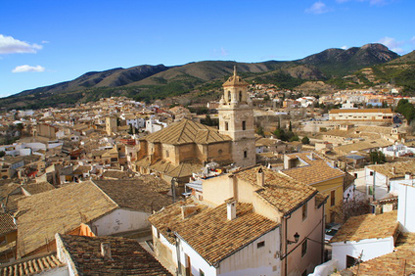
 Caravaca de la Cruz, a town steeped in history, boasts a medieval castle and the Basilica-Sanctuary of the True Cross, which houses a revered cross-shaped reliquary. The town's annual festival, held from 1-5 May, features the unique 'Horses of Wine' celebration, which is vying for UNESCO Intangible Cultural Heritage status. Nature enthusiasts can explore the Fuentes del Marqués Natural Park or trek along the 78 km Vía Verde, a former railway track turned natural walkway. Culinary delights include 'empedrado', a dish made with rice, white beans, and dried cod, and 'yemas de Caravaca', egg-based sweets covered in caramel or chocolate. The town is also home to Europe's largest collection of ethnic instruments at the Museo de Música Étnica Barranda. |
| Murcia |
|---|

Founded in 825 CE by the Moors as Medina sayyid, Murcia is a city where history comes alive through its stunning Gothic-Renaissance Cathedral of Santa María, built between 1394 and 1465. The city centre features the 18th-century Glorieta square along the Segura River and pedestrianised areas around Platería and Trapería Streets, where the lavish Casino social club showcases a Moorish-style patio inspired by the Alhambra. Known as Europe's Orchard, Murcia delights food enthusiasts with distinctive dishes like zarangollo (eggs with zucchini and onions), pastel de carne (traditional meat pies dating back centuries), and marineras (potato salad with anchovies on a crunchy doughnut). The city boasts impressive archaeological sites from the ancient Carthago Nova and hosts vibrant celebrations like the Feria de Murcia in September and the San Javier Jazz Festival. The University of Murcia, established in 1915, adds to the city's cultural fabric, whilst the Ermita de Jesús houses remarkable Passion sculptures by Francisco Salzillo. |
| Cartagena |
|---|

Cartagena, a historic port city, is renowned for its rich tapestry of cultures, having been founded in 227 BCE by the Carthaginian general Hasdrubal. The city flourished under Roman rule as Carthago Nova, and today, visitors can explore significant archaeological sites such as the well-preserved Roman Theatre Museum and the ancient Punic Walls. Cartagena is also home to the National Museum of Underwater Archaeology (ARQVA), showcasing its maritime heritage. The local cuisine features fresh seafood delicacies, notably Caldero, a traditional rice dish, and the vibrant Calle del Carmen is a hotspot for tapas and dining. Additionally, the Concepción Castle offers stunning panoramic views and insight into the city's military history, making Cartagena a compelling destination for history enthusiasts and food lovers alike. |
Other attractions

Almadenes Canyon
Jumilla castle
Lorca
Moratalla
Mula


 : Local interest
 : Moderately interesting
 : Outstanding place
 : Must-see in the country
 : Top cities in Europe