


| Contents |
|---|
Introduction
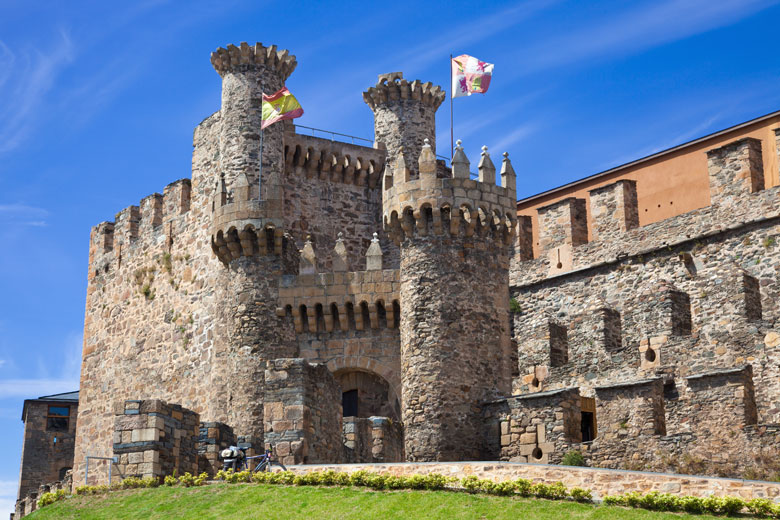
Ponferrada is the second most populated municipality in the Province of León with nearly 64,000 inhabitants. Named after the iron-reinforced bridge (Pons Ferrata) commissioned in 1082 to aid pilgrims on the Way of St. James, the city boasts a rich medieval history closely tied to the Knights Templar, who controlled the area from 1211 to 1312. The imposing Templar Castle, covering approximately 16,000 square metres, stands as the city's primary attraction, while other notable sites include the Renaissance-style Basilica de la Encina, the Clock Tower (the last remaining gateway of the medieval walls), and several museums documenting the region's industrial heritage. Though not particularly picturesque due to its mining past, Ponferrada serves as an excellent base for exploring nearby Las Médulas, a UNESCO World Heritage Site featuring a striking landscape created by ancient Roman gold mining techniques. The city comes alive during the annual Fiestas de La Encina in September and the summer Templar Night, when participants recreate 14th-century town life at the castle.
Interesting Facts about Ponferrada
- Ponferrada derives its name from "Pons Ferrata" meaning "Iron Bridge," which was built in 1082 by Bishop Osmundo of Astorga to ensure safe passage for pilgrims on the Camino de Santiago.
- The impressive Templar Castle (Castillo de los Templarios) covers approximately 16,000 square metres and was donated to the Knights Templar in 1178 by Ferdinand II of León to protect pilgrims.
- The Templars only controlled their fortress for about twenty years before the order was disbanded and its properties confiscated in 1311.
- Ponferrada is the last major town on the French route of the Camino de Santiago before reaching Santiago de Compostela.
- Las Médulas, ancient Roman gold mines and a UNESCO World Heritage Site, are located just a few kilometres from Ponferrada.
- The Romans exploited the area's mineral wealth, especially gold, as early as the 1st century CE.
- The Basilica de la Encina, built in Renaissance style in 1573, features a baroque tower dating from 1614.
- According to local tradition, the Templars discovered the statue of the Virgen de la Encina (the Virgin of the Holm Oak), the patron saint of El Bierzo, inside a holm oak around the year 1200.
- In 2023, Ponferrada received more than 113,000 tourists, generating approximately 15 million euros in direct economic impact.
- The tallest building in Ponferrada is the Torre de la Rosaleda, located in the Roseleda district.
- Ponferrada hosts several museums including the El Bierzo Museum, the Museum of Radio, the Railway Museum, and the Energy Museum.

History
Ponferrada's history is deeply intertwined with the Camino de Santiago, tracing its origins to a strategic medieval crossing point over the River Sil. In the late 11th century, Bishop Osmundo of Astorga commissioned an iron-reinforced bridge – the Pons Ferrata – to aid pilgrims journeying to Compostela. This structure not only gave the town its name but fostered the growth of two settlements: the ecclesiastical "Puebla de San Pedro" near the bridge and a fortified enclave established by King Fernando III of León. The Knights Templar’s arrival in 1178 under royal patronage marked a transformative chapter, as they expanded a former Roman castro into a formidable castle to protect pilgrims from bandits.
The Templar Castle evolved through successive medieval dynasties after the order’s dissolution in 1312. Lords from the Castro and Osorio families, including Count Pedro Álvarez Osorio, extended its walls and towers, creating the iconic polygonal fortress that dominates the town today. By the 16th century, Ponferrada had emerged as a thriving market town, its cobbled streets adorned with Renaissance churches like the Basilica de la Encina. The settlement maintained its importance as a royal borough under Catholic monarchs, though the castle gradually fell into disrepair until 20th-century restoration efforts revived its grandeur.
Ponferrada’s modern identity took shape through industrialisation, particularly after the 1908 discovery of local tungsten and coal deposits. King Alfonso XIII’s granting of city status that same year catalysed its transformation from agricultural hub to mining centre, with infrastructure projects like the ENDESA power station driving economic growth. While embracing this industrial legacy, the city retains profound connections to its Jacobean heritage, serving as both gateway to the Las Médulas gold mines and a pivotal stop for contemporary pilgrims traversating the French Way.
Main Attractions
Castle of the Knights Templar (Castillo de los Templarios)
The Castle of the Knights Templar is Ponferrada’s most iconic landmark and a must-visit for anyone exploring the city. Originally built in the 12th century, it was expanded and modified over the centuries, eventually becoming one of the largest and most impressive castles in Spain. The castle served as a fortress for the Knights Templar, who were tasked with protecting pilgrims on their way to Santiago de Compostela. Visitors can explore its towers, walls, and courtyards while learning about its history through various exhibitions. The Templum Libri exhibition inside the castle showcases rare manuscripts and codices, offering a glimpse into medieval knowledge and culture. Additionally, the Torre de Moclín provides insight into the daily life of medieval knights and castle inhabitants. During summer, the castle hosts Noche Templaria (Templar Night), a festival that

Historic Quarter (Casco Antiguo)
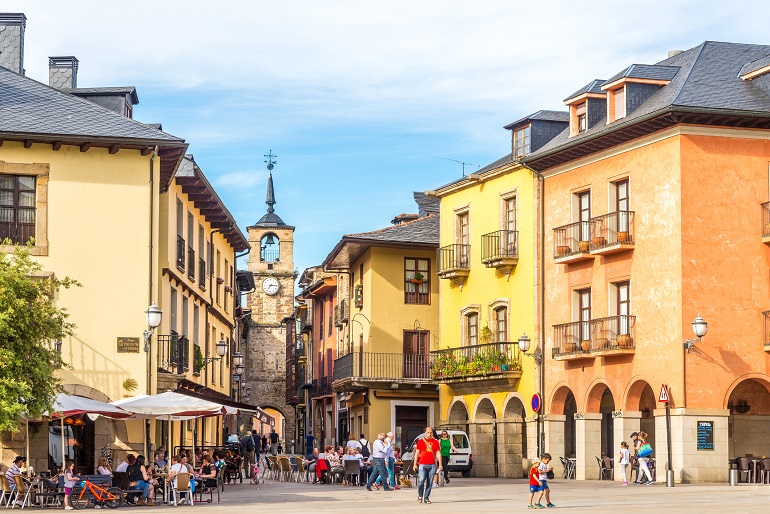
Ponferrada’s historic quarter offers visitors a chance to step back in time as they wander through its narrow cobblestone streets lined with traditional houses. Many buildings retain their original architectural features, such as wooden balconies and stone façades. Highlights include Calle del Reloj (Clock Street), which leads to the Clock Tower, and Calle del Cristo, known for its charming atmosphere. The historic quarter is also home to various small shops selling local products such as wine from El Bierzo and artisan crafts.
Plaza del Ayuntamiento (Town Hall Square)
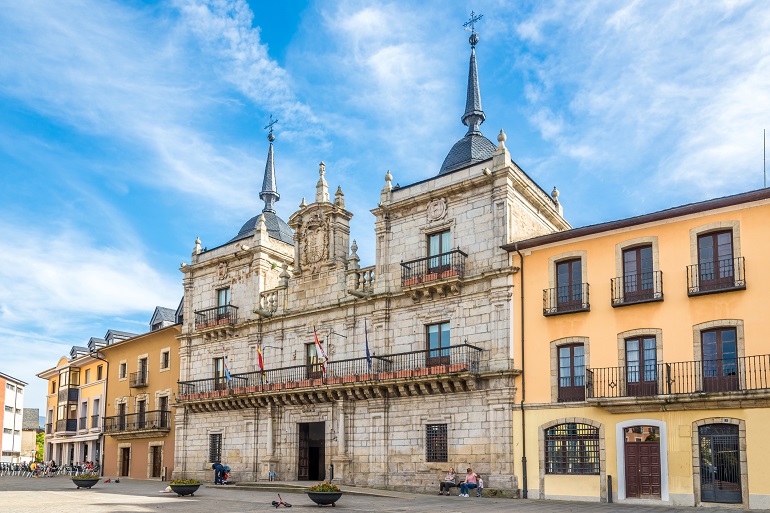
The Plaza del Ayuntamiento is Ponferrada’s central square and a focal point of city life. It is home to the 17th-century Town Hall building, which features two symmetrical towers topped with weather vanes. The square is surrounded by historic buildings and lively terraces where locals and visitors gather to enjoy food and drinks. This area is an excellent starting point for exploring Ponferrada’s old town, as several streets leading from the square are lined with shops, restaurants, and traditional houses. The plaza also serves as a venue for public events and celebrations throughout the year.
Clock Tower (Torre del Reloj)
The Clock Tower is one of Ponferrada’s most recognisable structures and an important remnant of its medieval past. Built in the 16th century above one of the original gates of the city’s defensive walls, it has undergone several modifications over time. The tower features an imperial shield of King Philip II alongside Ponferrada’s own coat of arms. Its clock was added in the 19th century, making it a functional as well as decorative feature of the cityscape. Visitors can admire this historic structure while walking through the old town or heading towards other nearby attractions.
Basílica Nuestra Señora de la Encina
The Basílica Nuestra Señora de la Encina is a significant religious site in Ponferrada dedicated to Our Lady of the Holm Oak (La Virgen de la Encina), who is also the patron saint of El Bierzo. The basilica was constructed between 1573 and 1673 on the site of an earlier medieval church that had been built by the Knights Templar. Its Renaissance-style façade is simple yet elegant, while its interior houses several notable artworks, including a statue of Our Lady of La Encina believed to date back to the 12th century. The basilica plays an important role in local religious celebrations, particularly during September’s La Encina Festival.
River Sil Promenade
The River Sil runs through Ponferrada, providing a natural setting for outdoor activities and relaxation. The riverside promenade offers walking paths that are popular among locals for leisurely strolls or exercise. Alongside scenic views of the riverbanks and surrounding hills, visitors can find green spaces ideal for picnics or resting after exploring the city. Several bridges cross the river, including modern structures as well as older ones that add to Ponferrada’s charm.
Top Museums
Museum of El Bierzo (Museo del Bierzo)
The Museum of El Bierzo is housed in a historic building dating back to 1565-1572, which once served as the town council meeting place, prison, and judge's residence. This museum provides a comprehensive journey through the history of Ponferrada and the El Bierzo region.
The collection spans from the Paleolithic era to the early 20th century, featuring:
- Cultural material objects from prehistoric times
- Artefacts from the Roman settlement and Las Médulas
- Exhibits on the Visigothic period and monastic life in the Valley of Oza
- A dedicated room for Ponferrada Castle
- Valuable gold and silver articles
- A coin collection ranging from the Middle Ages to the 20th century
- Examples of industrial archaeology
The museum also highlights the region's natural history, with exhibits on geology and local flora and fauna. Visitors can explore the evolution of human settlement in the area, from ancient times to modern developments.
The Light Factory Energy Museum (La Fábrica de Luz Museo de la Energía)
Located on Avenida de la Libertad, this museum focuses on the industrial heritage of Ponferrada. It offers visitors an insight into the region's energy production history and its impact on local development. The museum showcases how the city transitioned from traditional energy sources to modern technologies, highlighting the role of electricity in transforming the region's economy and daily life.
Interactive exhibits allow visitors to engage with the history of energy production, making it an engaging experience for both adults and children. The museum also explores the environmental impact of energy production and the efforts towards sustainability.
Templar Library and Ponferrada Centre of Investigation and Historical Study
For those interested in the Knights Templar, this institution provides an in-depth look at the medieval order's history and its significance to Ponferrada. The centre offers a wealth of information and resources for researchers and history enthusiasts alike. It houses extensive archives and publications related to the Templars, making it a valuable resource for anyone interested in this period of history.
The library also organises lectures and workshops, providing a platform for scholars and enthusiasts to share knowledge and insights about the Templars and their influence on the region.
Castillo de los Templarios (Templar Castle) Museum
While primarily known as a fortress, the Templar Castle also houses museum exhibits. Visitors can explore the weapons room, stables, and various towers, immersing themselves in the medieval atmosphere. The castle's architecture and historical significance make it a must-visit attraction in Ponferrada.
The castle's museum section offers insights into the military and strategic importance of the fortress during the Templar period. Exhibits include artefacts related to the daily life of the Knights Templar, as well as historical documents and relics that highlight the castle's role in regional history.
Museo Histórico del Bierzo
This museum focuses on the historical aspects of the Bierzo region, offering visitors a glimpse into the area's past through various exhibits and artefacts. It explores the social, economic, and cultural developments that have shaped the region over the centuries.
The museum also hosts temporary exhibitions that delve into specific themes or events in the region's history, providing a dynamic and engaging experience for visitors.
Local Cuisine
The local climate nurtures exceptional ingredients including pippin apples, conference pears, chestnuts, and walnuts, but the crown jewel is undoubtedly botillo, a distinctive cured meat delicacy with unmistakable flavour. The region is also renowned for its excellent wines with Designation of Origin El Bierzo that pair perfectly with local fare. Galician influences bring seafood specialities like octopus and cod to local menus, whilst trout from local rivers and handmade goat cheese round out the culinary offerings. Visitors will delight in Ponferrada's vibrant food scene, where traditional recipes harmoniously coexist with innovative cooking techniques to showcase the region's outstanding produce.
Getting There & Around
The easiest way to reach Ponferrada by car is via the A-6 motorway. For those preferring public transport, ALSA offers daily bus services from Madrid to Ponferrada for around €29.34, with the journey taking approximately four hours. The town is also an important railway hub, with regular train connections to cities like Madrid, León, and Santiago de Compostela. For local travel, Ponferrada has a bus network with stops at strategic points throughout the city. Taxis are available 24/7 through RadioTaxi Ponferrada, which can be reached at (+34) 987 087 087. They not only provide transport within the town but also organise visits to nearby attractions like Las Médulas and the Ancares of León.