Spain Guide  |
|---|
|
| | Top Spanish Cities |
|---|
|
| | Spanish Regions |
|---|
|
| | Europe Guide |
|---|
|
| | Travel Tools |
|---|
|
|
|
|
Canary Islands Travel Guide
 Teide volcano on Tenerife Island, Canary Islands. Teide volcano on Tenerife Island, Canary Islands.
Introduction

Located 1,500 km southwest of mainland Spain, 100 km off the coast of Morocco, the Canary Islands (Islas Canarias in Spanish) are the top tourist destination in Spain, with over 10 million visitors per year - a fifth of all tourist arrivals in Spain. Blessed with sunshine all the year round, the Canaries have become a winter refuge for Northern Europeans in need of warm weather, particularly Germans and Britons.
The Canaries are a volcanic archipelago composed of seven relatively large islands (Tenerife, Fuerteventura, Gran Canaria, Lanzarote, La Palma, La Gomera, and El Hierro) and six smaller ones (La Graciosa, Alegranza, Isla de Lobos, Montaña Clara, Roque del Este, and Roque del Oeste). All together they make up a land area of 7,493 km² (2,893 sq mi), a bit smaller than Corsica. The main population centres are Las Palmas de Gran Canaria and Santa Cruz de Tenerife. 83% of the Canaries's 2.1 million inhabitants live on the islands of Gran Canaria and Tenerife.
The local economy relies heavily on tourism, but tobacco, sugarcane, bananas, papayas, mangos, oranges, figs, melons, grapes, peaches, apricots and other fruits are also grown and exported.
Beaches are far from being the only attraction of these tropical islands. People come here to see nature in its most glorious state. The Teide National Park in Tenerife and the Garajonay National Park in La Gomera were both designated World Heritage Sites by the UNESCO, while te whole island of Lanzarote is a UNESCO Biosphere Reserve.
Cuisine
Canarian cuisine is a simple affair, making the most of the fresh local ingredients, including a wealth of ripe fruits and vegetables. The traditional cuisine blends harmoniously Spanish, Portuguese, and North African influences. Canarian cuisine has in turn had a considerable impact on Latin American cuisine through emigration, especially to Cuba, Puerto Rico, and Venezuela.
Canarian dishes, be it meat, fish or potatoes, are typically served with mojo, a moderately spicy sauce made with olive oil, garlic, paprika, and cumin, and flavoured with the likes of vinegar, lemon, orange or lime juice. The most common variety is the red mojo (made with dried red peppers and chillies), followed by the green one (coriander and parsley), while the orange mojo (bitter oranges) is the least often encountered. Another key Canarian ingredient is gofio, flour made from roasted wheat or sweet corn, that is added to most sauces, soups, stews, desserts, and even ice cream. Gofio is thought to be have been the main staple of the diet of the Guanches, the aboriginal inhabitants of the Canary Islands.
Canarian culinary specialties include the papas arrugadas (small unpeeled potatoes boiled in salt water and usually served with chicken and topped with mojo), puchero canario (a stew made of pumpkin, cabbage, sweet potatoes, pork and beef), ropa vieja (lit. "old clothes"; a dish of chicken and beef mixed with potatoes and chickpeas), and sancocho (a soupy fish stew with potatoes and mojo). For dessert, try bienmesabe (lit. "it tastes good to me"; almond cream dessert made of grounded almonds, lemon rinds, honey, cinnamon and egg yolks) or truchas de Navidad (semi-circular pies filled with sweet potato and almond - traditionally eaten in winter).
The Canaries have produced wine ever since the first vines were introduced by the Spanish in the 15th century. There are now ten Canarian Denominación de Origen, half of which on Tenerife. Banana liqueur and honeyed rum are two other popular drinks.
Attractions
Tenerife Island
Natural attractions
| Teide National Park ※ |
|---|

 Mount Teide, a stratovolcano rising 3,718 metres above sea level and 7,500 metres from the ocean floor, stands as the third-tallest volcanic structure in the world and Spain's highest peak. The national park surrounding it spans 18,990 hectares and features unique geological formations, including lava fields, craters, and the iconic Roques de García rock formations. The aboriginal Guanches considered Teide sacred, believing it to be the gate to hell (Echeyde), and archaeological sites within the park attest to this cultural significance. The park houses several dining establishments, including Spain's highest restaurant which serves local cuisine with panoramic views. The site also hosts the Observatorio del Teide with its renowned telescopes, making it an excellent location for stargazing. The park's 'Science and Legend' exhibition tells the tale of Tenerife's largest volcanic eruption from both scientific and Guanche perspectives, whilst the last actual eruption occurred in 1909. |
| Macizo de Anaga |
|---|

 Anaga Rural Park, a UNESCO Biosphere Reserve, is a captivating natural wonder on the northeastern tip of Tenerife. This ancient landscape, formed by volcanic eruptions 7-9 million years ago, boasts sharp peaks, deep ravines, and one of the largest laurel forests in the Canary Islands. The park is home to over 800 unique species of flora and fauna, making it the area with the highest concentration of endemic species in Europe. Visitors can explore 26 traditional villages nestled in the mountains, hike through misty forests that resemble enchanted woodlands, and discover hidden black sand beaches. The local cuisine features Canarian specialities such as 'papas arrugadas' (wrinkly potatoes) served with 'mojo' sauce, as well as dishes made from locally grown sweet potatoes, tomatoes, and goat's milk cheeses. For a truly unique experience, one can dine in cave dwellings or visit the Cruz del Carmen Visitors' Centre to learn more about this extraordinary ecosystem. |
| Macizo de Teno |
|---|

Teno Rural Park, spanning 8,063 hectares, is one of Tenerife's oldest geological areas, featuring rock formations over seven million years old. The park encompasses five traditional settlements and boasts dramatic landscapes including the towering Los Gigantes cliffs, deep ravines, and the famous Masca Gorge. Its diverse ecosystems support unique wildlife, including the endemic speckled lizard found nowhere else in the world, and the area has earned EU Special Protection Area status for its birdlife. Local artisans maintain centuries-old traditions, producing goat cheese, honey, and palm weaving crafts, whilst the hamlet of Masca, designated as an Asset of Cultural Interest, showcases exemplary traditional Canarian architecture. The park's agricultural heritage is visible in its distinctive terraced landscapes, where locals historically practised a sharecropping system called medianería. |
 Reserva Ambiental de San Blas
Reserva Natural Especial del Malpais de Guimar
Beaches
| Playa de Las Teresitas |
|---|

 Las Teresitas Beach, a stunning artificial beach created in the 1970s, boasts golden sand imported from the Sahara Desert. Stretching for 1.3 kilometres, it's protected by a breakwater that ensures calm, crystal-clear waters ideal for swimming and water sports. Originally a rocky, black sand beach, it was transformed using 270,000 tons of Saharan sand, making it unique among Tenerife's beaches. The beach offers various amenities, including beach bars, restaurants, and facilities for activities such as paddle surfing and kayaking. Interestingly, the area contains an important paleontological site with fossil mollusks from the Quaternary period. Local cuisine can be savoured at beachfront establishments, where visitors might enjoy traditional Canarian dishes like 'papas arrugadas' with 'mojo' sauce. |
 Abama
El Camison
El Duque
El Médano
Fañabé
La Tejita
Los Gigantes
 Benijo
El Bollullo
Las Vistas
Los Cristianos
Playa Jardín
Puerto Colon
San Juan
Family attractions
| Siam Park |
|---|

 Opened in 2008, Siam Park holds multiple world records, including Europe's largest waterpark at 185,000 square metres. The park features Thai-inspired architecture, boasting the largest collection of Thai-themed buildings outside Thailand. Its signature attractions include the Tower of Power, a 28-metre vertical slide through a shark-filled aquarium, and the Wave Palace, which produces the world's largest artificial waves reaching 3 metres in height. The park's Mai Thai River stands as the world's longest and highest-elevated lazy river at 8 metres. Whilst outside food is prohibited, visitors can dine at several themed venues, including the Beach Club restaurant and the Tea House Bar and Creperie. The park operates its own desalination plant, processing 700 cubic metres of seawater daily, and maintains water temperature at 25°C year-round. Siam Park has been crowned the world's best waterpark by TripAdvisor for nine consecutive years. |
Loro Park
Aqualand
Castillo San Miguel
Forestal Park
Jungle Park
Lago Martiánez
Monkey Park
Museum of Science and the Cosmos
Historical cities & towns
| Santa Cruz de Tenerife |
|---|
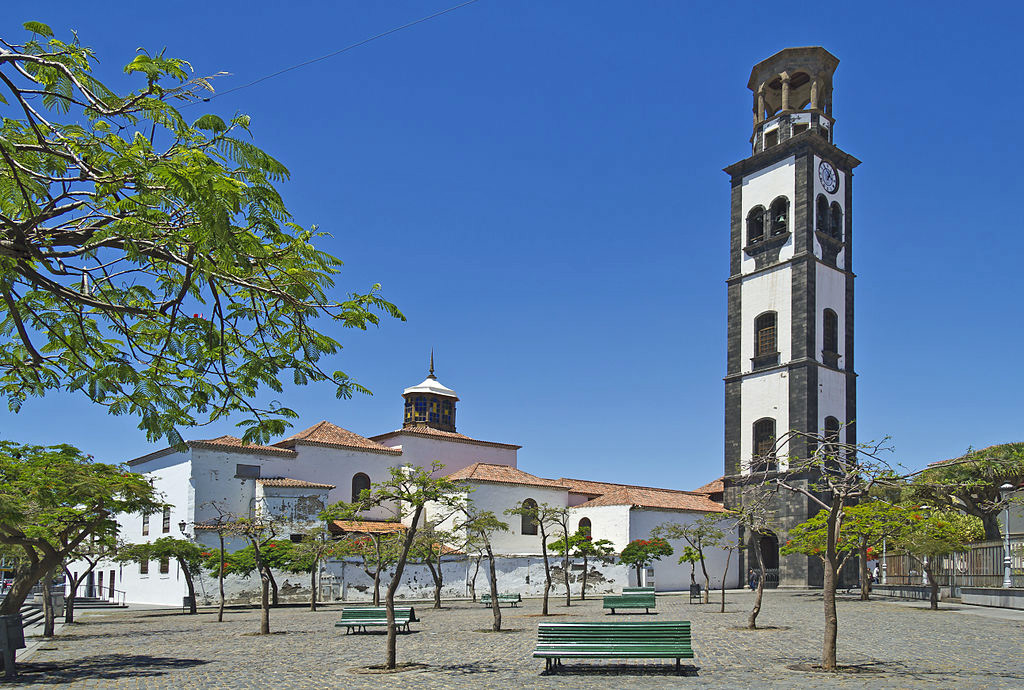
Santa Cruz de Tenerife, the capital of Tenerife, boasts a rich history dating back to its founding in 1494. The city's iconic Auditorio de Tenerife, designed by Santiago Calatrava, is a masterpiece of contemporary architecture. Visitors can explore the charming old town, centred around Plaza de España, which features a large circular lake reflecting the Anaga mountains. The city is home to several museums, including the Museum of Nature and Archaeology, showcasing the island's natural and cultural heritage10. Nature enthusiasts will appreciate the Palmetum, a botanical garden specialising in palm trees, and the nearby Anaga Massif, a UNESCO Biosphere Reserve. Foodies can savour local delicacies such as wrinkled potatoes with mojo sauce, fresh seafood, and the distinctive Barraquito coffee. The Santa Cruz Food Market offers an excellent opportunity to sample artisanal goat's cheese, a regional speciality. |
| Masca |
|---|

 Masca is a remote hamlet of around 90 inhabitants nestled in the Teno mountains, remaining isolated until the first road was built in 1972. This former pirate hideout features traditional stone houses perched dramatically on steep slopes, with a rich heritage dating back to the indigenous Guanche people who inhabited the area before Spanish colonisation. The village offers spectacular hiking opportunities, including the challenging Masca Gorge trail which takes 3-4 hours to complete and ends at a beach where boats can transport visitors to Los Gigantes. Local culinary specialities include papas arrugadas (wrinkled potatoes) with mojo sauce, whilst the village square hosts local craftsmen and live music. The area's ancient terraced fields, still visible today, showcase the agricultural ingenuity of its early inhabitants. A small white church that accommodates up to 80 people stands prominently against the mountain backdrop, connected to the village square which doubles as a viewpoint over the ravine. |
| Icod de los Vinos |
|---|
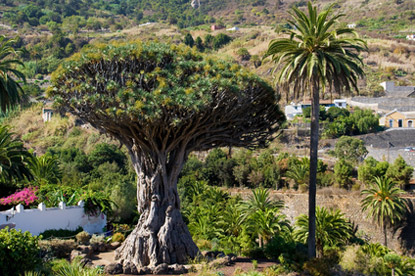
 Icod de los Vinos, founded in 1496, is renowned for its iconic Drago Milenario, a dragon tree estimated to be over 800 years old. The town's historic centre, a Site of Cultural Interest, boasts traditional Canarian architecture and cobbled streets dating from the 16th to 18th centuries. Visitors can explore the Cueva del Viento, one of the world's longest volcanic tubes formed 27,000 years ago, home to 190 unique species. The area's rich viticultural heritage is celebrated at the Museo de Malvasía, where guests can sample local wines, including the famous sweet Malvasia. For nature enthusiasts, the Drago Butterfly Park offers a tropical setting with various butterfly species. Local cuisine features dishes such as papas arrugadas (small potatoes boiled in salt water) and conejo en salmorejo (rabbit in spicy tomato sauce). |
San Cristóbal de La Laguna
Garachico
La Orotava
Los Silos
Puerto de la Cruz
Pyramids of Güímar
Santiago del Teide
Vilaflor
Gran Canaria Island
| Las Palmas de Gran Canaria |
|---|

Founded in 1478 and named for its abundant palms, Las Palmas de Gran Canaria features the historic Vegueta quarter with its characteristic wooden balconies and cobblestone streets, where some houses date back to the 15th century. The city boasts one of Europe's finest urban beaches, Playa de las Canteras, protected by a natural reef where visitors can observe surfers at the La Cícer section. The local cuisine uniquely blends African, European, and Latin American influences, with signature dishes including papas arrugadas (wrinkled potatoes) served with mojo sauce. The city houses several cultural institutions, including the Canario Museum displaying Guanche artefacts, the Columbus House museum documenting the city's role in transatlantic voyages, and the Elder Science Museum. The Guanarteme district has transformed over the past two decades into one of the city's most vibrant areas, whilst the traditional fishing quarters of La Isleta and San Cristóbal offer an authentic glimpse of local life. |
| Firgas |
|---|

Firgas, originally called Afurgad by indigenous inhabitants, is a small town situated 465 metres above sea level, featuring a remarkable 30-metre-long cascading waterfall in its town centre. The town's main attraction is the Paseo de Gran Canaria, adorned with Sevillian tiles displaying heraldic shields of Gran Canaria's municipalities. The area's history is deeply connected to water and sugar cane cultivation, with the latter unfortunately leading to the destruction of much of the original laurel forests. A notable historical landmark is the Molino del Conde, the oldest functioning watermill in the Canary Islands, built in 1517 and now housing the Gofio Museum where visitors can observe the traditional production of gofio, a local toasted grain meal. The town centre features beautiful pedestrian walkways, including the Gran Canaria Walkway and Canarias Walkway, which showcase carved stone representations of all Canary Islands. |
Natural attractions & Beaches
Maspalomas
Artenara
Other attractions
Arucas
La Gomera Island
| Garajonay National Park ※ |
|---|
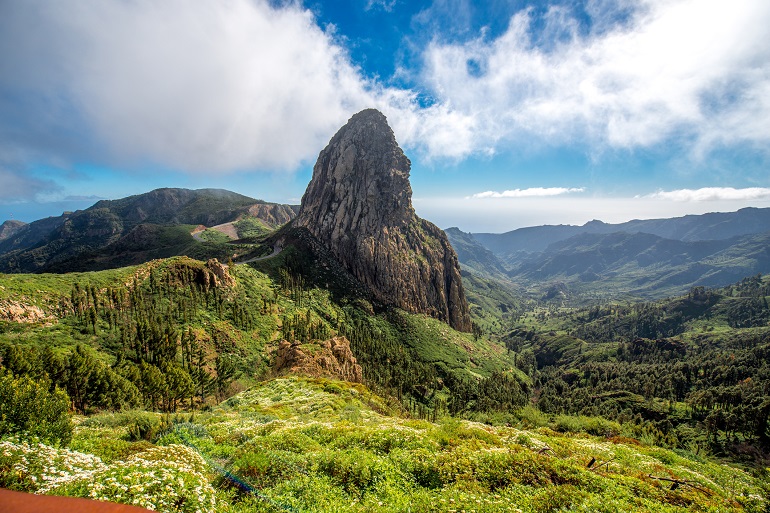
Garajonay National Park, a UNESCO World Heritage Site since 1986, is home to a rare and ancient laurel forest that once covered much of Southern Europe. The park's name comes from a tragic Guanche legend about star-crossed lovers Gara and Jonay. Visitors can explore 18 hiking trails, including the popular Route 1 to Laguna Grande, and ascend Alto de Garajonay, the island's highest point at 1,487 metres, offering panoramic views of neighbouring Canary Islands on clear days. The park boasts impressive biodiversity, including the critically endangered Gomera giant lizard and endemic bird species like the Bolles pigeon. Interestingly, the nearby village of Agulo is an excellent place to experience the unique Silbo Gomero, a whistled language used historically to communicate across the island's deep valleys. |
Other attractions
San Sebastián de la Gomera
La Palma Island
| Santa Cruz de La Palma |
|---|

Founded in 1493, Santa Cruz de La Palma is a historic port city with well-preserved colonial architecture, featuring distinctive wooden balconies along its maritime avenue. The city holds several pioneering achievements: it established Spain's first democratically elected town hall and was among the world's first cities to receive electric lighting in 1893. The main street, Calle Real, is lined with shops and colonial buildings, whilst the Plaza de España serves as the city centre with its 16th-century structures. Notable landmarks include the Castillo de Santa Catalina, a 16th-century fortress that once served as the city's main gateway, the white Castillo de La Virgen, and the Naval Museum, which houses a replica of one of Christopher Columbus's ships. The city maintains its original founding location, making it unique among Canary Islands capitals, and its port continues to be a vital connection point for ferries to mainland Spain and neighbouring islands. The surrounding area features the impressive Caldera de Taburiente, a 10-kilometre-wide volcanic formation with walls reaching over 2,000 metres in height. Along the harbour road, the Balcones de la Avenida Marítima presents a striking ensemble of 19th-century houses with colourful wooden balconies. The local cuisine centres on fresh seafood, particularly vieja fish, and traditional dishes like papas arrugadas - wrinkled potatoes served with mojo sauce. A peculiar local monument, the Monumento a El Enano, commemorates the island's unique tradition of dancing dwarfs wearing Napoleon hats. |
Other attractions
Los Canarios
Lanzarote Island
| Papagayo Beach |
|---|
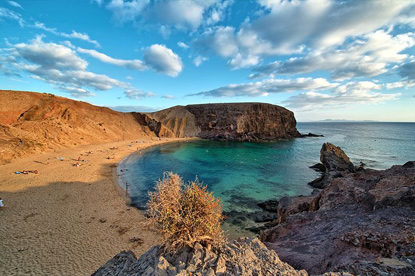
Playa Papagayo is a series of pristine coves with golden sand and turquoise waters, nestled within Los Ajaches Natural Monument. The beach is surrounded by protective cliffs that create sheltered swimming conditions, making it an excellent spot for snorkelling where visitors can observe various marine species including starfish, seahorses, octopi and occasionally rays. A 3 vehicle entrance fee applies until 6 pm, after which access becomes free. Two restaurants, El Risco and Casa El Barba, sit near the beach offering local dishes. The area holds significant archaeological wealth and belongs to a protected natural area with minimal facilities to preserve its unspoilt character. Visitors can explore the coastline through kayaking excursions that depart from Las Coloradas beach, combining water activities with learning about the Canary Islands' volcanic history. |
| Cueva de los Verdes |
|---|
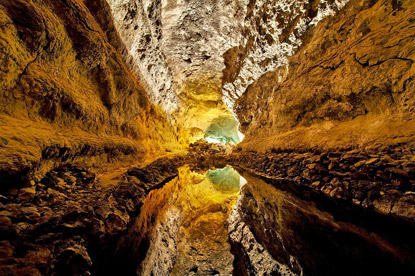
Cueva de los Verdes is a fascinating volcanic cave system formed around 3,000 to 5,000 years ago by lava flows from Monte Corona. This 6-kilometre-long lava tube extends from the volcano's crater to the sea, with an additional 1.5 kilometres underwater, known as the Túnel de la Atlántida. The cave served as a refuge for locals during pirate attacks in the 16th and 17th centuries. In the 1960s, artists Jesús Soto and César Manrique transformed the cave into a captivating attraction, using clever lighting to highlight the volcanic rock formations. Visitors can explore about 1 kilometre of the cave system during guided tours, marvelling at galleries up to 50 metres high and 15 metres wide. The cave complex also features a natural auditorium with excellent acoustics, which hosts musical events throughout the year. |
| Guatiza Cactus Garden |
|---|

The Jardín de Cactus, César Manrique's final masterpiece completed in 1991, transformed an abandoned volcanic quarry into an amphitheatre-style botanical garden housing over 4,500 specimens from 450 species of cacti and succulents from five continents. The garden features a restored 19th-century windmill, decorative volcanic stone sculptures, and ornamental ponds with orange goldfish. The on-site restaurant offers unique cactus-based dishes, including cactus burgers, croquettes, and ice cream, alongside traditional Canarian fare and local denomination wines. The garden's distinctive design incorporates artistic elements throughout, including a giant metallic cactus sculpture at the entrance, whilst the surrounding area historically cultivated prickly pears for cochineal production, a natural red dye. Current admission costs 8 for adults and 4 for children aged 7-12, with the garden open daily from 10:00 to 16:30. |
Natural attractions & Beaches
El Golfo Crater, Laguna & Beach
Playa Blanca, Yaiza
Timanfaya National Park
Other attractions
Arrecife
Betancuria
Femés
Teguise
Fuerteventura Island
Gran Tarajal
La Oliva
Puerto del Rosario
|


 : Local interest
 : Moderately interesting
 : Outstanding place
 : Must-see in the country
 : Top cities in Europe