Introduction
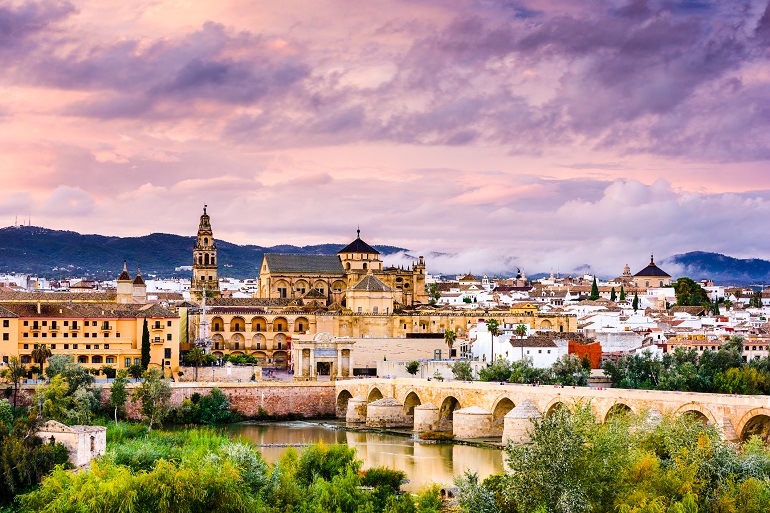
Córdoba (pop. 324,000) is a city steeped in over 2,000 years of history. Founded by the Romans in the 2nd century BCE, it later flourished under Moorish rule from the 8th century, becoming one of the largest and most advanced cities in Europe with a population reaching one million. The city reached its peak in the 10th century as a centre for education, economy and culture, where Muslim, Jewish and Christian communities peacefully coexisted. Today, Córdoba's historic centre is a UNESCO World Heritage Site, featuring the magnificent Great Mosque (Mezquita) which was later converted into a cathedral, the Roman Bridge spanning the Guadalquivir River, the Alcázar de los Reyes Cristianos with its stunning gardens, and charming traditional houses built around interior courtyards (casa-patio). Despite being often overlooked in favour of Seville, Granada and Malaga, Córdoba offers visitors a fascinating glimpse into Spain's diverse cultural heritage through its well-preserved architecture and historical sites.
Interesting Facts about Cordoba
- Córdoba’s Mezquita-Catedral is a unique mosque-cathedral where forest-like red-and-white arches meet a Renaissance nave, reflecting centuries of layered history.
- In the 10th century, Córdoba was one of Europe’s largest and most cultured cities under the Umayyad Caliphate, famed for learning and the arts.
- The historic centre of Córdoba, including the Mezquita-Catedral and Roman remains, is inscribed as a UNESCO World Heritage Site.
- The city’s patios burst into colour each May during the Festival de los Patios, recognised by UNESCO as Intangible Cultural Heritage.
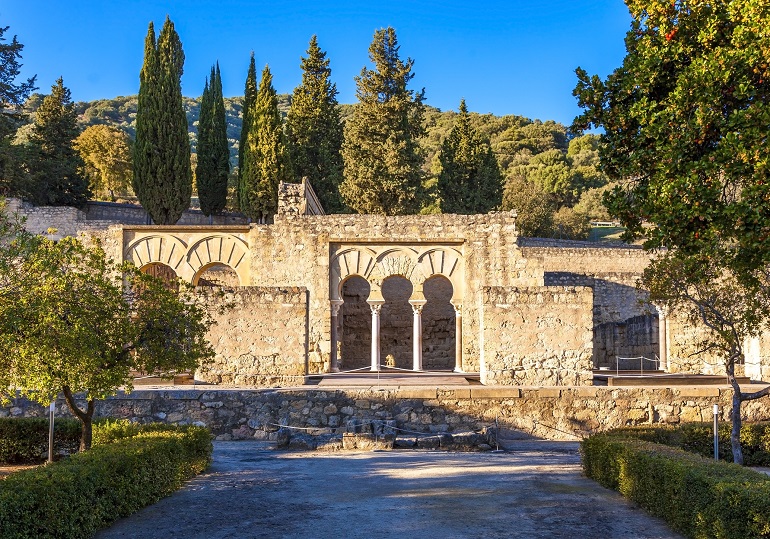
- Madinat al-Zahra, the ruined palatial city just outside Córdoba, is another UNESCO World Heritage Site linked to the Caliphate’s splendour.
- Córdoba’s Roman bridge over the Guadalquivir evokes its ancient origins, later reshaped through Moorish and Spanish periods.
- Summers in Córdoba rank among the hottest in Europe, with July and August often soaring to average highs near 37°C.
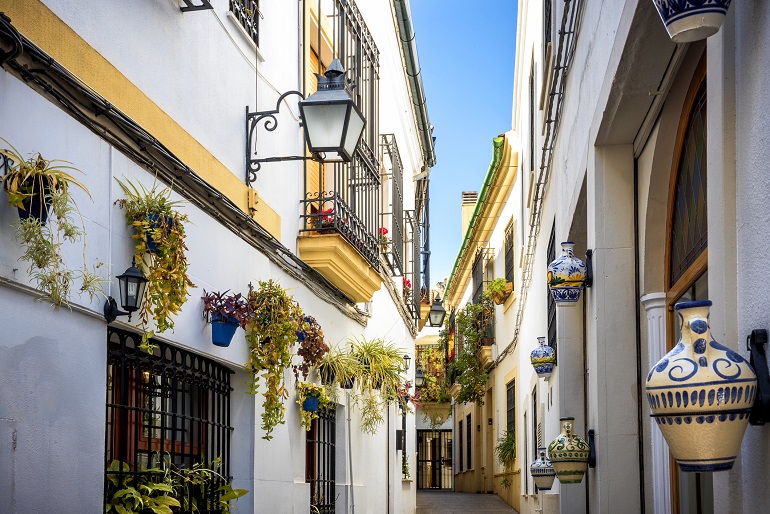
- The Judería (Jewish Quarter) preserves narrow lanes and whitewashed houses, recalling the city’s medieval coexistence of Jewish, Christian, and Muslim communities.
- Great thinkers associated with Córdoba include the philosopher Averroes and the Jewish polymath Maimonides.
- Traditional crafts such as leatherwork and silver-smithing have long been hallmarks of Córdoba’s artisanal heritage.
History
Roman Heritage and Early Foundations
Córdoba's remarkable history begins with its Roman founding in 152 BCE, though the area was previously occupied by Carthaginians and had shown human presence dating back 42,000 years with Neanderthal remains. The Romans transformed the settlement into Colonia Patricia between 46-45 BCE under Augustus, making it the capital of the prosperous province of Baetica. The city flourished as the main centre of Roman intellectual life in Hispania Ulterior, producing famous philosophers including Seneca the Younger, his father Seneca the Elder, and the poet Lucan. Despite a brutal episode in 45 BCE when Julius Caesar massacred 20,000 inhabitants for supporting Pompey's sons, Córdoba recovered magnificently under imperial rule. The Romans constructed forums, temples, theatres, and minted the first Colonia Patricia coins in 13 BCE, establishing foundations that would influence the city for centuries.
Islamic Golden Age and Caliphate Glory
Following the Muslim conquest in 711 CE, Córdoba experienced its most spectacular period of growth and cultural achievement. Abd al-Rahman I established it as his capital in 756 CE and founded the Great Mosque, which his successors enlarged until its completion around 976 CE. The city reached unprecedented heights when Abd al-Rahman III proclaimed himself Caliph of the West in 929, challenging the authority of Baghdad and North Africa. During the 10th century, Córdoba became the largest and most cultured city in Europe with an estimated population between 100,000 to 1,000,000 inhabitants. The city boasted approximately 300 mosques, countless palaces, and public buildings that rivalled Constantinople, Damascus, and Baghdad. Two magnificent palatine cities were constructed nearby: Madīnat al-Zahrā by Abd al-Rahman III and Medina Alzahira by al-Mansur. The city's artisans produced prized silks, brocades, leatherwork, and jewellery throughout Europe and the East, whilst its scholars rivalled Christian monks in manuscript production.
Christian Reconquest and Modern Development
Córdoba's Islamic golden age ended abruptly with the caliphate's collapse in 1009, leading to civil wars amongst petty Muslim kingdoms until Ferdinand III conquered the city in 1236, incorporating it into Christian Spain. The Great Mosque was converted into a cathedral, and new defensive structures including the Alcázar de los Reyes Cristianos and Torre Fortaleza de la Calahorra were erected. The city experienced a renaissance between 1530-1580, reaching 50,000 inhabitants by 1571 through agricultural trade and textile production from Los Pedroches. However, decline followed, reducing the population to just 20,000 by the 18th century. Modern revival began with railway connections to Seville in 1859, followed by links to Jerez, Cádiz in 1861, and Madrid in 1866. The city played a significant role in the Spanish Civil War when Colonel Ciriaco Cascajo launched the Nationalist coup on 18 July 1936, bombing the civil government and igniting the conflict. Today, Córdoba's historic centre, encompassing the mosque-cathedral and surrounding medieval streets, stands as a UNESCO World Heritage site, testament to its extraordinary multicultural legacy.
Main Attractions
La Mezquita (Mosque-Cathedral)
The Mezquita stands as Córdoba's most magnificent monument, a UNESCO World Heritage site that represents the pinnacle of Moorish architecture in Spain. Construction began in 785 CE under Abd al-Rahman I on the site of a Visigothic church, with subsequent rulers expanding the structure over two centuries. The prayer hall features a mesmerising forest of 856 columns of jasper, onyx, marble, and granite, supporting distinctive double-tiered red and white arches that seem to stretch infinitely. This architectural innovation allowed for a higher ceiling while maintaining structural integrity. The mihrab, or prayer niche, is particularly splendid with its Byzantine-influenced gold mosaics and intricate geometric patterns. After the Christian reconquest, a Renaissance cathedral was inserted into the centre in the 16th century, creating the unique hybrid structure visible today. The contrast between the rectilinear Christian elements and the organic flow of Islamic design creates a fascinating architectural dialogue that reflects Andalusia's complex history.

Alcázar de los Reyes Cristianos
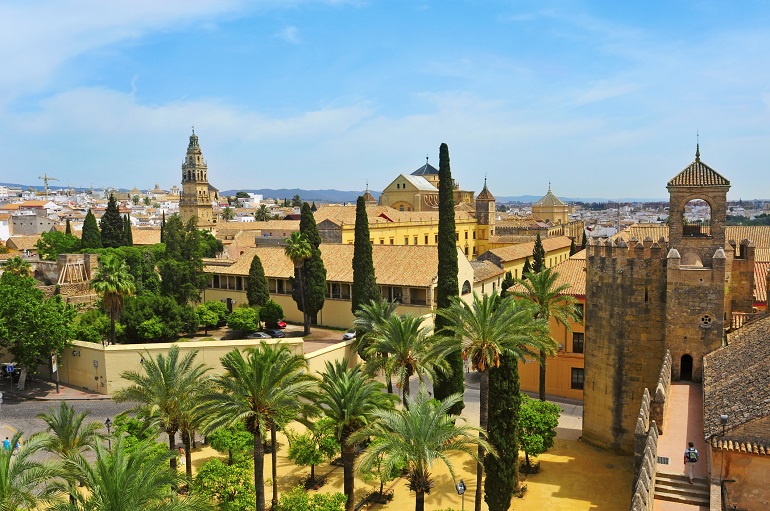
This formidable fortress-palace combines military functionality with royal elegance. Built in the 14th century by Alfonso XI on the remains of earlier Arab fortifications, the Alcázar served as a residence for the Catholic Monarchs Ferdinand and Isabella for eight years. Here, they planned their final campaign against Granada, the last Moorish stronghold in Spain, and later met with Christopher Columbus to discuss his proposed voyage to the Indies. The Alcázar's gardens represent some of the finest examples of Mudéjar landscaping, featuring geometric pools, cascading fountains, and carefully manicured cypress trees. Archaeological excavations have revealed remarkable Roman mosaics within the grounds, including a rare depiction of Oceanus surrounded by marine creatures. The fortress's towers—Torre de los Leones, Torre del Homenaje, Torre del Río, and Torre de la Vela—offer commanding views across the Guadalquivir River and the historic city centre.
Jewish Quarter (Judería)
The atmospheric Judería encapsulates medieval Córdoba with its labyrinthine network of narrow, winding streets and intimate plazas. This district flourished particularly during the Caliphate period when Córdoba was a centre of intellectual exchange between Jewish, Muslim, and Christian scholars. The 14th-century Synagogue, though modest in size, features exquisite Mudéjar plasterwork with Hebrew inscriptions and intricate floral motifs. Unlike many Jewish quarters across Spain that were abandoned after the 1492 expulsion, Córdoba's Judería maintained much of its original urban layout. The quarter's most enchanting spot is Calleja de las Flores, where whitewashed walls provide the perfect backdrop for cascading geraniums and bougainvillea. A statue of Moses Maimonides, the influential 12th-century Jewish philosopher and physician born in Córdoba, stands in a small plaza, with visitors often touching his foot for good luck. The quarter's architecture reveals the cultural synthesis that defined medieval Córdoba, with elements of Islamic design adapted to Jewish communal needs.
Roman Bridge (Puente Romano)
Spanning the olive-green waters of the Guadalquivir River, the Roman Bridge has connected Córdoba's banks for nearly two millennia. Though originally constructed in the 1st century BCE during the Roman Republic, most of the current structure dates from the Moorish reconstruction in the 8th century. The bridge stretches 331 metres in length and features 16 arches, creating a rhythmic silhouette against the water. For centuries, it served as the city's only crossing point and the main entrance for travellers and merchants. The central statue of San Rafael, the patron saint of Córdoba, was added in the 16th century. The bridge gained renewed fame when it appeared as the Long Bridge of Volantis in the television series Game of Thrones. At its southern end stands the Calahorra Tower, a fortified gate built by the Almohads in the 12th century to protect the bridge. The pedestrianised crossing now serves as a vibrant public space where locals and visitors gather, particularly at sunset when the Mezquita and the city are bathed in golden light.

Patios of Córdoba
The patios represent Córdoba's most distinctive living tradition, evolving from Roman and later Islamic domestic architecture as a response to the city's scorching summers. These private courtyards, hidden behind unassuming façades, transform into lush oases through careful arrangement of potted plants, climbing vines, and water features. During the annual Patio Festival (Fiesta de los Patios), held since 1921 and recognised by UNESCO as Intangible Cultural Heritage, residents open their homes to the public, competing for honours while sharing this intimate aspect of Córdoban life. The patios follow two main styles: traditional Córdoban patios with central fountains and plants arranged on ground level; or architecturally elaborate ones with plants displayed on walls and balconies. Many feature traditional elements like well-heads or ceramic decorations. While May offers spectacular displays during this festival period specifically many patios remain accessible year-round across neighbourhoods like San Basilio or Alcázar Viejo.

Palacio de Viana
Known as the "Museum of Patios," this aristocratic residence evolved over five centuries, incorporating various architectural styles from Gothic to Baroque. The palace belonged to the Marquises of Viana until 1980 when it was acquired by a banking foundation and opened to the public. Its 12 distinct courtyards and gardens create a fascinating chronological journey through the evolution of Córdoban domestic space. The Patio de Recibo welcomes visitors with Renaissance proportions and archaeological fragments, while the Patio de los Gatos (Courtyard of Cats) showcases a more intimate 18th-century design. The Jardín de los Naranjos features geometric beds of orange trees, typical of Andalusian garden design, while the Patio de las Columnas displays classical influences with marble columns and archaeological pieces. Beyond the courtyards, the palace houses an impressive collection of tapestries, leather artworks (cordobanes), firearms, and one of Spain's most important private libraries with over 7,000 volumes dating back to the 16th century. The palace offers a rare glimpse into the lifestyle of Andalusian aristocracy while demonstrating how successive generations adapted historical spaces to contemporary needs.
Medina Azahara
Rising and falling within the span of just 80 years, Medina Azahara represents one of the most ambitious architectural projects of medieval Europe. Located 8 kilometres west of Córdoba on the lower slopes of the Sierra Morena, this palatine city was commissioned by Caliph Abd al-Rahman III in 936 CE as a statement of Umayyad power and legitimacy. The site was arranged in three terraced levels: the upper level for the royal palace, the middle for government functions and gardens, and the lower level for the city proper and the grand mosque. At its height, up to 30,000 people lived and worked here, with water supplied by aqueducts from the mountains. The reception hall, with its rich marble decoration and Byzantine mosaics, exemplified the caliph's wealth and sophisticated taste. The site's name, meaning "Shining City," referred to the gleaming materials used in its construction—alabaster, marble, and gold—that reportedly could be seen glinting from miles away. This splendour was short-lived; during civil wars in the early 11th century, Medina Azahara was looted and burned, then gradually forgotten until archaeological excavations began in the early 20th century. Today, only about 10% of the site has been excavated, suggesting that many treasures still lie beneath the Andalusian soil.
Caballerizas Reales (Royal Stables)
Established in 1570 by King Philip II, the Royal Stables were created specifically to develop the Spanish horse breed, now known as the Andalusian or Pura Raza Española. Philip, a passionate equestrian, sought to create the "perfect horse" for both warfare and courtly display, resulting in the distinctive breed known for its intelligence, sensitivity, and elegant movement. The stables' architecture reflects their royal purpose, with vaulted stone ceilings, elegant arches, and a functional design that has changed little in four centuries. The main quadrangle could accommodate up to 80 horses, with additional areas for training, breeding, and care. During the Spanish Golden Age, horses from these stables were highly prized throughout Europe and featured prominently in portraits of royalty and nobility. Today, the Córdoban equestrian tradition continues with regular performances of "The Passion and Spirit of the Andalusian Horse," showcasing classical dressage, historical riding techniques, and the remarkable bond between horse and rider. The performances often incorporate elements of flamenco music and dance, highlighting the cultural synthesis that characterises Andalusia.
Plaza de la Corredera
Unlike the typical Andalusian plaza, Plaza de la Corredera follows a Castilian model similar to Madrid's Plaza Mayor, creating a striking architectural contrast within Córdoba's otherwise Moorish-influenced cityscape. Constructed in the 17th century under Corregidor Francisco Ronquillo Briceño, the rectangular plaza measures 113 metres by 55 metres, completely enclosed by three-storey buildings with 113 uniform façades and balconies. Historically, the plaza hosted a remarkable range of public activities: markets, bullfights (from which it derives its name, corredera meaning "running place"), public executions, and royal proclamations. Archaeological excavations beneath the plaza revealed substantial Roman remains, including a large section of mosaic flooring now visible through glass panels. The plaza's northern side features the Mercado Sánchez Peña, a former prison converted into a market in the 19th century. After a comprehensive restoration in the 1980s, the plaza has reclaimed its role as a social hub, with arcaded ground floors housing traditional taverns and shops selling local products like silver filigree, leather goods, and ceramics. The plaza's uniform architecture creates a theatrical setting that continues to serve its original purpose as a space for public gathering and celebration.

Calahorra Tower
Standing guard at the southern end of the Roman Bridge, the Calahorra Tower has protected Córdoba since the Almohad period in the 12th century. This defensive structure was built to control access to the city from the south and features a distinctive tripartite design with two large towers connected by a smaller central one. After the Christian reconquest, the tower was modified and strengthened, serving various purposes throughout its history including as a prison and a girls' school. Today, it houses the Museum of Al-Andalus, which explores the peaceful coexistence of Islamic, Jewish, and Christian cultures during medieval times. The museum's exhibits include models, audiovisual presentations, and artefacts that illustrate the scientific, philosophical, and artistic achievements of this golden age. From the tower's roof terrace, visitors can enjoy panoramic views of the Roman Bridge, the Guadalquivir River, and the Mezquita-Cathedral, offering a perfect vantage point to appreciate Córdoba's historical layout and architectural evolution.
Top Museums
Art Museums
Museum of Fine Arts (Museo de Bellas Artes)
This museum, one of the oldest in Córdoba, houses an impressive collection of paintings from the Andalusian Baroque era onwards. Visitors can admire works by renowned Spanish artists such as Valdés, Goya, and Murillo, as well as pieces by local Cordoban artists including Carlos de Haes, Romero Barros, and Zuloaga. The museum's most valuable collections pertain to the Baroque and 19th century, often featuring Cordoban or Andalusian artists, alongside works by Italian Renaissance masters.
Julio Romero de Torres Museum
Dedicated to the life and work of Julio Romero de Torres, one of Spain's greatest painters, this museum is a must-visit for art enthusiasts. It showcases the artist's provocative paintings, many featuring nude women, and is renowned for capturing the essence of Andalusian folklore. Notable works include "Naranjos y Limones", "Cante Hondo", and "La Chiquila Piconera".
History and Archaeology Museums
Archaeological Museum
Housed in a grand Renaissance palace, this museum offers a fascinating journey through Córdoba's history. It displays artefacts from various eras, including Iberian, Roman, Visigothic, Islamic, and Renaissance periods. Highlights include the Roman head of Drusus, the bronze deer statue of Medina Azahara, and the Visigothic Treasure of Donjimeno.
Living Museum of Al-Andalus (Museo Vivo de Al-Andalus)
Located in the Calahorra Tower, this museum provides insight into the multicultural history of Córdoba during the Al-Andalus period. Its eight rooms offer a journey through the culture of Al-Andalus, exploring the coexistence and collaboration between Christians, Jews, and Muslims from the 9th to 12th centuries.
Unique and Decorative Arts Museums
Viana Palace (Palacio de Viana)
This 14th-century stately mansion, built on the remains of a Roman building, is famous for its twelve beautiful courtyards and gardens. Known as the "Museum of Patios", it showcases typical Cordoban floral courtyards and offers visitors a glimpse into aristocratic life through the centuries.
Leather Museum (Casa Museo Arte Sobre Piel)
Situated near the Mezquita, this unique museum preserves the ancient tradition of Cordobanes (leather crafting). It features the artwork of Ramón García Romero, who played a crucial role in saving this craft from extinction, and displays various leather artworks and tools.
Botanical Museum
Ethnobotanical Museum
Set within a 5.5-hectare garden, this museum explores the relationship between humans and plants. It houses a valuable collection of paleo-botanical fossils and showcases a wide variety of Andalusian and Spanish flora.
Local Cuisine
Córdoba's cuisine is a delightful fusion of Mediterranean flavours influenced by the various civilisations that have shaped the region's culinary heritage. At the heart of Cordoban cooking is olive oil, which serves as the foundation for most dishes. The city's most celebrated speciality is salmorejo, a refreshing cold tomato soup thickened with breadcrumbs and typically garnished with boiled egg and jamón serrano. Meat lovers should not miss rabo de toro (oxtail stew), a dish with Roman origins that showcases the city's bullfighting tradition. Another local favourite is flamenquín, consisting of pork loin wrapped in jamón serrano, breaded and deep-fried to golden perfection. For those with a sweet tooth, pastel cordobés offers a unique sweet-savoury experience – a circular puff pastry filled with angel hair (a sweet pumpkin jam) and topped with almonds, sugar and cinnamon. Vegetable dishes also feature prominently, with berenjenas con miel (fried aubergines drizzled with honey or molasses) reflecting the city's Moorish heritage. To complement these delicacies, sample the local Montilla-Moriles wines, particularly the sweet Pedro Ximénez, which pairs wonderfully with desserts.
Shopping
The city centre features pedestrianised shopping streets, with Calle Gondomar considered the most important shopping thoroughfare, followed by Cruz Conde Street and Calle Concepción, all radiating from Plaza de las Tendillas. Here you'll find major fashion brands like Zara, Pull&Bear, and Stradivarius alongside department stores such as El Corte Inglés. For traditional goods, the Jewish Quarter and areas around the Mezquita-Catedral house artisan workshops selling silver filigree jewellery, leather goods, and local crafts. The Zoco Municipal marketplace offers a North African-inspired shopping experience with textiles and exotic goods. Several shopping centres are available, including El Arcángel (the largest, with 75 shops), La Sierra, and El Zoco. For bargain hunters, flea markets operate on different days: the Arenal market (Sundays), Mercadillo de las Setas (Tuesdays and Fridays), and Fuensanta market (Saturdays). Most large stores open from 10:00 to 21:00, while traditional shops typically operate from 10:00 to 13:30 and 17:00 to 20:30.
Nature in and around Cordoba
The city is flanked by the Sierra Morena mountain range, which includes two notable natural parks: Sierra de Hornachuelos and Sierra de Cardeña y Montoro. These parks feature dense woodlands, rolling hills, and diverse wildlife. The Sierras Subbéticas Natural Park, located south of Cordoba, is renowned for its limestone karst formations and peaks exceeding 1,500 metres. Within the city itself, the Sotos de la Albolafia provides an urban oasis along the Guadalquivir River, home to over 120 bird species. The province also boasts several protected wetlands, with the Laguna de Zóñar Natural Reserve being the largest, offering important habitats for wildfowl, particularly in winter. For botanical enthusiasts, Cordoba's Botanical Gardens showcase the region's flora and offer educational events.
Getting There & Around
Córdoba, located in Andalusia in southern Spain, is easily accessible via various transport options. The most convenient way to reach Córdoba is by the AVE high-speed train, which takes approximately 1 hour 40 minutes from Madrid's Puerta de Atocha station or just 45 minutes from Seville's Santa Justa station. For budget travellers, long-distance buses connect Córdoba with major Spanish cities, taking around 4 hours 50 minutes from Madrid and 2 hours from Seville, with tickets typically costing between 20-30 euro one-way. If you're driving, the A4 Highway (Andalusia Highway) is the main access route, connecting Madrid to Córdoba in about 4 hours, while the journey from Seville takes approximately 1 hour 30 minutes. Although Córdoba doesn't have an international airport, travellers can fly to nearby Seville (1.5 hours away by road) or Málaga (2 hours away), then continue their journey by train, bus or car. Upon arrival, the city's train and bus stations are conveniently located opposite each other near the city centre, with taxis and local buses available for the final leg to your accommodation.
Best Time to Visit
The best time to visit Cordoba, Spain is during the spring months of April and May or the autumn months of September and October. During these periods, the weather is pleasantly mild, with temperatures ranging from the mid-teens to mid-twenties Celsius, making it ideal for exploring the city's historic sites and charming streets. Spring is particularly delightful, as the city bursts into bloom and hosts several vibrant festivals, including the famous Fiesta de los Patios Cordobeses in May. However, be prepared for larger crowds and higher prices during this peak season. Autumn offers a quieter alternative with equally agreeable weather and the added bonus of fewer tourists. It's best to avoid the scorching summer months of July and August when temperatures can soar above 35°C, making sightseeing uncomfortable. Winter can be chilly but mild, offering a peaceful atmosphere for those who don't mind cooler temperatures and the occasional rainy day.


