


| Contents |
|---|
Introduction
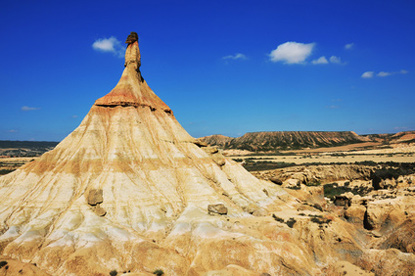
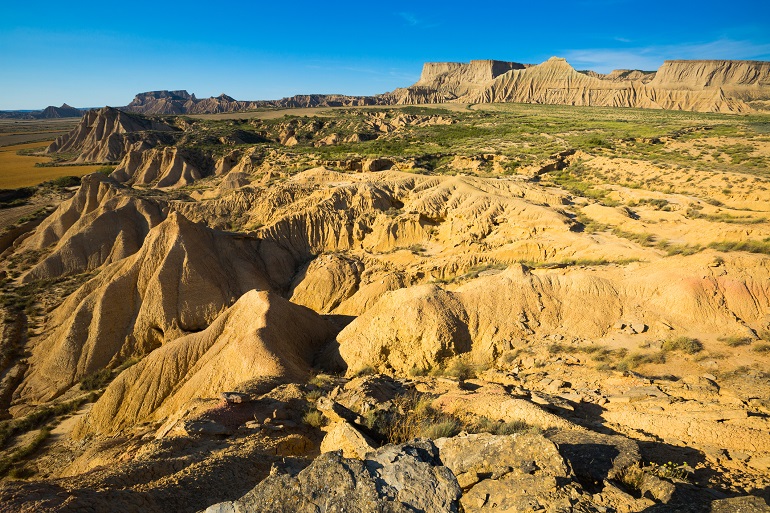
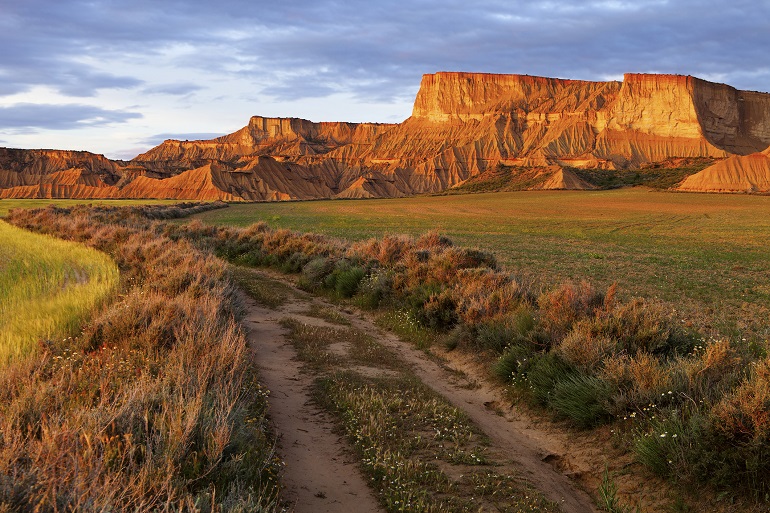
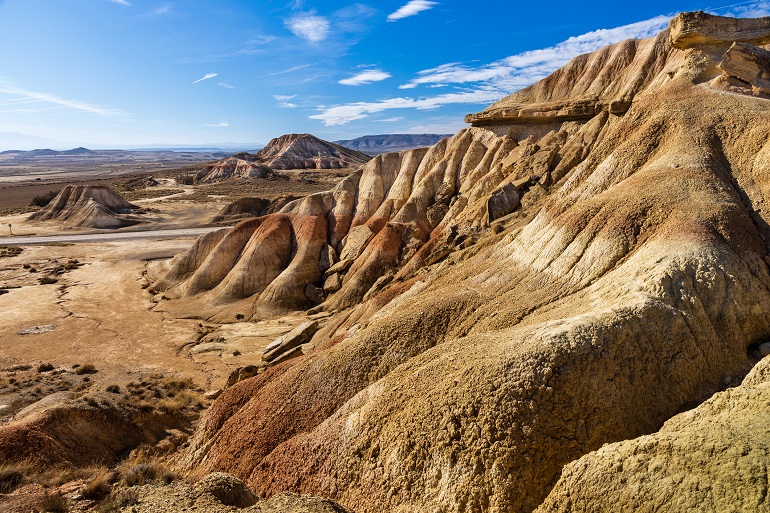
Bardenas Reales, located in the southeast of Navarre, is a semi-desert natural region covering approximately 42,000 hectares. This UNESCO Biosphere Reserve (designated in 2000) features a striking landscape of clay, chalk and sandstone that has been eroded by water and wind, creating unusual formations including ravines, plateaus, tabular structures and isolated hills known as cabezos. The area is divided into several distinct zones, with the most visited being La Bardena Blanca, home to the iconic rock formations Castildetierra and Pisquerra. Despite being commonly referred to as a desert, it is technically an arid area receiving more than 300 litres of rainfall per square metre annually. The region experiences few but torrential rainfalls, very hot summers and cold winters. With no urban settlements within its boundaries, Bardenas Reales can be explored via marked paths by foot or car, offering visitors a chance to experience landscapes reminiscent of the American Wild West just 1.5 hours from Zaragoza and 1.25 hours from Pamplona.
Activities and Attractions
Exploring the Desert
The desert is divided into four distinct zones, each offering unique experiences:
- Blanca Baja: The most visited "tourist" part where most tours take place
- Blanca Alta: An excellent area for hiking enthusiasts
- El Plano: A flat area that can be viewed from a distance
- Negra: The "greenest" part of the desert with more vegetation
Visitors can explore this natural park in various ways:
- Walking/Hiking: Numerous marked trails for all difficulty levels
- Cycling/Mountain Biking: Nine routes along farming tracks throughout the park
- Car Tours: A 25km perimeter track around La Bardena Blanca offers the most beautiful views
- 4x4 Tours: Guided tours to see unusual places with expert explanations
- Alternative Transport: Options include Segway, e-bike, and horseback riding
Notable Hiking Trails
Castildetierra Trail
This iconic trail takes you to the symbol of the desert—a large rocky peak known as Castildetierra. The formation is the result of millions of years of erosion. From the car park, a 2km round trip path allows you to circle this landmark while descending into the canyon.
La Piskerra and El Rallon
Located in the Blanca Alta section, this 3-hour hike takes you through a canyon with stunning orange hues and to another "head" formation called the Cabezo de las Cortinillas. The trail offers magnificent views of the ravined landscape.
Cabezo de las Cortinillas
A shorter half-hour hike leading to a flat summit that forms a large platform. Concrete stairs embedded in the ground (though somewhat twisted in places) lead to the summit, which is covered with a grey-green carpet of dry grass. The platform offers panoramic views of the surrounding Bardenas landscape.
Easy Family Walks
For those travelling with children or seeking less strenuous options, there are several easy walks available:
- 3.02-mile easy trail taking approximately 1 hour 28 minutes
- 3.37-mile easy trail taking approximately 1 hour 33 minutes
- 2.32-mile easy trail taking approximately 1 hour
Intermediate Hikes
For more experienced hikers:
- 7.42-mile intermediate trail taking approximately 3 hours 8 minutes
- 7.31-mile intermediate trail taking approximately 3 hours 27 minutes
- 7.86-mile intermediate trail taking approximately 3 hours 17 minutes
Historical Attractions
Land of Castles
The Bardena was once a border territory of the Kingdom of Navarra, first with the Muslims and later with the Kingdoms of Castile and Aragon. Several castles and surveillance watchtowers were built, including Aguilar, Sanchicorrota, La Estaca, Mirapex, Peñaflor and El Fraile.
Bardeneras Cabins
Throughout La Bardena, visitors can find numerous corrals and cabins that served as shelter for shepherds and farmers. These simple constructions were where traditional shepherd's migas (a dish made with stale bread, lamb suet, water, garlic and salt) were cooked over an open fire.
Viewpoints
La Blanca Viewpoint
This viewpoint includes the area of Piskerra and El Rallón and offers the most characteristic and spectacular landscape of the Bardenas Reales. Ravines, hills and cut forts create a setting reminiscent of a Wild West film.
Belvedere Viewpoint
Located at the top of a hill near the tourist information centre, this viewpoint provides a high vantage point over the whole of the Bardenas, allowing visitors to take in the vast arid ochre-coloured desert and its distinctive peaks.
Important Information
When visiting the Bardenas Reales, it's essential to respect the protected environment:
- Stay on marked paths only
- Certain areas are prohibited to protect the fragile landscape
- A military zone exists in the middle of the desert where access is forbidden
- Bring water and appropriate clothing for the arid climate
The Bardenas Reales offers a unique landscape in Europe, providing visitors with an otherworldly experience that feels like walking on the moon or in the American Wild West—all within easy reach of major Spanish cities like Zaragoza and Pamplona.
Getting There and Around
You can access this UNESCO Biosphere Reserve via several entry points. The main access is from the village of Arguedas, though there are other secondary entrances available. The park's Information Centre serves as an excellent starting point for your visit, where you can collect free maps and valuable information about the 42,500-hectare park. Many visitors explore the area by car, following the 32km circular route through the Blanca Baja area that covers most major attractions in about 1-2 hours depending on stops. For a more adventurous experience, numerous companies offer guided tours using 4×4 vehicles, buggies, quads, segways, or even horses. Alternatively, you can rent electric mountain bikes to explore the park's 700 kilometres of back roads.
Best Time to Visit
Seasonal Considerations
- Spring (March to May): This is an excellent time to visit, with mild temperatures and a greener landscape. The weather is pleasant, making it ideal for outdoor activities such as hiking and exploring by bike or car.
- Autumn (September to November): Similar to spring, autumn provides comfortable temperatures and a vibrant landscape, making it another peak season for tourism.
- Summer: While the scenery is dramatic, summer can be extremely hot, which may make exploring less enjoyable. However, if you prefer warmer weather, this might still be a good time for you.
- Winter: Winters are cold, but if you're interested in capturing unique winter landscapes or prefer fewer tourists, this could be a good option. Keep in mind that the sun rises late and sets early, limiting your daytime exploration.
Weather After Rainfall
Visiting after rainfall is highly recommended, as it enhances the beauty of the landscape. The temperature drops, and the scenery becomes even more dramatic, making it perfect for photography.
Time of Day
The park is open from 8 AM until one hour before sunset. Unfortunately, this means you cannot experience the stunning sunset views within the park itself. However, the daytime offers plenty of opportunities to explore and enjoy the unique landscapes.
Additional Tips
- Access and Restrictions: Ensure you stay on marked paths to protect the fragile environment. Some areas may be restricted due to military activities or environmental reasons.
- Preparation: Bring plenty of water, sunscreen, and comfortable clothing to cope with the arid climate.
- Guided Tours: Consider guided tours for a deeper understanding of the park's geology and history.
By visiting during the spring or autumn and being mindful of the park's rules and climate, you can have a memorable and enriching experience in the Bardenas Reales.