Scotland Guide  |
|---|
|
| | Top Destinations |
|---|
|
| | Scottish Regions |
|---|
|
| | Europe Guide |
|---|
|
| | Travel Tools |
|---|
|
| | UK & Ireland Guide |
|---|
|
|
|
|
 Eilean Donan Castle Eilean Donan Castle
Introduction
The Highland council area is Scotland's largest and most thinly populated region (with only 9 inhab./km²). It covers the greatest part of the Scottish Highlands.
Highland's administrative centre is Inverness (pop. 60,000), where over a quarter of the region's inhabitants live. It is one of the best ranked British cities for its quality of life, and is also one of Europe's fastest growing cities.
The Highlands are renowned for their dramatic natural scenery, in particular for the wild and rugged mountains such as Ben Nevis and Glen Coe.
Scotland's most famous lake, Loch Ness, is the backbone of the Highlands, running over 37 km (23 mi) southwest of Inverness. Superbly sighted at the junction of Loch Duich, Loch Long and Loch Alsh, the medieval castle of Eilean Donan is one of Scotland's most picturesque spots. Another familiar Highland scene is the Glenfinnan Viaduct, which featured, among others, in the Harry Potter film series.
Attractions
Caithness
| Castle & Gardens of Mey |
|---|
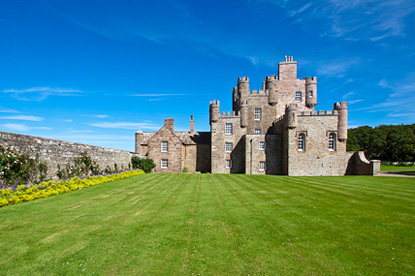
 The Castle of Mey, built in 1566, holds the distinction of being the most northerly inhabited castle on mainland Britain and offers spectacular views across the Pentland Firth to the Orkney Islands. Originally named Barrogill Castle, it was purchased and lovingly restored by Queen Elizabeth The Queen Mother in 1952, who spent many happy summers there until her death in 2001. The castle features a unique walled garden where vegetables are still grown for the Royal dining table, whilst the middle section is surrounded by fruit and herbaceous borders. Visitors can tour the castle's intimate rooms, including entertaining spaces, bedrooms and kitchens, where the Queen Mother's frugal nature is evident through various personal touches, such as her shell collection from beach walks displayed in the front hall. The grounds include an Animal Centre housing donkeys, pigs and geese, whilst the on-site Granary Lodge has been converted into luxury bed and breakfast accommodation. The castle still maintains its Royal connection, with King Charles regularly visiting in August, during which time the castle closes to the public. |
Sutherland
| Dunrobin Castle |
|---|

 Dunrobin Castle, one of Britain's oldest continuously inhabited houses dating back to the early 1300s, boasts 189 rooms and features distinctive French château-style architecture with towering conical spires designed by Sir Charles Barry, who also designed London's Houses of Parliament. The castle has served multiple purposes throughout its history, including as a naval hospital during World War I and a boys' boarding school from 1965 to 1972. Its magnificent formal gardens, modelled after the Palace of Versailles, slope down to the sea and create a clever optical illusion when viewed from the castle's drawing room. Visitors can enjoy daily falconry displays featuring peregrine falcons, gyrfalcons and Harris hawks on the castle lawn, explore the Victorian museum housed in an 18th-century summer house, and take self-guided tours through the state rooms that showcase centuries of clan history. The castle grounds also feature ancient Pictish stones, and the property's name includes 'dun', suggesting the presence of earlier defensive structures in the area. |
Inverness & Nairn
| Glen Coe National Nature Reserve |
|---|

 Glen Coe was formed over 420 million years ago by a supervolcano and later sculpted by massive glaciers, creating its distinctive U-shaped valley. The reserve encompasses 21 square miles and features eight Munros, including Bidean nam Bian at 1,150 metres. The area gained tragic notoriety from the 1692 Glencoe Massacre, where 38 members of Clan MacDonald were murdered by government soldiers. Today, visitors can explore the eco-friendly visitor centre with its giant 3D map and reconstruction of a 300-year-old turf and creel house. The reserve harbours diverse wildlife, including red deer, golden eagles, ptarmigan, and rare arctic alpine willows. Film enthusiasts might recognise the dramatic landscape from scenes in Harry Potter, Skyfall, and Braveheart. The Lost Valley, once used by the MacDonald clan to hide rustled cattle, can be accessed via a three-hour return hike from the Three Sisters viewpoint. Celtic legend claims the area was home to the folk hero Fingal, whose poet son Ossian found inspiration in the landscape. |
| Ben Nevis |
|---|

 Standing at 1,345 metres, Ben Nevis is the highest peak in Britain and was once an active volcano that exploded and collapsed inwards millions of years ago. The mountain attracts 130,000 visitors annually who tackle its 16km round trip, typically taking 6-8 hours to complete. Its north face features dramatic 700-metre cliffs that provide world-class rock and ice climbing opportunities, whilst its summit houses the ruins of an observatory that operated from 1883 to 1904, where groundbreaking meteorological data was collected and C. T. R. Wilson was inspired to invent the cloud chamber. The mountain's name has two possible Gaelic translations: 'mountain with its head in the clouds' or 'venomous mountain'. The summit plateau hosts unique alpine flora including moss campion and mountain sorrel, whilst golden eagles soar overhead and ptarmigan change their plumage to match the seasonal conditions. The first recorded ascent was made by Edinburgh botanist James Robertson in 1771, and since 1951, the mountain has hosted an annual race with the fastest runners completing it in roughly 1½ hours. |
| Cawdor Castle & Gardens |
|---|

This 14th-century fortress, still inhabited by the Countess of Cawdor during winter months, features a fascinating legend about its location being chosen by a donkey carrying gold that lay down under a holly tree - which was subsequently built into the castle's vault and dated to 1372. The castle houses an impressive collection of artworks, tapestries and sculptures, whilst its grounds encompass three distinct gardens, including a walled garden operated on biodynamic principles aligned with lunar phases. A remarkable Tibetan plant collection, brought back by the 5th Earl from the Himalayas over 80 years ago, features rare rhododendrons and the elusive blue Meconopsis poppies. The castle's interior maintains its lived-in charm, complete with the family's personal touches such as the dining room's peculiar 18th-century Portuguese shaving bowl centrepiece. Whilst the castle's connection to Shakespeare's Macbeth is merely fictional, visitors can explore the original kitchen with its well and cooling cupboard, browse three shops (including one in the former horse stables), dine at the restaurant, and view the holly maze's bronze Minotaur sculpture, though the maze itself is closed to protect the trees. |
| Glenfinnan Viaduct |
|---|
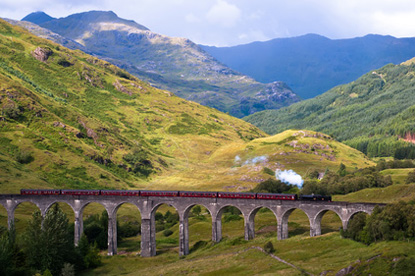
 The Glenfinnan Viaduct, a remarkable feat of Victorian engineering completed in 1898 by Sir Robert McAlpine, stands as the longest concrete railway bridge in Scotland at 380 metres, featuring 21 graceful arches that span 100 feet above the River Finnan. The viaduct gained worldwide fame as the route of the Hogwarts Express in the Harry Potter films, and today visitors can experience it aboard the Jacobite Steam Train running between Fort William and Mallaig. The site holds historical significance beyond its railway heritage, as it was here in 1745 that Bonnie Prince Charlie raised his standard to begin the Jacobite Rising, commemorated by the 18-metre tall Glenfinnan Monument erected in 1815. The surrounding area offers splendid walking trails through ancient Caledonian pines, where one might spot diverse wildlife including dragonflies, otters, and golden eagles, whilst the Glenfinnan Visitor Centre provides historical exhibits, guided monument tours, and a welcoming café. |
| Inverness |
|---|
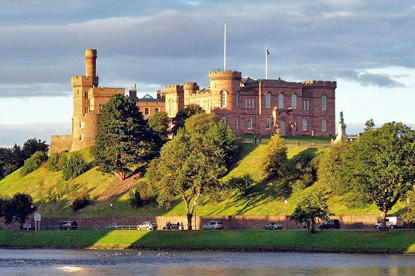
Inverness, a city steeped in history since 1057, sits at the mouth of River Ness and serves as the gateway to the Scottish Highlands. The city's iconic red sandstone castle is currently being transformed into a major tourist attraction set to open in 2025. Visitors can explore the free Inverness Museum and Art Gallery, which houses 100,000 artefacts including Pictish stones and Jacobite memorabilia. The peaceful Ness Islands, connected by suspension bridges, offer excellent wildlife spotting opportunities and walking trails. The historic Victorian Market, dating from 1890, features over thirty local shops and eateries. Just outside the city lie the ancient Clava Cairns, 4,000-year-old burial structures that inspired the standing stones in 'Outlander'. The local cuisine emphasises fresh seafood, wild game, and Highland produce, with notable restaurants like The Mustard Seed, housed in a converted church. The city is also near the famous Culloden Battlefield, where the last battle on British soil took place in 1746. |
Other attractions
 Culloden Battlefield Culloden Battlefield
Fort Augustus
Glenelg
Inverewe Garden
| Loch Ness & Urquhart Castle |
|---|
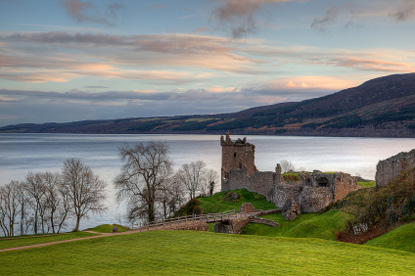
Loch Ness is Britain's largest body of water by volume, containing more water than all lakes in England and Wales combined. The loch, which never freezes due to a unique thermocline effect, maintains a constant temperature of 6°C and features pitch-black waters due to peat particles. The 22-mile-long loch houses Cherry Island, its sole island, an artificial creation from the Iron Age. Overlooking these mysterious waters stands the dramatic Urquhart Castle, founded in the 13th century, which played a crucial role in the Wars of Scottish Independence before being partially destroyed in 1692 to prevent Jacobite use. The castle's ruins, now amongst Scotland's most-visited attractions, witnessed numerous conflicts between the Crown and the MacDonald clan, including a significant raid in 1545 when the Islesmen made off with three great boats and 20 guns. For dining, visitors can sample local Highland produce at establishments like Glen Rowan Café, The Lovat Hotel in Fort Augustus, or Fiddlers Highland Restaurant in Drumnadrochit. |
Ross & Cromarty
| Eilean Donan Castle |
|---|

 Situated on a small tidal island where three sea lochs meet, Eilean Donan Castle was originally built in the 13th century to defend against Viking raids. Though partially destroyed during the Jacobite uprising in 1719, the castle was meticulously restored between 1912 and 1932. Today's visitors can explore the Banqueting Hall, Kitchen, and Jacobite Room whilst admiring period furniture and weaponry displays. The castle regularly attracts wildlife enthusiasts who spot porpoises, dolphins, and otters in the surrounding waters. Notably featured in films like 'Highlander' and 'The World Is Not Enough', Eilean Donan is considered Scotland's most photographed castle. For dining, the nearby Glenelg Inn serves local delicacies such as Loch Hourn langoustines. The castle's dramatic history includes a grim episode in 1331 when 50 wrongdoers were executed and their heads displayed on its walls. Adult entry costs £11, and the castle offers a computer-based virtual tour for those unable to manage the numerous steps. |
| Torridon Hills |
|---|

The Torridon Hills, made of some of the oldest rocks on Earth dating back 750 million years, feature dramatic peaks rising above 3,000 feet that are popular with hillwalkers and mountaineers. The area encompasses Britain's first National Nature Reserve and hosts rare wildlife including black-throated divers, pine martens, otters, and golden eagles. The landscape's unique geology tells a remarkable story spanning 3 billion years, including evidence of ancient oceans, mountain ranges, and even a meteorite impact from 1.2 billion years ago. Visitors can explore 18 miles of walking paths, attempt five Munros including the formidable Liathach ridge, try sea kayaking in the loch, or participate in activities like clay pigeon shooting and gorge scrambling. The area is also renowned for its exceptional stargazing opportunities due to being one of the darkest locations on Earth. The local landscape features ancient Scots pinewoods, whilst the small village shop doubles as a café and sits near the ruins of Am Ploc church. |
|


 England Guide
 Ireland Guide
 Wales Guide

 The Castle of Mey, built in 1566, holds the distinction of being the most northerly inhabited castle on mainland Britain and offers spectacular views across the Pentland Firth to the Orkney Islands. Originally named Barrogill Castle, it was purchased and lovingly restored by Queen Elizabeth The Queen Mother in 1952, who spent many happy summers there until her death in 2001. The castle features a unique walled garden where vegetables are still grown for the Royal dining table, whilst the middle section is surrounded by fruit and herbaceous borders. Visitors can tour the castle's intimate rooms, including entertaining spaces, bedrooms and kitchens, where the Queen Mother's frugal nature is evident through various personal touches, such as her shell collection from beach walks displayed in the front hall. The grounds include an Animal Centre housing donkeys, pigs and geese, whilst the on-site Granary Lodge has been converted into luxury bed and breakfast accommodation. The castle still maintains its Royal connection, with King Charles regularly visiting in August, during which time the castle closes to the public.
 Dunrobin Castle, one of Britain's oldest continuously inhabited houses dating back to the early 1300s, boasts 189 rooms and features distinctive French château-style architecture with towering conical spires designed by Sir Charles Barry, who also designed London's Houses of Parliament. The castle has served multiple purposes throughout its history, including as a naval hospital during World War I and a boys' boarding school from 1965 to 1972. Its magnificent formal gardens, modelled after the Palace of Versailles, slope down to the sea and create a clever optical illusion when viewed from the castle's drawing room. Visitors can enjoy daily falconry displays featuring peregrine falcons, gyrfalcons and Harris hawks on the castle lawn, explore the Victorian museum housed in an 18th-century summer house, and take self-guided tours through the state rooms that showcase centuries of clan history. The castle grounds also feature ancient Pictish stones, and the property's name includes 'dun', suggesting the presence of earlier defensive structures in the area.
 Glen Coe was formed over 420 million years ago by a supervolcano and later sculpted by massive glaciers, creating its distinctive U-shaped valley. The reserve encompasses 21 square miles and features eight Munros, including Bidean nam Bian at 1,150 metres. The area gained tragic notoriety from the 1692 Glencoe Massacre, where 38 members of Clan MacDonald were murdered by government soldiers. Today, visitors can explore the eco-friendly visitor centre with its giant 3D map and reconstruction of a 300-year-old turf and creel house. The reserve harbours diverse wildlife, including red deer, golden eagles, ptarmigan, and rare arctic alpine willows. Film enthusiasts might recognise the dramatic landscape from scenes in Harry Potter, Skyfall, and Braveheart. The Lost Valley, once used by the MacDonald clan to hide rustled cattle, can be accessed via a three-hour return hike from the Three Sisters viewpoint. Celtic legend claims the area was home to the folk hero Fingal, whose poet son Ossian found inspiration in the landscape.
 Standing at 1,345 metres, Ben Nevis is the highest peak in Britain and was once an active volcano that exploded and collapsed inwards millions of years ago. The mountain attracts 130,000 visitors annually who tackle its 16km round trip, typically taking 6-8 hours to complete. Its north face features dramatic 700-metre cliffs that provide world-class rock and ice climbing opportunities, whilst its summit houses the ruins of an observatory that operated from 1883 to 1904, where groundbreaking meteorological data was collected and C. T. R. Wilson was inspired to invent the cloud chamber. The mountain's name has two possible Gaelic translations: 'mountain with its head in the clouds' or 'venomous mountain'. The summit plateau hosts unique alpine flora including moss campion and mountain sorrel, whilst golden eagles soar overhead and ptarmigan change their plumage to match the seasonal conditions. The first recorded ascent was made by Edinburgh botanist James Robertson in 1771, and since 1951, the mountain has hosted an annual race with the fastest runners completing it in roughly 1½ hours.
 The Glenfinnan Viaduct, a remarkable feat of Victorian engineering completed in 1898 by Sir Robert McAlpine, stands as the longest concrete railway bridge in Scotland at 380 metres, featuring 21 graceful arches that span 100 feet above the River Finnan. The viaduct gained worldwide fame as the route of the Hogwarts Express in the Harry Potter films, and today visitors can experience it aboard the Jacobite Steam Train running between Fort William and Mallaig. The site holds historical significance beyond its railway heritage, as it was here in 1745 that Bonnie Prince Charlie raised his standard to begin the Jacobite Rising, commemorated by the 18-metre tall Glenfinnan Monument erected in 1815. The surrounding area offers splendid walking trails through ancient Caledonian pines, where one might spot diverse wildlife including dragonflies, otters, and golden eagles, whilst the Glenfinnan Visitor Centre provides historical exhibits, guided monument tours, and a welcoming café.
 Culloden Battlefield

 Situated on a small tidal island where three sea lochs meet, Eilean Donan Castle was originally built in the 13th century to defend against Viking raids. Though partially destroyed during the Jacobite uprising in 1719, the castle was meticulously restored between 1912 and 1932. Today's visitors can explore the Banqueting Hall, Kitchen, and Jacobite Room whilst admiring period furniture and weaponry displays. The castle regularly attracts wildlife enthusiasts who spot porpoises, dolphins, and otters in the surrounding waters. Notably featured in films like 'Highlander' and 'The World Is Not Enough', Eilean Donan is considered Scotland's most photographed castle. For dining, the nearby Glenelg Inn serves local delicacies such as Loch Hourn langoustines. The castle's dramatic history includes a grim episode in 1331 when 50 wrongdoers were executed and their heads displayed on its walls. Adult entry costs £11, and the castle offers a computer-based virtual tour for those unable to manage the numerous steps.
 : Top cities in Europe