


 England Guide
 Ireland Guide
 Wales Guide
| Contents |
|---|

Introduction
Dunrobin Castle, located near Golspie in the Scottish Highlands, is a magnificent stately home that resembles a French château with its towering conical spires. As the family seat of the Earls of Sutherland, it is one of Britain's oldest continuously inhabited houses, dating back to the early 1300s. The castle boasts 189 rooms, making it the largest in the Northern Highlands. Visitors can explore the castle's rich history, admire its stunning architecture influenced by Sir Charles Barry and Sir Robert Lorimer, and enjoy the picturesque gardens designed in the style of Versailles. Open annually from 1st April to 31st October, Dunrobin Castle offers guided tours, a falconry display, and a museum housing archaeological artefacts and ethnographic items collected by the Sutherland family over the years.
Interesting Facts about Dunrobin Castle
- Dunrobin Castle is one of Britain's oldest continuously inhabited houses, dating back to the early 1300s.
- The castle boasts 189 rooms, making it the largest in the Northern Highlands.
- Sir Charles Barry, architect of the Houses of Parliament in London, remodelled Dunrobin Castle in the Scottish Baronial style.
- The castle's design resembles a French château with towering conical spires and turrets.
- Dunrobin Castle served as a naval hospital during the First World War.
- From 1965 to 1972, the castle functioned as a boys' boarding school.
- The castle's gardens were inspired by the Palace of Versailles and feature an optical illusion when viewed from the drawing room.
- Dunrobin Castle houses a museum containing archaeological artefacts and ethnographic items collected by the Sutherland family.
- The castle was stormed by Jacobite troops in 1745 during the Rising of Bonnie Prince Charlie.
- Queen Victoria described Dunrobin as 'a mixture of an old Scotch castle and a French chateau' when she visited in 1872.
History
Dunrobin Castle trace back its origins to the early 1300s, making it one of Britain’s oldest continuously inhabited houses. Initially a medieval stronghold, it has served as the ancestral seat of the Earls and Dukes of Sutherland for over seven centuries. The name "Dunrobin" likely derives from Robert, the 6th Earl of Sutherland, and the site itself may have been home to defensive structures long before the current castle was built. Over time, Dunrobin evolved from a fortress into a grand residence, with significant expansions carried out in the 19th century under Sir Charles Barry, who transformed it into the stunning chateau-like structure seen today.
The castle’s history is deeply intertwined with Scotland’s turbulent past. During the Jacobite Rising of 1745, Dunrobin was seized by troops loyal to Bonnie Prince Charlie but was soon recaptured by government forces. Despite such conflicts, the castle remained in Sutherland hands and underwent extensive remodelling in subsequent centuries. The most notable transformation occurred between 1835 and 1850 when Sir Charles Barry added its iconic turrets and spires, giving it a fairytale appearance. Dunrobin also played roles beyond its aristocratic heritage, serving as a naval hospital during World War I and later as a boys’ boarding school from 1965 to 1972.
Today, Dunrobin Castle is a popular tourist destination, open to visitors from April to October. Its 189 rooms are adorned with tapestries, portraits, and artefacts that reflect the opulent lifestyle of its former residents. The meticulously designed gardens, inspired by those at Versailles, offer breathtaking views of the surrounding landscape and the Moray Firth. Visitors can also explore a museum on-site that houses archaeological treasures and ethnographic items collected by the Sutherland family. With its rich history and enchanting architecture, Dunrobin Castle remains one of Scotland’s most picturesque and fascinating landmarks.
Description
The Castle Exterior
Dunrobin Castle stands as a magnificent architectural jewel in the Scottish Highlands, commanding attention from its dramatic position overlooking the Moray Firth. The castle's silhouette is unmistakable—a fairytale vision of conical spires and turrets that rise majestically against the Scottish sky. Unlike many Scottish castles with their austere, defensive appearance, Dunrobin presents a decidedly continental aesthetic, resembling a French château more than a Highland fortress.
As you first approach, the narrow side of the castle presents itself, with an impressive arrangement of towers creating a striking vertical emphasis. The façade cleverly bends twice, offering different perspectives as you move around the grounds. The brilliant white stonework contrasts beautifully with the slate blue roofs of the towers, creating a visual spectacle that seems almost ethereal on bright days when reflected in the waters of the Moray Firth.
The sea-facing elevation, though architecturally plainer, offers perhaps the most dramatic vista as the castle rises imperiously from the cliff face. From this vantage point, one can truly appreciate the scale of Dunrobin, with its 189 rooms making it the largest house in the northern Highlands. The castle's position, set against the backdrop of the sea on one side and sheltered by woodland on the other, creates a perfect harmony between the man-made structure and its natural surroundings.

The Castle Interior
Stepping inside Dunrobin Castle is like entering another world. The entrance hall immediately impresses with its grand staircase and ancestral portraits adorning the walls. The magnificent woodwork throughout the castle speaks to the craftsmanship of a bygone era, with intricate carvings and panelling creating an atmosphere of refined elegance.
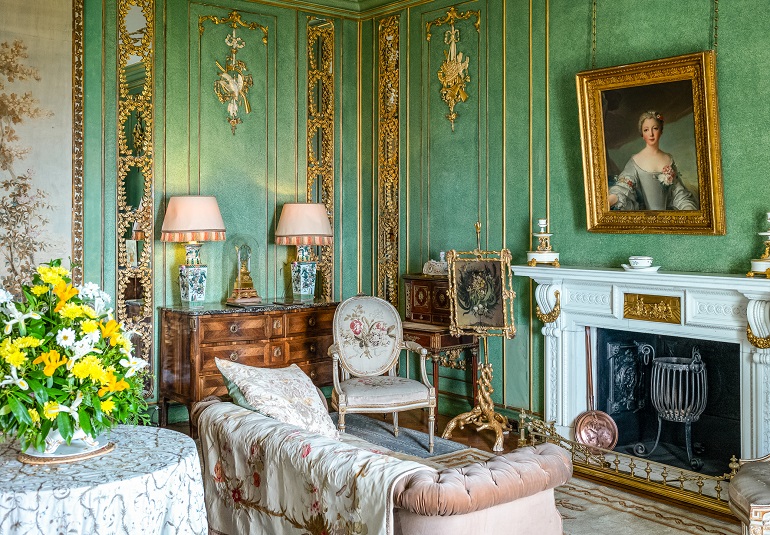
The Drawing Room stands as one of the most impressive chambers, with its ornate plasterwork ceiling and large windows offering panoramic views across the gardens to the sea beyond. The room is furnished with exquisite antiques and family heirlooms, including delicate French furniture and fine porcelain.
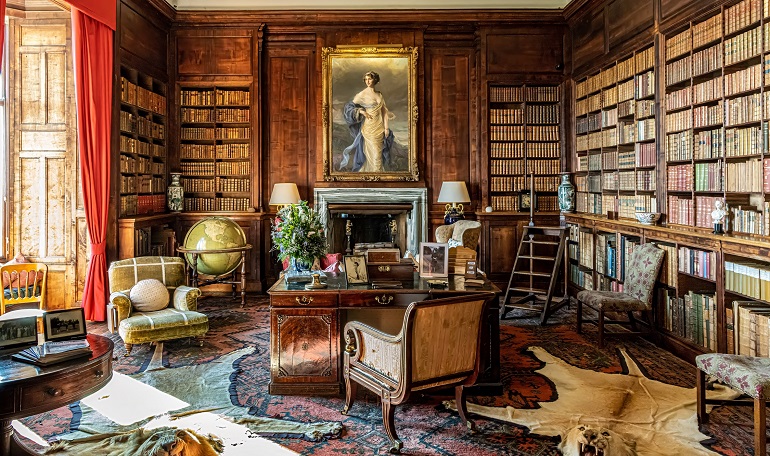
The Library presents a more masculine aesthetic, with floor-to-ceiling bookshelves housing leather-bound volumes collected over centuries. The warm wood tones and comfortable seating create an inviting space that one could easily imagine being used for quiet contemplation or lively intellectual discussion by generations of the Sutherland family.
The Dining Room continues the theme of grandeur, with its long table capable of seating dozens of guests beneath glittering chandeliers. The walls are adorned with family portraits and hunting scenes, reflecting the aristocratic lifestyle of the castle's inhabitants through the centuries.
As you ascend to the upper floors, you'll encounter the more intimate family rooms, including the notorious "Seamstress's Room," said to be haunted by the ghost of a young woman who fell to her death from the window. Many visitors report a distinct chill in this chamber, regardless of the weather outside.
The Formal Gardens
The gardens at Dunrobin are nothing short of spectacular, designed to complement and enhance the castle's dramatic architecture. Created by Sir Charles Barry in the 1850s, the same architect responsible for the Houses of Parliament in London, they draw inspiration from the formal gardens of Versailles while incorporating elements suited to the Scottish climate and landscape.
The formal gardens are laid out on a series of terraces that descend from the castle towards the sea. From the castle's windows, they present a perfect geometric pattern, with two main parterres arranged around circular pools with fountains at their centres. The symmetry is immaculate, with carefully clipped box hedges outlining beds filled with seasonal plantings that provide colour from spring through autumn.
The upper terrace offers breathtaking views across the gardens to the Moray Firth and, on clear days, to the distant Cairngorm mountains. Stone balustrades and urns add classical elements to the design, while statuary placed at strategic points guides the eye through the landscape.

The Woodland and Meadow Areas
Beyond the formal gardens, Dunrobin's grounds transition into more naturalistic areas that showcase Scotland's native flora. Sheltering trees create protected microclimates that allow for surprising diversity in plantings. The woodland walks offer a peaceful contrast to the geometric precision of the formal gardens, with dappled sunlight filtering through the canopy and carpets of bluebells in spring.
At the western end of the gardens, areas have been given over to meadow planting, creating a riot of colour during summer months. Poppies in vibrant red, pink, and orange hues dance in the sea breeze, while native grasses add texture and movement. This naturalistic approach to gardening provides important habitat for pollinators and reflects contemporary ecological concerns while maintaining the aesthetic beauty expected of a grand estate.
The Duchess Border and Special Collections
The Duchess Border at the eastern end of the gardens deserves special mention for its magnificent herbaceous plantings. This border showcases a masterful combination of height, texture, and colour, with tall delphiniums and foxgloves rising behind mid-height peonies and lupins, while lower-growing plants like geraniums and alchemilla provide ground cover. The planting scheme has been carefully designed to provide continuous interest from late spring through early autumn.
Along the northern side, closest to the castle, raised borders and a sheltered walkway within the walls create a microclimate that allows for the cultivation of more tender specimens. Here, you'll find unusual plants collected from around the world, reflecting the Victorian passion for botanical exploration and collection.
The Museum and Falconry Displays
Within the castle grounds, the personal museum of the Dukes of Sutherland houses a fascinating collection of artefacts. Unlike many stately home museums that focus solely on family history, Dunrobin's museum resembles a Victorian cabinet of curiosities, with hunting trophies, archaeological finds, and ethnographic objects gathered from around the world during the height of the British Empire.
The falconry displays held in the gardens provide a living connection to Scotland's past. These excellent demonstrations showcase the ancient art of falconry, with trained birds of prey including hawks, falcons, and owls demonstrating their natural hunting behaviours. The falconer's commentary provides insight into both the biology of these magnificent birds and the historical importance of falconry in Scottish culture.
Seasonal Highlights
Dunrobin Castle and its gardens offer different delights throughout the visitor season. In spring, the formal gardens come alive with thousands of tulips and daffodils, while the woodland areas are carpeted with bluebells and wild garlic. Summer brings the herbaceous borders to their peak, with a succession of blooms creating changing colour schemes throughout the season.
By late summer and early autumn, the meadow areas reach their zenith, with grasses catching the golden light of shorter days. The formal gardens take on a more structured appearance as summer bedding is replaced with autumn plantings, while the surrounding woodlands begin their spectacular colour change before winter dormancy.
Getting There
Dunrobin Castle, the magnificent fairy-tale residence of the Earls and Dukes of Sutherland, is located about one mile north of Golspie in the Scottish Highlands. Visitors have several options for reaching this stunning 189-room château with its distinctive conical spires. If driving, the castle is approximately 50 miles north of Inverness on the A9, with ample parking available for 200 cars. Those without a car can take a ScotRail train from Inverness to Dunrobin Castle Station (a seasonal request stop operating April to October), which is just 0.3 miles from the castle. Alternatively, the X99 bus from Inverness to Dunrobin Station takes about 1.5 hours, making it faster than the train. For a more comprehensive experience, consider joining a small group tour like Rabbie's day trip from Inverness, which typically includes other attractions such as Dornoch. The castle is open annually from 1st April to 31st October, with adult admission costing £12.50, concessions £10.00, children £7.50, and family tickets £35.00.
Best Time to Visit
The best time to visit Dunrobin Castle is between April and October, when the castle and its gardens are open to the public. During this period, visitors can enjoy the stunning architecture of the castle, explore its 189 rooms, and take in the beautiful gardens. The castle offers daily falconry displays at 11:30 am and 2:30 pm, which are a highlight of any visit. From May to September, the castle is open from 10 am to 5 pm, allowing ample time to explore the state rooms, library, and museum. The surrounding area, including the picturesque village of Golspie and the historic town of Dornoch, also offers plenty of opportunities for exploration. Visitors should plan their trip carefully, as the castle closes from November to March, and public transport options may be limited, making a car the best way to reach the castle.