


 England Guide
 Ireland Guide
 Wales Guide
| Contents |
|---|
Introduction
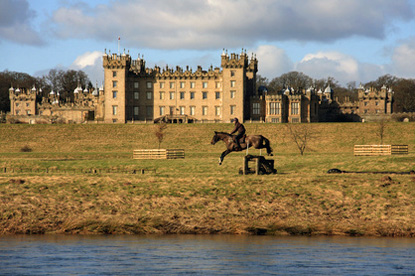
Floors Castle, located in Kelso in the Scottish Borders, is Scotland's largest inhabited castle and has been home to the Dukes of Roxburghe for over 300 years. Despite its name, it is actually an estate house rather than a fortress, built in the 1720s by architect William Adam for the 1st Duke of Roxburghe and later embellished with turrets and battlements by William Playfair in the 19th century. The castle stands majestically by the River Tweed with views of the Cheviot Hills and features spectacular gardens, including Victorian Walled Gardens and a formal Millennium Garden. Visitors can explore the grand rooms housing fine art, porcelain and tapestries, enjoy woodland and riverside walks, visit the Terrace and Courtyard Cafés, or browse the Apple Shed Shop and Deli. The castle itself is open to visitors from May to September, while the gardens, cafés and shops are open year-round.
Interesting Facts about Floors Castle
- Floors Castle is the largest inhabited house in Scotland, opened to the public in 1977 by the 10th Duke of Roxburghe.
- The castle's name is thought to derive from the French 'fleurs' (flowers) or from the terraces on which it was built.
- William Adam designed the original structure in the 1720s, possibly inspired by Sir John Vanbrugh's work.
- The castle underwent significant remodelling around 1837 by William Henry Playfair, giving it its distinctive fairy-tale appearance.
- Floors Castle features unique facilities for smoking salmon and kippers, essential for a Victorian country house.
- The castle grounds include a holly tree marking the spot where King James II was killed in 1460 by an exploding cannon.
- Floors Castle's architecture bears a close resemblance to Donaldson's College in Edinburgh, another of Playfair's works.
- The estate boasts magnificent woodlands, including a line of sweet chestnut trees dating back to Daniel Defoe's visit in the 18th century.
- Despite being a family residence, several rooms in Floors Castle are open to visitors, showcasing fine art, porcelain, and tapestries.
- The castle's grounds offer scenic woodland walks and are situated on the banks of the River Tweed.

History
The castle's history dates back to the 12th century when the Ker family held lands in Roxburghshire. The name 'Floors' is believed to derive either from 'flowers' or from the terraces upon which the castle is built.
The present-day castle was constructed in the 1720s by the renowned architect William Adam for John Ker, the 1st Duke of Roxburghe. It is thought that the design may have incorporated elements of an earlier tower house. The original structure consisted of a main block with two symmetrical service wings, following a common 18th-century layout. In the 19th century, the castle underwent significant embellishments under the direction of architect William Playfair for the 6th Duke of Roxburghe, adding turrets and battlements that contribute to its current dramatic appearance.
Throughout its history, Floors Castle has been home to eleven generations of the Dukes of Roxburghe. The castle stands proudly on the banks of the River Tweed, offering stunning views of the Cheviot Hills to the south. In 1977, the 10th Duke opened the castle to the public, allowing visitors to explore its rich history and impressive collection of fine art, porcelain, and tapestries. Today, Floors Castle is not only the largest inhabited house in Scotland but also a Category A listed building, with its grounds recognised in the Inventory of Gardens and Designed Landscapes.
Description
The Castle Exterior
Floors Castle rises majestically from the Scottish Borders landscape, commanding attention with its distinctive silhouette against the sky. This architectural masterpiece, designed by William Adam and later embellished by William Playfair, presents an extraordinary blend of baronial grandeur and fairy-tale whimsy. The castle's cream sandstone exterior catches the light beautifully throughout the day, its colour shifting from warm honey in morning sunlight to a soft rose gold at sunset.
As you approach along the sweeping driveway, the castle's elaborate skyline unfolds before you—a theatrical display of turrets, battlements, and ornate chimney stacks that create a striking silhouette. The pepper-pot angle turrets, with their distinctive conical roofs, mark each corner of the building, while the elaborate water spouts and fluted chimneys add further visual interest to the roofline.
The main entrance, framed by an impressive porte-cochère, welcomes visitors with an air of dignified elegance. Intricate stonework details adorn the façade, with the family crest prominently displayed above the entrance, speaking to the castle's long heritage as the seat of the Dukes of Roxburghe.
The Castle Interior
Stepping inside Floors Castle reveals a world of refined opulence. The entrance hall sets the tone with its soaring ceiling and magnificent central staircase. From here, a succession of stately rooms unfolds, each more impressive than the last.
The Drawing Room dazzles with its collection of French furniture and Brussels tapestries. Light streams through tall windows, illuminating the rich fabrics and gilded details. The ceiling, adorned with delicate plasterwork, draws the eye upward, while the walls are hung with masterful portraits of Roxburghe ancestors.
The Ballroom, perhaps the most impressive space, features a spectacular barrel-vaulted ceiling and walls lined with family portraits spanning generations. Crystal chandeliers cast a warm glow over the polished wooden floor, which has witnessed countless grand occasions over the centuries.
The Dining Room presents an intimate yet grand setting, with its walls adorned in rich crimson silk damask. The table, which can seat dozens of guests, is typically set with gleaming silver and crystal, showcasing pieces from the family's extensive collection.
The Bird Room derives its name from the exquisite hand-painted Chinese wallpaper depicting exotic birds amongst flowering branches. This room houses some of the castle's most precious porcelain, including rare examples from Sèvres and Meissen.
The library contains thousands of leather-bound volumes arranged in oak bookcases, creating a sanctuary of knowledge and contemplation. A collection of globes, astronomical instruments, and maps reflects the scholarly interests of past dukes.
The Gardens in Detail
The Walled Garden
The magnificent Walled Garden at Floors Castle is a horticultural haven spanning four acres. Enclosed by weathered red brick walls that provide both shelter and warmth, this garden represents one of Scotland's finest Victorian kitchen gardens, lovingly restored and maintained.
The garden is divided into distinct sections, each with its own character:
- The Herbaceous Borders present a masterclass in planting design, with carefully orchestrated drifts of colour that evolve throughout the seasons. In spring, tulips and alliums create bold blocks of colour, giving way to lupins, delphiniums, and foxgloves in early summer. By late summer, the borders reach their magnificent peak with towering hollyhocks, dahlias, and heleniums in rich jewel tones.
- The Glasshouses, restored to their Victorian splendour, house collections of tender exotics and productive plants. The Peach House nurtures ancient varieties trained against the back wall, while the Vine House produces sweet, juicy grapes. The central glasshouse often displays seasonal arrangements of potted specimens, from scented pelargoniums to citrus trees heavy with fruit.
- The Kitchen Garden section demonstrates traditional and contemporary growing techniques side by side. Perfectly aligned rows of vegetables create a patchwork of textures and colours, from the feathery fronds of asparagus to the deep purple globes of heritage beetroot varieties. Espalier fruit trees line the walls, their branches trained into elegant horizontal tiers.
- The Cut Flower Garden provides a constant supply of blooms for the castle's arrangements. Sweet peas climb tall hazel wigwams, releasing their perfume into the air, while rows of zinnias, cosmos, and snapdragons create a painter's palette of colours.
The Millennium Garden
The Millennium Garden represents a more formal approach to garden design, with its geometric layout and precise plantings. The French-style parterre features intricate box hedging outlining beds filled with seasonal plantings—tulips and forget-me-nots in spring give way to lavender and roses in summer, followed by dahlias and salvias for autumn interest.
At the centre of this garden stands an elegant stone fountain, its gentle splashing providing a soothing soundtrack. Surrounding the parterre, gravel paths crunch pleasantly underfoot as visitors circumnavigate the garden.
The Queen's House, a charming summer house of classical design, offers a shaded retreat at one end of the garden. Its interior, decorated with botanical prints and comfortable wicker furniture, provides the perfect spot for contemplation or shelter from a passing shower.
The Terrace Gardens
The Terrace Gardens cascade down from the castle in a series of level platforms, each offering a different perspective of both the building and the surrounding landscape. Stone balustrades edge each terrace, with wide steps leading from one level to the next.
The upper terrace, directly adjacent to the castle, features immaculate lawns punctuated by classical urns planted with seasonal displays. From here, the view extends across the River Tweed to the Cheviot Hills beyond, creating a breath-taking panorama that changes with the seasons and the light.
The middle terrace incorporates a series of themed garden rooms, each with its own distinct character. The White Garden shimmers with silver-leaved plants and white-flowered specimens, from the ghostly spires of white foxgloves to the moon-like discs of honesty. The Blue Border offers a study in cool tones, with delphiniums, agapanthus, and echinops creating a tranquil atmosphere.
The lower terrace transitions into more naturalistic plantings, with ornamental grasses swaying in the breeze and late-summer perennials attracting bees and butterflies in abundance.
The Wider Estate
Woodland Walks
The estate's woodland areas offer a network of paths that wind through ancient stands of oak, beech, and Scots pine. In spring, the forest floor becomes a carpet of bluebells, their scent hanging in the air. Summer brings deep shade and the gentle rustle of leaves, while autumn transforms the woods into a spectacular display of gold, amber, and russet.
The Star Plantation presents a unique feature—a series of straight paths radiating outward from a central point like the spokes of a wheel. This geometric design, typical of 18th-century landscape planning, creates intriguing vistas and perspectives as you walk along each avenue.
Riverside Trails
The River Tweed forms a natural boundary to part of the estate, and walking trails follow its meandering course. These paths offer tranquil spots for contemplation, with occasional benches positioned to make the most of particularly fine views. The river itself is renowned for its salmon fishing, and lucky visitors might spot leaping fish or a kingfisher's electric-blue flash.
The Arboretum
The arboretum houses an impressive collection of specimen trees from around the world. Towering sequoias reach for the sky, while Japanese maples provide more delicate interest with their finely cut leaves and autumn colour. Each tree is labelled with its botanical name and origin, creating an educational experience for those interested in dendrology.
The Millennium Viewpoint
This carefully positioned lookout offers perhaps the finest vista of the castle and its setting. From this elevated position, visitors can appreciate how the building sits within its designed landscape, with the River Tweed curving gracefully in the foreground and the distant hills providing a dramatic backdrop.
Getting There
Floors Castle, located on the outskirts of Kelso in the Scottish Borders, is easily accessible by various means of transport. If driving, use the postcode TD5 7RN for your sat nav and follow the brown tourist signs around Kelso. The castle can be reached via three major trunk roads: the A1 in the East, and the A7 and A68 in the Central Borders. Those travelling by public transport can take the train to Berwick-Upon-Tweed on the East Coast rail line, or use the Borders Railway from Edinburgh to Tweedbank (a 55-minute journey), then connect to bus 67 which stops at Angraflat Road near the castle gates. From Edinburgh, you can also take a bus to Galashiels Transport Interchange and then connect to bus 67. For those flying in, Edinburgh Airport is the closest option - from there, follow the city bypass, take the A68 south, and follow signs for Kelso and Floors Castle. Adult admission costs £20, while children under 15 enter free.
Best Time to Visit
The best time to visit Floors Castle is during the spring and summer months, from May to September, when the castle and its grounds are fully open to the public. This period offers the most comprehensive experience, allowing visitors to explore the castle's grand rooms, stroll through the stunning Victorian Walled Gardens, and enjoy leisurely walks along the River Tweed. The warmer weather also enhances the beauty of the gardens and the surrounding countryside, making it ideal for outdoor activities such as woodland walks and cycling. For those interested in visiting during the off-season, the Walled Garden, Apple Shed, and Terrace Café remain open year-round, providing a more relaxed and peaceful experience amidst the winter landscapes.