


 England Guide
 Ireland Guide
 Wales Guide
| Contents |
|---|
Introduction
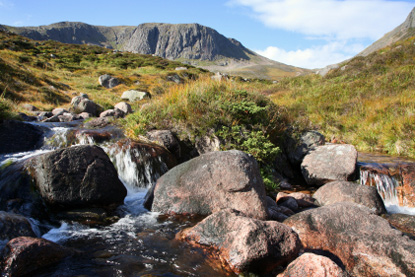
The Cairngorms National Park, established in 2003, is the largest national park in the UK, covering an impressive 4,528 square kilometres across the council areas of Aberdeenshire, Moray, Highland, Angus and Perth and Kinross. Located in the heart of Scotland, this vast wilderness encompasses the Cairngorms mountain range, ancient Caledonian pine forests, and rolling moorlands. The park features five of the UK's six highest mountains, with Ben Macdui standing as its highest point at 1,309 metres. Three major Scottish rivers—the Spey, the Dee, and the Don—rise within the park boundaries. Home to approximately 19,000 residents, the Cairngorms is renowned for its remarkable biodiversity, supporting a quarter of the UK's threatened species, including golden eagles, red squirrels, pine martens, and the Scottish crossbill, the only bird unique to Britain. Visitors can explore hundreds of miles of paths and trails, experience the arctic-alpine mountain environment, and discover the park's rich cultural heritage through its castles, distilleries and local communities.
Geography and Landscape
The Cairngorms National Park showcases some of Britain's most spectacular mountain environments and diverse terrain.
Mountain Ranges and Plateaux
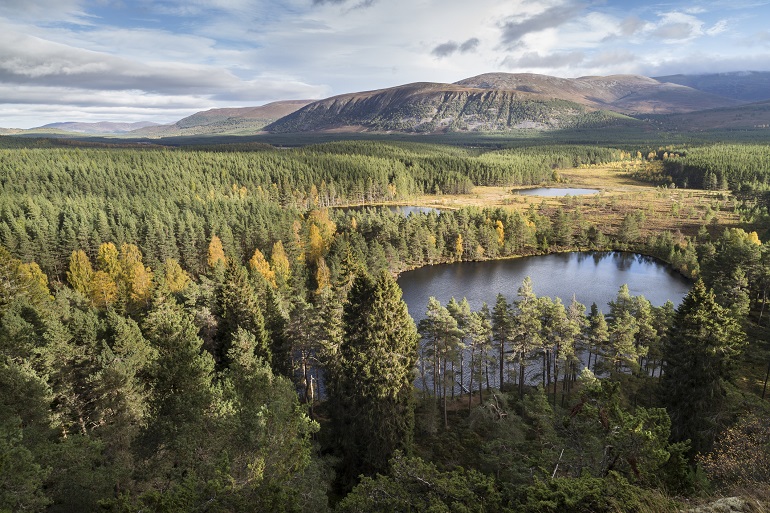
At the heart of the park lies the Cairngorms mountain range, characterised by its extensive upland plateaux and distinctive rounded summits. The central Cairngorm massif forms the largest homogenous granite mass in Britain, creating a spectacular landscape reminiscent of Norway's Hardangervidda National Park.
The park boasts an impressive collection of high peaks, including four of the five highest mountains in the UK:
- Ben Macdui (1,309m)
- Braeriach (1,296m)
- Cairn Toul (1,291m)
- Sgor an Lochain (1,258m)
The Cairn Gorm itself stands at 1,244m, making it the sixth highest mountain in the UK. With 55 Munros (mountains above 914m) within its boundaries, the park offers abundant opportunities for hill walking and climbing.
The Cairngorms plateau is particularly notable as the highest and most extensive area of arctic mountain landscape in the British Isles. The range consists of three main plateaux at about 1,000-1,200m above sea level, above which domed summits rise to around 1,300m. Many summits feature tors—free-standing rock outcrops that stand atop the boulder-strewn landscape.
Beyond the Cairngorms themselves, the park encompasses other significant mountain ranges, including the Monadhliath mountains to the north of Strathspey—a bleak, wide plateau rising to between 700 and 950m—and the Angus Glens.
Rivers and Watersheds
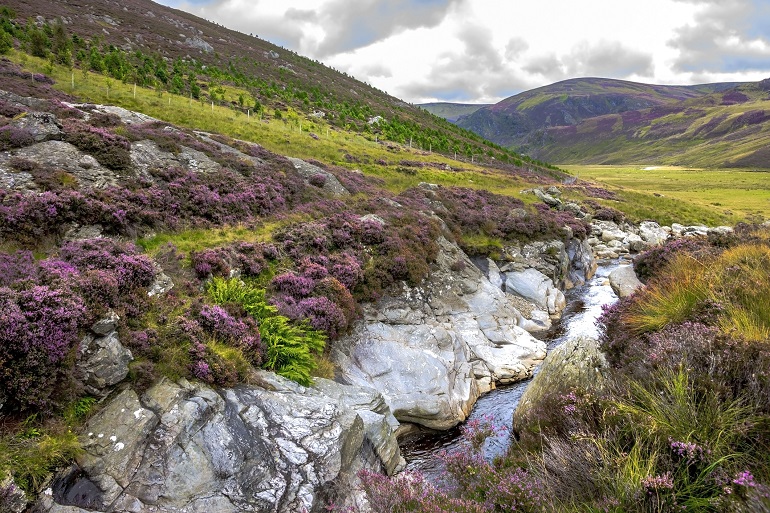
Three major Scottish rivers rise within the park: the Spey, the Dee, and the Don. The Spey, Scotland's second-longest river, rises in the Monadhliath mountains, while both the Dee and Don originate in the Cairngorms themselves. These waterways have carved impressive straths (wide valleys) that form a crucial part of the park's landscape character.
The park's rivers demonstrate a dynamic character, with fast-flowing waters that can cause rapid flash floods due to the thin soils, steep slopes and largely impervious bedrock. During floods, gravel beds can shift, eroding river edges and sometimes causing abrupt changes in a river's course.
Geological Features
The landscape of the Cairngorms has evolved over millions of years through complex geological processes. The majority of rocks belong to the Dalradian Supergroup, deposited between 800 and 600 million years ago. The granite mass forming the Cairngorms themselves was emplaced around 427 million years ago.
The Ice Ages have left their mark through both erosional and depositional features. The edges of the plateaux feature steep granite cliffs, excellent for skiing, rock climbing and ice climbing. Post-glacial features include peat formations and landslips.
The variety of underlying rocks creates different landscape characteristics. Granite landscapes typically feature rounded, smooth landforms with extensive boulder fields, particularly prevalent throughout the Cairngorm-Ben Macdui-Braeriach plateau. These areas tend to be less fertile, giving them a more barren character. In contrast, mountains comprising metamorphosed rocks display 'knobbly' landform patterns.
Landscape Character
The Cairngorms landscape is characterised by its layers, ascending from inhabited straths to remote, uninhabited uplands. This stratification moves from meandering rivers through straths of settlement and farmland, through rough pasture, woodlands and forestry, to moorland with its patchwork of muirburn, and eventually to the high, corrie-fringed mountains.
A defining feature of the Cairngorms is what has been described as "the harmony of complicated curves." Unlike the angular landscapes of the western Highlands, the Cairngorms present rounded hills and peaks with long, undulating, smooth ridges, and gently convex plateaux. Corries and glens, scooped out by past glaciers, are concave, while at lower levels, glacial moraines create hummocky, rounded landforms.
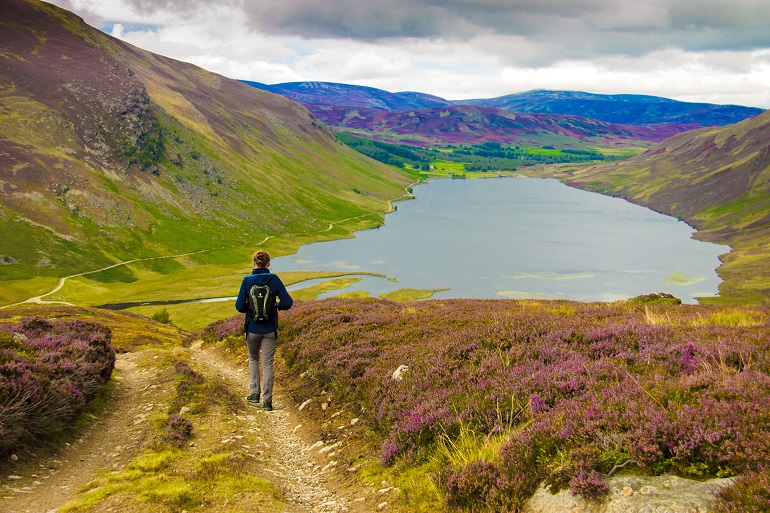
Open, rolling heather moorland covers great tracts of land, with extensive woodlands and straths on a grand scale that host majestic rivers. The landscape presents a striking contrast between cultural and natural elements—the lower altitudes show evidence of long human habitation, while the highest ground comprises uninhabited wild land of moor and mountain, representing the greatest extent of natural vegetation and landform in the British Isles.
Transport Routes
Two major transport routes traverse the park. The A9 road and the Highland Main Line cross over the Pass of Drumochter and run along Strathspey, connecting the western and northern parts of the park to Perth and Inverness. The Highland Main Line is the only mainline rail route through the park, though several other major roads exist, including the A86 linking Strathspey to Fort William, and the A93 connecting the Deeside area to both Perth and Aberdeen.
The Cairngorms National Park truly represents one of Britain's most magnificent landscapes, offering visitors a chance to experience the grandeur of its mountains, the serenity of its straths, and the remarkable diversity of its terrain.
Flora and Fauna
The Cairngorms National Park is a remarkable wildlife sanctuary, home to 25% of the UK's threatened animal, insect, fungi and plant species, despite covering less than 2% of the UK's landmass. This biodiversity hotspot offers visitors an extraordinary opportunity to experience Scotland's natural heritage.
Ancient Woodlands
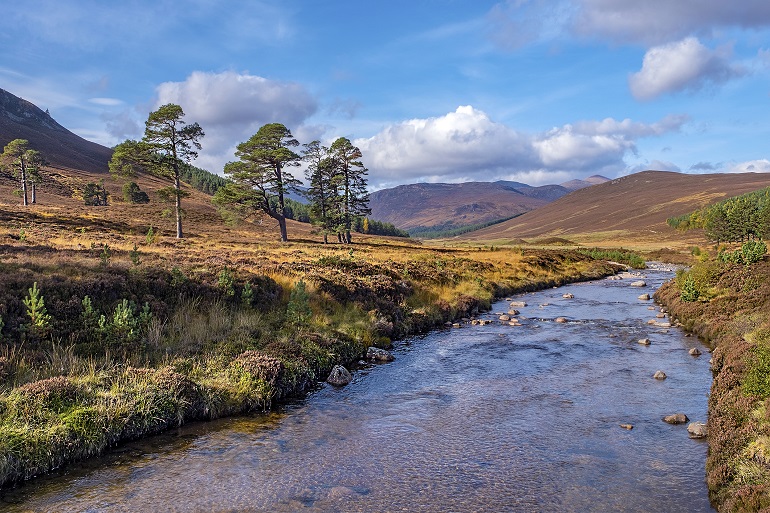
The Cairngorms contains one quarter of Scotland's native forest, with the ancient Caledonian Forest being one of its most precious habitats. This vast primeval wilderness of Scots pine, birch, rowan, aspen and juniper supports a rich ecosystem. The forest floor is adorned with bell heather, wild berries such as bilberry and crowberry, and delicate flowers including the lesser twayblade and twinflower.
The park is also known for its distinctive Bog Woodland and Mountain Willow Scrub. Bog woodlands feature stunted Scots pine, birch, willow or alder coexisting with bogs and mires, creating a primeval atmosphere. Mountain willow scrub occurs above the natural tree-line on exposed ridges and summits, supporting rare species including the netted mountain moth and numerous rare liverworts, hornworts, mosses and lichens.
Alpine Flora
The Cairngorms boasts the largest high-level mountain ground in Britain and Ireland, providing vital habitat for rare mountain plants. Notable alpine species include:
- Trailing Azalea (Kalmia procumbens): A prostrate plant with pink flowers that lies close to the ground to avoid being damaged by wind
- Dwarf Cornel (Cornus suecica): Recognisable by its white petal-like bracts supporting purplish to black flowers
- Dwarf Willow (Salix herbacea): The smallest of the montane willows with tiny leaves only about three centimetres across
- Alpine Lady Fern (Athyrium distentifolium): Found in sheltered corries above 600 metres, particularly on scree slopes
- Newman's Lady Fern (Athyrium flexile): An endemic Scottish species found only in four sites in Scotland, typically at altitudes above 750 metres
Iconic Wildlife
Mammals
- Red Squirrels: These charming creatures can be spotted throughout the park's pine forests, particularly active just after dawn and before sunset. Their distinctive dusty red fur, tufted ears and bushy tails make them easily recognisable as they leap between trees.
- Scottish Wildcat: One of the most elusive and critically endangered species in the park, these rare cats are native to Scotland and primarily spotted in woodland areas during dusk or dawn.
- Pine Marten: This small predator roams the forests and is a treat for those lucky enough to spot one.
- Red Deer: An iconic Scottish figure, red deer stags are particularly impressive during the autumn rut when their roars echo through the hills.
- Mountain Hare: These adaptable creatures change their coat to white in winter, blending perfectly with the snow. They are most active in the evening and at night, resting during the day with their backs to the wind, sheltered by rocks and heather.
Birds
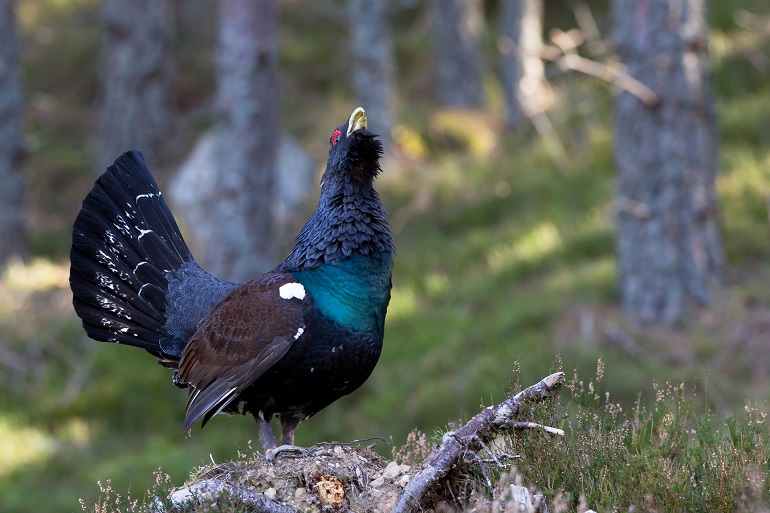
The Cairngorms is uniquely home to all British grouse species – Ptarmigan, Red Grouse, Black Grouse and the secretive Capercaillie. Other notable bird species include:
- Golden Eagle: These majestic birds can be seen soaring above remote glens and mountain ridges.
- Osprey: Returning from West Africa in late March, ospreys can be spotted near water bodies, particularly at the RSPB Osprey Centre at Loch Garten.
- Scottish Crossbill: The only bird species found exclusively in the UK, these unique birds have distinctive crossed bills that help them extract seeds from pine cones.
- Crested Tit: A rare woodland bird that can be found in the Caledonian pine forests.
- Snow Bunting: Normally resident in the arctic circle, a small year-round population lives on Cairngorm Mountain.
Best Wildlife Watching Locations
- Abernethy National Nature Reserve: A vast area of ancient Caledonian pine forest, home to capercaillies, red squirrels, and ospreys.
- Glenmore Forest Park: Nestled at the foot of Cairngorm Mountain, this forest park is excellent for spotting red squirrels and crested tits.
- Cairn Gorm plateau: Take the funicular railway to 1,097m where ptarmigan, snow buntings and mountain hares can be seen close to the station.
- Muir of Dinnet Nature Reserve: A great spot to see various bird species, including the rare Scottish crossbills.
- Insh Marshes: Perfect for watching flocks of whooper swans, greylag geese and other wildfowl, as well as hen harriers and red kites arriving to roost near dusk.
Spring is particularly rewarding for wildlife enthusiasts, as the heather begins to bloom and many animals emerge from hibernation or return from migration. However, each season offers unique wildlife experiences in this extraordinary national park.
Activities and Attractions
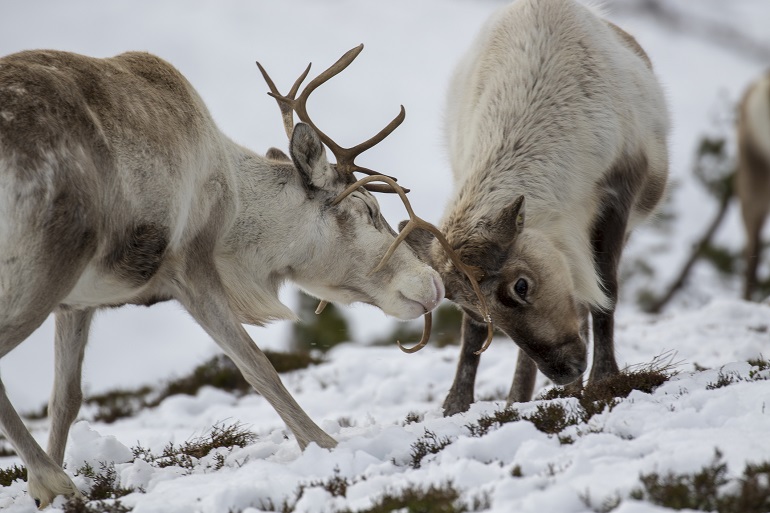
The Cairngorms National Park offers an unparalleled range of outdoor activities and attractions for visitors of all ages and interests. This magnificent landscape encompasses mountains and valleys, ancient forests, glistening lochs, and fast-flowing rivers, making it a perfect destination for nature lovers and adventure seekers alike.
Outdoor Activities
Walking and Hiking
The Cairngorms boasts hundreds of miles of paths and trails suitable for all abilities. From gentle riverside strolls to challenging mountain expeditions, the park offers walking opportunities for everyone. Notable routes include:
- Corrie Fee National Nature Reserve, a breathtaking corrie that looks like an amphitheatre framed by mountains
- The Mayar and Driesh Munros, offering spectacular views across the park
- Loch an Eilein's scenic lakeside walk through tranquil woodlands with picturesque views and castle ruins
Winter and Summer Sports
The park transforms with the seasons, offering different activities year-round:
- Skiing and snowsports during winter months at Cairngorm Mountain
- Mountain biking on numerous trails throughout the park
- Tubing park for family fun at Cairngorm Mountain
Water Activities
With numerous lochs and rivers, the Cairngorms is ideal for water enthusiasts:
- Canoeing and kayaking on the River Spey, River Dee, and various lochs
- Sailing and windsurfing opportunities
- Fishing for trout in serene ponds and rivers
Attractions and Heritage Sites
Castles and Historic Sites
- Balmoral Castle, the Scottish holiday residence of the British Royal Family
- Braemar Castle, offering open days and special events
- Corgarff Castle with its distinctive star-shaped perimeter wall and military history
Wildlife and Nature
- Rothiemurchus Estate, offering interactive falconry, clay pigeon shooting, and trout fishing
- Abernethy National Nature Reserve, perfect for spotting rare Scottish wildlife
- Working Sheepdogs demonstrations, where visitors can engage with herding animals and learn about traditional farming
Family Attractions
- Landmark Forest Adventure Park with climbing walls, high ropes, and a dinosaur section
- Highland Folk Museum, an open-air museum featuring historic buildings and staff in period costumes
- Highland Wildlife Park with drive-through and walkable sections for observing animals like polar bears and snow leopards
Food and Drink
No visit to the Cairngorms would be complete without sampling local specialities:
- The Glenlivet Distillery, offering whisky-tasting tours
- Numerous restaurants, cafes, and pubs serving local produce
- Seasonal food festivals celebrating Scottish cuisine
Accessibility
The Cairngorms National Park is committed to providing access for all visitors:
- Easy access paths for those with mobility requirements
- Accessible activities and attractions
- Visitor information centres throughout the park offering guidance on accessible facilities and services
Accommodation
The Cairngorms National Park offers a diverse range of accommodation options to suit every traveller's preference, budget and adventure style. From luxury to rustic, the Park provides countless ways to experience the magnificent Highland landscape.
Types of Accommodation
Self-Catering Options
Self-catering accommodation is abundant throughout the Cairngorms, offering visitors independence and flexibility. Log cabins, chalets and lodges are particularly popular, providing idyllic nature-immersed settings that many holiday dreams are made of. These properties often feature special amenities such as hot tubs, wood-burning stoves and panoramic views of the surrounding mountains.
Holiday cottages range from traditional Highland dwellings to contemporary builds, many featuring spacious gardens and modern conveniences whilst maintaining authentic charm. Self-catering options are ideal for families or groups wanting to explore at their own pace.
Hotels and B&Bs
For those preferring a more serviced experience, the Park boasts numerous hotels and bed & breakfasts. These range from historic establishments with traditional Highland character to modern, eco-friendly accommodations.
B&Bs throughout the region are known for their warm Highland welcome and personal touch, often providing insider knowledge on local attractions and hidden gems. Many offer home-cooked breakfasts featuring locally-sourced ingredients.
Camping and Outdoor Options
The Cairngorms offers excellent facilities for those wishing to get closer to nature. Formal campsites provide amenities such as shower blocks, electricity hook-ups and on-site shops, perfect for families or those new to camping.
For the more adventurous, wild camping opportunities exist throughout the Park (following Scottish Outdoor Access Code guidelines). Camping pods and glamping sites bridge the gap between traditional camping and more comfortable accommodation, offering the outdoor experience with added comfort.
Unique and Specialist Accommodation
The Cairngorms also features a variety of unique accommodation options, including:
- Bunkhouses and hostels perfect for outdoor enthusiasts and groups
- Glamping pods and wigwams for a quirky outdoor experience
- Historic buildings converted into holiday accommodation
- Eco-friendly lodgings for the environmentally conscious traveller
Locations
Accommodation is spread throughout the Park's towns and villages, each offering a different experience:
- Aviemore serves as a central hub with numerous options and excellent transport links
- Braemar and Ballater in Royal Deeside offer accommodation with regal connections
- Grantown-on-Spey and Tomintoul provide quieter alternatives with traditional charm
- Boat of Garten and Carrbridge offer accommodation in smaller, picturesque settings
Seasonal Considerations
Accommodation availability varies significantly by season. Winter months see high demand around the ski centres, while summer brings visitors for hiking and outdoor activities. Booking well in advance is recommended, particularly for peak periods such as school holidays, Christmas and Hogmanay.
Spring and autumn can offer better value and availability while still providing excellent opportunities to experience the Park's natural beauty and wildlife.
Accessibility
Many accommodations across the Park have made efforts to improve accessibility, with ground-floor rooms, adapted bathrooms and level access. It's advisable to check specific requirements directly with providers before booking.
Gastronomy
The Cairngorms National Park is increasingly making a name for itself as a premier destination for fine locally-sourced food and drinks. This spectacular region offers a distinctive and high-quality culinary experience that reflects its dramatic, wild and rugged landscape.
Local Specialities
The Cairngorms boasts a remarkable array of traditional Scottish fare that is deeply connected to the land. Amongst the foods that this region is most famous for are:
- Venison from deer that range freely across the hills
- Highland beef from traditional cattle and hardy rare breeds
- Salmon and trout freshly caught from pristine rivers and lochs
- World-famous whisky from age-old distilleries
- Award-winning gins that are gaining international recognition
Beyond these headliners, visitors can discover other delights including bread from a 400-year-old mill, award-winning beer, and wild food for foraging. During summer months, locally grown strawberries and raspberries feature prominently on menus, while autumn brings seasonal offerings like pumpkin.
Food Culture
There is a strong and growing trend for visitors to enjoy locally-produced food when they come to the Cairngorms. The Park is brimming with passionate foodies who prioritise eating well, sourcing quality homegrown ingredients seasonally, and reducing food miles and waste.
One of the most endearing qualities about the food scene here is the number of independent producers operating niche, artisan shops. The region hosts regular farmers' markets from April to September in various towns, offering fresh, locally produced foods.
Traditional Scottish Dishes
Visitors to the Cairngorms can sample authentic Scottish cuisine including:
- Haggis, neeps and tatties - Scotland's iconic dish made from meat, oatmeal, onions and spices, served with mashed turnip and potato
- Cranachan - a delicious dessert usually made from oatmeal, fresh cream, raspberries, honey and whisky
- Fish and chips - fried in golden, crispy batter with thick-cut chips
Sustainable Food Culture
The Cairngorms Food for Life Development Plan encourages communities and visitors to understand the importance of eating locally and seasonally. It promotes access to local, fresh and organic food which is healthy, sustainable and affordable, while helping people understand farming and food production.
Buying local in the Cairngorms not only enhances your experience but also supports the local economy, reduces food miles, and helps farmers and land managers continue caring for the Park.
Foraging and Field-to-Fork Experiences
For the more adventurous, the Cairngorms offers opportunities to catch your own dinner. Many of the 60 estates covering about 75% of the Park area allow visitors to get involved in activities like fishing. There's also growing interest in foraging, with educational opportunities to learn about gathering wild food.
Getting There and Around
The Cairngorms National Park is easily accessible by various modes of transport, making it a convenient destination for visitors from across the UK and beyond.
By Road
The Cairngorms National Park can be accessed via several scenic routes:
- The A9 Highland Tourist Route is the most popular road into the Park, connecting central Scotland with the Cairngorms. It enters the Park at Killicrankie/Blair Atholl in the south and travels through the western part, exiting just north of Carrbridge.
- From the east, you can take the A93 from Perth, entering the Park just south of Glenshee, and travel through Glenshee Ski Centre to Braemar and Ballater.
- The Moray Gateway offers the A95 leading towards Grantown-on-Spey, which you can connect to via the A941 from Elgin.
- From the Highlands, you can approach the Park from three locations. From Inverness, take the A9 along Strathspey and Badenoch. From Fort William, take the A82 and A86 towards Laggan, connecting with Dalwhinnie and Newtonmore.
Driving times are approximately 2.5 hours from Glasgow or Edinburgh, and around 1 hour from Inverness.
By Train
The Cairngorms National Park is well-connected by rail:
- There are railway stations in the west of the Park at Dalwhinnie, Newtonmore, Kingussie, Aviemore and Carrbridge.
- Trains between London King's Cross and Inverness stop at either Kingussie or Aviemore, with 10 services each way daily.
- The Caledonian Sleeper offers an overnight service from London Euston to six destinations in the Park including Blair Atholl, Dalwhinnie, Newtonmore, Kingussie, Aviemore and Carrbridge (on request).
- Aberdeen is the closest station to the east side of the National Park, with regular services including a Sleeper Service from London.
- The Strathspey Steam Railway runs between Aviemore, Boat of Garten and Broomhill at Nethy Bridge for a more nostalgic journey.
By Bus and Coach
Bus services provide excellent coverage throughout the Park:
- Regular coach services run from London, Edinburgh, Glasgow, Aberdeen and Inverness.
- CityLink and Megabus operate express coaches from London Victoria and across the country to the western Cairngorms and nearby Aberdeen.
- Stagecoach operates local bus timetables throughout the region.
- The Aviemore Adventurer 30 bus runs 7 days a week between Aviemore and Cairngorm Mountain.
- Specialised services include Speyside Dial-a-bus, Strathdon A2B Dial-a-bus, and Where 2 Today Minibus Service connecting Aviemore with Laggan and Nethy Bridge.
By Air
Two airports serve the Cairngorms National Park:
- Inverness Airport is ideal for accessing the western part of the Park, being only a 30-minute drive to the Badenoch & Strathspey area. It's a 1.5-hour flight from London, with services by British Airways, EasyJet and Flybe.
- Aberdeen Airport serves the eastern part of the Park, particularly Royal Deeside. It's also a 1.5-hour flight from London, with a 1-hour drive to the Park. Airlines serving Aberdeen include British Airways, Eastern Airways, bmi, Flybe, Loganair, Easyjet, KLM and Air France.
Getting Around the Park
Once in the Cairngorms, visitors have several options for exploring:
- Local buses connect towns and villages throughout the Park, including dial-a-bus and minibus services.
- Cycling is increasingly popular as a sustainable way to travel, with various routes available including the challenging climb from Aviemore to Cairngorm Mountain.
- Electric bikes are gaining popularity, and there are charging points for electric cars throughout the Park.
- Ranger services are available at 10 bases throughout the Park to help visitors discover and appreciate the landscape.
- Taxi services like Gerry's Aviemore Taxis provide transport for local people and visitors.
For those with accessibility requirements, there are plenty of easy access paths, accessible activities, attractions, facilities and services available. First ScotRail's Assisted Travel helpline (0800 912 2 901) can provide assistance for getting to and around the Park.
Best Time to Visit
The Cairngorms National Park offers stunning landscapes and diverse activities throughout the year. Each season brings its own unique charm and experiences, making it a year-round destination.
Spring (April-May)
Spring in the Cairngorms is a magical time as nature awakens from winter. May is particularly special, with longer daylight hours and the landscape bursting into life. The deciduous trees, plants and perennials bloom into countless shades of green, while colourful flowers add splashes of colour throughout the park.
This season is ideal for wildlife enthusiasts, as it's prime time for birdwatching. Ospreys return to Loch Garten, and you might spot rare species like the Capercaillie or Black Grouse. The forest trails come alive, offering opportunities to see pine martens, red squirrels, and badgers.
Do note that April can still be quite cold, with occasional snowfall even at village level. However, the strengthening sun makes for pleasant conditions when out of the wind.
Summer (June-August)
For those seeking warmer weather, early July to mid-August typically offers the most favourable conditions. The weather experts recommend this period for the warmest temperatures, though it's worth remembering that the Cairngorms can experience "four seasons in one day," so always be prepared for changing conditions.
Summer brings the benefit of incredibly long daylight hours, with the sun barely setting around the summer solstice on 21st June. This gives you ample time for activities, especially for tackling those longer Munro hikes.
Be aware that July and August are the busiest months for tourism, so accommodation should be booked well in advance. Also, don't forget to pack jumpers and raincoats even in summer, as good weather is never guaranteed in the Scottish Highlands!
Autumn (September-November)
Autumn is a spectacular time to visit the Cairngorms, as the landscape transforms into a tapestry of oranges and golds. Photographers and artists often cite this as their favourite season due to the stunning colours and quality of light.
There are several practical advantages to an autumn visit: fewer tourists, often reduced accommodation rates, and the departure of the infamous Highland midges. The park sometimes enjoys a late, warm "Indian summer" in early autumn, providing pleasant conditions for outdoor activities.
Winter (December-March)
Winter transforms the Cairngorms into a snow-covered wonderland, offering unique experiences for those prepared for the cold. February is traditionally considered the prime winter month, coinciding with UK school half-term breaks when many families visit for skiing holidays.
However, snow conditions can be unpredictable. Some years February might have thin snow cover, while March and April can surprise with phenomenal snowfall. January and February can also bring powerful winter storms with winds exceeding 100 mph.
On clear winter days, the visibility can be extraordinary, with views stretching over 50 miles in crystal-clear air. If planning a winter visit, especially during February half-term, booking accommodation well in advance is essential.
When to Avoid
There's no definitive "bad" time to visit the Cairngorms, but certain periods might be less ideal depending on your preferences:
- If you dislike crowds, avoid July and August and school holiday periods
- Those sensitive to midges might want to avoid the height of summer
- If you're not confident hiking in snow or icy conditions, winter and early spring might present challenges
Final Thoughts
The Cairngorms National Park truly offers something special in every season. Many locals recommend the "shoulder seasons" of spring and autumn when you can enjoy the changing landscape with fewer crowds. Whatever time you choose to visit, remember the Highland saying and "expect the unexpected" when it comes to weather—always pack layers and waterproofs!
The best time to visit ultimately depends on what you want to experience, whether that's snowy mountains, autumn colours, summer activities, or spring wildlife. With proper planning and the right expectations, the Cairngorms will delight visitors in any season.

Conservation and Responsible Tourism
The Cairngorms National Park is home to a quarter of the UK's rare and endangered species and contains Scotland's largest natural habitats. This stunning landscape requires careful conservation efforts and responsible tourism to ensure its preservation for future generations.
Conservation Efforts
The Cairngorms National Park Authority leads conservation efforts to protect endangered species and maintain biodiversity throughout the park. Their work focuses on several key priorities:
Landscape-scale Conservation
Conservation in the Cairngorms operates on a landscape scale, including woodland expansion and the restoration of peatlands and wetlands. These nature-based solutions are particularly important in tackling climate change, as the park represents 6% of Scotland's landmass and is well-positioned to contribute to Scotland's net zero carbon emissions target by 2045.
Protected Areas
The park boasts nine National Nature Reserves, each offering unique wildlife encounters in carefully managed habitats:
- Abernethy: Ancient Caledonian pine forest, home to capercaillies, red squirrels, and ospreys
- Craigellachie: Birch woodlands near Aviemore, known for butterflies and peregrine falcons
- Creag Meagaidh: Mountain peaks and wooded valleys that provide habitat for golden eagles and wild goats
Species Protection
Focused action to improve the status of threatened or declining species is a core part of the Cairngorms Nature strategy. Projects monitor and protect rare species like the wildcat and capercaillie, with conservation teams working to restore their natural habitats.
Responsible Tourism
Tourism accounts for 30% of the Cairngorms economy and 43% of employment, with approximately 2 million visitors annually. Sustainable tourism is essential to ensure visitors don't undermine the very features that attract them—landscape, wildlife, culture, and tranquillity.
European Charter for Sustainable Tourism
The Cairngorms was the first national park in the UK to be awarded the European Charter for Sustainable Tourism in Protected Areas in 2005, just two years after its designation. The park has been repeatedly recognised for its commitment to sustainable tourism, most recently in late 2023. The charter is based on five principles:
- Giving priority to protection
- Contributing to sustainable development
- Engaging all stakeholders
- Planning sustainable tourism effectively
- Pursuing continuous improvement
Responsible Access
Scotland's Land Reform Act 2003 provides generous "right to roam" access throughout the Cairngorms, but this comes with responsibilities outlined in the Scottish Outdoor Access Code. Visitors are encouraged to:
- Take responsibility for their own actions by researching in advance and preparing accordingly
- Respect the interests of other people, including farmers, land managers, and other visitors
- Care for the environment by leaving no trace and protecting wildlife
Sustainable Transport Initiatives
The Cairngorms 2030 programme is working to transform transport within the park, reducing carbon emissions and enhancing visitor experiences:
- Development of high-quality walking, cycling, and wheelchair-accessible connections between communities
- Creation of a dedicated e-bike network for residents and visitors
- Investigation of sustainable transport options, particularly for popular routes like Aviemore to Cairngorm Mountain
These initiatives aim to make it easier for visitors to explore the park without a private vehicle, reducing environmental impact while improving health and creating safer communities.
How Visitors Can Help
As a visitor to the Cairngorms, you can support conservation efforts by:
- Staying on designated paths to protect fragile habitats
- Participating in guided tours that contribute to conservation efforts
- Respecting wildlife by maintaining a safe distance and not disturbing animals
- Using sustainable transport options where possible
- Following the principles of "leave no trace" when camping and hiking
- Supporting local businesses that demonstrate environmental responsibility
Visitor Centres and Educational Facilities
Throughout the park, you'll find numerous visitor information centres that serve as excellent starting points for your adventures. These centres provide valuable resources for planning your onward travel, discovering local attractions, and obtaining leaflets and maps. Key locations include:
- Aviemore: A Visit Scotland Information Centre offering comprehensive guidance
- Ballater: Another Visit Scotland centre, ideal for exploring the eastern part of the park
- Glenmore: A visitor centre situated in a picturesque forest setting
- Tomintoul: A local information point in the northern part of the park
Additionally, keep an eye out for visitor centres in Nethy Bridge, Blair Atholl, Braemar, and other communities within the park. These facilities offer insights into the unique history, character, and culture of each area.
Educational Facilities
The Cairngorms National Park is a natural classroom, offering numerous educational opportunities for visitors of all ages.
Ranger Services
Ten ranger bases are scattered throughout the park, welcoming visitors and helping them appreciate the landscape and nature of the Cairngorms. These bases offer:
- Year-round ranger-led events
- Educational programmes for school groups
- Guided walks and talks on local flora, fauna, and geology
Outdoor Learning
The park provides exceptional opportunities for outdoor education:
- School visits: The park authority offers travel grants to support educational visits, particularly for schools from deprived areas or those who haven't visited before.
- Curriculum-based resources: Teachers can access materials that support learning about the park's unique environment.
- John Muir Award: The park facilitates this environmental award scheme, encouraging people to connect with, enjoy, and care for wild places.
Specialised Centres
Several dedicated educational facilities enhance the learning experience:
- Cairngorm Mountain Ranger Service: Offers guided experiences and workshops about the mountain environment, wildlife, and conservation efforts.
- Glenmore Visitor Centre: Provides information on the area's ecology and outdoor activities.
Accessibility
The Cairngorms National Park is committed to inclusivity, offering:
- Easy access paths for those with mobility issues
- Accessible activities and attractions
- Specialised facilities and services for visitors with disabilities
Whether you're a casual visitor or part of an educational group, the Cairngorms National Park provides a rich array of resources to deepen your understanding and appreciation of this extraordinary natural landscape. From informative visitor centres to hands-on learning experiences with rangers, the park offers something for everyone keen to explore and learn about the Scottish Highlands.