Development & Well-being
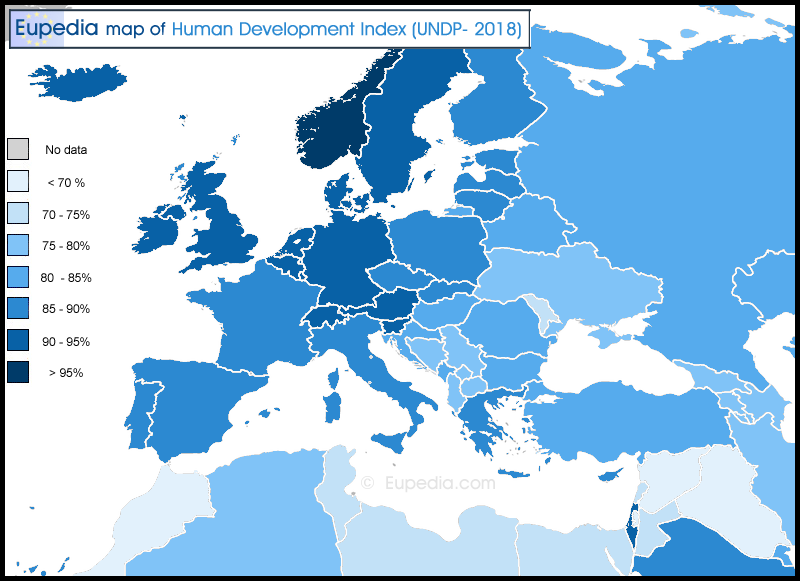
Human Development Index (2018)
This map is based on the United Nations's Human Development Report for 2019 (2018 data)
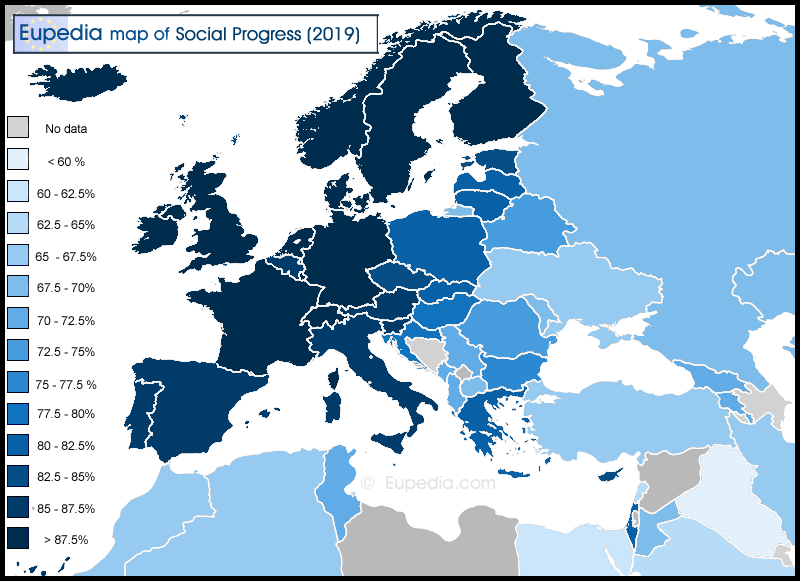
Social Progress Index (2019)
This map is based on the Social Progress Index for 2019.
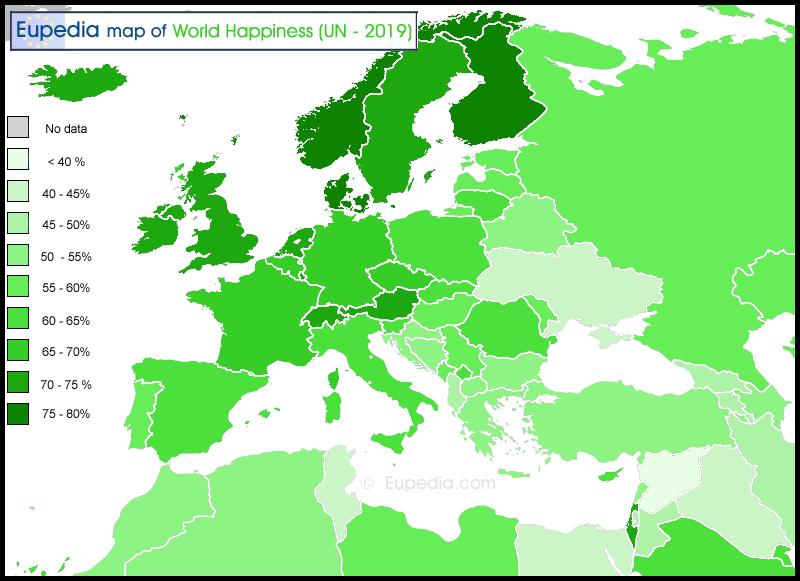
World Happiness Report (2019)
This map is based on the United Nations's World Happiness Report (2019)
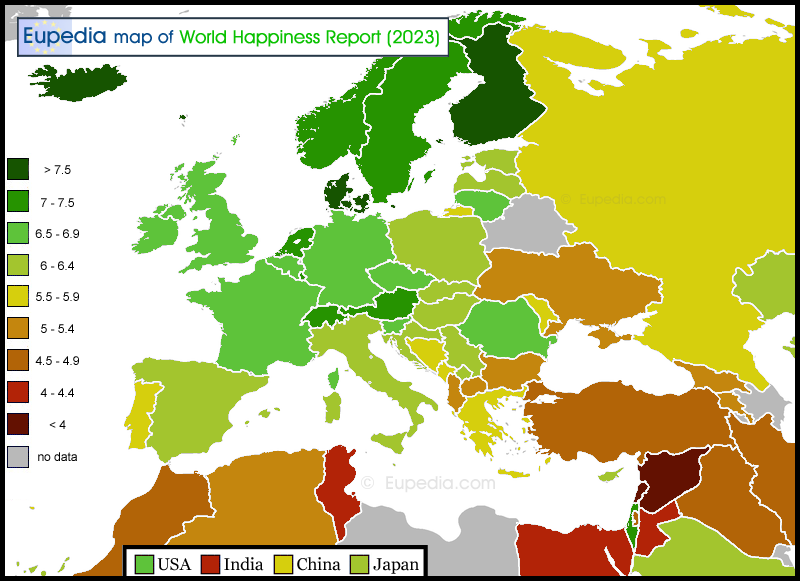
World Happiness Report (2023)
This map is based on the United Nations's World Happiness Report (2023)
Well-being (Gallup - 2014)
This map is based on the Gallup Well-Being Index (mid-2013 data). The map shows the percentage of people thriving (scoring 7/10 or higher on the well-being scale).
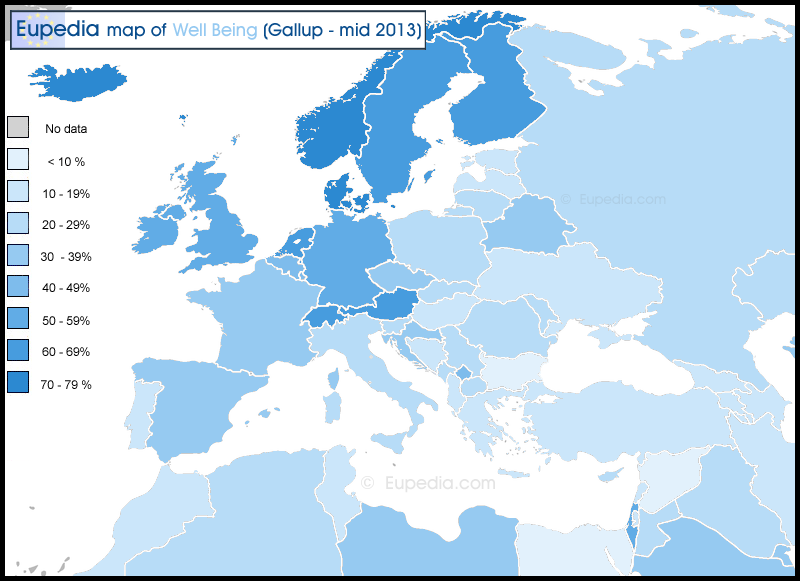
Overal life satisfaction (Eurostat - 2018)
This map is based on the data from Eurostat for 2018.
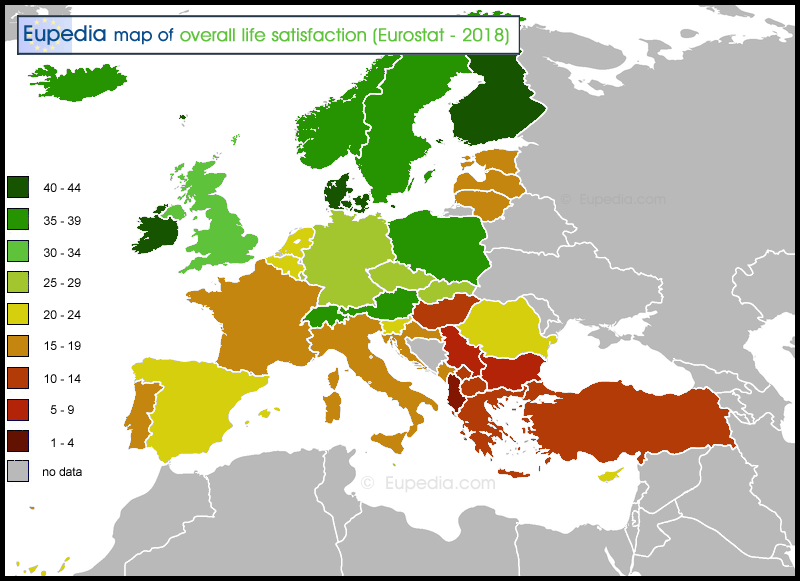
Job satisfaction (Eurostat - 2018)
This map is based on the data from Eurostat for 2018.
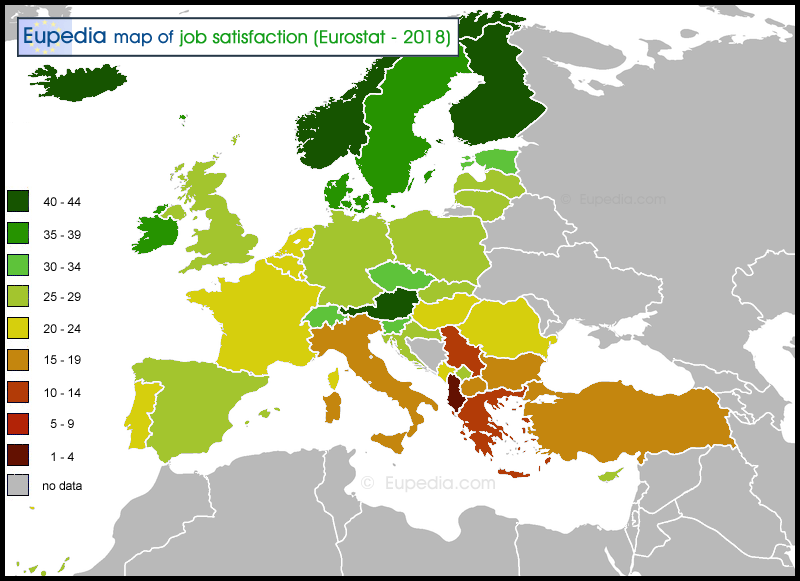
Satisfaction with personal relationships (Eurostat - 2018)
This map is based on the data from Eurostat for 2018.
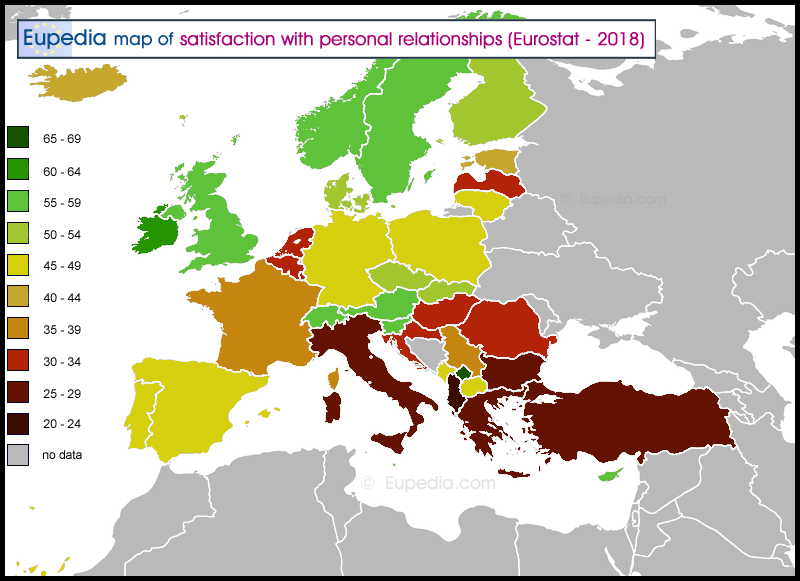
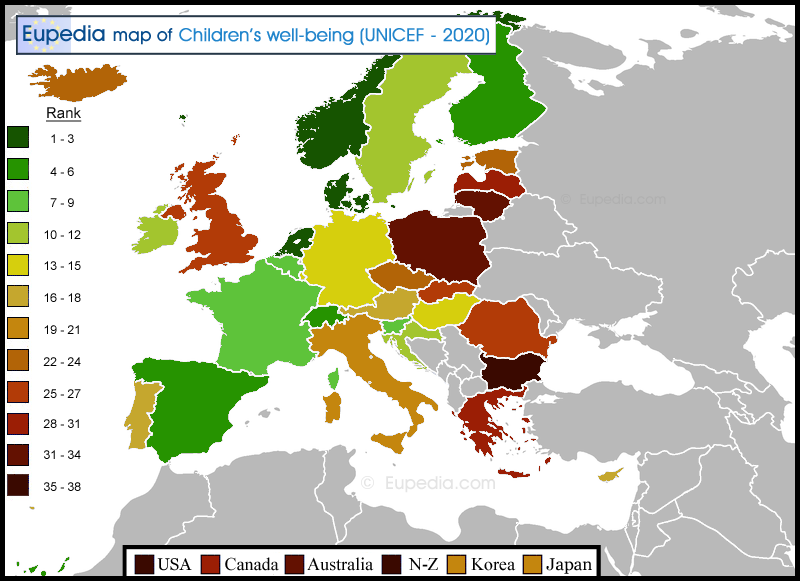
Children well-being in rich countries (UNICEF - 2020)
This map is based on a UNICEF report on children well-being in 38 countries for 2020. See also the discussion on the forum.
Digital Life
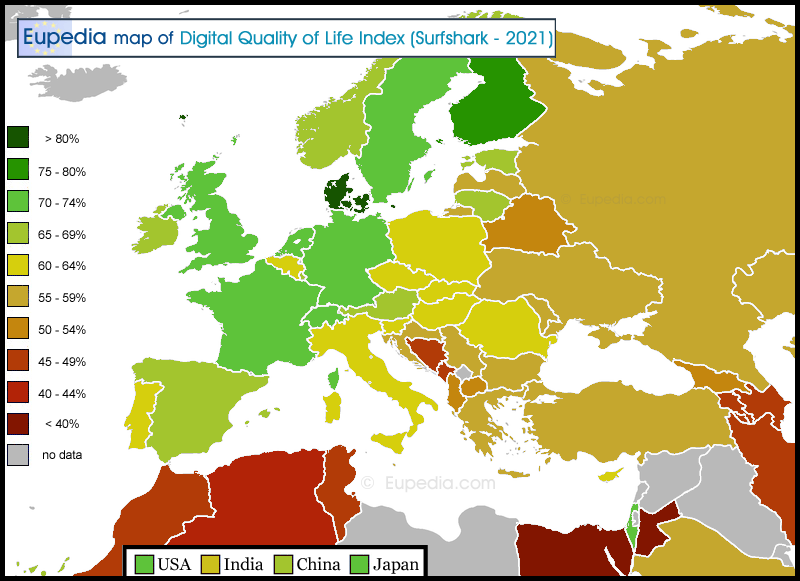
Digital Quality of Life Index (2021)
This map is based on the data from Surfshark for 2021.
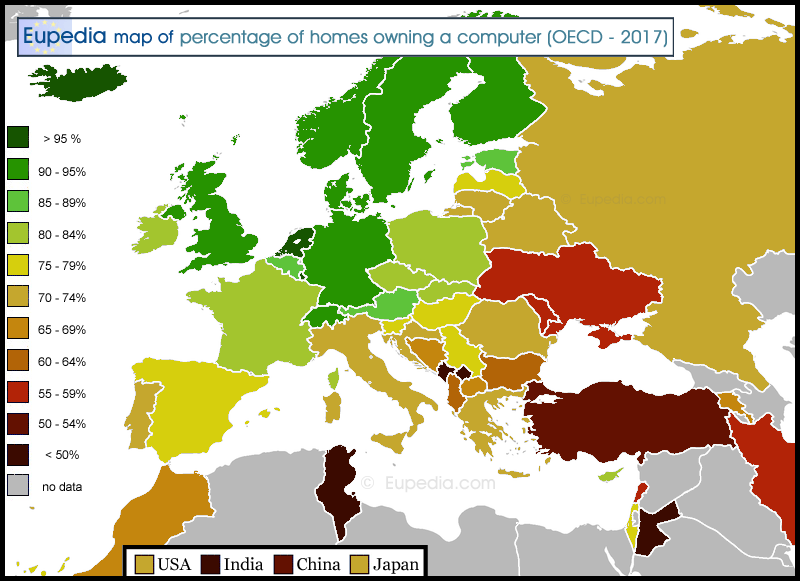
Percentage of households with at least one computer (2017)
This map is based on the data from OECD for 2017. Data from other countries come from various sources.
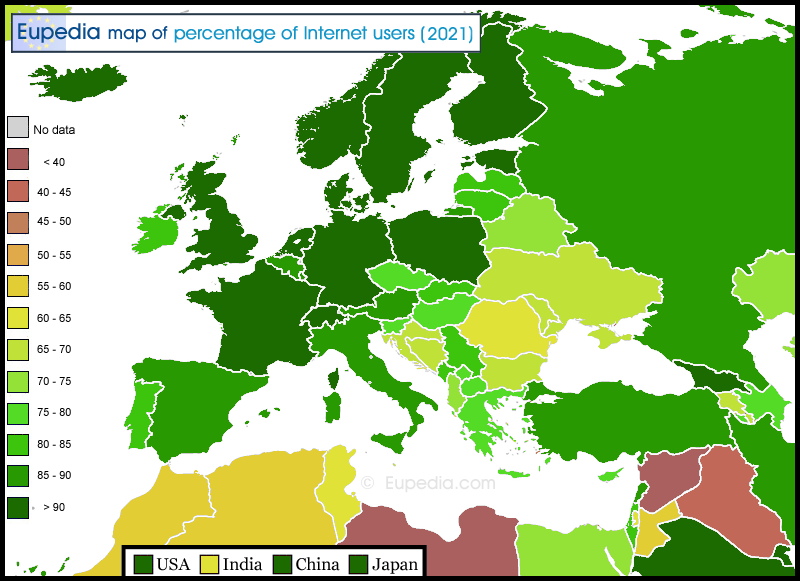
Percentage of Internet users (2021)
This map is based on the data from Wikipedia for 2021.
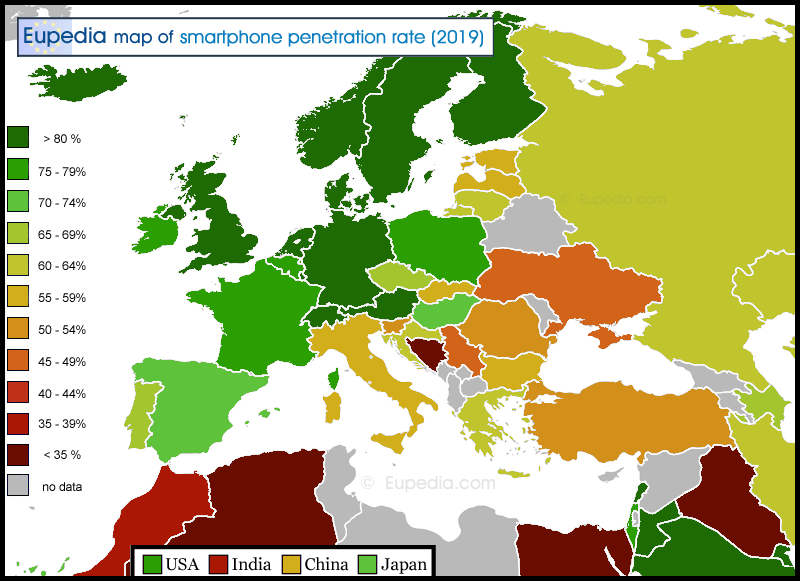
Smartphone penetration (2019)
This map is based on the data from Newzoo, Statista, Pew Research and other sources for 2019.
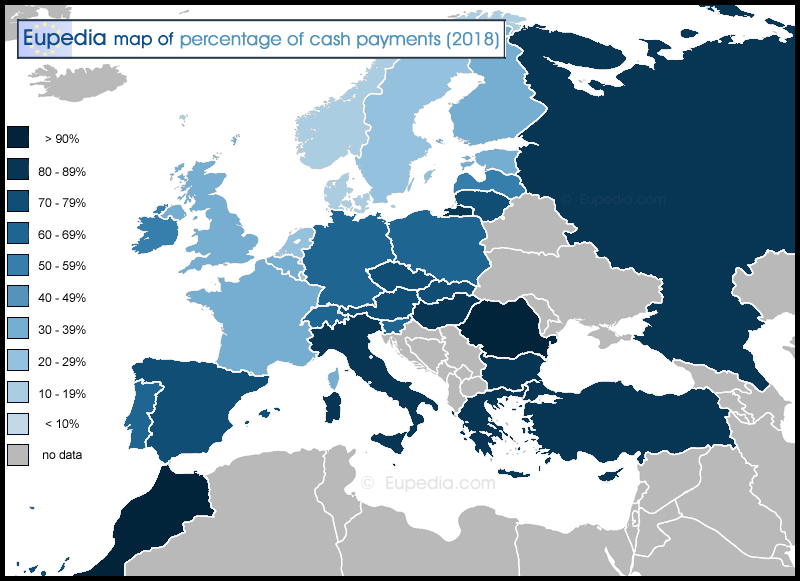
Proportion of cash payments (2018)
This map is based on the data from a report from McKinsey & Company.
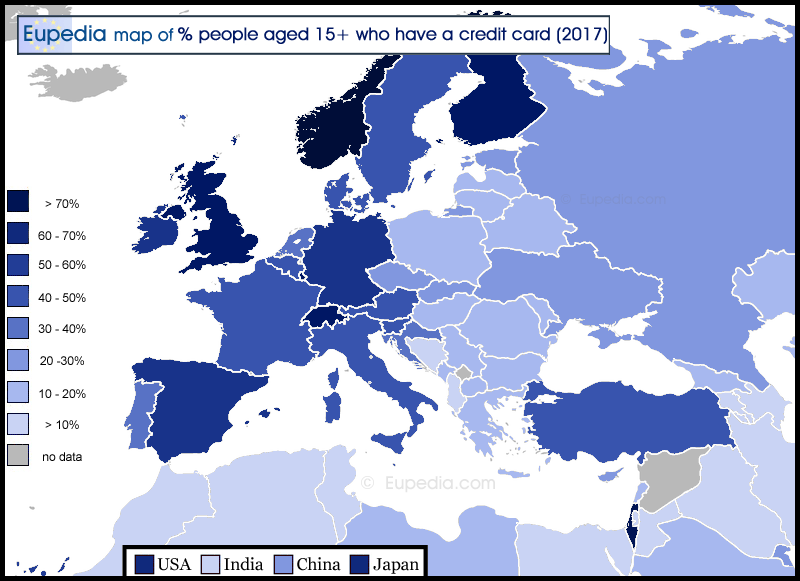
Percentage of people aged 15+ who have a credit card (2017)
This map is based on the data from The Global Economy.
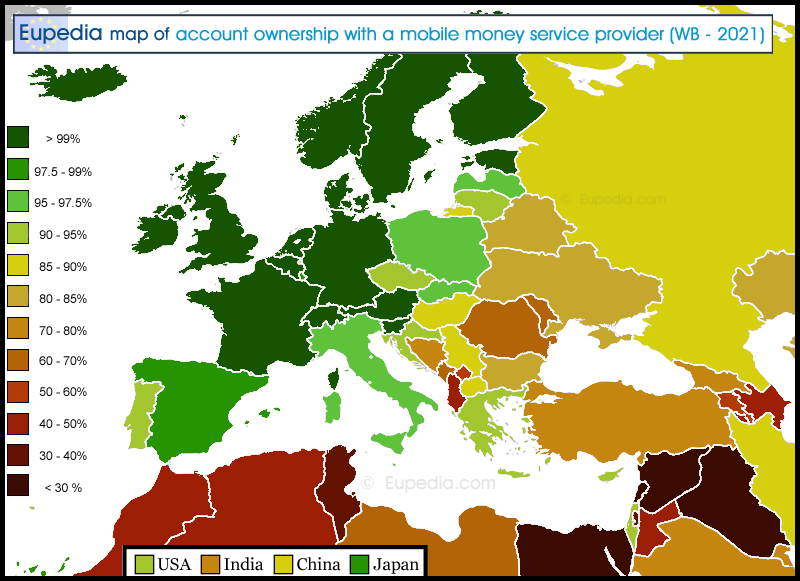
Percentage of people aged 15+ who own an account at a financial institution with mobile money service provider (2023)
This map is based on the data from the World Bank.
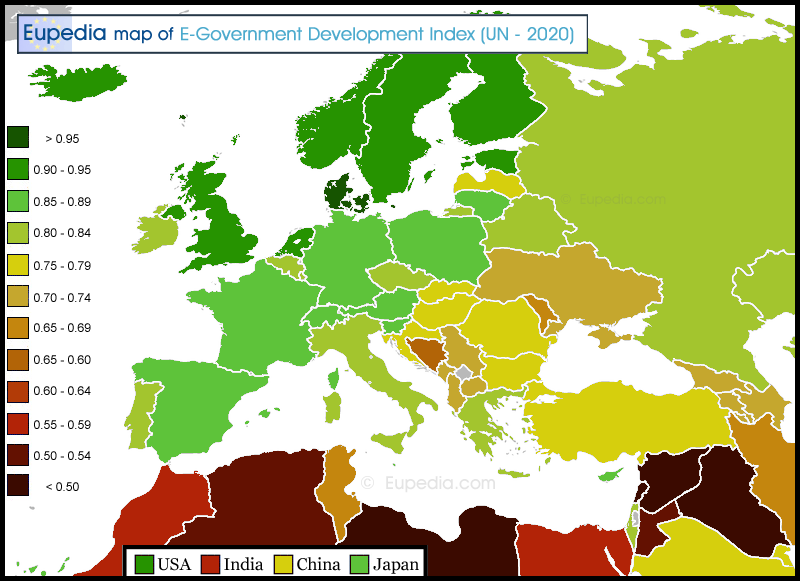
E-Government Development Index (2020)
This map is based on the United Nations' E-Government Survey 2020.
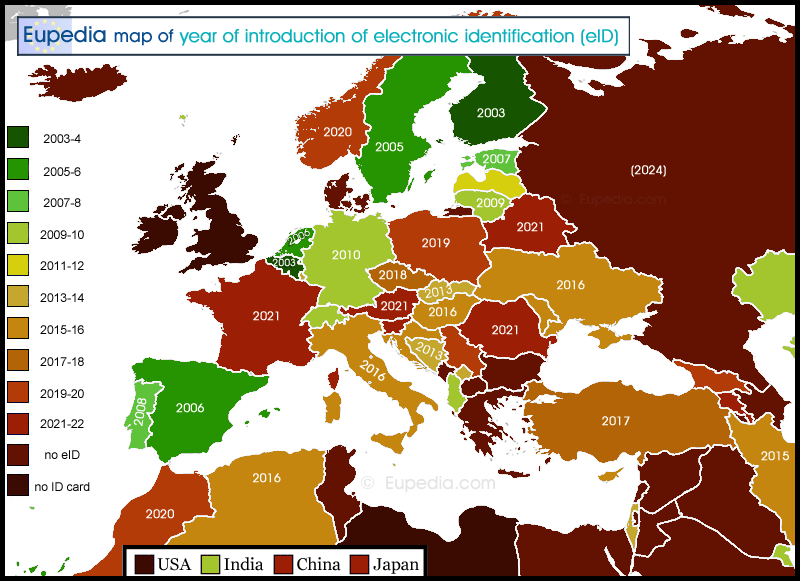
Year of introduction of electronic ID cards
Some 70 countries worldwide now use eID cards. Belgium and Finland were the first countries to introduce them in 2003. In 2007, Estonia became the first country to allow electronic voting for parliamentary elections. Nowadays most European countries have biometric ID cards with an electronic chip and/or contactless NFC microchip. In contrast most English-speaking countries do not even use ID cards, let alone electronic ones.
Demographics
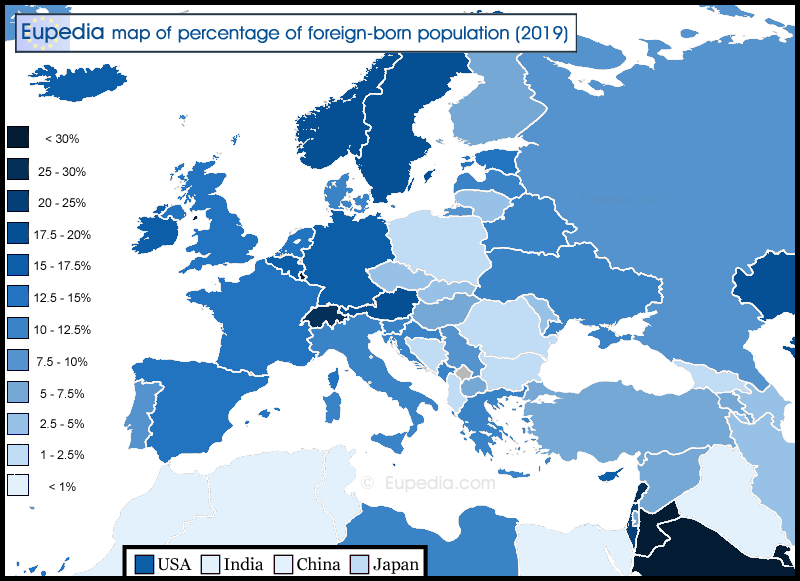
Percentage of the population that is foreign-born (2019)
This map is based on data from the United Nations for 2019.
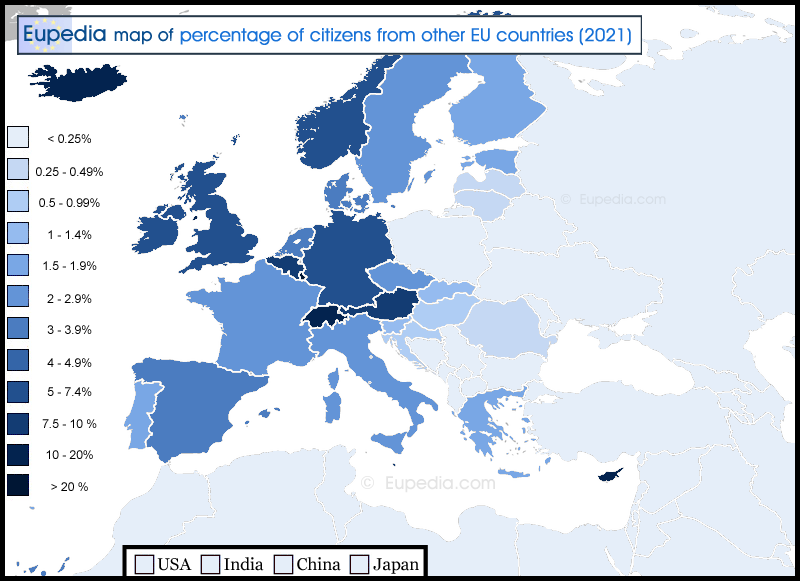
Percentage of citizens from (other) EU countries (2021)
This map is based on data from the Eurostat for 2021.
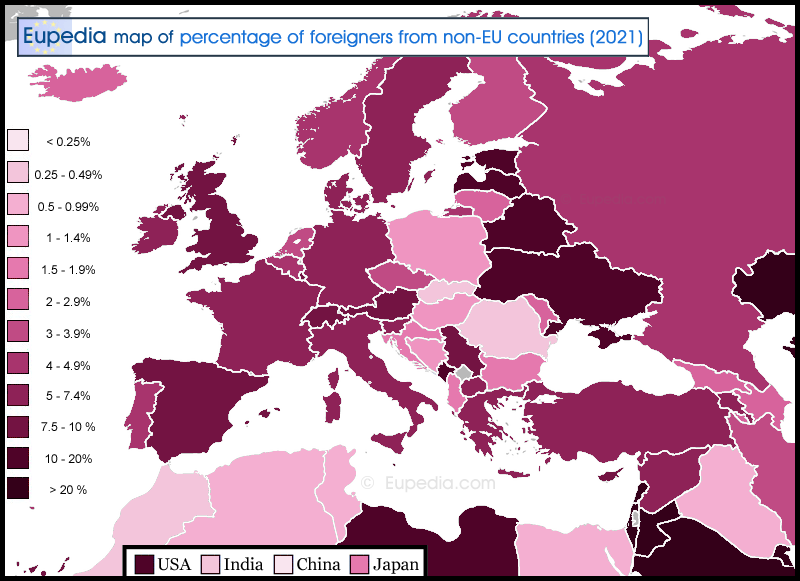
Percentage of foreigners from non-EU countries (2021)
This map is based on data from the Eurostat for 2021.
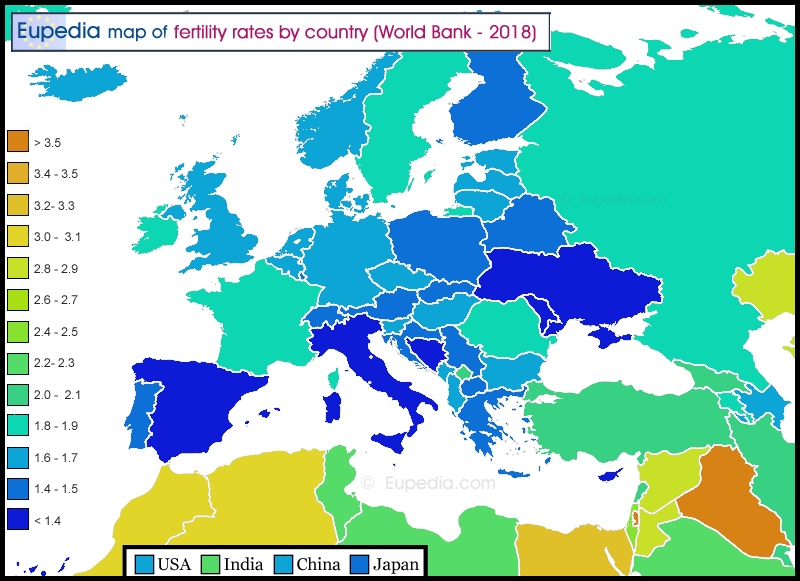
Fertility rates by country (2018)
This map is based on data from the World Bank for 2018.
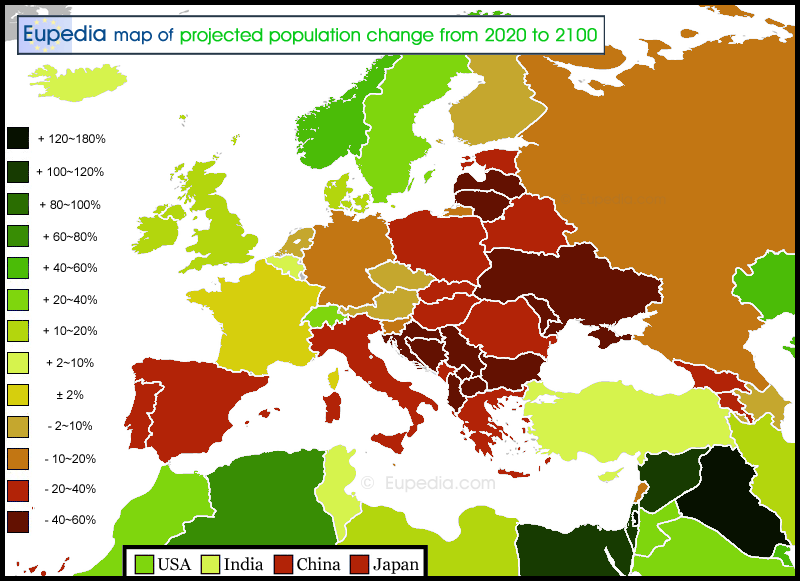
Projected population growth from 2020 to 2100
This map is based on the forecast by Our World in Data.
Gender Issues
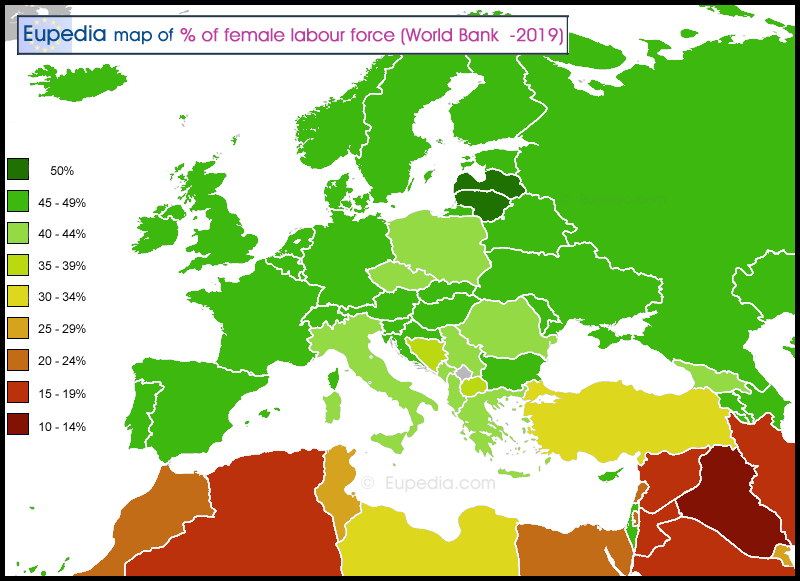
Percentage of the labour force that is female (2019)
This map is based on the data from World Bank for 2019.
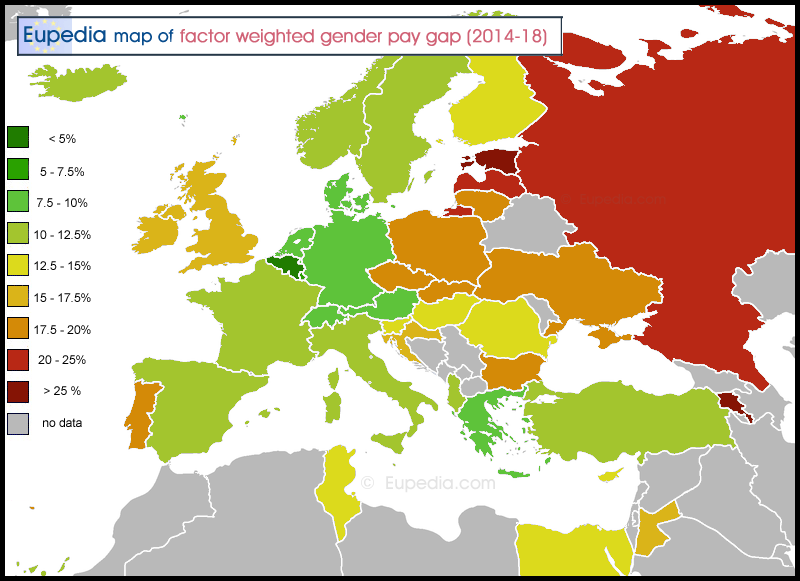
Factor adjusted gender pay gap
This map was computed by averaging the data of the factor-weighted gender pay gap from International Labor Organization (ILO) for 2018 with the adjusted pay gap from the Eurostat 2018 gender gap report. In both cases, the raw mean and median wage differences are corrected (using econometric analysis) by considering education levels, age, working time (full-time versus part-time) and status (private-sector versus public-sector employment). The EU report also takes into account job experience, the type of employment contract and working
time.
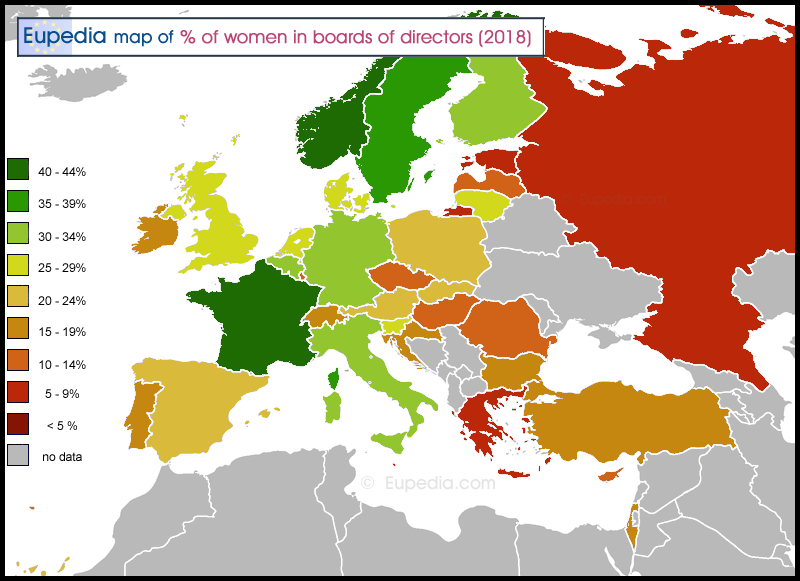
Percentage of women in boards of directors of large publicly listed companies
This map was computed by averaging the data of the 2019 Report on equality between women and men in the EU (p. 71, data for 2018) and Institutional Shareholder Services for 2018 (2017 for Greece and Portugal).
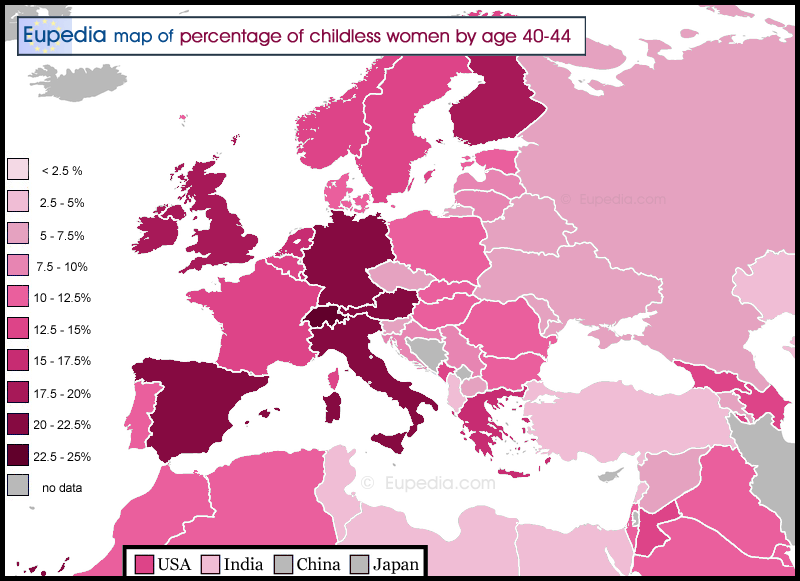
Percentage of women aged 40 to 44 who are childless
This map was computed by averaging the data of the OECD Family Database (2018), Childlessness in Europe: Reconstructing Long-Term Trends Among Women Born in 1900–1972, by T. Sobotka (2017) and Families and Societies: Increasing childlessness in Europe (2015). Data for developping countries is from the United Nations' report Percentage of childless women and women with parity three of higher (2012).
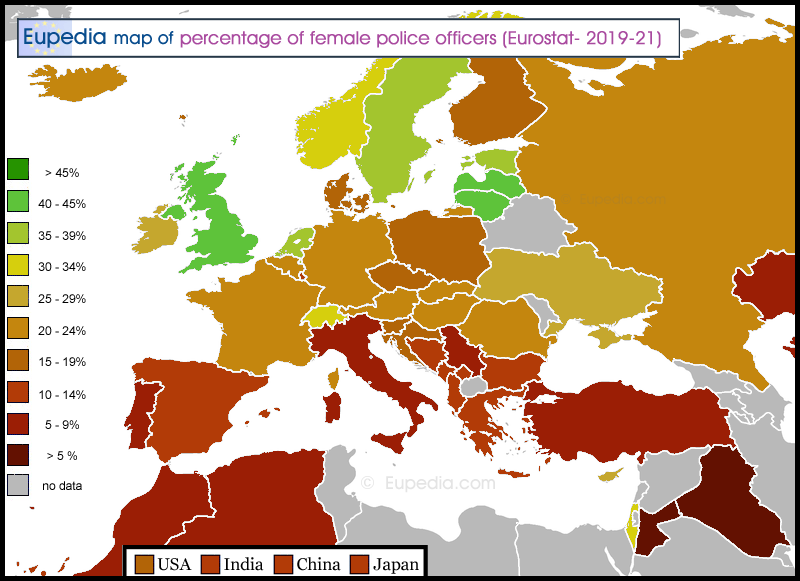
Percentage of women in the police forces
This map is based on the data from Eurostat (average of 2019-2021 period). Other sources were used for countries not part of the Eurostat data set.
Prevalent emotions
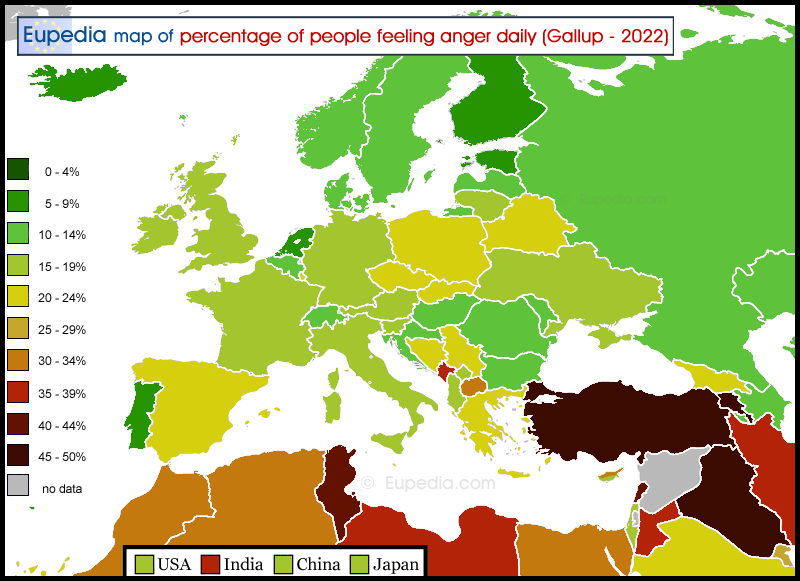
Percentage of people feeling anger on a daily basis (Gallup - 2022)
This map is based on data from Gallup's State of the Global Workplace: 2022 Report. Note that data for this survey was collected before the Russian invasion of Ukraine.
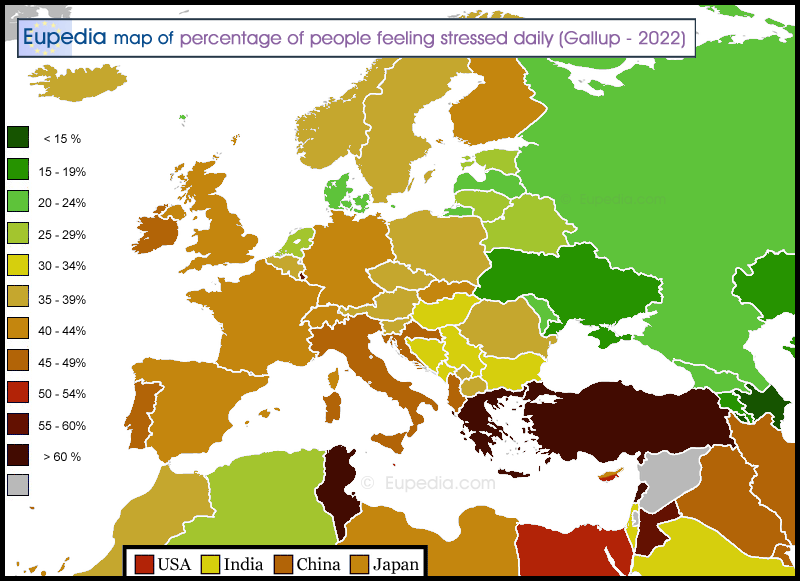
Percentage of people feeling stress on a daily basis (Gallup - 2022)
This map is based on data from Gallup's State of the Global Workplace: 2022 Report. Note that data for this survey was collected before the Russian invasion of Ukraine.
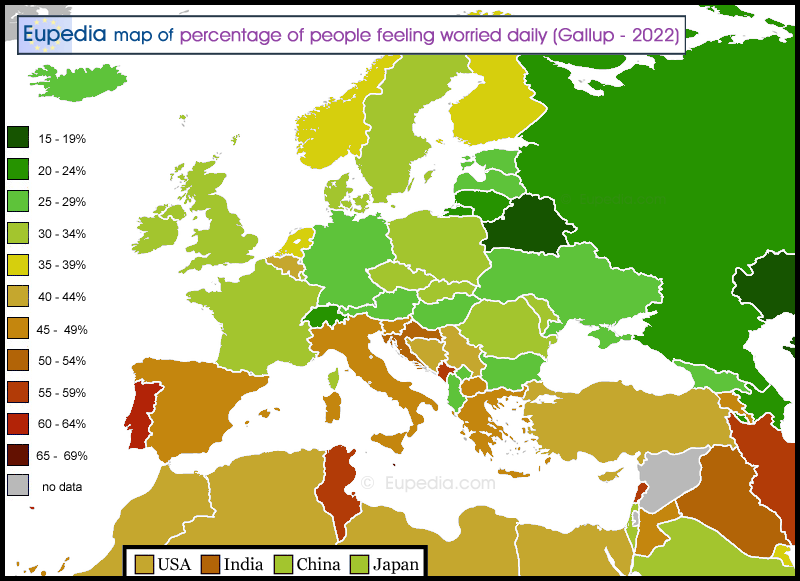
Percentage of people feeling worried on a daily basis (Gallup - 2022)
This map is based on data from Gallup's State of the Global Workplace: 2022 Report. Note that data for this survey was collected before the Russian invasion of Ukraine.
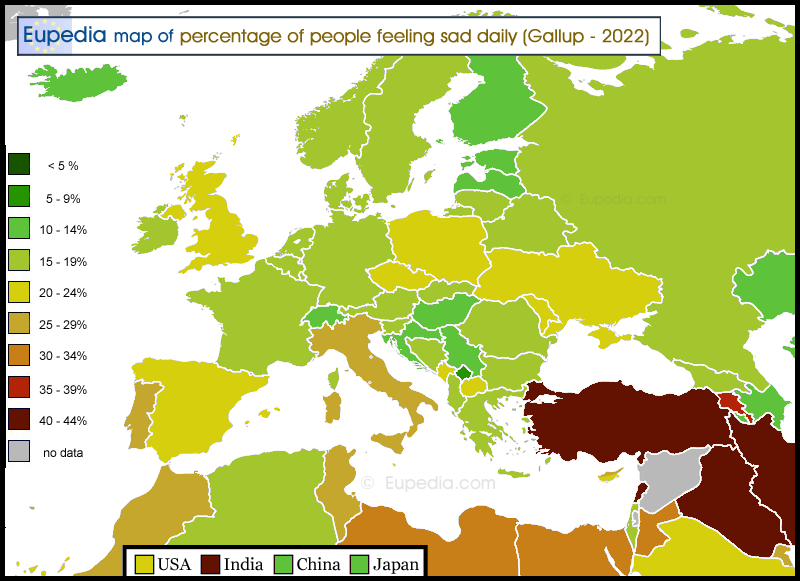
Percentage of people feeling sadness on a daily basis (Gallup - 2022)
This map is based on data from Gallup's State of the Global Workplace: 2022 Report. Note that data for this survey was collected before the Russian invasion of Ukraine.
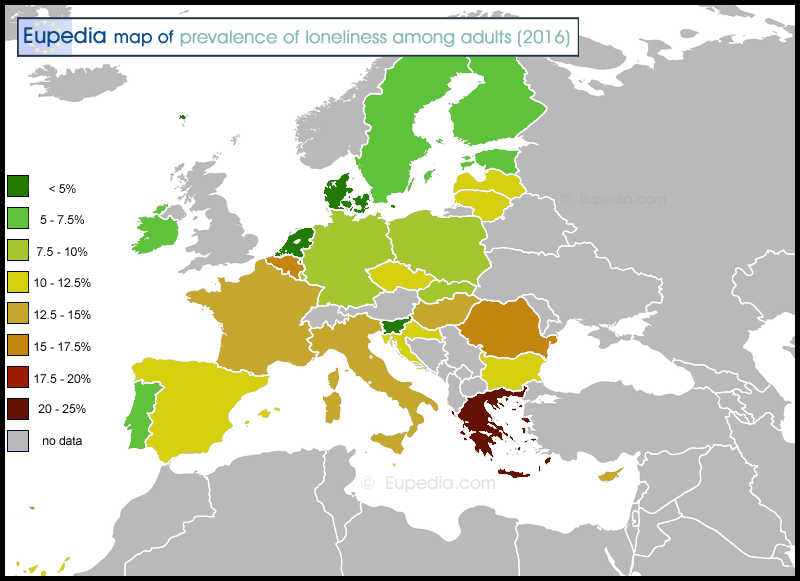
Percentage of people feeling lonely most of the time (EU - 2016)
This map is based on data from the European Commission's publication Loneliness in the EU. Insights from surveys and online media data. It indicates the share of respondents feeling lonely more than half of the time the two weeks preceding the interview.
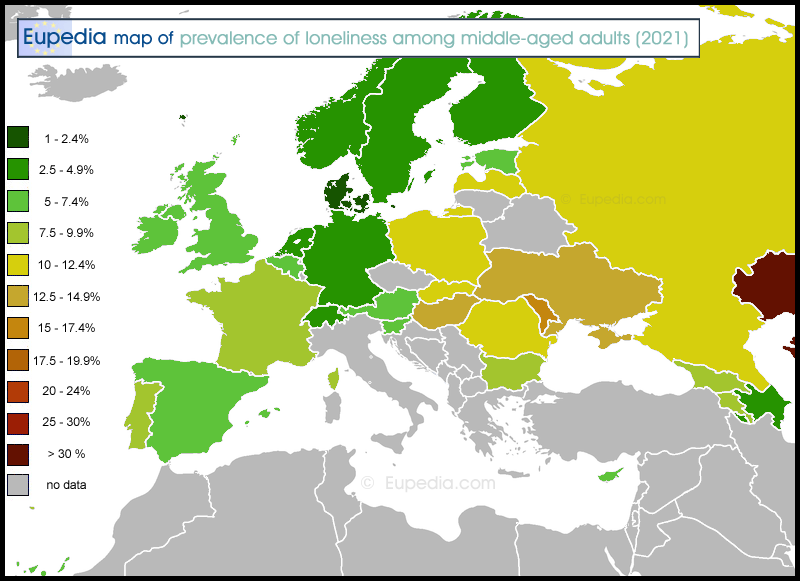
Prevalence of loneliness in middle-aged adults (2021)
This map is based on data from the BMJ's study The prevalence of loneliness across 113 countries: systematic review and meta-analysis, by Surkalim et al.
Choose more maps
The content of this page is purely indicative and subject to changes, approximations or errors.


