


 Austria Guide
 Croatia Guide
 Hungary Guide
 Poland Guide
 Slovakia Guide
 Slovenia Guide
| Contents |
|---|

Introduction
Bohemian Switzerland National Park, established on 1st January 2000, is the Czech Republic's fourth and youngest national park, covering an area of approximately 80 square kilometres. Located in the northwestern part of the Czech Republic, it forms part of the larger Elbe Sandstone Mountains region that extends into Germany. The park is characterised by its spectacular sandstone formations, deep gorges, narrow river valleys, and lush forests that have been shaped by millions of years of wind and water erosion. Its most iconic feature is the Pravčická brána (Prebischtor), the largest sandstone arch in Europe. The park's biodiversity includes various wildlife such as red deer, European bison, golden eagles, and fire salamanders. Visitors can explore the park through numerous hiking trails, boat rides through serene gorges, and visits to information centres located in Krásná Lípa, Saula, Jetřichovice, Srbská Kamenice, and Hřensko.
Geography and Landscape
Geological Features
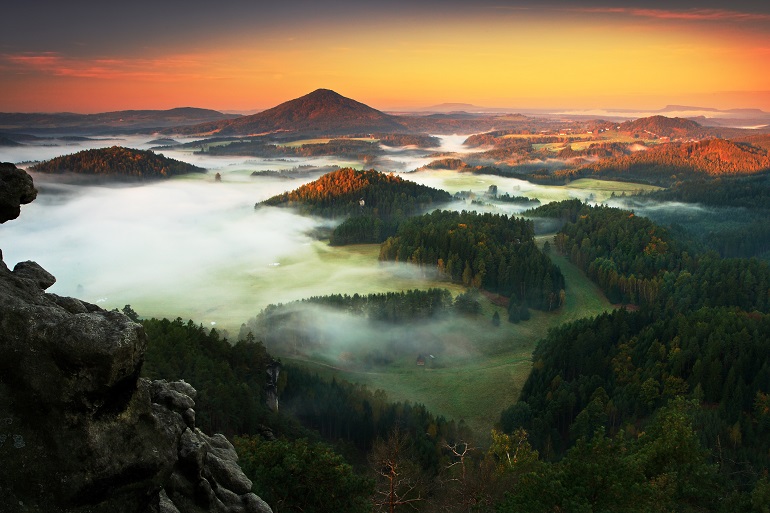
The park's most distinctive feature is its spectacular sandstone formations, which have been sculpted over millions of years by wind and water erosion. These towering cliffs, deep gorges, and intricate rock formations create a mesmerising landscape that has captivated visitors for centuries. The park boasts the largest natural sandstone arch in Europe, known as Pravčická brána, which stands as an iconic symbol of the region.
Topography
The terrain of Bohemian Switzerland is characterised by a mix of rolling hills, dense forests, and dramatic rock formations. The highest point in the park is Růžovský vrch, reaching an elevation of 619 metres above sea level. This peak, formed by volcanic activity during the Tertiary period, offers panoramic views of the surrounding landscape.
Water Features
The Elbe River plays a significant role in shaping the park's geography, carving out a spectacular canyon up to 300 metres deep. This canyon, located near Hřensko, marks the lowest point in the Czech Republic at just 114 metres above sea level. Numerous smaller streams and rivers wind through the park, creating a network of ravines and gorges that add to the area's rugged beauty.
Unique Landscape Elements
One of the most intriguing aspects of Bohemian Switzerland's geography is its inverted climate zones. In contrast to typical mountain environments, the lower elevations of the park, particularly in the canyons, tend to be cooler, while higher elevations experience warmer temperatures. This phenomenon creates microclimates that contribute to the park's diverse ecosystem.
The park also features several table mountains, such as Vysoký Snežník, which offer stunning vistas of the surrounding countryside. Deep gorges like Edmunds's Gorge and Stille Gorge provide visitors with the opportunity to explore the park's hidden recesses and experience the raw beauty of its sandstone formations up close.
Human Impact
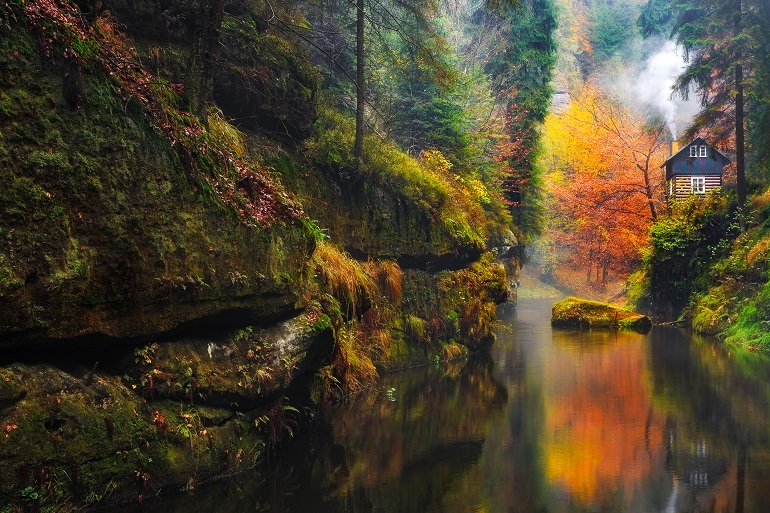
While much of the park remains in a pristine natural state, the landscape also bears witness to centuries of human habitation. Traditional villages with timber houses dot the periphery of the park, seamlessly blending into the natural environment and adding a cultural dimension to the geographical tapestry of Bohemian Switzerland.

Flora and Fauna
Flora
The park's unique microclimate, characterised by cool, humid conditions in its ravines and gorges, supports a remarkable variety of plant life. Visitors can expect to encounter:
- Trees: Beech, spruce, pine, and birch dominate the landscape, with old-growth forests preserved on inaccessible rock promontories.
- Wildflowers: The park is home to rare species such as geminiflorous violets, alpine yellow-violets, and several orchid varieties.
- Ferns: A plethora of fern species thrive in the park, with hard-fern being particularly characteristic of the area.
- Mosses and Fungi: Numerous bryophyte species and rare fungi can be found throughout the park.
Fauna
The diverse habitats within Bohemian Switzerland support an impressive array of wildlife:
- Mammals: Visitors might spot red deer, wild boar, and European badgers. The park is also home to more elusive creatures such as the Eurasian lynx and, recently, wolves.
- Birds: The skies are graced by peregrine falcons, black storks, and tawny owls. The park boasts one of the largest falcon populations in Central Europe.
- Reptiles and Amphibians: Keep an eye out for the common European viper and fire salamanders.
- Fish: The park's rivers and streams are home to brown trout and salmon.
- Insects: The park hosts many rare insect species, including the grayling butterfly.
Visitors are most likely to encounter wildlife during the early morning or evening hours. While spotting some of the more elusive species like wolves or lynx requires considerable luck, the park offers ample opportunities to observe a wide range of animals in their natural habitat.

Activities and Attractions
Hiking Trails
The park's extensive network of well-marked hiking trails is its crowning glory, offering everything from gentle strolls to challenging full-day hikes.
Pravcicka Brana Trail
The journey to Pravcicka Brana (Pravcicka Gate) represents the park's signature hike. This magnificent sandstone arch, standing proudly as Europe's largest natural stone bridge, reaches 16 metres in height with a spectacular 26-metre span.
The classic route begins in Hrensko village, following the red-marked trail through dense forest before climbing steadily upward. After approximately 70 minutes and 4 kilometres, hikers are rewarded with their first glimpse of this geological marvel. The trail offers:
- Multiple viewpoints to photograph the arch from different angles
- Access to the historic Falcon's Nest (Sokolí hnízdo), a 19th-century Swiss-style chateau built directly beneath the arch
- Wooden platforms providing panoramic vistas of the surrounding sandstone landscape
- A series of information panels detailing the geological and cultural significance of the formation
For a more comprehensive experience, continue from Pravcicka Brana to Mezní Louka, creating a circular route of approximately 16 kilometres that showcases the diverse landscapes of the park.
Gabriela's Trail
This lesser-known gem offers a tranquil alternative to the more popular routes. Beginning near Jetrichovice, this 12-kilometre circular trail winds through:
- Ancient beech forests with trees over 200 years old
- Secluded sandstone formations untouched by mass tourism
- The picturesque Pavlino údolí (Pauline Valley) with its babbling brooks
- Several natural viewpoints offering vistas across the Czech-German border
The trail is moderately challenging with some steep sections but rewards hikers with solitude and pristine natural beauty.
Kyjov Valley Trail
This family-friendly route follows the crystal-clear Krinice River through a verdant valley. Starting from the village of Kyjov near Krasna Lipa, highlights include:
- The enchanting Kyjov waterfall, particularly impressive after rainfall
- Historic stone bridges dating back to the 19th century
- Unique rock formations including the "Frog's Mouth" and "Elephant Rocks"
- Ancient water mills that once powered local industry
- Lush riverside vegetation hosting numerous butterfly species
The main trail extends for approximately 8 kilometres one-way but can be shortened or extended with numerous connecting paths, making it ideal for customising to your fitness level.
Jetrichovice Walls and Viewpoints
This spectacular trail offers some of the park's most breathtaking panoramas. The circular route of approximately 10 kilometres includes:
- Mariina Viewpoint (Mariina vyhlídka), offering a 360-degree vista of the surrounding landscape
- Vilemínina Wall, with its dramatic drop-offs and sandstone pillars
- Rudolfstein, a natural rock castle with narrow passages and hidden chambers
- Historic stone staircases carved directly into the rock face
- The "Czech Crown" formation, resembling a royal headpiece when viewed from certain angles
The trail involves some steep climbs and narrow passages, requiring a reasonable level of fitness and sturdy footwear.
Edmund's Gorge (Edmundova soutěska)
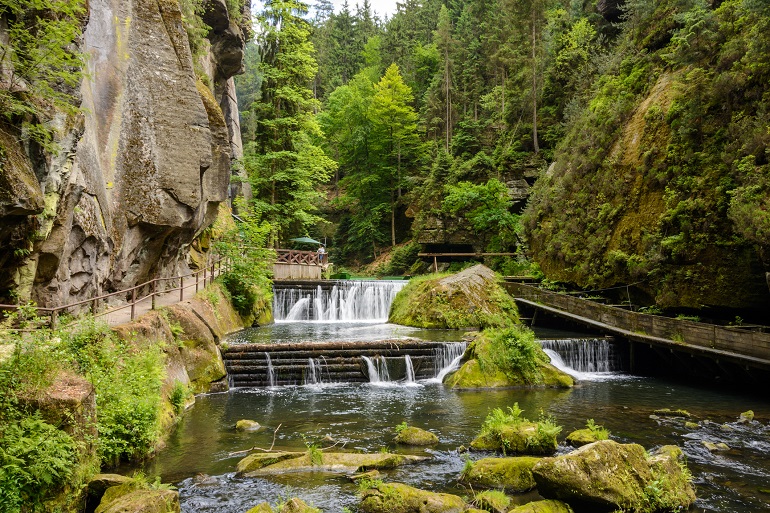
For a magical experience combining hiking with water adventure, Edmund's Gorge is unmatched. This 2-kilometre trail follows the Kamenice River through a narrow canyon where:
- Sheer rock walls rise dramatically on either side, sometimes only a few metres apart
- The trail transitions to a guided punt boat ride where the gorge becomes too narrow for footpaths
- Local boatmen share legends and point out rock formations with names like "Water Dome" and "Frog Prince"
- The microclimate supports rare ferns and mosses, creating an almost prehistoric atmosphere
Combined with the nearby Wild Gorge (Divoká soutěska), this creates a half-day adventure suitable for all ages.
Šaunštejn (Robber's Castle) Trail
This adventurous 11-kilometre route leads to the ruins of a medieval hideout perched atop a sandstone outcrop. The trail features:
- A series of metal ladders and steps carved into the rock face
- Narrow passages between towering sandstone columns
- The atmospheric ruins of Šaunštejn, once used by bandits to monitor trade routes
- Spectacular views extending into neighbouring Germany
- The "Wishing Stone," where local tradition suggests making a wish while touching the ancient rock
This challenging trail is not recommended for those with a fear of heights or during wet weather when the rocks become slippery.
Cross-Border Trails
Several trails connect with Germany's Saxon Switzerland National Park, allowing for international hiking adventures:
- The Elbe Sandstone Mountains Trail crosses the border multiple times, following ancient trade routes
- The European Long-Distance Path E3 passes through both parks
- The Painters' Path (Malerweg) celebrates the landscape that inspired Romantic artists centuries ago
Remember to carry identification when crossing borders, even within the Schengen Area.
Other Activities
Rock Climbing
The sandstone formations of Bohemian Switzerland have attracted climbers for generations. The park offers:
- Over 1,000 official climbing routes of varying difficulties
- The Via Ferrata in Decín, perfect for beginners with proper equipment
- Strict regulations to protect the soft sandstone (no climbing after rain, chalk restrictions)
- Guided climbing experiences with local experts who understand the unique properties of sandstone
Climbing permits are required and can be obtained from the park administration.
Water Activities
The rivers flowing through the park provide refreshing alternatives to land-based exploration:
- Canoe and kayak rentals available in Hrensko and Decín for paddling the Elbe River
- Guided rafting trips through the Kamenice River gorges
- Swimming spots at designated areas along the Krinice River
- Fishing with proper permits in selected locations
The Elbe River forms a natural boundary of the park and offers a gentler paddling experience suitable for beginners.
Cycling
While mountain biking is restricted in some areas to protect the fragile ecosystem, numerous cycling routes exist:
- The Elbe Cycle Path runs along the park's edge, offering spectacular views without technical challenges
- The Krasna Lipa to Jetrichovice route provides a perfect balance of natural beauty and accessibility
- E-bike rentals available in gateway towns for those wanting assistance on hillier sections
- Dedicated cycling maps highlighting bike-friendly trails and refreshment stops
Cyclists should respect trail designations, as some paths are strictly for hikers only.
Photography
The park's dramatic landscapes make it a photographer's paradise:
- Dawn at Pravcicka Brana offers magical light conditions as the sun illuminates the arch
- The misty mornings in the river valleys create ethereal atmospheres
- Seasonal highlights include spring wildflowers, autumn foliage, and winter ice formations
- Several photography hides are available for wildlife photography enthusiasts
Photography workshops and guided photo tours can be arranged through the visitor centres.
Key Attractions
Pravcicka Brana
Beyond being a hiking destination, this iconic formation deserves special mention:
- Featured on countless postcards and in films, it has become the symbol of the region
- The adjacent Falcon's Nest restaurant houses a small museum detailing the geological history
- The surrounding viewpoints offer different perspectives of this natural wonder
- Access is restricted to the viewing platforms to protect the increasingly fragile arch
Note that climbing on or walking across the arch is strictly prohibited to preserve this natural treasure for future generations.
Kamnitz Gorge
This spectacular canyon can only be fully experienced by combining hiking with a traditional punt boat ride:
- Local boatmen in traditional costumes navigate narrow passages using poles
- The boat journey covers sections where the gorge is too narrow for footpaths
- Towering rock walls create a cathedral-like atmosphere with exceptional acoustics
- The cool microclimate provides welcome relief on hot summer days
- Historical carvings and inscriptions can be spotted on the canyon walls
Boat rides operate seasonally from April to October, weather permitting.
Lookout Towers
The park and its surroundings feature several architecturally distinct observation towers:
- The stone tower at Snezník, dating from 1864, offers views extending to the Ore Mountains
- The modern helix lookout tower in Janov combines contemporary design with functionality
- The Ruzenka lookout tower features unique wooden architecture inspired by traditional local building styles
- The brick Tanecnice tower stands 26 metres tall, providing panoramic views across to Germany
- The Vlčí hora tower near Krásná Lípa combines a meteorological station with public viewing platforms
Each tower has its own character and offers a different perspective on the landscape.
Tisa Rocks
This labyrinthine rock city near the village of Tisa features:
- Narrow passages between towering sandstone formations
- Whimsically named rock shapes including "The Mayor and His Wife" and "The Elephant"
- Locations used in the filming of The Chronicles of Narnia
- A designated children's route with easier paths and interactive elements
- Illuminated night tours during summer months for a completely different experience
The site offers two main circuits—the Large and Small Labyrinths—which can be combined for a half-day exploration.
Historic Villages
The park encompasses several picturesque villages worth exploring:
- Jetrichovice with its traditional timber-framed houses and excellent trailhead facilities
- Rynartice, featuring well-preserved rural architecture and a historic church
- Vysoká Lípa, offering a glimpse into traditional rural life with its preserved farmsteads
- Mezná, a perfect example of the region's distinctive architectural style with half-timbered houses
These settlements provide cultural context to the natural wonders and often serve as excellent starting points for hikes.
Accommodation
Types of Accommodation
Hotels and Pensions
The area surrounding the national park offers a selection of hotels and pensions, catering to different budgets and preferences. Many of these establishments are located in picturesque towns and villages near the park's boundaries, providing easy access to the natural wonders within.
Nature-Inspired Lodgings
For those seeking a more immersive experience, there are accommodations that reflect the park's stunning environment. These may include:
- Eco-friendly lodges
- Rustic cabins
- Glamping sites
Such options allow visitors to feel closer to nature while still enjoying modern amenities.
Location and Accessibility
Accommodation can be found both within and around the national park. Some establishments are conveniently situated near popular attractions like the Pravčická Gate or the Kamenice River gorges. Others may be nestled deeper in the forest, offering a more secluded experience.
Amenities and Services
Many accommodations in the area provide amenities tailored to outdoor enthusiasts, such as:
- Bicycle storage and rental
- Packed lunch services for hikers
- Information about local trails and attractions
- Transport services to key park locations
Booking Considerations
When planning your stay in Bohemian Switzerland, consider the following:
- Peak seasons (summer and early autumn) can be busy, so book well in advance.
- Some accommodations may have minimum stay requirements during high season.
- Check the proximity to public transport if you're not driving.
- Inquire about eco-friendly practices if sustainability is important to you.

Gastronomy
Traditional Czech Fare
At the heart of the region's gastronomy lies hearty Czech fare. Visitors can indulge in classic dishes such as:
- Svíčková: A cornerstone of Czech cooking, this dish features larded, braised beef slow-cooked with root vegetables and served with bread dumplings, cranberries, and a dollop of whipped cream.
- Knedlo-vepřo-zelo: A beloved combination of roasted pork, potato dumplings, and sauerkraut that exemplifies Czech comfort food.
- Schnitzel: Often served with boiled potatoes and butter or the more traditional Czech potato salad, which includes a zesty mix of potatoes, carrots, hard-boiled eggs, onions, mayonnaise, mustard, and pickles.
Regional Specialities
The Bohemian Switzerland area boasts its own unique culinary treasures:
- Potato pancakes: A local favourite, often served as a hearty side dish.
- Fruit-filled kolaches: Sweet pastries that make for a perfect breakfast or dessert.
- Wild game dishes: The region's forests provide inspiration for venison and wild boar specialities.
- Homemade soups: Try the kulajda or zelňačka, prepared according to time-honoured recipes.
Local Produce and Craft
The area's gastronomic scene is enriched by an emphasis on locally-sourced ingredients:
- Farm-fresh products: Many restaurants prioritise ingredients from nearby farms, ensuring the freshest flavours.
- Seasonal offerings: Menus often change to reflect the bounty of each season, from spring vegetables to autumn mushrooms.
- Craft beers: The region boasts several microbreweries producing a variety of local beer specialities.
Sweet Treats
Those with a sweet tooth will find plenty to enjoy:
- Yeast-raised buns: Often filled with plums or jam, these make for a delightful snack.
- Apple strudel: A classic dessert with a local twist.
- Homemade ice cream: A refreshing treat, perfect after a day of hiking.
Modern Interpretations
While traditional dishes dominate, many establishments offer contemporary takes on Czech cuisine:
- Vegetarian and gluten-free options: Increasingly available to cater to diverse dietary needs.
- Fusion dishes: Some chefs creatively blend Czech flavours with international culinary trends.
Getting There and Around
From Prague
The park is approximately 120 kilometres north of Prague, making it an accessible day trip or weekend getaway from the Czech capital.
By Train (Recommended)
The train is the quickest and most convenient public transport option:
- Depart from Prague's Hlavní Nádraží (Main Station)
- Take a direct train to Děčín, which takes about 1.5 hours
- Trains run regularly, with international and domestic express connections arriving in Děčín approximately every two hours
From Děčín, you have several options to reach different parts of the park:
- Bus 434: Take this bus from directly in front of Děčín railway station to reach Hřensko (20 minutes), Mezní Louka, or during summer season, to Krásná Lípa
- Bus 435/436: For Jetřichovice, take bus 435 or 436 (30 minutes journey)
- Train U28: Travel to Schöna (Germany) and then take the cross-border ferry to Hřensko. This is useful if you're planning to visit Soutěsky and Pravčická brána
- Train to Krásná Lípa: Trains run hourly from Děčín to the centre of the National Park at Krásná Lípa
By Car
Driving from Prague to Bohemian Switzerland takes approximately 2 hours:
- Take highway D8 from Prague towards Ústí nad Labem and Dresden
- Turn off at Ústí nad Labem and continue towards Děčín and Hřensko
- Parking is available in Hřensko or Mezní Louka for around 120 CZK per day
- Note that during summer, car parks can fill up between 10am and 2pm
From Germany
If you're coming from Germany (Dresden or Berlin):
- Take the S1 train from Dresden Hauptbahnhof to Bad Schandau (40 minutes, €6.50 one way)
- From Bad Schandau, take the Wanderschiff ferry up the River Elbe to Hřensko (€10.60 one way, €15 return)
- The ferry runs from May to November
- Alternatively, you can take train U28 to Schöna and then use the cross-border ferry to Hřensko
Best Time to Visit
Summer (May to September)
- Weather: Warm and sunny, with temperatures ranging from 18°C to 33°C during the day. June, July, and August are the warmest months, but they are also the rainiest.
- Activities: Ideal for hiking, cycling, and boat rides through the gorges. The lush greenery and vibrant flora make summer a popular time for outdoor enthusiasts.
- Crowds: Peak tourist season, especially in July and August, so expect more visitors.
Spring (April to May)
- Weather: Mild temperatures, with fewer tourists compared to summer. April is relatively dry, making it a good time for those who prefer fewer crowds.
- Activities: Perfect for hiking and cycling as the flora begins to bloom, offering picturesque landscapes.
Autumn (September to October)
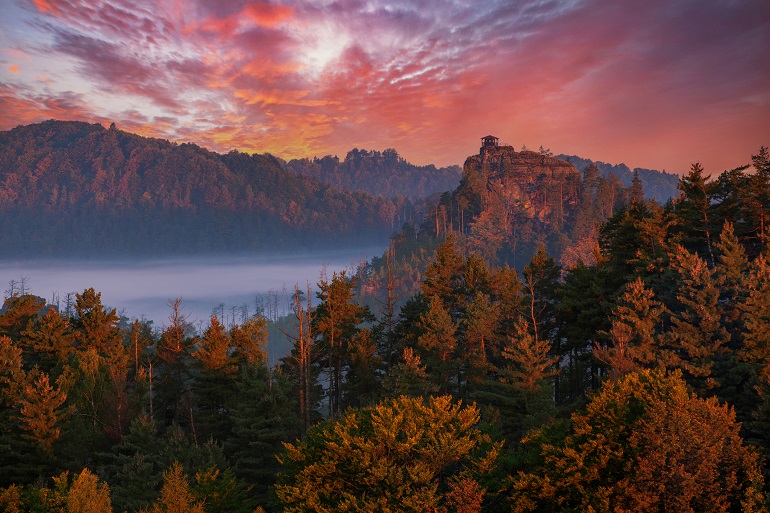
- Weather: Comfortable temperatures with stunning autumn foliage, creating a beautiful backdrop for hiking and photography.
- Activities: Enjoy the vibrant colours of the changing leaves, making it an excellent time for nature lovers and photographers.
- Crowds: Fewer tourists than in summer, providing a more serene experience.
Winter (December to February)
- Weather: Cold with potential snow, transforming the park into a magical winter wonderland.
- Activities: Suitable for winter hiking and exploring the snow-covered landscapes. Some attractions may be closed, but the scenery is unique and peaceful.
Tips for Visiting
- Clothing: Always bring waterproof gear and sturdy footwear, as the weather can change quickly.
- Transportation: Use public transport from nearby towns like Děčín to reach the park's main entrance at Hrensko.
- Planning: Consider visiting early in the day to avoid crowds during peak seasons.
Overall, the best time to visit Bohemian Switzerland National Park depends on your preference for weather and crowd levels. Summer offers warm weather and lush landscapes, while spring and autumn provide fewer tourists and beautiful seasonal changes. Winter is ideal for those who enjoy a serene, snow-covered environment.
Conservation and Responsible Tourism
As the fourth national park in the Czech Republic, the Bohemian Switzerland National Park plays a crucial role in preserving the region's valuable flora and fauna. To ensure the park's long-term sustainability and protect its delicate ecosystems, visitors are encouraged to practice responsible tourism.
Conservation Efforts
The park administration focuses on several key conservation initiatives:
- Ecosystem restoration: Efforts are underway to restore the countryside's natural character, including the reintroduction of native species such as silver firs, peregrine falcons, and salmon.
- Invasive species management: The park faces challenges with invasive species, particularly the White Pine (Pinus strobus), which threatens native plant communities.
- Reforestation: Following a devastating wildfire in 2022, an ambitious reforestation programme was launched to repair damage and ensure long-term sustainability.
- Biodiversity protection: The park aims to connect isolated ecosystems and restore watercourses to secure habitats for animals and plants.
Responsible Tourism Guidelines
Visitors can contribute to conservation efforts by following these guidelines:
- Stay on marked trails: In the first zone of the national park, tourists must stick to designated paths marked by the Czech Tourists Club or park administration.
- Use eco-friendly transport: The park promotes sustainable travel options, including eco-buses, trains, and cycling on marked cycle tracks.
- Respect camping regulations: Overnight stays are only permitted in designated areas, such as the Mezní Louka campsite.
- Fire safety: Smoking and making fires are strictly prohibited due to the high risk of forest fires.
- Leave no trace: Visitors should take all rubbish with them and avoid disturbing wildlife or plant life.
- Support local initiatives: Engage with local communities and purchase regional products to contribute to sustainable development.
Sustainable Tourism Initiatives
The park administration and local organisations have implemented various measures to promote responsible tourism:
- Visitor management: The "Sustainable Tourism and Biodiversity" programme aims to improve the management of visitor flows in protected areas.
- Educational centres: The House of Bohemian Switzerland in Krásná Lípa serves as a visitor and educational centre, offering interactive exhibitions about the region's natural and cultural heritage.
- Cross-border cooperation: Joint efforts with the neighbouring Saxon Switzerland National Park in Germany promote coordinated care and development of the cross-border region.
- Eco-friendly accommodations: The park offers environmentally-friendly adventure stays and promotes sustainable lodging options.
- Diverse attractions: New tourist trails and less popular destinations are being promoted to reduce pressure on overcrowded areas.

Visitor Centres and Educational Facilities
Visitor Centres
Bohemian Switzerland National Park offers several visitor centres and educational facilities to enhance your experience and understanding of this unique natural area.
The primary information hub for the national park is the Bohemian Switzerland Centre located in Krásná Lípa. This centre features an interactive exhibition where visitors can learn about the park's flora, fauna, geology, and cultural heritage. The centre provides comprehensive information for planning your visit, including accommodation recommendations, day trip suggestions, and insider tips.
Additional information points can be found along hiking trails in:
- Saula near Dolní Chřibská
- Jetřichovice
- Srbská Kamenice
- Hřensko
These smaller centres offer focused information on specific themes relevant to their locations within the park.
Educational Facilities
The park administration places a strong emphasis on environmental education, particularly for children and young people. They offer various programmes and facilities designed to foster an appreciation for nature and conservation:
- Educational trails: The park features several nature trails, including one that begins at the main square in Krásná Lípa.
- School programmes: There is close cooperation between the national park and local schools, with coordinators trained in environmental education centres to facilitate learning experiences.
- Outdoor learning areas: The park provides spaces for hands-on nature experiences, such as the freely accessible outdoor grounds where children can explore a barefoot path and a scented organ.
Cross-border Education
Bohemian Switzerland National Park collaborates closely with its German counterpart, Saxon Switzerland National Park. This partnership extends to educational initiatives:
- Bilingual services are offered at visitor centres in both Bad Schandau (Germany) and Krásná Lípa (Czech Republic).
- Joint environmental education programmes bring together children and young people from both countries to experience nature across borders.
Family-Friendly Activities
For families visiting the park, there are several child-friendly options:
- Guided hikes tailored for families
- Agritourism experiences on local farms
- Educational programmes designed specifically for school groups