Wales Guide  |
|---|
|
| | Welsh Counties |
|---|
|
| | National Parks |
|---|
|
| | Europe Guide |
|---|
|
| | Travel Tools |
|---|
|
| | UK & Ireland Guide |
|---|
|
|
|
|
 Tenby Harbour, Dyfed. Tenby Harbour, Dyfed.

Attractions
Cardiganshire (Ceredigion)
| Aberystwyth |
|---|

 Aberystwyth is a university and seaside town with a population of 14,640, serving as the largest town in Ceredigion. The town features an imposing castle built in the late 13th century that was once a powerful symbol of Welsh independence. The National Library of Wales, housed in a grand neo-classical building, holds historic books, including the world's smallest book, and hosts painting and film exhibitions where visitors can watch archive films from across Wales. Since 1902, the Vale of Rheidol Railway has operated as a narrow-gauge railway, offering scenic journeys through the Rheidol Valley, passing through picturesque villages and forests. For outdoor enthusiasts, Pen Dinas Hill features an Iron Age hillfort and an 1850s monument dedicated to the first Duke of Wellington3. The Victorian-era Town Market Hall, built in the 1860s, continues to thrive as a lively marketplace with independent shops and cafés. |
| Colby Woodland Garden |
|---|

 Originally an 18th-century coalfield, this eight-acre woodland garden was acquired by John Colby in the 1790s but truly flourished after pharmacist Samuel Kay purchased it in the 1870s, with his descendants later adding ponds and horticultural features. The garden is renowned for its rhododendrons and houses Britain's tallest Japanese redwood, reaching 134 feet high near the newt pond. The site features four acres of flood meadow filled with indigenous wildflowers and a walled garden showcasing formal flora displays, sculptures, a water feature and a Victorian Gothic gazebo. The wooded valley teems with wildlife, including rare bats and occasional otters. Visitors can enjoy the Bothy Tea-room's homemade cakes and light lunches, browse locally made crafts at the Loft Gallery, or peruse the second-hand bookshop at the visitor centre. A walking path connects the garden to the sandy beach at Amroth village. |
| Vale of Rheidol Railway |
|---|

The Vale of Rheidol Railway is a narrow gauge heritage railway running between Aberystwyth and Devil's Bridge, covering a distance of 11¾ miles. The journey takes passengers through diverse landscapes including open fields, ancient woodland and rugged mountain scenery, with opportunities to spot red kites and buzzards soaring above the valley floor. Originally built to transport lead ore from local mines and timber for pit props in South Wales coal mines1, it holds the distinction of being the sole steam-operated line on British Rail from 1968 until its privatisation in 1989. Today, visitors can ride in vintage carriages pulled by historic coal-fired steam locomotives built by the Great Western Railway in the 1920s and 30s. At Devil's Bridge terminus, visitors will find the famous waterfalls just 400 metres away, along with Sarah Bunton's handmade chocolate shop. |
| Cardigan (Aberteifi) |
|---|

 Once a thriving herring fishery and trading port that declined with the arrival of railways, Cardigan has been revitalised with craft shops, fashion labels and gourmet food stores. The town's iconic castle, first built by Normans in 1093, changed hands 16 times over 150 years before Lord Rhys ap Guffydd constructed the stone fortress in 1171, whose fortified walls still stand overlooking the River Teifi. The castle notably hosted the first recorded Eisteddfod, a Welsh cultural festival of music and poetry, and now features the world's only exhibition about this remarkable tradition. The town's Guildhall Market, one of Britain's first civic buildings in the 'modern Gothic' style with Arabic touches, houses local businesses selling handmade knits, traditional lovespoons and Welsh memorabilia. Nature enthusiasts can spot bottlenose dolphins along Cardigan Bay, one of the few places in the UK where these marine mammals are regularly seen1. The town boasts Wales' only independent multiplex cinema, Mwldan, which serves as an arts centre featuring films, music, drama, opera and visual art. |
Other attractions
Llanerchaeron Estate
Strata Florida Abbey (ruins)
Carmarthenshire
| Aberglasney House and Gardens |
|---|

Aberglasney House and Gardens encompasses 10 acres featuring various garden styles, from historic to modern designs. Its most remarkable feature is the Cloister Garden, bounded by a three-sided arcaded walkway made of solid stone - the only known surviving structure of its kind in the UK. The property includes the unique Ninfarium, an indoor garden housed within the old mansion walls, featuring exotic plants growing amidst restored stone walls and timber-framed doorways beneath glass roofs. The famous Yew Tunnel, planted by the Dyer family in the eighteenth century, was once thought to be over 1,000 years old but was proven through dendrochronology in 1999 to be just a quarter of that age - it particularly fascinated Victorian visitors. Made famous by the BBC series "A Garden Lost in Time," the grade II* listed mansion has housed numerous notable figures over 500 years, including poets, artists, a Bishop, and a High Sheriff, with John Dyer, a notable landscape poet, writing celebrated works about the Tywi valley scenery. |
| National Botanic Garden of Wales |
|---|

The National Botanic Garden of Wales spans 568 acres and features cascades, waterfalls, eagles in flight, and some of the world's rarest plants, along with specially-themed areas, sculptures, wildlife exhibits, and the British Bird of Prey Centre. Its centrepiece is the world's largest single-spanned glasshouse, designed by Foster and Partners, which houses one of the finest collections of Mediterranean climate-zone plants from regions including Western Australia, Chile, the Canaries, California, southern Africa, and the Mediterranean basin. The site has a fascinating history, with the Middleton family building a mansion in the early 17th century, before Sir William Paxton purchased the estate in 1789 for £40,000 and commissioned architect Samuel Pepys Cockerell to build a new Middleton Hall, which became renowned as 'one of the most splendid mansions in South Wales'. Paxton created an ingenious water park featuring interconnecting lakes, ponds and streams linked by dams, sluices, bridges and cascades, even installing an advanced water system that provided the mansion with piped running water and water closets. The garden opened to the public in May 2000, and the Great Glasshouse design won the Gold Medal for Architecture at the National Eisteddfod of Wales that same year. |
Pembrokeshire
| Pembrokeshire Coast National Park |
|---|

 Pembrokeshire Coast is the only National Park primarily designated for its coastal landscape, with nowhere being more than 10 miles from the sea, and whilst it's one of the smallest National Parks, it boasts one of the most diverse landscapes as one of Wales' most ecologically rich areas. Visitors can explore historic sites like Pembroke Castle and St Davids Cathedral, hike along the famous Coast Path, or visit the charming town of Tenby with its colourful houses and bustling harbour. The park's wildlife includes rare birds such as choughs and skylarks on the coastal heathland, whilst Atlantic grey seals, dolphins, porpoises, basking sharks, and even orcas can be spotted in the waters. The pristine beaches are particularly noteworthy, with 10 blue flag beach and 7 green coast beach designations achieved in 2022. Nature enthusiasts might be intrigued to know that twelve of the UK's 16 bat species are found in the park, including colonies of tiny pipistrelle bats measuring just 4 cm with a 20 cm wingspan, serving as vital insect predators, plant pollinators and seed dispersers. |
| Preseli Hills |
|---|
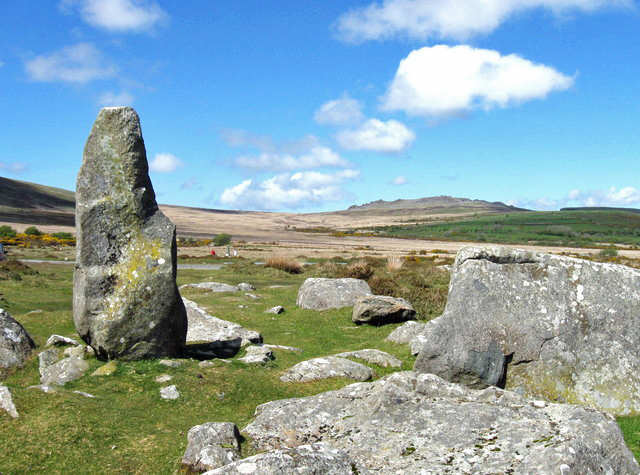
The Preseli Hills (or Preseli Mountains) rise to 536m in the northern half of Pembrokeshire, and feature wild moorland, heath and grassland that hosts rare plants and invertebrates. The area is steeped in history, with an ancient track called The Golden Road dating back to the Neolithic period from 5,000 years ago, whilst prehistoric remains and Bronze Age burial cairns dot the landscape. The hills contain numerous Neolithic settlements, and notably, their bluestone was used to construct Stonehenge's inner circle. From Foel Eryr, visitors can enjoy 360-degree panoramic views stretching across the sea to Ireland and Snowdonia on clear days. The area's industrial heritage includes former slate quarries at Rosebush, where visitors can now enjoy a pint at the Tafarn Zinc, whilst the village of Pontfaen features the famous 'Bessie's' pub, where beer is still traditionally served from barrels and jugs. |
Attractions within Pembrokeshire Coast Nat. Park
Coast from Abereiddi to Abermawr
St David's Peninsula
Solva Coast
Stackpole National Nature Reserve
| St Davids (Ty-ddewi) |
|---|

 St Davids is Britain's smallest city with a population of just over 1,600, having been awarded city status in 1995, though its roots trace back to the 5th century. The peninsula boasts magnificent coastal scenery within the Pembrokeshire Coast National Park, with delightful Coast Path walking opportunities. Visitors can enjoy adventure activities like coasteering, sea kayaking, climbing and surfing, or take wildlife-watching boat trips to spot whales, dolphins and nesting gannets. The city even produces its own gin, including Ramsey Island Welsh Dry Gin made from locally foraged botanicals, and a unique Seaweed Welsh Dry Gin. A local speciality is the St Davids Oggie, a pasty dating back to 1811 that was originally made to feed cathedral construction workers, filled with local lamb, leeks and redcurrants. The streets feature independent shops, art galleries, cafés and restaurants working with seasonal ingredients. |
| St Brides Bay (Bae Sain Ffraid) |
|---|

 St Brides Bay is embraced by St. David's peninsula and Dale to the north, and Marloes to the south, with the Atlantic to the west along with the islands of Skomer, Grassholm and Ramsey, plus two lighthouses. The area reveals complex geology, with cliffs formed from Ordovician and Devonian sandstones in the south, and Precambrian and Cambrian rocks in the north. The bay features charming spots like Solva, a bustling village with galleries, crafts shops and a woollen mill, split between Upper and Lower sections around an L-shaped harbour where boats rest on sand at low tide; visitors can enjoy crabbing from the harbour wall and sample fresh local crab and lobster at various eateries. The area's beaches each offer unique characteristics - Caerfai Bay features purple sandstone that was used to build St Davids Cathedral, whilst Marloes beach is distinguished by dramatic, jagged rock islands and cliffs seamed with purple, grey and gold. The marine life is particularly noteworthy, with playful seals, dolphins, and a vibrant underwater world inhabited by colourful fish, anemones, and starfish. The coastline, part of the Pembrokeshire Coast National Park since 1951, is protected as a special area of conservation due to its outstanding landscape quality. |
| Caldey Island |
|---|

Caldey Island lies cradled in the magnificent South Pembrokeshire coastline and is one of Britain's holy islands. The Cistercian monks continue a tradition which began in Celtic times, with more than a thousand years of prayer and quiet living making this remote island a haven of tranquility. The island has a rich history, with prehistoric settlements evidenced by finds dating from the Stone Age, and it later became an important early Christian centre12. Visitors can enjoy refreshments at a small tea shop serving hot drinks, homemade Pembrokeshire cakes and lunch items. The monks farm the island and produce the famous Caldey Island perfume and chocolate. A long looping coastal walk passes the lighthouse, which takes about 30 minutes to reach. The island's biodiversity is an integral part of its appeal, with the surrounding marine environment being part of the Carmarthen Bay & Estuaries Marine Special Area of Conservation, featuring rocky shores and reefs. Access is via small boats, which can be mildly choppy but are generally smooth and comfortable. |
| Haverfordwest (Hwlffordd) |
|---|

Haverfordwest was historically the second largest port in Wales until the railway arrived in 1853. The town is divided by the Western Cleddau river and dominated by its castle, which was built around 1110, changed hands during the Civil War and was ordered to be destroyed by Cromwell in 1648, though a lack of gunpowder left much still standing. Just outside the town walls lies a ruined priory dating from the late 12th century, which features Britain's only surviving ecclesiastical medieval garden. Notable residents have included artists Augustus and Gwen John, poet Waldo Williams, and actors Rhys Ifans and Christian Bale. Today, the town offers numerous pubs, cafés and restaurants, with a farmers' market held by the riverside every Friday. Its popularity as a tourist destination stems from its proximity to major attractions, including St David's (the world's smallest city), the Pembrokeshire National Park, and Wales' only theme park. |
| Pembroke Castle |
|---|

This enormous oval castle, mostly surrounded by a serene mill pond, was extensively restored in Victorian times and features a complex gatehouse and huge circular keep. As Wales's largest privately-owned castle, it uniquely sits atop a natural cave called the Wogan, which has been inhabited since prehistoric times. The late 12th-century keep boasts an unusual stone dome, circular rooms reaching nearly 80 feet high, and features ornate windows with dog tooth moulding and carved heads. This historic fortress was the birthplace of Henry Tudor, who became Henry VII, father to Henry VIII and grandfather of Elizabeth I. The castle hosts daily summer events including re-enactments and falconry displays, whilst throughout the year visitors can enjoy various themed events such as dragon days and storytelling. Visitors can picnic in the well-maintained grounds, visit the Brass Rubbing Centre to create souvenirs, and take a walk around the medieval town walls and millpond to view the castle in all its glory surrounded by water. |
| Tenby (Dinbych Y Pysgod) |
|---|

Originally called "Dinbych y Pysgod" (meaning "fortlet of the fish"), Tenby is a charming seaside town with colourful houses. Notable features include 3 miles of sandy beaches, the Pembrokeshire Coast Path, 13th-century medieval town walls with the Five Arches barbican gatehouse, Tenby Museum and Art Gallery, and the Tudor Merchant's House. The town made history in 1854 as the site of Wales' first dinosaur discovery when fossilised remains of a Megalosaurus were unearthed in a limestone quarry. The town's underground tunnels played a fascinating role in history when Henry Tudor used them to escape onto a waiting boat, before eventually returning to Britain to overthrow King Richard and claim the throne. The local cuisine features fresh seafood, traditional Welsh cakes (small griddled cakes with currants), locally-crafted Pembrokeshire sea salt, and unique local spirits and beers. Two islands lie off the coast: Caldey Island, accessible by boat from Easter to October, and St Catherine's Island, a tidal island that has served various purposes throughout history, including as a chapel, fort, private residence, and zoo. |
Other attractions
Carew Castle
Cilgerran Castle
Fishguard (Abergwaun)
Manorbier Castle (ruins)
|


 England Guide
 Ireland Guide
 Scotland Guide


 Aberystwyth is a university and seaside town with a population of 14,640, serving as the largest town in Ceredigion. The town features an imposing castle built in the late 13th century that was once a powerful symbol of Welsh independence. The National Library of Wales, housed in a grand neo-classical building, holds historic books, including the world's smallest book, and hosts painting and film exhibitions where visitors can watch archive films from across Wales. Since 1902, the Vale of Rheidol Railway has operated as a narrow-gauge railway, offering scenic journeys through the Rheidol Valley, passing through picturesque villages and forests. For outdoor enthusiasts, Pen Dinas Hill features an Iron Age hillfort and an 1850s monument dedicated to the first Duke of Wellington3. The Victorian-era Town Market Hall, built in the 1860s, continues to thrive as a lively marketplace with independent shops and cafés.
 Originally an 18th-century coalfield, this eight-acre woodland garden was acquired by John Colby in the 1790s but truly flourished after pharmacist Samuel Kay purchased it in the 1870s, with his descendants later adding ponds and horticultural features. The garden is renowned for its rhododendrons and houses Britain's tallest Japanese redwood, reaching 134 feet high near the newt pond. The site features four acres of flood meadow filled with indigenous wildflowers and a walled garden showcasing formal flora displays, sculptures, a water feature and a Victorian Gothic gazebo. The wooded valley teems with wildlife, including rare bats and occasional otters. Visitors can enjoy the Bothy Tea-room's homemade cakes and light lunches, browse locally made crafts at the Loft Gallery, or peruse the second-hand bookshop at the visitor centre. A walking path connects the garden to the sandy beach at Amroth village.

 Once a thriving herring fishery and trading port that declined with the arrival of railways, Cardigan has been revitalised with craft shops, fashion labels and gourmet food stores. The town's iconic castle, first built by Normans in 1093, changed hands 16 times over 150 years before Lord Rhys ap Guffydd constructed the stone fortress in 1171, whose fortified walls still stand overlooking the River Teifi. The castle notably hosted the first recorded Eisteddfod, a Welsh cultural festival of music and poetry, and now features the world's only exhibition about this remarkable tradition. The town's Guildhall Market, one of Britain's first civic buildings in the 'modern Gothic' style with Arabic touches, houses local businesses selling handmade knits, traditional lovespoons and Welsh memorabilia. Nature enthusiasts can spot bottlenose dolphins along Cardigan Bay, one of the few places in the UK where these marine mammals are regularly seen1. The town boasts Wales' only independent multiplex cinema, Mwldan, which serves as an arts centre featuring films, music, drama, opera and visual art.


 Pembrokeshire Coast is the only National Park primarily designated for its coastal landscape, with nowhere being more than 10 miles from the sea, and whilst it's one of the smallest National Parks, it boasts one of the most diverse landscapes as one of Wales' most ecologically rich areas. Visitors can explore historic sites like Pembroke Castle and St Davids Cathedral, hike along the famous Coast Path, or visit the charming town of Tenby with its colourful houses and bustling harbour. The park's wildlife includes rare birds such as choughs and skylarks on the coastal heathland, whilst Atlantic grey seals, dolphins, porpoises, basking sharks, and even orcas can be spotted in the waters. The pristine beaches are particularly noteworthy, with 10 blue flag beach and 7 green coast beach designations achieved in 2022. Nature enthusiasts might be intrigued to know that twelve of the UK's 16 bat species are found in the park, including colonies of tiny pipistrelle bats measuring just 4 cm with a 20 cm wingspan, serving as vital insect predators, plant pollinators and seed dispersers.

 St Davids is Britain's smallest city with a population of just over 1,600, having been awarded city status in 1995, though its roots trace back to the 5th century. The peninsula boasts magnificent coastal scenery within the Pembrokeshire Coast National Park, with delightful Coast Path walking opportunities. Visitors can enjoy adventure activities like coasteering, sea kayaking, climbing and surfing, or take wildlife-watching boat trips to spot whales, dolphins and nesting gannets. The city even produces its own gin, including Ramsey Island Welsh Dry Gin made from locally foraged botanicals, and a unique Seaweed Welsh Dry Gin. A local speciality is the St Davids Oggie, a pasty dating back to 1811 that was originally made to feed cathedral construction workers, filled with local lamb, leeks and redcurrants. The streets feature independent shops, art galleries, cafés and restaurants working with seasonal ingredients.
 St Brides Bay is embraced by St. David's peninsula and Dale to the north, and Marloes to the south, with the Atlantic to the west along with the islands of Skomer, Grassholm and Ramsey, plus two lighthouses. The area reveals complex geology, with cliffs formed from Ordovician and Devonian sandstones in the south, and Precambrian and Cambrian rocks in the north. The bay features charming spots like Solva, a bustling village with galleries, crafts shops and a woollen mill, split between Upper and Lower sections around an L-shaped harbour where boats rest on sand at low tide; visitors can enjoy crabbing from the harbour wall and sample fresh local crab and lobster at various eateries. The area's beaches each offer unique characteristics - Caerfai Bay features purple sandstone that was used to build St Davids Cathedral, whilst Marloes beach is distinguished by dramatic, jagged rock islands and cliffs seamed with purple, grey and gold. The marine life is particularly noteworthy, with playful seals, dolphins, and a vibrant underwater world inhabited by colourful fish, anemones, and starfish. The coastline, part of the Pembrokeshire Coast National Park since 1951, is protected as a special area of conservation due to its outstanding landscape quality.


 : Must-see in the country
 : Top cities in Europe