


 Denmark Guide
 Finland Guide
 Iceland Guide
 Sweden Guide
| Contents |
|---|

Introduction
Lysefjord, located in the Ryfylke area of southwestern Norway, is a 42-kilometre long fjord in Rogaland county, approximately 25 kilometres east of Stavanger. Formed during the last Ice Age about 10,000 years ago by glacial erosion, the fjord features dramatic landscapes with rocky walls plunging nearly vertically over 1,000 metres into waters that reach depths of up to 422 metres. The name "Lysefjord" (or "Lysefjorden" in Norwegian) means "light fjord," derived from the light-coloured granite rocks along its sides. It is renowned for its spectacular natural attractions, particularly Preikestolen (Pulpit Rock), a flat mountain plateau rising 604 metres above the fjord, and Kjerag Mountain, which stands at 1,084 metres. The fjord is sparsely populated, with only the villages of Lysebotn at its eastern end and Forsand and Oanes at its western end near the Lysefjord Bridge, the only crossing of the fjord.

Activities and Attractions
Iconic Hiking Trails
The Lysefjorden Rundt Trail
One of Norway's most spectacular multi-day hiking trails, the Lysefjorden Rundt circumnavigates the entire fjord, covering over 100 kilometres divided into 8 stages. This challenging trail connects all the major landmarks while showcasing lesser-known viewpoints and cultural treasures.
The complete trail is quite demanding, and most hikers opt to complete different stages as day trips or over several years. Each stage offers unique experiences:
- Stage 1: Vinddalen – Skåpet (3.5 km, Easy) - A gentle introduction through pine forests to the DNT design cabins at Skåpet.
- Stage 2: Skåpet – Flørli (10 km, Challenging) - Following the historic "Svenskaveien" through rocky terrain and wild valleys.
- Stage 3: Flørli – Langavatn (17 km, Very challenging) - Beginning with the famous 4,444 steps from Flørli, considered among the most terrifying staircases in the world.
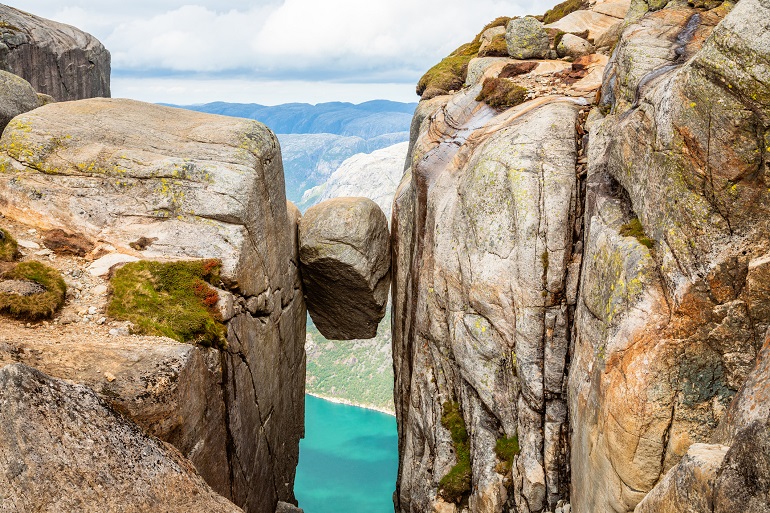
- Stage 4: Langavatn – Kjerag – Lysebotn (13 km, Challenging) - Featuring the thrilling Kjeragbolten boulder wedged between cliffs at 984 metres altitude.
- Stage 5: Lysebotn – Songedalen Fjellgard (24 km, Challenging) - A spectacular route offering views of Lysedalen and the Kjerag massif.
- Stage 6: Songedalen Fjellgard – Bakken Gård (10 km, Moderate) - Following historical roads past charming farms along the shores.
- Stage 7: Bakken Gård – Preikestolen BaseCamp (16 km, Challenging) - A demanding stage with scrambling sections and panoramic views.
- Stage 8: Preikestolen BaseCamp – Høllesliheia (10 km, Challenging) - A breathtaking route closely following the fjord with countless viewpoints.
World-Famous Landmarks
Preikestolen (Pulpit Rock)
Formed by melting glaciers over 10,000 years ago, Preikestolen is Norway's most iconic natural landmark. This flat-topped cliff stands 604 metres above the fjord, offering dramatic views that attract thousands of visitors annually. The hike to Preikestolen is moderately challenging but accessible to most reasonably fit hikers.
Kjerag and Kjeragbolten
For thrill-seekers, Kjerag mountain and the famous Kjeragbolten boulder provide an adrenaline-pumping experience. The boulder is wedged between two cliffs at an altitude of 984 metres above the fjord. The challenging hike rewards adventurers with the opportunity to stand on the boulder itself—a truly heart-racing experience.
Flørli 4444
The historic Flørli stairs hold the record for the world's longest wooden staircase with its 4,444 steps. This physically demanding climb offers stunning views of the fjord and a unique sense of accomplishment. The staircase leads from the idyllic hydroelectric village of Flørli up to Ternevatnet.
Hidden Gems
Lysefjord Panorama Trail
This newer trail (established in 2022) rivals Preikestolen in its spectacular views. About 75% of the route runs close along the fjord, several hundred metres above sea level. The 9-kilometre trail winds along mountain cliffs and gorges, including Skjerajuvet and Fantahålå, offering countless panoramic viewpoints.
Fantapytten
Don't miss "Fantapytten"—Lysefjord's own natural infinity pool. Located approximately midway between Preikestolen BaseCamp and Høllesliheia, this eternal pool offers a unique photo opportunity and a moment of tranquility amidst the dramatic landscape.
Hengjanenibbå
This spectacular cliff formation is encountered on the demanding stage between Bakken Gård and Preikestolen BaseCamp. From "Hoppet" nearby, hikers can enjoy views of the entire Lysefjord stretching out before them.
Water Activities
Kayaking
The calm waters of the Lysefjord provide perfect conditions for kayaking, offering a completely different perspective of the towering cliffs and hidden coves. Paddling through the fjord allows visitors to appreciate the sheer scale of the surrounding mountains and access secluded areas unreachable by foot.
Boat Tours
For those preferring a more relaxed experience, boat tours provide comfortable access to the fjord's most impressive sights. These tours offer unique views of famous landmarks like Preikestolen and Kjerag from below, showcasing their imposing presence from the water.
Cycling Adventures
Lysefjordruta
Established in 2022, the Lysefjordruta is a bicycle route connecting all gateways, towns, and attractions around the Lysefjord. Cycling offers a different pace to experience the landscape, allowing travellers to cover significant distances while still having the flexibility to stop at viewpoints and attractions. The route provides a more accessible way to circumnavigate the fjord for those not up to the challenging multi-day hike.
Getting There and Around
The Lysefjord is conveniently located just 45 minutes east of Stavanger in southwestern Norway, making it easily accessible for day trips. Visitors can reach this magnificent 42-kilometre fjord via several routes. The most popular option is taking a fjord cruise or ferry service from Stavanger, which offers breathtaking views along the journey. For those preferring to drive, you can access the western end of the fjord near the Lysefjord Bridge at the villages of Forsand and Oanes. To reach Lysebotn at the eastern end, brave the spectacular Lysevegen mountain road with its impressive 27 hairpin bends and one spiralling tunnel, rising almost 900 metres. During summer months, passenger ferries operate from Lauvvik and Forsand to Flørli and Lysebotn, though tickets must be booked in advance. These ferries can accommodate a small number of cars, but not motorhomes or caravans. For adventurous travellers, kayaking tours provide a unique perspective of the fjord's dramatic landscape.
Best Time to Visit
Summer (June to August)
Summer is widely considered the prime time to visit Lysefjord, offering several advantages:
- Mild temperatures ranging from 15°C to 25°C
- Long daylight hours, perfect for extended exploration
- Optimal conditions for hiking popular trails like Preikestolen (Pulpit Rock) and Kjerag
- Full accessibility to all hiking trails and scenic routes
- Ideal weather for kayaking, fjord cruises and outdoor activities
Do note that June, July and August are peak-season months when visitors from around the world flock to the region, especially on sunny weekends. This may lead to full car parks, some crowding on trails, and queues at popular photo spots.
Spring (May to June) and Autumn (September to October)
These transitional seasons offer an excellent balance of reasonable weather and fewer tourists:
- In spring, witness blooming flowers and verdant greenery
- Autumn brings a gorgeous display of golden colours across the landscape
- Melting snow in spring creates impressive waterfalls, perfect for photography enthusiasts
- Experience a more peaceful atmosphere with fewer visitors
- Generally cooler temperatures compared to summer
Winter (November to March)
Winter transforms Lysefjord into a magical wonderland:
- Snow-capped mountains and frozen waterfalls create a serene landscape
- Opportunity to witness the Northern Lights dancing above the fjord
- A quieter, more tranquil experience of the fjord
- Some hiking trails may be closed or challenging due to snow and ice
- Boat tours may operate less frequently
Practical Considerations
For hiking enthusiasts, it's worth noting that Preikestolen can be hiked year-round, though winter conditions require proper preparation. The Lysefjord can be experienced from sea level through all seasons via Lysefjord cruises, which operate throughout the year.
Temperature varies significantly by season, with July and August seeing average temperatures around 10°C, while December and January can drop to around -3°C.