Denmark Guide  |
|---|
|
| | Europe Guide |
|---|
|
| | Travel Tools |
|---|
|
| | Nordic Europe |
|---|
|
|
|
|
 Viking Age house hut at Bork village, Denmark. Viking Age house hut at Bork village, Denmark.
Introduction
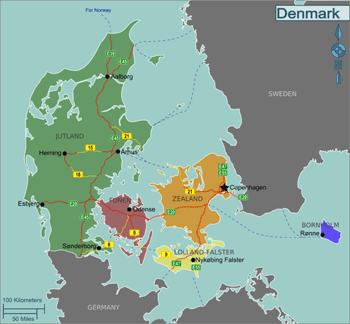
Denmark (Danmark in Danish) is the southernmost and the smallest of the Nordic countries. It consists of the Jutland peninsula, prolonging the German state of Schleswig-Holstein, five large islands, (Zealand, Funen, Lolland, Falster and Bornholm), and hundreds of minor islands often referred to as the Danish Archipelago. Along with the nearby Netherlands, Denmark is one of the world's flattest and lowest lying countries. The highest point, Møllehøj, only rises to 171 metres (561 ft). One in four Danes live in the Greater Copenhagen area.
Denmark is one of the wealthiest countries in the world in terms of GDP per capita. It also has the world's lowest income inequality and is ranked as the world's most democratic and least corrupted country. The Danes pride themselves on being egalitarian, liberal and environmentally conscious. Bicycles are the favourite way of transportation of the majority of the population.
Some of better known Danish contributions to the world are the Lego construction toys, the Velux windows and skylights, and the fairy tales of Hans Christian Andersen (including The Little Mermaid).
The Faroe Islands and Greenland are self-governing countries under the sovereignty of the Kingdom of Denmark. Iceland was also ruled by Denmark until 1918.
Famous people from Denmark include (chronologically): the writer Andersen Hans Christian, the philosopher Søren Kierkegaard, the physicist Niels Bohr, the designer Arne Jacobsen, the Sydney Opera House architect Jørn Utzon, and the movie director Lars von Trier.
|
History of Denmark
|
|---|
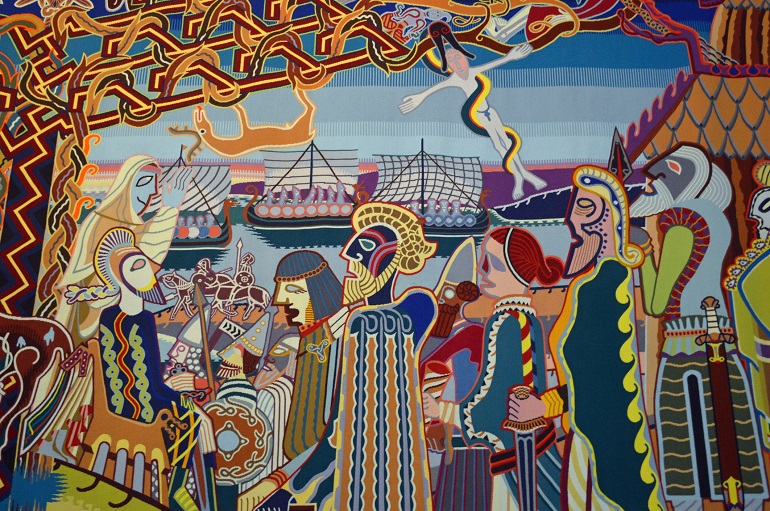
Discover Denmark's rich history from Viking explorers to constitutional monarchy. Learn about key events including the Kalmar Union, the Reformation, and Denmark's journey to becoming a modern welfare state.
|
| Danish Cuisine
|
|---|
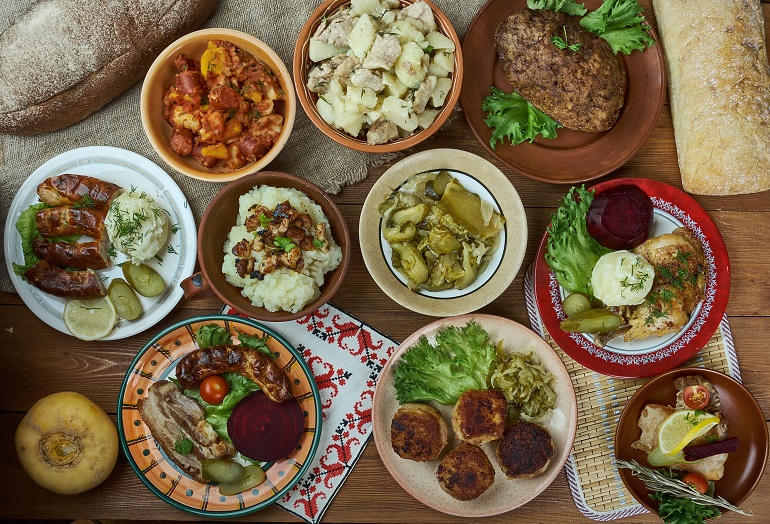
Discover Denmark's culinary treasures from traditional smørrebrød to New Nordic cuisine. Explore signature dishes, seasonal ingredients and the gastronomic revolution that put Danish food on the world map.
|
Attractions
West Denmark (Jutland & Funen)
| Århus |
|---|
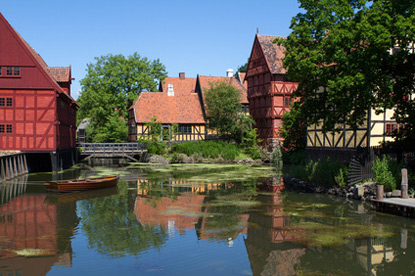
 Århus, Denmark's second-largest city, offers a captivating blend of historical charm and modern innovation. At its heart lies Den Gamle By, an extraordinary open-air museum featuring more than 75 historic buildings transported from across Denmark, where visitors can experience life from the 16th to 20th centuries. The city's artistic highlight is ARoS Art Museum, topped by the iconic 'Your Rainbow Panorama', a circular walkway offering spectacular 360-degree views. Nature enthusiasts can explore the endless-seeming Infinite Bridge along the coastline or wander through the Botanical Garden's tropical houses. The city's royal connection is maintained through Marselisborg Palace, the summer residence of the Danish Queen, where visitors can explore the beautiful rose gardens when the royal family is away. For those seeking thrills, Tivoli Friheden amusement park, nestled in the Marselisborg forest, offers one of the world's highest freefall rides. |
| Ålborg |
|---|
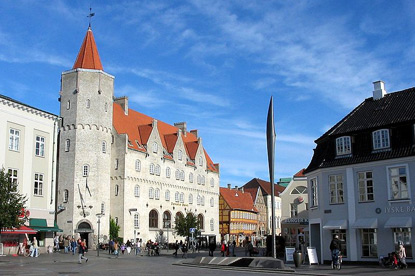
 Ålborg, a vibrant Danish city in North Jutland, combines Viking heritage with modern architectural marvels along its bustling waterfront. The city boasts the remarkable Lindholm Høje, a mystical Viking burial ground with stone circles dating back over 1,500 years. Art enthusiasts can explore Kunsten, Denmark's only museum designed by Finnish architect Alvar Aalto, housing over 4,000 works of art. The city's transformation from an industrial centre to a cultural hub is exemplified by unique attractions like the Utzon Centre and the dramatic House of Music (Musikkens Hus). For panoramic city views, visitors can ring a bell at the 55-metre-tall Ålborg Tower and enjoy refreshments at its bistro. The historic Jomfru Ane Gade, dating back to the 16th century, now serves as the city's primary entertainment street, whilst the former furniture factory has been transformed into a popular street food market where visitors can sample diverse cuisines. |
| Kolding |
|---|

 Kolding, a Danish seaport city, is home to the magnificent Koldinghus Castle, the last royal castle in Jutland with a 700-year history that dramatically burned down in 1808 before being restored to its former glory. The city boasts the exceptional Trapholt Museum, renowned for its outstanding collection of Danish Modern Furniture Design and contemporary art, situated in a beautiful park overlooking Kolding Fjord. A unique feature of the Castle Lake (Slotssøen) is that the Queen of Denmark maintains exclusive rowing privileges there. Nature enthusiasts can explore the Geografisk Have, a 14-hectare botanical garden housing over 2,000 plant species arranged by geographical origin. The city centre retains its charm with timber-framed buildings, including the impressive Borchs Gård from 1595, which originally served as the town's pharmacy. |
| Skagen |
|---|

Skagen, Denmark's northernmost town, offers a truly unique natural phenomenon at Grenen where you can stand with one foot in each of two seas - the Skagerrak and Kattegat - as their waves dramatically collide. The town flourished as an artists' colony in the late 1800s due to its exceptional quality of light, leading to an international reputation in art history that continues today through its museums displaying works by the famous Skagen painters. Notable attractions include Råbjerg Mile, Northern Europe's largest migrating sand dune reaching heights of up to 40 metres, and the haunting remains of the 14th-century Sand-Covered Church, whose tower stands as the sole survivor of the structure that succumbed to advancing sand dunes in the 18th century. The town is also characterised by its distinctive golden-coloured houses and renowned seafood restaurants, offering visitors a taste of authentic Danish coastal cuisine. |
Other attractions
Legoland, Billund
 Esbjerg
Horsens
Nyborg
Odense
Silkeborg
East Denmark (Zealand)
| Copenhagen (København) |
|---|

 Copenhagen, Denmark's charming capital founded around 1050, offers a delightful blend of historical landmarks and modern attractions. The city is home to Tivoli Gardens, one of the world's oldest amusement parks that notably inspired Walt Disney. The iconic Little Mermaid statue, though surprisingly small at just over four feet tall, has graced the waterfront for more than a century, paying homage to Hans Christian Andersen's beloved fairy tale. The vibrant Nyhavn district showcases colourful 17th-century townhouses along a picturesque canal, whilst the unique Round Tower features a spiral ramp that leads to a still-functioning astronomical observatory. For those interested in royal heritage, Amalienborg Palace serves as the Danish royal family's residence, comprising four identical rococo-style palaces around an octagonal courtyard. The city is also remarkably bicycle-friendly, with locals embracing cycling as their preferred mode of transport regardless of weather conditions. |
| Egeskov Castle |
|---|

Egeskov Castle, Europe's best-preserved Renaissance moat castle built in 1554, stands majestically on Funen island and rests upon oak pilings that, according to legend, required an entire forest to construct. This living castle features a fascinating mix of history and entertainment, housing remarkable exhibitions including Titania's Palace - the world's most magical dollhouse containing 3,000 unique objects, an impressive collection of vintage cars and motorcycles dating back to 1899, and a peculiar Wooden Man in the tower spire who, folklore suggests, must not be moved lest the castle sink into its moat on Christmas Night. The castle grounds boast one of Northern Europe's most spectacular gardens, complete with three mazes and a treetop walk, whilst the castle's defensive architecture includes clever features such as embrasures and machicolations designed for pouring boiling water or tar onto attackers. The renowned author Hans Christian Andersen visited twice, with his 1842 visit leaving such an impression that he documented it in his diary, and today visitors can view a special exhibition featuring his paper doll creation, Augusta Snorifass. |
| Fredensborg Palace |
|---|

 Fredensborg Palace, nicknamed 'Denmark's Versailles', is a magnificent 18th-century baroque palace built as a hunting residence for Frederik IV and remains the Danish Royal Family's most-used residence today. The palace, whose name translates to 'Palace of Peace', commemorates the end of the Great Northern War in 1722. Visitors can explore Denmark's largest historical royal garden, featuring 9 kilometres of restored tree-lined allées, 85 restored sculptures, and a unique Norseman's Valley displaying 70 sculptures of Norwegian and Faeroese farmers and fishermen. The palace gardens blend French baroque formality with romantic woodland paths, whilst the private gardens, including a royal herb garden and modern orangery, are open to the public during July and early August. A fascinating tradition sees visiting heads of state etch their names on the palace's window panes using diamond pens. |
| Frederiksborg Palace |
|---|

Frederiksborg Castle, located just 35 minutes north of Copenhagen, stands as the largest Renaissance complex in the Nordic region, rising majestically from three islets in Castle Lake. This Dutch Renaissance fortress-palace, built by King Christian IV in the early 17th century, houses the Museum of National History, which showcases Denmark's largest portrait collection and 500 years of Danish history through paintings, furniture and decorative arts. Visitors can explore over 80 rooms of astonishing grandeur, including the gold-adorned Castle Chapel where Danish monarchs were crowned between 1671 and 1840, and the fascinating Audience Chamber featuring a 17th-century elevator chair that allowed the king to rise dramatically through the floor. The castle is surrounded by stunning gardens, including a meticulously restored baroque garden from the 1720s with cascading fountains and symmetrical box hedges displaying royal monograms, as well as a romantic landscape garden that offers peaceful walks and boat trips on the lake. |
| Kronborg Castle ※ |
|---|
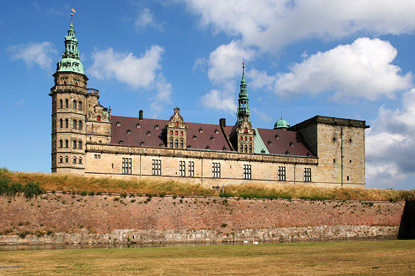
Kronborg Castle, a UNESCO World Heritage site located in Helsingør just an hour north of Copenhagen, stands as one of Northern Europe's finest Renaissance castles and is globally renowned as the setting for Shakespeare's Hamlet. Originally built in 1420 as a fortress called Krogen, it was transformed into a magnificent Renaissance castle between 1574 and 1585 by Frederik II, who used the lucrative Sound Dues collected from passing ships to finance its splendid copper roofs and sandstone ornaments. The castle houses remarkable attractions including Frederik II's sumptuous ballroom, magnificent tapestries, and the legendary statue of Holger the Dane in its atmospheric catacombs, who is said to wake from his stone slumber should Denmark ever be in peril. Theatre enthusiasts can enjoy the annual Shakespeare Festival held each August, featuring open-air performances against the castle's dramatic backdrop, whilst history buffs will appreciate that the castle once served as the headquarters for collecting Sound Dues for 400 years, controlling the strategic strait between Denmark and Sweden. |
| Roskilde ※ |
|---|

Roskilde, Denmark's first capital city, offers a fascinating blend of Viking heritage and modern culture just 25 minutes from Copenhagen. The city's crown jewel is the Viking Ship Museum, housing five remarkably preserved 11th-century vessels discovered in Roskilde Fjord, where visitors can even sail aboard reconstructed Viking ships during summer. Beyond its maritime legacy, Roskilde boasts more springs north of the Alps than any other city, and its UNESCO World Heritage Cathedral stands atop the city's peak, overlooking both the urban landscape and the scenic fjord. For music enthusiasts, RAGNAROCK museum showcases pop and rock culture in interactive exhibits, whilst the city hosts Northern Europe's largest music festival. Nature lovers can explore the adjacent Skjoldungernes Land National Park, and the charming pedestrian zone offers numerous shops and restaurants where visitors can unwind after a day of sightseeing. |
Other attractions
Esrum Abbey
|


 Finland Guide
 Iceland Guide
 Norway Guide
 Sweden Guide

 Århus, Denmark's second-largest city, offers a captivating blend of historical charm and modern innovation. At its heart lies Den Gamle By, an extraordinary open-air museum featuring more than 75 historic buildings transported from across Denmark, where visitors can experience life from the 16th to 20th centuries. The city's artistic highlight is ARoS Art Museum, topped by the iconic 'Your Rainbow Panorama', a circular walkway offering spectacular 360-degree views. Nature enthusiasts can explore the endless-seeming Infinite Bridge along the coastline or wander through the Botanical Garden's tropical houses. The city's royal connection is maintained through Marselisborg Palace, the summer residence of the Danish Queen, where visitors can explore the beautiful rose gardens when the royal family is away. For those seeking thrills, Tivoli Friheden amusement park, nestled in the Marselisborg forest, offers one of the world's highest freefall rides.
 Ålborg, a vibrant Danish city in North Jutland, combines Viking heritage with modern architectural marvels along its bustling waterfront. The city boasts the remarkable Lindholm Høje, a mystical Viking burial ground with stone circles dating back over 1,500 years. Art enthusiasts can explore Kunsten, Denmark's only museum designed by Finnish architect Alvar Aalto, housing over 4,000 works of art. The city's transformation from an industrial centre to a cultural hub is exemplified by unique attractions like the Utzon Centre and the dramatic House of Music (Musikkens Hus). For panoramic city views, visitors can ring a bell at the 55-metre-tall Ålborg Tower and enjoy refreshments at its bistro. The historic Jomfru Ane Gade, dating back to the 16th century, now serves as the city's primary entertainment street, whilst the former furniture factory has been transformed into a popular street food market where visitors can sample diverse cuisines.
 Kolding, a Danish seaport city, is home to the magnificent Koldinghus Castle, the last royal castle in Jutland with a 700-year history that dramatically burned down in 1808 before being restored to its former glory. The city boasts the exceptional Trapholt Museum, renowned for its outstanding collection of Danish Modern Furniture Design and contemporary art, situated in a beautiful park overlooking Kolding Fjord. A unique feature of the Castle Lake (Slotssøen) is that the Queen of Denmark maintains exclusive rowing privileges there. Nature enthusiasts can explore the Geografisk Have, a 14-hectare botanical garden housing over 2,000 plant species arranged by geographical origin. The city centre retains its charm with timber-framed buildings, including the impressive Borchs Gård from 1595, which originally served as the town's pharmacy.
 Esbjerg

 Copenhagen, Denmark's charming capital founded around 1050, offers a delightful blend of historical landmarks and modern attractions. The city is home to Tivoli Gardens, one of the world's oldest amusement parks that notably inspired Walt Disney. The iconic Little Mermaid statue, though surprisingly small at just over four feet tall, has graced the waterfront for more than a century, paying homage to Hans Christian Andersen's beloved fairy tale. The vibrant Nyhavn district showcases colourful 17th-century townhouses along a picturesque canal, whilst the unique Round Tower features a spiral ramp that leads to a still-functioning astronomical observatory. For those interested in royal heritage, Amalienborg Palace serves as the Danish royal family's residence, comprising four identical rococo-style palaces around an octagonal courtyard. The city is also remarkably bicycle-friendly, with locals embracing cycling as their preferred mode of transport regardless of weather conditions.

 Fredensborg Palace, nicknamed 'Denmark's Versailles', is a magnificent 18th-century baroque palace built as a hunting residence for Frederik IV and remains the Danish Royal Family's most-used residence today. The palace, whose name translates to 'Palace of Peace', commemorates the end of the Great Northern War in 1722. Visitors can explore Denmark's largest historical royal garden, featuring 9 kilometres of restored tree-lined allées, 85 restored sculptures, and a unique Norseman's Valley displaying 70 sculptures of Norwegian and Faeroese farmers and fishermen. The palace gardens blend French baroque formality with romantic woodland paths, whilst the private gardens, including a royal herb garden and modern orangery, are open to the public during July and early August. A fascinating tradition sees visiting heads of state etch their names on the palace's window panes using diamond pens.

 : Top cities in Europe