


 Belgium Guide
 Luxembourg Guide
Introduction
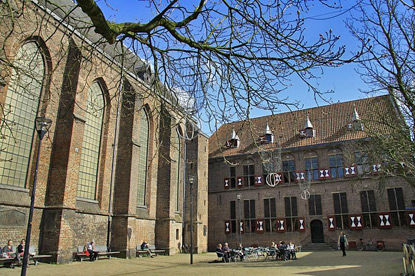
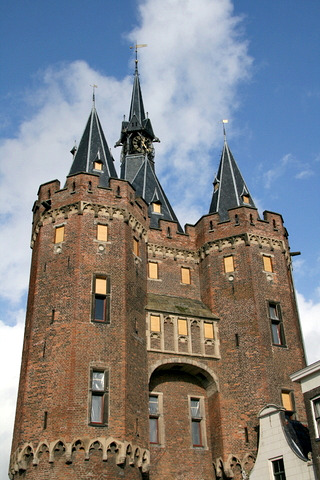
Zwolle is the capital city of the Overijssel province in the Northeastern Netherlands, with a population of approximately 132,441 as of December 2023. Located 120 kilometres northeast of Amsterdam, this vibrant Hanseatic city boasts a beautiful medieval centre with historic buildings, canals, and remnants of an old city wall. Founded around 800 CE by Frisian merchants and troops of Charlemagne, Zwolle received its city rights in 1230 and later joined the Hanseatic League in 1294. The city is known for its cultural offerings, including Museum de Fundatie, the ANNO city museum, two large theatre locations ('Odeon' and 'De Spiegel'), and numerous studios and galleries. Zwolle is also celebrated for its green spaces, having been named the 'greenest city in Europe' in 2006. Notable landmarks include the Peperbus tower (part of the Onze Lieve Vrouwe Basilica), the Sassenpoort (an old city gate), the Mosterdmakerstoren (mustard makers' tower), and the Grote of Sint Michaëlskerk with its exquisite Baroque organ.
History
The region of Zwolle was inhabited since the Neolithic period. The Romans never conquered the part of the Netherlands beyond the Rhine. The Overijssel was the homeland of the Salian Franks since at least the 2nd century. The Franks would migrate south to present-day Belgium in the 3rd and 4th centuries, and give rise to the Merovingian and Carolingian dynasties that created the medieval kingdoms of France and Germany.
The oldest written mention of Zwolle dates from 1040. Zwolle was granted city rights in 1230 by the bishop of Utrecht, and joined the powerful Hanseatic league in 1294. Its strategic position on a fluvial network and on a well-sheltered bay made of Zwolle the foremost Hanseatic city in the Netherlands.
After 9 years of war between the Hanseatic League and King Valdemar IV of Denmark, the Treaty of Stralsund (1370) awarded Zwolle a trade colony in Scania, southern Sweden. Zwolle experienced a golden age in the 15th century, and saw its GDP multiplied by six from 1402 to 1450.
In the next centuries, the history of Zwolle follows the history of the Netherlands, with the war of independence against the Spaniards, or the French occupation under Napoleon.
Attractions
The charm of Zwolle resides its well-preserved architecture, its city gates (notably the Sassenpoort) and city walls, though there aren't many outstanding monuments.
The Stadhuis (town hall) was originally built in 1448, but the modern concrete extension give it an odd appearance. Next to it, the Grote Kerk (lit. "big church"), also known as Sint Michaëlskerk (St Michael's Church), is the city's main church, although it is nothing exceptional. On the other hand, the former Basilica of Our Lady of the Ascension (Onze Lieve Vrouw ten Hemelopneming-basilica), dating from 1399, has one of the tallest church towers in the Netherlands, and has become a symbol of Zwolle. The tower is known to the locals as the peperbus (peppermill) due to its shape.
The municipal museum has eclectic collections, including some fine historical items related to Zwolle's role as a Hanseatic city. The museum host numerous temporary art exhibitions all year round.
How to get there
Zwolle serves as a major transportation hub in the northeast Netherlands, making it highly accessible. If arriving by air, Amsterdam Schiphol Airport (AMS) offers the most convenient connection, with direct Dutch Railways services to Zwolle taking just 1 hour 24 minutes (€17-20). The city is also well-connected by train from major Dutch cities like Rotterdam and Amsterdam, with Zwolle station functioning as the second largest rail hub in the Netherlands after Utrecht, offering connections in eight different directions. Within Zwolle, the compact, partially car-free city centre is best explored on foot, with just a 10-minute walk from the train station to the heart of town. For local transport, Syntus operates city buses (requiring an OV-chipkaart for travel, with single journeys costing €1.50), while cycling presents an excellent option with a 30-mile cycle route around the city centre and bike rentals readily available. For a unique perspective, visitors can even rent "water bikes" to navigate Zwolle's picturesque canal system.