


 Belgium Guide
 Luxembourg Guide
| Contents |
|---|
Introduction
Amsterdam (pop. 933,000; urban 1.5 million; metro 2.5 million) has been the official capital of the Netherlands since 1806, although the seat of the government and monarchy are still in The Hague, and the capital of the North Holland province is Haarlem.
Amsterdam is the largest city in the country, and one of the most cosmopolitan cities in the world, with over 170 nationalities living there.
The city's name refers to a dam built on the river Amstel. Built on the southern tip of Lake IJssel (more like an inner sea connected to the North Sea), Amsterdam is a maritime city par excellence. Its hundreds of kilometres of canals, 90 islands and 1500 bridges have earned Amsterdam the nickname of "Venice of the North".
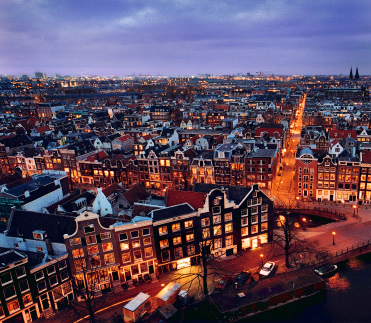
During the Dutch Golden Age (1584-1702), Amsterdam was one of the most important ports in the world, with innovative developments in trade, and became the leading centre for finance and diamonds. Nowadays, it is known for its historic port, the splendid Rijksmuseum, its red-light district (de Wallen), or its liberal coffeeshops selling soft drugs legally.
In many respects, Amsterdam is the antithesis of cities like The Hague or Brussels, which are dominated by ministries, international organisations, embassies, posh restaurants, and a stark contrast between rich suburbs and poor downtown neighbourhoods. Amsterdam surprises by the homogeneity of its architecture, its informal atmosphere and laid-back lifestyle for a city of its size. In short, it is definitely more hippie than yuppie.
Interesting Facts about Amsterdam
- Amsterdam is built on approximately 11 million wooden poles, driven into soft peat and clay to stop buildings from sinking.
- The city boasts more canals than Venice, with over 165 canals spanning about 100 km.
- Amsterdam has an impressive 1,281 bridges, four times more than Venice.
- The Amsterdam Stock Exchange, founded in 1602, is widely considered the world’s first modern securities exchange.
- Amsterdam is often referred to as the "gay capital of Europe" due to its inclusive and vibrant LGBTQ+ community.
- The city has the highest concentration of museums per square metre in the world, featuring famous institutions like the Rijksmuseum and Van Gogh Museum.
- Amsterdam's canal ring is a UNESCO World Heritage Site, recognised for its historical and architectural significance.
- Heineken, one of the world's most popular beers, was founded in Amsterdam in 1864.
- Houseboats are a quintessential feature, with thousands moored along the historic waterways.
- There is a unique cat houseboat in Amsterdam called De Poezenboot, which serves as a shelter for stray cats.
- Bicycles outnumber residents, with cycling being the dominant mode of transport across the compact city centre.
- Many canal houses are tall and narrow because historical taxes were based on the width of a property’s façade.
- Amsterdam lies below sea level, protected by an extensive system of dykes, canals, and pumps.
- The Netherlands legalised same-sex marriage in 2001, and Amsterdam hosts one of Europe’s most famous Pride events.
- The city’s name traces back to a 13th-century dam on the River Amstel, originally recorded as “Amstelredam.”
History
An early Frisian fishing village probably developed in the 12th century. The first known record of Amsterdam is 27 October 1275, when Count Floris V of Holland exempted the locals from paying a bridge toll relating to "the bridge on the Amstel" (there was only one at the time).
Amsterdam was granted city rights around 1300, and flourished on trade with the cities of the Hanseatic League. The so-called "Miracle of the Host", which occured near Kalverstraat on 12 March 1345, would make of Amsterdam an important pilgrimage destination until the Protestant Reformation. Today, a Stille Omgang (silent procession) is still conducted each year to commemorate the event.
In 1556, Emperor Charles V of Habsburg abdicated, giving Austria and Germany to his brother Maximilian, and Spain to his son Philip. The Low Countries were split from the Holy Roman Empire and came under Spanish rule. King Philip II of Spain was to become one of the most hated sovereign in the Netherlands, due to his imposition of new taxes, the tenth penny, and his religious persecution against Protestants with the infamous Spanish Inquisition. The revolt escalated into the Eighty Years' War (1568-1648), which ultimately led to Dutch independence.
Under the leadership of William I of Orange-Nassau (better known among English-speakers as William the Silent), the Dutch Republic became known for its relative religious tolerance. Jews from Spain and Portugal, prosperous merchants and printers from Antwerp, Ghent and Bruges (economic and religious refugees from the part of the Low Countries still controlled by Spain), and Huguenots from France (persecuted for their religion) sought safety in Amsterdam. The influx of Flemish printers and the city's intellectual tolerance made Amsterdam a hotbed of the European free press.
The 17th century is considered Amsterdam's "Golden Age". In the early 17th century, Amsterdam became one of the wealthiest cities in the world. Ships sailed from Amsterdam to the Baltic Sea, North America, Africa and present-day Indonesia, India, Sri Lanka and Brazil, and formed the basis of a worldwide trading network.
Amsterdam's merchants had the biggest share in the Dutch East India Company and the Dutch West India Company. These companies acquired the overseas possessions which formed the seeds of the later Dutch colonies. Amsterdam was the most important point for the trans-shipment of goods in Europe, and it was the leading financial centre of the world. Amsterdam's stock exchange was the first to trade continuously.
The three first Anglo-Dutch Wars (between 1652 and 1674) had resulted in a Dutch victory and domination of world trade. However, the Fourth Anglo-Dutch War (1780-1784), caused by the discovery of a secret trade treaty proposed by the city of Amsterdam to the Americans, ended with a decisive British victory, and the decline of the Netherlands and Amsterdam as centres for international trade.
French Revolutionary troops invaded the Netherlands in 1795 and created the Batavian Republic (1795-1806), modelled on the new French Republic. In 1806, Napoleon I dissolved the Republic and created a new Kingdom of Holland, installing his brother Louis Bonaparte as king. Louis preferred Amsterdam to The Hague, and consequently moved the capital there, where it has since remained.
In 1815, following Napoleon's defeat at Waterloo, the United Kingdom of the Netherlands was founded, encompassing the modern Netherlands and Belgium. But the Belgians decided to split in 1830, claiming favouritism towards the Protestant Dutch in administration.

The late 19th century is sometimes seen as Amsterdam's second Golden Age. New museums, the central train station (1881-1889), and the concert hall (1883-1888) were built, and the Amsterdam-Rhine Canal was dug in 1892. Note that Amsterdam's train station served as inspiration for Tokyo Station, and in turn also Seoul Station.
Germany invaded the Netherlands on 10 May 1940, taking control of the country after five days of fighting. The Germans installed a Nazi civilian government in Amsterdam that cooperated in the persecution of Jews. Many Amsterdammers sheltered Jews at a high risk to themselves and their families and those that were discovered were also sent to the concentration camps. After the war approximately 120,000 Dutch were prosecuted as collaborators. More than 100,000 Jews were deported from the Netherlands to concentration camps, of whom perhaps the most famous was a young German girl, Anne Frank. Only 5,000 Dutch Jews survived the war.
In the last months of the war, communication with the rest of the country broke down, and food and fuel became scarce. Many inhabitants of the city had to travel to the countryside to collect food. Dogs, cats, and raw sugar beets were consumed to stay alive. Tulip bulbs - cooked to a pulp - were a common food as well. Most of the trees in Amsterdam were cut down for fuel, and all the wood was taken from the apartments of deported Jews.
Main Attractions
Amsterdam Centraal Station
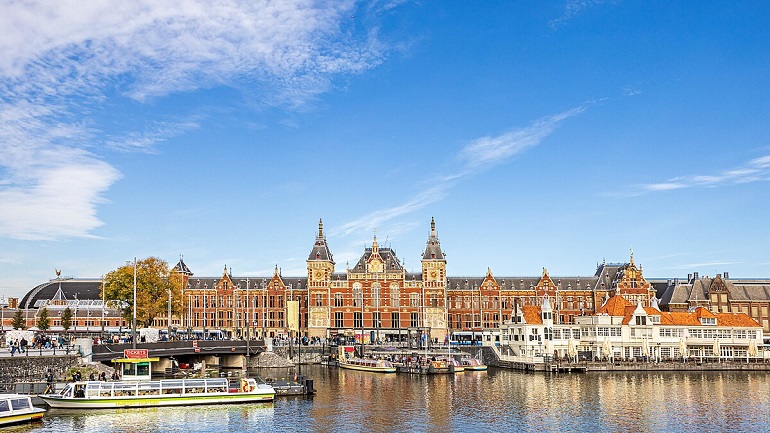
Amsterdam Centraal Station is Amsterdam’s grand gateway, a red-brick neo-Gothic and Renaissance Revival landmark designed by Pierre Cuypers and opened in 1889 on three artificial islands known as Stationseiland, supported by thousands of wooden piles beneath the IJ waterfront. Behind its turreted façade and clock towers lies a vast transport hub linking national and international rail with trams, the metro and free ferries that glide across to Amsterdam-Noord from the modern IJ-side hall. Inside, soaring iron spans cover the platforms, while restored historic details recall the station’s Golden Age ambition, including a royal waiting room and decorative stone reliefs celebrating trade and industry. The distinctive cast iron roof, spanning nearly 45 metres and manufactured by Handyside & Company of Derby, England, creates a cathedral-like atmosphere over the platforms with its 50 curved trusses.
Originally built to handle 200,000 passengers annually, the station now welcomes over 200,000 travellers daily, transforming Amsterdam from a traditional waterfront city into a modern inland metropolis connected to Europe's rail network. Despite extensive modernisation and ongoing renovations to accommodate metro lines and high-speed trains, Centraal Station has preserved its historical grandeur, including the ornate Queen's Waiting Room, hand-painted decorations by Austrian artist George Sturm, and the majestic main hall with its soaring arches and marble floors. The station's controversial construction, which effectively separated Amsterdam from its historic harbour connection, remains a testament to the bold urban planning decisions that shaped the modern city whilst creating one of Europe's most beautiful railway terminals.
Damrak and the Historic Waterfront
Damrak serves as Amsterdam's grand entrance, a wide boulevard that connects Central Station directly to Dam Square, creating one of the city's most important thoroughfares. While modern commercial developments have somewhat altered its character, Damrak retains significant historical importance and architectural beauty that rewards careful observation. More than twenty buildings along this avenue carry designation as Royal Monuments, their facades representing various periods from the late 18th through early 20th centuries.
The Damrak Waterfront area showcases Amsterdam's historic harbour heritage, providing some of the city's most photographed views that appear on countless postcards and travel brochures. This waterfront perspective captures the essence of Amsterdam's relationship with water, showing how the city emerged from marshlands to become a global trading power. The boulevard houses the flagship Bijenkorf department store, one of the Netherlands' most prestigious shopping destinations, offering everything from high-end fashion to Dutch design items. Despite its commercial nature, Damrak provides an essential Amsterdam experience - the walk from Central Station to Dam Square traces the path that countless visitors, merchants, and residents have followed for generations. Early morning visits reveal the street's character before tourist crowds arrive, whilst evening strolls showcase the illuminated facades and bustling restaurant terraces that line this historic route.
Canal Cruises
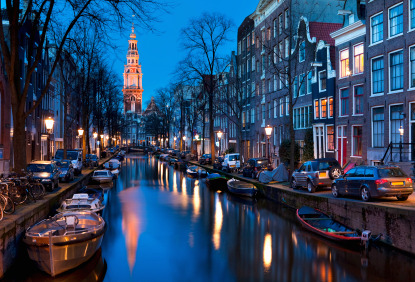
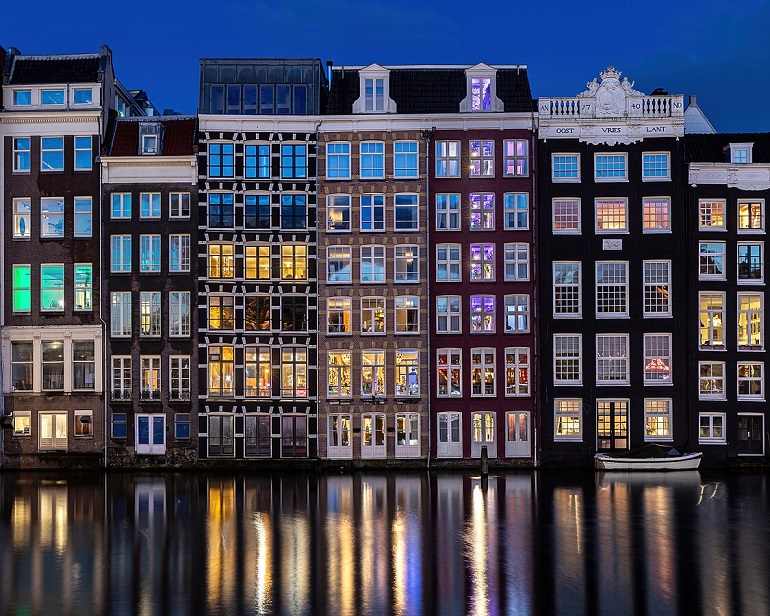
A canal cruise remains the quintessential Amsterdam experience, offering visitors an unparalleled perspective of the city's UNESCO World Heritage canal ring. These waterways, dating back to the 17th century Golden Age, form concentric semicircles around Amsterdam's historic centre and provide a floating journey through four centuries of Dutch history. The canal cruise experience varies dramatically throughout the day - morning trips offer crisp views of the city awakening, whilst afternoon cruises showcase the hustle and bustle of daily Amsterdam life. Evening canal cruises are particularly magical, with the city's golden lights reflecting on the dark water, creating an almost fairytale atmosphere that captures the romance and charm of old Amsterdam.
During your cruise, you'll glide past elegant 17th-century merchant houses with their characteristic narrow facades and ornate gables, historic bridges that span the waterways, and bustling waterfront cafés where locals gather to socialise. Commentary during these trips typically covers the fascinating stories behind the canal houses, the ingenious engineering that created this water-based city, and tales of Amsterdam's maritime trading empire that once stretched across the globe.

Dam Square and the Royal Palace
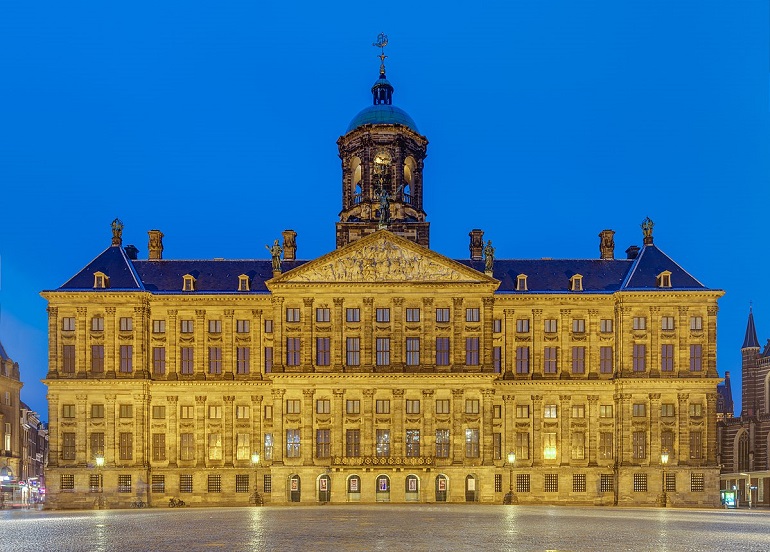
Dam Square stands as Amsterdam's beating heart, a vast open space that has served as the city's main gathering place for over 750 years. Originally built on a dam across the Amstel River (hence Amsterdam's name), the square today pulses with constant activity - street performers entertain crowds, political demonstrations unfold, and seasonal celebrations bring thousands together. The National Tulip Day festivities transform the square into a sea of colourful blooms each January, whilst Chinese New Year celebrations add multicultural vibrancy to this historic space.
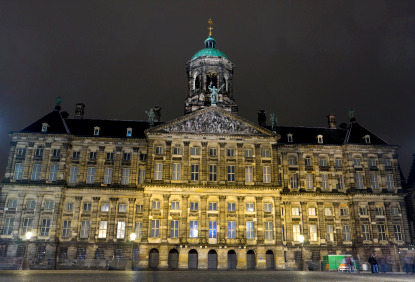
Dominating the square's western edge stands the imposing Royal Palace Amsterdam, the official reception palace of the Dutch Royal Family. Though its exterior may appear somewhat austere, particularly on overcast days typical of Amsterdam's climate, the interior reveals breathtaking opulence that reflects the wealth of the Dutch Golden Age. Visitors who venture inside discover magnificent marble floors imported from Italy, stunning crystal chandeliers that illuminate grand halls, intricate sculptures crafted by master artisans, and impressive paintings depicting scenes from Dutch mythology and history. The palace serves as a working royal residence for official state functions, so advance booking is essential as it may close for extended periods during important ceremonies or diplomatic events.
The Jordaan District
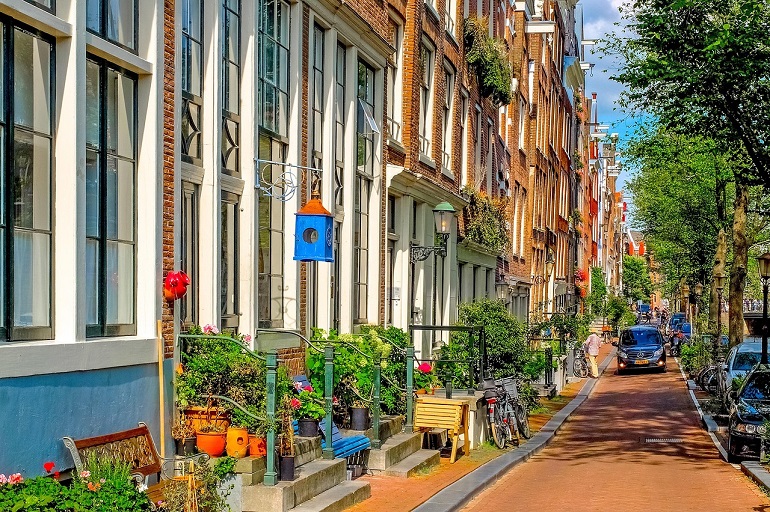
The Jordaan represents Amsterdam at its most charming and authentic, a bohemian neighbourhood that has evolved from a working-class area into one of the city's most beloved districts. This maze of narrow cobblestone streets, tree-lined canals, and historic brown cafés embodies the relaxed Amsterdam lifestyle that locals cherish. Originally built in the 17th century to house the city's working population, the Jordaan has retained its intimate village-like atmosphere despite being located just west of the city centre. Wandering through its winding streets, visitors encounter an eclectic mix of independent boutiques selling vintage clothing and handcrafted goods, art galleries showcasing local talent, and cosy cafés where conversation flows as freely as the coffee.
The neighbourhood comes alive on Saturdays when the Noordermarkt and smaller street markets fill with locals shopping for organic produce, antique treasures, and artisanal foods. The Jordaan's numerous brown cafés (traditional Dutch pubs) provide the perfect opportunity to experience authentic Amsterdam culture - these dimly lit establishments with their tobacco-stained walls and worn wooden floors have served as community gathering places for generations. Many visitors find themselves returning to the Jordaan throughout their stay, drawn by its welcoming atmosphere and the sense of discovering the "real" Amsterdam away from tourist crowds.
Bloemenmarkt (Floating Flower Market)
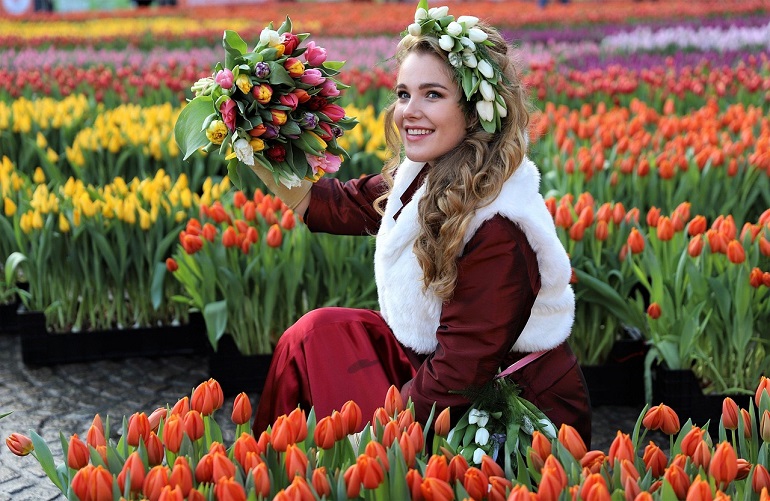
The Bloemenmarkt stands as Amsterdam's most colourful attraction and the world's only floating flower market, a unique spectacle that has graced the Singel Canal since 1862. Though the barges are now permanently moored and the experience feels similar to any traditional market once inside, the concept and setting remain genuinely extraordinary. This fragrant marketplace stretches along the canal, with individual stalls housed on historic barges that were once used to transport flowers from the Dutch countryside directly to Amsterdam's consumers. The market bursts with vibrant displays that change with the seasons - spring brings an explosion of tulips in every imaginable colour, summer features sunflowers and seasonal blooms, whilst autumn and winter showcase hardy varieties and festive arrangements.
Beyond fresh flowers, vendors offer an impressive selection of flower bulbs ready for international export, making it possible for visitors to take a piece of Dutch horticultural expertise home. The bulbs sold here are specially prepared for export and come with proper documentation for international travel, though buyers should ensure they're firm, mold-free, and undamaged. The market also caters to souvenir hunters with an array of Dutch-themed items including traditional wooden clogs, miniature windmills, and hand-painted wooden tulips. Visiting during spring's peak tulip season provides the most impressive experience, with the entire market resembling a living rainbow that epitomises the Netherlands' reputation as Europe's garden.
Albert Cuyp Market
Albert Cuyp Market represents Amsterdam's most authentic market experience, a bustling daily affair that has served locals for over a century whilst welcoming curious visitors into the rhythm of everyday Dutch life. Stretching for nearly a kilometre through the vibrant De Pijp neighbourhood, this outdoor market creates a sensory explosion of sights, sounds, and aromas that capture the multicultural essence of modern Amsterdam. The market's food section offers an incredible journey through Dutch culinary traditions - vendors call out to passers-by, encouraging them to sample freshly made stroopwafels still warm from the iron, taste various Dutch cheeses aged to perfection, or try herring prepared in the traditional Amsterdam style.
International food stalls reflect the city's diversity, with vendors offering everything from Surinamese roti to Turkish döner kebab, creating a multicultural feast that mirrors Amsterdam's immigrant communities. Beyond food, the market functions as a practical shopping destination where locals purchase fresh produce, household goods, clothing, and everyday necessities at prices significantly lower than city centre shops. The atmosphere remains genuinely local despite tourist interest, with vendors maintaining the friendly, no-nonsense attitude that characterises Amsterdam's working-class neighbourhoods. Visitors often find themselves caught up in the market's energy, practising basic Dutch phrases with vendors, sampling unfamiliar foods, and experiencing Amsterdam as residents do rather than as tourists.
Architecture and Unique Buildings
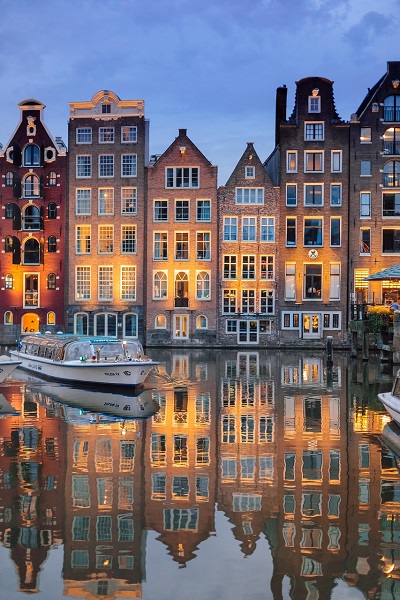
Amsterdam's architectural landscape extends far beyond its famous canal houses, encompassing centuries of building styles that reflect the city's evolution from medieval trading post to modern metropolis. The city centre showcases the distinctive Amsterdam School architecture, characterised by expressive brickwork, ornate facades, and innovative masonry techniques that emerged in the early 20th century. These buildings, with their curved corners, decorative elements, and social housing origins, represent a uniquely Dutch architectural movement that prioritised beauty and craftsmanship in working-class housing. The Zevenlandenhuizen (Seven Countries Houses) present a charming architectural curiosity - seven connected houses each designed to reflect different European architectural traditions, creating a miniature tour of continental building styles.
Modern Amsterdam reveals itself in the Zuidas business district, where bold contemporary designs like The Valley building and striking glass towers create dramatic cloudscrapers that reshape the city's skyline. Central Station itself stands as an architectural monument, its elaborate 19th-century design reflecting the confidence and prosperity of the era when railways connected Amsterdam to the wider world. Walking tours of Amsterdam's architecture reveal hidden courtyards, Art Deco details, and innovative modern insertions that show how the city continuously adapts whilst preserving its historic character. The contrast between medieval buildings, Golden Age canal houses, 19th-century public buildings, and 21st-century sustainable architecture creates an urban landscape that serves as a living museum of Dutch building traditions.
NDSM Wharf
NDSM Wharf represents Amsterdam's creative renaissance, a former industrial shipyard that has been transformed into one of Europe's most dynamic cultural hubs. Located across the IJ River in Amsterdam North, this post-industrial playground showcases how urban spaces can be reimagined and revitalised. The journey to NDSM begins with a short, free ferry ride from behind Central Station, offering visitors spectacular views of Amsterdam's skyline and harbour. Once a thriving shipbuilding facility that constructed vessels for the Dutch merchant marine, NDSM today hosts an impressive collection of street art, with massive murals covering warehouse walls and shipping containers. The area's crowning jewel is the NDSM-Loods, a colossal former shipbuilding warehouse that now houses dozens of creative businesses, artist studios, restaurants, and event spaces. This industrial cathedral regularly hosts festivals, markets, and cultural events, including some of Europe's largest flea markets where treasure hunters can spend entire days browsing vintage furniture, retro clothing, and unique collectibles.
The wharf's dining scene reflects its alternative spirit, with restaurants like Pllek occupying repurposed shipping containers and offering waterfront dining with panoramic city views. Weekend evenings see NDSM transform into a nightlife destination, with underground clubs and bars drawing Amsterdam's creative community for dancing and socialising in decidedly unconventional settings. The area also serves as a launching point for exploring wider Amsterdam North, including the nearby A'dam Tower with its observation deck and the Eye Film Museum.
Top Museums
Amsterdam stands as one of Europe's most culturally rich cities, hosting over 50 museums that span centuries of art, history, science, and culture. This comprehensive guide provides detailed descriptions of the city's most significant museums, offering insight into their collections, architecture, and unique features.
The Museum Quarter (Museumplein) Icons
Rijksmuseum
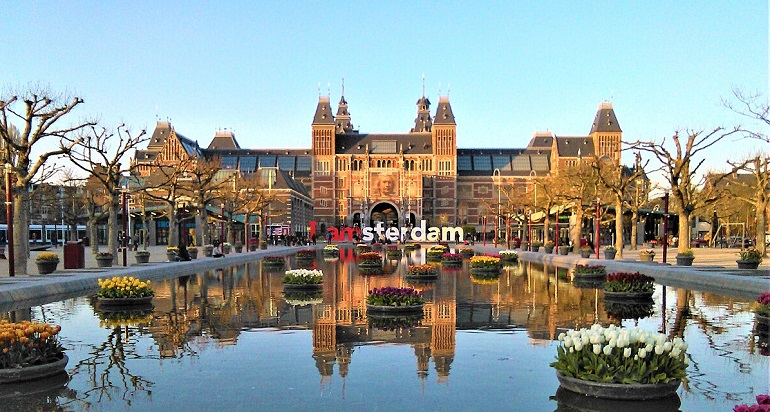
The Rijksmuseum represents the pinnacle of Dutch cultural heritage and stands as one of the world's most prestigious art institutions. Designed by renowned Dutch architect Pierre Cuypers in the late 19th century, this architectural masterpiece exemplifies Revival Architecture with striking Gothic and Renaissance elements. The building itself is considered a chef-d'œuvre, serving as both container and complement to the treasures within.
The museum's collection spans 800 years of Dutch history and art, from medieval times through to the modern era, with over 8,000 objects displayed across 80 galleries. At its heart lies Rembrandt's monumental "The Night Watch" (De Nachtwacht), arguably the most famous painting in Dutch art history. The museum houses an extraordinary assemblage of Dutch Golden Age masterpieces, including multiple Rembrandt works such as several self-portraits and "Isaac and Rebecca" (known as "The Jewish Bride").
Johannes Vermeer's exquisite paintings feature prominently, including "The Milkmaid", "Woman Reading a Letter", and "The Love Letter". The collection extends to works by Hendrik Avercamp, Frans Hals, and Van Gogh, creating a comprehensive narrative of Dutch artistic achievement. Beyond painting, the museum showcases decorative arts, sculpture, historical artefacts, and Asian art, making it a complete cultural experience rather than merely an art gallery.
The Rijksmuseum's vast scope can be overwhelming; visitors are advised to focus on specific sections or download the museum's app for guided tours. The institution attracts enormous crowds, particularly during afternoon hours, making morning visits preferable for a more contemplative experience.
Van Gogh Museum
The Van Gogh Museum houses the world's most comprehensive collection of works by Vincent van Gogh, featuring more than 200 paintings, 500 drawings, and nearly all of the artist's surviving letters. This remarkable assemblage provides unparalleled insight into the development of one of history's most influential artists.
Masterpieces on display include the iconic "Sunflowers", the vibrant "Irises", the intimate "The Bedroom", the delicate "Almond Blossom", and "The Sower". These works span Van Gogh's artistic evolution, from his early dark palette to the brilliant colours of his final years. The museum's presentation goes beyond mere exhibition, weaving together Van Gogh's turbulent personal history with his artistic development through carefully curated displays and his own written correspondence.
To provide artistic context, the museum also features works by Van Gogh's contemporaries, including Henri de Toulouse-Lautrec, Claude Monet, and Camille Pissarro. This comparative approach illuminates the broader Post-Impressionist movement and Van Gogh's place within it.
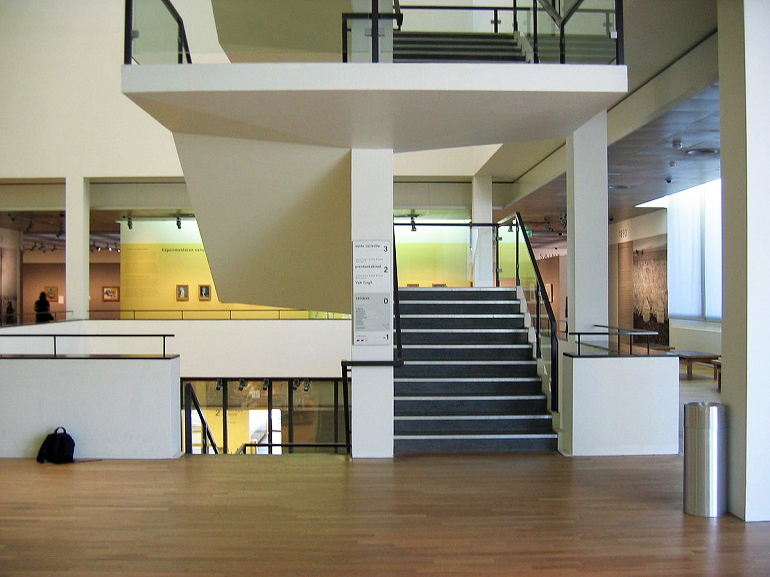
The museum building itself represents architectural excellence, designed by celebrated Dutch architect Gerrit Rietveld. In 2015, a new glass entrance foyer was added, creating a modern counterpoint to Rietveld's original design whilst improving visitor flow and experience.
Stedelijk Museum
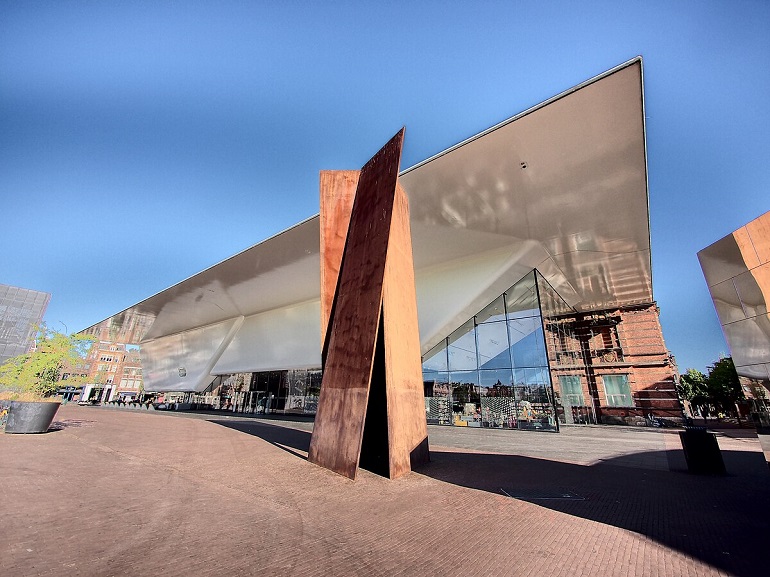
The Stedelijk Museum serves as Amsterdam's premier institution for modern and contemporary art, featuring an extraordinary collection that spans from the late 19th century to the present day. The museum's holdings include masterworks by Paul Cézanne, Pablo Picasso, Henri Matisse, and Andy Warhol, alongside cutting-edge contemporary exhibitions that challenge and inspire.
The museum's approach emphasises both historical context and contemporary relevance, regularly rotating exhibitions that place classic modernist works in dialogue with current artistic practices. Its innovative programming and thought-provoking displays make it a focal point for art enthusiasts seeking to understand the evolution of modern artistic expression.
Historical and Cultural Museums
Anne Frank House
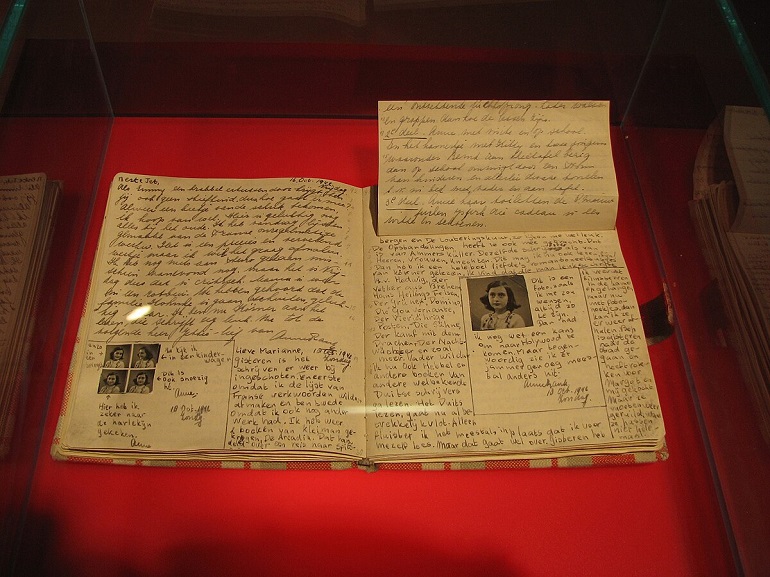
The Anne Frank House stands as one of the world's most poignant memorial museums, preserving the secret annex where Anne Frank, her family, and four others hid from Nazi persecution during the Second World War. The museum maintains the hidden rooms largely as they were during the war years, creating an intensely moving experience that brings history to life through personal testimony.
Visitors can view Anne's original diary, personal belongings, and extensive exhibits detailing the broader context of Jewish persecution, resistance movements, and the Holocaust. The museum extends beyond Anne's individual story to address themes of discrimination, human rights, and the importance of tolerance in contemporary society. Interactive displays and multimedia presentations help visitors understand both the historical period and its continued relevance.
Amsterdam Museum
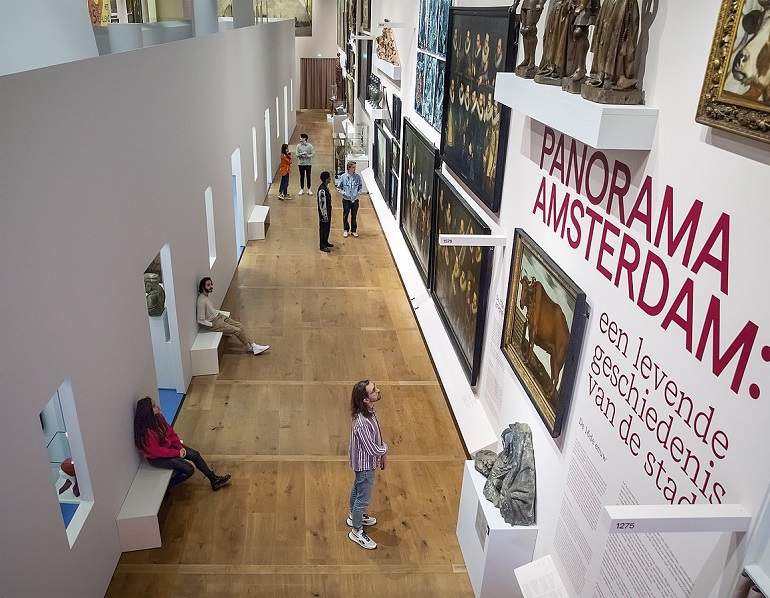
The Amsterdam Museum chronicles the rich history and evolving identity of Amsterdam from its medieval origins to the present day. Originally housed in a historic city orphanage, the museum underwent extensive renovation and temporarily relocated to the Hermitage building on Amstel 51, operating as "Amsterdam Museum on the Amstel" until its permanent home reopens in 2025.
Current exhibitions include the impressive Portrait Gallery of the 17th Century, which unites 30 monumental group paintings from the Dutch Golden Age in a single spectacular display. The Panorama Amsterdam: City Time Lapse offers a unique perspective on urban development, showing how the city has evolved over centuries from the museum's specific vantage point.
The museum employs interactive installations, multimedia presentations, and carefully curated artefacts to tell Amsterdam's story, covering topics from trade and commerce to religious tolerance, urban planning, and cultural diversity. Rather than being overwhelmed by crowds like some major tourist attractions, the Amsterdam Museum offers a more intimate and contemplative experience.
Rembrandt House Museum
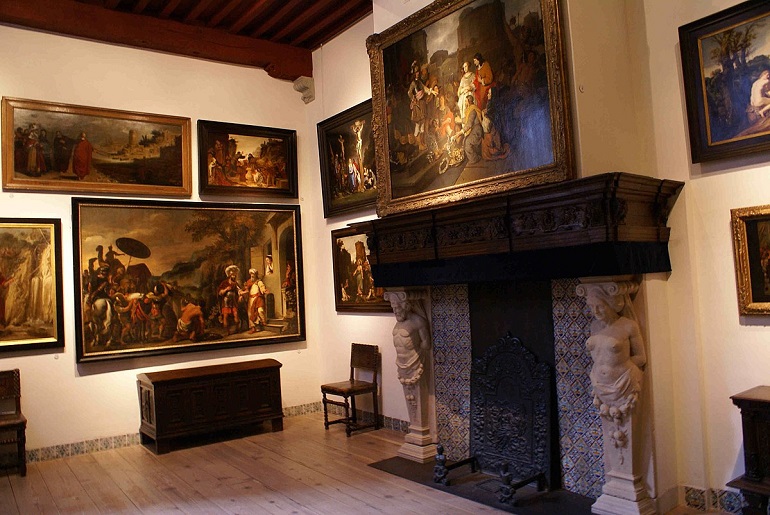
The Rembrandt House Museum occupies the meticulously restored 17th-century home and studio where Rembrandt van Rijn lived and worked during his most productive years. The building itself serves as a three-dimensional historical document, furnished with period pieces and artist's materials that recreate the atmosphere of the Dutch Golden Age.
The museum's collection focuses on Rembrandt's etchings, which many consider among his finest works, alongside personal artefacts, furniture, and art objects that belonged to the master or his contemporaries. Visitors gain insight not only into Rembrandt's artistic process but also into 17th-century domestic life, the art market of the period, and the social context that shaped one of history's greatest painters.
Jewish Historical Museum
The Jewish Historical Museum presents the rich cultural, religious, and historical heritage of Jewish communities in Amsterdam and the Netherlands. Housed in a complex of historic synagogues, the museum's architecture itself tells part of the story, representing centuries of Jewish presence in the city.
Collections encompass religious ceremonial objects, historical documents, artworks, and personal testimonies spanning several centuries. The museum addresses both celebratory aspects of Jewish culture and the tragic history of persecution, providing balanced and educational perspectives on Jewish life in the Netherlands. A dedicated Children's Museum makes the complex history accessible to younger visitors through interactive exhibits and age-appropriate presentations.
Science and Technology Museums
NEMO Science Museum
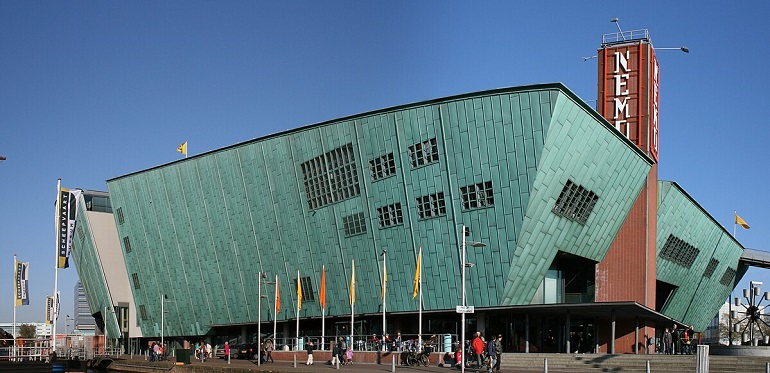
NEMO Science Museum transforms scientific concepts into engaging, hands-on experiences across five floors of interactive exhibitions. The museum's collection of 19,500 artefacts explores themes including lighting, electrical engineering, energy generation and storage, and domestic technology, tracing humanity's technological progress.
Designed by world-renowned Italian architect Renzo Piano (architect of the Centre Pompidou in Paris and The Shard in London), the building's distinctive green copper-clad exterior resembles a ship anchored in Amsterdam's eastern docklands. This striking architectural form has made NEMO one of Amsterdam's most photographed landmarks.
The museum excels at making complex scientific principles accessible through experimentation, demonstration, and interactive learning. Visitors of all ages can participate in workshops, conduct experiments, and explore everything from molecular biology to renewable energy technologies. The museum's approach emphasises discovery and hands-on learning, making it particularly popular with families and educational groups.
Micropia
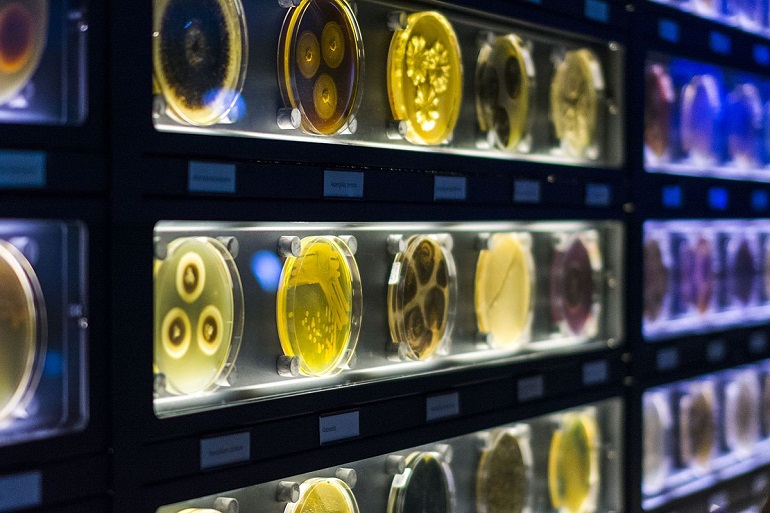
Micropia represents a unique concept in museum design, dedicated entirely to the microscopic world that shapes life on Earth. This specialised institution illuminates the usually invisible realm of microorganisms, bacteria, viruses, and other microscopic life forms through innovative display techniques and interactive technology.
The museum employs cutting-edge microscopy, live cultures, and multimedia presentations to reveal how microbes influence human health, environmental systems, and technological applications. Visitors can observe living microorganisms in real-time, understand their crucial roles in ecosystem function, and appreciate both beneficial and harmful microbial activities.
Art and Photography Museums
FOAM (Fotografiemuseum Amsterdam)
FOAM serves as Amsterdam's premier contemporary photography museum, showcasing both established masters and emerging talents in the photographic arts. The museum's programming spans documentary photography, portraiture, conceptual work, fashion photography, and experimental digital media.
Exhibitions change regularly, ensuring fresh perspectives and contemporary relevance. The museum also hosts workshops, lectures, and educational programmes that foster engagement with photographic practice and theory. FOAM's dynamic approach to curation and its commitment to pushing photographic boundaries make it a vital part of Amsterdam's contemporary art scene.
Moco Museum
The Moco Museum specialises in modern and contemporary art, with particular emphasis on street art, pop art, and contemporary masters. The museum regularly features works by Banksy, Andy Warhol, Keith Haring, and other influential contemporary artists.
Exhibition themes often explore urban culture, social commentary, and artistic innovation, making contemporary art accessible to broad audiences. The museum's curatorial approach emphasises the relevance of contemporary art to current social and political issues, creating connections between artistic expression and contemporary life.

Maritime and Transportation Museums
National Maritime Museum (Het Scheepvaartmuseum)
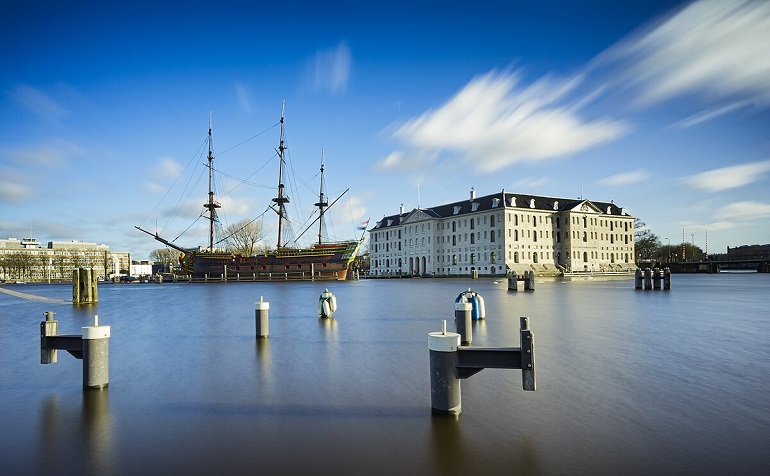
The National Maritime Museum houses one of the world's largest maritime collections, chronicling 500 years of Dutch maritime history. The museum's comprehensive holdings include ship models, navigation instruments, sea charts, and naval paintings depicting famous Dutch sailors and historical sea battles.
A highlight of the museum experience is the full-scale replica of the Amsterdam, an 18th-century cargo ship of the Dutch East India Company (VOC - Vereenigde Oost-Indische Compagnie). Visitors can board this meticulously reconstructed vessel and experience life aboard a Golden Age trading ship.
The museum's location in Amsterdam's eastern docklands provides an authentic maritime atmosphere. The surrounding area offers beautiful waterside walks, historic ships, and maritime-themed restaurants, making a visit to the museum part of a broader exploration of Amsterdam's seafaring heritage. The comprehensive nature of the collection requires 3-4 hours for a thorough visit.
Specialty and Unique Museums
Museum Het Schip
Museum Het Schip celebrates Amsterdam School architecture, a distinctive early 20th-century design movement that shaped much of the city's residential landscape. The museum is housed in an extraordinary example of this architectural style, often called a "worker's palace" for its innovative approach to social housing.
Guided tours reveal the philosophy behind Amsterdam School design, which sought to create beautiful, dignified housing for working-class families. The building's expressive brickwork, decorative elements, and integrated design demonstrate how architecture can serve both functional and aesthetic purposes. The museum provides insight into progressive urban planning and the social ideals that drove early 20th-century housing reform.
Museum of the Canals (Het Grachtenhuis)
The Museum of the Canals occupies one of Amsterdam's best-preserved 17th-century canal houses on the prestigious Herengracht. This intimate museum tells the fascinating story of Amsterdam's iconic waterways through multimedia exhibitions, architectural models, and historical artefacts.
Interactive displays explain how the canal ring was planned and constructed during the Dutch Golden Age, transforming Amsterdam into a major commercial centre. After visiting the museum, guests report seeing the city's canals with completely new understanding and appreciation. The museum visit typically takes about one hour, making it an ideal complement to canal-side walks or boat tours.
Ons' Lieve Heer op Solder (Our Lord in the Attic)
This remarkable museum preserves a hidden Catholic church concealed in the attic of a 17th-century canal house. During periods when Catholic worship was officially forbidden in Protestant Amsterdam, clandestine churches like this one allowed Catholic communities to maintain their religious practices.
The museum provides insight into religious tolerance and coexistence in Golden Age Amsterdam. The hidden church remains largely intact, complete with altar, pews, and religious artefacts, offering visitors a unique glimpse into the complexities of religious life in historical Amsterdam.
Houseboat Museum (Woonboot Museum)
The Houseboat Museum offers visitors the rare opportunity to explore a typical Amsterdam houseboat, providing insight into a uniquely Dutch way of life. Thousands of Amsterdam residents live on houseboats moored along the city's canals, and this museum explains the practicalities, history, and culture of houseboat living.
The floating exhibition covers everything from daily life aboard these compact homes to the legal and environmental aspects of canal-based living. For many visitors, especially those from countries without houseboat traditions, this museum provides fascinating insight into an alternative lifestyle that has flourished in Amsterdam for generations.
Allard Pierson Museum
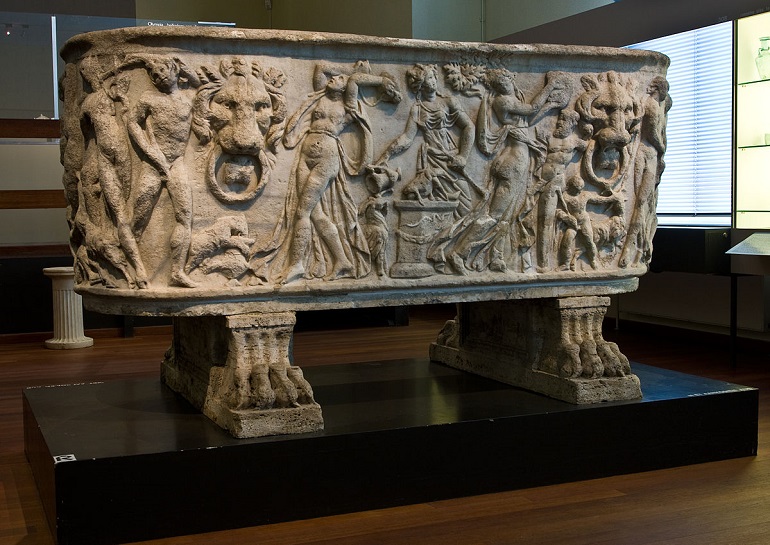
The Allard Pierson Museum serves as the archaeological and cultural history museum of the University of Amsterdam. Its collection of 10,000 objects spans archaeology, book history, cartography, graphic design, Jewish cultural history, and zoology.
Housed in an imposing building that originally served as the Dutch Central Bank, the museum combines academic rigour with accessible presentation. Exhibitions explore cultural development across civilisations and time periods, making it particularly valuable for visitors interested in comparative cultural history and archaeological discoveries.
Unique and Quirky Museums
Cat Cabinet (KattenKabinet)
The Cat Cabinet represents one of Amsterdam's most whimsical cultural institutions, dedicated entirely to the artistic, literary, and cultural representation of cats. This unique museum showcases paintings, sculptures, posters, and artefacts featuring felines throughout art history.
Founded by a wealthy businessman in memory of his beloved cat, the museum occupies a beautiful canal house and includes works by famous artists alongside folk art and contemporary cat-themed creations. While undoubtedly eccentric, the Cat Cabinet demonstrates Amsterdam's appreciation for unconventional cultural expressions.
Hash, Marihuana & Hemp Museum
This specialised museum explores the history, cultivation, and cultural significance of cannabis from historical, scientific, and artistic perspectives. Exhibitions cover the plant's traditional uses in textiles, medicine, and spiritual practices, alongside contemporary debates about legalisation and regulation.
Interactive displays and educational materials present balanced information about cannabis while acknowledging Amsterdam's reputation for progressive drug policies. The museum serves both educational and cultural tourism purposes, reflecting the city's pragmatic approach to drug policy and harm reduction.

Lesser-Known Cultural Gems
Tropenmuseum
The Tropenmuseum (Museum of the Tropics) presents world cultures through ethnographic collections, contemporary art, and interactive exhibitions. Originally focused on Dutch colonial history, the museum has evolved to address global cultural diversity, migration, and intercultural understanding.
Collections include traditional crafts, musical instruments, religious objects, and contemporary artworks from Africa, Asia, Latin America, and Oceania. The museum's approach emphasises cultural dialogue and mutual understanding rather than exotic otherness, making it valuable for understanding global interconnectedness and cultural diversity.

Fashion for Good Museum
This relatively new institution explores sustainable fashion and textile innovation. Interactive exhibitions address the environmental and social impacts of clothing production while showcasing innovative materials, production methods, and design approaches.
The museum appeals particularly to visitors interested in sustainability, design, and social responsibility. Through workshops, exhibitions, and educational programmes, it promotes awareness of fashion's environmental impact and highlights positive alternatives.
Museum Van Loon
Museum Van Loon occupies a magnificent 17th-century canal house that has been beautifully preserved to show how Amsterdam's wealthy merchant families lived during the Golden Age. The museum displays period rooms, family portraits, decorative arts, and personal belongings that illuminate daily life among Amsterdam's elite.
The building's grand interiors, including ornate plasterwork, painted ceilings, and period furnishings, provide intimate insight into Golden Age domestic culture. The museum also maintains beautiful period gardens that exemplify 17th-century landscape design.
Local Cuisine
Amsterdam's culinary landscape offers a delightful blend of traditional Dutch fare and international influences. The city's signature dishes include raw herring (haring) served with pickles and onions, and the beloved bitterballen - crispy deep-fried snacks perfect for accompanying drinks. For those with a sweet tooth, stroopwafels (waffle cookies filled with caramel syrup) are best enjoyed fresh and warm from the Albert Cuypmarkt. Traditional Dutch comfort food features hearty dishes like stamppot (mashed potatoes with vegetables) and snert (split pea soup), whilst the city's colonial history has enriched its food scene with Indonesian rijsttafel - a feast of small dishes served with rice and spicy sambals. The Dutch passion for seafood is evident in dishes like kibbeling (battered white fish) and mussels, whilst the city's modern dining scene showcases innovative interpretations of Dutch cuisine at establishments like De Kas, where ingredients are sourced from their own greenhouse.
Shopping
Amsterdam offers a diverse shopping experience with distinct areas catering to every taste and budget. The city centre features two main shopping thoroughfares: Kalverstraat, home to popular high-street brands like H&M and Zara, and the more upmarket Leidsestraat, which hosts exclusive boutiques1. For luxury shopping, the P.C. Hooftstraat showcases prestigious brands such as Chanel and Louis Vuitton. The charming Nine Streets (De Negen Straatjes) area, situated in the historic canal district, is perfect for those seeking unique boutiques, vintage stores and artisanal shops. Markets are also a significant part of Amsterdam's shopping scene, with the Albert Cuyp Market offering everything from fresh produce to clothing, whilst the Waterlooplein Flea Market is ideal for vintage finds and quirky collectibles. For a more alternative shopping experience, the trendy Haarlemmerstraat and Haarlemmerdijk streets feature an eclectic mix of funky fashion boutiques, speciality food shops and contemporary design stores.
Nature in and around Amsterdam
Amsterdam offers a remarkable array of natural attractions that provide a refreshing escape from urban life. The city's crown jewel is the Amsterdamse Bos, a vast woodland park featuring rowing courses, swimming ponds, and a delightful goat farm where visitors can sample goat milk ice cream. Just north of the city, Het Twiske presents spectacular open landscapes and waterways perfect for canoeing, sailing, and swimming, whilst being surrounded by the picturesque villages of the Waterland. Nature enthusiasts will be captivated by the Amsterdamse Waterleidingduinen, a unique coastal reserve between Zandvoort and Noordwijk where one can spot grazing deer and foxes in their natural habitat. The Amstelland Green Area, accessible by following the Amstel River south, offers tranquil meadows and polders ideal for walking and cycling, whilst the National Park Zuid-Kennemerland boasts pristine dune valleys and is home to remarkable European bisons. For those seeking water-based activities, De Nieuwe Meer lake provides excellent opportunities for swimming, windsurfing, and sailing, all whilst observing local wildlife.
Vondelpark
Vondelpark serves as Amsterdam's green lung, a sprawling 47-hectare oasis that provides respite from the urban energy surrounding it. Named after the 17th-century playwright Joost van den Vondel, this beloved park attracts both locals and visitors with its diverse landscape of rolling lawns, tranquil ponds, winding pathways, and mature trees that create natural canopies. The park's layout encourages various forms of recreation - families spread picnic blankets on sunny slopes, joggers follow designated routes past sculptures and fountains, and cyclists navigate dedicated bike paths that weave throughout the grounds. During summer months, Vondelpark transforms into an outdoor entertainment venue with free concerts at the open-air theatre, drawing audiences who gather on blankets to enjoy performances ranging from classical music to contemporary dance. The park's several cafés and pavilions provide convenient refreshment stops, particularly the famous Blauwe Theehuis (Blue Tea House), a distinctive round building that serves as a popular meeting spot. Children gravitate towards the various playgrounds scattered throughout the park, whilst adults often engage in outdoor yoga sessions or simply relax by the ponds watching ducks and other waterfowl. The park's appeal extends beyond daylight hours - early morning visits offer peaceful moments before the city awakens, whilst evening strolls provide romantic settings as the sun sets through the trees.

Rembrandt Park
Rembrandt Park offers a peaceful alternative to the more touristy Vondelpark, providing visitors with an authentic glimpse of residential Amsterdam life in the city's western districts. Named after the master painter Rembrandt van Rijn, whose works including "The Night Watch" define Dutch Golden Age artistry, this expansive green space serves as Amsterdam's second-largest park. The park's design emphasises natural beauty over formal landscaping, with winding walking and cycling paths meandering through diverse terrain that includes wooded areas, open meadows, and small lakes. Scattered throughout the grounds, visitors discover an impressive collection of sculptures and art installations that create outdoor galleries where art and nature harmoniously coexist. The surrounding neighbourhood provides insight into modern Amsterdam life, with practical apartment blocks and local shops that cater to residents rather than tourists. This working-class area offers visitors a refreshing contrast to the historic city centre, and tellingly, signs here appear primarily in Dutch rather than the multilingual displays common in tourist areas. The park attracts a local crowd of families with children, elderly residents taking daily walks, and fitness enthusiasts using the space for jogging or cycling. Its relative obscurity means fewer crowds and more opportunities for quiet contemplation or genuine interaction with Amsterdam residents going about their daily routines.
Getting to Amsterdam & Around
Getting to Amsterdam
The easiest ways to reach Amsterdam are by air, train, and ferry, with smooth onward transfers from major hubs across Europe.
By air
Amsterdam’s main gateway is Schiphol Airport, which sits on a dedicated rail hub beneath the terminal with direct trains to Amsterdam Centraal in about 16–18 minutes and departures roughly every 10–15 minutes.
Schiphol also has frequent international trains to Brussels and Paris, so it can double as a handy interchange for onward European travel.
Alternative airports include Rotterdam The Hague Airport (bus to Rotterdam Centraal, then Intercity services to Amsterdam) and Eindhoven Airport (local bus to Eindhoven Centraal, then Intercity services), plus limited direct coaches from Eindhoven Airport to Amsterdam.
By train
High-speed rail brings Amsterdam within easy reach: direct Eurostar services connect London St Pancras to Amsterdam, with arrivals at Amsterdam Centraal.
If a direct train is not available on a given day, travel is straightforward via a same-station change in Brussels, and service patterns may vary during planned works—checking live updates before travelling is wise.
From Belgium, Eurocity Direct now runs frequently to Amsterdam, currently serving Amsterdam Zuid where local transport links make it simple to continue to the centre.
Dutch domestic timetables were expanded in 2025, with more frequent Intercity and Sprinter services across the network and adjusted routings in the Amsterdam area.
Background note for planners: after a temporary terminal closure in 2024, Eurostar’s Amsterdam facilities were upgraded and direct London–Amsterdam services resumed in early 2025.
By coach
International coaches provide cost-conscious links into the city from across Europe, with frequent operations on routes such as Brussels–Amsterdam.
Common arrival points include Amsterdam Sloterdijk, the Schiphol Coach Terminal, De Ruijterkade at Centraal Station (IJzijde), and Bijlmer Arena, depending on the operator and route.
Services from providers like FlixBus and BlaBlaCar Bus typically use Sloterdijk as a key hub, offering broad coverage and overnight timings.
By ferry
North Sea routes make Amsterdam accessible without flying: options include Newcastle–IJmuiden (for the Amsterdam region) as well as Harwich–Hook of Holland and Hull–Rotterdam.
From these Dutch ports, onward travel to Amsterdam by train is frequent and well signposted, and “Rail & Sail” style combinations are a practical, relaxed alternative to air.
By car
Amsterdam is encircled by the A10 ring road, which connects to major motorways from across the Netherlands and neighbouring countries.
Before driving into town, review current environmental rules: Amsterdam operates low- and zero-emission zones that tighten from 2025, with specific standards for diesel vehicles and phased requirements for vans and lorries within and around the ring roads.
Key stations
Amsterdam Centraal places arrivals in the historic heart, with immediate onward access to trams, metros, and buses.
Amsterdam Zuid is an important long-distance stop for some international and high-speed services; it is well connected by local transport for a quick hop into the centre.
Practical tips
Aim to check live service updates for high-speed and international trains, especially during periods of planned engineering or seasonal adjustments.
From Schiphol, the dedicated airport station offers the fastest route into the city, and its frequent schedule makes timing flexible for early arrivals or late flights.
Getting around Amsterdam
Amsterdam offers excellent transport options that make exploring the city straightforward and enjoyable. The public transport network and cycling infrastructure are particularly well-developed, giving visitors flexible ways to navigate the compact city centre and reach outlying areas.
Public Transport
Amsterdam's public transport is operated by GVB (Gemeentevervoer Bedrijf), which runs an integrated system of trams, metros, buses, and ferries. The network operates from 06:00 to 00:30, with night services continuing until 07:00.
Trams
Trams are the backbone of Amsterdam's city transport, with 16 routes covering the historic centre and many tourist areas. Line 2 is particularly scenic, running from Centraal Station past Vondelpark, the canals, and the Rijksmuseum. Trams offer frequent services and most newer vehicles are wheelchair-accessible.
Metro
The metro system comprises 5 lines serving longer distances, especially useful for reaching outer districts and nearby towns like Amstelveen and Noord. Line 52 (the North/South line) connects Amsterdam Noord to the Zuidas business district via Centraal Station. Trains run every 10 minutes and all stations are wheelchair-accessible.
Buses
Amsterdam operates around 50 bus routes throughout the city and surrounding areas. Buses complement the tram and metro network, particularly useful for areas not served by rail. Night buses operate from 00:30 to 07:00 for late-night travel.
Ferries
Free ferries connect Amsterdam Noord with the city centre, offering both practical transport and scenic canal views. These services are part of the GVB network and particularly useful for reaching attractions north of the IJ waterway.
Cycling
Cycling is quintessentially Amsterdam – the city has extensive bike lanes, flat terrain, and a cycling culture that makes two wheels often the fastest way to get around. Bike rental is widely available throughout the city.
Bike Rental Options
- Standard city bikes: Available from numerous rental shops, typically costing around €10-15 per day
- I amsterdam City Card: Includes free 24-hour bike rental at participating locations
- Share bikes: Services like Donkey Republic offer flexible short-term rentals
- OV-fiets: Cheapest option (under €5 per 24 hours) but requires a Dutch resident's OV-chipkaart
Popular rental locations include shops near Centraal Station, with options ranging from basic city bikes to tandems and electric models.
Tickets and Payment
Amsterdam's public transport operates a cashless system – tickets can only be purchased using debit cards, credit cards, or the I amsterdam City Card.
Ticket Options
- Single journeys: Use OV-chipcard or contactless payment (OVpay)
- Day passes: Unlimited travel on all GVB services
- 1 day: €9.50
- 2 days: €15.50
- 3 days: €21.50
- 7 days: €42.50
- I amsterdam City Card: Includes unlimited public transport plus museum entries
Where to Buy
Tickets are available from:
- GVB Tickets & Info offices
- Ticket machines at metro stations
- Online in advance
- On trams and buses (day tickets only)
Note: You cannot buy tickets from drivers – plan ahead or use contactless payment.
Practical Tips
Plan your route: Use GVB's website or mobile apps for real-time information and route planning.
Avoid rush hours: Public transport gets busy between 07:30-09:30 and 17:00-19:00 on weekdays.
Night services: Your day ticket is valid on night buses, which operate different routes from daytime services.
Cycling safety: Always use bike lanes, lock your bike securely, and be aware that bike theft is common.
Accessibility: Most new trams and all metro stations are wheelchair-accessible. Look for the pink ITS symbol on older accessible trams.
Multi-day visits: Day passes become increasingly economical for longer stays – a 7-day pass works out to just €6.10 per day.
The combination of efficient public transport and excellent cycling infrastructure means getting around Amsterdam is rarely a challenge. Whether you prefer the convenience of trams, the speed of the metro, or the freedom of cycling, the city's transport network makes it easy to explore everything from the historic centre to the outer districts.
Best Time to Visit
The best time to visit Amsterdam is typically during the spring months of April and May or the autumn months of September and October. During these periods, you can enjoy milder temperatures, fewer crowds, and more affordable accommodation rates compared to the peak summer season. Spring offers the added bonus of witnessing the stunning tulip blooms, particularly at the renowned Keukenhof Gardens, whilst autumn boasts beautiful foliage and a cosy atmosphere. Both seasons provide pleasant weather for exploring the city's charming canals, world-class museums, and vibrant cultural scene. However, it's worth noting that Amsterdam's weather can be unpredictable, so packing layers and a waterproof jacket is advisable regardless of when you visit.