


 Belgium Guide
 Luxembourg Guide
Introduction
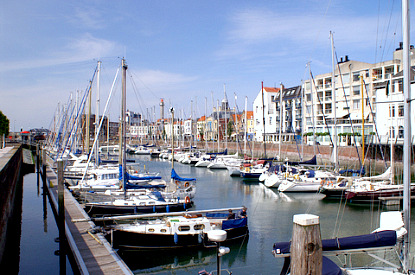
Vlissingen, historically known in English as Flushing, is a municipality and city in the southwestern Netherlands on the former island of Walcheren. Located at the mouth of the Western Scheldt estuary where it meets the North Sea, Vlissingen has been an important harbour for centuries due to its strategic position. The city, which received its city rights in 1315, is the third largest town in Zeeland with approximately 45,410 inhabitants (as of January 2024). Vlissingen is characterised by its rich maritime history, having served as a main harbour for the Dutch East India Company in the 17th century and as the birthplace of Lieutenant-Admiral Michiel de Ruyter. Today, the city is known for its shipbuilding yards where many vessels of the Royal Netherlands Navy are constructed, its 2.6-kilometre-long boulevard (the longest promenade in the Netherlands), and its position as a commercial port, fishing harbour, and seaside resort. The municipality also includes the villages of Oost-Souburg, West-Souburg, and Ritthem, as well as the hamlet of Groot-Abeele.
History
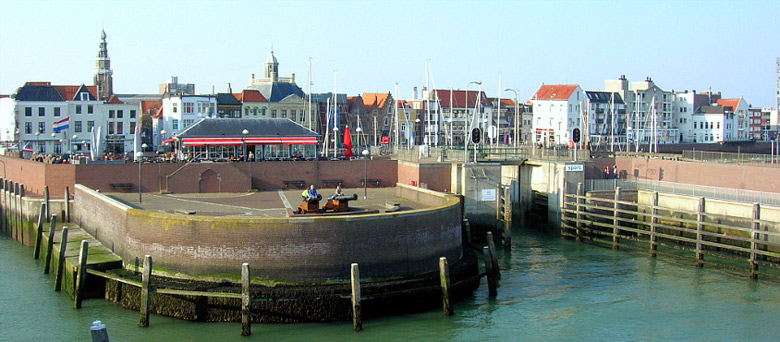
Founded as a fishing village on the island of Walcheren in 620, Flushing was granted city rights in 1315. It quickly became one of the main ports in the Low Countries, thanks to to location at the estuary of the Schedlt. This passage later became of vital importance when Antwerp, further upstream, became one of the world's busiest ports. For this reason, several foreign powers (Britain, France, Spain, Germany) coveted Flushing through history. Nowadays, 50,000 ships from all over the world pass annually through the River Scheldt (i.e. an average of 135 ships per day).
In the 17th century, Flushing developed into an important harbour for the ships of the Dutch East India Company. In the centuries of its growth, Flushing was especially well known as the centre of (herring) fishing, commerce, privateering, and the slave trade. The history of Flushing is characterized by oppression, bombardments and floods.
The late 18th century marked the start of the decline for Flushing. The effects of the Napoleonic Wars were especially disastrous. After 1870, a period of revival occurred as a result of the building of new docks, the canal through Walcheren, the arrival of the railway and the establishment of a new shipyard.
How to get there
Vlissingen is well-connected and accessible via multiple transport options. You can reach the city by train, with two railway stations serving as the final stop on the Roosendaal-Vlissingen line, offering direct connections to Amsterdam, The Hague and Rotterdam every 30 minutes. By road, the A58 motorway is the main route into town, while smaller roads provide access for cyclists. For those flying in, Rotterdam Airport is a convenient option for discount carriers, while Brussels and Amsterdam Schiphol airports offer more extensive international connections. Once in Vlissingen, the city is compact enough to explore on foot, but renting a bicycle is highly recommended to take advantage of the excellent cycle lanes and paths. Public transport includes buses to the city centre, and there's also a solar train from the ferry terminal. Water travel is another distinctive option, with the Westerschelde Ferry connecting Vlissingen to Breskens for pedestrians and cyclists. For a unique experience, consider using a water taxi to sail from the station to downtown Vlissingen.