Ireland Guide  |
|---|
|
| | Top Destinations |
|---|
|
| | Irish Regions |
|---|
|
| | Travel Tools |
|---|
|
| | UK & Ireland Guide |
|---|
|
|
|
|
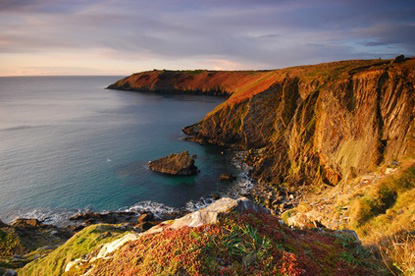 Old Head of Kinsale. Old Head of Kinsale.
Introduction
The province of Munster (Mumhain in Irish) corresponds almost exactly to the ancient Kingdom of Munster, which existed from the 4th to the 12th century. Munster is particularly famous for Irish traditional music and harp players. In sports, Munster excels at rugby and hurling. Most of the early medieval Ogham inscriptions in Old Irish language are found in Munster, especially in County Kerry.
Munster has the largest land area of any Irish province, with 24,675 km² (9,527 sq mi). Its population is only of 1.2 million, slightly more than Dublin's urban area. Munster's largest city is Cork, with 120,000 inhabitants. The Shannon Free Zone, in County Clare, has attracted over 100 multinational companies thanks to its generous corporate tax policy. It is adjacent to Shannon Airport, once the largest airports for commercial flights between Europe and North America, in the aftermath of WWII.
Famous people from Leinster include (chronologically): the scientist and inventor Robert Boyle, the political leader Daniel O'Connell, the submarine designer John Philip Holland, the Irish revolutionary leader Michael Collins, the Nobel Prize physicist Ernest Walton, Irish President Patrick Hillery, and the radio and television broadcaster Terry Wogan.
Attractions
County Clare
| Cliffs of Moher |
|---|

 Stretching for 8 kilometres along the Atlantic Ocean, the Cliffs of Moher rise dramatically to heights of up to 214 metres at their highest point. Formed over 320 million years ago, they are now part of the Burren and Cliffs of Moher UNESCO Global Geopark. The cliffs contain fascinating geological treasures, featuring distinctive rock types including shale, siltstone, and sandstone. As a Special Protection Area for Birds and Wildlife, they host major colonies of nesting sea birds, with an estimated 30,000 seabirds using these cliffs for settlement. Visitors can explore the fully accessible Visitor Centre, which features a self-guided exhibition and virtual reality cliff-face adventure, along with 800m of safe, paved pathways and viewing areas including O'Brien's Tower. The on-site Cliffs View Café offers spectacular views whilst serving traditional Irish food sourced locally from the Burren area. The cliffs have achieved celebrity status in cinema, notably featuring in Harry Potter and the Half-Blood Prince. |
| Burren National Park |
|---|
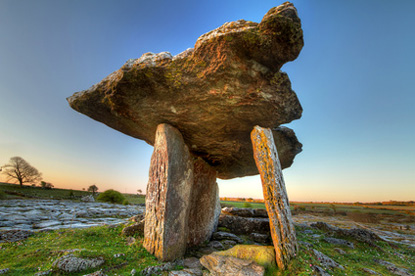
 The Burren National Park spans approximately 1,500 hectares and is home to an astounding 75% of Ireland's plant species, including 23 of the country's 27 native orchid species. The name 'Burren' derives from the Irish word 'Boíreann' meaning 'rocky place', though it's historically known as 'fertile rock', and its limestone foundation was formed from sediments in a tropical sea roughly 350 million years ago. The park hosts about 1,000 feral goats, representing 20% of Ireland's feral goat population, which help maintain the vegetation. Wildlife enthusiasts can spot 30 out of Ireland's 32 butterfly species here. The area features two types of caves - fossil and active - with many fossil caves in the uplands revealing fascinating evidence of prehistoric human use. Visitors can explore the Burren Food Trail, launched in 2013 with over 20 members offering local hospitality and produce, which won the Irish prize in the European Destination of Excellence for Tourism and Local Gastronomy in 2015. |
Other attractions
 Killaloe Killaloe
 Leamanagh Castle
Scattery Island
County Cork
Bantry House & Garden  |
|---|
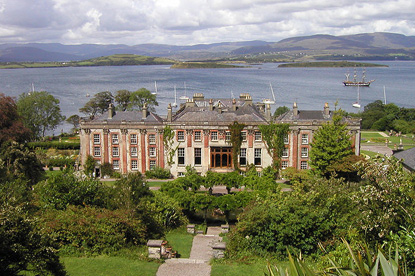
 This elegant Queen Anne-style stately home was originally built around 1710 by the Hutchison family and was significantly expanded during the mid-19th century under Richard White, the 2nd Earl of Bantry. The house features remarkable period details including Italian plasterwork, Venetian glass, and striking Aubusson tapestries that were originally made for Marie Antoinette and acquired during the French Revolution. The gardens are laid out in Italian style across seven terraces, featuring a Parterre with a wisteria circle surrounding a fountain, and the famous Hundred Steps built from local stone amidst azaleas and rhododendron. Four historic guns overlook the bay, including two six-pounders from the Carrion Works in Falkirk (1780), a twelve-pounder from Clyde Iron Works (1796), and a French gun from the Ruelle Foundry (1795) possibly captured during a failed French invasion. Opened to the public in 1946, the estate remains unique as it is still lived in and managed by the White family, offering visitors the chance to explore the formal gardens, enjoy afternoon tea in the Library, and even stay in the East Wing. |
| Blackrock Castle Observatory |
|---|

Originally built in the early 17th century under Queen Elizabeth as a defensive fortification, Blackrock Castle sits on a rocky outcrop overlooking the River Lee. After being devastated by fire in 1827, the castle was rebuilt by architects George and James Pain, who expanded the tower with three additional floors. Today, it houses MTU Blackrock Castle Observatory, featuring a working research observatory with a 16" robotic telescope where researchers actively search for new planets around distant stars. The facility boasts an award-winning interactive astronomy exhibit and offers popular Dome & Dungeon Tours suitable for all ages. Visitors can experience planetarium shows and even send messages to space via the castle's radio telescope, targeting nearby stars with known planets. The Castle Café, situated in the courtyard, serves Mediterranean cuisine using local ingredients37, and the surrounding area features scenic walks along greenways and the harbour front. |
| Blarney Castle & Gardens |
|---|

Built nearly 600 years ago by Irish chieftain Cormac MacCarthy, Blarney Castle is actually the third structure on this site, which originally housed a wooden hunting lodge in the tenth century, later replaced by a stone structure around 1210. The castle features underground passages from the Middle Ages, including a chilling dungeon where prisoners were held. The famous Blarney Stone, a two-foot-long limestone slab at the castle's tower top, is said to grant the gift of eloquence to those who kiss it and has been visited by world statesmen, literary giants, and film stars. The grounds include unique attractions such as the Poison Garden, featuring toxic plants from around the world with detailed information about their toxicity and uses. The mystical Rock Close area features the Wishing Steps, where tradition holds that wishes come true within a year if visitors walk up and down with their eyes closed. Within the castle's roofless structure, visitors can see remnants of the medieval banqueting hall, family room, and the sinister 'murder hole'a pit used to drop rocks or boiling water on invaders. |
| Blarney House |
|---|

Built in 1874, Blarney House is a Scottish Baronial mansion designed by John Lanyon that opens to the public during summer months. It was built for Sir George Conway Colthurst and his wife Louisa to provide a residence away from the tourist-filled Blarney Castle. The house showcases various architectural styles, featuring a neoclassical porch from the Colthurst's Ardrum house, Jacobean strapwork on the first-floor window, and Scots baronial elements with stepped gables and a turret. Situated overlooking Blarney Lake, the house is surrounded by extensive parkland containing rare and unusual trees, including maples, southern beech and giant western red cedars, alongside formal gardens with manicured lawns and rose beds. Visitors can explore unique features such as a fern garden resembling a tropical jungle and the intriguing Poison Garden, which houses dangerous plants like deadly nightshade, wolfsbane and poison ivy. The grounds also include the mystical Rock Close, an ancient druidic settlement featuring yew and oak trees, a dolmen, wishing steps, a witch's kitchen, and a water garden with waterfalls. |
| Cobh |
|---|
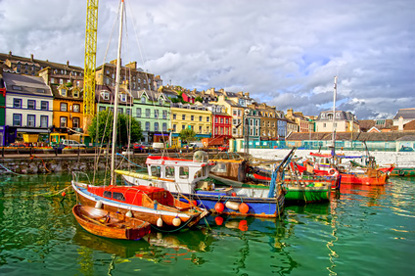
Cobh (pronounced "KOHV") is a seaport town with around 14,400 inhabitants, located on Great Island in Cork Harbour and features Ireland's only dedicated cruise terminal. The town boasts significant maritime history, including the world's first yacht club (established in 1720) and being the departure point for the first steamship to cross the Atlantic in 1838. Most notably, it was the embarkation point for approximately 2.5 million Irish emigrants between 1848 and 1950. Key attractions include the Titanic Experience (commemorating the ship's last port of call), the picturesque 'Deck of Cards' houses on Bandon Hill, and the magnificent St Colman's Cathedral with its 49 bells. Visitors can sample local cuisine at traditional pubs and restaurants, featuring fresh seafood, hearty Irish stews, and locally-sourced ingredients. A unique attraction is Spike Island, which has served as a 6th-century monastery, a defensive fort, and a Victorian prison, earning it the nickname "Ireland's Hell" - though today it's a popular tourist destination accessible by ferry. |
| Cork |
|---|
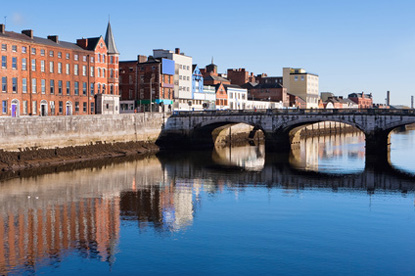
Cork is Ireland's largest county, with its city being the third largest after Belfast and Dublin. Known as the city of steps and steeples, Cork boasts a vibrant cultural scene and has earned a reputation as a gourmet destination. The city's main thoroughfares are built on covered-up river channels, and its Gaelic name 'Corcaigh' means 'marshy place'. The city is home to the world's oldest yacht club, the Royal Cork Yacht Club, established in 1720. The historic English Market, dating from 1788, offers a cornucopia of fresh produce, including local cheeses, seafood, and artisanal foods. Notably, Cork is the birthplace of Boolean algebra, created by George Boole, which forms the foundation of modern computers and information technology. Visitors can explore the 16th-century Blackrock Castle, which now serves as an award-winning science centre and active research observatory. The famous Blarney Castle houses the Blarney Stone, which according to popular myth, bestows the 'gift of gab' upon those who kiss it. |
| Old Midleton Distillery |
|---|

 The Old Midleton Distillery was built in 1825 on the banks of the Dungourney River and produced whiskey until the mid-1970s. The facility houses the world's largest pot still and features a 150-year-old water wheel, original malting houses, corn stores and still houses. Set over 15 acres and operating as a visitor's centre since 1992, the facility welcomes approximately 130,000 guests annually. Visitors can enjoy guided tours through the old distillery and participate in comparative whiskey tastings, comparing Jameson Whiskey with Scotch and American whiskeys to become a 'Qualified Irish Whiskey Taster'. An interesting piece of history involves the famous Paddy Whisky brand, which was originally called the Cork Distilleries Company Old Irish Whiskey but was renamed after their salesman P.J. O'Flaherty (nicknamed Paddy), as merchants would simply ask for 'Paddy Flaherty's Whisky' when placing orders. The tour concludes at the Jameson Bar with a sampling of 'Uisce Beatha' (the Irish word for whiskey, meaning water of life), and the facility includes a restaurant and gift shop stocking some 25 brands of Irish Whiskey. |
Other attractions
Ballycrovane Ogham Stone
County Kerry
| Skellig Michael (Sceilg Mhichíl) ※ |
|---|

Skellig Michael is a rocky island spanning 22 hectares, with its highest point reaching 218 metres above sea level. The island hosts diverse wildlife including gannets, puffins, razorbills and approximately fifty grey seals. Visitors can explore six beehive huts where monks once slept, a church dedicated to St. Michael, a walled garden, and a cemetery with 22 grave slabs. Reaching the monastery requires climbing 618 steep, uneven stepsa challenging but rewarding journey. The island gained recent fame as a filming location for Star Wars: The Force Awakens and The Last Jedi, where it served as the planet Ahch-To, home to the Jedi Temple. Access is only possible by boat from Portmagee, and there are no facilities on the island, including no toilets. Notably, it marks the westernmost sacred site in Europe and concludes an ancient pilgrimage route that stretches through France, Italy, and Greece to Palestine, known as the Apollo/St Michael axis. |
| Killarney National Park |
|---|

Killarney National Park, established in 1932 as Ireland's first national park when the Muckross Estate was donated to the state, now encompasses over 102.89 km² of diverse landscapes including lakes, woodlands and mountain peaks. The park hosts the only red deer herd on mainland Ireland and boasts the most extensive native forest remaining in the country, with high ecological value due to its diverse habitats and rare species. The area has been continuously wooded since the end of the last ice age (10,000 years ago), with human settlement dating back to the Bronze Age when copper mining took place at Ross Island. The McGillycuddy's Reeks, Ireland's highest mountain range rising over 1,000 metres, sweeps down to the famous lakes of Killarney, whilst Muckross House serves as the park's focal point. Notable features include one of only three pure yew woodlands in Europe, located at Reenadinna on the Muckross Peninsula. Visitors can experience authentic rural Irish life from the 1930s and 1940s at the Muckross traditional farms, which span 70 acres and showcase historical farming practices and crafts. |
| Muckross House |
|---|

Built in Tudor style with 65 rooms, Muckross House was designed by Scottish architect William Burns for Henry Arthur Herbert and his wife Mary Balfour. The house, completed in 1843, underwent significant improvements in the 1850s for Queen Victoria's visit, which ultimately contributed to the Herbert family's financial difficulties. After passing through the Guinness family, it was purchased by the Bowers Bourn family of California in 1910, who gave it as a wedding present to their daughter Maud. In 1932, it was presented to the Irish nation, becoming the country's first National Park. Today, visitors can explore the elegantly furnished rooms showcasing the lifestyle of landed gentry, observe traditional craftworkers practising weaving, pottery and bookbinding, and experience the traditional farms, which provide an authentic interpretation of rural life in Kerry in the 1930s and 1940s, featuring traditional buildings and daily farming demonstrations. The on-site Garden Restaurant offers dining with views of the Torc and Mangerton Mountains and the Victorian Walled Garden area, with seating for 170 guests in a modern, self-service setting. |
| Ross Castle |
|---|

Ross Castle is a late medieval tower house built between 1450-1500 by the O'Donoghue family. The four-storey structure features storage areas on the ground floor, domestic rooms on the first floor, bedrooms on the second floor, and a Great Hall on the top floor. The castle was notably one of the last in Ireland to surrender to Cromwell's army, falling only when artillery was brought by boat across the lake. According to legend, O'Donoghue still slumbers beneath the lake's waters and rises every seven years on the first morning of May riding a white horse - those who glimpse him are said to receive lifelong good fortune. Today, visitors can enjoy angling and boat hire from the castle pier, where three of the town's six rowing clubs operate, and the site hosts the world's oldest traditional regatta. The surrounding parkland is home to Irish Red Deer, which have inhabited the area continuously since the end of the last Ice Age (around 10,000 BCE). |
| Blennerville Windmill |
|---|
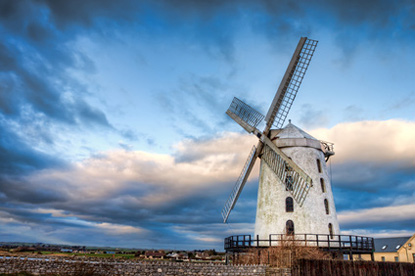
Blennerville Windmill stands as the largest working windmill in Ireland and the only one along the Wild Atlantic Way. Built around 1800 by Sir Rowland Blennerhassett, the windmill's early history includes a tragic incident when Lady Millicent Yielding was fatally struck by one of the massive sails shortly after its opening. Visitors can climb to the top to observe flour-making demonstrations using ancient quern stones, explore the Kerry Model Railway exhibition, and view vintage artefacts. The site holds historical significance as the main emigration port from County Kerry during the Great Famine (1845-1848), and its visitor centre features fascinating displays about the Jeanie Johnson emigrant ship. Nature enthusiasts can use the available telescope to spot various bird species including curlew, heron, turnstone, and pale-bellied brent geese, which feed on eelgrass and green seaweeds in the mudflats and graze in nearby fields. |
| Gallarus Oratory |
|---|
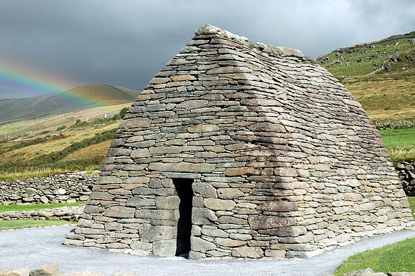
Located at the western tip of the Dingle peninsula, the iconic Gallarus oratory resembles an upturned boat and was constructed entirely from locally sourced stone. Whilst its exact construction date remains uncertain, it likely dates from the 11th/12th centuries CE, and its interior measures just 4.8m long by 3m wide. The structure showcases sophisticated engineering, featuring a masterful corbelling technique where stones were carefully laid at a slight angle to allow water to run off. A fascinating local legend claims that anyone who climbs through its tiny window is guaranteed access to heaven, though this feat is physically impossible as the window measures only 18cm by 12cm. The renowned poet Seamus Heaney immortalised the oratory in verse, describing it as 'a core of old dark walled up with stone'3. Visitors can access the site either through the Visitor Centre, which charges a fee and offers amenities, or via a free public entrance that's open 24/7. |
| Lartigue Monorail |
|---|
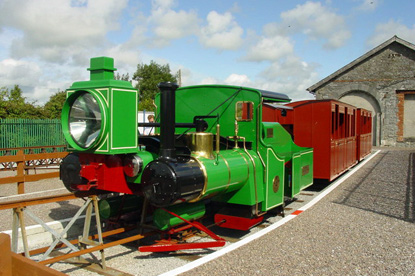
The Lartigue Monorail, located in Listowel, offers visitors the opportunity to experience a unique form of rail travel on what was originally a steam-powered monorail that ran for nine miles between Listowel and the seaside resort of Ballybunion. The system was developed by French engineer Charles Lartigue, who was inspired by watching camels carrying heavy loads in panniers in Algeria, leading him to design a single rail held at waist height on A-shaped trestles with specially-made carriages sitting astride like panniers. The original system had fascinating operational quirks - loads had to be evenly balanced, meaning if a farmer wanted to send a cow to market, he would need to send two calves to balance it on opposite sides of the freight wagon. Today, visitors can explore the Heritage Railway museum and ride a full-scale diesel-powered replica of the original monorail, which includes three platforms, two turntables, three switches, and an engine shed housing an exact reproduction of the original 0-3-0 steam engine on the outside. |
| Derrynane House |
|---|
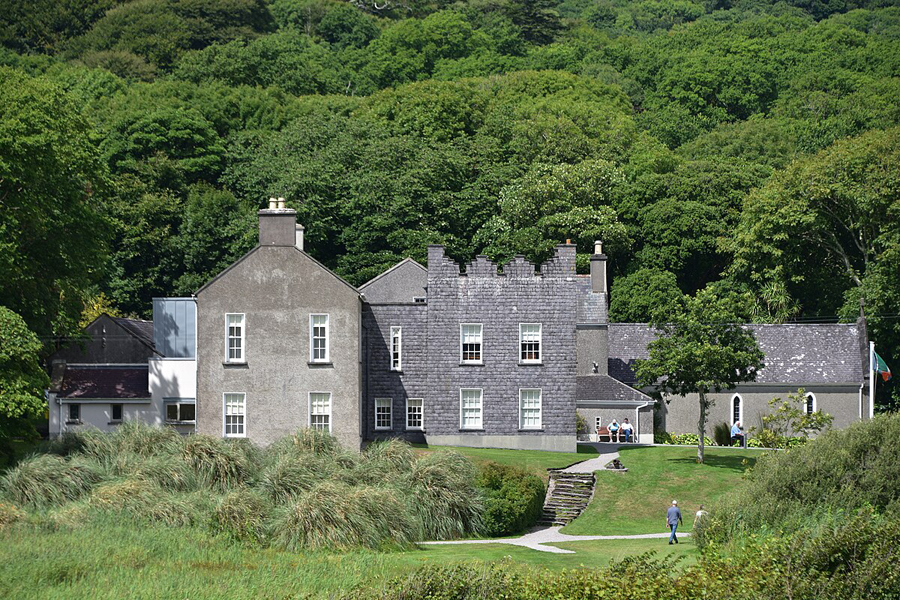
Located at the southern tip of the Iveragh Peninsula, Derrynane House was the ancestral home of Daniel O'Connell, known as 'The Liberator', who was a lawyer, politician and statesman. O'Connell built the two-storey south wing facing the sea and the library wing in 1825, with a chapel added in 1844. The estate encompasses over 120 hectares of land rich in natural heritage, featuring a Rock Garden, Fernery and Arboretum with rare and exotic plants from around the world. The site has significant archaeological importance, with a Bronze Age trumpet known as the Derrynane Horn discovered nearby, along with three ringforts, two souterrains and an ogham stone. Inside the house, visitors can view unique relics of O'Connell's life, including a triumphal chariot presented to him by Dublin citizens in 1844 and the bed in which he passed away. A tea house serving fresh-baked cakes opens at 11 am. |
County Limerick
| Adare Village |
|---|

The thatched village of Adare has been dubbed Ireland's prettiest village. The iconic thatched cottages that line Adare's main street were built in the 1820s by the Dunraven family for estate workers and now house charming shops, cafés and boutiques. Desmond Castle, originally a Norman ring-fort built in 1202, served as a key stronghold and belonged to the Earls of Kildare for nearly 300 years before passing to the Earls of Desmond, and today offers guided tours. The River Maigue flows alongside the village, offering excellent fishing spots for salmon, brown trout and European eel, whilst otters can often be spotted playing in the current. Local folklore enthusiasts will be intrigued by Knockfierna, known as the Hill of the Fairies, which is said to be a gathering place for the mystical Aos Sí1. Every Saturday, the Village Hall hosts a bustling country market featuring freshly baked bread, local honey, handmade crafts, and homemade pastries. Adare is considered one of Ireland's premier dining destinations, with its restaurants and hotels regularly winning prestigious national and international food awards. The village boasts notable culinary credentials, with 1826 Adare restaurant's Chef Wade Murphy, who has worked in prestigious establishments from London to Egypt, being awarded Best Chef in Limerick. |
| Limerick |
|---|

 Founded by Vikings in 922 CE, Limerick sits along the River Shannon and is dominated by the impressive King John's Castle. This Norman fortress, representing the most western castle in Europe, dates back to 1200 and remains one of the best-preserved of its kind. The city boasts a thriving food scene, centred around the historic Milk Market, whilst the Hunt Museum houses an impressive collection including works by Leonardo da Vinci and Jean Renoir. Limerick considers itself Ireland's rugby capital and is notably associated with the short, humorous verse form known as the limerick. The city has produced notable cultural figures including The Cranberries and Pulitzer Prize-winning author Frank McCourt. Interestingly, the world-famous Irish Coffee was first created in the 1940s in Limerick's port village of Foynes. The city earned recognition as Ireland's first-ever City of Culture in 2014 and continues to innovate and create, partly due to its active universities and energetic student population. |
| Adare Manor |
|---|
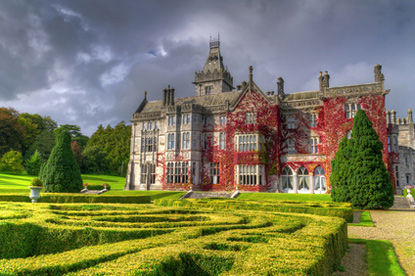
Adare Manor is a fascinating 'Calendar House' featuring 365 leaded windows, 52 ornate chimneys, 7 stone pillars and 4 towers, symbolising the days, weeks and seasons of the year. Built in Gothic Revival style reminiscent of a chateau, the building showcases intricate gargoyles, heraldry, and decorative carvings, including medieval bestiary creatures. Its grand interior includes a remarkable Gallery spanning 132 feet in length and 26½ feet in height, inspired by Versailles' Hall of Mirrors and adorned with 17th Century Flemish choir stalls. The estate features meticulously manicured gardens, a championship golf course and walking trails. |
| Foynes Flying Boat Museum |
|---|
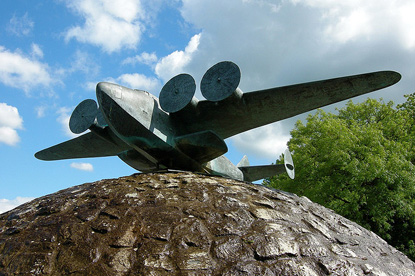
The Foynes Flying Boat Museum, housed in the original terminal building, commemorates the period from 1939 to 1945 when the town became the centre of the aviation world, serving as the water runway for the world's first transatlantic passenger flights from New York. The massive Boeing B314 'Yankee Clipper', designed to carry 35 passengers in luxury, transported notable figures including Ernest Hemingway and John F. Kennedy. The museum is also significant as the birthplace of Irish Coffee, which was first created by Chef Joe Sheridan in 1942 to warm up some damp and miserable passengers. Visitors can explore interactive exhibits, including a full-size replica of a Boeing 314 Clipper and flight simulators. The museum features the Maureen O'Hara Exhibition, displaying the Hollywood actress's personal belongings, including her Academy Award and movie outfits. |
| Adare Castle |
|---|

 Desmond Castle sits on the banks of the River Maigue and is a fine example of a Norman ring castle with a large central keep inside two concentric baileys or wards. Whilst its original builder remains unknown, with the O'Donovans possibly creating the first ring fort in the early 13th century, the earliest description from 1329-1331 mentions a hall, chapel with stone walls, and a chamber. The inner ward features a giant yew tree, which is particularly interesting as yew wood was historically used to make crossbows. The Gate Tower has undergone restoration work to make its portcullis functional again, making it one of only two castles in Ireland with a working portcullis, the other being Cahir Castle. After a rebellion in 1536, the castle was granted to the Fitzgerald dynasty, Earls of Desmond, who gave it its present name, though it fell to the English in 1578 after an eleven-day siege and was later dismantled by orders of Oliver Cromwell in 1657. Today, visitors can explore the ruins and foundations of the stables, hall, ovens, and the Water Tower in the outer ward. |
| Askeaton Castle & Friary |
|---|
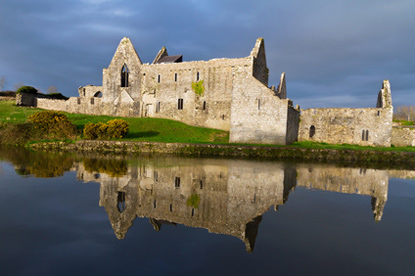
Built in 1199, Askeaton Castle sits dramatically on a rocky island in the River Deel and features one of Ireland's finest medieval banqueting halls, along with an exquisite medieval fireplace and impressive windows, though partially ruined. During the 14th and 15th centuries, the castle was a hub of international trade and diplomacy, with its Great Hall hosting palatine courts and entertaining merchants from Florence, Bruges, and Paris. The nearby Franciscan friary is equally impressive, with surviving features including the church, north transept, sacristy, and a beautiful 15th-century cloister arcade adorned with a devotional carving of St Francis showing the stigmata. An intriguing historical footnote is the early 18th-century building near the castle that served as a Hellfire Club, rumoured to be a den where wealthy gentlemen engaged in drink, mock rituals and other questionable activities. Local legend tells of Gerald FitzGerald, the 3rd Earl of Desmond, who supposedly sleeps in a cave, waiting to return on his silver-shod steed when Ireland needs him most. |
County Tipperary
| Cahir Castle |
|---|

Cahir Castle stands as one of Ireland's largest and best-preserved castles, proudly situated on a rocky island in the River Suir. The castle's strategic position, with its only access via a causeway, and its massive defensive walls built atop limestone outcrop, made it nearly impregnable by preventing undermining attempts. It features a rare fully functioning portcullis and exhibits Norman architectural style with a barbican, inner and outer wards, a hall, and multiple towers. The castle's defences were finally overcome in 1599 when the Earl of Essex used heavy artillery against it for the first time, and a reminder of this siege remains visible today as a culverin ball is still embedded in the Northeast Tower wall. Modern visitors might recognise the castle from its appearances in productions like 'Excalibur' and 'The Tudors'. The surrounding grounds feature a wooden bridge leading to the 'inch field', which showcases stunning hand-crafted wooden historical sculptures. |
| Rock of Cashel |
|---|

Set on a dramatic outcrop of limestone in the Golden Vale, the Rock of Cashel possesses the most impressive cluster of medieval buildings in Ireland. It served as the traditional seat of the kings of Munster as early as the 4th century, with Brian Boru being crowned there as king in 977 and making it his capital. The site features a remarkable collection of structures including a round tower, a high cross, a Romanesque chapel, a Gothic cathedral, an abbey, the Hall of the Vicars Choral and a fifteenth-century Tower House. Notably, Cormac's Chapel contains the only surviving Romanesque frescoes in Ireland. According to local legends, the Rock originated from the Devil's Bit mountain 20 miles north of Cashel when St Patrick banished Satan from a cave, resulting in the Rock's landing in its current location. Admission costs around 8 for adults, and visitors should note there are no toilets on the site itself, only in the nearby car park. |
| Cahir's Swiss Cottage |
|---|

The Swiss Cottage is an early 19th-century ornamental cottage (cottage orné) located near the town of Cahir, built around 1810. Designed by renowned English Regency architect John Nash, it was built for Lord and Lady Cahir (Richard Butler, 1st Earl of Glengall, and his wife Emily Jeffereys from Blarney Castle) as a fancy retreat for entertaining guests. The two-storey cottage features a rustic design inspired by nature, with a curved thatched roof and external woodwork resembling tree branches, whilst its interior showcases some of the first commercially produced Parisian wallpapers from the Dufour factory. Interestingly, whilst no one ever spent the night there, it served as a venue for summer picnics and parties, with some suggesting it may have been a secret love nest for the Earl - complete with a discreet tunnel entrance. Visitors can reach the cottage via a scenic 2-kilometre woodland walk from Cahir Castle along the river, and admission is by guided tour only, though photography is not permitted inside the building. |
Other attractions
Nenagh
Ormond Castle (ruins)
County Waterford
| Lismore Castle & Garden |
|---|

Originally built in 1185 by Prince John, Lismore Castle served as a Bishop's Palace until 1589, when it was acquired by Sir Walter Raleigh and later sold to Richard Boyle. Notably, Robert Boyle, the father of modern chemistry, was born here in 1626. The castle's gardens, which are the oldest continually cultivated in Ireland, cover 10 acres and are divided into three distinct parts. The Upper Garden, dating from 1605, features fruit and vegetable production, herbaceous borders and wildflower meadows. In the Lower Garden, visitors can stroll along the historic Yew Tree Walk, where Edmund Spenser reportedly wrote 'The Faerie Queen' around 1590. The gardens feature interesting installations including two sections of the Berlin Wall (installed in 2015) and contemporary sculptures. While the castle, once home to Fred Astaire's sister Adele (1932-1944), remains closed to the public, the gardens are open from March to October. Art enthusiasts can visit Lismore Castle Arts, established in 2005, which hosts major international exhibitions in its main gallery space and presents diverse contemporary art programmes in St Carthage Hall. |
| Ballynatray House |
|---|
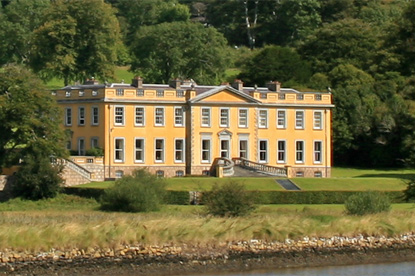
Ballynatray House is a magnificent 18th-century Georgian mansion set in 850 acres of beautiful countryside, with breathtaking views over the Blackwater River. Built between 1795-97 for Grice Smyth by Cork architect Alexander Deane, the estate offers activities including clay shooting, tennis, croquet, and walking trails, whilst the main house features an indoor heated pool, sauna, Jacuzzi, massage room, snooker room and gym. Film enthusiasts might recognise the estate from Stanley Kubrick's "Barry Lyndon", which filmed several scenes here, including the famous duel scene at Templemichael Quay. Within the grounds lies a ruined medieval abbey, featuring a Classical urn erected in honour of Raymond-le-Gros, Strongbow's companion, and a statue of St. Molanfide, the abbey's founder. The estate was recently acquired by vacuum cleaner magnate James Dyson for 30 million and is undergoing significant restoration work, including the addition of a helicopter landing area. |
| Curraghmore House and Gardens |
|---|

Curraghmore House is Ireland's largest private demesne, spanning 2,500 acres, and was once part of a vast 39,000-acre estate. Home to the Marquis of Waterford since 1170, the estate was established by the de la Poers who arrived from Normandy via Wales. The architecture uniquely blends 12th and 18th-century styles with French influences, featuring a Le Poer family keep from 1176 that has been incorporated into an 18th-century house, now encased in a spectacular Victorian mansion with flanking Georgian ranges. The house showcases artworks by masters including Rubens, Reynolds and Gainsborough, and houses a special treasure: a pearl necklace once owned by Mary Queen of Scots, given to Mary Hamilton the night before the Queen's execution. Notable features include one of Ireland's tallest trees, a Sitka spruce planted in the 1830s, which overlooks King John's Bridge, built in 1205 and one of Ireland's oldest bridges. The gardens feature an ancient oak woodland, arboretum, and a unique shell grotto built and decorated by Catherine Countess of Tyrone in 1754. |
Other attractions
Dromana House & Gardens
Ardmore Round Tower and Cathedral (ruins)
Ballysaggartmore Towers
Waterford
|


 England Guide
 Scotland Guide
 Wales Guide


 Stretching for 8 kilometres along the Atlantic Ocean, the Cliffs of Moher rise dramatically to heights of up to 214 metres at their highest point. Formed over 320 million years ago, they are now part of the Burren and Cliffs of Moher UNESCO Global Geopark. The cliffs contain fascinating geological treasures, featuring distinctive rock types including shale, siltstone, and sandstone. As a Special Protection Area for Birds and Wildlife, they host major colonies of nesting sea birds, with an estimated 30,000 seabirds using these cliffs for settlement. Visitors can explore the fully accessible Visitor Centre, which features a self-guided exhibition and virtual reality cliff-face adventure, along with 800m of safe, paved pathways and viewing areas including O'Brien's Tower. The on-site Cliffs View Café offers spectacular views whilst serving traditional Irish food sourced locally from the Burren area. The cliffs have achieved celebrity status in cinema, notably featuring in Harry Potter and the Half-Blood Prince.
 The Burren National Park spans approximately 1,500 hectares and is home to an astounding 75% of Ireland's plant species, including 23 of the country's 27 native orchid species. The name 'Burren' derives from the Irish word 'Boíreann' meaning 'rocky place', though it's historically known as 'fertile rock', and its limestone foundation was formed from sediments in a tropical sea roughly 350 million years ago. The park hosts about 1,000 feral goats, representing 20% of Ireland's feral goat population, which help maintain the vegetation. Wildlife enthusiasts can spot 30 out of Ireland's 32 butterfly species here. The area features two types of caves - fossil and active - with many fossil caves in the uplands revealing fascinating evidence of prehistoric human use. Visitors can explore the Burren Food Trail, launched in 2013 with over 20 members offering local hospitality and produce, which won the Irish prize in the European Destination of Excellence for Tourism and Local Gastronomy in 2015.
 Killaloe
 Leamanagh Castle

 This elegant Queen Anne-style stately home was originally built around 1710 by the Hutchison family and was significantly expanded during the mid-19th century under Richard White, the 2nd Earl of Bantry. The house features remarkable period details including Italian plasterwork, Venetian glass, and striking Aubusson tapestries that were originally made for Marie Antoinette and acquired during the French Revolution. The gardens are laid out in Italian style across seven terraces, featuring a Parterre with a wisteria circle surrounding a fountain, and the famous Hundred Steps built from local stone amidst azaleas and rhododendron. Four historic guns overlook the bay, including two six-pounders from the Carrion Works in Falkirk (1780), a twelve-pounder from Clyde Iron Works (1796), and a French gun from the Ruelle Foundry (1795) possibly captured during a failed French invasion. Opened to the public in 1946, the estate remains unique as it is still lived in and managed by the White family, offering visitors the chance to explore the formal gardens, enjoy afternoon tea in the Library, and even stay in the East Wing.


 The Old Midleton Distillery was built in 1825 on the banks of the Dungourney River and produced whiskey until the mid-1970s. The facility houses the world's largest pot still and features a 150-year-old water wheel, original malting houses, corn stores and still houses. Set over 15 acres and operating as a visitor's centre since 1992, the facility welcomes approximately 130,000 guests annually. Visitors can enjoy guided tours through the old distillery and participate in comparative whiskey tastings, comparing Jameson Whiskey with Scotch and American whiskeys to become a 'Qualified Irish Whiskey Taster'. An interesting piece of history involves the famous Paddy Whisky brand, which was originally called the Cork Distilleries Company Old Irish Whiskey but was renamed after their salesman P.J. O'Flaherty (nicknamed Paddy), as merchants would simply ask for 'Paddy Flaherty's Whisky' when placing orders. The tour concludes at the Jameson Bar with a sampling of 'Uisce Beatha' (the Irish word for whiskey, meaning water of life), and the facility includes a restaurant and gift shop stocking some 25 brands of Irish Whiskey.


 Founded by Vikings in 922 CE, Limerick sits along the River Shannon and is dominated by the impressive King John's Castle. This Norman fortress, representing the most western castle in Europe, dates back to 1200 and remains one of the best-preserved of its kind. The city boasts a thriving food scene, centred around the historic Milk Market, whilst the Hunt Museum houses an impressive collection including works by Leonardo da Vinci and Jean Renoir. Limerick considers itself Ireland's rugby capital and is notably associated with the short, humorous verse form known as the limerick. The city has produced notable cultural figures including The Cranberries and Pulitzer Prize-winning author Frank McCourt. Interestingly, the world-famous Irish Coffee was first created in the 1940s in Limerick's port village of Foynes. The city earned recognition as Ireland's first-ever City of Culture in 2014 and continues to innovate and create, partly due to its active universities and energetic student population.

 Desmond Castle sits on the banks of the River Maigue and is a fine example of a Norman ring castle with a large central keep inside two concentric baileys or wards. Whilst its original builder remains unknown, with the O'Donovans possibly creating the first ring fort in the early 13th century, the earliest description from 1329-1331 mentions a hall, chapel with stone walls, and a chamber. The inner ward features a giant yew tree, which is particularly interesting as yew wood was historically used to make crossbows. The Gate Tower has undergone restoration work to make its portcullis functional again, making it one of only two castles in Ireland with a working portcullis, the other being Cahir Castle. After a rebellion in 1536, the castle was granted to the Fitzgerald dynasty, Earls of Desmond, who gave it its present name, though it fell to the English in 1578 after an eleven-day siege and was later dismantled by orders of Oliver Cromwell in 1657. Today, visitors can explore the ruins and foundations of the stables, hall, ovens, and the Water Tower in the outer ward.


 : Must-see in the country
 : Top cities in Europe