


 England Guide
 Scotland Guide
 Wales Guide
| Contents |
|---|

Introduction
Cork, Ireland's second-largest city, is a vibrant destination nestled on the southern coast. Founded in the 6th century as a monastic settlement and later expanded by Viking invaders, Cork boasts a rich history spanning over 1,400 years. The city centre is uniquely situated on an island between two channels of the River Lee, connected by numerous bridges that give Cork a distinctive continental feel. With a population of 224,004 as of 2022, Cork offers visitors a blend of historical landmarks, cultural attractions, and natural beauty. From the iconic Blarney Castle and its famous Stone of Eloquence to the bustling English Market dating back to 1788, Cork provides a diverse range of experiences. The city is renowned for its culinary scene, earning a reputation as a gourmet destination, and serves as an excellent base for exploring both urban attractions and the surrounding countryside.
Interesting Facts about Cork
- Cork is known as 'The Rebel County' due to its history of independence and resistance.
- The city centre of Cork is built on an island between two channels of the River Lee.
- Cork Harbour is considered the second-largest natural harbour in the world after Sydney Harbour.
- The Royal Cork Yacht Club, established in 1720, is the oldest yacht club in the world.
- Cork's main thoroughfares are built on covered-up river channels, with the Gaelic word for Cork ('Corcaigh') meaning 'marshy place'.
- Blarney Castle, home to the famous Blarney Stone, is located in County Cork.
- Cork was the site of the first Ford Motor Company factory built outside of America.
- The port of Cobh, formerly known as Queenstown, was the Titanic's last port of call in 1912.
- County Cork is the largest county in Ireland, with Cork City being the third-largest city on the island.
- The first potato in Ireland was likely planted near Youghal, Cork, around 1588.
- George Boole, the creator of Boolean algebra which forms the foundation of modern computing, was from Cork.
- In the 18th century, Cork had the largest butter market in the world.
- The world's first ship to cross the Atlantic entirely under steam sailed from Cork in 1838.
- Cork city was founded in the 6th century as a monastic settlement and later expanded by Viking invaders.
- Corkonians sometimes refer to their city as 'the real capital' of Ireland.

History
Cork boasts a rich history dating back to the 6th century when Saint Finbarr founded a monastic settlement. The city's name, derived from the Gaelic word "Corcaigh" meaning marshy place, reflects its origins on the wetlands of the River Lee. Cork's development took a significant turn in the early 10th century when Viking settlers established a trading port, laying the foundation for the city's future as an important maritime centre.
The city's strategic importance was recognised by the Anglo-Normans, and in 1185, Prince John granted Cork its first charter. Throughout the medieval period, Cork flourished as a walled city, with some remnants of its ancient defences still visible today. The 17th century marked a tumultuous time for Cork, as it played a crucial role in various conflicts, including the Irish Confederate Wars and the Williamite War. Despite these challenges, Cork continued to grow as a vital port and centre of commerce.
Cork's rebellious spirit earned it the moniker "the Rebel City", a testament to its strong sense of independence and pride in its role in Irish history. The 18th and 19th centuries saw Cork expand beyond its medieval boundaries, with the development of elegant Georgian architecture and the growth of industries such as brewing and shipbuilding. Today, visitors to Cork can explore its fascinating past through its well-preserved historic sites, museums, and the vibrant culture that has evolved from centuries of rich history.
Main Attractions
Blackrock Castle Observatory
Located on the banks of the River Lee, Blackrock Castle is a 16th-century fortification that now serves as an interactive science centre. The castle's history dates back to 1582 when it was built to protect Cork from pirates and other invaders.
Today, visitors can explore a variety of exhibits, including:
- "Ireland in Space": An interactive display showcasing Ireland's contributions to space exploration
- "The Comet Chaser": A virtual space mission experience
- "Journeys of Exploration": An exhibit on cosmic and earth-bound journeys
The castle also features a working research observatory where astronomers conduct studies on cosmic phenomena. Guided tours are available, offering insights into both the castle's history and current scientific endeavours.
The panoramic views of Cork Harbour from the castle tower are particularly noteworthy. On clear days, visitors can see as far as Cobh and Monkstown. The surrounding area offers scenic walking routes along the river, perfect for a post-visit stroll.

St. Anne's Church and Shandon Bells
Built in 1722, St. Anne's Church is one of Cork's most recognisable landmarks, known for its distinctive red sandstone and white limestone walls.
The church's bell tower, housing the famous Shandon Bells, offers visitors a unique experience:
- Climb 132 steps to reach the top of the tower
- Ring the bells yourself using a numeric system to play tunes
- Enjoy stunning 360-degree views of Cork city from the viewing platform
The church clock, affectionately known as the "Four-Faced Liar," earned its nickname due to the four faces occasionally showing slightly different times. This quirk is attributed to the effects of wind on the clock's large hands.
Inside the church, visitors can admire the original 18th-century baroque-style organ and various historical artefacts.
Elizabeth Fort
This 17th-century star-shaped fort, located on Barrack Street, has played various roles throughout Cork's history. Built in 1601 during the reign of Elizabeth I, it has served as a military barracks, a women's prison, and a police station.
Visitors can:
- Walk along the fort's walls for panoramic views of Cork city
- Explore the internal courtyard and remaining buildings
- Learn about the fort's history through informative plaques and occasional guided tours
The fort's design, with its distinctive star shape, is an excellent example of 17th-century military architecture. It was built to withstand cannon fire and provide a strong defensive position overlooking the city.
During the Great Famine, the fort was used as a food depot. Later, it served as a convict depot for prisoners awaiting transportation to Australia.
The fort hosts occasional events, including markets and outdoor cinema screenings during summer months.
Around Cork
Cobh
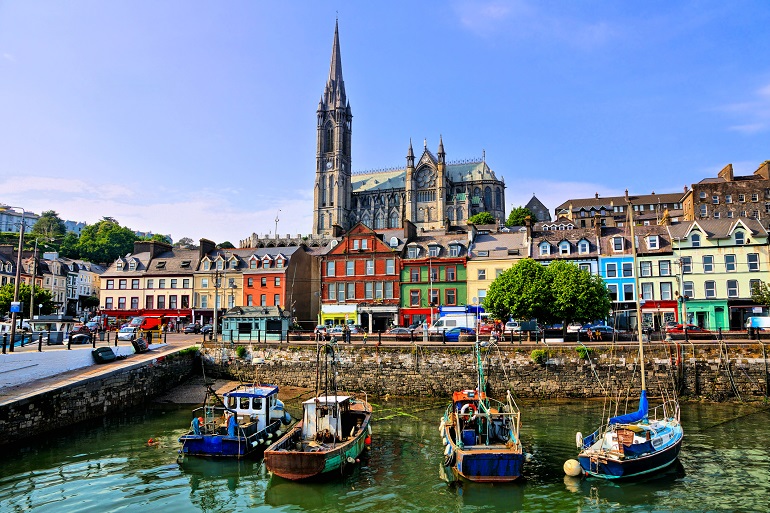
Located on the southern side of Great Island just outside Cork, Cobh is a picturesque seaport town renowned for its vibrant character and rich history. This charming destination is a must-visit for anyone exploring the Cork area, offering a blend of historical landmarks, cultural experiences, and scenic beauty.
Key Attractions
- St. Colman's Cathedral: This magnificent neo-Gothic cathedral, completed in 1911, is a striking landmark with intricate architecture and stunning stained glass windows. Its 100-metre spire and 42-bell carillon make it a standout feature of the town.
- The Deck of Cards: A colourful row of houses on West View Street, aptly named for its resemblance to a deck of cards. This iconic street is one of Ireland's most photographed spots.
- Titanic Experience Cobh: Situated in the original White Star building, this museum offers an immersive experience, retelling the story of the Titanic's final port of call and its tragic fate.
- Cobh Heritage Centre: This centre provides a deep dive into Cobh's immigration history, including multimedia exhibits on the Great Famine and the transportation of convicts to Australia.
- Annie Moore Statue: A tribute to the first emigrant processed at Ellis Island, symbolising the journey of countless Irish emigrants.
Blarney Castle and Stone
Located 8km northwest of Cork city, Blarney Castle is one of Ireland's most famous historical landmarks. Built nearly 600 years ago by Cormac MacCarthy, one of Ireland's greatest chieftains, it has been attracting visitors for centuries.
The castle's main attraction is the legendary Blarney Stone. According to tradition, kissing the stone endows the kisser with the gift of eloquence. To kiss the stone, visitors must:
- Climb to the castle's top
- Lean backwards over a parapet's edge (while held by an attendant)
- Kiss the stone upside down
Beyond the famous stone, the castle offers much to explore:
- The battlements provide panoramic views of the castle grounds
- The dungeons and caves beneath the castle can be toured
- Extensive gardens, including:
- The Poison Garden, featuring various toxic plants
- The Fern Garden, with its prehistoric atmosphere
- The Arboretum, home to many Irish tree species
The Rock Close, a mystical garden said to be the site of ancient druidic settlements, features various rock formations and structures of supposed mythological importance.
Spike Island
Often referred to as "Ireland's Alcatraz," Spike Island has a rich and varied history dating back to a 6th-century monastic settlement. Located in Cork Harbour, it's accessible by ferry from Cobh.
The island's history includes:
- Use as a 24-acre star-shaped military fortress
- Service as a prison during multiple periods, including the 1850s
- Function as a coastal defence during World War II
Today, visitors can explore:
- The 200-year-old Fort Mitchel
- Former prison cells and military quarters
- An artillery gun park
- Various museums and exhibits detailing the island's history
Guided tours provide in-depth information about the island's past, including stories of famous prisoners and military engagements. The "After Dark" tour is particularly popular, offering a more eerie experience of the island's history.
The island also offers stunning views of Cork Harbour, one of the largest natural harbours in the world.
Kindred Spirits Sculpture
Located in Bailick Park in Midleton, the Kindred Spirits sculpture is a poignant memorial that commemorates a remarkable act of generosity during one of Ireland's darkest periods.
The sculpture, created by Alex Pentek, consists of nine 20-foot stainless steel feathers arranged in a circle, forming the shape of an empty bowl. It symbolises the donation of $170 (a significant sum at the time) made by the Choctaw Nation to Ireland during the Great Famine in 1847.
This act of kindness was particularly notable because:
- The Choctaw people had themselves recently endured great hardship during their forced relocation, known as the "Trail of Tears"
- Despite their own struggles, they empathised with the suffering of the Irish people
The sculpture serves as a reminder of:
- The universal nature of human compassion
- The enduring bond between the Irish and Choctaw peoples
- The importance of remembering historical acts of kindness
The park around the sculpture offers a peaceful setting for reflection, with views of the Owenacurra River.
Knocknakilla Stone Circle
Situated in a remote location between Macroom and Millstreet, the Knocknakilla Stone Circle is a fascinating example of prehistoric Irish archaeology.
Key features of the site include:
- A stone circle consisting of five stones (originally seven)
- Two portal stones standing at 2m high
- A 3m-high standing stone (now fallen) to the south-west
- Two fallen standing stones to the north-east
The stone circle is believed to date back to the Bronze Age, around 1500 BCE. It likely served several purposes:
- As a ceremonial site for religious rituals
- As an astronomical calendar to track seasons for agricultural purposes
- As a burial site (though no excavations have been conducted to confirm this)
The remote location of Knocknakilla adds to its mystical atmosphere. Visitors often report a sense of connection with ancient Ireland when visiting the site.
Nearby attractions include:
- The Gougane Barra Forest Park
- The Millstreet Country Park
- Several other stone circles and megalithic monuments in the area
When visiting, it's important to respect the site's historical significance and fragility. Visitors should not climb on or disturb the stones in any way.
Top Museums
Historical Museums
Cork Public Museum
Nestled in the verdant surroundings of Fitzgerald's Park, the Cork Public Museum stands as a testament to the rich tapestry of Cork's history and archaeology. This venerable institution, housed in a charming Georgian building, offers visitors a comprehensive journey through time, from the Bronze Age to the present day.
The museum's collection is a treasure trove of artefacts that bring Cork's past to life. Among its most prized possessions are Ireland's oldest pick and shovel, unearthed in a Bronze Age copper mine. These ancient tools offer a tangible link to the region's earliest inhabitants and their primitive mining techniques.
As visitors wander through the exhibits, they'll encounter a diverse array of displays that chronicle Cork's evolution. The maritime section is particularly noteworthy, showcasing the city's long-standing relationship with the sea. From models of historic ships to navigational instruments, this exhibit highlights Cork's importance as a major port.
The museum also pays homage to Cork's revolutionary heroes, with exhibits dedicated to the men and women who played pivotal roles in Ireland's struggle for independence. Personal effects, letters, and photographs offer intimate glimpses into the lives of these local legends.
For those interested in social history, the museum's recreations of period rooms provide a vivid sense of how Corkonians lived in bygone eras. From Victorian parlours to mid-20th century kitchens, these displays offer a fascinating window into the everyday lives of past generations.
Cork Butter Museum
In the historic Shandon quarter, the Cork Butter Museum stands as a unique tribute to one of Ireland's most successful agricultural exports. This specialised museum offers visitors an in-depth look at the history of butter-making in Ireland, from its humble beginnings to its rise as a global commodity.
The museum's exhibits trace the evolution of butter production, beginning with the traditional craft of home butter-making. Visitors can see the simple tools used by farm families to churn butter, learning about the skill and labour involved in this essential household task.
A highlight of the museum is its exploration of the Cork Butter Exchange, an institution that played a crucial role in establishing Cork as the centre of Ireland's butter trade in the 19th century. The Exchange set standards for quality and facilitated the export of Irish butter to markets around the world. Through displays of historic documents, price lists, and butter firkins (wooden barrels used for shipping), visitors gain an appreciation for the scale and sophistication of this early international trade.
The museum also delves into the scientific aspects of butter-making, explaining the chemistry behind the process and how advances in technology transformed the industry. Exhibits showcase the development of modern creameries and the rise of brands like Kerrygold, which have made Irish butter famous worldwide.
For those interested in culinary history, the museum offers insights into the role of butter in Irish cuisine and culture. From its use in traditional dishes to its symbolic importance in folk customs, butter's significance extends far beyond mere nutrition.
Cobh Heritage Centre
Located in the picturesque harbour town of Cobh (formerly known as Queenstown), the Cobh Heritage Centre offers a poignant and immersive exploration of Irish emigration history. Housed in the restored Victorian railway station, the centre's exhibits bring to life the experiences of the millions of Irish people who left their homeland in search of better opportunities abroad.
The centre's main exhibition, "Queenstown Story," provides a comprehensive look at Irish emigration from the 1600s to the 1950s. Through a combination of audio-visual displays, life-sized reconstructions, and artefacts, visitors can gain a deeper understanding of the factors that drove so many to leave Ireland, including poverty, famine, and political unrest.
A significant portion of the museum is dedicated to Cobh's connection to the RMS Titanic. As the last port of call for the ill-fated ship, Cobh played a unique role in the Titanic's story. The museum houses a scale model of the ship and offers detailed accounts of the 123 passengers who boarded at Cobh, bringing a local perspective to this global tragedy.
The centre also explores another maritime disaster with strong ties to Cobh: the sinking of the RMS Lusitania. Exhibits detail the events of May 7, 1915, when the ship was torpedoed off the coast of Cork, and Cobh became the centre of rescue and recovery efforts.
For genealogy enthusiasts, the centre offers resources for tracing Irish ancestors who emigrated through Cobh. This service provides a personal connection to the broader narratives of emigration explored in the museum.
Nano Nagle Place
Situated in the heart of Cork City, Nano Nagle Place is more than just a museum; it's a multi-faceted heritage experience that celebrates the life and legacy of Nano Nagle, a pioneering 18th-century educator and social reformer.
The museum portion of the complex offers a vivid depiction of life in 18th-century Cork. Through carefully curated exhibits and immersive displays, visitors can gain a sense of the stark social inequalities that existed in the city during Nano Nagle's time. The contrast between the opulent lifestyles of the wealthy merchants and the dire poverty of the working classes is brought into sharp relief.
Central to the museum's narrative is the story of Nano Nagle herself. Born into a wealthy family, Nano devoted her life to educating and caring for Cork's poor, despite the Penal Laws that prohibited Catholic education. The museum traces her journey from privileged young woman to tireless social reformer, highlighting her establishment of schools for poor children and her founding of the Presentation Sisters religious order.
Visitors can explore the beautifully restored 18th-century convent buildings that Nano had constructed, including the chapel where she prayed and the school rooms where she taught. These spaces offer a tangible connection to Nano's work and the early days of her congregation.
The site also features tranquil gardens, designed both for contemplation and to showcase sustainable urban gardening practices. These gardens reflect Nano's ethos of care for both people and the environment.
Cork City Gaol
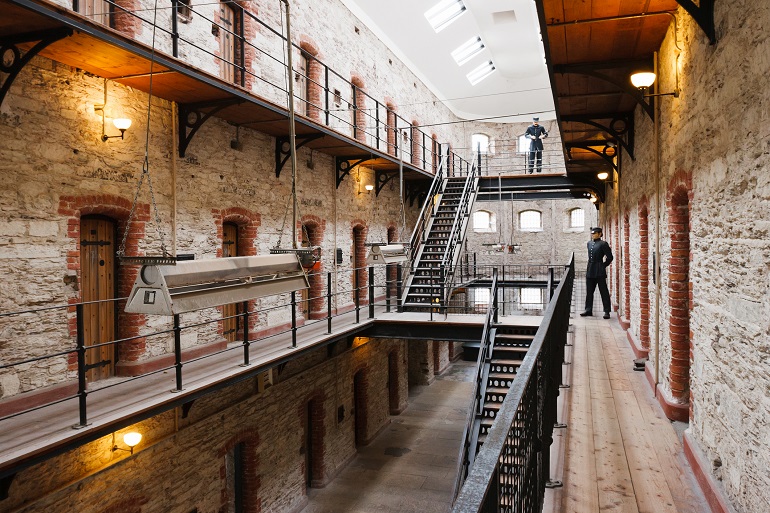
Perched on a hilltop overlooking the city, Cork City Gaol is a formidable 19th-century prison that now serves as a atmospheric museum. This imposing castle-like building offers visitors a glimpse into the harsh realities of penal life in 19th and early 20th-century Ireland.
As visitors step through the gates, they are transported back in time to an era of strict discipline and spartan conditions. The museum has meticulously restored cells and corridors, complete with life-like wax figures that depict prisoners and guards, creating an eerie sense of the gaol's former occupants.
The self-guided tour takes visitors through the various aspects of prison life, from the arrival of new inmates to the daily routines and punishments. Audio guides, available in multiple languages, provide narration from the perspective of inmates and warders, adding depth to the experience.
One of the most compelling aspects of the museum is its focus on the social context of crime and punishment in 19th-century Ireland. Exhibits explore the socio-economic conditions that led many to resort to crime, particularly during times of famine and economic hardship. The stories of individual prisoners, including political detainees, bring a human element to the broader historical narrative.
The museum also delves into the history of women in the penal system, with a section dedicated to the experiences of female prisoners. This offers a unique perspective on gender and justice in Victorian-era Ireland.
For those interested in the paranormal, the gaol's reputation as one of Cork's most haunted buildings adds an extra layer of intrigue to the visit. Night tours are occasionally offered for the particularly brave.
Military Museums
Collins Barracks Military Museum
Housed within the active Collins Barracks, home to the 1st Brigade of the Irish Army, this museum offers a comprehensive look at Ireland's military history. The museum's collection spans centuries, from ancient weaponry to modern military equipment.
Upon entering, visitors are greeted by an impressive array of military vehicles and artillery pieces in the courtyard. Inside, the museum is divided into several sections, each focusing on a different aspect of Ireland's martial past.
The Irish War of Independence and Civil War section is particularly noteworthy. Through a collection of weapons, uniforms, and personal effects, it tells the story of Ireland's struggle for independence and the subsequent internal conflict. Visitors can see items such as Michael Collins' briefcase and weaponry used during these tumultuous periods.
Another significant part of the museum is dedicated to Ireland's involvement in United Nations peacekeeping missions. This exhibit showcases the important role Irish troops have played in international peacekeeping efforts, with displays of UN uniforms, equipment, and medals.
The museum also houses an extensive collection of military insignia, medals, and decorations from various periods of Irish history. These small but significant items offer insights into the evolving structure and traditions of Ireland's armed forces.
For those interested in military technology, the museum's collection of communication equipment, from early field telephones to modern radio systems, provides a fascinating look at how military communication has evolved over the years.
The knowledgeable curators offer guided tours that bring the exhibits to life with engaging narratives and lesser-known historical anecdotes. These tours are particularly valuable for understanding the context of the various conflicts and peacekeeping missions represented in the museum.
Art Museums
Crawford Art Gallery
Occupying a significant place in Cork's cultural landscape, the Crawford Art Gallery is a national cultural institution dedicated to the visual arts, both historic and contemporary. Housed in a beautiful building that began life as the city's Customs House in the early 18th century, the gallery itself is a piece of Cork's architectural heritage.
The gallery's collection is vast and varied, spanning multiple centuries and artistic movements. One of its most distinctive features is the collection of Canova Casts, plaster casts of classical Greek and Roman sculptures. These casts, which arrived in Cork in 1818, form the basis of the gallery's sculpture collection and provide a tangible link to the grand traditions of European art education.
Moving through the gallery's rooms, visitors encounter a comprehensive survey of Irish art from the 18th century to the present day. The collection includes works by noted Irish artists such as James Barry, Daniel Maclise, and Jack B. Yeats, offering insights into the development of a distinctly Irish artistic voice.
The Crawford is also committed to showcasing contemporary art, with rotating exhibitions that feature both established and emerging artists. These exhibitions often push boundaries and provoke thought, ensuring that the gallery remains a vital part of Ireland's contemporary art scene.
For those interested in the technical aspects of art, the gallery's print room is a treasure trove. It houses an extensive collection of prints and drawings, offering a more intimate look at artists' processes and techniques.
The gallery also serves as a hub for art education in Cork, with regular lectures, workshops, and children's programmes. Its beautiful café, overlooking the sculpture galleries, provides a perfect spot for reflection after exploring the exhibits.
Architectural Heritage
Cork Civic Trust
While not a traditional museum, the Cork Civic Trust offers a unique perspective on the city's architectural and cultural heritage. The Trust, housed in a beautifully restored 18th-century townhouse, works to preserve and promote Cork's historic built environment.
Visitors to the Trust can explore the lovingly restored rooms of the townhouse, which serve as a living museum of 18th-century domestic architecture. The period furnishings and decor offer a glimpse into the lifestyle of Cork's merchant class during the city's commercial heyday.
The Trust also maintains an archive of historical documents, maps, and photographs related to Cork's urban development. This resource is invaluable for researchers and anyone interested in tracing the evolution of the city's streetscapes and buildings.
Regular exhibitions focus on different aspects of Cork's architectural heritage, from its medieval walls to its Georgian terraces and Victorian industrial buildings. These exhibitions often incorporate contemporary issues of urban planning and conservation, making connections between the city's past and its future.
Science Museums
Blackrock Castle Observatory
Perched on the banks of the River Lee, Blackrock Castle is a distinctive landmark that houses a unique combination of historical site and cutting-edge science centre. Originally built as a coastal defence fortification in the 16th century, the castle now serves as an observatory and interactive astronomy centre.
The castle's history is brought to life through exhibits that trace its evolution from medieval fortress to scientific institution. Visitors can explore the castle's towers and battlements, gaining insight into its strategic importance in Cork's maritime defence.
However, it's the observatory's focus on space science that truly sets it apart. The interactive exhibits allow visitors to explore the wonders of the universe, from our solar system to distant galaxies. The on-site radio telescope demonstrates how astronomers search for signs of extraterrestrial life, while the planetarium offers immersive shows about cosmic phenomena.
A highlight for many visitors is the opportunity to view the night sky through powerful telescopes during special evening events. These sessions, guided by knowledgeable astronomers, offer a chance to observe planets, stars, and other celestial objects.
The combination of historical architecture and cutting-edge science makes Blackrock Castle Observatory a unique attraction that bridges Cork's past and future.
From butter to battleships, from fine art to the far reaches of space, Cork's museums offer a diverse and enriching exploration of Irish history, culture, science, and art. Each institution provides a unique window into different aspects of Cork's heritage and contemporary identity, helping visitors to better understand the forces that have shaped this vibrant city and its surroundings. Whether you're a history buff, an art lover, or a curious traveller, Cork's museums offer something to pique every interest and spark the imagination.
Local Cuisine
Cork, known as the food capital of Ireland, boasts a rich culinary scene that showcases the best of local produce and traditional dishes. Visitors to this gastronomic haven must try tripe and drisheen, a quintessential Cork dish featuring cow's intestine lining and a blood sausage. The city's coastal influence is evident in its superb seafood offerings, including fresh mussels and oysters. Don't miss the chance to savour spiced beef, a Cork speciality of cured, spiced meat that's particularly popular during Christmas but enjoyed year-round. For cheese enthusiasts, the county produces world-renowned farmhouse cheeses such as Durrus, Coolea, and Hegarty's. The English Market, a historic covered market in the city centre, is a treasure trove of local delicacies, including smoked fish from artisanal smokehouses. To round off your culinary adventure, indulge in a hearty full Irish breakfast or enjoy fish and chips from one of the city's many excellent eateries.
Shopping
Cork's city centre features several main shopping areas, including Patrick Street, Oliver Plunkett Street, and Opera Lane, where visitors can find a mix of high-street brands and independent retailers. The English Market, dating back to 1788, is a covered food market offering local produce, artisanal goods, and speciality items. Cork's shopping landscape is characterised by a high percentage of independent and family-run businesses, providing unique offerings alongside familiar chain stores. For those seeking a more modern shopping experience, suburban centres like Mahon Point and Wilton Shopping Centre house numerous retailers under one roof. Additionally, Cork's streets are dotted with boutiques, vintage shops, and craft stores, reflecting the city's creative spirit and offering shoppers the chance to discover one-of-a-kind items.
The English Market
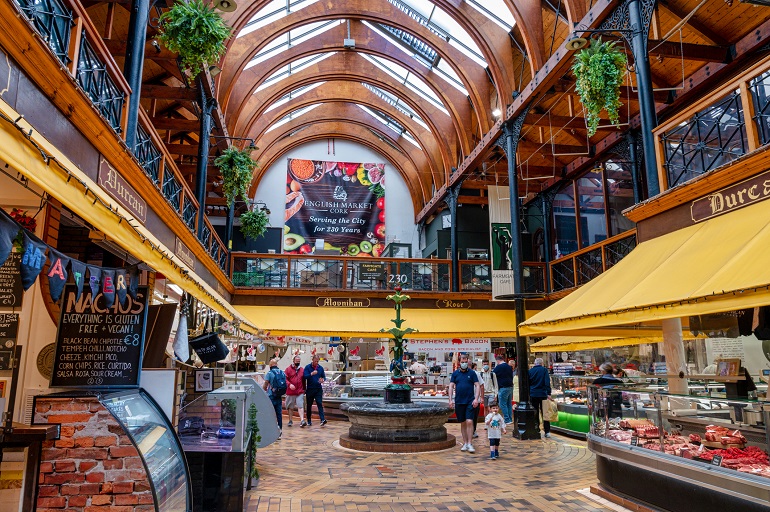
Dating back to 1788, the English Market is a historic covered food market located in the heart of Cork city. It's renowned for its architectural character, with its ornate fountain and vaulted ceilings, as well as its importance to Cork's culinary scene.
The market features:
- Numerous stalls selling fresh local produce, including fruits, vegetables, and herbs
- Butchers offering a variety of meats, including traditional spiced beef
- Fishmongers with fresh catches from nearby waters
- Artisanal cheese makers and bakers
- Specialty food shops selling international ingredients
Visitors can sample local delicacies like drisheen (a type of blood sausage) or explore the wide range of Irish and international cheeses. The Farmgate Restaurant, located on the balcony level, offers a chance to enjoy dishes made with ingredients from the market below.
The market has hosted several notable visitors, including Queen Elizabeth II during her state visit to Ireland in 2011.
Nature in and around Cork
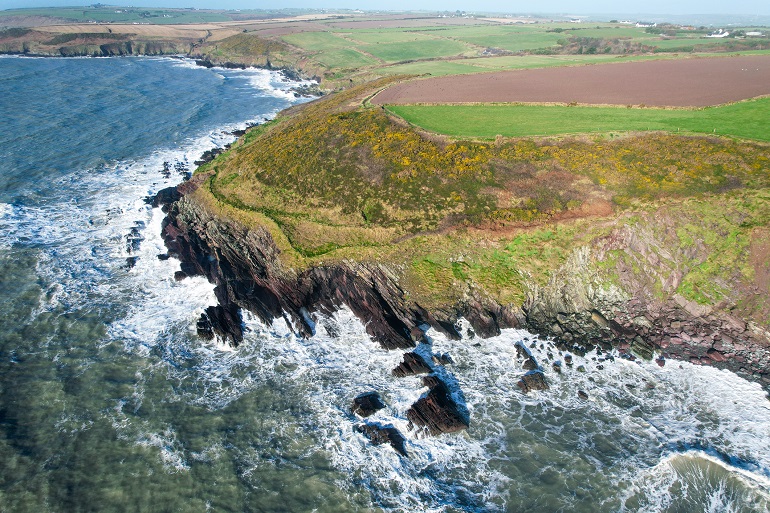
The Beara Peninsula showcases dramatic landscapes with two mountain ranges, the Caha Mountains and the Slieve Miskish Mountains, perfect for hiking enthusiasts. Mizen Head, Ireland's most southerly point, boasts towering cliffs and breathtaking coastal views. Gougane Barra presents a serene valley and lake encircled by mountains, featuring a picturesque chapel on a small island. The Ballycotton Cliff Walk provides a scenic 5-mile coastal trail with stunning ocean vistas. Lough Hyne, Europe's only saltwater lake and Ireland's first marine reserve, offers unique kayaking experiences and rich biodiversity. Glengarriff Woods Nature Reserve showcases one of Ireland's best examples of oceanic sessile oak woodland, ideal for nature walks. Cork's coastline also boasts numerous Blue Flag and Green Coast award beaches, perfect for seaside relaxation and water activities.
Fitzgerald Park
This 12-acre public park, named after Edward Fitzgerald, the city's Lord Mayor who organised Cork's International Exhibition in 1902, offers a tranquil escape from the bustling city centre.
Key features of the park include:
- Beautifully landscaped gardens with a variety of plant species
- A collection of sculptures, including ones dedicated to Michael Collins and Seamus Murphy
- A serene pond frequented by ducks and swans
- The iconic "Shaky Bridge" (officially Daly's Bridge), a pedestrian bridge known for its slight wobble
Families can enjoy the modern playground equipped with various play structures. The park also houses a café for refreshments and often hosts outdoor events and concerts during summer months.
The Cork Public Museum is located within the park, though as per the brief, we won't delve into its details here.
Baltimore Beacon
Situated on the southern tip of Baltimore Harbour in West Cork, the Baltimore Beacon is a distinctive white-painted stone marker. Built in 1849, it stands approximately 50 feet (15.2m) tall and is known locally as "Lot's Wife."
The beacon serves several purposes:
- Acts as a navigational aid for ships entering the harbour
- Marks the entrance to the harbour from the Atlantic Ocean
- Serves as a warning about the nearby Loo Rock
The walk to the beacon offers spectacular views of:
- The Atlantic Ocean
- Sherkin Island
- Cape Clear Island
- The coastline of West Cork
The area around the beacon is popular for:
- Whale watching (particularly in late summer and autumn)
- Bird watching
- Photography, especially during sunset
The beacon played a role in the area's history of piracy and invasion. In 1631, Baltimore was subject to a raid by Algerian pirates, an event commemorated annually in the village.

Ballycotton Cliff Walk
The Ballycotton Cliff Walk is a scenic 8km trail along the rugged coastline of East Cork. Starting in the picturesque fishing village of Ballycotton, the walk offers stunning views of the Celtic Sea and the surrounding countryside.
Key features of the walk include:
- Dramatic cliff views
- Sightings of various seabirds, including gannets and cormorants
- Wild flora, including sea pinks and wild orchids in season
- Views of Ballycotton Lighthouse on a nearby island
The walk takes approximately 2-3 hours to complete and is generally considered moderate in difficulty. It's well-maintained with stiles and fencing along most of the route.
Points of interest along the way:
- Ballycotton Village: A charming fishing village with colourful houses
- Several small, secluded beaches accessible from the path
- Ballyandreen Beach: A beautiful sandy beach at the end of the walk
It's advisable to wear sturdy footwear and bring waterproof clothing, as the Irish weather can be unpredictable.
Fota Wildlife Park
Located on Fota Island, about 12km east of Cork city, Fota Wildlife Park is a 100-acre wildlife conservation park that opened in 1983. It's one of Ireland's top tourist attractions, welcoming over 460,000 visitors annually.
The park is home to nearly 30 mammal and 50 bird species, many of which roam freely in naturalistic settings. Some key features include:
- Cheetah Run: One of the world's most successful cheetah breeding programmes
- Asian Sanctuary: Home to Sumatran tigers, Indian rhinos, and Asian lions
- Tropical House: Features various reptile and amphibian species
- Madagascar Zone: Houses several lemur species that visitors can walk among
Fota Wildlife Park is actively involved in various conservation programmes, including:
- European Endangered Species Breeding Programmes
- The International Union for Conservation of Nature (IUCN) Species Survival Commission
The park offers guided tours, feeding times, and conservation workshops for visitors interested in learning more about wildlife preservation.
Getting There & Around
Cork has an international airport just 10 minutes from the centre, offering direct flights from numerous European destinations and North America. For those travelling by sea, Cork's ferry terminal, a mere 15km from the city centre, provides daily services to France and Spain. The city is also well-connected by road and rail, with high-quality bus networks linking Cork to major Irish cities and a train station offering access to the national rail network. Once in Cork, getting around is a breeze. The city's extensive bus system, operated primarily by Bus Éireann, covers both the urban area and suburbs with frequent services. For shorter journeys, visitors can take advantage of the TFI Bike Share scheme or simply explore on foot, as Cork's compact size makes it ideal for walking. Taxis are readily available for those preferring a more direct mode of transport.
Best Time to Visit
The best time to visit Cork is during the shoulder seasons of May and September to October. These months offer a delightful balance of mild weather, fewer crowds, and reasonable accommodation prices. Whilst summer (June to August) boasts warmer temperatures and longer daylight hours, it also brings peak tourist crowds and higher costs. Spring and early autumn provide pleasant conditions for outdoor activities, with temperatures ranging from 12°C to 16°C. Although rain is a possibility year-round in Cork, these months tend to have a mix of sunny spells and occasional showers. Visitors during this time can enjoy the city's attractions, explore the surrounding countryside, and experience local festivals without the summer rush. However, it's worth noting that Cork's weather can be unpredictable, so packing layers and rain gear is always advisable, regardless of when you choose to visit.