


 Croatia Guide
 Czechia Guide
 Hungary Guide
 Poland Guide
 Slovakia Guide
 Slovenia Guide
| Contents |
|---|
Introduction
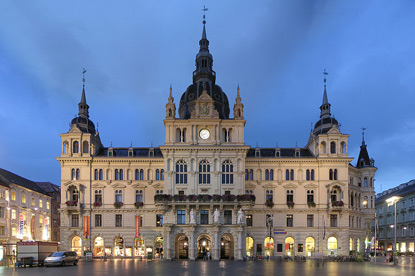
Graz is the capital of the Austrian federal state of Styria and Austria's second-largest city, situated along the Mur River. Known for its well-preserved historic centre, designated a UNESCO World Heritage Site in 1999, Graz showcases a range of architectural styles from medieval to modern periods, including notable landmarks such as Schlossberg Hill, Graz Cathedral, and Eggenberg Palace. The city is an important educational hub, home to four universities and four colleges, collectively hosting more than 60,000 students. Graz served historically as a residence city for the Habsburg dynasty and retains significant cultural heritage from this era. The city's strategic location at the head of the Mur valley made it a target for invaders throughout history, yet it successfully defended itself against numerous sieges, including those by the Ottoman Turks in the 16th century.
Interesting Facts about Graz
- Graz, the second-largest city in Austria, serves as the capital of Styria and boasts a UNESCO-listed historic centre renowned for its well-preserved Renaissance architecture.
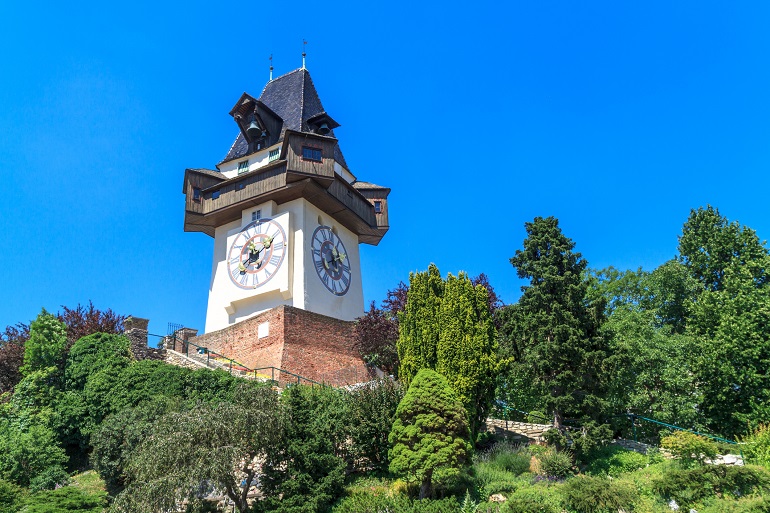
- The iconic Clock Tower (Uhrturm), dating to the 13th century, crowns Schlossberg hill and survived Napoleonic demolition after locals paid a ransom to preserve it.
- Home to the world’s largest historical armoury, the Landeszeughaus displays over 30,000 medieval and Renaissance weapons in its original 16th-century state.
- Graz’s University, founded in 1585 by Archduke Karl II, hosted Nobel laureates like Otto Loewi and physicist Erwin Schrödinger.
- The city’s double spiral staircase in Graz Castle, known as the "Staircase of Reconciliation", features two intertwined flights that symbolically reunite at each floor.
- Graz withstood multiple Ottoman sieges during the 16th century, with Schlossberg hill remaining the only regional fortress never captured by Turkish forces.
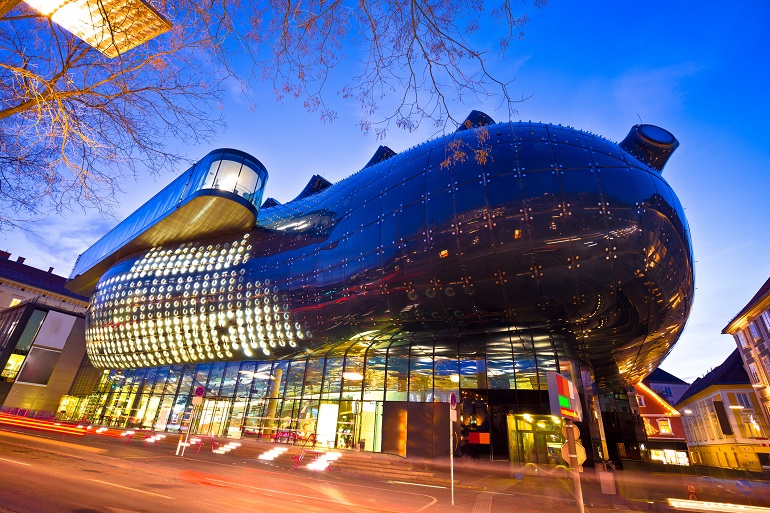
- Designated the European Capital of Culture in 2003, Graz blends historic charm with modern landmarks like the futuristic Kunsthaus art museum nicknamed "the Friendly Alien".
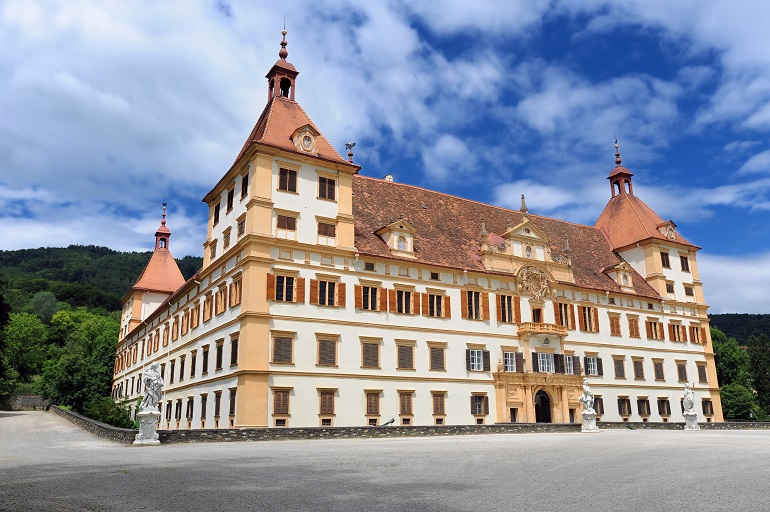
- The 17th-century Eggenberg Palace, a UNESCO site, aligns its 365 windows and 24 rooms with astronomical principles to reflect the calendar year.
- Graz’s Schlossberg funicular railway, operational since 1894, offers panoramic city views while ascending the 475-metre hill in under three minutes.
- During the 2020 pandemic, Graz’s Stadtpark gained notoriety for unauthorised late-night parties organised by an Italian club owner before police intervention.
- Johannes Kepler, the famous astronomer, lived and taught mathematics in Graz during the late 16th century.
- Nikola Tesla studied electrical engineering at Graz Polytechnic in 1875.
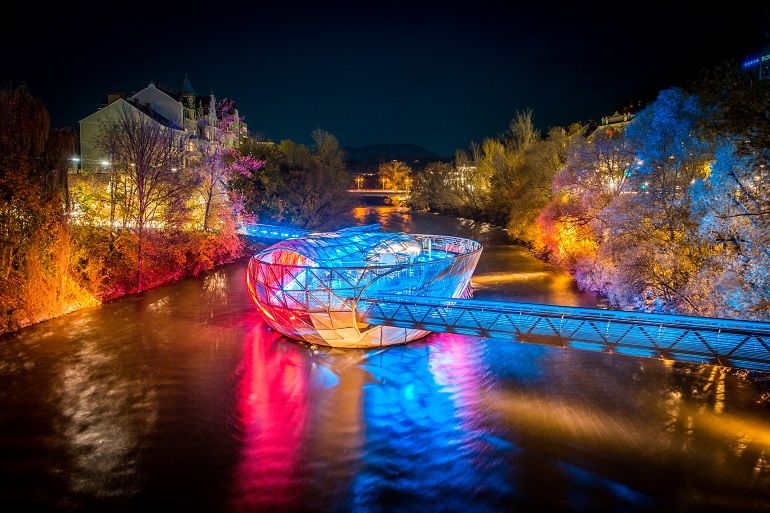
- The Murinsel is an artificial island constructed in the Mur River as part of Graz's cultural celebrations in 2003.
- Graz has a vibrant culinary scene and was named a City of Culinary Delights in 2008.
- Graz Opera House is Austria's second-largest opera venue, renowned for its architectural beauty and performances.
History
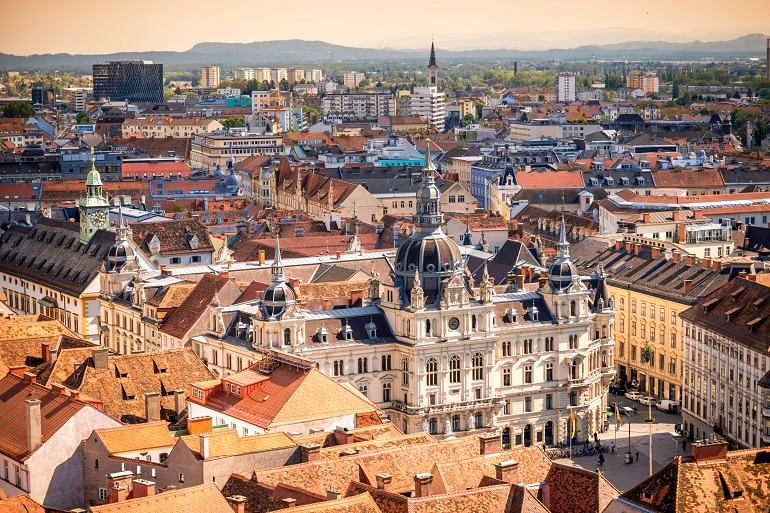
Graz, Austria's second-largest city, boasts a rich history spanning over 900 years. The name derives from the Slavic word "gradec," meaning "small fortress," with the first mention of the settlement dating back to around 1128-29. It received town rights around 1240 and developed into an important commercial centre under Babenberg rule during the 12th century. In the 14th century, Graz became the residence of the Inner Austrian line of the Habsburgs, who ruled Styria, Carinthia, most of today's Slovenia, and parts of Italy from the Schlossberg castle. The city's strategic location made it a target for invaders, yet the Schlossberg was notably the only fortification in the region that never fell to the Ottoman Turks during their invasions in 1529 and 1532.
The 16th century saw Graz's design and planning primarily controlled by Italian Renaissance architects and artists, creating a unique blend of architectural styles. One of the most famous buildings from this period is the Landhaus, designed by Domenico dell'Allio. The University of Graz, founded by Archduke Karl II in 1585, is the city's oldest university and has hosted notable scholars including astronomer Johannes Kepler, who worked as district mathematician while studying astronomy from 1594 to 1600. The city is also home to the provincial armory, the world's largest historical collection of late medieval and Renaissance weaponry, preserved since 1551 with over 30,000 items on display.
Throughout its history, Graz has withstood numerous sieges and occupations. Napoleon's army occupied the city in 1797, and in 1809 Graz defended itself against another French assault. Following Austria's defeat at the Battle of Wagram that year, the fortifications on the Schlossberg were demolished using explosives as stipulated in the Peace of Schönbrunn. However, the iconic belltower (Glockenturm) and civic clock tower (Uhrturm), now a leading tourist attraction and symbol of Graz, were spared after citizens paid a ransom for their preservation. Today, Graz's historic centre, including Schloss Eggenberg, is a UNESCO World Heritage Site celebrated for its harmonious blend of Gothic, Renaissance, Baroque and Historicism architectural styles, earning it the title of "the best-preserved city centre of Central Europe".
Main Attractions
Old Town (Altstadt)
The UNESCO World Heritage-listed Old Town of Graz stands as a testament to nearly a millennium of Austrian history and architectural evolution. As you wander through its labyrinthine network of cobblestone streets, you'll be transported back in time, surrounded by well-preserved medieval structures, Renaissance courtyards, and Baroque façades. The distinctive red-tiled roofs create a picturesque panorama when viewed from above, contrasting beautifully with the verdant Schlossberg hill that overlooks the historic centre.
The Old Town began its existence as the main market square in the mid-12th century, gradually expanding outward as the city grew in importance as a strategic crossroads between Central and Southeastern Europe. Throughout the centuries, Graz served as a bulwark against various invasions, which contributed to its rich cultural tapestry and architectural diversity. Today, the Old Town remains remarkably intact, having escaped major damage during the World Wars, allowing visitors to experience an authentic medieval Austrian cityscape that has evolved organically over centuries.
Hauptplatz (Main Square)
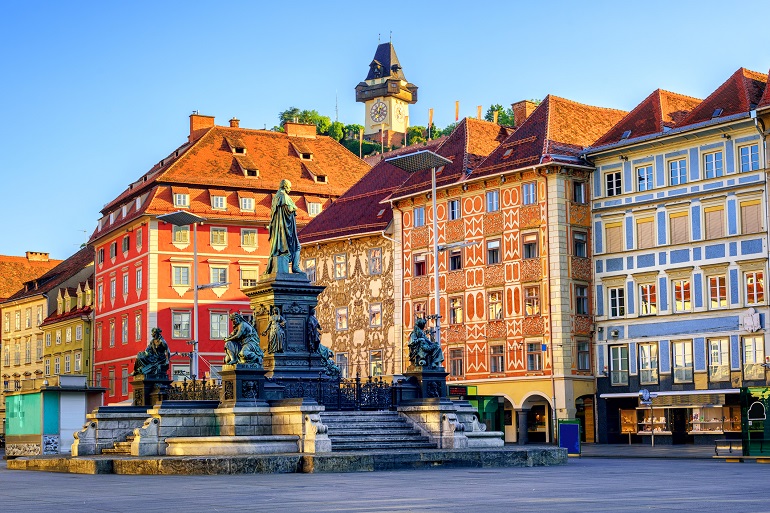
The trapezoidal Hauptplatz forms the beating heart of Graz, serving as both a geographical and cultural centre for the city since medieval times. This expansive square has witnessed countless historical events, from imperial proclamations to public celebrations, maintaining its role as the city's primary gathering place throughout the centuries.
The architectural ensemble surrounding the square presents a fascinating chronicle of Graz's development, with buildings representing various periods and styles. The elegant White House (Weißes Haus), constructed in 1710, exemplifies refined Baroque aesthetics with its symmetrical façade and ornate detailing. The Eagle Pharmacy (Adler-Apotheke), dating back to 1535, showcases earlier architectural traditions with its Gothic elements. The Citizens' Home to the Great Christoph, built in the 17th century, adds to the square's historical narrative, while the Luegg House captivates visitors with its elaborate stucco façade that seems to dance with light and shadow throughout the day.
Dominating the centre of the square since 1878 is the Franz Ponninger fountain monument dedicated to Archduke Johann von Osterreich, a beloved figure in Styrian history who contributed significantly to the region's economic and cultural development. The monument features four female allegorical figures representing the major rivers of Styria—the Mur, Enns, Drava, and Sann—symbolising the natural bounty and geographical significance of the region.
Herrengasse
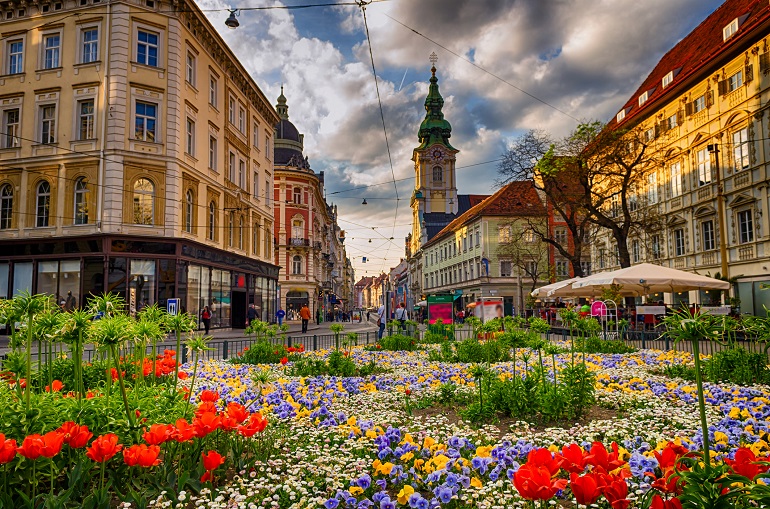
Herrengasse, Graz's premier pedestrian thoroughfare, stretches for a full kilometre from Jakominiplatz to the main square, serving as the elegant spine of the Old Town. This historic street has functioned as the city's commercial and social artery since medieval times, evolving from a narrow lane into the sophisticated promenade we see today.
Walking along Herrengasse is like traversing through an open-air museum of architectural styles. The street is lined with imposing mansions and townhouses built by wealthy merchants and nobility over the centuries. Particularly striking is the corner where Herrengasse meets Sporgasse, dominated by the magnificent Luegghaus with its ornate Renaissance arcaded courtyard, now housing the glittering displays of Swarovski.
What makes Herrengasse truly special is the hidden world that exists just beyond its main façades. Venture through unassuming gateways along the street to discover secret courtyards (Höfe) adorned with Renaissance arcades, Baroque staircases, and peaceful gardens. These tranquil spaces offer respite from urban bustle and provide glimpses into private historical Graz.
Schlossberg and Clock Tower
Rising 473 metres above sea level, Schlossberg hill stands prominently in Graz's centre. Historically significant as a defensive stronghold since medieval times, it once featured an imposing fortress demolished after Napoleonic wars except for two iconic structures: Clock Tower (Uhrturm) and Bell Tower.
The Clock Tower dates back around 1560 and remains Graz's most recognisable landmark due to its unusual clock mechanism where long hand indicates hours while short hand shows minutes—the reverse conventionally used elsewhere. Today Schlossberg offers panoramic views over city rooftops alongside lush gardens dotted by winding paths leading visitors towards historical monuments or open-air theatres hosting cultural performances.
Murinsel (Island in Mur)
The Murinsel represents contemporary architecture introduced during Graz's tenure as European Capital Culture 2003; designed by artist Vito Acconci creating artificial island anchored mid-Mur River connecting eastern-western banks historically divided socioeconomically.
This biomorphic structure resembles twisted seashell constructed primarily steel-glass materials measuring approximately fifty metres length connected riverbanks via sleek footbridges integrating urban fabric yet maintaining distinct island character itself transforming nightly illuminated sculpture visible across cityscape interior spaces featuring amphitheatre playground café offering unique dining experiences atop flowing waters beneath transparent flooring surfaces.
Eggenberg Palace (Schloss Eggenberg)
Schloss Eggenberg stands prominently on western edge Graz representing pinnacle Baroque architecture Styria commissioned Prince Hans Ulrich von Eggenberg Imperial Governor Inner Austria designed physical manifestation Gregorian calendar universe comprising precisely calculated windows rooms towers symbolising days hours seasons respectively within meticulously planned mathematical precision extending interior layout frescoes depicting astronomical mythological historical scenes court painter Hans Adam Weissenkircher completed between years 1678-1685 Planetary Room cycle staterooms arranged circular pattern reflecting cosmic order understood late Renaissance period extensive formal gardens landscaped park featuring rose mound exotic plant collections freely roaming peacocks UNESCO World Heritage recognition granted 2010 acknowledging unique representation European intellectual heritage.
Kunsthaus Graz (Art House)
Kunsthaus Graz affectionately nicknamed "Friendly Alien" landed right bank Mur River 2003 creating striking juxtaposition historic surroundings biomorphic blue acrylic shell protruding nozzles incorporating programmable fluorescent rings transforming façade low-resolution screen displaying patterns animations night-time hours interior defies conventional museum architecture flowing organic spaces challenging artists curators alike absence straight walls right angles providing immersive viewing experiences transparent needle escalator offering ascending descending views historic city centre rooftop terrace distinctive viewpoints contemplating dialogue between medieval roofscape futuristic structure complementing it today.
Landhaushof (Provincial Parliament Courtyard)
Landhaushof hidden behind unassuming Renaissance façade Old Town houses spectacular three-storey arcaded courtyard built Italian architect Domenico dell'Allio between years 1557-1565 representing finest Renaissance design north Alps ceremonial centre Styria provincial government harmonious proportions elegant arcades slender columns classical capitals medallions relief carvings adapting Mediterranean principles Alpine context hosting concerts cultural events exceptional acoustics connecting significant interior spaces Landstube Rittersaal forming complex witnessing centuries political deliberation continuing seat regional parliament today.
Glockenspiel (Carillon)
The Glockenspiel installed 1905 originally advertising liqueur manufacturer Gottfried Maurer evolved cherished tradition performing mechanical musical interludes daily wooden figures traditional Styrian couple emerging rotating dancing melodies charming audiences generations surrounding square cafes restaurants providing ideal settings enjoying performances alongside local culinary specialities becoming quintessentially Austrian experience visitors locals alike.
Top Museums
Historical Museums
Graz Museum Schlossberg
More than just a museum, the Graz Museum Schlossberg is an experience. Perched atop the Schlossberg, it offers the most spectacular panoramic views of Graz, making the ascent worthwhile in itself. The museum meticulously unravels the Schlossberg's intricate history, from its days as a formidable fortress to its current status as a beloved city landmark.
Exhibits include historical artefacts, interactive displays, and multimedia installations that bring the past to life. A standout feature is the interactive screen, which allows visitors to journey through time, exploring how the cityscape has evolved over centuries. Deep beneath the mountain, in the casemate, a detailed multimedia model reveals the complex network of tunnels that snake through the Schlossberg's interior.
For those travelling with children, the Garden of Wonders provides an enchanting diversion. Here, mythical creatures associated with Graz come to life in whimsical sculptures and installations, sparking the imagination and creating lasting memories. The Graz Museum Schlossberg is not merely a repository of history but a vibrant and engaging destination for all ages.
Graz Museum (History Museum)
The Graz Museum, or History Museum, serves as the primary custodian of Graz's rich and complex history. Through its diverse collection of artefacts, documents, and exhibits, the museum tells the story of the city and the broader Styria region from its earliest beginnings to the present day.
The museum is organised into four distinct areas, each focusing on a different aspect of Graz's history. Permanent exhibitions provide a comprehensive overview of key historical periods, while temporary exhibitions delve into specific themes and events. The museum's collection includes thousands of items, ranging from ancient relics to everyday objects, offering a tangible connection to the past.
The Graz Museum is an invaluable resource for anyone seeking to understand the forces that have shaped Graz into the vibrant and culturally rich city it is today. It is a place where history comes alive, offering visitors a deeper appreciation for the city's heritage.
Styrian Armoury
The Styrian Armoury is a unique museum that houses the world's largest collection of historic weapons. With approximately 32,000 objects dating from the 15th to 18th centuries, the armoury offers a fascinating glimpse into the military history of the region.
The collection includes suits of armour, firearms, swords, cannons, and other military equipment. The objects are meticulously arranged, creating a visually stunning and historically informative display. The Styrian Armoury is a must-see for anyone interested in military history, offering a unique perspective on the evolution of warfare in Europe.
Art Museums
Kunsthaus Graz
The Kunsthaus Graz, affectionately known as "The Friendly Alien" due to its distinctive biomorphic shape and luminous blue skin, is an architectural marvel and a beacon of contemporary art. Designed by Peter Cook and Colin Fournier, this iconic structure has become synonymous with Graz's forward-thinking artistic spirit.
Inside, the Kunsthaus hosts a dynamic programme of temporary exhibitions that showcase groundbreaking contemporary art from around the globe. The focus is on art that challenges conventions, provokes dialogue, and explores the evolving role of art in the 21st century. Exhibitions often delve into social, political, and cultural themes, encouraging visitors to reflect on the world around them.
The building itself is an integral part of the Kunsthaus experience. Its unique design allows for flexible exhibition spaces, and its "BIX façade" – an array of acrylic glass panels that function as a giant screen – often displays captivating light installations, transforming the building into a living, breathing work of art. A visit to the Kunsthaus Graz is an immersion into the cutting edge of contemporary art and design.
Neue Galerie Graz
The Neue Galerie Graz, centrally located, offers a comprehensive overview of art from the 19th century to the present day. The gallery's collection is a balanced mix of international masterpieces and works by regional artists, providing a unique perspective on the development of art in Styria.
The collection includes notable examples of Realism, Jugendstil (Art Nouveau), classical Modernity, Viennese Actionism, and Conceptual Art. The Neue Galerie places particular emphasis on Styrian artists who have made significant contributions to the art world, highlighting the region's unique artistic identity.
Exhibitions are carefully curated to explore specific themes, movements, and artists, providing visitors with a deeper understanding of the art on display. The Neue Galerie is a valuable resource for art enthusiasts seeking to expand their knowledge of both international and regional art history.
Alte Galerie
Housed within the magnificent Eggenberg Palace complex, the Alte Galerie boasts an exceptional collection of art from the Middle Ages, Renaissance, and Baroque periods. The gallery's collection includes panel paintings, shrine altars, stained glass, and sculptures, providing a comprehensive overview of artistic developments in Central Europe during these periods.
The Alte Galerie's collection is particularly strong in works from the medieval period, showcasing the craftsmanship and religious fervour of the time. The gallery also features important works from the Renaissance and Baroque periods, demonstrating the influence of Italian art on Central European artists. The Alte Galerie is a treasure trove for art lovers, offering a rare opportunity to see masterpieces from different eras in a stunning palatial setting.
Palaces & Cultural Museums
Eggenberg Palace
Located just outside the city centre, Eggenberg Palace is a UNESCO World Heritage Site and a testament to the grandeur of the Baroque era. Constructed in 1625, the palace is a marvel of architectural and symbolic design, reflecting the intellectual and artistic currents of its time.
The palace's 24 staterooms remain virtually unchanged since the 18th century, offering visitors a glimpse into the opulent lifestyle of the Eggenberg family. Each room is lavishly decorated with ornate furnishings, intricate stucco work, and stunning frescoes, creating a truly immersive experience.
The Planetary Room is the palace's undisputed highlight. This magnificent hall features a series of enormous, detailed paintings that blend astronomy with other symbolism to represent the Eggenberg dynasty's cosmic significance. The Planetary Room is a testament to the Baroque era's fascination with science, art, and the interconnectedness of the universe.
Folk Life Museum
The Folk Life Museum, located at the Paulustor in Graz, explores the diverse lifestyles, social and cultural changes, and evolving traditions that have shaped Styria's unique identity. The museum examines how shifts in everyday life, from work and family to customs and beliefs, have influenced the region's social fabric.
The museum's exhibits feature a wide range of artefacts, including traditional clothing, tools, furniture, and household items. These objects provide a tangible connection to the past, offering insights into the daily lives of Styrian people throughout history. The Folk Life Museum is a valuable resource for anyone seeking to understand the cultural heritage of Styria and its people.
Local Cuisine
Graz, Austria's culinary capital, offers a tantalising array of Styrian specialties that will delight any food lover. The city is renowned for its Backhendl (breaded fried chicken), a simple yet extraordinary dish where spiced chicken pieces are deep-fried to golden perfection. Another must-try is the Käferbohnensalat (scarlet runner bean salad), made with distinctive lilac-violet speckled beans dressed with vinegar, pumpkin seed oil, onions and seasonings. When visiting local restaurants, order a Brettljause, a wooden sharing platter laden with regional cold cuts, spreads and black bread – traditionally served in wine taverns along the Styrian Wine Roads. Fish enthusiasts should sample Arctic Char, a fresh fish native to alpine lakes, often served smoked with trout roe. For a sweet finish, try Schmarren, a shredded pancake dish typically served with stewed apricots or apple sauce, or indulge in Zotter chocolates and cakes, a local brand known for their organic ingredients. Pair your meal with Styrian wine, particularly the crisp Sauvignon Blanc, or try Schilcher, a sparkling rosé produced exclusively in western Styria.
Shopping
Graz's charming old town where beautiful historic buildings house numerous shops, boutiques and cafés. The main shopping area stretches between Hauptplatz and Jakominiplatz squares, connected by Herrengasse, the city's main shopping street lined with trendy boutiques, perfumeries and jewellers. Most shops operate Monday to Friday from 9 am to 6 pm and Saturday from 9 am to 5 pm, with some closing at noon on Saturdays, and all shops remain closed on Sundays. For department store shopping, visit Kastner & Öhler, Austria's most beautiful department store offering fashion from over 500 brands across six floors, with a rooftop café providing spectacular views of the city. The creative quarter around Kunsthaus Graz is recommended for original designs, while farmers' markets like Bauernmarkt Lendplatz offer fresh local produce and regional specialities. Unique independent shops can be found throughout the city, including long-established businesses like Leder Schuster (leather goods since 1898) and Küchenfee (kitchen items since 1835).
Kaiser Josef Market
Kaiser Josef Market occupies spacious square behind opera house showcasing agricultural abundance Styria vibrant marketplace connecting urban consumers regional producers offering distinctive delicacies including scarlet runner beans apples pumpkin seed oil alongside seasonal produce cheeses honeys mushrooms hosting social interactions exchanges recipes maintaining authentic glimpse local life culinary heritage essential stop understanding region beyond architectural landmarks.
Nature in and around Graz
Graz, the capital of Styria, offers a wealth of natural attractions both within the city and in its surroundings. The city itself boasts several green spaces, including the expansive Stadtpark, the tranquil Burggarten, and the riverside Augarten. For panoramic views, visitors can ascend Schlossberg hill or hike to Plabutsch or Fürstenstand. Just outside the city, nature enthusiasts can explore the Leechwald Forest and Hilmteich Pond. The surrounding region, known as the green heart of Austria, features hills, mountains, forests, lakes, and vineyards. Notable attractions include Mount Schöckl for hiking, the Mur River for cycling, and the picturesque Südsteirische Weinstraße (South Styrian Wine Road). For those seeking more adventurous outings, the Bärenschützklamm gorge (when open) and the Gesäuse National Park offer stunning natural landscapes.
Stadtpark (City Park)
Stadtpark created during nineteenth-century demolitions former fortifications forming green crescent eastern edge Old Town combining formal gardens woodland areas cultural monuments specimen trees seasonal plantings sculptures monuments literary scientific figures central Francis Joseph Fountain Music Pavilion hosting musical events providing contemplative recreational space bridging medieval core nineteenth-century expansions beloved locals visitors alike.
Getting There & Around
Getting to Graz is straightforward with several transport options available. The city is well-connected by air through Graz Airport (GRZ), which offers flights from major European cities including Berlin, Frankfurt, Munich and Vienna. From the airport, you can reach the city centre by taxi (approximately €35-39), bus (lines 630 and 631 to Jakominiplatz, €3.10), or train (S5 line to Hauptbahnhof, 15-minute journey). Alternatively, train travel is an excellent choice, with frequent direct connections from Vienna (hourly) and good services from Salzburg, Munich and other Austrian cities. The scenic Semmering Railway route from Vienna is particularly noteworthy as a UNESCO World Heritage site. For those preferring road travel, Graz is accessible via the A9 and A2 motorways. Once in Graz, the compact old town is easily explored on foot, with most attractions within 20 minutes' walking distance of each other. For longer journeys, the city offers excellent public transport with trams and hydrogen-powered buses, and the Graz Card (available for 24h, 48h or 72h) provides free access to attractions and public transport within zone 101.
Best Time to Visit
The best time to visit Graz is during the shoulder seasons of spring (April to May) and autumn (September to October). These periods offer pleasant weather with mild temperatures, ideal for exploring the city's charming Old Town and climbing Schlossberg Hill. The spring months bring blooming gardens and cultural events like the Spring Festival, whilst autumn paints the city in golden hues and hosts the delightful Truffle Festival. During these times, you'll encounter fewer crowds compared to the peak summer months, allowing for a more relaxed experience of Graz's UNESCO World Heritage sites and vibrant cultural scene. Additionally, hotel rates tend to be more affordable, and you can comfortably enjoy outdoor activities such as cycling or hiking in the surrounding countryside. Whether you prefer the fresh blossoms of spring or the cosy atmosphere of autumn, these seasons provide the perfect backdrop for discovering the unique blend of history, culture, and Mediterranean flair that Graz has to offer.