


| Contents |
|---|
Introduction
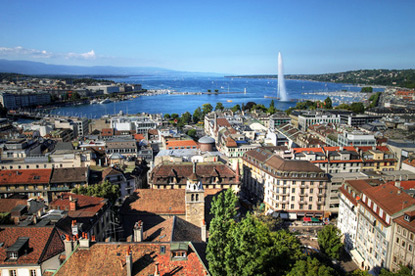
Geneva (pop. 205,000; metro 1 million), Switzerland's second-largest city, sits at the southwestern end of Lake Geneva where it meets the Rhône River, nestled between the Alps and Jura mountains at an elevation of 1,230 feet (375 meters). This global city serves as a major diplomatic hub, hosting the European headquarters of the United Nations and the Red Cross headquarters. Geneva combines historical significance with modern importance, featuring a well-preserved Old Town dominated by Saint Peter's Cathedral. The city is characterized by its international character, with over 40% of its population coming from outside Switzerland. Its most recognizable landmark is the Jet d'Eau, a fountain shooting water 140 meters into the air, while the city offers numerous cultural attractions including over thirty museums, the Grand Théâtre opera house, and extensive recreational opportunities on the lake.
Interesting Facts about Geneva
- Geneva is renowned as the capital of Swiss watchmaking, with prestigious brands like Rolex and Patek Philippe having their roots there. The first Swiss wristwatch made in the city in 1868.
- Geneva’s iconic Jet d’Eau propels 500 litres of water per second to a height of about 140 metres, making it one of the tallest fountains in the world.
- The Jet d’Eau began in 1886 as a pressure-release valve for a hydraulic plant on the Rhône before becoming a celebrated city symbol.
- Two rivers meet in Geneva—the Rhône and the Arve—creating a striking confluence with distinct colours.
- The World Wide Web was created at CERN on the outskirts of Geneva, cementing the city’s role in scientific innovation.
- Geneva is home to the European headquarters of the United Nations and the International Committee of the Red Cross, underpinning its nickname “City of Peace.”
- The Red Cross was founded in Geneva in 1863 and still maintains its headquarters and museum in the city.
- Geneva is home to the International Museum of the Red Cross and Red Crescent, providing insights into humanitarian history.
- Lake Geneva (Lac Léman) is Europe’s largest Alpine lake, stretching roughly 73 km in length and 14 km at its widest.
- Philosopher Jean-Jacques Rousseau was born in Geneva in 1712, with his birthplace preserved in the Old Town.
- Geneva is among Europe’s most international cities, with a large share of residents born abroad and significant foreign communities.
- The city proper covers about 16 km² and had just over 200,000 inhabitants in recent years, while the wider urban area exceeds one million residents.
- The Jet d’Eau’s water exits the nozzle at around 200 km/h, and the fountain’s current maximum height cannot be exceeded due to nearby buildings.
- A sunrise music festival, Les Aubes, brightens August mornings at Bains des Pâquis with performances and lake swims.
- The Rhône flows out of Lake Geneva through the city, offering promenades and viewpoints of the fountain and Alps.
- The metropolitan area spans Swiss and French territory, reflecting Geneva’s cross-border commuter culture and growth.

History
Geneva's fascinating history stretches back over 5,000 years, beginning with Paleolithic settlements and evolving into a pre-Celtic Ligurian community around 3000 BCE. The city's strategic position at Lake Geneva's outlet attracted the Celtic Allobroges, who established a fortified settlement around 500 BCE to defend against the Germanic Helvetii tribe. The Romans conquered Geneva in 121 BCE, transforming it into an important staging point during Caesar's Gallic campaigns. In 58 BCE, Caesar famously destroyed the Rhône bridge and constructed a 19-mile earthwork from Lake Geneva to the Jura Mountains to block Helvetii migration. The city gained Christian significance in the 4th century, with its first bishop appointed in the 5th century. A devastating tsunami in 563 CE swept Lake Geneva, destroying numerous settlements and causing widespread deaths. Following Germanic invasions, Geneva became the first capital of the Burgundian kingdom from 443 to 534 CE, before passing through various rulers including the Franks, the Kingdom of Burgundy, and ultimately the Holy Roman Empire in 1033.
The medieval period witnessed Geneva's transformation into a powerful independent city-state. Bishops ruled as temporal lords from the 11th century until the Reformation, with Bishop Adhémar Fabry granting the city its great charter in 1387, establishing the foundation for communal self-government. The House of Savoy gained nominal control during the late 14th century, whilst an oligarchic republican government emerged in the 15th century with the creation of the Grand Council. Geneva's international trade fairs reached their zenith during the 15th century, establishing the city's commercial reputation across Europe. The Protestant Reformation arrived in the first half of the 16th century, creating religious upheaval that saw Savoy rule overthrown and Geneva allying with the Swiss Confederacy. In 1541, John Calvin became the spiritual leader, establishing Geneva as "Protestant Rome" and making it a refuge for persecuted Protestants throughout Europe. The city achieved final independence in 1602 after successfully repelling an invasion by the Duke of Savoy, an event still celebrated today as l'Escalade.
Geneva's modern era began with its admission to the Swiss Confederation on 12 September 1814, following the fall of Napoleon. The city underwent dramatic transformation under James Fazy's radical leadership after the 1846 working-class revolution, which saw the demolition of outer fortifications and the creation of railway connections. The founding of the Red Cross in 1864 by Henry Dunant marked Geneva's emergence as an international humanitarian centre. The city's global significance expanded with the installation of the League of Nations in 1919, followed by the European headquarters of the United Nations in 1946. Throughout the 19th and 20th centuries, Geneva attracted renowned intellectuals including Voltaire and Jean-Jacques Rousseau, whilst becoming a major banking hub and leader in Europe's industrial revolution. The separation of Church and State in 1907 modernised the city's governance, cementing Geneva's reputation as a cosmopolitan centre that draws international residents and organisations from around the world.
Main Attractions
Jet d'Eau
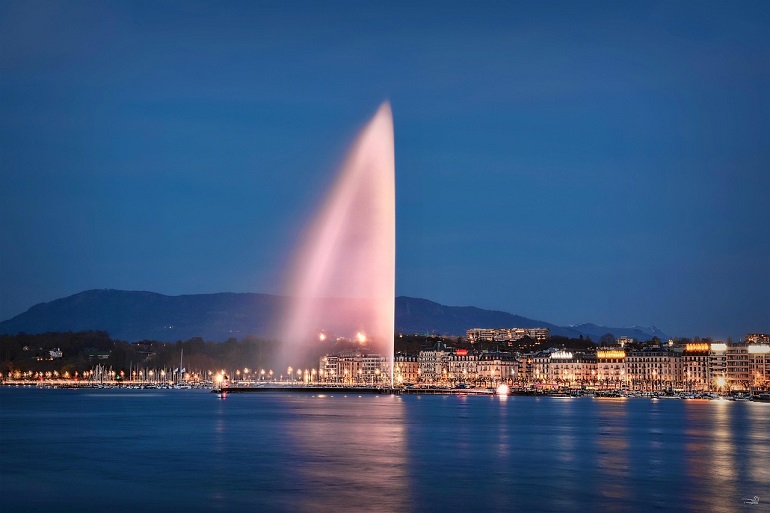
Jet d'Eau towers over the Rhône at the point where Lake Geneva narrows into the river, propelling 500 litres of water per second to an impressive height of 140 metres. Originally created in 1886 as a safety valve for the city’s hydraulic plant, it soon became a celebrated landmark and was moved to its present lakeside position in 1891. By night from spring to autumn, the fountain is transformed into a luminous spectacle by a network of 21 powerful lights that illuminate the plume in vivid shades, making it visible throughout the city and from the air. Visitors can approach along the stone jetty at the left bank to feel the spray and admire the sheer force and engineering precision that combine to make the Jet d’Eau one of Geneva’s most enduring symbols.
Quai du Mont Blanc
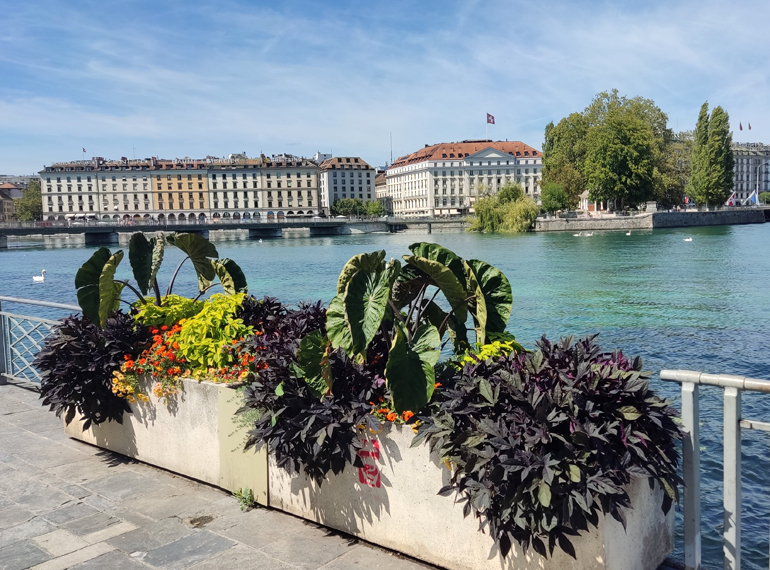
Quai du Mont Blanc offers an elegant promenade along the northern shore of Lake Geneva, celebrated for its panoramic views that, on clear days, stretch to the summit of Mont Blanc itself. This prestigious waterfront is lined with grand Belle Époque hotels and sophisticated restaurants, making it a favoured spot for a leisurely stroll among both locals and visitors. The walkway is punctuated by significant landmarks, including the striking neo-Gothic Brunswick Monument and a poignant memorial to Empress Sisi of Austria. Serving as a primary departure point for lake cruises and alive with flowerbeds and outdoor art, the quai perfectly captures the city's blend of natural splendour and cosmopolitan grace.
Bains des Pâquis
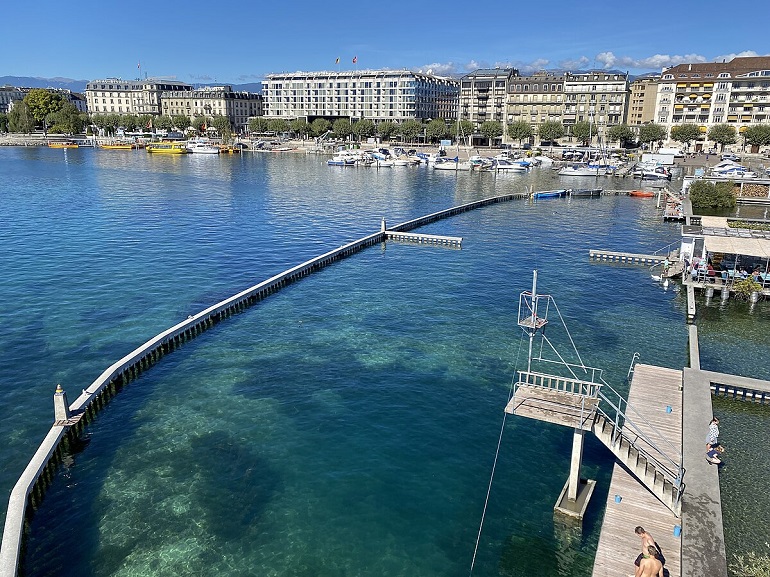
Bains des Pâquis occupies a distinctive peninsula jutting into Lake Geneva, crowned by a lighthouse and offering Geneva's most beloved "city beach" experience just metres from the Jet d'Eau. Dating back to 1872 and rebuilt in reinforced concrete in 1932, this extraordinary complex provides sandy shores for summer sunbathing, year-round hammam and Turkish baths, plus a zip-line and climbing wall that add adventure to the lakeside experience. The site transforms seasonally—becoming a vibrant beach destination with table tennis and water volleyball during warmer months, then switching to a wellness sanctuary in winter where locals gather for fondue evenings while admiring Geneva's sparkling night-time lights, all managed by the Association of Users who preserved this unique space from commercial development in the 1980s.
Vieille Ville (Old Town)
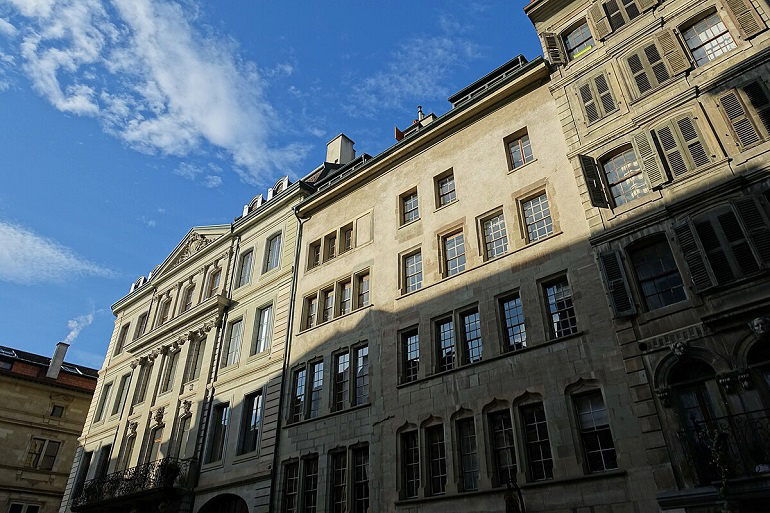
Vieille Ville is a living tapestry of Geneva’s medieval past, where narrow, cobbled lanes open onto sun-bathed squares framed by centuries-old façades. Wandering without a map, one discovers hidden passages leading to quiet cloisters, wrought-iron signs marking ancient craft workshops and cafés spilling onto patios beneath flowering window boxes. The heart of this historic quarter is Place du Bourg-de-Four, the city’s oldest public space, which has served as a marketplace since Roman times and remains a vibrant meeting place for locals savouring a café crème or artisanal gelato. At every corner, the ancien régime of Geneva reveals itself in the worn stone steps, the carved lintels above doorways and the hush of history within atmospheric lanes.
Place du Bourg-de-Four
Place du Bourg-de-Four remains Geneva’s oldest square and retains the atmosphere of a centuries-old market. Its centrepiece fountains, hewn from Carrara marble in the medieval period, glimmer beneath the shade of adjacent cafés whose pavement terraces evoke the lively trading days of yore. Surrounding each fountain, elegant boutiques and chocolateries entice passersby, while the square’s periphery is lined with historic arcades that once sheltered merchants. As evening falls, the warm glow of street lanterns and the gentle murmur of conversations create an ambiance of timeless conviviality.

St. Pierre Cathedral
St. Pierre Cathedral crowns the hill at the summit of Old Town and offers a striking contrast of austere Protestant interiors against its ornate Romanesque-Gothic exterior. Dating back to the 12th century and forever linked with the Reformation through John Calvin’s fiery sermons, its twin towers may be climbed via a winding spiral staircase of 157 steps to reveal panoramas of the city, lake and distant Alpes. Beneath the nave lies an archaeological site where vestiges of a 4th-century baptistry and the foundations of earlier churches lie preserved, offering a tangible connection to Geneva’s earliest Christian heritage.

Promenade de la Treille
Promenade de la Treille stretches along the ramparts of Old Town, boasting one of the world’s longest wooden benches at 126 metres. Lined with ancient chestnut trees, the elevated walkway affords uninterrupted views towards the Rhône and the tree-lined promenades below. In spring, delicate blossoms form a canopy overhead, while in summer the bench becomes a favourite vantage point for spontaneous gatherings and sunset watch-parties, its unbroken expanse offering both tranquillity and sociable conviviality in equal measure.
The Reformation Wall
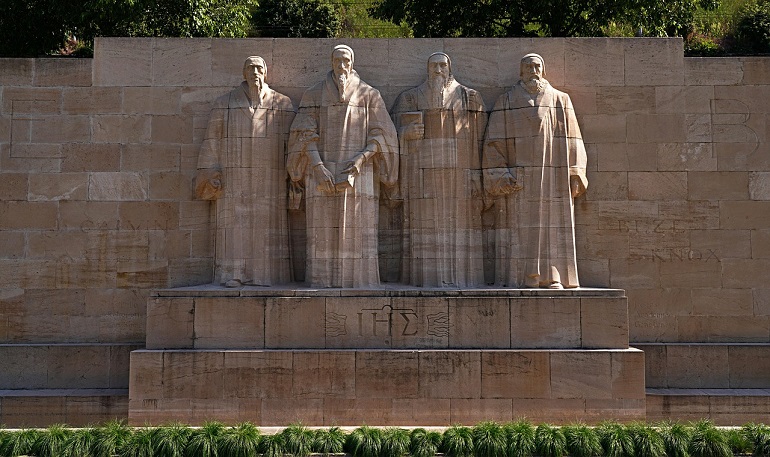
The Reformation Wall stands imposingly within Parc des Bastions against authentic 16th-century ramparts that once protected Geneva, stretching 100 metres in length with monumental statues of Protestant reformers carved from Carrara stone. Built between 1909 and 1917 to commemorate John Calvin's 400th birthday and the 350th anniversary of Geneva Academy, the wall features four central figures—Calvin, William Farel, Théodore de Bèze and John Knox—alongside international contributors to the Reformation including Cromwell, Admiral de Coligny and Frederick William of Brandenburg. The engraved motto "Post Tenebras Lux" (After Darkness, Light) represents the core philosophy of Calvinist thought, while the surrounding Parc des Bastions provides a perfect setting with its chestnut-shaded pathways and giant chessboards where locals gather for contemplative games.
Palais des Nations
Palais des Nations, the European headquarters of the United Nations, stands within a vast park overlooking Lake Geneva. Completed in the 1930s as the League of Nations headquarters, its imposing assembly halls and art-filled corridors now host diplomatic meetings of global significance. Guided tours lead through the Grand Assembly Hall—where intricate tapestry panels illustrate Europe’s cultural heritage—and the Human Rights and Alliance of Civilisations Room, while outside, the surrounding grounds feature commemorative statues and sculptures donated by member states.

Russian Orthodox Church
Russian Orthodox Church stands as an architectural jewel in the Les Tranchées neighbourhood, its nine golden onion domes and striped Byzantine arches creating an unmistakably Eastern Orthodox presence in Geneva's religious landscape. Completed in 1866 through the generous patronage of Grand Duchess Anna Fyodorovna and designed by David Grimm of the Imperial Academy of Arts in St. Petersburg, the Cathedral of

Lake Geneva Cruise Line
Lake Geneva Cruise Line offers a variety of boat excursions that reveal the city from a waterborne perspective, with commentary available in multiple languages. Traditional paddle steamers and modern motor vessels ply the lake from quay to château, stopping at idyllic bays and resort villages. As the vessel glides past rolling vineyards and Belle Époque villas, passengers may choose themed cruises—ranging from sunset Champagne sails to gastronomic voyages—ensuring a memorable journey across the blue expanse.
Carouge
Carouge enchants visitors with its Mediterranean atmosphere and distinctive Sardinian architecture, a legacy of its 18th-century reconstruction by Victor Amadeus III of Sardinia as an alternative to Protestant Geneva. Often called Geneva's "Little Italy" or "Greenwich Village," this former independent town features pastel-coloured terraced houses with green shutters, wrought-iron balconies and intimate courtyards that create a village-like ambiance just minutes from the city centre. The heart of the district pulses around Place du Marché, where a 300-year-old weekly market continues on Wednesdays and Saturdays, while the surrounding streets host artisan workshops, antique dealers, jazz bars and cosy bistros that reflect the area's enduring bohemian spirit and reputation as a refuge for free-thinkers and creative souls.
Top Museums
History and Art
Museum of Art and History (Musée d'Art et d'Histoire)
Geneva’s Museum of Art and History is one of Switzerland’s most significant encyclopaedic museums and the largest cultural institution in the city. Built between 1903 and 1910 by Genevan architect Marc Camoletti, this magnificent edifice was designed to consolidate Geneva's dispersed public collections under one roof. The museum houses over half a million objects, including numerous major works that have established its international reputation.
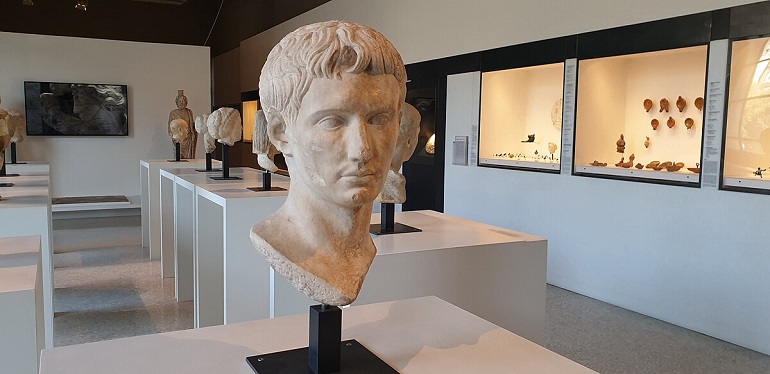
The archaeological collections span 15,000 years of history, with the ground floor dedicated to ancient civilisations. Visitors encounter the Ancient Egypt section featuring sphinxes, Egyptian pharaohs and their tombs, historic excavations including vases from the Meroitic epoch, jewellery, and decorative objects. The following galleries showcase antique statues and numerous busts from the Greek period, followed by Etruscan and ancient Roman artefacts. The extensive collection includes jewellery, vases, jars, bowls, cutlery, and hanging scales from these ancient civilisations.
The applied arts collections present religious items including paintings, icons, and stained glass of saints and apostles, alongside several reconstructions of original rooms of historical figures, luxuriously and beautifully decorated. A particularly striking section features a large room filled with medieval steel armour and various weapons such as swords, halberds, canons, and handguns, all decorated with hung flags. The museum also displays furniture, musical instruments, and textiles.
The fine arts section, located on the first floor, houses paintings from the Middle Ages to the 20th century, representing Italian, Dutch, French, English, Genevan, and Swiss schools. At the end of the staircase, visitors can admire a beautiful romantic sculpture by Canova portraying Venus and Adonis. Hall 402 contains the celebrated retablo from Konrad Witz (1444) depicting Jesus Christ and a fisherman on Lake Geneva—recognised as The Miraculous Draught of Fishes. Other notable artists represented include Rembrandt, Cézanne, Modigliani, Rodin, Jean-Étienne Liotard, Ferdinand Hodler, Félix Vallotton, and Jean-Baptiste Camille Corot.
The museum has incorporated complete interior furnishing and wood panelling from several rooms of the Lower Castle Zizers (late 17th century) into its displays. The institution also maintains research laboratories, an art restoration studio, and an art and archaeology library containing 400,000 books.
Horology and Timekeeping
Patek Philippe Museum
Located in the trendy Plainpalais district, the Patek Philippe Museum occupies a beautiful early 20th-century building and offers an unparalleled journey through nearly 500 years of watchmaking history. This private institution, established by the renowned Swiss watch manufacturer Patek Philippe, provides unique insight into the art of horology that cannot be experienced elsewhere.
The museum's collections span three comprehensive levels. The ground floor showcases the intricate tools used in watchmaking, providing visitors with an understanding of the craftsmanship required in this precision art. The first floor is dedicated to the Patek Philippe collection, featuring watches produced by the company from 1839 to 1989. The second floor houses an extraordinary ancient collection of watches dating from the 16th to the 19th centuries.
The third floor contains a specialised library with over 8,000 works related to watchmaking and its ancillary branches. It also houses the archives of Patek Philippe, which trace the complete history of the manufacturer. Additionally, there is a salon of miniature portraits, offering insight into the artistry involved in watchmaking.
The collections include musical automata and enamel miniatures, reflecting Geneva's historic legacy in precision and luxury craftsmanship. Visitors can marvel at gem-studded timepieces of royalty and ingenious early mechanical watches, with each piece demonstrating the extraordinary skill and artistry of Swiss horologers. The museum atmosphere recreates the feeling of stepping into a vintage jeweller's shop.
Ceramics and Glass
Ariana Museum (Swiss Museum of Ceramics and Glass)
The Ariana Museum represents a palatial architectural masterpiece constructed at the end of the 19th century. This grandiose building was bequeathed to Geneva by its founder, collector and generous patron Gustave Revilliod (1817-1890), who designed it specifically as a museum to house ceramics and glass. Located in the scenic Parc Ariana adjacent to the United Nations, the museum underwent complete renovation between 1981 and 1993.
With a collection of over 27,000 ceramic pieces, the Ariana Museum pursues the encyclopaedic mission initiated by Gustave Revilliod. The collections represent European, Middle Eastern, and Far Eastern ceramics covering an extensive period from medieval times to the present day. All ceramic techniques are represented, including earthenware, faience, stoneware, and porcelain, illustrated through both display and utilitarian objects. Glass and stained glass also became part of the institution at the end of the 20th century.
The museum's architectural splendour makes it worth visiting regardless of one's interest in ceramics. The interior features huge pillars supporting large arched ceilings, gleaming marble floors, and luxurious and breathtaking spaces. Visitors can explore a beautiful historical golden-red styled room with several paintings adorning the walls, alongside magnificent stained glass windows.
The collections showcase ceramic vases, plates, decorative table statues, and cups, but also include paintings and information tables demonstrating how ceramics are made—from clay excavation through modelling, firing, to painting on ceramics. The museum presents ceramics as practical art, focusing on the artistic portrayal of daily objects.

Natural Sciences
Museum of Natural History (Muséum d'Histoire Naturelle)
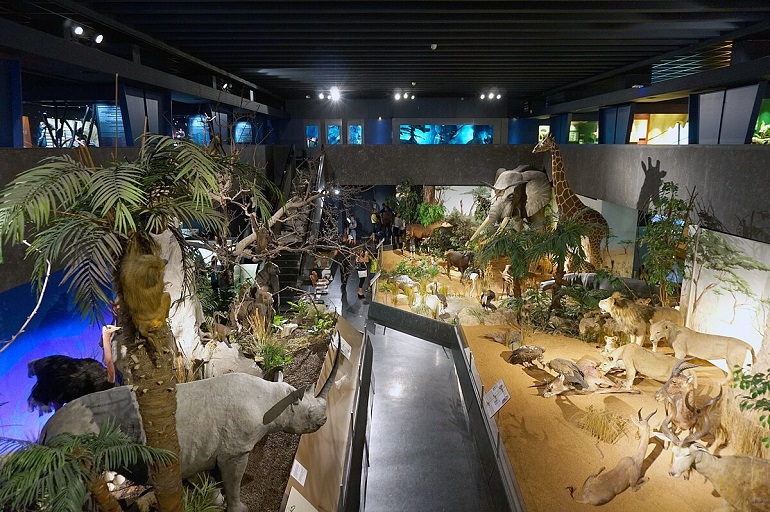
Geneva's Museum of Natural History holds the distinction of being the largest natural history museum in Switzerland, offering five floors devoted to flora, fauna, and geology. The museum houses extensive scientific collections and serves as both an educational institution and research centre.
The museum's collections include Louis Jurine's extensive insect collections of Hymenoptera, Coleoptera, Lepidoptera, and Hemiptera. Other remarkable displays feature a collection of intricate glass models of invertebrates crafted by Leopold and Rudolf Blaschka. The museum's most famous resident is Janus, a living two-headed tortoise that serves as the institution's mascot and one of its main attractions.
The museum emphasises Swiss environmental history and showcases global biodiversity through carefully curated exhibits. Visitors can explore dinosaur skeletons, extensive sea life displays, native wildlife specimens, and geological formations that tell the story of natural evolution. The five floors provide a comprehensive journey through natural sciences, making complex scientific concepts accessible to visitors of all ages.
Ethnography and Human Cultures
Museum of Ethnography (MEG)
Founded in 1901, the Musée d'ethnographie de Genève (MEG) serves as a window into human culture from around the world. The museum's modern, pagoda-like building houses over 80,000 artefacts from five continents, with approximately 1,000 objects on permanent display.
The museum's permanent exhibition traces the history of MEG's collections, offering glimpses of the institution's rich heritage with objects selected from Asia, Americas, Africa, Europe, Oceania, and Music sections. The guided tours take visitors on "a journey through time and the world," exploring the diversity of human cultures and traditions.
MEG features innovative exhibition approaches, including the "Magical Encounters" programme where twelve people from different communities share personal stories linking them to objects in the collections. Each guest chose an object from their community of origin, creating intimate connections between contemporary lives and historical artefacts. These encounters reveal previously unknown stories linked to places, experiences, connections, and heritage.
The museum regularly offers thematic visits such as "Dance of the Collections," which focuses on body movement in different cultural and social contexts, exploring the meaning of body expression across various traditions. The institution also provides enhanced multimedia resources and annually rotating temporary exhibitions.

Humanitarian and Social History
International Museum of the Red Cross and Red Crescent
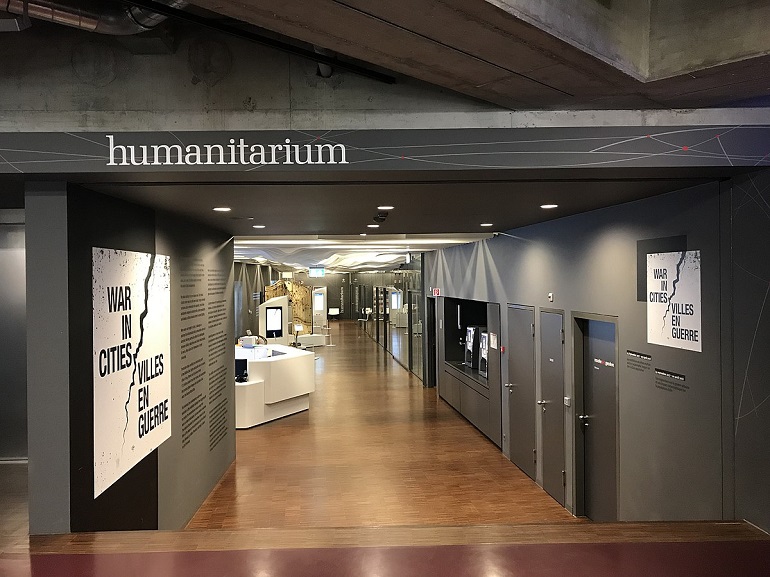
This unique museum invites visitors to reflect on humanitarian action and its contemporary relevance through modern, interactive displays. Unlike traditional museums, the exhibitions are designed to be emotionally engaging, featuring various testimonies from people across many nations.
The museum's exhibitions are organised around three central themes: Defending Human Dignity, Restoring Family Links, and Reducing Natural Risks. The first theme, Defending Human Dignity, begins with displays about Henry Dunant, the founder of the Red Cross, including the original Geneva Convention and identification items used by the organisation. The most moving section features artwork created by prisoners from various parts of the world and an interactive "meet the witnesses" area where visitors can touch life-size images to hear personal stories.
The Restoring Family Links section stands out for its immersive approach. Visitors must navigate through a narrow, dark passage hung with heavy metal chains to access the exhibition. This design choice creates a powerful sensory experience that connects visitors emotionally to the challenges faced by separated families.
The museum's permanent exhibition, titled "The Humanitarian Adventure," addresses major challenges in humanitarian action through personal stories, first-hand accounts, and immersive installations. Each year, the institution also presents temporary exhibitions offering diverse perspectives on contemporary social and cultural issues. The museum includes gardens designed as spaces for reflection, featuring specially commissioned installations that interact with the landscape, soil, topography, and vegetation.
International Museum of the Reformation
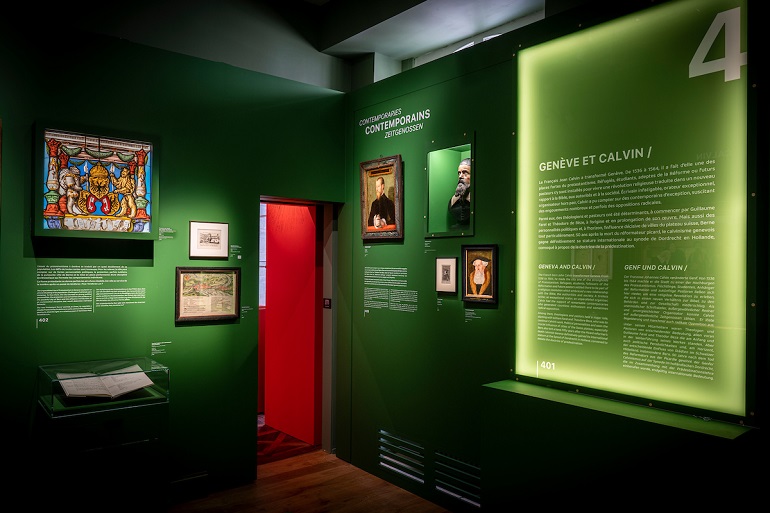
Opened on 15th April 2005, the International Museum of the Reformation presents the history of Protestantism from its very beginnings through to the present day. The museum occupies the ground floor and part of the basement of the Maison Mallet, an 18th-century dwelling built on the foundations of St. Pierre's Cloister, where the Reform was voted in 1536.
The museum houses approximately 500 authentic objects including pictures, engravings, books, manuscripts, medals, photographs, communion chalices, watches, and scale models. In 2012, the institution acquired an exceptional 16th-century manuscript written by Martin Luther, donated by a private collector. The building itself holds historical significance as the former home of notable Huguenot Gedeon Mallet.
Spread over twelve rooms, the museum explores important events surrounding Protestant history, describing the lives of men and women who contributed to the Reformation Movement. The exhibitions employ various media, from historic items such as paintings, original manuscripts, engravings, and religious objects, to modern films. The museum pays special attention to the foundation of the Reformation Movement, the ideas it inspired, and its conception of the world and mankind.
Maison Tavel
Maison Tavel represents Geneva's oldest private residence, meticulously preserved to depict medieval and patrician life. This six-floor museum provides insight into local history and the lives of Geneva's residents over the centuries.
The museum allows visitors to experience medieval daily routines, architecture, and customs through period furnishings, miniature models, and pieces of art. One of the most impressive features is a detailed model of 19th-century Geneva that occupies an entire room. The museum serves as the ideal destination for travellers genuinely interested in Geneva's local culture, traditions, and historical development.
Modern and Contemporary Culture
MAMCO (Museum of Modern and Contemporary Art)
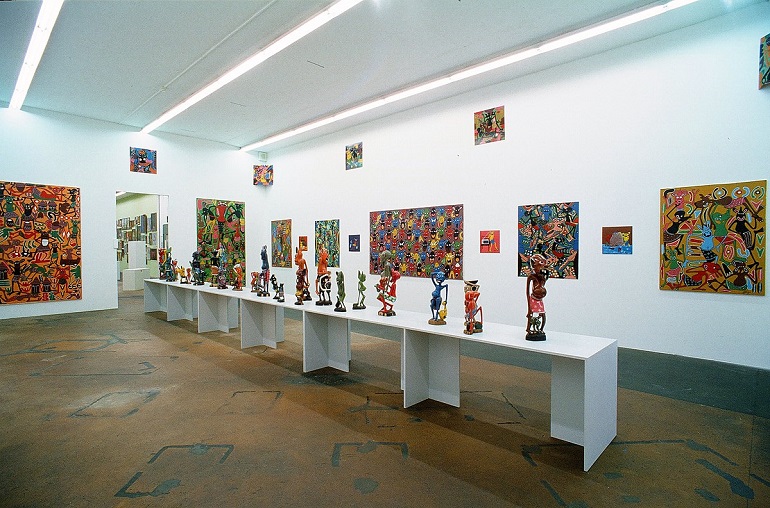
MAMCO stands as Switzerland's largest museum dedicated to modern and contemporary art. The institution presents rotating exhibitions, installations, and performances that reflect the vibrancy and evolution of contemporary artistic trends. The museum serves as a vital platform for understanding current artistic movements and their cultural contexts.
Science and Technology
CERN Science Gateway
For visitors intrigued by physics and the universe, CERN's visitor centre provides extraordinary insight into research behind the Large Hadron Collider and scientific exploration at the frontiers of knowledge. Although not a traditional museum, CERN offers guided tours that reveal the cutting-edge research being conducted at this world-renowned facility.
Photography
Centre de la Photographie Genève
This specialised institution serves as a beacon for photographic arts, exhibiting innovative works from Swiss and international artists. The centre demonstrates photography's evolution as an artistic medium and its role in contemporary culture.
Specialised Collections
Museum of Watchmaking and Enamelling
Part of the Geneva Museums of Art and History association, this institution focuses specifically on timepieces and enamels. The museum complements the Patek Philippe Museum by providing additional perspectives on Geneva's horological heritage.
Cabinet des Estampes
Also part of the municipal museum network, the Cabinet des Estampes specialises in graphic arts and prints. The institution maintains significant collections of engravings, lithographs, and other printed works that document artistic and historical developments.
Local Cuisine
Geneva's culinary scene beautifully reflects its position at the crossroads of Swiss and French gastronomy, offering visitors a delightful array of local specialities alongside beloved Swiss classics. The city's signature dish is longeole, a distinctive pork sausage infused with fennel seeds that's traditionally slow-cooked for hours and served with boiled potatoes and lentils, particularly during the festive Escalade celebrations. Fresh from the pristine waters of Lake Geneva, lake perch fillets and trout feature prominently on local menus, often prepared simply to showcase their delicate flavours with butter and lemon sauces. During the Christmas season, locals savour cardon genevois (cardoons), a thorny artichoke variety prepared as a rich gratin, while malakoff - crispy fried cheese balls with molten centres - appear at festivals and make perfect companions to local wines. Sweet tooths shouldn't miss rissoles aux poires, delicate pastries filled with spiced pear compote made from local cooking pears, alongside the classic Swiss offerings of cheese fondue, raclette, and rösti. The city's restaurants proudly champion locally-sourced ingredients, from Tomme Vaudoise cheese to seasonal vegetables, creating a farm-to-table movement that celebrates Geneva's rich terroir whilst maintaining strong connections to traditional Swiss culinary heritage.
Shopping
Geneva offers a sophisticated shopping experience with distinct retail areas catering to various tastes and budgets. The city's main shopping district stretches along the parallel streets of Rue du Rhône and Rue du Marché, where luxury boutiques and world-famous watchmakers showcase their finest collections. For a more diverse shopping experience, visitors can explore Rue du Mont-Blanc, which specialises in Swiss souvenirs, including pocket knives and chocolates. The charming Old Town, particularly along Grand Rue, is perfect for art enthusiasts and antique collectors, whilst the Plainpalais area offers excellent vintage shopping opportunities. The city also boasts several modern shopping centres, with Balexert being the largest mall, housing over 140 stores. For those seeking local designers and unique finds, the trendy Eaux-Vives district features chic boutiques and concept stores. Whilst Geneva's prices tend to be on the higher side, more affordable shopping can be found at department stores like Manor and high-street chains such as H&M and C&A.
Nature in and around Geneva
Geneva offers a remarkable blend of natural wonders, from its iconic lake to its majestic mountain surroundings. The city itself is one of Europe's greenest, with 20% covered in verdant spaces. The stunning Lake Geneva provides a picturesque backdrop, whilst the limestone ridge of Mont Salève, just south of the city, offers breathtaking views from its 1,143-metre summit. Nature enthusiasts can explore the serene Vallon de L'Allondon, a pristine area perfect for light trekking alongside a beautiful stream. The meeting point of the differently-coloured Arve and Rhône rivers at La Jonction presents a fascinating natural spectacle. For more adventurous travellers, the nearby Jura Mountains present excellent opportunities for hiking, with Mont Tendre, the tallest peak at 1,679 metres, providing panoramic views of the lake and Alps. The region's natural parks, including the Parc Jura Vaudois, showcase Switzerland's commitment to environmental preservation and offer more than 100 square kilometres of exploration opportunities.
Conservatoire et Jardin botaniques de Genève (Botanical Garden)
Conservatoire et Jardin botaniques de Genève combines artfully landscaped outdoor gardens with distinctive glasshouses housing exotic flora. Seasonal guided tours reveal an extraordinary collection of cacti, orchids and tropical species, while the outdoor herbarium and rock garden illustrate Geneva’s dedication to botanical science. Visitors may stroll among rose beds and century-old magnolias or attend one of the garden’s periodic lectures on conservation and climate resilience, making the site both a soothing escape and an educational experience.

Jardin Anglais
Jardin Anglais occupies a prime lakeside setting, framed by rows of plane trees and offering sweeping views of the Jet d’Eau and the distant fabled Alpes. At its heart sits Geneva’s iconic Flower Clock, a living dais of over 6,500 flowering plants that change with the seasons, perfectly illustrating the watchmaking precision for which the city is famed. Winding paths lead to ornamental beds, marble benches and a graceful 19th-century fountain, inviting visitors to pause for a leisurely picnic or simply to absorb the serene interplay of greenery and water.

Parc La Grange
Parc La Grange is Geneva’s largest lakeside park, celebrated for its extensive rose garden of over 10,000 blooms that burst into colour each summer. Winding paths beneath age-old chestnut trees lead to shaded lawns where open-air concerts are staged on a historic theatre platform, while a restored Victorian greenhouse houses delicate ferns and palm species. The gently undulating topography offers vantage points over the water, making the park a beloved setting for leisurely promenades and sun-dappled repose.
Parc Mon Repos
Parc Mon Repos stretches gracefully along the lakeshore near the United Nations complex, distinguished by its century-old plane tree that dominates the landing pier and palm trees that create an unexpectedly exotic atmosphere near the children's paddling pool. Originally the private estate of scientist Philippe Plantamour, who bequeathed it to the city in 1898, it became Geneva's first public garden along the lakeshore and is managed today without chemical products to promote biodiversity through flowering meadows, beehives and nesting boxes. The park bursts into colour each spring with magnolia blooms near the corner of Rue de Lausanne, followed by crape myrtles producing pink and mauve flowers in summer, while its lakeside position provides exceptional opportunities for birdwatching with species ranging from mallards and great crested grebes to occasional migrant waders.
Bois de la Bâtie
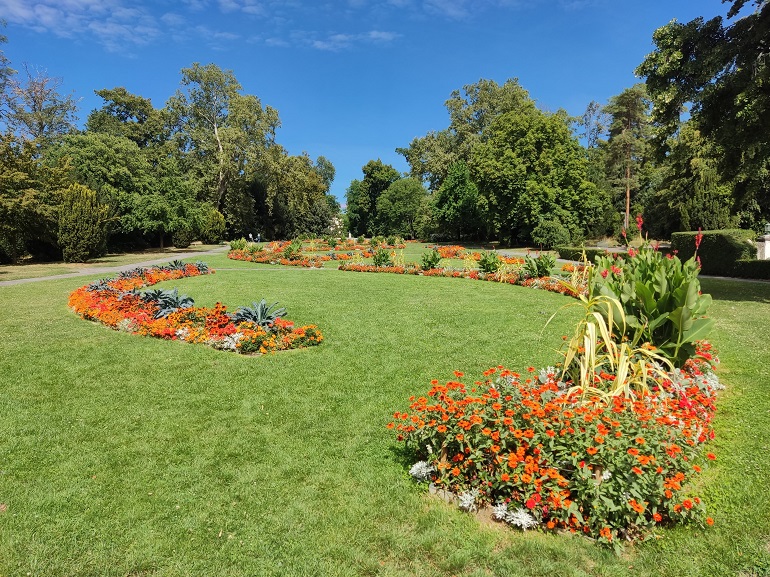
Bois de la Bâtie offers Geneva's most delightful family attraction in the form of a compact zoological garden housing nearly 300 specimens of regional fauna across 2.5 hectares on a wooded hillside overlooking the confluence of the Rhône and Arve rivers. This former 14th-century fort site, donated to the city in 1868, features free-roaming peacocks, domestic animals from ancient Swiss breeds preserved by ProSpecieRara foundation, and enclosures containing everything from alpine ibex to Shetland ponies. Beyond the animal park, the site encompasses Geneva's largest playground, complete with a 10-metre-high tower-slide and hedgehog-shaped hut, alongside forest paths beneath centuries-old oak trees and seasonal splashing pools that delight children during summer months.
Getting to Geneva & Around
Getting to Geneva
The simplest ways to reach Geneva are by air into Genève Aéroport, by train to Genève-Cornavin on Swiss and French rail networks, by long-distance coach to the central bus station, by car via the A1 (and the A40 from France), and even by boat across Lake Geneva.
By air
Genève Aéroport sits roughly 4 km from the city centre and is integrated into the unireso public transport network for easy transfers into town.
There is a dedicated airport rail station with frequent services, and all trains to or from Genève-Aéroport call at Genève-Cornavin in about seven minutes, placing arrivals in the heart of the city swiftly.
By train
Genève-Cornavin is the principal station and an international hub served by Swiss Federal Railways and French services, including TGV and TER, as well as the cross-border Léman Express network.
High-speed TGV Lyria connects Paris and Geneva directly, providing a fast intercity link into Genève-Cornavin for onward connections on foot, tram, or local rail.
The airport station also offers direct trains into the Swiss network and towards France, making rail a convenient choice for both international and domestic arrivals.
By coach
Long-distance coaches such as FlixBus serve central Geneva at the Gare Routière Centrale on Place Dorcière, providing links from numerous European cities straight into the city centre area.
By car
Geneva anchors the western end of Switzerland’s A1 motorway, the main east–west route that spans the country and connects major cities across the network.
From France, the A40 (Autoroute Blanche) approaches the Geneva area via the Jura and Alps, offering a direct corridor from Mâcon and the Rhône-Alpes region towards the Swiss border.
A Swiss motorway vignette is mandatory for vehicles up to 3.5 tonnes using motorways and expressways; it can be obtained before entering Switzerland or at the border and is valid across the network for the stated period.
By boat
CGN passenger boats on Lake Geneva link Geneva with lakeside towns such as Nyon and Lausanne, offering a scenic approach to the city in season.
Services use multiple Geneva landings, with Genève-Mont-Blanc the primary quay for many departures, and additional calls at spots such as Jardin Anglais depending on the cruise or route.
Practical tips
- The airport–city rail hop to Genève-Cornavin takes around seven minutes and runs frequently throughout the day for quick transfers into the centre.
- The cross-border Léman Express improves access from French towns and the canton of Vaud, with integrated services designed for seamless regional mobility.
- Within Greater Geneva, the unireso network covers the airport and city, simplifying multimodal connections on arrival.
Getting around Geneva
Getting around Geneva is straightforward thanks to the integrated Unireso network linking trams, buses, commuter trains and lake boats across the urban area, with clear maps, frequent services and simple ticketing across modes. Visitors staying in registered accommodation typically receive the digital Geneva Transport Card, enabling complimentary travel on public transport across zone 10 for the duration of the stay.
Public transport
The backbone of mobility is Unireso, a common fare system spanning Transports publics genevois (TPG) trams and buses, Swiss Federal Railways, the Léman Express and the Mouettes Genevoises shuttle boats, enabling seamless multimodal trips on a single ticket within defined zones. Network information, timetables and service updates are available via the TPG website, which covers city trams, trolleybuses and buses across the canton and beyond.
Trams and buses
TPG operates dense tram and bus corridors that reach the main districts, business areas and border communes, with frequent daytime headways and reliable interchange at key hubs such as Cornavin and Plainpalais. The official TPG mobile app provides live departures, journey planning and service alerts to streamline trips across the whole network.
Léman Express
The Léman Express is the cross-border S-train network built around the CEVA link, connecting Genève-Cornavin with Eaux-Vives and Annemasse and extending to French Alpine towns, making rail an everyday option within Greater Geneva. Travel by SBB and Léman Express within the canton is included in Unireso tickets, simplifying combined rail–tram–bus journeys.
Lake shuttles
Mouettes Genevoises run four colour-coded shuttle-boat lines across the harbour, offering fast cross-lake links between Pâquis, Molard, Eaux-Vives, Genève-Plage and De-Chateaubriand that form part of the public transport network. These services are integrated into Unireso, so one ticket covers boat, tram, bus and eligible train segments within the valid zones.
Tickets and passes
Unireso’s integrated ticketing means one valid ticket or pass covers trams, buses, lake shuttles and eligible trains in the selected zones and time window, reducing the need to re-purchase when changing modes. Guests in approved hotels, hostels and campsites receive the digital Geneva Transport Card before arrival, valid for unlimited public transport within zone 10 (canton of Geneva, excluding Céligny) for the full stay.
Night travel
On weekend nights, the nocturnal network keeps many urban and regional lines running, with coordinated connections and inclusion within usual Unireso validity, ensuring late-evening and overnight mobility. Links are provided with Léman Express where applicable, aiding cross-network transfers after hours.
Cycling
Geneva supports city cycling with rental options: Genève Roule offers convenient hire near Cornavin and seasonal free bike schemes, while Donkey Republic provides app-based 24/7 bikes with numerous hubs for flexible pick-up and drop-off. Lakeside paths and central corridors make short intra-city rides efficient, especially for crossing between Eaux-Vives, Pâquis and Carouge.
Car sharing
For trips beyond the reach of public transport, Mobility car sharing maintains numerous vehicles and locations across the city, bookable via app and accessible around the clock. This complements transit for occasional driving without the commitments of car ownership, with options ranging from compact cars to vans.
Useful tools
- TPG website and app: live departures, disruptions and journey planning for trams and buses across the canton.
- Unireso overview: how the integrated fare system spans tram, bus, rail and lake shuttles in and around Geneva.
- Geneva Transport Card: digital pass provided by registered accommodation, valid across zone 10 for the length of the stay.
Best Time to Visit
The optimal time to visit Geneva falls between May and October, with the summer months of June to August offering the warmest temperatures around 25°C and perfect conditions for outdoor activities. However, these peak months bring larger crowds and higher prices. For a more economical visit with pleasant weather and fewer tourists, consider travelling in the shoulder seasons of spring (May) or autumn (September-October). The city experiences rainfall throughout the year, with approximately 8-10 days of precipitation each month. Winter months from December to February transform Geneva into a magical destination with Christmas markets and nearby skiing opportunities, though temperatures can drop significantly below freezing. Regardless of when you choose to visit, Geneva's compact size allows you to explore its main attractions comfortably, with most hotels providing complimentary public transport cards for convenient city navigation.