Romania Guide  |
|---|
|
| | Top Destinations |
|---|
|
| | Southeast Europe |
|---|
|
| | Europe Guide |
|---|
|
| | Travel Tools |
|---|
|
|
|
|
Romania Travel & Culture Guide
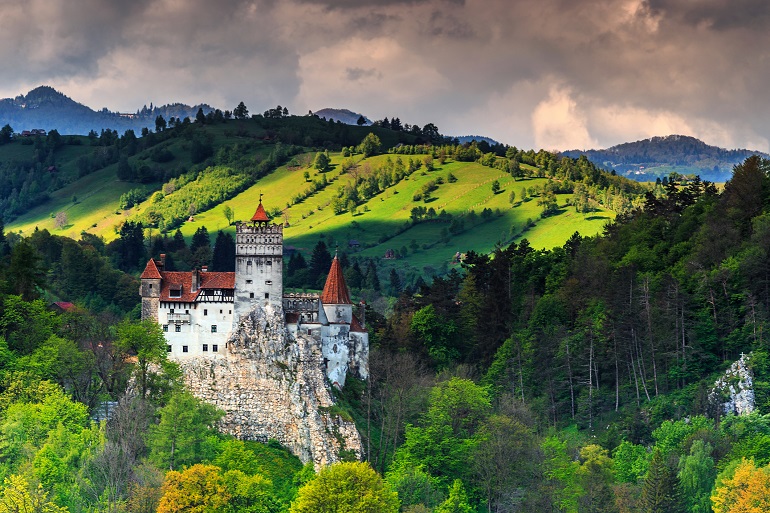 Bran Castle, Romania Bran Castle, Romania
Introduction to Romania
Romania, located in the geographic centre of Europe, is the largest country in Southeastern Europe and the twelfth-largest in Europe, with an area of 238,391 square kilometres. It borders Ukraine and Moldova to the east, the Black Sea to the southeast, Bulgaria to the south, Serbia to the southwest, and Hungary to the west. The country features diverse terrain distributed roughly equally between mountains, hills, and plains, with the Carpathian Mountains dominating the centre.
The Romanian landscape offers remarkable natural beauty, including 14 national parks and the Danube Delta, which is the second-largest and best-preserved delta in Europe. This delta spans 5,800 square kilometres and supports 1,688 different plant species, making it a UNESCO World Heritage Site and a paradise for birdwatchers. Romania's varied ecosystems provide habitats for numerous wild animals, including brown bears, European lynx, grey wolves, and even reintroduced European bison.
Romania has a rich cultural heritage reflected in its well-preserved medieval towns, castles, and traditional villages. The country has earned recognition as a top destination to visit by CNN Travel, highlighting attractions such as Transylvania with its historic castles, the lesser-known regions of Maramureș, and the Via Transilvanica trail that connects 12 UNESCO World Heritage sites. The capital, Bucharest, is home to approximately 2.1 million people, while other significant cities include Iași, Cluj-Napoca, Timișoara, and Constanța.
With a population of about 21.9 million, Romania is predominantly Romanian (89.6%), with Hungarian (6.1%) and other minorities. The official language is Romanian, a Romance language similar to French, Spanish, and Italian. Romania joined the European Union in 2007 and is also a member of NATO, making it an increasingly popular tourist destination that attracted 14 million foreign visitors.
|
History of Romania
|
|---|
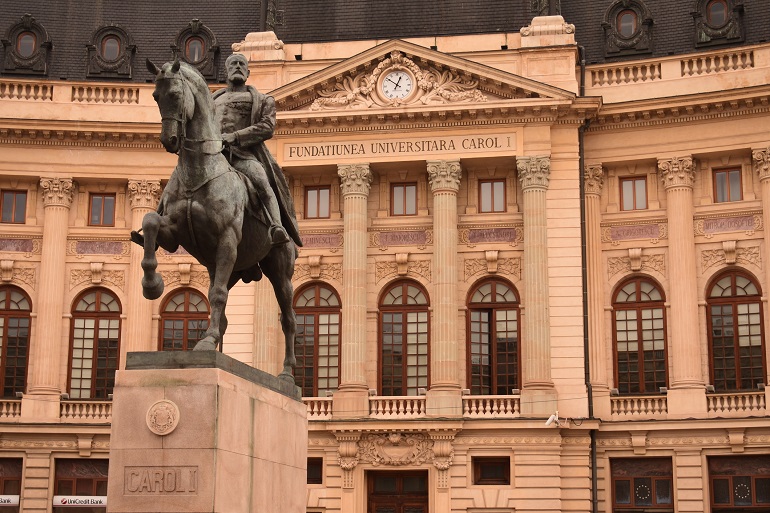
Discover Romania's rich history from ancient Dacian settlements to modern democracy. Learn about its unification, independence from the Ottoman Empire, and journey through communism to EU membership.
|
| Romanian Cuisine
|
|---|
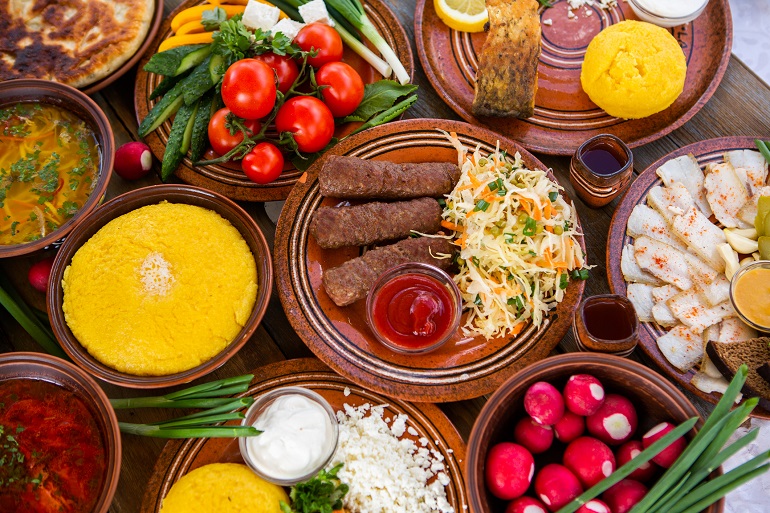
Discover Romania's hearty cuisine featuring sarmale, mici and mămăligă. From traditional meat dishes to delectable desserts, explore the authentic flavours of this Eastern European gem.
|
Attractions
|
Northern Transylvania
| Rodna Mountains National Park
|
|---|
 Rodna Mountains National Park, Romania's second-largest protected area in the Eastern Carpathians, showcases spectacular glacial landscapes with rugged peaks, deep valleys, and pristine lakes. The park's crown jewel is Pietrosul Rodnei, standing at 2,303 metres as the highest summit in the Eastern Carpathians. Nature enthusiasts will appreciate the park's remarkable biodiversity, including rare plants like the Rodna Mountain Orchid and Edelweiss, alongside wildlife such as brown bears, wolves, lynx, and successfully introduced marmots. Visitors can explore numerous hiking trails leading to stunning attractions including Lacul Lala Mare (the largest glacial lake in the Eastern Carpathians), the impressive Horses Waterfall (Cascada Cailor), and the breathtaking Daffodils Clearing which spans six hectares when in bloom each May. The park also offers seasonal activities with skiing at Borșa resort in winter and equestrian walks through traditional villages where local crafts and folk traditions remain vibrant. |
| Wooden Churches of Maramureș ※
|
|---|
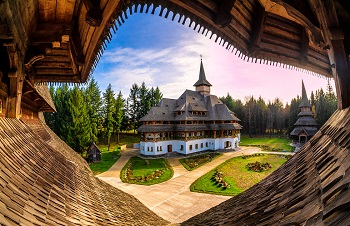
 The Wooden Churches of Maramureș offer visitors a remarkable glimpse into Romania's rich cultural heritage, showcasing extraordinary craftsmanship that dates back to the 16th century. These architectural masterpieces emerged as a creative response to the Habsburg Empire's prohibition against Orthodox stone churches, with local artisans developing a distinctive "Gothic style of Maramureș" characterised by tall, slim bell towers and massive roofs that appear to dwarf the main structures. Of the original 300 wooden churches, approximately 100 remain today, with eight recognised as UNESCO World Heritage Sites for their outstanding cultural value. The interiors feature naive yet captivating Biblical scenes painted by local artists, whilst the exteriors demonstrate exceptional timber construction techniques passed down through generations of specialised church carpenters. Each church tells a story of resilience, faith and artistic ingenuity, offering a rare opportunity to experience what is essentially a living museum of European vernacular religious architecture. |
Western Transylvania
| Retezat National Park
|
|---|

 Retezat National Park, Romania's first national park established in 1935, offers a breathtaking natural landscape with crystal-clear glacial lakes, dense forests and towering peaks. Known as the 'land of the blue eyes', it boasts 80 magical glacial lakes, including Bucura, the largest glacial lake in Romania, and Zănoaga, the deepest. The park features 20 peaks over 2,000 metres, with Peleaga standing at 2,509 metres offering stunning 360-degree views. Wildlife enthusiasts will appreciate the rich biodiversity, home to 55 mammal species including brown bears, wolves and lynx, as well as 120 bird species and rare butterflies. Hikers can explore well-marked trails leading to spectacular waterfalls like Lolaia, whilst history buffs can discover nearby cultural treasures such as the ancient Roman capital Ulpia Traiana Sarmizegetusa and the mysterious Densuș Church. |
| Alba Iulia
|
|---|
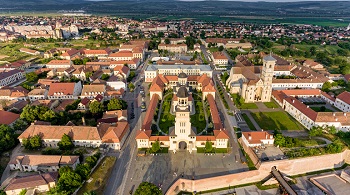
 Alba Iulia, Romania's historical gem, stands as a testament to the nation's rich heritage with its impressive Alba Carolina Citadel, the largest Vauban-style fortress in Southeastern Europe. The seven-bastion star-shaped fortress, constructed between 1716 and 1735, features six monumental gates adorned with baroque architectural elements that showcase 18th-century Transylvanian artistry. Within its walls, visitors can explore significant landmarks including St. Michael's Roman Catholic Cathedral—the most representative Romanic-style building in Transylvania—the Orthodox Coronation Cathedral, the National Union Museum, and the Union Hall where Romania's Great Union of 1918 was declared. Beyond its historical significance, Alba Iulia offers diverse experiences from watching the "Changing the Guard" ceremony to exploring the surrounding natural beauty of the Apuseni Mountains, Scarisoara Cave, and the Dendrological Park. The city's blend of medieval charm, architectural splendour, and cultural importance makes it an authentic Romanian destination that appeals to history enthusiasts, nature lovers, and families alike. |
| Cluj-Napoca
|
|---|
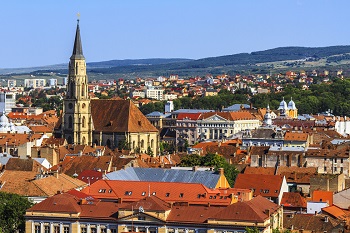
Cluj-Napoca, Romania's unofficial capital of Transylvania, offers a remarkable blend of architectural treasures and cultural heritage. The city centre showcases an impressive collection of historical landmarks, including the Gothic St. Michael's Church with the tallest church tower in Romania, the Baroque Bánffy Palace housing the Art Museum, and the 15th-century Matthias Corvinus House. Union Square forms the heart of the city with its eclectic mix of Renaissance, Baroque and Neo-Classical buildings, dominated by the equestrian statue of King Matthias Corvinus. Beyond architectural splendour, Cluj-Napoca provides natural retreats with its Central Park, the Alexandru Borza Botanical Garden, and the panoramic views from Cetățuia Hill. The city maintains a distinctly relaxed atmosphere where locals enjoy their coffee in the sun without rushing, creating a laid-back environment that complements its rich historical significance and vibrant cultural scene. |
| Timișoara
|
|---|
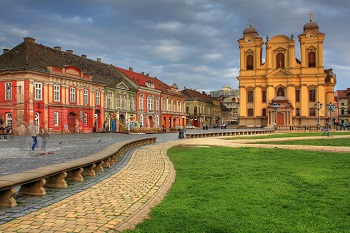
Timișoara, Romania's third-largest city, offers visitors a rich tapestry of architectural splendour with its impressive mix of Baroque, Art Nouveau, and Neo-Renaissance buildings earning it the nickname "Little Vienna." The city's historical significance shines through its role as the birthplace of the 1989 Romanian Revolution, where it proudly became the first Romanian city free from communism. Boasting the largest area of historical monuments in Romania with over 900 heritage buildings, Timișoara delights with its magnificent squares including Union Square with its colourful Baroque buildings and Art Museum, and Victory Square dominated by the imposing Orthodox Metropolitan Cathedral with its 83-metre dome—the tallest in Romania. The elegant Palace of Culture, housing four cultural institutions, stands as perhaps the city's most emblematic building, whilst the pedestrian-friendly Old Town, beautiful parks, and the charming Bega River promenade provide perfect settings for leisurely exploration. As the 2023 European Capital of Culture, Timișoara combines architectural grandeur, revolutionary heritage, and vibrant urban spaces in one remarkable destination. |
| Corvin Castle
|
|---|
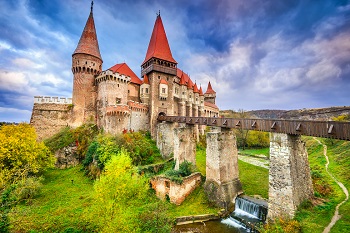
Corvin Castle, one of the largest medieval castles in Europe, offers visitors a fascinating glimpse into Transylvania's rich past. Built in the 15th century by John Hunyadi, this Gothic masterpiece features impressive architectural elements including tall defence towers, a drawbridge, colourful roofs and ornate balconies. The castle boasts remarkable spaces such as the Knight's Hall, the Diet Hall and circular stairways, all decorated with marble and period-accurate furnishings. Beyond its architectural splendour, the castle is shrouded in intriguing legends, including tales of Vlad the Impaler's imprisonment and Turkish prisoners who dug a 30-metre well in exchange for freedom. With its blend of Gothic, Renaissance and Baroque elements developed over six centuries, Corvin Castle continues to captivate the hundreds of thousands of tourists who visit annually to explore its courtyards, towers and even the chilling torture chambers in the underground. |
| Salina Turda Salt Mine
|
|---|
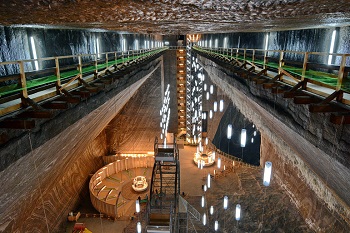
Salina Turda Salt Mine offers a remarkable blend of historical significance and modern entertainment in a subterranean setting. Dating back to antiquity with salt extraction documented since the 13th century, this former medieval salt mine operated until 1932 before being repurposed during World War II as an aircraft shelter. Transformed into a tourist attraction in 1992 and extensively renovated in 2008, today's visitors can explore vast cathedral-sized chambers named after Habsburg monarchs, including the 112-metre-deep Iosif Mine and the stunning 90-metre-high Theresa Mine with its underground salt lake. Beyond its historical value, the mine now functions as an underground theme park complete with a Ferris wheel, rowing boats, bowling alley, mini-golf and table tennis, all whilst maintaining a therapeutic microclimate beneficial for respiratory ailments. This unique combination of preserved mining heritage and contemporary leisure facilities, set against dramatically illuminated salt formations, earned Salina Turda recognition from Business Insider as "the most beautiful underground place in the world." |
| Turda Gorge
|
|---|
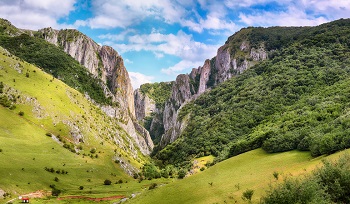
Turda Gorge, a spectacular natural reserve in Romania, showcases dramatic limestone walls reaching heights of 300 metres, formed over 150 million years by the erosive action of the Hășdate River. This 2.9-kilometre-long canyon houses a remarkable biodiversity with over 1,000 plant and animal species, including rare specimens like the Turda Onion (Allium obliquum), found only here and in Asia, and various protected butterfly species. The gorge features approximately 60 caves, many of which have sheltered humans since Neolithic times, with the oldest visitor inscription dating back to 1574. Adventure seekers can enjoy numerous hiking trails crossing four bridges, practice rock climbing on the impressive cliffs, or try paragliding in suitable weather conditions. The Sharp Tower with Hili's Cave offers an impressive via ferrata route, while the Grand Fortress cave represents the main attraction of this wild karst landscape. Beyond its natural splendour, Turda Gorge serves as an important archaeological site with traces of human habitation spanning from the Middle Palaeolithic through the Bronze Age. |
| Roșia Montană ※
|
|---|
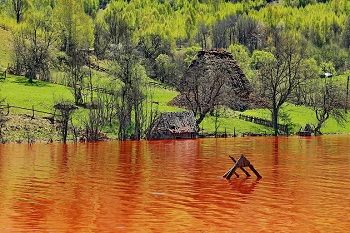
 Roșia Montană offers a unique blend of ancient history and natural beauty. As one of Europe's oldest mining establishments, it boasts a rich heritage dating back to 131 BCE, with over 100 kilometres of historical galleries to explore. The area's multicultural past is evident in its diverse religious sites and cemeteries. Visitors can delve into the fascinating world of gold mining at the Mining Museum, which showcases traditional tools and archaeological discoveries. The surrounding landscape features picturesque tarns and hiking trails, including the opportunity to explore the Carnic Massif and Detunata Goala peak. Despite its struggles with poverty, Roșia Montană's designation as a UNESCO World Heritage site in 2021 highlights its global significance and ensures the preservation of its remarkable mining legacy for future generations. |
| Oradea
|
|---|
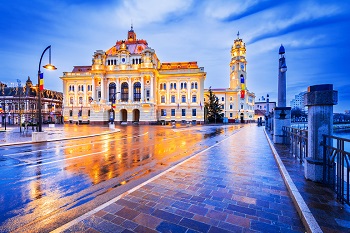
Oradea captivates with its remarkable Baroque architecture, exemplified by the spectacular Bishop's Palace with its 100 fresco-adorned rooms and 365 windows, now home to the Crisana Region Museum. The city boasts impressive landmarks including the Black Eagle Palace with its glass-roofed art nouveau shopping arcade, the majestic Oradea Fortress dating back to 1569, and the elegant Moon Church. Visitors can explore the Town Hall Tower, offering panoramic views and housing a century-old "mother clock" bearing bullet holes from 1944, or wander through Union Square and King Ferdinand Square with their numerous coffee houses. Beyond architectural splendours, Oradea offers cultural experiences through its various museums, the thermal spa at Băile Felix, and a calendar filled with vibrant events such as the Medieval Festival and Saint Ladislaus Days, making it a perfect blend of historical significance and modern leisure. |
| Sarmizegetusa Regia ※
|
|---|
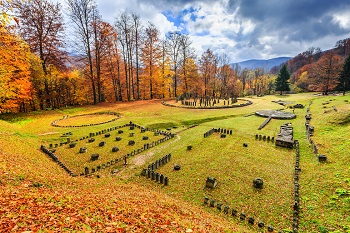
 Sarmizegetusa Regia offers visitors a glimpse into the ancient Dacian civilisation as the former capital and political centre of the Dacian Kingdom. This archaeological site, often compared to Stonehenge, features the remains of an impressive sacred area with eight temples, a monumental altar and a procession road, revealing the sophisticated religious architecture of Dacian culture. Dating back to the 1st century BCE, the site flourished under King Decebalus before its destruction by Romans in 106 CE, marking a symbolic end to Dacian spirituality. Today, visitors can explore the ruins of the fortress, sacred area with its emblematic circular Large Sanctuary, and fragments of a 2,000-year-old paved road remarkably preserved in the dense forests of the Carpathians. As a UNESCO World Heritage site since 1999, Sarmizegetusa Regia provides compelling historical insights amidst beautiful woodland surroundings. |
| Ulpia Traiana Sarmizegetusa
|
|---|
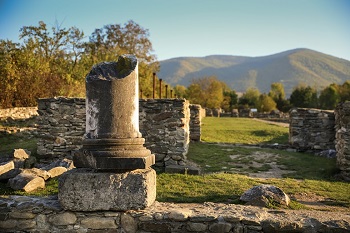
Ulpia Traiana Sarmizegetusa offers visitors a remarkable glimpse into ancient Roman civilisation in Dacia. As the political, administrative, financial and religious centre of the Roman province during the 2nd-3rd centuries, this archaeological site showcases the impressive ruins of a once-thriving metropolis. Visitors can explore the remains of the amphitheatre that once seated 5,000 people, the forum, and several temples dedicated to various deities including Nemesis, Liber Pater, and Mithras. Founded shortly after the second Dacian War, the colony housed 20,000-25,000 settlers and was strategically positioned at the crossroads of important commercial routes. Though only about 5% of the site has been excavated, the visible ruins and artefacts at the nearby museum provide fascinating insights into daily life in this ancient Roman capital that remained inhabited until the 5th century. |
Eastern Transylvania
| Bran Castle
|
|---|
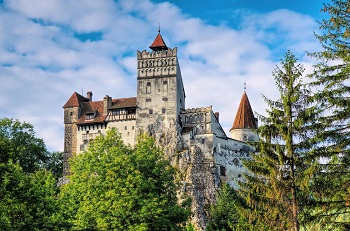
 Perched dramatically on a rocky hilltop, Bran Castle offers visitors a captivating journey through Romanian heritage. This medieval fortress, dating back to the 14th century, served various purposes throughout its storied past, including a defensive stronghold against Ottoman invasions, a customs post, and later a royal residence for Queen Marie of Romania. While its connection to Vlad the Impaler (the alleged inspiration for Count Dracula) is largely exaggerated, this association has contributed to its mystical allure. Today, the castle showcases medieval architecture with narrow staircases, hidden passageways and turreted towers, alongside exhibitions displaying historical artefacts, royal chambers, and Gothic elements. The panoramic views of the surrounding Carpathian Mountains further enhance the timeless beauty of this iconic landmark that represents Romania's rich history and cultural resilience. |
| Villages with fortified churches ※
|
|---|
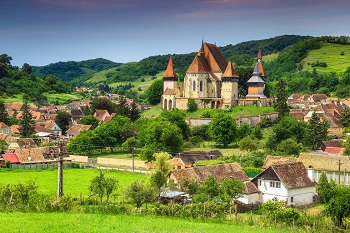
The Villages with Fortified Churches in Transylvania showcase a remarkable medieval defensive heritage, with seven villages (six Saxon and one Székely) recognised as UNESCO World Heritage Sites. These architectural marvels emerged between the 12th and 16th centuries when German Saxon settlers constructed ingenious dual-purpose structures serving as both places of worship and community fortifications against Ottoman, Tartar and other invading forces. The churches feature impressive defensive elements including massive stone walls up to 4.5 metres thick, watchtowers, bastions, and fortified courtyards. Prejmer, the most imposing example, boasts 14-metre-high walls and 270 storage rooms that once sheltered entire communities during sieges. Other notable sites include the charming Viscri (occasionally visited by King Charles), the Gothic Biertan, and the unique Dârjiu representing Székely heritage. Beyond their military function, these churches formed the heart of village life, housing food storage, educational facilities, and even areas for resolving marital disputes. Today, these well-preserved monuments stand as testament to the region's distinctive settlement patterns and cultural landscape that have endured since the late Middle Ages. |
| Brașov
|
|---|
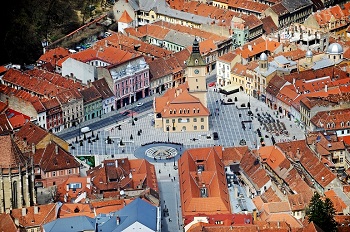
Brașov offers a captivating blend of medieval charm and natural beauty, with over 600 years of history evident in its Gothic, Baroque and Renaissance architecture. The city's fairytale Old Town features the imposing Black Church, the largest Gothic church in Romania, alongside picturesque Council Square lined with beautiful red-roofed merchant houses. Visitors can explore well-preserved medieval fortifications including the White and Black Towers, Catherine's Gate with its Disney-like turrets, and the impressive Weavers' Bastion. For panoramic views, Mount Tâmpa provides a perfect vantage point, accessible by scenic hiking trails or cable car. Beyond the city centre, day trips to nearby attractions such as Bran Castle (often associated with Dracula), Peles Castle and Rasnov Citadel offer further glimpses into Romania's rich cultural heritage. The city's unique character is enhanced by quirky features like Rope Street, one of Europe's narrowest passageways, and the Beth Israel Synagogue, considered one of Eastern Europe's most beautiful. |
| Sibiu
|
|---|
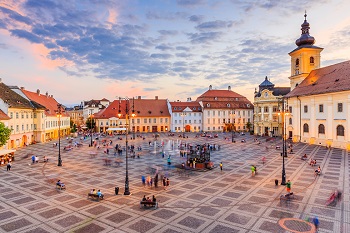
Sibiu captivates with its remarkably preserved medieval charm, boasting a 900-year-old heritage visible throughout its distinctive Upper and Lower Towns. The city's three main squares—Piața Mare, Piața Mică, and Huet Square—are surrounded by colourful historic buildings featuring the famous "Eyes of Sibiu" on their rooftops. Visitors can explore iconic landmarks such as the 14th-century Lutheran Cathedral with southeastern Europe's largest organ, the mysterious Bridge of Lies with its cast-iron structure and fascinating legends, and the Brukenthal National Museum—Romania's first museum established in 1817. The picturesque Stairs Passage connects the wealthier Upper Town with the manufacturing Lower Town, while climbing the Council Tower rewards travellers with panoramic views of the cobblestone streets below. Beyond its architectural splendour, Sibiu offers rich cultural experiences as home to Romania's first hospital (1292), first pharmacy (1494), and the location where the first book in Romanian was printed in 1544. |
| Sighișoara ※
|
|---|
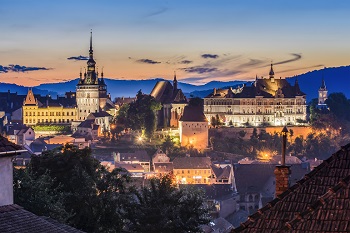
Sighișoara, a UNESCO World Heritage site dating back to the 12th century, stands as one of Europe's last inhabited medieval citadels with over 600 years of history. This colourful Transylvanian town features the iconic 64-metre Clock Tower from the 14th century, complete with moving wooden figurines representing days of the week and offering panoramic views from its summit. The well-preserved citadel is protected by nine surviving towers (from the original fourteen), each maintained historically by different craft guilds and displaying unique designs and architecture. Beyond its connection to Vlad the Impaler, the inspiration for Dracula, Sighișoara charms with its cobbled streets, vibrant buildings, and significant landmarks including the Church on the Hill with its 500-year-old frescoes, the Covered Stairway, and the historic Lower Town with its 17th-century houses. This medieval gem combines architectural splendour, rich Saxon heritage, and authentic atmosphere that transport visitors back through centuries of Transylvanian history. |
| Piatra Craiului National Park
|
|---|
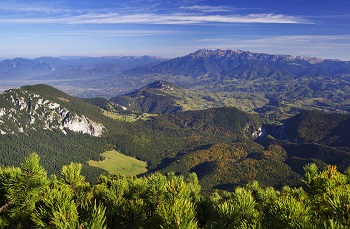
Piatra Craiului National Park offers a breathtaking landscape with steep peaks reaching 2,177 metres and impressive limestone ridges stretching 25 kilometres—the longest of this type in Romania. Established as a protected area in 1938 and later designated a national park in 1990, it boasts remarkable biodiversity with 35 unique invertebrate species, 216 butterfly species, and over 100 bird species, alongside 40% of Romania's mammal species, including large carnivores and chamois. Nature enthusiasts can explore 42 marked hiking trails and 11 cycling routes that wind through spectacular formations such as the Zărnești Gorges with their vertical limestone walls, numerous caves, and karst features. The park's rich flora includes the endemic Dianthus callizonus (the park's symbol), edelweiss, and numerous orchids, whilst history buffs will appreciate the nearby Bran Castle, built between 1377-1382, which served as both a strategic military fortress and later a royal residence, now famous for its connection to the Dracula legend. |
| Bucegi Natural Park
|
|---|
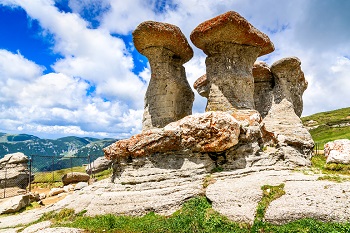
Bucegi Natural Park, a protected area in Romania's Southern Carpathians, offers visitors a remarkable blend of geological wonders and biodiversity. The park's crown jewels are its peculiar rock formations, most notably the Romanian Sphinx—a natural formation resembling a human head created by wind erosion over thousands of years—and Babele (the Old Women), which attract thousands of tourists annually. The expansive Bucegi Plateau, situated above 2,000 meters and accessible by cable car, features 39 marked trekking routes across diverse landscapes including waterfalls, caves, gorges, and glaciers. Nature enthusiasts will appreciate the park's rich biodiversity, home to over 3,500 animal species including chamois, brown bears, wolves, lynx, and golden eagles, alongside endangered plants like the edelweiss flower. Beyond natural attractions, the park houses significant cultural monuments such as the Heroes' Cross (Caraiman Cross), erected in memory of World War I soldiers, and the unique Ialomita Cave Monastery carved into the mountainside—considered by locals to be a sacred place with refreshing properties. With activities ranging from hiking and climbing to skiing and snowboarding in winter, Bucegi Natural Park provides year-round adventures for outdoor enthusiasts. |
| Făgăraș Mountains
|
|---|
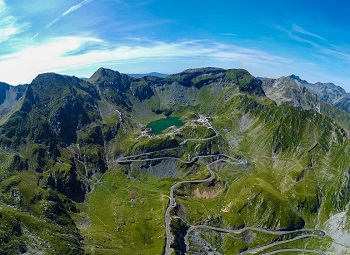
The Făgăraș Mountains and Transfăgărășan Highway offer a perfect blend of natural splendour and historical significance. This remarkable destination boasts Romania's highest peak, Moldoveanu (2,544 metres), alongside breathtaking glacial lakes, cascading waterfalls, and lush alpine meadows. The winding Transfăgărășan road, with its hairpin turns and panoramic views, provides access to numerous attractions including the picturesque Bâlea Lake, the impressive Poenari Castle (the actual residence of Vlad the Impaler), and the magnificent Vidraru Dam. Adventure seekers can enjoy hiking trails, wildlife spotting, and in winter, even stay at the famous ice hotel built from blocks taken directly from Bâlea Lake. The region seamlessly combines outdoor activities with cultural experiences, featuring historic fortresses, Gothic monasteries, and charming villages that showcase Romania's rich heritage. |
| Făgăraș Citadel
|
|---|
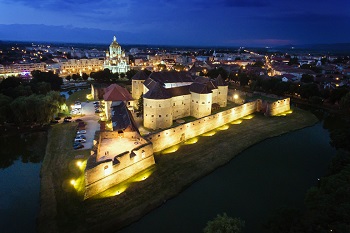
The Făgăraș Citadel offers visitors a remarkable journey through Romania's medieval past. Built in 1310 on the site of a 12th-century wooden fortification, this impressive stronghold has withstood the test of time and served various purposes throughout history—from a defensive fortress to a princely residence, and even as a prison during the communist era. The citadel features an impressive architectural design with thick walls, a water-filled moat, and five towers including the notable Red Tower and Black Tower. Inside, visitors can explore the Făgăraș County Museum with its collection of Roman artefacts, medieval weapons, folk crafts and stunning glass-painted icons. The fortress's Renaissance elements, added during the reign of Prince Gabriel Bethlen, blend with its medieval military architecture to create a fascinating glimpse into Transylvania's rich heritage. |
| Dumbrava Sibiului Natural Park
|
|---|
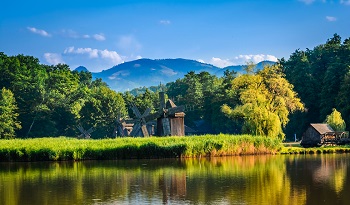
The Dumbrava Sibiului Natural Park offers a remarkable blend of natural beauty and cultural heritage just 4 km from Sibiu's centre. This 960-hectare protected area features a centuries-old oak forest where hornbeam, wild cherry, elm, field maple and lime trees flourish alongside the Trinkbach brook, which forms three picturesque man-made lakes perfect for boat rides and hydrobicycle excursions. The park's crown jewel is the ASTRA Museum of Traditional Folk Civilization, one of Europe's largest open-air museums, showcasing over 300 traditional rural households from across Romania's historical regions. Nature enthusiasts will appreciate the diverse ecosystems supporting abundant wildlife and bird species, with many trees exceeding 100 years of age—including a magnificent 400-year-old oak near one of the lakes. Since the 18th century, this verdant sanctuary has been beloved by locals, offering visitors today a perfect blend of tranquil woodland walks, cultural exploration, and natural splendour in the heart of Romania. |
| Râșnov
|
|---|
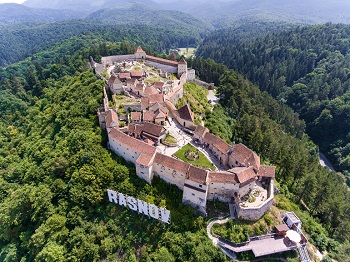
Râșnov offers visitors a remarkable journey through Romanian heritage, centred around its iconic medieval fortress built in the early 13th century. The fortress, which withstood numerous invasions throughout history and was conquered only once in 1612, provides spectacular panoramic views of the surrounding Carpathian Mountains and plains. Beyond the citadel, tourists can explore the Valea Cetatii Cave with its impressive stalactites, visit the largest dinosaur theme park in Eastern Europe (Dino Parc Râșnov), or experience the unique slope elevator that connects the town centre to the fortress. History enthusiasts will appreciate the well-preserved medieval architecture and the fascinating legend of the fortress well, reportedly dug by two Turkish prisoners over 17 years. The town also offers hiking opportunities in the nearby mountains, traditional markets, and winter sports facilities including an Olympic Ski Jumping Complex. |
Wallachia (Southern Romania)
| Bucharest
|
|---|
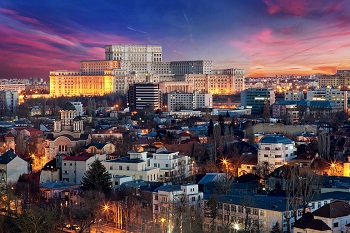
Bucharest captivates visitors with its fascinating blend of historical charm and modern vibrancy. The Romanian capital boasts impressive architectural marvels, including the colossal Palace of Parliament—the second largest administrative building in the world after the Pentagon—and the exquisite Romanian Athenaeum, renowned for its perfect acoustics and baroque spiral staircases. History enthusiasts will appreciate the city's rich heritage, from the 18th-century Stavropoleos Monastery with its ornate frescoes to the Old Town's diverse architectural styles ranging from Byzantine to modern. Nature lovers can enjoy tranquil retreats in Bucharest's beautiful green spaces, such as Herăstrău Park—the largest in the city—and the romantic Cișmigiu Garden, the oldest public garden in Bucharest with its English-style landscaping. The Dimitrie Gusti National Village Museum offers a unique glimpse into Romania's rural architectural heritage, whilst cultural attractions like the Grigore Antipa Museum of Natural History and the George Enescu National Museum provide enriching experiences for curious travellers.
|
| Peleș Castle
|
|---|
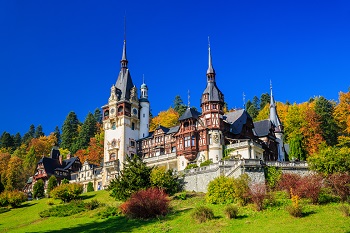
Peleș Castle stands as a magnificent testament to Romania's royal heritage, having served as the summer residence of King Carol I and the royal family from its inauguration in 1883 until 1947. This Neo-Renaissance masterpiece, built between 1873 and 1914, boasts 160 sumptuously decorated rooms featuring Murano crystal chandeliers, German stained-glass windows, handmade silk embroideries and Cordoba leather-covered walls. The castle was remarkably innovative for its time, becoming the world's first castle fully powered by locally produced electricity, with the electric system completed in 1884 and central heating installed by 1897. Beyond its architectural splendour, Peleș Castle holds significant historical value, having hosted important political meetings and distinguished guests including emperors, presidents and world leaders. Today, visitors can explore this architectural jewel through guided tours, marvelling at the Honorary Hallway with its inlaid wood landscapes, the Arms Room filled with impressive armour, the Oriental Room's elaborate weapons collection, and the secret passageway in the Library, all offering a glimpse into the distinguished life of Romanian royalty.
|
| Iron Gates
|
|---|
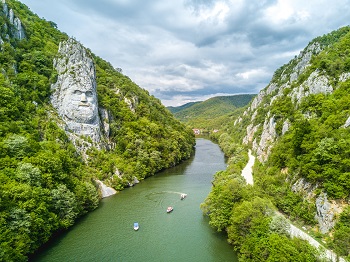
The Iron Gates offers a spectacular combination of natural wonder and historical richness. This stretch of the Danube features Europe's longest gorge system with dramatic limestone cliffs and the narrow Cauldrons where the river reaches depths of 80 metres. The area boasts remarkable archaeological significance, from Mesolithic settlements to Roman engineering achievements like Trajan's Bridge and Tabula Traiana. The impressive 40-metre Decebalus statue carved into riverside cliffs stands as Europe's tallest rock sculpture, while the Iron Gates dams represent significant modern engineering feats. Visitors can explore caves, monasteries, and medieval fortresses, or enjoy boat cruises and hiking trails that showcase the region's unique cultural landscape shaped by Serbian, Czech, Turkish and Romanian influences over centuries. |
| Berca Mud Volcanoes
|
|---|
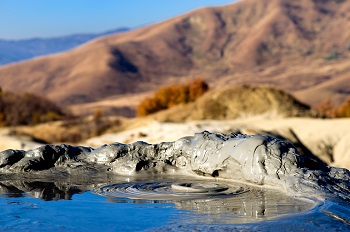
 The Berca Mud Volcanoes offer visitors a truly otherworldly experience, with their lunar-like landscape of small volcano-shaped structures formed by natural gas eruptions pushing mud and salty water to the surface. These rare geological formations, which the locals poetically call "The Gates of Hell," create an ever-changing scenery as new volcanoes emerge whilst others disappear. The conical structures, ranging from 1-8 metres in height, feature bubbling mud "craters" and a cracked clay terrain devoid of most vegetation, except for two rare halophyte shrubs—Nitraria schoberi and Obione verrucifera—that remarkably thrive in this salt-saturated environment. This unique geological and botanical reservation has become a popular backdrop for photographers, film productions and fashion editorials, offering visitors the extraordinary sensation of walking on another planet whilst witnessing one of Europe's most distinctive natural phenomena.
|
| Horezu Monastery ※
|
|---|
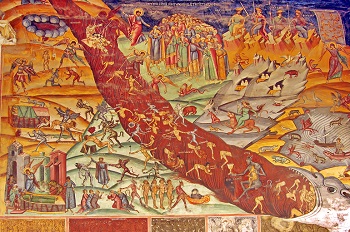
Founded in 1690 by Prince Constantin Brâncoveanu, Horezu Monastery stands as a masterpiece of the unique Brâncovenesc architectural style, which harmoniously blends traditional elements with Neo-Byzantine and Renaissance influences. This Romanian Orthodox nunnery, recognised as a UNESCO World Heritage Site since 1993, showcases exquisite craftsmanship through its architectural purity, rich sculpted details, magnificent frescoes and painted decorative works. The monastery complex includes the main church, the Bolnița Church, and two hermitages, all aligned on an east-west axis in a unified concept. Beyond its architectural significance, Horezu holds profound historical importance through its connection to Prince Brâncoveanu, who was executed in 1714 for refusing to renounce his Christian faith. The monastery also houses a valuable library with rare books dating back to the 16th century, and visitors can experience the peaceful monastic life by arranging overnight accommodation.
|
| Curtea de Argeș Cathedral
|
|---|
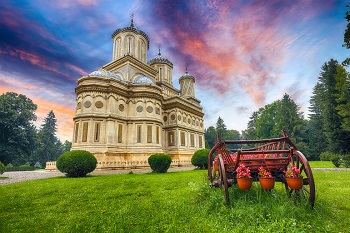
The Curtea de Argeș Cathedral stands as a masterpiece of Romanian medieval architecture, blending Byzantine, Ottoman and local Romanian styles to create a visually stunning monument. Built in the early 16th century during the reign of Neagoe Basarab and consecrated in 1517, this architectural marvel features intricate stone carvings, twisted columns and elegant domes that showcase exceptional 16th-century craftsmanship. Beyond its architectural significance, the cathedral holds deep spiritual importance as a revered pilgrimage site housing the relics of Saint Filofteia and serves as the final resting place for several members of Romania's royal family. Adding to its allure is the fascinating Legend of Master Manole, a tale of sacrifice tied to the cathedral's construction, which gives the site an almost mythical dimension that has inspired Romanian writers and artists throughout the centuries.
|
Moldavia (Northeast Romania)
| Ceahlău National Park
|
|---|
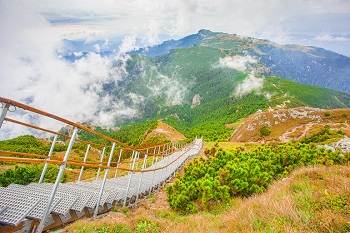
Ceahlău National Park, often referred to as the "Olympus of Romania" or the "Holy Mountain," offers visitors a remarkable blend of natural beauty and cultural significance. This majestic park boasts breathtaking landscapes featuring towering peaks, lush forests, crystal-clear lakes, and the stunning Duruitoarea waterfall. The park is steeped in ancient mythology and Romanian folklore, with fascinating rock formations like Dochia and Cusma Dorobantului that are surrounded by intriguing legends. Beyond its natural splendour, Ceahlău holds deep spiritual importance as the second holy mountain of Orthodox Christianity after Mount Athos, with its own religious holiday celebrated on 6th August. Nature enthusiasts will appreciate the park's rich biodiversity, which includes over 2,000 flower species and numerous protected wildlife. Visitors can explore seven well-marked hiking trails leading to panoramic viewpoints, ancient monasteries, and unique natural phenomena such as the Holographic Pyramid and the Stairway to Heaven that occur around its dedication day.
|
| Iași
|
|---|
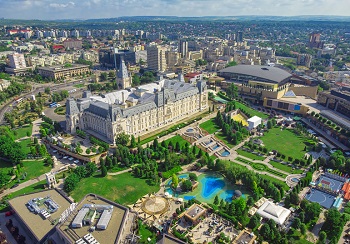
Iași, one of Romania's oldest and most charming cities, captivates visitors with its rich 600-year history and status as Romania's cultural capital. The city boasts magnificent architectural treasures, including the flamboyant neo-Gothic Palace of Culture with its 365 rooms housing four museums, the largest Orthodox church in Romania - the Metropolitan Cathedral, and the exquisite Three Holy Hierarchs Monastery with its unique stone lacery featuring over 30 non-repeating decorative motifs. Beyond its historical landmarks, Iași delights nature lovers with the oldest and largest botanical garden in Romania spanning 100 hectares, and the romantic Copou Park with its famous Eminescu's linden tree. Art enthusiasts will appreciate the "Vasile Alecsandri" National Theatre with its lavish interiors and the University Palace's Hall of Lost Steps adorned with captivating blue murals by Sabin Bălașa. This blend of historical significance, architectural splendour, natural beauty and artistic heritage makes Iași a truly special destination.
|
| Churches of Moldavia
|
|---|
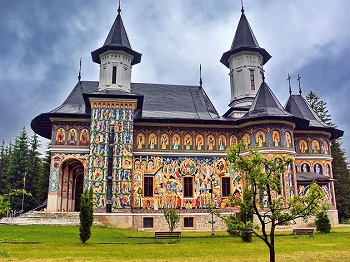
The Churches of Moldavia represent a remarkable collection of eight Romanian Orthodox churches in northern Moldavia, built between the late 15th and late 16th centuries, recognised as UNESCO World Heritage Sites since 1993. These architectural masterpieces are distinguished by their complete exterior walls covered in vibrant fresco paintings—a feature unique in Europe. The frescoes, influenced by Byzantine art, systematically cover all facades with complete cycles of religious themes, showcasing exceptional composition, elegant symbolism, and harmonious colours that complement the surrounding landscape. Notable examples include the Beheading of St. John the Baptist Church in Arbore, built in 1502 by boyar Luca Arbore; the Resurrection Church in Sucevița, added to the UNESCO list in 2010, featuring the magnificent "Ladder to Paradise" depiction; and the Holy Cross Church in Pătrăuţi, founded by Stephen the Great in 1487. The churches stand as testimony to the Moldavian architectural style developed from the 14th century onwards, with each church typically displaying a predominant colour—blue, green, or red—creating a distinctive visual identity amidst the rolling green wooded mountains and flower-filled pastures of Bucovina.
|
| Suceava Fortress
|
|---|
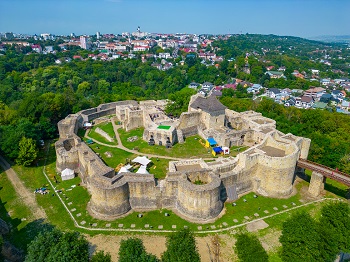
The Fortress of Suceava, built in the late 1300s by Moldavian ruler Peter Mușat, stands as a remarkable testament to Romania's medieval heritage. This 14th-century fortification boasts an impressive reputation as the "unbeatable fortress" that was never conquered by foreign invaders despite numerous Ottoman siege attempts. Throughout its storied past, the fortress served as the royal residence for influential Moldavian voivodes including Stephen the Great and Alexander the Good. Today, visitors can explore the fully reconstructed fortress with its interactive museum exhibitions showcasing medieval weapons, original chapel, and rooms dedicated to Moldavia's historic rulers. The fortress offers a perfect blend of historical immersion and modern entertainment, hosting yearly events such as the "Stefan cel Mare" Medieval Arts Festival with knight tournaments, medieval music, and a unique light and sound show in the evenings. From walking along ancient walls and climbing to panoramic lookout spots to witnessing historical reenactments, the Suceava Fortress provides an authentic journey through Romania's rich medieval past.
|
Dobruja (Eastern Romania)
| Danube Delta ※
|
|---|
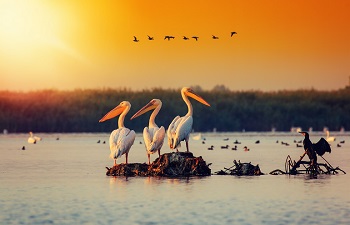
The Danube Delta offers a unique blend of natural wonders and rich cultural heritage. As Europe's second largest and best-preserved delta, it boasts impressive biodiversity with over 5,000 species of plants and animals, including more than 300 bird species, making it a paradise for birdwatchers and nature photographers. Visitors can explore subtropical forests like Letea with its ancient trees and wild horses, cruise through a labyrinth of serene canals, or relax on pristine wild beaches. The delta's fascinating history spans millennia, from ancient Greek colonisation and Roman settlements to Byzantine influences and Turkish domination, all contributing to its cultural mosaic. Today, travellers can discover picturesque villages like Sulina, Chilia Veche and Sfântu Gheorghe, enjoy activities from boat trips and kayaking to fishing and forest safaris, and sample delicious freshwater fish cuisine—all whilst experiencing a place where time seems to stand still and nature reigns supreme.
|
| Constanța
|
|---|
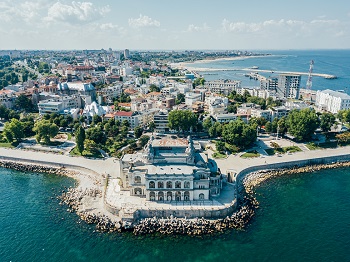
Constanța, Romania's oldest attested town, offers visitors a remarkable blend of ancient heritage and seaside charm. This Black Sea port city showcases 2,600 years of history through its well-preserved landmarks, including the iconic Ovid's Square with its 1887 statue of the exiled Roman poet, and the National History and Archaeology Museum housing treasures from Greek and Roman civilizations. The city's archaeological wealth is displayed in the Archaeology Park with its vestiges of columns, amphorae and ancient building fragments, while the Roman Mosaic Building reveals over 850 square metres of colourful mosaics from the commercial centre that once linked the upper town to the harbour. Beyond its classical heritage, Constanța features the elegant Casino with its stunning seaside promenade, the impressive Orthodox Cathedral built between 1883-1895, and the Great Mahmudiye Mosque offering panoramic city views from its minaret. This harmonious fusion of Greek, Roman, Byzantine and Ottoman influences, combined with beautiful beaches and a vibrant cultural scene, makes Constanța a fascinating destination.
|
|


 Bulgaria Guide
 Greece Guide


 The Wooden Churches of Maramureș offer visitors a remarkable glimpse into Romania's rich cultural heritage, showcasing extraordinary craftsmanship that dates back to the 16th century. These architectural masterpieces emerged as a creative response to the Habsburg Empire's prohibition against Orthodox stone churches, with local artisans developing a distinctive "Gothic style of Maramureș" characterised by tall, slim bell towers and massive roofs that appear to dwarf the main structures. Of the original 300 wooden churches, approximately 100 remain today, with eight recognised as UNESCO World Heritage Sites for their outstanding cultural value. The interiors feature naive yet captivating Biblical scenes painted by local artists, whilst the exteriors demonstrate exceptional timber construction techniques passed down through generations of specialised church carpenters. Each church tells a story of resilience, faith and artistic ingenuity, offering a rare opportunity to experience what is essentially a living museum of European vernacular religious architecture.

 Alba Iulia, Romania's historical gem, stands as a testament to the nation's rich heritage with its impressive Alba Carolina Citadel, the largest Vauban-style fortress in Southeastern Europe. The seven-bastion star-shaped fortress, constructed between 1716 and 1735, features six monumental gates adorned with baroque architectural elements that showcase 18th-century Transylvanian artistry. Within its walls, visitors can explore significant landmarks including St. Michael's Roman Catholic Cathedral—the most representative Romanic-style building in Transylvania—the Orthodox Coronation Cathedral, the National Union Museum, and the Union Hall where Romania's Great Union of 1918 was declared. Beyond its historical significance, Alba Iulia offers diverse experiences from watching the "Changing the Guard" ceremony to exploring the surrounding natural beauty of the Apuseni Mountains, Scarisoara Cave, and the Dendrological Park. The city's blend of medieval charm, architectural splendour, and cultural importance makes it an authentic Romanian destination that appeals to history enthusiasts, nature lovers, and families alike.


 Roșia Montană offers a unique blend of ancient history and natural beauty. As one of Europe's oldest mining establishments, it boasts a rich heritage dating back to 131 BCE, with over 100 kilometres of historical galleries to explore. The area's multicultural past is evident in its diverse religious sites and cemeteries. Visitors can delve into the fascinating world of gold mining at the Mining Museum, which showcases traditional tools and archaeological discoveries. The surrounding landscape features picturesque tarns and hiking trails, including the opportunity to explore the Carnic Massif and Detunata Goala peak. Despite its struggles with poverty, Roșia Montană's designation as a UNESCO World Heritage site in 2021 highlights its global significance and ensures the preservation of its remarkable mining legacy for future generations.

 Sarmizegetusa Regia offers visitors a glimpse into the ancient Dacian civilisation as the former capital and political centre of the Dacian Kingdom. This archaeological site, often compared to Stonehenge, features the remains of an impressive sacred area with eight temples, a monumental altar and a procession road, revealing the sophisticated religious architecture of Dacian culture. Dating back to the 1st century BCE, the site flourished under King Decebalus before its destruction by Romans in 106 CE, marking a symbolic end to Dacian spirituality. Today, visitors can explore the ruins of the fortress, sacred area with its emblematic circular Large Sanctuary, and fragments of a 2,000-year-old paved road remarkably preserved in the dense forests of the Carpathians. As a UNESCO World Heritage site since 1999, Sarmizegetusa Regia provides compelling historical insights amidst beautiful woodland surroundings.

 Perched dramatically on a rocky hilltop, Bran Castle offers visitors a captivating journey through Romanian heritage. This medieval fortress, dating back to the 14th century, served various purposes throughout its storied past, including a defensive stronghold against Ottoman invasions, a customs post, and later a royal residence for Queen Marie of Romania. While its connection to Vlad the Impaler (the alleged inspiration for Count Dracula) is largely exaggerated, this association has contributed to its mystical allure. Today, the castle showcases medieval architecture with narrow staircases, hidden passageways and turreted towers, alongside exhibitions displaying historical artefacts, royal chambers, and Gothic elements. The panoramic views of the surrounding Carpathian Mountains further enhance the timeless beauty of this iconic landmark that represents Romania's rich history and cultural resilience.


 : Local interest
 : Must-see in the country
 : Top cities in Europe