-
Don't want to see ads? Install an adblocker like uBlock Origin or use a Europe-based privacy-friendly browser like Vivaldi or Mullvad.
You are using an out of date browser. It may not display this or other websites correctly.
You should upgrade or use an alternative browser.
You should upgrade or use an alternative browser.
Genetic study The arrival of the Near Eastern ancestry in Central Italy predates the onset of the Roman Empire
- Thread starter Tautalus
- Start date
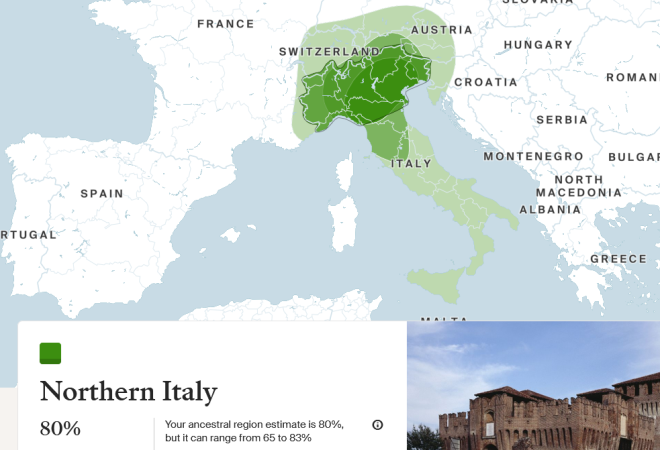
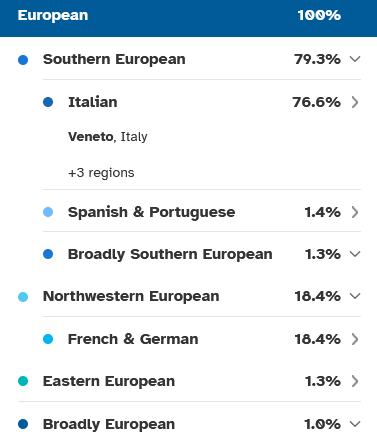
Who were the first Italic speakers? You usually say a very low level but for example we read about ancient Pompeii samples: "The largest proportion of ancestry is accounted for by the combination of components derived from Neolithic farmers from Iran (IRN_Ganj-Dareh_N) and Anatolia Neolithic farmers (TUR_Marmara_Barcin_N)— 69%–88% and 84%–97%, respectively."Always with your old theories?
Firstly, Near Eastern is a too unprecise term - secondly the Italic languages formed surely in Central Europe in an estern post-BB background, what doesn't exclude they could have had some blood drops of your "Near-Eastern" - (what kind? Anatolians dominant? Iranians dominant? Levantines dominant? A mix of 2 of them or of the 3?...) - but at a very low level, and not inherited from the first Italic speakers.
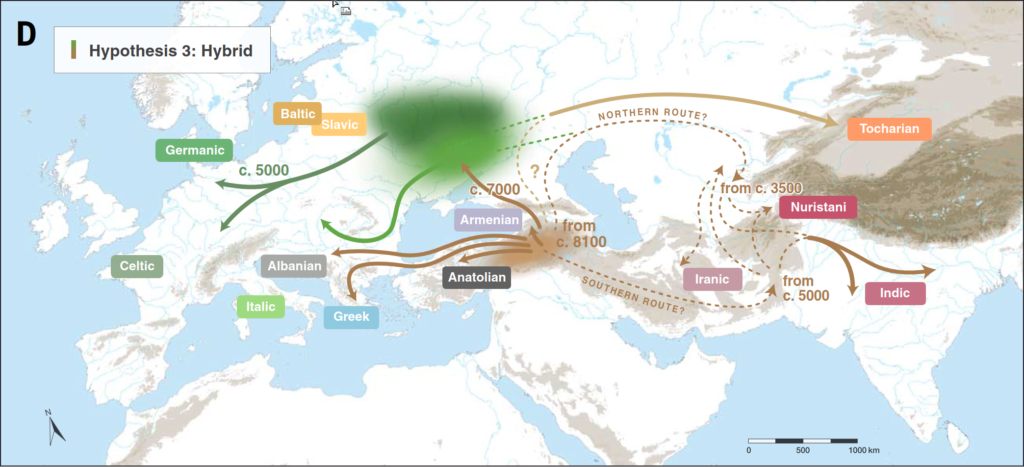
According to the most recent study about the original land of Indo-Europeans (Heggarty et al. 2023), the region in the east of Anatolia and northwest of Iran was the original land of Indo-Europeans and those who were from this region were the original Indo-Europeans, whether you call them slaves or anything else.
HereToLearn
Regular Member
Sorry, again I was referring to phenotype not genetics as the saying refers to a "faccia" (phenotype) of course.Totally agree. The current sample size is low.
I see a lot of similarities between the Greeks and Italians, similar to how I view Swedes and Norwegians. They are separate nations, certainly, but very closely genetically related with a closely tied history.
Ticinese are simply other Italians so of course they overlap with Lombards. This is no surprise. The city was controlled by Milan, historically, and Ticino has been inhabited by Italics since at least the iron age according to Polybius.
The Piemontese do overlap Northern Greeks more so than southern french, although the distance between the two is not excessive.
In fact, as you know, (supposed) genetic similarity doesn’t always predict phenotype.
Even though genetic markers are useful for determining ancestry and relatedness between populations, phenotype is a much more complex trait, shaped by both genetic factors and environmental influences. For example, both Italians and Greeks (or Spaniards, or Portuguese) might share certain genetic markers for light skin or darker skin, but the expression of these traits can vary based on local genetic drift, environmental adaptation, and historical mixing with different populations over time.
Human populations show phenotypic plasticity, meaning that they can adapt to their environment in ways that influence the expression of genetic traits. For instance, skin color is a trait heavily influenced by UV radiation in the environment. Populations living in sunnier areas (such as Southern Spain or Southern Italy) historically developed darker skin to protect against sun exposure, while those in less sunny areas evolved lighter skin to optimize vitamin D production in lower light conditions. In this sense, therefore, geographical closeness can be an even stronger factor than genetics in determining phenotype.
To summarize, while genetics suggests that some Italians and some Greeks are genetically close, phenotypic differences arise because of historical, geographical, and environmental factors that shape how those genetic traits are expressed. In particular, differences in climate, historical migrations, and genetic drift contribute to the observable physical appearance of individuals from these populations. Therefore, even closely related populations can look different due to the complex interplay between their genetic makeup and the environmental conditions they have lived under for centuries.
Last edited:
HereToLearn
Regular Member
Not to disrespect anyone or any nationality, I really don't feel any unique bond with Greece (definitely not more unique than the cultural bond I may feel with Spain for example, maybe also because my wife is Spanish, or even France). I feel much more at home in Barcelona than in Athens.The similarity between Italians and Greeks is due to various reasons, and it does not always mean that they have completely similar origins. The uniparental markers are only partly the same. As I know the thesis that modern Greeks, particularly continental Greeks, had medieval influences from the north, which are called Slavic but could well be something more generically Balkan, and are further north than Iron Age Greeks has not yet been fully disproved.
Many of you, though of Italian ancestry, were born and raised abroad. I was born and raised in Italy, and honestly today the relationship between Italy and Greece is almost inexistent, even the history of Italy and Greece is separated by many centuries. On TV you can count on the fingers of one hand the number of times Italian TV talks about something happening in Greece. Today there are more Italians living in Spain and Portugal than in Greece. Italy in recent decades has perhaps had more relations with Albania than with Greece.
At the same time, I feel connected with Central and Southern Italy too, of course.
Again nothing against Greece and the Greeks, towards whom I have the utmost respect, but they are really not "in the radar" for me and for people with my background.
Last edited:
HereToLearn
Regular Member
I'm very curious to finally see a genetic comparison of the Piemontese and French natives from Alpes Maritimes or even Var.To be honest, the Piedmontese sample on the G25 is from Val Borbera, in the far southeastern corner of Piedmont, and where I think they speak more Ligurian than Piedmontese (but I'm not sure about that). Thus, an area more similar to northern Ligurians and northwesterns Emilians than to Piedmontese in the Alps. While the Southern French on G25 is most likely a sample near the Spanish border.
MOESAN
Elite member
- Messages
- 6,372
- Reaction score
- 1,615
- Points
- 113
- Location
- Brittany
- Ethnic group
- more celtic
- Y-DNA haplogroup
- R1b - L21/S145*
- mtDNA haplogroup
- H3c
Whoever the first I-Eans are, when we speak of Italics or Germans or Celts or a lot of othersof the minguistic subfamilies we speak of pops far evolved from the first IE or proto-IE speakers, with a very different story and genetic package - So the people who imported the Italic culture and the Etruscans ones were already very far from the peri-Iranian regions and some of these newcomers who came only after the first IA the most during the Empire can be considered as strangers for the Roman and other "autochtonous" people of Italy. "Slaves" did you say? Slave is not an insult and nobody here affirmed all these new people in Italy were slaves; a lot seem to have been very well integrated people if not completely acculturated, and wealthy people too...Who were the first Italic speakers? You usually say a very low level but for example we read about ancient Pompeii samples: "The largest proportion of ancestry is accounted for by the combination of components derived from Neolithic farmers from Iran (IRN_Ganj-Dareh_N) and Anatolia Neolithic farmers (TUR_Marmara_Barcin_N)— 69%–88% and 84%–97%, respectively."
According to the most recent study about the original land of Indo-Europeans (Heggarty et al. 2023), the region in the east of Anatolia and northwest of Iran was the original land of Indo-Europeans and those who were from this region were the original Indo-Europeans, whether you call them slaves or anything else.
The main point is that "Who were the first Italic speakers?" We know Italic, Celtic, and Germanic were direct descendants of proto-IE language but Iranian and Slavic were from Indo-Iranian and Balto-Slavic sub branches, so the first Italic speakers should be close to proto-IE people.Whoever the first I-Eans are, when we speak of Italics or Germans or Celts or a lot of othersof the minguistic subfamilies we speak of pops far evolved from the first IE or proto-IE speakers, with a very different story and genetic package - So the people who imported the Italic culture and the Etruscans ones were already very far from the peri-Iranian regions and some of these newcomers who came only after the first IA the most during the Empire can be considered as strangers for the Roman and other "autochtonous" people of Italy. "Slaves" did you say? Slave is not an insult and nobody here affirmed all these new people in Italy were slaves; a lot seem to have been very well integrated people if not completely acculturated, and wealthy people too...

Pax Augusta
Elite member
The main point is that "Who were the first Italic speakers?" We know Italic, Celtic, and Germanic were direct descendants of proto-IE language but Iranian and Slavic were from Indo-Iranian and Balto-Slavic sub branches, so the first Italic speakers should be close to proto-IE people.


torzio
Well-known member
- Messages
- 4,203
- Reaction score
- 1,312
- Points
- 113
- Y-DNA haplogroup
- T - L131
according to an english uni ( which i posted months earlier)..it was celtic-italic-illyric......with celtic splitting off and going to southern germany....italic heading through NE italy and illyric into western balkansThe main point is that "Who were the first Italic speakers?" We know Italic, Celtic, and Germanic were direct descendants of proto-IE language but Iranian and Slavic were from Indo-Iranian and Balto-Slavic sub branches, so the first Italic speakers should be close to proto-IE people.
MOESAN
Elite member
- Messages
- 6,372
- Reaction score
- 1,615
- Points
- 113
- Location
- Brittany
- Ethnic group
- more celtic
- Y-DNA haplogroup
- R1b - L21/S145*
- mtDNA haplogroup
- H3c
We know?The main point is that "Who were the first Italic speakers?" We know Italic, Celtic, and Germanic were direct descendants of proto-IE language but Iranian and Slavic were from Indo-Iranian and Balto-Slavic sub branches, so the first Italic speakers should be close to proto-IE people.
Based on what? The IE languages modern families are all of them far enough from teir early IE ancestor and are not directly issued from the proto-IE. And these languages for he most of the cases are the result of a chain of transmission with loans of languages parts and loans of the people DNA accultured during the long travel towards modern geographic places. That remains true even if I accpet the "southern theory" for IE first parts of genesis. Italic shared a lot of northern Europe words present only in Celtic, Germanic, sometimes Slavic tongues.
Even the common admixture shared with Near-East is for a big part ancient long term heritages inherited before the IEan genesis, with drift very often.
torzio
Well-known member
- Messages
- 4,203
- Reaction score
- 1,312
- Points
- 113
- Y-DNA haplogroup
- T - L131
there was no germanic liguistic syntax in italy until the roman imperial times.
in the iron-age there where still celts in central and southern germany.
in fact Glauberg near modern frankfurt was still a celtic city.
in the iron-age there where still celts in central and southern germany.
in fact Glauberg near modern frankfurt was still a celtic city.
torzio
Well-known member
- Messages
- 4,203
- Reaction score
- 1,312
- Points
- 113
- Y-DNA haplogroup
- T - L131
my guess is from dalmatia , heading north where speaking an old italic branch used by liburnians, dalmatians, japodes, histrians etc in there 1000 year trading period with the veneti, picene, samnites etc.
in fact the daunian absorption into samnite society, who bordered the daunians on 2 sides was made easy due to this linguistic association
in fact the daunian absorption into samnite society, who bordered the daunians on 2 sides was made easy due to this linguistic association
torzio
Well-known member
- Messages
- 4,203
- Reaction score
- 1,312
- Points
- 113
- Y-DNA haplogroup
- T - L131
my guess is from dalmatia , heading north where speaking an old italic branch used by liburnians, dalmatians, japodes, histrians etc in there 1000 year trading period with the veneti, picene, samnites etc.
in fact the daunian absorption into samnite society, who bordered the daunians on 2 sides was made easy due to this linguistic associatio
in fact the daunian absorption into samnite society, who bordered the daunians on 2 sides was made easy due to this linguistic associatio
MOESAN
Elite member
- Messages
- 6,372
- Reaction score
- 1,615
- Points
- 113
- Location
- Brittany
- Ethnic group
- more celtic
- Y-DNA haplogroup
- R1b - L21/S145*
- mtDNA haplogroup
- H3c
Somebody in this thread spoke of Germanic syntax in "Italy" (Italic?) ???there was no germanic liguistic syntax in italy until the roman imperial times.
in the iron-age there where still celts in central and southern germany.
in fact Glauberg near modern frankfurt was still a celtic city.
Niceguy12
Regular Member
- Messages
- 57
- Reaction score
- 26
- Points
- 18
- Location
- São Paulo
- Y-DNA haplogroup
- R1b-DF27
- mtDNA haplogroup
- L2a
On this topic, it is also important to note sampling bias.
If you explore urban centers, you expect to see a larger fraction of foreigners.
But at the same, pre-modern time urban centers were demographic black-holes always repopulated from the surrounding countrysides.
Thus you can have a very biased impression about the genetic composition of an autochtonous population if you look only at snapshot of Urban centers (particularly for important cultural centers).
That said, Iron-age was clearly seing long distance movements of population (even without invasions), in particular for important cultural centers ... we have many haplogroups allowing to trace such population movements.
Academics are overwhelmingly left leaning (if not clearly communists-leaning) :
As it is expect for a population having mostly underwent through studying (non-productive life), and heavily dependent on public founds (obtained from the taxes paid by the productive parts of the population).
Being a scientist comes with an international cosmopolit lifestyle, that is a biased sampling of multi-culturalism (in a positive way, by being mostly exposed to educated and respectfull peoples) that may affect the objective perception of such concept (on the other side, observing only multiculturalism in poorly-educated sectors of the society might lead to a bias on the other side).
As a moderate/right-winger scientist ... On the political topics you feel a little bit lonely in the academic sector.
This is just the currently "popular" ideological alignement in their sphere of the society.
Western society underwent through many such ideological biases, sometimes having migrationists being heavily pushed, sometimes diffusionism being heavily pushed.
Historians (including genetisists) are often going way beyond the facts when trying to "tell a story", often projecting there own conceptions of the societies.
Whenever something points to diversity, the "internationalist" conspiracy theory appears, whenever something displeases nationalists, racists, in short, people with ethnic identities who make ethnicity their entire personal identity. The fault is always with the "leftists", "globalists", because, now, it is no longer appropriate to say "Jews."

Vitruvius
Well-known member
- Messages
- 647
- Reaction score
- 1,201
- Points
- 91
- Ethnic group
- Italian
- Y-DNA haplogroup
- I1
- mtDNA haplogroup
- H5a1
Sorry, again I was referring to phenotype not genetics as the saying refers to a "faccia" (phenotype) of course.
In fact, as you know, (supposed) genetic similarity doesn’t always predict phenotype.
Even though genetic markers are useful for determining ancestry and relatedness between populations, phenotype is a much more complex trait, shaped by both genetic factors and environmental influences. For example, both Italians and Greeks (or Spaniards, or Portuguese) might share certain genetic markers for light skin or darker skin, but the expression of these traits can vary based on local genetic drift, environmental adaptation, and historical mixing with different populations over time.
Human populations show phenotypic plasticity, meaning that they can adapt to their environment in ways that influence the expression of genetic traits. For instance, skin color is a trait heavily influenced by UV radiation in the environment. Populations living in sunnier areas (such as Southern Spain or Southern Italy) historically developed darker skin to protect against sun exposure, while those in less sunny areas evolved lighter skin to optimize vitamin D production in lower light conditions. In this sense, therefore, geographical closeness can be an even stronger factor than genetics in determining phenotype.
To summarize, while genetics suggests that some Italians and some Greeks are genetically close, phenotypic differences arise because of historical, geographical, and environmental factors that shape how those genetic traits are expressed. In particular, differences in climate, historical migrations, and genetic drift contribute to the observable physical appearance of individuals from these populations. Therefore, even closely related populations can look different due to the complex interplay between their genetic makeup and the environmental conditions they have lived under for centuries.
Sure, local adaptation is a reality, even if we assume two populations which start with an effectively identical population, but do you really think Italians and Greeks have such different appearances? It's not as if Italy and Greece are totally different climates with few similarities. Both are mountainous peninsulas that overstretch the North Mediterranean coupled with near surrounding islands.
Last edited: