• Don't want to see ads? Install an adblocker like uBlock Origin or use a Europe-based privacy-friendly browser like Vivaldi or Mullvad.

Society Americans fail to teach teens about sex education

Maciamo

Veteran member
Admin
Messages
10,681
Reaction score
4,536
Points
113
Location
Lothier
Ethnic group
Italo-celto-germanic
Ashton Schottler has just released another great video comparing how sex education is taught in the United States and Germany. Completely different worlds!


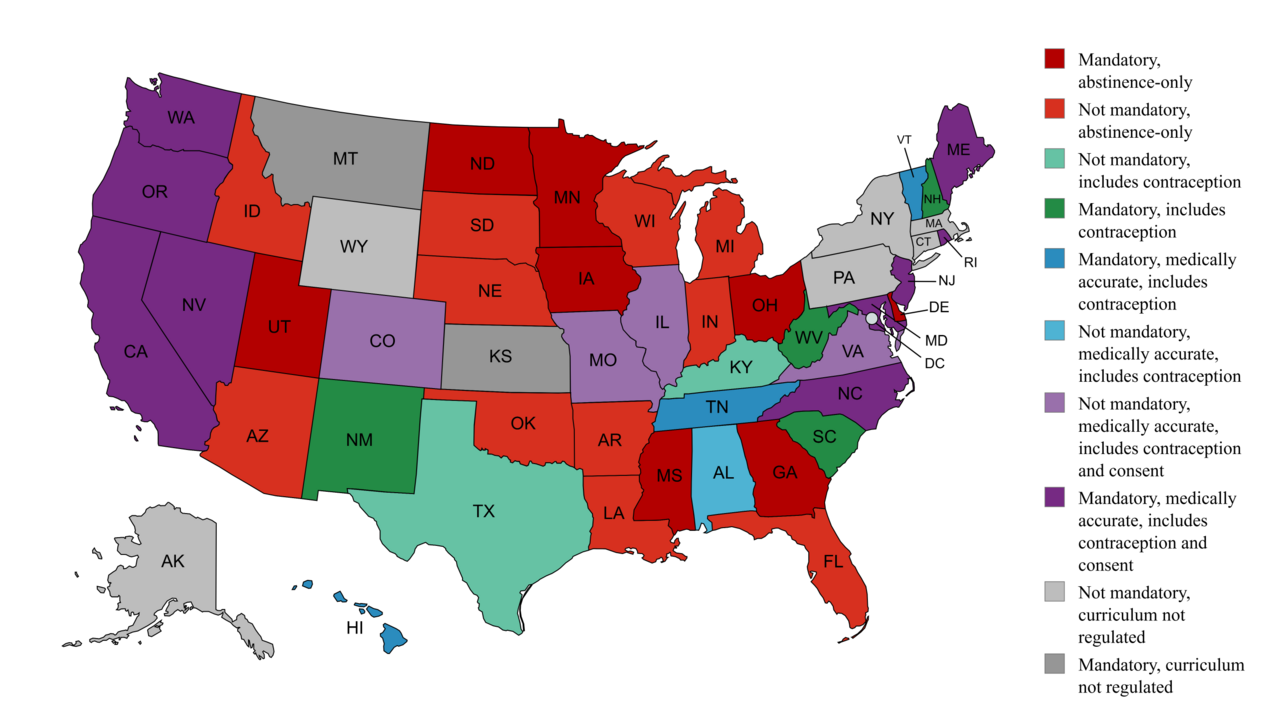
The first shocking revelation is that sex education is only mandatory in half of US states.

1782032868608.png


But even in states where sex education is taught, the official policy may be to teach abstinence as the only form of contraception (7 states). In some states sex education is mandatory but does not have to be medically or scientifically accurate (New Hampshire, West Virginia, South Carolina and New Mexico). In six states (including New York, Pensylvania and Massachussetts), sex education is not mandatory and not regulated at all. Only 10 states have mandatory sex education that should be medically accurate and teach about contraception and consent.
1782032975077.png


It's not surprising therefore that teen pregnancies is a major problem in the United States - far more so than in other rich countries. The teenage pregnancy rate in the US stood at 13.1 per thousand births, according to the latest data. This is considerably higher than in other developed countries: South Korea (0.5), Denmark (1.1), Norway (1.4), Switzerland (1.5), Japan (1.7), Sweden (1.8), Netherlands (1.9), Italy (2.9), Finland (3.1), France (3.5), Belgium (3.7), Austria (3.8), Ireland (4.1), Canada (4.8), Spain (4.8), China (5.2), Germany (5.5), Poland (6.2), Australia (6.7)... In fact the US has a higher teen pregnancy rate than in Muslim countries like Libya (5.9), Oman (6.2), Algeria (8.7), or Saudi Arabia (11.1). With a rate of 13.1, the United States is exactly in between Turkey (12.1) and India (14.1).

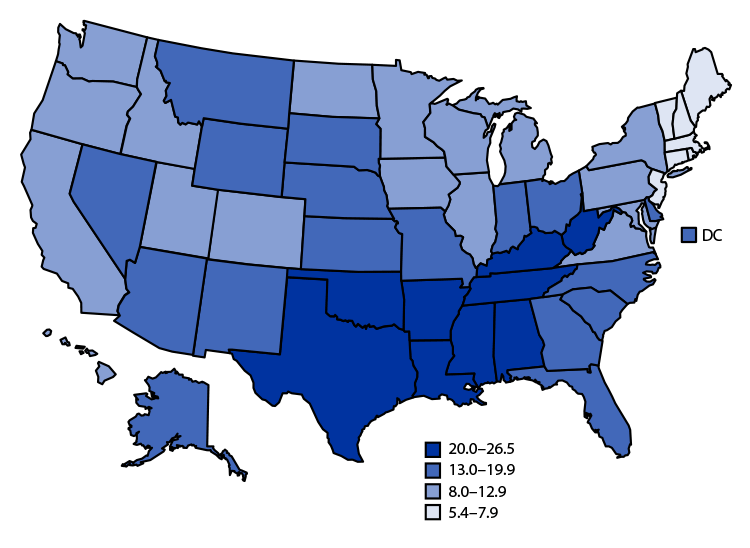
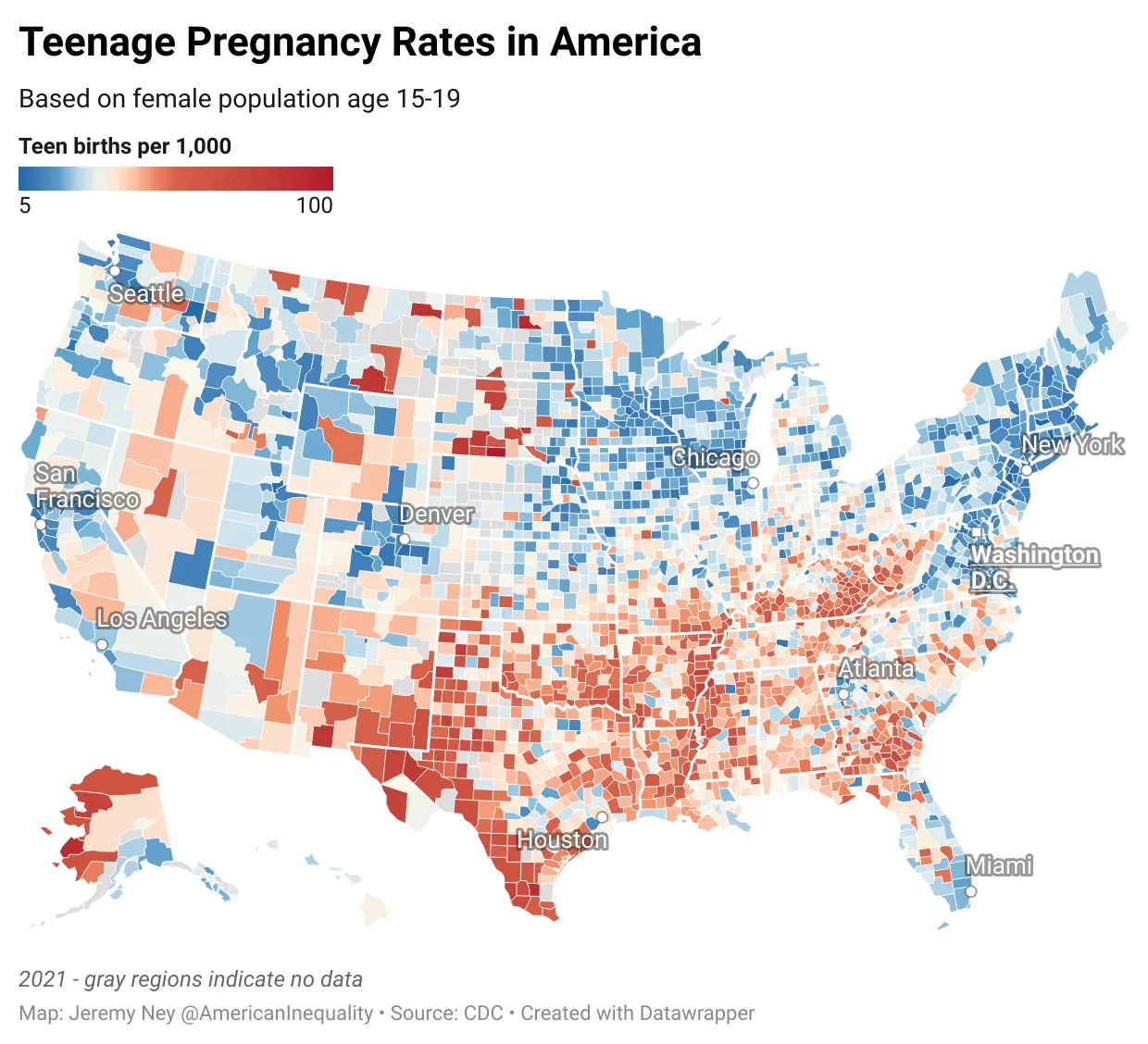
Of course there are, as always in the US, huge regional variations. The lowest rates are found in New England, where adolescent birth rates are similar to those in Canada or Germany. In contrast, in the Bible Belt, where people are most reluctant to discuss sex education, and where schools are the least likely to teach teenagers about it, the adolescent pregnancy rate is over 20 per thousand. Some counties have rates between 80 and 100! That's higher than Afghanistan (64) and many Sub-Saharan countries (e.g. 51 in South Africa, 56 in Kenya, 66 in Sudan, 70 in Ethiopia, and 86 in Nigeria).

Here are CDC maps showing the teenage pregnancy rates by state. This first one (source) is from 2021.
1782030341416.png

This second map shows the finer county-wide variations in 2021 (source). You can see the actual rate in each county on this interactive map on the CDC website.
1782030507118.png


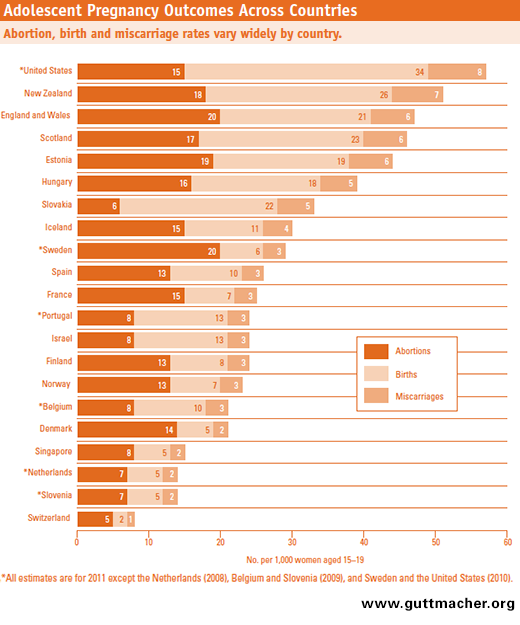
It might look bad but the reality is worse. This is because these rates only show the teenage births, not the actual teenage pregnancy rates. Even though the US is the country where the highest percentage of the population opposes abortion in the developed world (on a par with Poland), it is also the country with the highest teenage abortion rate. In the following chart we see that back in 2011 the teenage birth rate was 15 per 1000, but the actual pregnancy rate was 57 per thousand, i.e. 3.5 times more. The US also has a suspiciously high percentage of teenage miscarriage (3 or 4 times higher than in other developed countries). I wouldn't be surprised if these were abortions in disguise in religious families that "officially" reject abortion. In any case, only about a quarter of all US teen pregnancies resulted in live births.
1782031105980.png


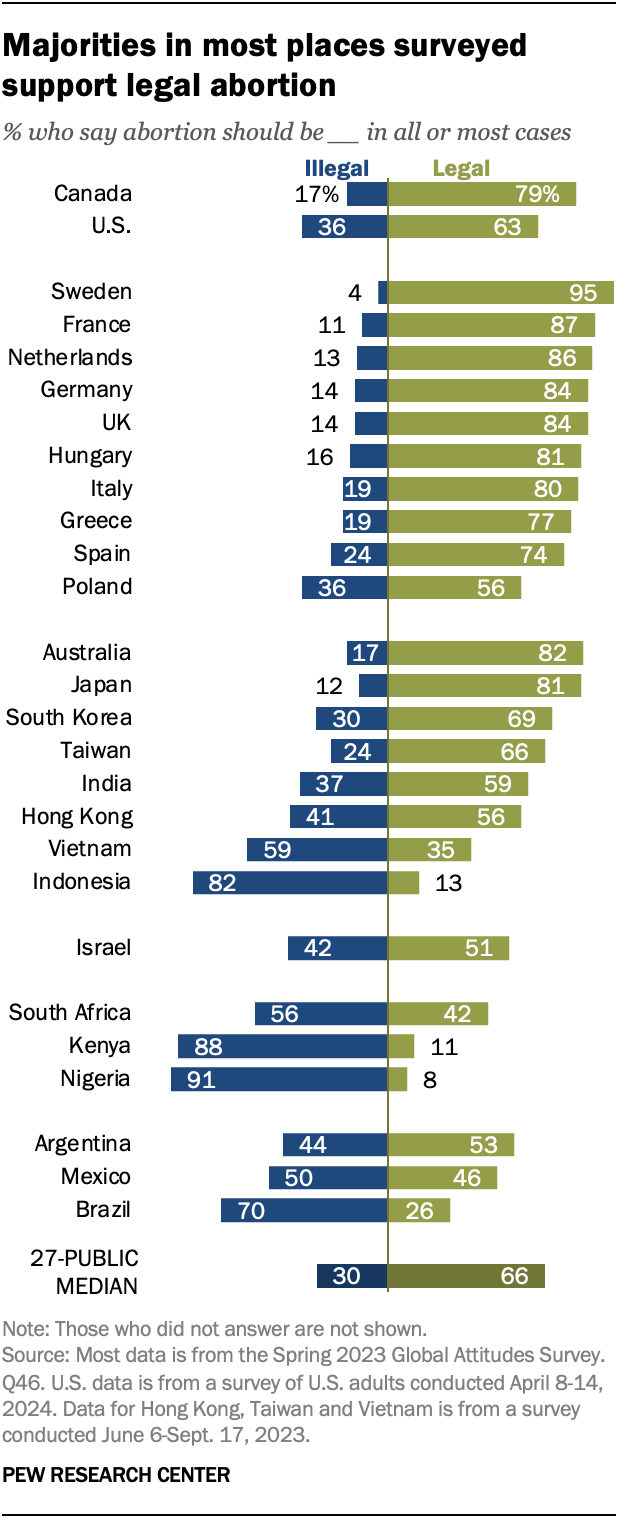
We can clearly see that the percentage of support for abortion in a country is not correlated with the actual percentage of abortions. Countries where the vast majority of people support abortion, like Sweden or the Netherlands, actually have some of the lowest abortion rates in the Western world.
1782031548174.png
 
Last edited:
The legislation about sex education in Europe varies widely by country as well. Countries where it is not compulsory typically have much higher teen pregnancy rates. The most notable cases are Romania and Bulgaria (rates of 33.8 and 39.1 per thousand). However some countries have no mandatory sex ed classes and still maintain low teen pregnancy rates (mostly notably Italy, with a rate of only 2.9, the lowest of any big countries).

Europeans also start learning about sexual education much earlier than Americans. Usually it starts in primary/elementary school, while in the States, when it is taught, it is from middle school or even high school (which is concerning as about 10% of Americans do not complete high school education).

Sex education at school by country (Europe)​

CountryStarting ageKey Details
Netherlands4Sexuality education begins at age 4 with "Relationships and Sexuality" course; mandatory for all primary/secondary schools since 2012.
Belgium (Wallonia)6Mandatory; at least 2 hours/year; covers relationships, consent, health.
France6Compulsory from primary school; covers biological, psychological, emotional, and social aspects.
Austria6Mandatory; includes parental involvement; comprehensive/holistic approach.
Portugal6Mandatory.
Luxembourg6Mandatory since the 1970s.
Sweden6-7Starts in preschool/kindergarten; mandatory nationwide since 1955; covers gender differences, reproduction, puberty from an early age.
Denmark6-7Mandatory since 1970; covers contraceptives, pregnancy, puberty.
Cyprus7Partly mandatory; partly comprehensive.
Poland7Legally mandatory but rarely offered; "Education for family life" with parental opt-out.
Germany9Mandatory since 1968; covers body changes, contraception, reproductive cycle.
Belgium (Flanders)10Integrated throughout curriculum; focuses on relationships, consent, diversity.
Estonia10Mandatory from age 10.
Latvia10-12Mandatory but only partly comprehensive.
Spain10-12Partly mandatory (regional variation).
Ireland11Mandatory (RSE within SPHE); focuses on biological aspects and risk prevention.
United Kingdom (England)11Compulsory from age 11; parents can withdraw from non-science parts.
Slovakia11Mandatory; parents can opt out.
Czech Republic12.5Mandatory but only partly comprehensive.
Finland13Health education (includes sex ed) begins in grade 7, around age 13.
Malta14Mandatory.
Hungary14Mandatory.
Greece14Mandatory but teachers can freely skip content.
ItalyNot mandatoryOptional; focuses on biological aspects only.


Sex education at school by country (East Asia)​

CountryStarting ageKey Details
Vietnam10-11Students receive first lesson only in 5th grade; educators debate starting at age 3.
South Korea10Sexuality education in "Health" and "Science"; covers puberty, reproduction, STIs.
Singapore10-12Integrated into "Character and Citizenship Education" and Science; focuses on abstinence, STIs, boundaries.
China10-12Integrated into biology/PE; focuses on population control, puberty; limited contraception/consent.
Taiwan10-12Sex ed exists but is limited/taboo; many parents lack knowledge themselves.
Japan10-12Puberty/menstruation taught; sex education minimal until high school (16-17); pregnancy process not taught in compulsory education.
Hong Kong12-14Not mandatory; integrated into General Studies/Science; average 3-4 hours/year at junior secondary.
 
Last edited:
"Sex education" became more and more a tool of "gender (mainstreaming) propaganda", LGBTQ+ ideology and general "sexualisation" of young peoples behaviour in much of the Western World. It heavily depends on the individual teacher, but the curriculum is not exactly helpful at all in many states. While its not being fully applied as of yet, especially to the younger children, fortunately, it already heavily differs from the more objective and neutral sex education which was common a couple of years ago.

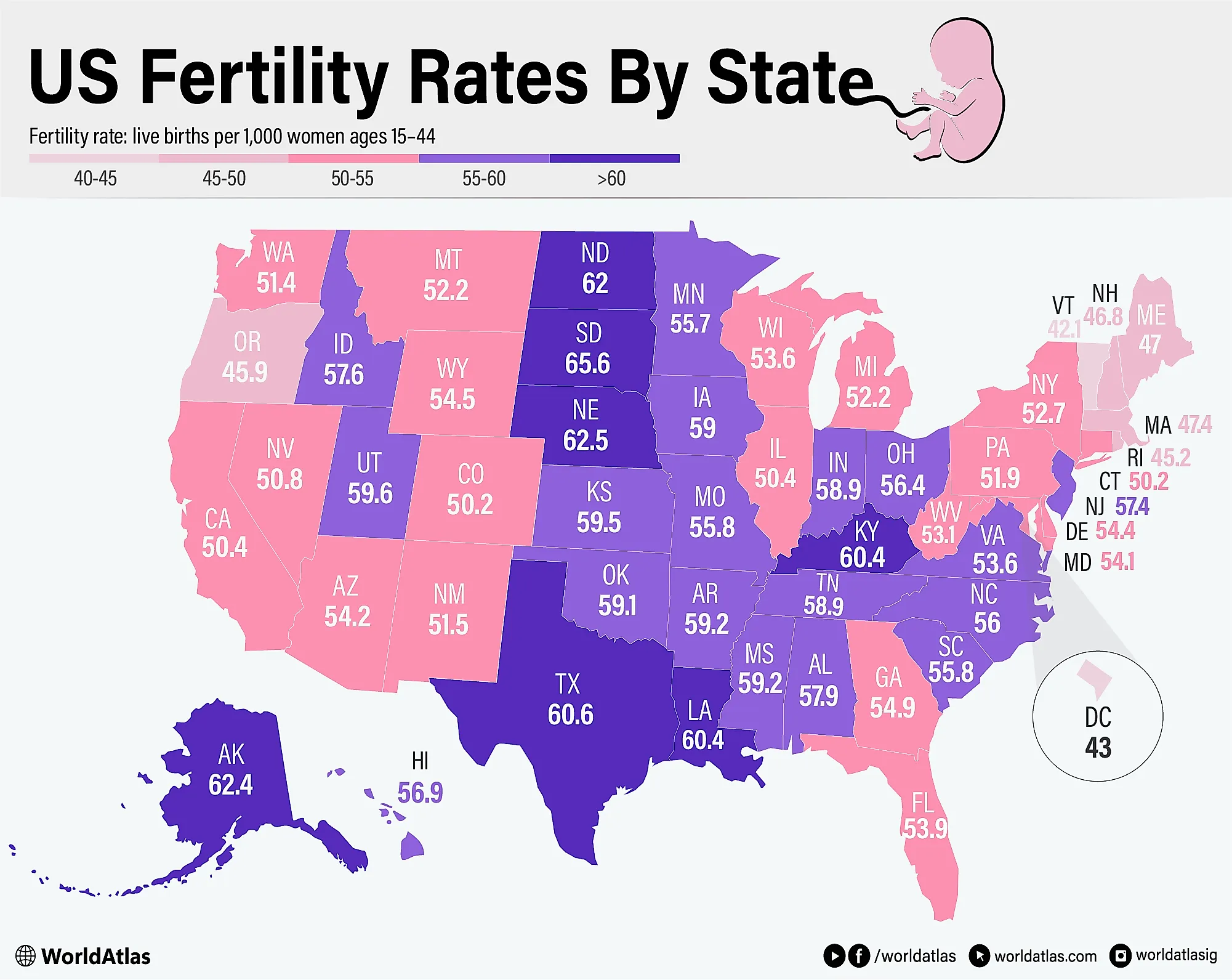
The worst outcome from a demographic perspective is zero births in a high frequency of women. You can directly compare the fertility rate per state with the teenage pregnancy rates per state:

us-fertility-rate-by-state-s3cdn.png


There is a significant correlation between the two. The very North East of the US has both some of the lowest rates for fertility and teenage pregnancies, which I think is a general anti-natalistic trend for this region of the US, which equals a dying population.

I guess the correlation is not always as pronounced, like in Oregon, but I would like to see whether there are high fertility regions with very low teenage pregnancies.

There is also a huge difference to make within the "teenage" cohort: Like pre-16 vs. 17-19 or in vs. out of wedlock/stable relationship etc.

The other detail is social and ethnic group. This factor needs to be taken into account as well.
 
Fertility rates are typically lower in more densely populated areas and cities where property prices are higher. In the US it just happens that people in the countryside are more conservative and religious, but that is not the main reason for their increased fertility rates.

If you look at the fertility rates map of a homogeneous society like South Korea, you can see huge discrepancies between cities and the countryside. Seoul has the lowest fertility rate of any Korean city by far, because homes costs so much per square metre.

1782479596709.png


Population density of South Korea

1782479640780.png


In Europe, fertility rates (2024) in more religious and traditional countries like Greece (1.34 births/woman), Albania (1.33), Poland (1.3), Italy (1.2) or Malta (1.11) are consistently lower than in secular and socially liberal countries like France (1.64), the UK (1.54), Denmark (1.52), Iceland (1.5), Netherlands (1.44) Sweden (1.44), or Norway (1.42).
 
These countries are
In Europe, fertility rates (2024) in more religious and traditional countries like Greece (1.34 births/woman), Albania (1.33), Poland (1.3), Italy (1.2) or Malta (1.11) are consistently lower than in secular and socially liberal countries like France (1.64), the UK (1.54), Denmark (1.52), Iceland (1.5), Netherlands (1.44) Sweden (1.44), or Norway (1.42).

I think those countries can't be considered religious in the same sense though, because they are not as socially conservative any longer. E.g. if its about clothing, sexuality and marriage, they are not as conservative and value based religious any longer. They might be more religious in the sense of believing in god and supporting the church, but they don't live religious-conservative family lives any longer. Plus they are under greater economical stress to fulfil the more conservative wishes within the framework of a Western Capitalist ideal for their living standards. Like having a house of their own before getting children.

How important the latter truly is can be seen if looking out for urbanised people with strong religious and pro-natal beliefs like orthodox Jews and fundamentalistic muslims: They exceed any birth rate of any rural European population without "hard conservative" or generally family values.

Actually I would love to see a statistic for ultraorthodox Jews in urban vs. suburban vs. rural setting say in Israel and what difference it makes for those. I guess they still lose more of their offspring to secular lifestyles if living in an urban setting, but I also guess the loss rate is minimal compared to any non-socially conservative cohesive group without pro-natalistic values.

The values are more important, anything else comes second. Therefore the true question to ask is why people in the urban setting lose their family values more easily? Financial stress and limited space is surely a major factor, I myself wouldn't do well if I would have to live in 60 m2 with 14 people, but it is all about priorities still.
Therefore individualistic lifestyles with anonymity, lots of distractions and corrupting effects, ideologcial dominance of the cosmopolitan worldviews, different social pressures and first and foremost different pathways to social climbing. Like if having many children brings you down, on the social ladder, many people won't do it.

Perfect example: There were studies which showed that even for successful males their status was, about 10 years ago, rising with every additional kid. This time might be gone, but its not long time ago. But the rise was only up to about 3 children in a modern Western setting of the 2000's. After that, it was falling again. Like there was a positive judgment if a male had family and children, but if he had 3 kids, there was nothing to win any more. With 4, 5, 6 and more children, the perception became not more positive, but rather negative.

And if you know that there are always and everywhere infertile people, individuals which die early, which have some kind of defect otherwise which prevents them from having children as adults or makes them more unlikely to do so, you know that those fertile and "good couples" which are able and ready to have healthy children should always have more than 2, usually more than 3 children, just to achieve the average for a stable population without high losses of say 2,1-2,3 children per women per generation.

Therefore if a societal system tells even those which want children "one is enough", "two is best" and "more than three is bad" - you automatically get in a negative spiral downwards. And that's what the Western system is explicitly and implicity communicating.

Worst of all by actually forcing women into a prolonged educational lifetime and second telling them that job and career are more important than husband and children.

If we circle back to the conservative values mentioned above: If the females don't work out of the husbands household (which could still mean she works in his workshop or on his farm etc.), they are way more likely to get children and to get more of them. If they are, on the other hand, working for foreign people (outside of the family/clan), chances for many negative outcomes rise: Being childless, having fewer children, getting STD's, getting divorced, being unfaithful etc.

That doesn't mean there is an automatism at all, but the statistical trends are clear and can be observed. It is a whole bundle of factors and influences, but reducing everything to urban vs. rural context falls short of explaining the main factors.
Like urban people of the 1990's, just a bit mroe than 30-40 years ago, had as many children as many rural people do today. This alone tells you that there is something fundamentally wrong and dysfunctional in the Western style societies and that it got much worse in a fairly short period of time. The 1990's were for many Western countries the last years in which they had say "acceptable" birth rates for their autochthonous families and women. Already bad, but acceptable. If it would have stayed that way, it could have been "healthy shrinking" without/very limited immigration. By now we are in a free fall into the abyss.
 
Back
Top