• Don't want to see ads? Install an adblocker like uBlock Origin or use a Europe-based privacy-friendly browser like Vivaldi or Mullvad.
анциґа́нити/ancygánytyto scold, to beratexëgit/xugit/xugis - to bother; provoke, tauntl, to irritate
cys/cyt - 1) to poke, prod, goad 2) to spur on, incite, provoke 3) to stir up, instigate
ба/babut, however; near in meaning to "dozh" (until)po - 1) but 2) (in conditional clauses) if; 3) if only interj oh say! say! but say! 4) indicates momentaneous action: be {verb}ing
por - conj but
бойо/boio(Adverb) Truly; indeed.po - 1) affirmative particle: yes; indeed 2) [Colloq] (in questions) confirmative tag: is that right? 3) confirmative identifier: exactly, precisely, the very 4) indicates momentaneous action: be {verb}ing
башта -и/bashta -ytall old tree, most often a sprucebështajë - copse of slender oak
баштанник -а/bashtannyk -arare, old spruce forestbështajë - copse of slender oak
бота/bota1) A large piece or large quantity of something; 2) A large flock of sheepbotë - 1) world 2) [Collec] others, strangers 6) living things or objects with a common denominator 9) life on Earth, the objective world, afterlife
би́сти/býsty"may you..." (used when making a wish or command)bëhesh - to become, used in phrases to wish someone future success…may you so and so
брині́ти/brynítyto begin to ripen (berries/grain)brydh - to soften, tenderize, ripen (of fruit), crumble
br'ynawyj,
бринявий/brynjavyj, бринявіти/bryniavity
rotten, decaying, spoiled
Decayed, rotten (referring to wood);
(verb) to become rotten/hollow.
brydh - tender, soft, ripe; loose and easy to work (of soil)
вбріхто́ваний/vbrixtóvanyjbeaten up; drunk; or spoiled/brokenbrydh - to tenderize, make soft, ripen; crumble
вбріхтува́ти/vbrixtuvátyto spoil; to beat up; to get someone drunk (with vodka)brydh - to tenderize, make soft, ripen; crumble
обріхтува́ти/obrixtuváty
обріхтува́тисі/obrixtuvátysi
to ruin/spoil; to beat someone up
to harm one's health (injury/binge)
brydh - to tenderize, make soft, ripen; crumble
прибриха́тисі/prybryxátysito worm one's way into someone's trust; to build a relationship through deceit
brydh - to soften, tenderize, ripen (of fruit)

ancygányty, a nice beautiful proto-Albanoid construction en+cygán-yty(slavic suffix)

xëgit/xugit/xugis are likely from en+cyt, or n+cyt, with nc shifting to x, similar to nxjerr/xjerr. The Hutsul phonetics remaining more archaic and still frozen in the en+cyt phase.
 
Last edited:
барани/barany(Literally "rams") White foam-capped waves on a river (whitecaps).bardhë - the color white; white paint; something white. From Proto-Albanian *bardza
bardhajkë - white sheep, goat, or cow
bardhanë - white sheep, goat, or cow
bardhishe - white goat
бараниця/baranytsiaA blanket made of dressed sheepskins.bardhë - the color white; white paint; something white. From Proto-Albanian *bardza
bardhajkë - white sheep, goat, or cow
bardhanë - white sheep, goat, or cow
bardhishe - white goat
баранчик/baranchykA small rambardhë - the color white; white paint; something white. From Proto-Albanian *bardza
bardhajkë - white sheep, goat, or cow
bardhanë - white sheep, goat, or cow
bardhishe - white goat
буркут/burkut1) Natural mineral water (sparkling/carbonated); 2) (Rare) A natural spring;burim - 1) spring, fountainhead 2) head/source of a river or stream 3) source 4) origin 5) resource
buron - 1) (of water) to spring up out of the ground, bubble up: well up 2) to originate
бурматний/burmatnyi1) Greyish-green; 2) Turbid/murky.mbrëmje - evening, night
mbrëmanet - toward evening time, towards dusk; during the evening, at evening time
Related to Thracian bera?
бирів/byriv(Archaic) A village headman (viit).burrë - 1) male person; man 2) husband 3) real man: brave/courageous person, man of his word, loyal person 4) distinguished person
бурми́ло/burmýloa stout or burly manburrë - 1) male person; man 2) husband 3) real man: brave/courageous person, man of his word, loyal person 4) distinguished person
ва́лом/váloma sudden massive wave (of a mountain flood after a storm)valomë - 1) big wave 2) (figurative) flow, current; flood

Baranu means ram in Slavic, it has no clear etymology:

  • barany - The constant Hutsul association with the color white strongly suggests this a early Slavic borrowing from Dacian and barany is the Slavic pronunciation of a north Dacian bardzane.
  • Burkut has been posted before, but in this version it also means just plain water spring, it's nice to be vindicated.
  • Burmylo, a nice addition to BYREŠ(The steward, the manager), BYRYLO(A tall, long-legged, clumsy man.), the famous byrov (village headman) and the verb byruvaty. Ylo in Ukranian is used as a prefix to imply a characteristic. Burm-ylo, should not have in m inside of the word bur, unless the word was once burrëmadz, with adz replaced by a Slavic suffix and m remains as a legacy of the word madh/madz = big. In any case this variant seals the deal, the Hutsul variants are all related to Albanian burr, and there is no more doubt this is a Daco-Thracian word.
  • válom and valomë, nice. Pure chance? LMAO How do the Hutsul continue to fleterinje so bukurija?
 
Last edited:
вивалитиси/vyválytysy
ВИВАЛИТИСЯ/VYVALYTYSJA
To quarrel, to argue harshly

To quarrel / To argue severely / To dispute.
valas/valvalas - constantly quarrelling
варівки́й/varivkýjsickly; treacherous/dangerousvarr - unbearably difficult; grievous and intolerable
zvarrë - 1) dragging, dragging along; (crawling) along the ground 2) [Fig] with difficulty; by force, unwillingly
гала́йсвіта/halájsvita, Галайсвіта/HalajsvitaTo "God knows where"; far away to parts unknown.

To go "into the wide world" (usually wandering aimlessly).
shkel - 1) to step on [ ], tread; trample; stamp 2) [Fig] to set foot on/in [ ] 3) [Fig Colloq] to trip on [ ], slip carelessly on [ ] 4) to exert pressure on [something that offers resistance]: press; full [cloth]
shkal - to tread, spur (on the heel)
Slavic svit - world
гала́й-бала́й/haláj-balájCarelessly; haphazardly; any which way.shkel - 1) to step on [ ], tread; trample; stamp 2) [Fig] to set foot on/in [ ] 3) [Fig Colloq] to trip on [ ], slip carelessly on [ ] 4) to exert pressure on [something that offers resistance]: press; full [cloth]
shkal - to tread, spur (on the heel)
pallë - lounge, idle
га́лька/hálʹkatailoring: A woman's slip or chemise.holla - 1) money 2) underwear; light summer underclothing
hollë - 1) delicate, fine; thin 2) (of bodies) slim, lean, slender 3) long and narrow 4) coming to a fine point or edge: sharp 5) in fine detail: detailed; delicate, fine, precise
гам/haminterj: Used to encourage small children to eat.hamë - 1) to eat 2) to eat away [ ], eat away at [ ]: gnaw on [ ], nibble away at [ ]; erode; corrode 3) to bite 4) to mumble, mouth 5) to itch 6 to eat up [ ], spend, cost, waste
hamje - 1) way of eating 2) food
га́мати/hámatychildspeak: To eat; "to num-num."hamë - 1) to eat 2) to eat away [ ], eat away at [ ]: gnaw on [ ], nibble away at [ ]; erode; corrode 3) to bite 4) to mumble, mouth 5) to itch 6 to eat up [ ], spend, cost, waste
hamje - 1) way of eating 2) food
Гамішний/HamišnyjGreedy, gluttonous, or "having a sweet tooth."hamës - gluttonous
завіз (завізь)/zaviz (zaviz’)A landslide of soil or rocks onto a road.lëviz - to change position: move, change. From lë + viz, Hutsul word has replaced the prefix with a Slavic za
завіритиси/zavirytysyTo look at someone angrily.vëren - 1) to watch [ ] attentively, look at [ ] attentively: observe 2) to notice; note 3) to watch out for [ ] 4) to look after [ ], take care of [ ]


  • Hal in Hutsul means in a row, in sequence, consecutively or continuously. I can't find a Slavic explanation for it, it seems related to Albanian shkel/shkal with the stereotypical shift from shk to h.
  • halka also exists in dialectal Polish, the standard Polish etymology tries to trace it to a Slavic word for rubbish/drags: https://en.wiktionary.org/wiki/halka#Polish, such word does not exists in other Slavic speeches, it is a Carpathian borrowing, Poland ruled Hutsul and Rusyn lands from the end of the middle Ages until the collapse of Polish state
  • hamac or variants also exists in Slavic speeches, goroh treats it's as onomatopoeia, this is doubtful and more likely a Dacian loan into Slavic
  • Hamišnyj exists in Romanian hămesi, Hutsul word however the meaning is closer to Albanian
  • zavirytysy, appretnly Serbian has a similar word gviriti as noted in goroh, I can't find a Slavic explanation for it.
In a book written in the late 1800s by an anthropologists these following quotes are relevant to the word lëviz/lëvizës/lëvizshëm:

On rocky trails, it will poshnyphy (sniff) the stones and test them with a hoof to see if they are livo (loose/unstable).......On a stony path, it will poshnyfaty (пошнуфати) (sniff) the stones and test them with its hoof to see if they are luvo (люво) (loose or unstable)
 
Last edited:
зверешинйтиси/zverešynjtysyTo dash/rush in all directions.vërshon - 1) to flood, overflow 2) to pour out in a sudden flow: spurt/burst out 3) to rush, pour
Гаць/HacʹInterjection used to drive away pigs.hec - 1) to move under internal power: go, walk, move; flow; float along (in a liquid) 2) to go forward: go on, proceed; go well, go successfully. Also used as command on animals, to get them moving forward
Генде/HendeOver there (farther away).andej - 1) that way, in that direction, around there, along about there; over that way, over there 2) about then, along about then; since about then, from about then 3) [Colloq Fig] concerning that, about that
Гиндравий/HyndravyjWorthless, poor quality, or bad.dra - 1) (Dairy) waste residue left from melting butter 2) dregs, lees, sediment
Гиндра/Hyndra1) A rag or scrap of cloth; 2) (Metaphor) An old shirt.dra - 1) (Dairy) waste residue left from melting butter 2) dregs, lees, sediment
ndrag - to soil, make filthy
Грєнутиси/HrienutysyTo hit oneself; to strike against something (e.g., to bump into a fence).grind - to brawl, to fight, to wrangle over
загаразди́тисі/zaharazdýtysiTo fall through; to get stuck; to disappear or vanish.harrohet - 1) to be so absorbed in something as to lose track of everything else; be preoccupied 2) to doze off 3) to stay away longer than expected 4) [Colloq] to go into one's dotage: go dotty 5) to go out of mind, be forgotten/lost
згари́ти/zharýtyto lose; to wasteharr - to weed, to cut out.
harroj - to forget. From harr + -oj, literally "to eradicate".
гі́я/híjaarchaic: Necessary; "must"; also: a filler word used for rhyme in kolomyika songs.eja - come. come on!
Ги́ґа/Hýgageog: Name of a mountain in Chorni Oslavy; a mountain peak.gungë - hump, hunchback, small hill
гамсили́ти/hamsylýtyTo hit hard; to thrash or beat someone.hamullohet - to unleash an angry attack: make an assault, assail

hyndra and dra might be related, hard to tell. Hyn might simply be Hutsul corruption of en-
hija is two different words in one, first one is a loan from Hungarian, while the second meaning has to be from an Albanoid eja.
z-har-yty and za-harazh-yty-si are really good.
 
Last edited:
ґодзю́/godzjú, ґодзюка́ти/godzjukátyinterj: Used when tickling / To tickle someone.gudulis - 1) to tickle 2) to give pleasure to [ ]: please
ґо́лґанка/gólgankaculinary: A lump of flour or groats in a dish (clump).gërgalle - rocky terrain. from Proto-Albanian *gargalā; akin to Lithuanian gar̃galas (“knot, knotted thread”), gargõlas (“lump, clump”).[1]

gërhalë - sharp pointed rock; rock with a rough surface; ground covered by jagged rocks
дзир/dzyr, дзер/dzerculinary: Whey (the liquid remaining after milk has been curdled).xjerr/nxjerr - 1) to cause [ ] to move from in to out: get [ ] out, push/pull [ ] out; extract 2) to pick [ ] out, select 4) to move [ ] (to a different place/position); wrench/dislocate [one's limb] 5) to strip off [covering material] 6) to expose; reveal; display; offer
Дзеріти/Dzerity
To curdle or separate into whey (referring to milk).
xjerr/nxjerr - 1) to cause [ ] to move from in to out: get [ ] out, push/pull [ ] out; extract 2) to pick [ ] out, select 4) to move [ ] (to a different place/position); wrench/dislocate [one's limb] 5) to strip off [covering material] 6) to expose; reveal; display; offer
Ґоґодзнйк/GogodznjkA place where lingonberries grow.gogël - 1) hard globular seed or cone of a tree: acorn, cone 2) dark hair dye extracted from acorns/cones 3) small round object: ball of cheese, meatball, abacus bead, berry
Ґрапа/GrapaA harrow (farming tool for breaking up soil).grep/grap - hook, fishhook
Ґрапати/GrapatyTo harrow the land; to cultivate.grep/grap - hook, fishhook
zdriczkopupil of the eyedritë - 1) light 2) daylight 3) pupil (of an eye)
за́здріти/zázdrityto catch sight of; to noticezdrit/ndrit - to bathe [ ] with light, illuminate, light up [ ]
о́біздрітисі/óbizdritysito peek out (of the sun)zdrit/ndrit - to bathe [ ] with light, illuminate, light up [ ] 2) to shine brightly

Romanian zer(Hutsul dzer) in the past was linked with Albania hirrë solely on definition. The sound changes of ksira to hirrë provides zero breakthrough or it is not present in any other Romanian or Hutsul word were earlier Albanain ks = z/dz. A complete outlier in the pattern, a mismatch in phonetic laws, and must be wrong. The Hutsul definition meaning to separate(of liquid from solids) provides a insight and a viable path to phonetic compatibility.
 
Last edited:
гайнувати/hajnuvaty
прогайнувати/prohajnuvaty
to waste, squanderha - 1) to eat 2) to eat away [ ], eat away at [ ]: gnaw on [ ], nibble away at [ ]; erode; corrode 6) to eat up [ ], spend, cost, waste
hajn - thief, crook, scoundrel
дзьо́ґнутисі/dzʹógnutysiTo pr!ck oneself.xëgit/xugit/xugis - to bother; provoke, taunt, to irritate
відрідник/vidridnyka renegade / apostatedredhak/dredhalak - not reliable, undependable.
dredhi - 1) wiliness, slyness 2) cheating, deceit, chicanery, trickery
Ґлемей/Glemej1) An abyss or precipice; 2) A steep, rocky mountain.gjam - rocky and treeless patch of land at water's edge: rocky coast/shore/bank
задарь/zadary1) The raftsman steering the rear of a timber raft; 2) The last section of a raft; 3) The rear oar/rudder.dorak - 1) handle/grip of a tool/instrument: plowhandle, pan handle, crank (handle) 2) cane handle, cane
dorë - 1) hand 2) arm 3) handful; small group 4) handle
za - behind/back in Slavic
задьор/zadʹorAnger, spite; zayty u zadyor — to get angry/quarrel; u zadyor — out of spite.dor/djerr - 1) to waste; ruin, destroy 2) to condemn
здалий/zdalyjCapable, fit, or able to do something.del/dal - 3) to come out as a result; eventuate as 9) to protrude beyond a normal limit: jut/stick/pop out; curve outward: bulge 10) to pass beyond a usual limit: escape, burst through, leave the track/road, exceed, overflow 18) to be successful, come out well 19) to succeed in becoming 21) to become reality: prove to be, turn out to be; come true, come through
ja del - suitable, doable
зі́лі/zili(botany) herbs; weeds; plantsDacian reconstructed zila - plant, herb (bot.)
царзіля/carzilja, царзіль/carzilʹ(Botany) Elecampane (Inula helenium), a tall medicinal herb.barë e thatë - Elecampane (Inula helenium) in Albanian. the Hutsul word is a compound of tharë(from earlier carë/can) and Dacian word for herbs zila

  • Hajnuvaty is listed in goroh, one needs to follow the trail of the alleged root word, which as no such definition in any Slavic language and it's a borrowing from German that no proximity with the Hutsul word, the form is different too.
  • Vy-dridnyk is a nice one.
  • Glemej has been posted before, the meaning abyss, is nice addition
  • zili, Slavic linguist try to link this Slavic zelьje (green, greenery, greens). However only in Polish and Ukranian does the meaning extend to herbs, both countries who've ruled the Carpathians for a long while and recently the Carpathian dialects are part of Ukranian. The other big problem for pseudo linguists, no Slavic language uses zelje/zelya or what other variant as a compound word, as a suffix for various herbs like Dacians did. The fact that Hutsuls still have such word formations is proof that this word is Dacian, carzilja is a Dacian construction, goroh lists two more such herbs, without a doubt from Carpathian dialects. In standard Slavic languages (like Russian or Polish), plant names are usually adjectives + nouns (e.g., mleczna trawa) or single roots.

In Albanian, barë e thatë (literally "dry herb" or "dry grass") is a descriptive folk name for Elecampane (Inula helenium). While it has several regional names like mëllaga e egër or hithra e butë, the name barë e thatë is primarily used because:
  • Drying Requirement: Unlike some herbs that can be used fresh, Elecampane’s potent medicinal properties are traditionally accessed by drying the root. The fresh root is often too acrid or sticky to use easily; drying it concentrates the inulin and essential oils like alantolactone, making it suitable for tea or powders.
  • The "Dry" Nature of the Medicine: In traditional Balkan herbalism, plants are often named for the "condition" they treat. Because Elecampane is a powerful expectorant used to "dry up" excessive, damp phlegm in the lungs and chest, it is colloquially associated with the concept of "drying."
  • Appearance: Once harvested and processed, the thick, woody roots of the Elecampane plant become very hard and "dry" in texture compared to more succulent herbs.
 
Last edited:
The other two plant names from the goroh link also appear fully Dacian despite their superficial Slavic appearance of the root word.

зрадзі́лля/zradzílljaAgrimonia eupatorium L.» (bot.), betrayal if do go by Goroh/Salvic explantionrrodhe - 1) burr burdock (Arctium spp.) 2) spiny cocklebur 3) (Xanthium spinosum)
нечіпа́й-зі́лля/nečipáj-zíllja"white creeper, Bryonia alba L." (bot.), non-touching-plant, according to goroh, the name is due to the toxicity of creeper (especially berries and roots);ЧИПІРИТИСИ/ČYPIRYTYSY - Climb up, climb out, get out.
Related to çap - 1) step, stride, extended leg 2) to take steps in achieving something


1) Zillja is not used as plant/herb suffix in any Slavic speech.
2) The z in rad-zillja must be a late addition after Hutsul lost their Dacian speaking abilities.
3) Agrimonia eupatorium is quite similar to Albanian rodhe:
2. Botanical Similarities
The Albanian rrodhe and the Ukrainian зрадзілля (Agrimonia eupatoria) are physically "look-alike" plants that share the exact same ecological niche and dispersal method:
  • Common Targets: In Albanian, rrodhe refers to burdock (Arctium spp.) and spiny cocklebur (Xanthium spinosum).
  • The "Stickiness": Like Agrimonia, these plants are famous for hooked burrs that latch onto clothing and animal fur.
  • The Comparison: While Agrimonia belongs to the Rose family and Arctium/Xanthium belong to the Aster family, their seeds are so similar in behavior that they are often grouped together in folk taxonomy.

4) nečipáj-zíllja, though technically sound, in Hutsul čypir means to climb up. Bryonia alba L is a creaper plant that climbs itself up and wraps itself around objects. In fact this is one of the top naming etymologies for this particular plant:
In European folk botany,
Bryonia alba L. (White Bryony) is named after its physical growth, its massive root, its toxicity, and its association with magic and the devil.

1. Growth and Habit
  • The Sprouter: The botanical name Bryonia comes from the Greek bryein, meaning "to grow" or "to sprout lushly", referring to its rapid annual growth from the root stock.
  • The Fence-Climber: In German, it is Zaunrübe ("fence turnip") and in Swedish gärdsgårdsrova ("fence turnip"), named for its habit of climbing over hedges and fences.
  • Wild Hops/Vine: Because of its climbing nature and leaf shape, it is often called wild hop or wild vine in English.

The prefix ne was added to baptize the name into the new Slavic speech.

Now the Dacian zilla/dilla is assumed to mean plant/herb and it means so in Hutsul. I wonder if it was originally just suffix that specialized for plants, and similar to Albanian suffix "-zë"?

-zë - Forms diminutive feminine nouns of endearment. Synonyms: -kë, -uhskë, -icë. Goes back to a Pre-Proto-Albanian *-dio/ā-.

The proto-Albanian form is awfully close to dilla, which seems to have transitioned into zilla in Dacian and likely zia in Proto-Albanian.


Dacian plant names btw:
 
Last edited:
енґераш/engeraš(Archaic) Middlemanship/reselling.ndërresë - 2) change, changing, replacement, turn
ndërron - 1) to replace 2) to exchange; change [money], get change for [ ] 3) to change, alter 4) (Agr) to transplant 5 to change [residence]: move
жбухати/žbuxaty, жбихати/žbyxaty1) To punch or cuff; 2) To gush/spurt (liquid); 3) To burst out (flames); 4) To pour out.zbon - to force [ ] out/away: expel, evict, deport; chase [ ] away/out, rout; get rid of [ ], dispel
жєхлий/žjexlyj1) Passionate, fiery, temperamentalzjarr - impassioned, fervent 2) aflame, on fire
жибоніти/žybonityTo ripple or gurgle gently (of water).zhubër - 1) wrinkle, crease 2) stripe 3) crest (in bodies of water)
завушниця/zavušnycja1) (arch.) An earring;vesh - 1) ear 2) handle 3) bunch (of fruit)
позаушкувати/pozavuškuvaty, позаушник/pozavušnykTo slap someone.

A slap (on the face/ear).
vesh/veshi/veshja(verb) - to strike/slap/smack
качулка/kačulka1) The top of a poppy head; 2) The flower head of garlic.kaçul - 1) tuft (of feathers), crest 2) rooster's comb 3) (Ornit) horned lark (Eremophila alpestris, Alauda alpestris)
кацу́ри/kacúry, цу́рі/cúrirags; old worn-out clothescurrak - 1) debranched, deforested 2) short-haired, with cut hair (for animals) 3) featherless, with not yet grown feathers (for birds) 4) naked
k/kë = to, From Proto-Albanian *ka-
качьи́ти/kačʹýtyto roll / to be rolling (e.g., downhill)kaca- A prefixoid denoting sharpness, roughness, abruptness and/or curvity.


Pretty straightforward. Sometimes a "dialectal" word is listed in goroh, it's worth reading their explanation. Goroh for example lists vush as earring, but will not explain how it alleged evolved from proto-Slavic *uxo, or even how the sh replaced the x/h. Also the Hutsul extended meaning as verb to smack is a perfect Albanoid development.

cúri and kacúry are clearly the same word, with one version having prefix that's not Slavic, how is that? Why so? Some troll(with multiple accounts) from a mediocre linguistic department claims Hutsul is just a Rusyn speech. What are Albanian prefix, particles, and endless Albanoid root words doing in here. What kind of construction is en-gerras?
 
Last edited:
кігну́ти/kihnútyto pull; to drag (along the ground)qit - 1) to move [ ] out by forcible action: take [ ] out; expel; dislocate 2) to take off [outer covering]; expose [ ] to public view, bring [ ] out to the public, present [ ] publicly 3) to give off/out [ ], emit; issue; produce, yield, create From Proto-Albanian *kitja.
кіро́вник/kiróvnyk(archaic) manager, leaderkrye - 1) head 2) head, chief 6 )[Fig] best and most-honored position, hear
kryej - perform, carryout, execute
kryetar - chief, head; chairman, leader, boss
кербн/kerbn, кіран/kiran(archaic) A foreman or supervisor at a logging site.krye - 1) head 2) head, chief 6 )[Fig] best and most-honored position, head
kryej - perform, carryout, execute
kryetar - chief, head; chairman, leader, boss
krerë - 2) leading citizens, prominent persons, dignitaries
круг/kruhthe headboard or footboard of a bedkrye - head, lead
кри́жі/krýži(anatomy, plural only) the lower back / lumbar region of the spinekurriz - ridge, back, lower back
крижівни́ці/kryživnýcithe front and back walls of a wagon boxkurriz - 4) back part of a chair/building/dress 5) dorsal part 6) mountain ridge
kurrizor - pertaining to or located on the back: dorsal
крижува́тисі/kryžuvátysito show off one’s figure (specifically during a dance)kurriz - ridge, back, lower back
кйвером/kiverom(adv.) Upside down; head over heels.varur - 1) hung, hung up 2) hanging down; bent over; in a slump, slumping down 3) sloping steeply down
куге́кати/kuhékatyto cry or whimper (of an infant)kijas/kijet - 1) to whine 2) to sob
кьи́гатисі/kʹýhatysi2) to date secretlyqihet - to have sex/intercourse
лі́зти/líztyto shed (of fur or hair)lesh - 1) wool; hair (of an animal); (human) body hair 2) fleece 3) fuzz on plants or fruit; fuzz on insects or caterpillars 4) wooly fiber used as packing material or insulation
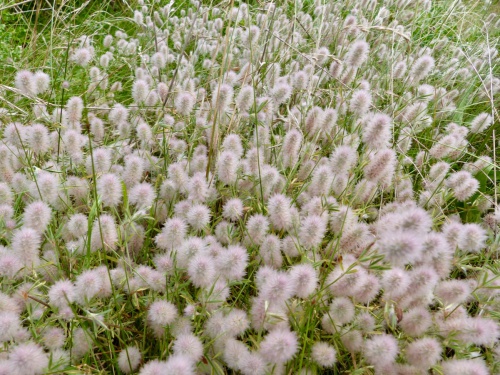
лєщик, -а/lješčyk, -a, лєшбк, -шка/lješbk, -ška(Bot.) Hare's-foot clover (Trifolium arvense).lesh - 1) wool; hair (of an animal); (human) body hair 2) fleece 3) fuzz on plants or fruit; fuzz on insects or caterpillars 4) wooly fiber used as packing material or insulation
leshtak - [Bot] 1) hairy, hirsute 2) having long thin fibers


  • Some were listed before, kruh is likely corrupted by Slavic krug, but the meaning head has no development from it, just the word was replaced by lookalike Slavic word, it's listed in goroh worth reading to get a good idea how consistently different is the usage in real Slavic
  • Kryzi is also in Podhale dialect, folk etymology is to link it to cross, goroh tries to link it to another rare word which means mountain ridge which also has a bogus explanation from Slavic *kreg. Given that Slavic did not develop in the mountains the rare word which is not even widespread in Slavic for mountain ridge is another perfectly Albanoid word kurriz, whose meaning also means mountain ridge. Funnily enough Albanian uses Slavic word for body(trup) while Hutsul kept an old Albanoid word.
  • kiverom - I wonder if ki might mean feet? If there is a Slavic explanation for this word, AI could not do it.
  • lješčyk - Hare's-foot clover is unique because its flower heads are incredibly soft, fuzzy, and hairy—looking exactly like a tuft of wool or a rabbit's foot. Previously we also had other similar words ліжник/ližnyk (home-woven wool blanket with pattern), лізник/liznyk (willow tree/wooly leaved tree), and now лі́зти/lízty (to shed (of fur or hair). Together with ljeshchyk and пе́лиші/pélyši ((pejorative) long, messy hair), this is a slam dunk connection to Albanian lesh.
med-o_1h8n3nn5k16k81mfj5rj62o3cg1s.jpeg


Little hairy ones indeed.​
 
Last edited:
ЛЬОПОТИ/LʹOPOTYProfanity; abusive words.llaptojkë - gossip, chatterbox
lap - to prattle on, chatter; talk irresponsibly: tattle, blab.
llapan - very talkative person.
llaptim - chatter. All derivatives of llapë - tongue(the organ).
льопотун/lʹopotun

лопота́йло/lopotájlo
A chatterbox (male/female).

(insulting) a chatterbox, a windbag
llaptojkë - gossip, chatterbox
lap - to prattle on, chatter; talk irresponsibly: tattle, blab.
llapan - very talkative person.
llaptim - chatter. All derivatives of llapë - tongue(the organ).
лопоті́ти/lopotíty

лопітли́вий/lopitlývyj

льопа/lʹopa

1) (insulting) to talk incessantly; 2) to flutter (of a flag)


talkative / loquacious


A female gossip/tattletale.
llaptojkë - gossip, chatterbox
lap - to prattle on, chatter; talk irresponsibly: tattle, blab.
llapan - very talkative person.
llaptim - chatter. All derivatives of llapë - tongue(the organ).
льо́па/lʹópaderogatory) an untidy womanlopë/lopa - cow
ЛЄМЗІТИ/LJEMZITY
лемсати/lemsaty
(Archaic) To hurry or rush.
To walk quickly.
lemzë - hiccough, hiccup
ли́ндик/lýndyka small piece (referring to land or fabric)lëndak/lëndor - concrete; substantive; material; substantial
lëngë - 1) small plot of arable land on the hillside, delimited by a wall 2) small hillside field
ЛИТВО/LYTVOEasily; without obstacles.lehtë - 1) light 2) soft; gentle 3) easy 4) agile
ЛЬОНТОМ/LʹONTOMNeglected; "left to its own devices" (e.g., cattle wandering without a herder).lën - 1) to leave 2) to leave [ ] behind: lose; forget; leave [ ] as inheritance 3) to leave [ ] out: omit, miss 4) to leave/let [ ] alone, allow [ ] to stay 5) to let 6) to let go: release
линньи́нка/lynnʹýnkaweeds and grass left after harvesting flax (used for livestock fodder)lëna - 1) leavings; leftovers, food scraps, garbage 2) debris left by ebbing water


Well this getting very lyt-vo.
 
Last edited:
вмордо́вуватисі/vmordóvuvatysi

змордо́ваний/zmordóvanyj
to get exhausted, to grow weary


exhausted; battered; worn out
mund - effort
mundon - 1) to demand great effort of [ ]; tire [ ] out 2) to torment
munduar - 1) tired out, exhausted 2) beaten-down, long-suffering, tormented
вмудрьи́тисі/vmudrʹýtysito manage (to do something difficult); to find a waymund - to beat, overcome, defeat; resist, stand up to [ ]
морде́вство/mordévstvoexhausting physical or mental labor that brings no satisfactionmunduar - 1) tired out, exhausted 2) beaten-down, long-suffering, tormented
мордува́тисі/morduvátysito toil / to exert oneself heavily in physical workmunduar - 1) tired out, exhausted 2) beaten-down, long-suffering, tormented
ми́ром/mýromin a good way, amicablymirë - 1) well 2) pleasantly 3) very much 4) [Iron] oh fine!
миро́м/myróm(idiom) used when reporting pregnancy in women or livestockmirë - 1) well 2) pleasantly 3) very much 4) [Iron] oh fine!
Мирно/Myrno, Миром/Myromsafely, All is well.mirë - 1) well 2) pleasantly 3) very much 4) [Iron] oh fine!
Мерендя/MerendjaA large udder (on a sheep or cow)mënd - to suckle; breast-feed, nurse.
mëndinë - suckling animal
mëndarak - 1) lamb or kid that nurses at the breast of a mother other than its own 2) baby raised by a wet nurse
маєрка/majerkaA woman/girl who goes to the mountain pastures in the evening to milk cows and returns in the morning.majë - 1) tip; point 2) top; peak summit

Some of these were posted before but the new variants always add insight. Some are new. Mordo variants exists in Polish primarily meaning murder as a borrowing from German, with some shift in meaning to Hutsul variant, but do not quite match and are likely highland speech interpretation flowing back into Polish. A word having multiple etymologies is quite common like in Albanian pend (where one meaning is Latin and one is native yet both words exist in one form). Either way Hutsul usage is clearly different and consistently Albanoid. The main problem is Dacian was never considered as an influence to Slavic Carpathian speeches and hence why a large inventory of words is given pseudo explanations, folk etymology or just labeled plain onomatopoeia.

Now when someone asks you how did the pregnancy go and you say myrom, this is suppose to be from Slavic peace? ....? Is that like going to the hood and greeting people "word to your mother". Curious what position linguist take on this.

Majerka is a women that goes nëpër maja and collects the milk from the sheepfold and brings it to the village.
 
Last edited:
зню́хатисі/znjúxatysi(pejorative) to become acquainted / to meet/to get in contact / to establish a connection.njeh - 1) to come to know [ ]: experience 2) to know the meaning of [ ] 3) to become acquainted/familiar with [ ]: meet, learn
njohje - 3) acquaintance; familiarity
о́ди/odyhere, right here, over hereaty - 1) near there (in relation to the position in space or time of one or both of the participants in the speech act or to another position immediately identifiable by them), right there, there, there by you, there by me 2) right then, at the same time
пе́лиші/pélyši(pejorative) long, messy hairlesh - 1) wool; hair (of an animal); (human) body hair 2) fleece 3) fuzz on plants or fruit; fuzz on insects or caterpillars 4) wooly fiber used as packing material or insulation
- A prefix for verbs
підто́ка/pidtókaland full of molehills (difficult to mow)tokë - earth; soil; ground; land; territory
pid - under in Slavic
пі́рґатисі/pírgatysito show off / to boast (rare)pirdh/pjerdh - 1) to break wind: fart 2) [Crude Scorn] to brag, boast: blow a lot of hot air
ост / оста, -и/ost / osta, -yA fishing spear or leister (iron fork on a long handle)ushtë - long spear. from Proto-Albanian *ušta

Pirga-tysi is interesting, like many Hutsul metaphors, they have perfect Albanian matches. Albanian pirdh/pjerdh is not unique as words with similar form exists in Slavic and even Greek, but the metaphor to boast is not Slavic or even Romanian. Hutsul semantic shifts successfully match Albanian development time and time again.

Pelyshi is very interesting. Apparently it is noted in Goroh in deteriorated form pélex

Not only does Goroh make it clear etymology is unclear, but they also listed other variants, some of which were posted in first dictionary(pages 3-6 of this thread).
Very interesting variants in goroh:

Пе́лех (Pëleh) - Lycopodium clavatum. Named for the moss's hair-like, fuzzy stems.
Пе́лех (Pëleh) - Tuft of hair; a shaggy person (or an old, unkempt man).
Пе́лех (Pëleh) - Trivia; splinters; "not a shred." Used in phrases like nemá j pélehu (not a trace left).
Пелеха́чики (Pelehačyky) - A type of poor-quality potato.
розпетле́шитися (rozpetlešytysja) - disheveled or coming undone

Albanian lesh also metaphorically mean trivial, nothing, and for somethign to become worthless.
Roz-petleš-ytysja = roz (apart+undoing) + Albanian përleshë - tangle
 
Last edited:
I missed this one, goroh list this word in the same family as peleh(Lycopodium clavatum),
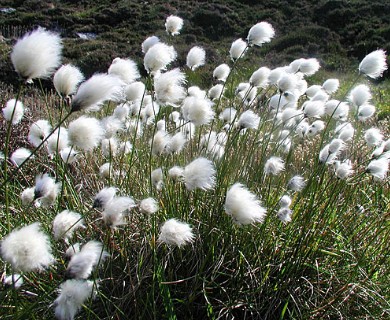
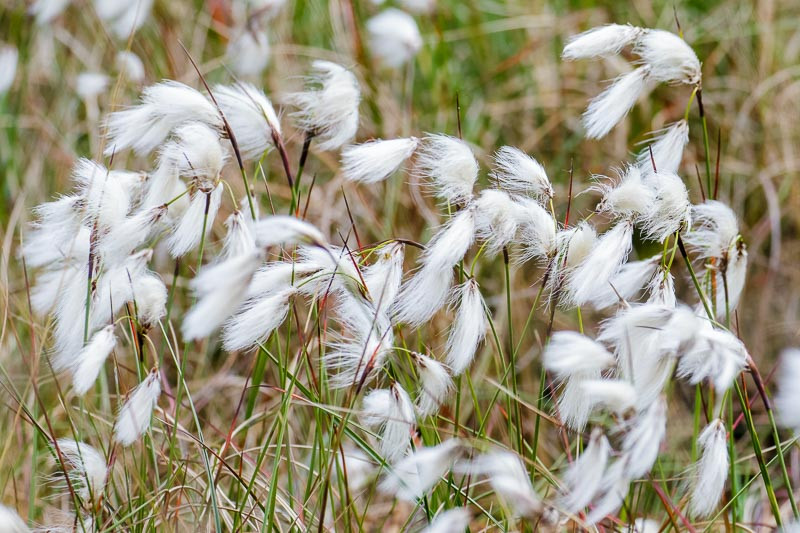
пеле́шник/peleshnik - cottongrass, Eriophorum L.
Eriophorum_vaginatum.jpg
eriophorum-angustifolium.webp
 
Last edited:
пусте́/pustélow-quality; vulgar / profane (referring to language)poshtër - 1) vile; base, low, indecent 2) [Reg] lower, inferior. A formation in -shtë > *-est, from posh, from Proto-Indo-European *pṓds.
пусті́ співанки́/pusti spivankydirty or obscene folk songsposhtërues - debasing, degrading
пусто́та/pustótadebauchery / licentiousnessposhtërsi - 1) baseness, indecency, immorality 2) indecent/immoral action: iniquity, misdeed, villainy
пуста́ ми́тка/pustá mýtka(offensive) a bad personposhtrak - villainous
poshtër - 1) vile; base, low, indecent 2) [Reg] lower, inferior. A formation in -shtë > *-est, from posh, from Proto-Indo-European *pṓds.
пустий/pustyi2) Bad/unkind.poshtër - 1) vile; base, low, indecent 2) [Reg] lower, inferior. A formation in -shtë > *-est, from posh, from Proto-Indo-European *pṓds.
 
пальцитуватиси/palʹcytuvatysyTo argue or bickerpëlcet - to explode; burst; burst out
перело, -а/perelo, -aA stone or board used for washing clothes by the riverpërlarje - the act or process of washing, rinsing, or bathing
laj - 1) to wash 2) to clean 3) to brush (teeth). From Proto-Albanian *lau-, or *launja,[1]
періш/periš1) Faster; 2) First / At firstpara - 1) (feminine) the first 2) the beginning; first course (of a meal)
para - forward: in front, ahead, earlier
parë - 1) first 2) most important, highest, principal; best; earliest; oldest
pari - adv (së) from the beginning: first; at first, to begin with; for the first time
përpara - 1) ahead; forward 2) earlier, before
перетше/peretšeEarlier; beforepara - 1) (feminine) the first 2) the beginning; first course (of a meal)
para - forward: in front, ahead, earlier
parë - 1) first 2) most important, highest, principal; best; earliest; oldest
pari - adv (së) from the beginning: first; at first, to begin with; for the first time
përpara - 1) ahead; forward 2) earlier, before
перший/pershyiat firstparë - 1) first 2) most important, highest, principal; best; earliest; oldest
pari - adv (së) from the beginning: first; at first, to begin with; for the first time
перія, -ї/perija, -jiA neighborhood; a street or row of housesThracian para - generally refers to a "settlement," "village," or "marketplace"
para - forward: in front
палити/palytyTo stretch or pull tightpellë - comb, blade (of ploughshare, of loom)

-perelo/pereloa - the root word is lo/loa clearly related to modern Albanian laj, and the reconstructed proto-Alb lau. The Dacian prefix of per has been replaced with a Slavic pere which fucntions the same as Albanian për.
- perish and peretshe have no chance of being from Slavic prvi, there is no mechanism to explain such format. Even the more pan-Carpathian form pershyi(used by Rusyns) does not have a proper path to Salvic prvi. https://en.wiktionary.org/wiki/перший#Ukrainian
Either borrowed from Polish pierwszy or formed in an analogous manner; in either case, ultimately from Proto-Slavic *pьrvъ. Cognates include Belarusian пе́ршы (pjéršy) and Polish pierwszy.
- perija - clear cut connection to Thracian para.
- palyty - the slavic "ty" suffix is a verbalizer, so combing/stretching something.
 
Last edited:
змерзитисьи/zmerzytysʹybother, to annoy, to get boredmërzit - 1) to bore 2) to annoy 3) to worry.
mërzitet - to feel bored; be annoyed; be worried
МЕРЗИТИСИ/MERZYTYSYto occupy or burden oneself with something unpleasant/unnecessary. Example: "Ivanchik paid no attention to what the little priest was crooning in a thin voice near the altar in the sacristy, because he did not understand what he was singing. Nor did he forget that confession which took place among the deacons in their pew, because he did not want to merzytysy with it. (P. Shekeryk-Donykiv, Dido Ivanchik, 306)"mërzit - 1) to bore 2) to annoy 3) to worry.
mërzitet - to feel bored; be annoyed; be worried
впрьи́тати/vprʹýtatyTo prepare, accumulate, or hoard a supply of something.pret - 1) to wait for [ ]; await; wait expectantly; expect 2) to catch [an approaching object]; (of a goalkeeper) save 3) to receive [visitors/guests], welcome; give [ ] a reception. From Proto-Albanian *pratja
сперед/spered(Prep.) From.prej - from. From Proto-Albanian *prei
уперед/upered2) Formerly/once.para - forward: in front, ahead, earlier
përpara - 1) ahead; forward 2) earlier, before
pari - adv (së) from the beginning: first; at first, to begin with; for the first time.
parë - 2) most important, highest, principal; best; earliest; oldest
partë - ancestors, forefathers
спрахтити/sprakhtyty(Archaic) To kill or drive someone out of this world.preh - 1) to cut; cut [ ] up/off/down; cut back [ ], prune 2) [Colloq] to slaughter,kill

- MERZYTYSY, Orel speculated that Albanian mërzit as a borrowing from Slavic mrzit - to hate, to cause disgust. The perfect eclipse in meaning of Hutsul and Albanian renders this unlikely. Both words are likely related but Albanian did not borrow it from Slavic, if it's a loan it must be from a another dead-end language that was similar to Slavic.
- upered - the word form is Slavic(pered), the secondary usage is not, it is a legacy of a Dacian para despite the form being swapped with Slavic. In standard Slavic, the root -pered- (front/before) is almost exclusively spatial (forward) or sequential (first)
 
Last edited:
зрунтати/zruntaty1) To move something from its place; 2) To destroy/ruin.rënë - 1) fallen to the ground; fallen 4) past one's prime; frail
rënie - 2) falling, fall 3) decline
rëndë - heavy, From Proto-Albanian *raunta, from Proto-Albanian *rauša (“to fall”)
ризовка/ryzovkaThe act of sliding logs down a mountain via a flume.rrëzohet - 1) to fall, fall down; collapse; fall out 2) to move down for a while to a lower region
rrëzon - 1) to cause [ ] to fall, fell: knock/throw/cut down 2) to cause [ ] to fall apart: break, break [ ] down/up 3) [Fig] to overthrow; upset, overturn 4) (of a boat) to move off course. Derivative of rrëzë +‎ -oj enlargement.
розриндзйтиси/rozryndzitysy, розри́ндитисі/rozrýndytysiTo burst into tears; to start crying. to burst into uncontrollable crying / to blubberrëndësi - heaviness
рапати/rapatyTo shout or scold.rreptë - 1) severe, harsh 2) strict, precise 3) stern 4) fierce, violent, ferocious. A derivate of rrjep, from Proto-Albanian *repa
рапатка/rapatkaSee dranka 1) (shingle/lath). 1) shirt (old, torn); 2) the same as a chopped board (up to 1 m long) for roofingrrjep - 1) to remove the outer layer: peel [fruit], peel off [bark], skin/fleece [animals]; scale [fish], pluck [fowl] 2) to gouge, gouge out [ ] 3) [Fig] to take unfair advantage of [ ]'s generosity/helplessness: exploit [ ] mercilessly; pluck [ ] clean, fleece [someone]; rob. From Proto-Albanian *repa

rrjepur - 1) having lost its outer covering: shorn; peeled; plucked; bald; eroded; bare 2) showing the effects of heavy use/wear: worn out; peeling away in spots 3) [Fig] worn out by hard work, exhausted
rripet - vpr < rrjep· 1) to shed bits of the outer layer: (of skin) peel; lose hair/feathers, moult 2) (of clothes) to wear out 3) (of land) to become eroded and barren 4) [Fig] to work to the point of exhaustion: work one's fingers to the bone
репіжити/repizhyty1) To beat/strike; to pound. 2) To throw.rreptë - 1) severe, harsh 2) strict, precise 3) stern 4) fierce, violent, ferocious. A derivate of rrjep, from Proto-Albanian *repa
поре́паний/porépanyjchapped or cracked (of skin or lips)rrjep - 1) to remove the outer layer: peel [fruit], peel off [bark], skin/fleece [animals]; scale [fish], pluck [fowl] 2) to gouge, gouge out [ ] 3) [Fig] to take unfair advantage of [ ]'s generosity/helplessness: exploit [ ] mercilessly; pluck [ ] clean, fleece [someone]; rob. From Proto-Albanian *repa
рипира́ція /rypyrácija, рипирува́ти/rypyruváty(med./archaic) surgery / operation, (med./archaic) to perform surgeryrrjep - 1) to remove the outer layer: peel [fruit], peel off [bark], skin/fleece [animals]; scale [fish], pluck [fowl] 2) to gouge, gouge out [ ] 3) [Fig] to take unfair advantage of [ ]'s generosity/helplessness: exploit [ ] mercilessly; pluck [ ] clean, fleece [someone]; rob. From Proto-Albanian *repa
рипитува́ти/rypytuváty(coarse) to yell or scream loudlyrreptë - 1) severe, harsh 2) strict, precise 3) stern 4) fierce, violent, ferocious
рипа/rypa, РЫПЭ/RYPÈ, ри́па/rýpa1) Steep mountain slope, slope, incline, scarp 2) Landslide; 3) Ravine/abyss; 4) Stony road; 5) Stony soil 6) 'precipice 7) a steep mountain slope caused by a landslide; a precipicerrjepë - 1) eroded and barren area 2) sheep or goat with many bare spots 3) bare spot
rripë - eroded crag
rripësirë - craggy area
rripet - vpr < rrjep· 1) to shed bits of the outer layer: (of skin) peel; lose hair/feathers, moult 2) (of clothes) to wear out 3) (of land) to become eroded and barren 4) [Fig] to work to the point of exhaustion: work one's fingers to the bone


A very nice family of another prolific root word. Albanian rripë is officially labeled as a Latin loan, and it seems the only merit(excuse) to call it so, is that Romanian and Vlach have it, so it must be from the Latin word for shore/bank. An extremely weak argument that ignores the meaning and usage of the term, it has nothing to do with riverbank or shore, but eroded harsh exposed slope or rock face of a mountain. The Hutsul version is also consistently Albanoid in usage but it even more importantly it keeps the old root for rypa and rapa in other root words that make it clear, it is rooted in the same exact meaning as Albanian rrjep, to rip/tear the outer skin off. We continue to break down barriers.
 
Last edited:
Some of the Hutsul words have a funny construction. palʹcyt-uvaty-sy for example already has Dacian yt(originally et) built in, so it is already a verb and does not need a Slavic compound verbalizer suffix.

rypyruváty is built on noun that already has a Dacian suffix yr(Albanian ur, see rrejpur), than re-verbalized through uvaty. It's a funny construction because it could have been built through the root word not through a noun by-product.
 
ві́шпортати/víšportatyto pick out, to dig up, to rake outshporoj - to pierce shpurris/shpurrit - 1) to poke [a fire] 2) (of fowl) to scratch and peck at [ ] 3) [Fig] to dig out what [ ] thinks, try to read [ ]'s mind, divine [ ]'s intentions
шпо́ртати/špórtatyTo hollow out; to peck; to poke around.shpurris/shpurrit - 1) to poke [a fire] 2) (of fowl) to scratch and peck at [ ] 3) [Fig] to dig out what [ ] thinks, try to read [ ]'s mind, divine [ ]'s intentions
shporohet - to develop a hole; spring a leak; (of a wound) to open and begin to run
шпо́ртатисі/špórtatysito faff about/digshporon/shporoj - 1) to pierce; bore 2) to spur, goad
shpor - small ditch dividing strips of land; irrigation furrow in a field
шпи́рі/špýria steep mountain with a jagged or sharp peakshpor - 6) ridge, mound, bed, plot
рбшпирка/rbshpyrkaA slit or vent in a skirt or trousers.shporoj - to pierce
shpurris/shpurrit - 1) to poke [a fire] 2) (of fowl) to scratch and peck at [ ] 3) [Fig] to dig out what [ ] thinks, try to read [ ]'s mind, divine [ ]'s intentions
ушпилйти/ushpylity1) To prrick/sting; 2) (Fig.) To sting with words.çpoj/shpohet - to pierce. A prefixed form with sh-. From Proto-Albanian *pēri-
ШПИЛЄТИ/SHPYLIETY
шпилєти/špyljety
To prrick or sting.

To prrick, to jab, to poke, to sting.
çpoj/shpohet - to pierce. A prefixed form with sh-. From Proto-Albanian *pēri-
 
Last edited:
стріхати/strixatyto dryshter/shteroj - to dry up, run dry
дошпе́нта/došpéntaTo the very last; entirely; completely.shperr - 1) to win all [the money/chips] 2) [Fig] to exhaust. From Proto-Albanian *sparna
shperret - 1) to lose it all 2) [Fig] to become exhausted
заштиліпа́ти/zaštylipáty
поштилипа́ти/poštylypáty
to shake; to jolt

to shake or jolt
shtyj - to push, shove, thrust
пошту́ркач/poštúrkač, пошту́ркувач/poštúrkuvač(insult) a person used by others; a "go-fer" or underdogshtyrë - put up to it by someone else: pushed into it (pushed around by others)
пришти́ркати/pryštýrkatyto arrive while limpingshty - 7) to manage to get through [a period of time], make it through [ ]: pull through [ ]
прошкува́ти/proškuvátyto go straight across / to take a shortcutshkon - 1) to go 2) to go away/off про/pro- (through/across). përshkon - 1) to pass [ ] through; thread [a needle] 2) to cross over/through [ ]; traverse [a route] 3) to permeate

Slavic pro = Albanian për
шкорушник/shkorushnyk
скорух/skorukh
A thicket or grove of mountain ash (rowan) trees.

(Botany) Mountain ash/Rowan tree (Sorbus).
shkurre/shkorre - 1) (Bot) shrub, bush, thicket 2) scrubland, brush


skorukh, mountain ash is quite widespread among Slavic speeches. I suspected it was likely related to shkorre as Slavic did not develop in mountains, the tree was unknown to them originally. And the Hutsul dual usage for thicket and mountain ash reveals its true meaning. It was used for shrubby type of vegetation in the mountains. The Carpathians do not have true shrubs like those mountains in the mediterrenean region, in the Carpathians, mountain ash is the dwarf tree that's shrub-like.
 
Last edited:
Back
Top