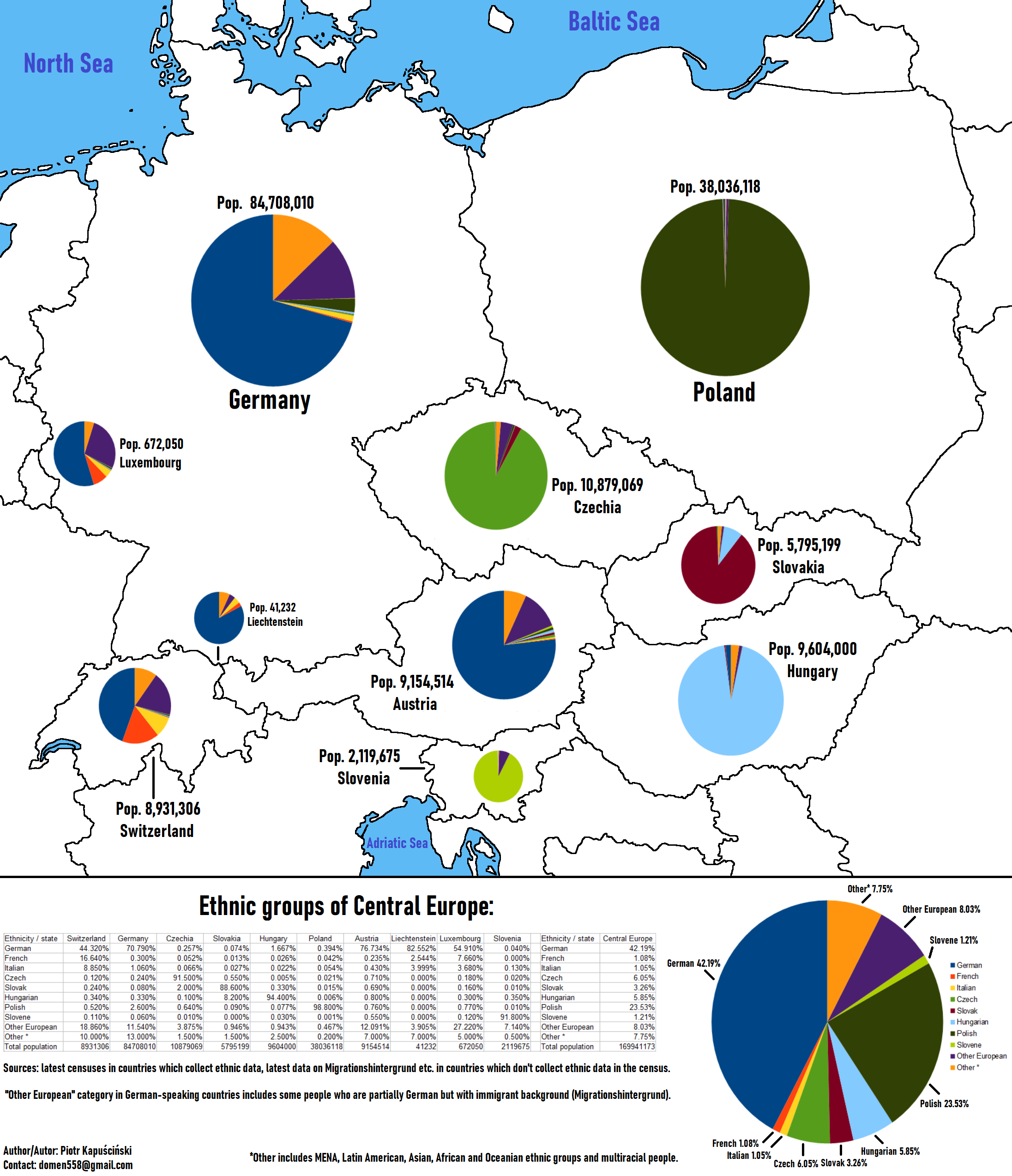
it's a weird mixture of numbers since all those countries have different systems to categorize their populations and so they are not comparable.
in german speaking countries the definition of migration background differs a lot.
for example in germany people who have at least one parent who was not born with german citizenship counts as a person with migrant background. everyone else doesn't.
in austria they only look at the birth place of the parents. if both of the parents have a place of birth abroad then the person has migration background. otherwise the person has no migration background even if noone has austrian citizenship.
the swiss one seems to be a bit more complicated and i'm not sure if i got it right. it seems that if at least one of the person's parents was born in switzerland and at least one of the parents(could also be the one not born in switzerland) aquired the swiss citizenship at some point before the birth of the person in question, then that person has no migration background. in addition if both parents were born in switzerland then the person doesn't have migration background even if noone has swiss citizenship.
in the non-german speaking countries listed here there is no such thing as "migration background" at all and also nothing comparable afaik.
edit: your post is a bit confusing. you say "ethnic groups" of central europe but what are your graphics trying to show? language groups, nationalities? the graphics show mostly this but then the "other" category you describe as "Mena, latin america....multiracial people" but none of these countries actually track something like that. where did you get those numbers from?