
Southpaw
Regular Member
- Messages
- 2,618
- Reaction score
- 1,424
- Points
- 113
- Ethnic group
- Albanian
- Y-DNA haplogroup
- E-V13
Some material:
In the first period of the Iron Age212, Hallstatt213, the identity of the
Northern-Pontical tribes was crystallized; now, the proto-Thracians separated in
North-Danubian Geto-Dacian (what is specific to them is the ceramic culture
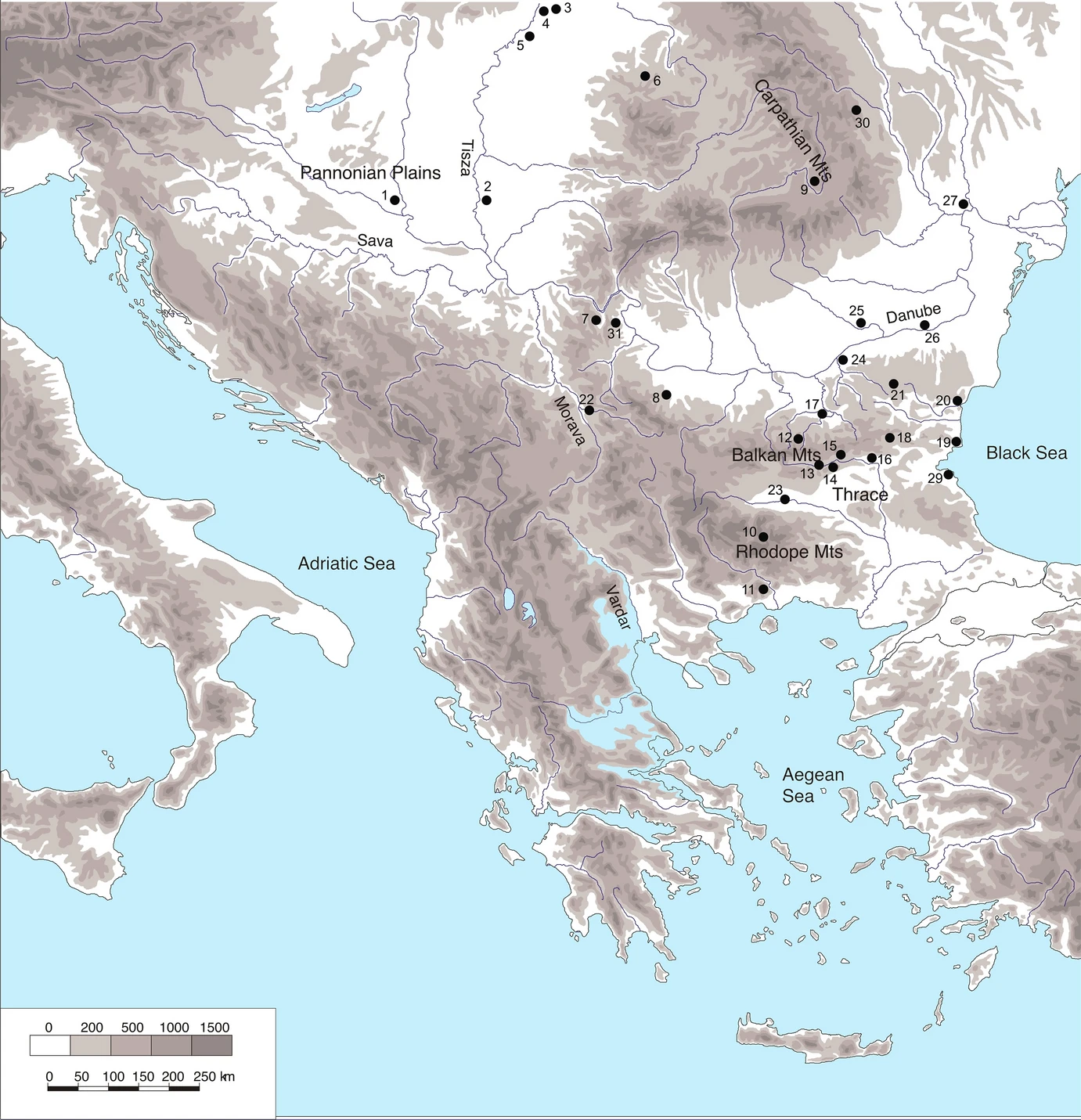
decorated with cannelures) and South-Danubian Thracians (recognized for their
cultures with printed ceramics, in the Thracian meridional group). New features
are added to the old aspects of Bronze spirituality: the perpetuation of the solar
cult, the diminishing of the number of necropoleis, the simultaneous practice of
inhumation and incineration, but in the Late Hallstatt, incineration will be step
by step extended (and later, in Latène, this ritual became fundamental)214.
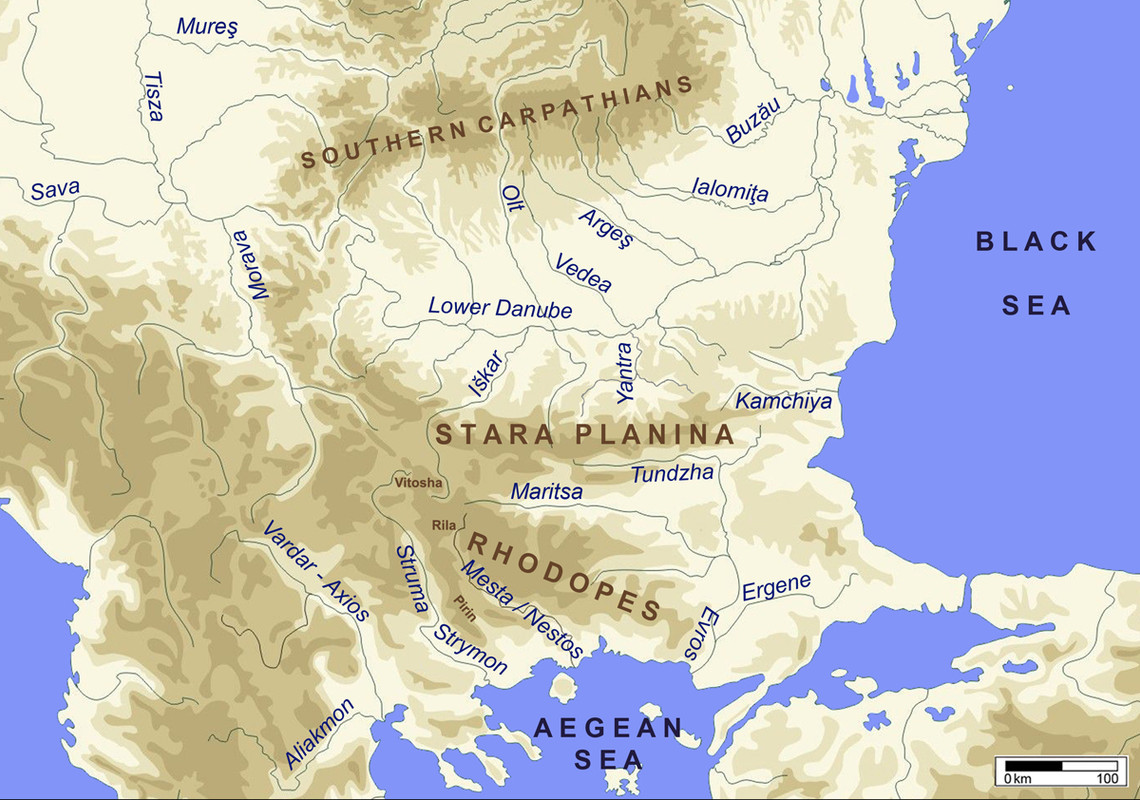
In the biggest part of the territory of Romania, the great cultural synthesis
was developed: the cultural complex Basarabi (named after the eponym place
from Dolj County), extended also in the North of Bulgaria and in the North of
the former Jugoslavia218, appeared on the local Hallstattian basis (the
resemblance with the cultures of Bronze Age: Tei, Gârla Mare, Wietenberg are
not a mere coincidence); it was found in Banat, Vojvodina, Serbia, Oltenia,
Câmpia Română, the South of Moldavia (up to the Dnestr), Mureș basin, the
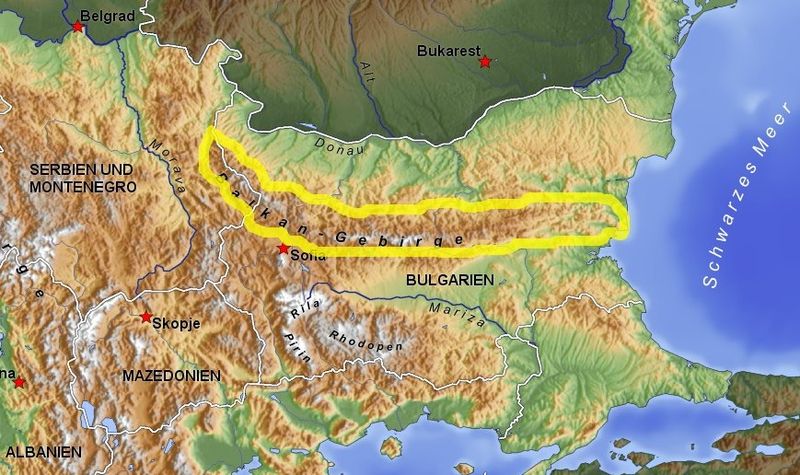
shore of the Danube, from Novi Sad up to Dobrogea and between the Balcans
and the Danube. This cultural complex already represents the individualization
of the Geto-Dacians in the Thracian branch219.


 A198_noUDG.SG