
Tautalus
Regular Member
- Messages
- 580
- Reaction score
- 1,482
- Points
- 93
- Ethnic group
- Portuguese
- Y-DNA haplogroup
- I2-M223 / I-FTB15368
- mtDNA haplogroup
- H6a1b2y
This news story from the Museum of Cultural History of the University of Oslo is about a new book that looks at the path to kingship in Scandinavia between 180 and 550 AD. It establishes a link between the Roman Empire and the emergence of the first Scandinavian kingdoms. The book argues that tribal Scandinavia was put on the path to kingship with the arrival in 180 AD of warrior groups who were discharged from the Roman army. These Scandinavian warriors, who served in the Roman army as mercenaries, played a significant role in the exchange of cultural and military practices between the Roman Empire and the Scandinavian regions. The experience of serving in the Roman army had a profound impact on these warriors, who were exposed to new cultures, ideas and technologies. After their discharge, these warriors brought back new military tactics, technologies and ideas, which they introduced into their communities, influencing the development of Scandinavian warfare and society.

The Roman Origins of the Viking Age - Museum of Cultural History
The earliest Scandinavian kingdoms emerged in the late 5th century, inspired by the Roman polity type. The reasons why this happened, and why these developments played a significant role in the rise of the Viking Age three centuries later, are explored by Professor Dagfinn Skre in his new book...www.khm.uio.no
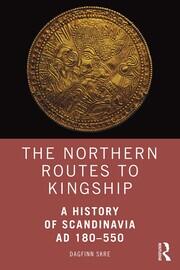
The Northern Routes to Kingship | A History of Scandinavia AD 180–550
This book argues that tribal Scandinavia was set on the route to kingship by the arrival in the AD 180s–90s of warrior groups that were dismissed from the Romanwww.taylorfrancis.com


