
The European Central Bank (ECB) has launched a public survey where we can vote on the new euro banknote designs, and it’s actually a pretty significant change for anyone using cash in the euro area.
Below is a quick overview of why the ECB is doing this, what the new designs are about, and how this survey works.
Why redesign the euro banknotes at all?
This is the first full redesign of euro banknotes since they were introduced in 2002. The ECB’s main reasons are:
– Improving security features to stay ahead of counterfeiters.
– Reducing the environmental impact of banknote production and circulation.
– Making the notes feel more relatable and better reflect European identity and values.
In short, they want new, more secure and more sustainable banknotes that people feel represent Europe today.
How did we get here?
This redesign is the result of a multi-year process rather than a quick cosmetic update. Key steps:
– The ECB first consulted a representative sample of euro area citizens on possible themes for future banknotes.
– A panel of experts (including historians, scientists and designers) shortlisted themes based on that input.
– In 2023, hundreds of thousands of Europeans gave feedback through public surveys and focus groups.
– Based on all that, the ECB selected two overarching themes for the future banknotes:
– “European culture: shared cultural spaces”
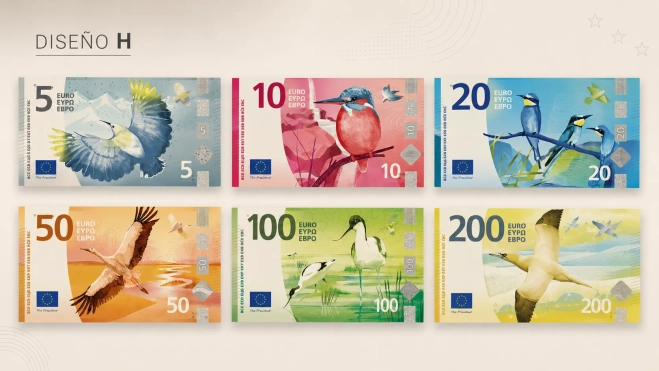
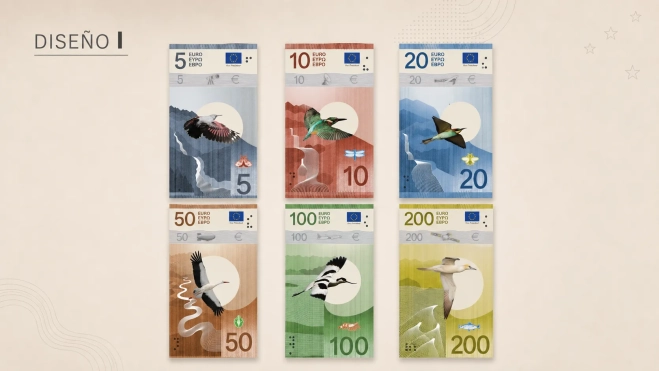
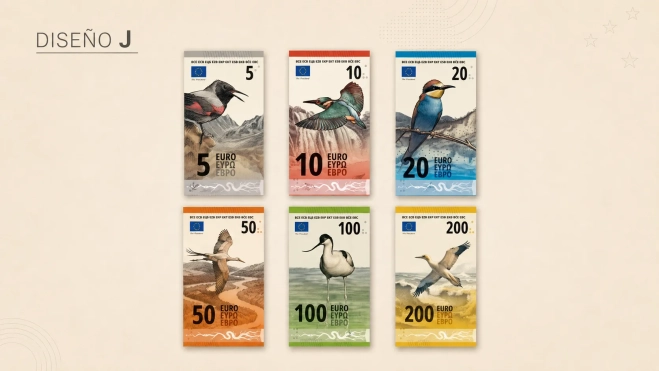
– “Rivers and birds: resilience in diversity”
Then, the ECB ran a Europe-wide design contest. More than a thousand designers applied, and a smaller group was invited to create full sets of banknote proposals. An independent jury reviewed these and narrowed them down to 10 final design proposals.
What is in the current survey?
The public survey that is now online asks us to react to those 10 shortlisted design proposals – five based on “European culture” and five based on “Rivers and birds”.
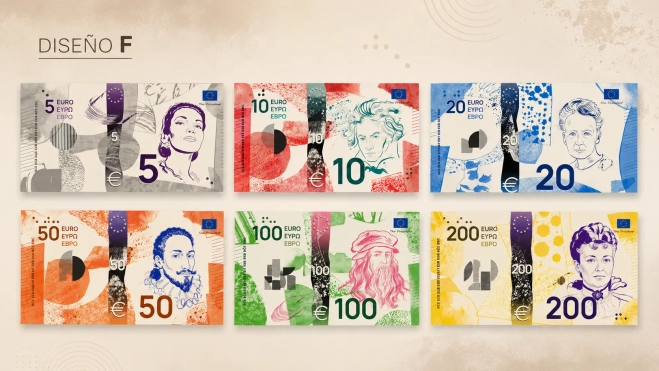
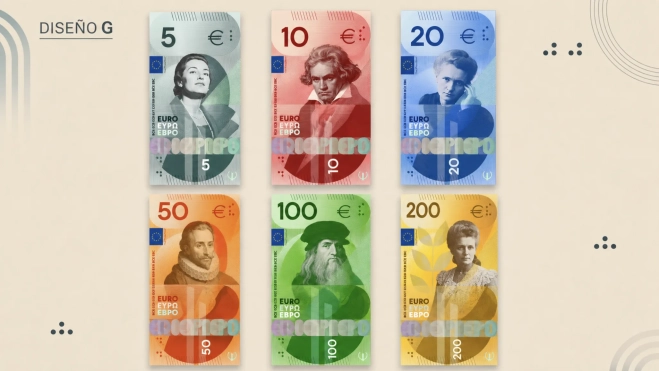
For the European culture theme, the proposals feature well-known cultural and scientific figures on different denominations, combined with everyday cultural scenes.
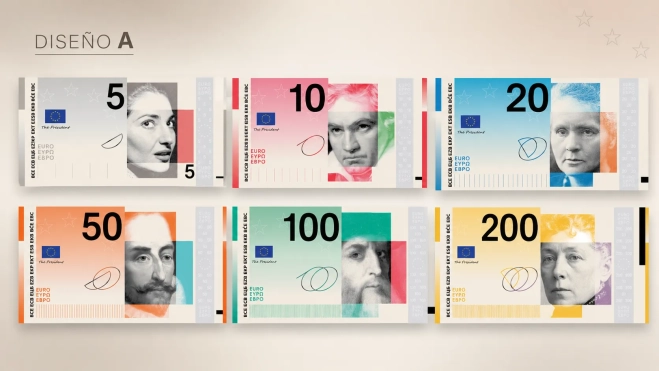
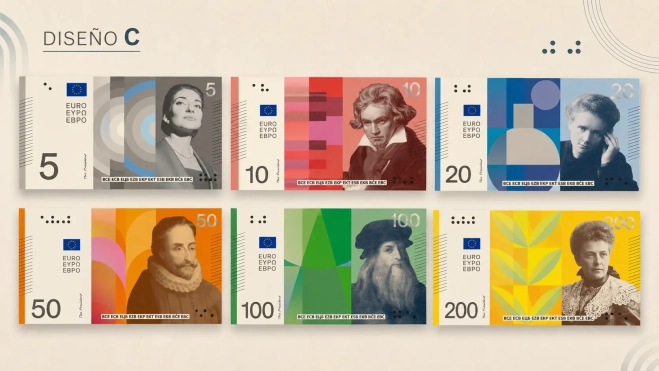
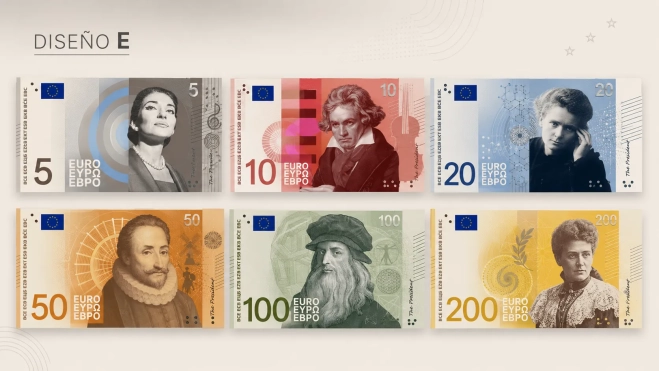
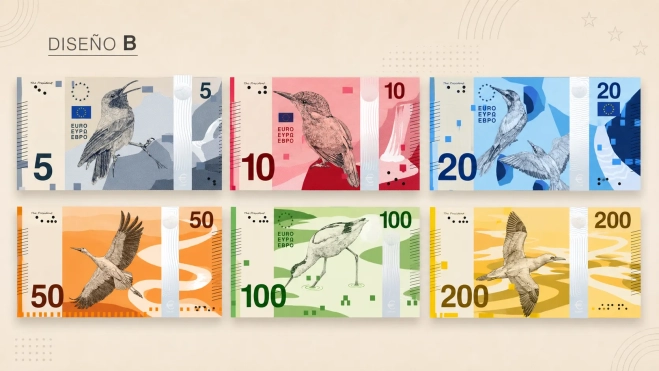
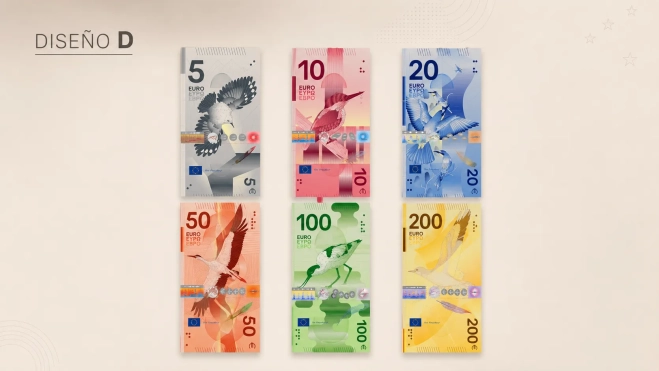
Here's what's actually on the table for each denomination (5, 10, 20, 50, 100, 200 euros):
Here are the proposed designs for the front side :
You can see all the designs here.
How the survey works
In the online survey, you can:
– View all 10 shortlisted design proposals.
– Give your preferences and opinions on the two themes and the specific designs.
– Comment on what you like or dislike about the look and the ideas behind them.
In parallel, the ECB is also running a similar survey through an independent research company with a representative sample of citizens. That means the final decision won’t rely only on self-selected online votes from the public; both sets of results will be combined and analysed.
What happens after the survey?
After the survey closes, the ECB’s Governing Council will:
– Examine the jury’s recommendations.
– Review the technical assessment of the designs (security, durability, production, etc.).
– Consider the feedback from the public survey and the representative sample.
Based on all this, they will choose the final design concept for the next series of euro banknotes. Then comes a technical development phase, testing and preparation for production. So even once the design is selected, it will still take several years before the new notes are actually printed and start circulating.
How to participate
If you want to have a say in what our future euro banknotes look like, you can take the survey here:
https://surveys.ecb.europa.eu/10b/banknotes/share/
It only takes a few minutes, and it’s one of those rare cases where ordinary citizens can directly influence something we literally use every day: the money in our pockets.
Below is a quick overview of why the ECB is doing this, what the new designs are about, and how this survey works.
Why redesign the euro banknotes at all?
This is the first full redesign of euro banknotes since they were introduced in 2002. The ECB’s main reasons are:
– Improving security features to stay ahead of counterfeiters.
– Reducing the environmental impact of banknote production and circulation.
– Making the notes feel more relatable and better reflect European identity and values.
In short, they want new, more secure and more sustainable banknotes that people feel represent Europe today.
How did we get here?
This redesign is the result of a multi-year process rather than a quick cosmetic update. Key steps:
– The ECB first consulted a representative sample of euro area citizens on possible themes for future banknotes.
– A panel of experts (including historians, scientists and designers) shortlisted themes based on that input.
– In 2023, hundreds of thousands of Europeans gave feedback through public surveys and focus groups.
– Based on all that, the ECB selected two overarching themes for the future banknotes:
– “European culture: shared cultural spaces”
– “Rivers and birds: resilience in diversity”
Then, the ECB ran a Europe-wide design contest. More than a thousand designers applied, and a smaller group was invited to create full sets of banknote proposals. An independent jury reviewed these and narrowed them down to 10 final design proposals.
What is in the current survey?
The public survey that is now online asks us to react to those 10 shortlisted design proposals – five based on “European culture” and five based on “Rivers and birds”.
For the European culture theme, the proposals feature well-known cultural and scientific figures on different denominations, combined with everyday cultural scenes.
Here's what's actually on the table for each denomination (5, 10, 20, 50, 100, 200 euros):
- European culture theme: Maria Callas (5), Ludwig van Beethoven (10), Marie Curie (20), Miguel de Cervantes (50), Leonardo da Vinci (100), Bertha von Suttner (200), paired with scenes like street performances, choirs, schools, libraries, museums, and public squares.
- Rivers and birds theme: wallcreeper (5), kingfisher (10), bee-eater (20), white stork (50), pied avocet (100), northern gannet (200), each tied to European river and coastal landscapes.
Here are the proposed designs for the front side :
You can see all the designs here.
How the survey works
In the online survey, you can:
– View all 10 shortlisted design proposals.
– Give your preferences and opinions on the two themes and the specific designs.
– Comment on what you like or dislike about the look and the ideas behind them.
In parallel, the ECB is also running a similar survey through an independent research company with a representative sample of citizens. That means the final decision won’t rely only on self-selected online votes from the public; both sets of results will be combined and analysed.
What happens after the survey?
After the survey closes, the ECB’s Governing Council will:
– Examine the jury’s recommendations.
– Review the technical assessment of the designs (security, durability, production, etc.).
– Consider the feedback from the public survey and the representative sample.
Based on all this, they will choose the final design concept for the next series of euro banknotes. Then comes a technical development phase, testing and preparation for production. So even once the design is selected, it will still take several years before the new notes are actually printed and start circulating.
How to participate
If you want to have a say in what our future euro banknotes look like, you can take the survey here:
https://surveys.ecb.europa.eu/10b/banknotes/share/
It only takes a few minutes, and it’s one of those rare cases where ordinary citizens can directly influence something we literally use every day: the money in our pockets.
Last edited:

