
A new paper about Iran/Persia.
Nature: Ancient DNA indicates 3,000 years of genetic continuity in the Northern Iranian Plateau, from the Copper Age to the Sassanid Empire
Abstract
"In this study, we present new ancient DNA data from prehistoric and historic populations of the Iranian Plateau. By analysing 50 samples from nine archaeological sites across Iran, we report 23 newly sequenced mitogenomes and 13 nuclear genomes, spanning 4700 BCE to 1300 CE. We integrate an extensive reference sample set of previously published ancient DNA datasets from Western and South-Central Asia, enhancing our understanding of genetic continuity and diversity within ancient Iranian populations. A new Early Chalcolithic sample, predating all other Chalcolithic genomes from Iran, demonstrates mostly Early Neolithic Iranian genetic ancestry. This finding reflects long-term cultural and biological continuity in and around the Zagros area, alongside evidence of some western genetic influence. Our sample selection prioritizes northern Iran, with a particular focus on the Achaemenid, Parthian, and Sassanid periods (355 BCE–460 CE). The genetic profiles of historical samples from this region position them as intermediates on an east-west genetic cline across the Persian Plateau. They also exhibit strong connections to local and South-Central Asian Bronze Age populations, underscoring enduring genetic connections across these regions. Diachronic analyses of uniparental lineages on the Iranian Plateau further highlight population stability from prehistoric to modern times."
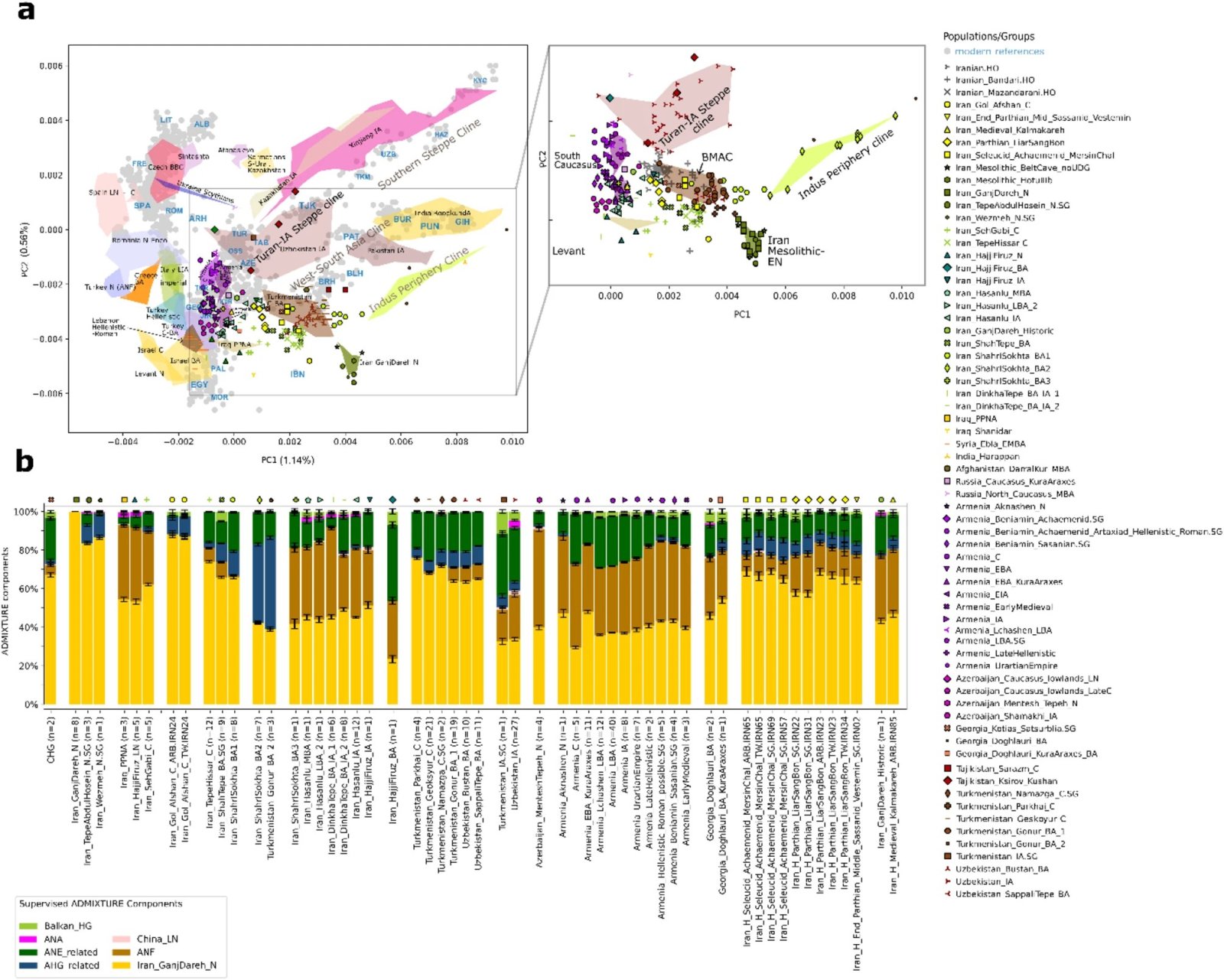
There are not many Y-DNA samples but those available appear to be neatly divided by historical period. The two Chalcolithic ones are R2a2b1. The six samples from the Achaemenid Empire are all J2b (mostly J2b2a), and the Parthian samples include five J1a2a and two J2a. Of course that doesn't mean much as there are so few samples from each period.
Nature: Ancient DNA indicates 3,000 years of genetic continuity in the Northern Iranian Plateau, from the Copper Age to the Sassanid Empire
Abstract
"In this study, we present new ancient DNA data from prehistoric and historic populations of the Iranian Plateau. By analysing 50 samples from nine archaeological sites across Iran, we report 23 newly sequenced mitogenomes and 13 nuclear genomes, spanning 4700 BCE to 1300 CE. We integrate an extensive reference sample set of previously published ancient DNA datasets from Western and South-Central Asia, enhancing our understanding of genetic continuity and diversity within ancient Iranian populations. A new Early Chalcolithic sample, predating all other Chalcolithic genomes from Iran, demonstrates mostly Early Neolithic Iranian genetic ancestry. This finding reflects long-term cultural and biological continuity in and around the Zagros area, alongside evidence of some western genetic influence. Our sample selection prioritizes northern Iran, with a particular focus on the Achaemenid, Parthian, and Sassanid periods (355 BCE–460 CE). The genetic profiles of historical samples from this region position them as intermediates on an east-west genetic cline across the Persian Plateau. They also exhibit strong connections to local and South-Central Asian Bronze Age populations, underscoring enduring genetic connections across these regions. Diachronic analyses of uniparental lineages on the Iranian Plateau further highlight population stability from prehistoric to modern times."
There are not many Y-DNA samples but those available appear to be neatly divided by historical period. The two Chalcolithic ones are R2a2b1. The six samples from the Achaemenid Empire are all J2b (mostly J2b2a), and the Parthian samples include five J1a2a and two J2a. Of course that doesn't mean much as there are so few samples from each period.
Last edited: