• Don't want to see ads? Install an adblocker like uBlock Origin or use a Europe-based privacy-friendly browser like Vivaldi or Mullvad.

Genetic study Continental influx and pervasive matrilocality in Iron Age Britain

Tautalus

Regular Member
Messages
585
Reaction score
1,498
Points
93
Ethnic group
Portuguese
Y-DNA haplogroup
I2-M223 / I-FTB15368
mtDNA haplogroup
H6a1b2y
Abstract

Roman writers found the relative empowerment of Celtic women remarkable. In southern Britain, the Late Iron Age Durotriges tribe often buried women with substantial grave goods. Here we analyse 57 ancient genomes from Durotrigian burial sites and find an extended kin group centred around a single maternal lineage, with unrelated (presumably inward migrating) burials being predominantly male. Such a matrilocal pattern is undescribed in European prehistory, but when we compare mitochondrial haplotype variation among European archaeological sites spanning six millennia, British Iron Age cemeteries stand out as having marked reductions in diversity driven by the presence of dominant matrilines. Patterns of haplotype sharing reveal that British Iron Age populations form fine-grained geographical clusters with southern links extending across the channel to the continent. Indeed, whereas most of Britain shows majority genomic continuity from the Early Bronze Age to the Iron Age, this is markedly reduced in a southern coastal core region with persistent cross-channel cultural exchange. This southern core has evidence of population influx in the Middle Bronze Age but also during the Iron Age. This is asynchronous with the rest of the island and points towards a staged, geographically granular absorption of continental influence, possibly including the acquisition of Celtic languages.

Fig.1) mtDNA and Y chromosome haplogroup frequencies for individuals.
7Gh4Rdn.png


SampleMacro-cladeISOGG Haplogroup (Yfull informed)YFull CladeYfull Clade Terminal Mutation(s) Piechart (Figure 1) Grouping
WBK102R-M269?R(*1b1a1b)--Not included (low resolution)
WBK32R-M269R1b1a1b--Not included (no relatives)
WBK104R-M269R1b1a1b--Not included (no relatives)
WBK193R-M269R1b1a1b--Not included (no relatives)
WBK27R-M269R1b1a1b(*1a1a2c1a)--Not included (no relatives)
WBK107R-M269R1b1a1b1 --Not included (low resolution)
WBK10R-M269R1b1a1b1a1(*a)--Not included (no relatives)
WBK36R-M269R1b1a1b1a1a2(*a2)xR-L21,xR-Y24530,xR-L617; xR-Y14529-Not included (low resolution)
WBK17R-M269R1b1a1b1a1axR-L21,xR-Y24530,xR-L617; xR-Y14529;xZ42-Not included (low resolution)
WBK192R-M269R1b1a1b1a(*1)xR-L21,xR-Y24530,xR-L617-Not included (low resolution)
WBK08R-L21R1b1a1b1a1a2c1a1eR-Z251Z251Not included (no relatives)
WBK43R-L21R1b1a1b1a1a2c1a1eR-Y5833Y5833;BY3060Not included (no relatives)
WBK12R-L21R1b1a1b1a1a2c1a1iR-S1051S1051,FGC9655,FGC9657,FGC9658,FGC9659R-L21-S1051
WBK20R-L21R1b1a1b1a1a2c1a1iR-S1051FGC9655,FGC9657,FGC9659,FGC17865R-L21-S1051
WBK106R-L21R1b1a1b1a1a2c1a3R-A9871A9871;BY9001R-L21-A9871
WBK29R-L21R1b1a1b1a1a2c1a4b2c1R-Z2186Z2186R-L21-Z2186
WBK05R-L21R1b1a1b1a1a2c1a4b2c1aR-Z2183L1066R-L21-Z2186
WBK06R-L21R1b1a1b1a1a2c1a4b2c1aR-Z2183L1066R-L21-Z2186
WBK41R-L21R1b1a1b1a1a2c1a4dR-Y16233MC14;FGC42666Not included (no relatives)
WBK18R-L21R1b1a1b1a1a2c1a6R-BY7804BY7804;BY705;BY11575R-L21-BY7804
WBK30R-L21R1b1a1b1a1a2c1b1R-CTS6919CTS6919;A91;FT14123R-L21-CTS6919
WBK191R-L21R1b1a1b1a1a2c1b1R-CTS6919CTS6919;Y5306Not included (no relatives)
WBK103R-DF27R1b1a1b1a1a2aR-Y14529Y14530;FT8789;position21368487R-DF27-Y14529
WBK23R-DF27R1b1a1b1a1a2a2aR-L617L617;FGC14936;BY31967;BY31968;FGC14934R-DF27-L617
WBK105R-DF27R1b1a1b1a1a2a R-DF27; xR-L617; xR-Y14529DF27 (xL21,xZ42,xL617,xY14529)R-DF27-xL617-xY14529
WBK33R-U152R1b1a1b1a1a2b3R-Z42Z42R-Z42
WBK39R-U152R1b1a1b1a1a2b3R-Z42Deduced from 1d male relative WBK33R-Z42
WBK13R-U152R1b1a1b1a1a2b1R-Y24530Y24606;Y63081;Y24605;FT86728;FT5385;FT6628Not included (no relatives)
WBK24R-PF7589R1b1a1b1a2aR-S1141S1141;Y11820Not included (no relatives)
WBK02G-Z725 (5600, 4300)G2a2b2a1a1b1a1a2G-Z726Z6382G-Z725-Z726
WBK195G-Z725 (5600, 4300)G2a2b2a1a1b1a1a2aG-CTS4803Z3441G-Z725-Z726
WBK03I-L460 (21300,21300)I2a1a1a1a1a1a(*1)I-Z105PF4194I-L460-Z105
WBK07I-L460 (21300,21300)I2a1b1a1a1b1a~I-Y3684Y23433,Y6020,Y3716,Y6026,Y3714,Y6025,Y3708,Y3706Not included (no relatives)
 
Last edited:
Abstract

Roman writers found the relative empowerment of Celtic women remarkable. In southern Britain, the Late Iron Age Durotriges tribe often buried women with substantial grave goods. Here we analyse 57 ancient genomes from Durotrigian burial sites and find an extended kin group centred around a single maternal lineage, with unrelated (presumably inward migrating) burials being predominantly male. Such a matrilocal pattern is undescribed in European prehistory, but when we compare mitochondrial haplotype variation among European archaeological sites spanning six millennia, British Iron Age cemeteries stand out as having marked reductions in diversity driven by the presence of dominant matrilines. Patterns of haplotype sharing reveal that British Iron Age populations form fine-grained geographical clusters with southern links extending across the channel to the continent. Indeed, whereas most of Britain shows majority genomic continuity from the Early Bronze Age to the Iron Age, this is markedly reduced in a southern coastal core region with persistent cross-channel cultural exchange. This southern core has evidence of population influx in the Middle Bronze Age but also during the Iron Age. This is asynchronous with the rest of the island and points towards a staged, geographically granular absorption of continental influence, possibly including the acquisition of Celtic languages.
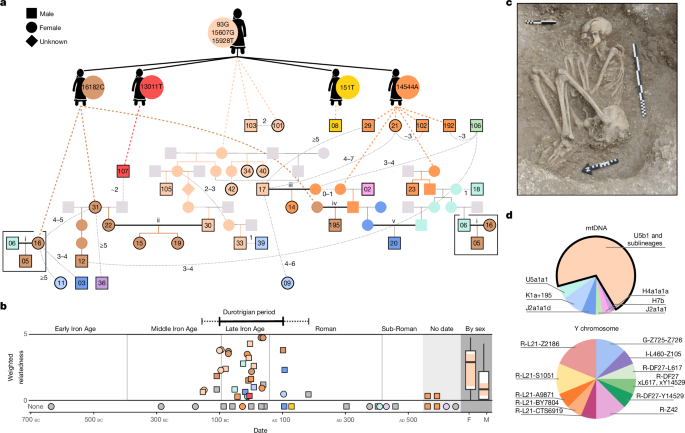

Fig.1) mtDNA and Y chromosome haplogroup frequencies for individuals.
7Gh4Rdn.png


SampleMacro-cladeISOGG Haplogroup (Yfull informed)YFull CladeYfull Clade Terminal Mutation(s) Piechart (Figure 1) Grouping
WBK102R-M269?R(*1b1a1b)--Not included (low resolution)
WBK32R-M269R1b1a1b--Not included (no relatives)
WBK104R-M269R1b1a1b--Not included (no relatives)
WBK193R-M269R1b1a1b--Not included (no relatives)
WBK27R-M269R1b1a1b(*1a1a2c1a)--Not included (no relatives)
WBK107R-M269R1b1a1b1--Not included (low resolution)
WBK10R-M269R1b1a1b1a1(*a)--Not included (no relatives)
WBK36R-M269R1b1a1b1a1a2(*a2)xR-L21,xR-Y24530,xR-L617; xR-Y14529-Not included (low resolution)
WBK17R-M269R1b1a1b1a1axR-L21,xR-Y24530,xR-L617; xR-Y14529;xZ42-Not included (low resolution)
WBK192R-M269R1b1a1b1a(*1)xR-L21,xR-Y24530,xR-L617-Not included (low resolution)
WBK08R-L21R1b1a1b1a1a2c1a1eR-Z251Z251Not included (no relatives)
WBK43R-L21R1b1a1b1a1a2c1a1eR-Y5833Y5833;BY3060Not included (no relatives)
WBK12R-L21R1b1a1b1a1a2c1a1iR-S1051S1051,FGC9655,FGC9657,FGC9658,FGC9659R-L21-S1051
WBK20R-L21R1b1a1b1a1a2c1a1iR-S1051FGC9655,FGC9657,FGC9659,FGC17865R-L21-S1051
WBK106R-L21R1b1a1b1a1a2c1a3R-A9871A9871;BY9001R-L21-A9871
WBK29R-L21R1b1a1b1a1a2c1a4b2c1R-Z2186Z2186R-L21-Z2186
WBK05R-L21R1b1a1b1a1a2c1a4b2c1aR-Z2183L1066R-L21-Z2186
WBK06R-L21R1b1a1b1a1a2c1a4b2c1aR-Z2183L1066R-L21-Z2186
WBK41R-L21R1b1a1b1a1a2c1a4dR-Y16233MC14;FGC42666Not included (no relatives)
WBK18R-L21R1b1a1b1a1a2c1a6R-BY7804BY7804;BY705;BY11575R-L21-BY7804
WBK30R-L21R1b1a1b1a1a2c1b1R-CTS6919CTS6919;A91;FT14123R-L21-CTS6919
WBK191R-L21R1b1a1b1a1a2c1b1R-CTS6919CTS6919;Y5306Not included (no relatives)
WBK103R-DF27R1b1a1b1a1a2aR-Y14529Y14530;FT8789;position21368487R-DF27-Y14529
WBK23R-DF27R1b1a1b1a1a2a2aR-L617L617;FGC14936;BY31967;BY31968;FGC14934R-DF27-L617
WBK105R-DF27R1b1a1b1a1a2aR-DF27; xR-L617; xR-Y14529DF27 (xL21,xZ42,xL617,xY14529)R-DF27-xL617-xY14529
WBK33R-U152R1b1a1b1a1a2b3R-Z42Z42R-Z42
WBK39R-U152R1b1a1b1a1a2b3R-Z42Deduced from 1d male relative WBK33R-Z42
WBK13R-U152R1b1a1b1a1a2b1R-Y24530Y24606;Y63081;Y24605;FT86728;FT5385;FT6628Not included (no relatives)
WBK24R-PF7589R1b1a1b1a2aR-S1141S1141;Y11820Not included (no relatives)
WBK02G-Z725 (5600, 4300)G2a2b2a1a1b1a1a2G-Z726Z6382G-Z725-Z726
WBK195G-Z725 (5600, 4300)G2a2b2a1a1b1a1a2aG-CTS4803Z3441G-Z725-Z726
WBK03I-L460 (21300,21300)I2a1a1a1a1a1a(*1)I-Z105PF4194I-L460-Z105
WBK07I-L460 (21300,21300)I2a1b1a1a1b1a~I-Y3684Y23433,Y6020,Y3716,Y6026,Y3714,Y6025,Y3708,Y3706Not included (no relatives)
Another thread about the same matter has been opened by Riverman: 'Genomes from late IABritain - 57 burials fromDurotrigian sites...'
 
Abstract

Roman writers found the relative empowerment of Celtic women remarkable. In southern Britain, the Late Iron Age Durotriges tribe often buried women with substantial grave goods. Here we analyse 57 ancient genomes from Durotrigian burial sites and find an extended kin group centred around a single maternal lineage, with unrelated (presumably inward migrating) burials being predominantly male. Such a matrilocal pattern is undescribed in European prehistory, but when we compare mitochondrial haplotype variation among European archaeological sites spanning six millennia, British Iron Age cemeteries stand out as having marked reductions in diversity driven by the presence of dominant matrilines. Patterns of haplotype sharing reveal that British Iron Age populations form fine-grained geographical clusters with southern links extending across the channel to the continent. Indeed, whereas most of Britain shows majority genomic continuity from the Early Bronze Age to the Iron Age, this is markedly reduced in a southern coastal core region with persistent cross-channel cultural exchange. This southern core has evidence of population influx in the Middle Bronze Age but also during the Iron Age. This is asynchronous with the rest of the island and points towards a staged, geographically granular absorption of continental influence, possibly including the acquisition of Celtic languages.


Fig.1) mtDNA and Y chromosome haplogroup frequencies for individuals.
7Gh4Rdn.png


SampleMacro-cladeISOGG Haplogroup (Yfull informed)YFull CladeYfull Clade Terminal Mutation(s) Piechart (Figure 1) Grouping
WBK102R-M269?R(*1b1a1b)--Not included (low resolution)
WBK32R-M269R1b1a1b--Not included (no relatives)
WBK104R-M269R1b1a1b--Not included (no relatives)
WBK193R-M269R1b1a1b--Not included (no relatives)
WBK27R-M269R1b1a1b(*1a1a2c1a)--Not included (no relatives)
WBK107R-M269R1b1a1b1--Not included (low resolution)
WBK10R-M269R1b1a1b1a1(*a)--Not included (no relatives)
WBK36R-M269R1b1a1b1a1a2(*a2)xR-L21,xR-Y24530,xR-L617; xR-Y14529-Not included (low resolution)
WBK17R-M269R1b1a1b1a1axR-L21,xR-Y24530,xR-L617; xR-Y14529;xZ42-Not included (low resolution)
WBK192R-M269R1b1a1b1a(*1)xR-L21,xR-Y24530,xR-L617-Not included (low resolution)
WBK08R-L21R1b1a1b1a1a2c1a1eR-Z251Z251Not included (no relatives)
WBK43R-L21R1b1a1b1a1a2c1a1eR-Y5833Y5833;BY3060Not included (no relatives)
WBK12R-L21R1b1a1b1a1a2c1a1iR-S1051S1051,FGC9655,FGC9657,FGC9658,FGC9659R-L21-S1051
WBK20R-L21R1b1a1b1a1a2c1a1iR-S1051FGC9655,FGC9657,FGC9659,FGC17865R-L21-S1051
WBK106R-L21R1b1a1b1a1a2c1a3R-A9871A9871;BY9001R-L21-A9871
WBK29R-L21R1b1a1b1a1a2c1a4b2c1R-Z2186Z2186R-L21-Z2186
WBK05R-L21R1b1a1b1a1a2c1a4b2c1aR-Z2183L1066R-L21-Z2186
WBK06R-L21R1b1a1b1a1a2c1a4b2c1aR-Z2183L1066R-L21-Z2186
WBK41R-L21R1b1a1b1a1a2c1a4dR-Y16233MC14;FGC42666Not included (no relatives)
WBK18R-L21R1b1a1b1a1a2c1a6R-BY7804BY7804;BY705;BY11575R-L21-BY7804
WBK30R-L21R1b1a1b1a1a2c1b1R-CTS6919CTS6919;A91;FT14123R-L21-CTS6919
WBK191R-L21R1b1a1b1a1a2c1b1R-CTS6919CTS6919;Y5306Not included (no relatives)
WBK103R-DF27R1b1a1b1a1a2aR-Y14529Y14530;FT8789;position21368487R-DF27-Y14529
WBK23R-DF27R1b1a1b1a1a2a2aR-L617L617;FGC14936;BY31967;BY31968;FGC14934R-DF27-L617
WBK105R-DF27R1b1a1b1a1a2aR-DF27; xR-L617; xR-Y14529DF27 (xL21,xZ42,xL617,xY14529)R-DF27-xL617-xY14529
WBK33R-U152R1b1a1b1a1a2b3R-Z42Z42R-Z42
WBK39R-U152R1b1a1b1a1a2b3R-Z42Deduced from 1d male relative WBK33R-Z42
WBK13R-U152R1b1a1b1a1a2b1R-Y24530Y24606;Y63081;Y24605;FT86728;FT5385;FT6628Not included (no relatives)
WBK24R-PF7589R1b1a1b1a2aR-S1141S1141;Y11820Not included (no relatives)
WBK02G-Z725 (5600, 4300)G2a2b2a1a1b1a1a2G-Z726Z6382G-Z725-Z726
WBK195G-Z725 (5600, 4300)G2a2b2a1a1b1a1a2aG-CTS4803Z3441G-Z725-Z726
WBK03I-L460 (21300,21300)I2a1a1a1a1a1a(*1)I-Z105PF4194I-L460-Z105
WBK07I-L460 (21300,21300)I2a1b1a1a1b1a~I-Y3684Y23433,Y6020,Y3716,Y6026,Y3714,Y6025,Y3708,Y3706Not included (no relatives)
Another thread about the same matter has been opened by Riverman: 'Genomes from late IABritain - 57 burials fromDurotrigian sites...'
 
Yes, its this one, the paper hadn't been published yet at the time.
 
The two Z56(Z42) relatives 33 and 39 are interesting. I hope a more specific SNP can be found for them.
Their autosomal makeup seems to indicate fully Celtic Briton (somewhat Gallo-Briton for WBK33) and I wonder if the Y-dna in this case comes from Belgic people.

Durotrigian:WBK33,0.127482,0.13405,0.055437,0.040698,0.042162,0.016455,0.00188,0.003923,0.006545,0.006196,-0.002761,0.015436,-0.013528,-0.015827,0.013301,0.005304,-0.009518,-0.000887,-0.004399,0.005253,0.013102,0.012365,-0.005423,0.007712,-0.000718

Durotrigian:WBK39,0.122929,0.133034,0.056945,0.050388,0.051086,0.02008,0,0.001846,0.003272,-0.007836,-0.007957,0.014987,-0.01665,-0.020643,0.019001,0.008486,-0.01682,-0.009122,-0.008547,0.007003,-0.002246,0.005688,-0.003081,0.006145,0.000359
 
I don't know yet if this matrilocality was general in BA/IA Britain? I think something close to this had been signaled by Ancients (Julius Caesar himself too)... We have to be cautious before generalizing.
 
that would be interesting future paper ;)

post-Roman aDNA from Worth Matravers, England
Evidence for kinship can be hard to discern in the archaeological record. Here we used ancient DNA to investigate biological relatedness and possible kinship at the post-Roman site of Worth Matravers, Dorset. We found that both biological and social kinship were involved in determining burial patterns, but also that biological kinship correlated almost exclusively with matrilineal descent. Whilst most individuals had local British ancestry, some carried Continental signatures, and one young male, buried following local practices, carried recent West African ancestry, highlighting the diverse heritage of early medieval Britain.


location:
 
Back
Top