• Don't want to see ads? Install an adblocker like uBlock Origin or use a Europe-based privacy-friendly browser like Vivaldi or Mullvad.

To burn or not to burn: LBA/EIA Balkan case

Status
Not open for further replies.
Snipsa with two read minimum:

Code:
PCA0121: Total SNPs: 38420
Result (66.3% 308 -11 +107): I-S17250

PCA0122: Total SNPs: 48430
Result (63.5% 365 -2 +200): R-A7970 

PCA0124: Total SNPs: 936
Result (29.4% 8 -1 +9): R-CTS1863

PCA0127: Total SNPs: 44289
Result (63.9% 341 -2 +183): I-Y4882 

PCA0130: Total SNPs: 1392
Result (58.3% 14 -0 +10): R-BY33340

PCA0137: Total SNPs: 868
Result (45.5% 5 -0 +6): E-M4279 

PCA0140: Total SNPs: 853
Result (30.0% 3 -0 +7): R-Y283478

PCA0148: Total SNPs: 1287
Result (13.3% 2 -0 +13): O-Z4632 

PCA0150: Total SNPs: 916
Result (57.9% 11 -0 +8): R-A228  

PCA0156: Total SNPs: 27338
Result (50.8% 210 -3 +186): I-Y18331

PCA0157: Total SNPs: 840
Result (17.6% 3 -0 +14): R-Y32853

PCA0161: Total SNPs: 8378
Result (60.2% 77 -2 +41): R-YP1337

PCA0165: Total SNPs: 31956
Result (66.7% 250 -2 +116): R-YP6048

PCA0166: Total SNPs: 58045
Result (67.3% 487 -7 +205): R-CTS11962

PCA0169: Total SNPs: 33028
Result (58.3% 261 -6 +156): R-YP593 

PCA0181: Total SNPs: 24401
Result (46.7% 213 -2 +230): R-L1029 

PCA0187: Total SNPs: 30365
Result (52.7% 297 -22 +141): R-M417  

PCA0191: Total SNPs: 39922
Result (54.0% 322 -2 +263): R-M458  

PCA0193: Total SNPs: 55675
Result (56.2% 428 -6 +301): R-A10971

PCA0197: Total SNPs: 53980
Result (65.3% 432 -2 +220): R-YP1337

PCA0198: Total SNPs: 35528
Result (77.8% 305 -0 +87): R-YP1018

PCA0200: Total SNPs: 33419
Result (35.0% 277 -9 +438): R-Y230110

PCA0202: Total SNPs: 30442
Result (44.5% 226 -3 +262): R-F1417 

PCA0203: Total SNPs: 52698
Result (62.5% 429 -7 +224): R-YP415 

PCA0206: Total SNPs: 1316
Result (73.9% 17 -0 +6): R-M198  

PCA0213: Total SNPs: 16819
Result (51.2% 126 -0 +120): R-CTS11962

PCA0216: Total SNPs: 25665
Result (73.0% 198 -1 +69): R-CTS11962

PCA0218: Total SNPs: 21857
Result (68.9% 177 -0 +80): R-FT76501
   
PCA0230: Total SNPs: 3340
Result (78.6% 33 -0 +9): I-Y3866 

PCA0232: Total SNPs: 2228
Result (71.7% 36 -1 +10): R-L260  

PCA0238: Total SNPs: 9213
Result (81.1% 73 -0 +17): R-M12335

PCA0240: Total SNPs: 9824
Result (63.3% 93 -0 +54): R-Y46239

PCA0241: Total SNPs: 5185
Result (76.9% 60 -0 +18): I1   
   
PCA0244: Total SNPs: 23813
Result (63.1% 190 -3 +97): R-Y76180

PCA0245: Total SNPs: 2005
Result (70.7% 32 -1 +9): R-Z280  

PCA0247: Total SNPs: 7580
Result (60.4% 70 -1 +41): R1a   
  
PCA0254: Total SNPs: 12015
Result (66.4% 96 -1 +44): R-M735  

PCA0298: Total SNPs: 1062
Result (91.7% 22 -0 +2): R-PF7521

PCA0299: Total SNPs: 8813
Result (65.7% 74 -1 +34): R-DF19  

PCA0300: Total SNPs: 26218
Result (71.6% 213 -2 +76): R-V2986 

PCA0309: Total SNPs: 34603
Result (68.9% 349 -15 +92): R-Z645  

PCA0311: Total SNPs: 2123
Result (53.6% 18 -1 +10): J-CTS1026

PCA0319: Total SNPs: 2340
Result (61.7% 29 -0 +18): P-P337  

PCA0322: Total SNPs: 4757
Result (67.3% 35 -0 +17): I-L621 
 
PCA0324: Total SNPs: 29944
Result (61.8% 265 -2 +154): N-Y6077 

PCA0327: Total SNPs: 1159
Result (60.9% 14 -0 +9): E-L618  

PCA0328: Total SNPs: 40042
Result (69.6% 329 -2 +135): R-YP509 

PCA0329: Total SNPs: 3841
Result (46.1% 41 -2 +35): R-CTS11962

PCA0332: Total SNPs: 39889
Result (67.5% 307 -7 +117): R-YP6048

PCA0333: Total SNPs: 54667
Result (79.1% 467 -3 +112): R-YP6048

PCA0334: Total SNPs: 24599
Result (62.5% 216 -6 +101): R1  
    
PCA0335: Total SNPs: 34214
Result (67.4% 280 -3 +122): R-YP256 

PCA0340: Total SNPs: 2709
Result (43.1% 31 -3 +20): E-CTS1273
     
PCA0354: Total SNPs: 100725
Result (78.0% 822 -5 +212): R-FTB1912

PCA0359: Total SNPs: 43357
Result (75.4% 362 -4 +102): R-CTS11962

PCA0366: Total SNPs: 6855
Result (91.2% 127 -1 +9): R-L1029 

PCA0368: Total SNPs: 9549
Result (58.9% 85 -3 +44): I-M507
 
PCA0378: Total SNPs: 10763
Result (73.3% 88 -0 +32): I-S8175
 
PCA0381: Total SNPs: 8687
Result (76.8% 76 -0 +23): R-BY51734

PCA0384: Total SNPs: 17498
Result (71.4% 158 -2 +55): R-YP343 

PCA0385: Total SNPs: 5222
Result (48.9% 47 -1 +43): I-L38
   
PCA0387: Total SNPs: 6007
Result (62.7% 48 -2 +19): R-M198  

PCA0388: Total SNPs: 3577
Result (48.1% 26 -0 +28): P-P337  

PCA0390: Total SNPs: 7252
Result (63.6% 62 -2 +26): J-L283  

PCA0391: Total SNPs: 16554
Result (56.7% 134 -1 +97): R-L389  

PCA0392: Total SNPs: 225
Result (75.0% 3 -0 +1): R-M198 
 
PCA0394: Total SNPs: 11541
Result (72.1% 98 -0 +38): R-CTS11962

PCA0398: Total SNPs: 4699
Result (60.8% 51 -2 +23): R-M459  

PCA0400: Total SNPs: 16295
Result (71.7% 157 -5 +41): E-BY5965

PCA0403: Total SNPs: 11410
Result (71.5% 96 -1 +34): R-CTS11962

PCA0405: Total SNPs: 372
Result (71.4% 13 -1 +1): R-Z92 
      
PCA0425: Total SNPs: 287
Result (75.0% 3 -0 +1): R-FT25222

PCA0426: Total SNPs: 2165
Result (55.3% 24 -1 +14): R-Z645
  
PCA0476: Total SNPs: 19134
Result (66.8% 174 -5 +64): R-L51 
  
PCA0478: Total SNPs: 2593
Result (76.0% 38 -0 +12): P-P337 
 
PCA0479: Total SNPs: 44305
Result (59.7% 347 -8 +194): R-Y2404 

PCA0480: Total SNPs: 5795
Result (54.6% 59 -2 +38): I-S6346 

PCA0483: Total SNPs: 10625
Result (57.4% 81 -5 +34): I-BY72774

PCA0486: Total SNPs: 2819
Result (71.2% 40 -1 +12): P-P337  

PCA0488: Total SNPs: 28601
Result (55.2% 288 -8 +190): I-BY127314

PCA0492: Total SNPs: 16585
Result (68.9% 135 -0 +61): I-Z170  

PCA0498: Total SNPs: 22566
Result (71.0% 196 -0 +80): I-L121  

PCA0504: Total SNPs: 2677
Result (84.2% 51 -1 +6): R-CTS8816

PCA0510: Total SNPs: 7868
Result (59.8% 55 -0 +37): R-Y61261

PCA0513: Total SNPs: 8151
Result (54.9% 62 -0 +51): R-PF6155

PCA0517: Total SNPs: 1512
Result (31.8% 7 -0 +15): R-Y151233

PCA0520: Total SNPs: 1191
Result (50.0% 9 -1 +3): R-M198  

PCA0521: Total SNPs: 3185
Result (58.5% 24 -0 +17): I-Y3120 

PCA0541: Total SNPs: 16995
Result (41.0% 138 -2 +184): R-Z645  

PCA0564: Total SNPs: 4237
Result (86.4% 38 -0 +6): R-M198  

PCA0565: Total SNPs: 2434
Result (80.0% 12 -0 +3): I-L621  

PCA0571.: Total SNPs: 5616
Result (40.2% 37 -0 +55): R-YP5863

PCA0572.: Total SNPs: 2113
Result (53.1% 17 -0 +15): R-M198  

PCA0579.: Total SNPs: 1928
Result (88.9% 32 -0 +4): R-M459

From: https://anthrogenica.com/showthread...ent-day-Poland&p=939012&viewfull=1#post939012

The good thing for E is, that most of the unrealistic results end up in very different branches which are fairly unlikely to have appeared in Europe. Therefore the possible to likely results are - all E-V13 (one presumably):
PCA0327: Total SNPs: 1159
Result (60.9% 14 -0 +9): E-L618

PCA0340: Total SNPs: 2709
Result (43.1% 31 -3 +20): E-CTS1273

PCA0400: Total SNPs: 16295
Result (71.7% 157 -5 +41): E-BY5965

Which equals to about more than 3 % for E-V13 which I consider coming from Daco-Thracians/Channelled Ware from the Southern fringe.

This one might be a wrong one, or just bad coverage (of the four E's by far the worst coverage) but in fact E-V13 too:
PCA0137: Total SNPs: 868
Result (45.5% 5 -0 +6): E-M4279

J1:
PCA0311: Total SNPs: 2123
Result (53.6% 18 -1 +10): J-CTS1026

One J-L283 (Illyrian-related):
PCA0390: Total SNPs: 7252
Result (63.6% 62 -2 +26): J-L283

But that's a nice confirmation of E-V13 being present more to the North in comparison to other "Southern lineages" and actually coming from the Northern Carpathians, spreading with Daco-Thracian related groups North. Just one J-L283 (less than one third to one fourth of E-V13) and no other Southern lineages (of J, G, T etc.) at all.

The only one with a more downstream position ends up being most common in Britain today, among Welsh people (Celtic):
https://www.yfull.com/tree/E-BY5965/
 
As far as G25 coordinates are available, the E-V13 individuals have all Early Slavic profiles and are closest to modern (rather Northern) Russians.
 
As far as G25 coordinates are available, the E-V13 individuals have all Early Slavic profiles and are closest to modern (rather Northern) Russians.

There are 101 Y-haplogroups and 103 G25s, but I don't know the total number of samples. So far E-V13 is 5.5555% of total Slavic and Slavic-Irgia cluster in G25. People are hoping there are medieval samples but so many of the Slavic individuals have significant Ingria admixture I'd say most are IA. The literature of the study might clear this part up.
 
There are 101 Y-haplogroups and 103 G25s, but I don't know the total number of samples. So far E-V13 is 5.5555% of total Slavic and Slavic-Irgia cluster in G25. People are hoping there are medieval samples but so many of the Slavic individuals have significant Ingria admixture I'd say most are IA. The literature of the study might clear this part up.

They are not the result of recent admixture in any case, and if extrapolating the numbers for the Slavs only, the percentage of E-V13 would be even higher in this sample. They must have been part of the Slavic communities for a couple of generations, at least. And since we get similar results from everywhere, from Northern Germany, Eastern Germany, Czechia, Poland, Northern and Central Russia, it becomes a pattern and E-V13 is highly likely to have taken part in the Early, if not Proto-Slavic formation already. They were likely picked up in the North Carpathian zone already, the first latest at the beginning of the Common Era.

Going back a couple of thousands of years, another E-V68 from a new paper, this time from Austria, presumably E-M78, if not E-L618:

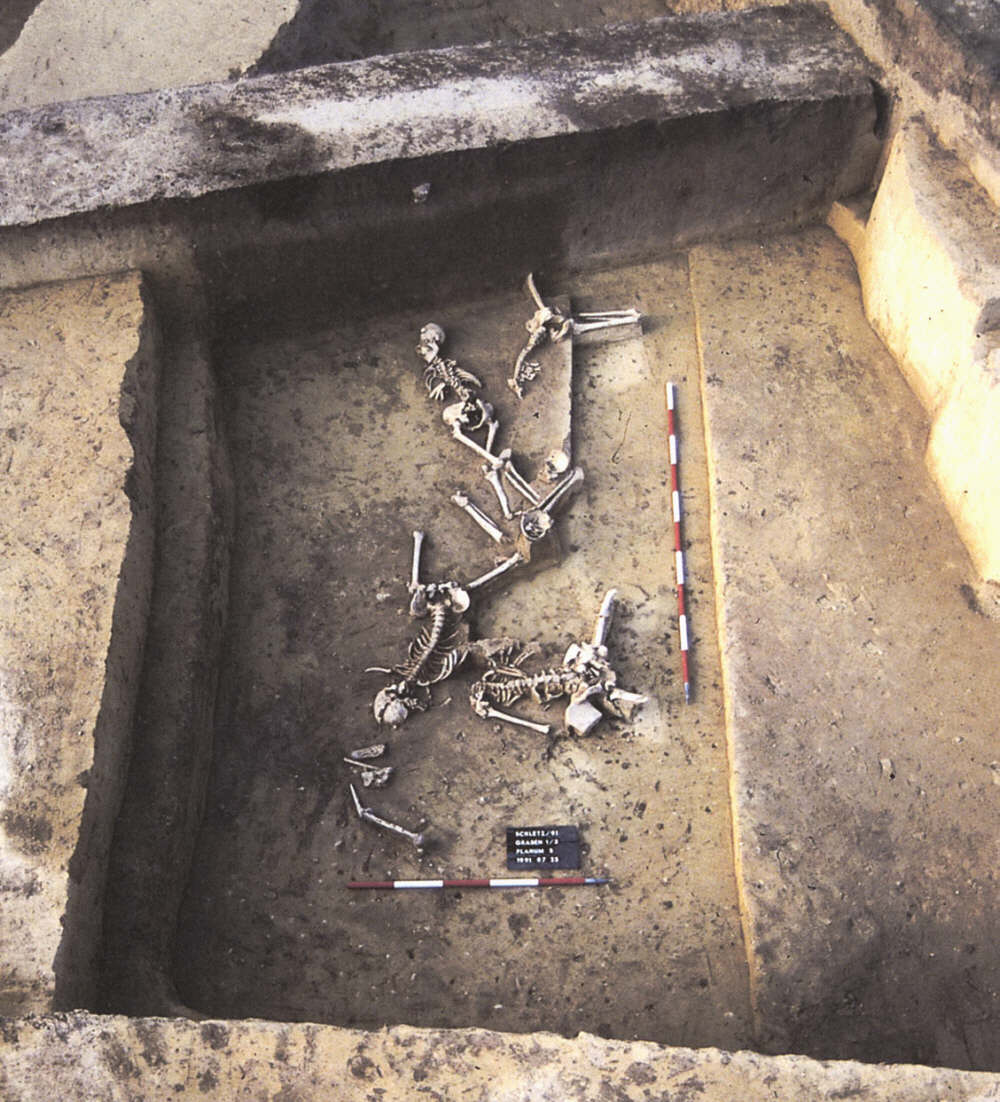
I27776 93/17 1993 FN 4520, I25314 tooth (molar) this paper 5207-4945 calBCE (6113?23) [R_combine: (6130?35 BP, VERA-2010); (6100?30 BP, VERA-2011)] Schletz_Ditch Asparn Schletz 48,57 16,46 adult-mature 30-45 M E1b1b1a1 W1+119

https://www.biorxiv.org/content/10.1101/2023.07.07.548126v1.supplementary-material

Thread: https://anthrogenica.com/showthread...-first-farmers-of-central-Europe-(discussion)

While he appears as a single sample in an G2a dominated environment, quite typically, for many finds of E1b1b in Europe, his EEF population is more diverse with C1a2, H2c, T1a1. I consider this almost a pattern, that E-L618 appears in the early Neolithic together with other more rare lineages, not just the typical G2a.

So we have now E1b1b from along the Rhine, down the whole Danube, over Austria (LBK)-Hungary (Lengyel-Sopot)-Bulgaria (Varna) and up to Ukraine (Tripolye-Cucuteni).
 
Last edited:
nice ;-)
So e-L618 were there
Not common as G but without any
Doubt present
Very cool
Austrian LBK
This I27776 was victim of massacre :(

A couple of remains where exhibited nearby, for some time. The execution of prisoners was a common practise in that era.
 
Asparn.jpg


source:

https://en.wikipedia.org/wiki/Massacre_of_Schletz


P.s
Lots of violence in LBK
 
Last edited:
Going by the simulated coordinates for those which weren't included in the G25 spreadsheet:
Code:
PCA0390_sim,0.131371953525,0.11316150586999998,0.06484040479500003,0.05127003716899965,0.02821552106799999,0.018646037608799994,0.013517015294999997,0.014191274266000059,-0.008724240511000056,-0.025304192058000052,0.0025508345983999998,-0.01113858653800004,0.023844888970999997,0.017320180074000102,-0.02747480215500006,-0.007464672385999967,0.005958965861999843,-0.0017800453209998526,-0.0006295519250000062,-0.007888319953,-0.011526230988000014,0.001044004268000026,0.002819545124999979,-0.00805988568199998,-0.002056756307000196
PCA0400_sim,0.13221730071800022,0.13349082796199999,0.052228629527,0.03723601640199993,0.031125747918000008,0.014818566303320001,0.0070140357719999874,0.005300981282000046,-0.007111561814999931,-0.004386253267999907,-0.003955297681864,0.0048464265189999845,-0.009214948648999995,-0.0030440492729996507,0.00959387144200004,0.001863810510000053,-0.002403694252000054,0.0018333178229999608,0.004816476061999984,0.0041912417103999984,0.0000867290470002377,0.0025436200400000657,0.0039499686469999925,0.01425194829899991,-0.0010600645700000536

The E-V13 with the more Western and probably Celtic-related subclade is German (old Germanic with minor Slavic and Southern admixture), the J-L283 is fully Slavic as well by the way. So 2-3 Slavic E-V13 carriers and 1 German(ic) one.
 
They are not the result of recent admixture in any case, and if extrapolating the numbers for the Slavs only, the percentage of E-V13 would be even higher in this sample. They must have been part of the Slavic communities for a couple of generations, at least. And since we get similar results from everywhere, from Northern Germany, Eastern Germany, Czechia, Poland, Northern and Central Russia, it becomes a pattern and E-V13 is highly likely to have taken part in the Early, if not Proto-Slavic formation already. They were likely picked up in the North Carpathian zone already, the first latest at the beginning of the Common Era.

Going back a couple of thousands of years, another E-V68 from a new paper, this time from Austria, presumably E-M78, if not E-L618:


https://www.biorxiv.org/content/10.1101/2023.07.07.548126v1.supplementary-material

Thread: https://anthrogenica.com/showthread...-first-farmers-of-central-Europe-(discussion)

While he appears as a single sample in an G2a dominated environment, quite typically, for many finds of E1b1b in Europe, his EEF population is more diverse with C1a2, H2c, T1a1. I consider this almost a pattern, that E-L618 appears in the early Neolithic together with other more rare lineages, not just the typical G2a.

So we have now E1b1b from along the Rhine, down the whole Danube, over Austria (LBK)-Hungary (Lengyel-Sopot)-Bulgaria (Varna) and up to Ukraine (Tripolye-Cucuteni).

Interesting, i wonder if Mayer's crazy theories about Slavic being a balticised pre-albanian (Carpathian Indo European according to him) based on some slavic ks - sk developments that he compared to Albanian sk-> h, were just an artefact of early language contact?
 
Interesting, i wonder if Mayer's crazy theories about Slavic being a balticised pre-albanian (Carpathian Indo European according to him) based on some slavic ks - sk developments that he compared to Albanian sk-> h, were just an artefact of early language contact?

I can't properly assess that, but my personal opinion is that Channelled Ware/Stamped Pottery = Daco-Thracians and that these Daco-Thracians were a direct influence working on Pre-/Proto-Slavs of the region, like e.g. through their influence in South Eastern Poland and North Western Ukraine, especially the Chernoles culture had significant Channelled Ware influences, and the Vysotsko group (compare with this map) was basically a Channelled Ware colony.
Also, its possible that the Lusatians too had some sort of linguistic relationship to the wider Thraco-Illyrian/Carpatho-Balkan sphere.

All this taken together, and the lineages we have which might point to such connections, I2a-din primarily, but also some early Slavic E-V13 branches, would imply a strong contact and influence from these groups Eastern Urnfielders working on the Pre-/Proto-Slavs. However, that is just an influence on a Baltoslavic people.

Another aspect is that by itself Daco-Thracian might be a related linguistic group to Baltoslavic. Especially if F?zesabony-Otomani would have spread the Daco-Thracian language late, and considering that F?zesabony was a daughter group from Mierzanowice, we would deal with a direct relationship and these R-Z282 F?zesabony people would have brought Daco-Thracian to the E-V13 carriers in the Carpatho-Balkans.
I don't think that's the case, I rather think that Daco-Thracian emerged from Cotofeni, but it can't be excluded at this point. The third alternative is Noua-Coslogeni, with Daco-Thracian coming from the steppe Sabatinovka people (R-Z93 dominated) by the way.
 
All this taken together, and the lineages we have which might point to such connections, I2a-din primarily, but also some early Slavic E-V13 branches, would imply a strong contact and influence from these groups Eastern Urnfielders working on the Pre-/Proto-Slavs. However, that is just an influence on a Baltoslavic people.
More like I2a-Slav. The correct nomenclature is I-Y3120 not "DIN", that is a pseudo-scientific term. We have samples from Cetina-Dinaric and they obviously do not carry non native Slavic medieval arrival parental markers.

One needs to imagine that in 2023 there are still people who use that pseudo-scientific term especially the Slavic autochthonists.
 
More like I2a-Slav. The correct nomenclature is I-Y3120 not "DIN", that is a pseudo-scientific term. We have samples from Cetina-Dinaric and they obviously do not carry non native Slavic medieval arrival parental markers.

One needs to imagine that in 2023 there are still people who use that pseudo-scientific term especially the Slavic autochthonists.

For an unknown reason I sometimes confuse the SNP, which is the main reason I reverted back to the I2a-Din, since everybody knows what's meant and I don't have to check it again ;)

As for its origin, we still don't know where it was, but my guess is with these exact Urnfielders, more likely Lusatians than G?va, but we'll see hopefully, eventually.
 
For an unknown reason I sometimes confuse the SNP, which is the main reason ..... [I2a-Y3120 Fixed that, also no reason to "revert" to pseudo-scientific autochthonist vocabulary.], since everybody knows what's meant and I don't have to check it again ;)

As for its origin, we still don't know where it was, but my guess is with these exact Urnfielders, more likely Lusatians than G�va, but we'll see hopefully, eventually.
Oh I'm pretty sure that I2a-Slav serves this purpose very well. It is very suspicious to forget correct nomenclatures only when regarding Slavic uniparentals. Especially for an "Austrian"? ;)

Well, that pseudo origin enigma doesn't affect the Balkan Bronze Age/Iron Age thread and is more something for the Slavic related threads :bigsmile:
 
@PaleoRevenge Weren't some of the archeologists of this team in the interesting video of a presentation you've shared. They also talked about the MBA Shkrel sample, right?

Deskaj and Galaty are in the author credits of the Reich Southern Arc papers and have been part of excavation teams in Albanian sites. From an article I have read and shared in the past Deskaj has also been working in the Republic of Kosova moreso in Peja, Ulpiana too IRC etc. let's hope we will finally also get samples from there next to additional samples from Albania.


THE SHKODRA ARCHAEOLOGICAL PROJECT / PROJEKTI ARKEOLOGJIK I SHKODRËS PASH

Screenshot-2023-06-22-135432.jpg


PASH is jointly operated by the Department of Archaeology and Cultural Heritage Management at the University of Tirana, Albania, and the Museum of Anthropological Archaeology at the University of Michigan, with permission from the Albanian Ministry of Culture. Primary financial support for PASH comes from the United States National Science Foundation.

The ultimate goal of PASH is to explain the origins of Mediterranean social inequality, beginning in the Late Copper Age, before about 3000 BC, through the late Iron Age and following Roman conquest. The explanatory models we are testing assume that Albanian late prehistoric landscapes – composed of nucleated hill top settlements and burial in mounds – were the result of multiple, long-term, interacting factors. These include shifts in regional environment and climate, social and economic interaction, competition and conflict, and, perhaps, migration. Since 2010, we have employed various field and laboratory methods to test our models and meet our goal.

See what they say under the section Survey: We have intensively surveyed 2368 tracts covering 15.208 square kilometers in the areas of Shkrel and Shtoj, surface collected seven late prehistoric archaeological sites, including the hill top settlement of Zagorës and the large hill fort at Gajtan, and surveyed 144 burial mounds (tumuli).


Link: https://shkodraarchaeologicalproject.weebly.com/results.html
 
That's right mount, they are husband and wife, Deskaj is from Kosovo originally. Samples would be nice, but the way things move, I doubt we will see them soon, on average it looks like there is four year lag time from when samples are tested to getting published. That's a unnecessary long time, academia loves to milk their funds.
 
That's right mount, they are husband and wife, Deskaj is from Kosovo originally. Samples would be nice, but the way things move, I doubt we will see them soon, on average it looks like there is four year lag time from when samples are tested to getting published. That's a unnecessary long time, academia loves to milk their funds.
Considering the published southeast Albanian Tumuli abstract and that they, especially Deskaj, have been involved in many other Balkan sites in the Southern Arc papers, I am actually a bit optimistic. However, the time span in which some of the preliminary results of the Albanian samples have been out there in the past has really been long indeed.
 
Considering the published southeast Albanian Tumuli abstract and that they, especially Deskaj, have been involved in many other Balkan sites in the Southern Arc papers, I am actually a bit optimistic. However, the time span in which some of the preliminary results of the Albanian samples have been out there in the past has really been long indeed.

The southeast paper is a small sample that's a stand alone product, easy to draft and pass through. A paper with multiple locations/countries where samples are compared to other nearby regions and modern populations, just blow up into unnecessary verbiage and appeasement campaigns to not offend national historical narratives. Even the Kamenica paper had it's abstract revised, to mention northern Aegean (probably Logkas MBA) through Dalmatia form a linear cline on PCA. I would not be surprised if Lorenc Bejko threw a fit and insisted Kamenica and Illyrians are the same people.

The hold up in any case occurs at the analysis of the genetic data, not the folks involved in the digging. Deskaj and Galaty seem entirely focused on getting samples from graves, old and new.

I don't expect much, what we are discussing here, the relevant samples will be out 2-5 years from now(in phases).

What we are likely to get this year is the Transalvania EBA-LBA samples, that would be sweet, imagine how the retards will react when E-V13 Riverman's hypothesis is confirmed. E-V13 story is a foregone conclusion at this point. I want to see Brnjica and eastern Paeoni samples, R-BY611 was definitely present among Brnjica(and likely came from Vatin), though I would not be surprised other R-Z2103 extinct branches were also present. R-Y23373 I see as eastern Brnjica expansion into Struma river valley. We might see such samples on the Bulgarian 1,000+ samples, but who knows when they'll get published.

One thing on the Kamenica paper, the R-Z2103 that shows up post 750 BC might be eastern Illyrians from eastern Bosnia/western Serbia(Hammond thought the culture package resembled western Kosovo and eastern Bosnia Glasinac), where the Vatin variant was assimilated into Illyrian ethnos, their branch would be very specific anyway, it would not be hard to dissect who represents who.
 
Last edited:
Interesting, i wonder if Mayer's crazy theories about Slavic being a balticised pre-albanian (Carpathian Indo European according to him) based on some slavic ks - sk developments that he compared to Albanian sk-> h, were just an artefact of early language contact?

I wouldn't be hyped about what Riverman says. I don't think E-V13 was part of Proto-Slavs. Maybe some of it got integrated among Proto-Slavs. But North-Carpathians were not the mainstream where E-V13 lived, it should be rather South Carpathians-Danube-Balkans area scretching to Haemus-Rhodope mountains where their core areas resided.

I think what we call Gava was a phenomenon from South Danubian migrants migrating up North somewhere during Bronze Age.

This even fits with all the records we have: https://link.springer.com/article/10.1007/s10963-021-09155-7


We see the same traditions being kept, metallurgy was keeping them alive, Ada Tepe as brother culture of Psenicevo should be fully V13 as well.

North Carpathian groups were completely broken by Yamnaya and latter Tumulus groups. But not the people from Central-Eastern Balkans, the pioneers of metallurgy, some of their groups were still giving a fight.

There is a reason why you see both in Central Europe and South it is the EEF which connects V13, with less CHG. No better place than East-Serbia/West-Bulgaria and South Carpathian triangle to explain this phenomenon.
 
We see the same traditions being kept, metallurgy was keeping them alive, Ada Tepe as brother culture of Psenicevo should be fully V13 as well.

North Carpathian groups were completely broken by Yamnaya and latter Tumulus groups. But not the people from Central-Eastern Balkans, the pioneers of metallurgy, some of their groups were still giving a fight.

There is a reason why you see both in Central Europe and South it is the EEF which connects V13, with less CHG. No better place than East-Serbia/West-Bulgaria and South Carpathian triangle to explain this phenomenon.

Belegis I and G?va are part of the same block. The problem with the Danubian zone and even more the areas to their South is that we already have samples, know the dominant cultures, and they were essentially related to Monteoru (I2), Encrusted Pottery (I2+G2) and Sabatinovka-Noua-Coslogeni (R-Z93).
I also think it is very characteristic, that among the Southern mixed Thracians we later find R-Z93 they picked up from these Eastern steppe groups, this being, at this point, the only non-E-V13 from that group. Very typical.

But considering the MBA-LBA, there is not even enough space South of the Danube for keeping the significant, huge E-V13 of the MBA-LBA alive.

If we think about groups like Verbicoara and Vartop from closer to Bulgaria, they too have a clear relationship to the Tisza-K?r?s zone, the later centre of G?va and Channelled Ware, the centre of the cremation block.

Considering the Slavic E-V13, we have multiple branches with a very clear branching pattern within the Slavic core population, so there can be little doubt, at this point, that some E-V13 lineages participated in the Proto-Slavic formation or were at least assimilated very early, before the main expansion. E-V13 must have been still pretty strong in the Dacian groups and here again I want to point to the Carpi and Costobocci in particular, with more mixed groups to their North still existing, but these are the better known Dacian tribes we know from the historical accounts.

The Carpathian Tumulus culture group of cremating Dacians was a reality in the North Carpathians and it was a fairly big group. I think that their role will be very significant for the dispersal of E-V13, because its in this group that a tribal, patrilinear ethnicity, presumably dominated by E-V13, survived for so long. And for the Roman demography, it is always those coming in latest having the biggest advantage, because the Roman way of life and reproductive practise was just a biological failure (comparable to the modern Western family policy). Which means the longer a people lived under "Roman conditions", the worse their growth and survival rate. This also means that people resettled and incoming from a tribal, traditional living group, had by far the best chances and bigger impact. And this is why the impact of the Dacian resettlement, which included people from the Carpi and Costobocci, at the end of the Roman rule in the Balkans, was so important, especially in areas which were known to be largely depopulated before, like Moesia.

I'm pretty confident that a signifcant portion of the Late Antiquity/Early migration period E-V13 in the Balkans, especially from those with a distinctive "Balkan Iron Age" profile without significant "Imperial Roman" admixture will be resettled Dacians.

This would also explain a couple of Balkan lineages which were not brought by Slavs to the Balkans and not by Balkan people to the Slavs, but basically came from an intermediate group, which donored lineages in both directions at roughtly the same time, but with no later overlap. An impression of how big the resettlement first from the province of Dacia, in which still many half-Romanised Dacians lived, and from the Carpi and other tribes later, can be estimated by reading this. The impact was even lower because the Southern provinces, to which they were resettled, being largely depopulated after the hostile incursions into Roman territory:

Sources are consistent regarding the evacuation and surrender of Dacia. In Eutropius' representative account, 'the province of Dacia, established by Trajan on the far side of the Danube, was evacuated and abandoned by Aurelianus after the devastation of Illyria and Moesia. The Romans were resettled from the towns and land of Dacia to the middle of Moesia, which he renamed Dacia. It separates the two Moesiae, and after standing on the left of the Danube, it now stands on the right'.[63] Is it conceivable that despite Eutropius' testimony, a sizeable number of Latin-speaking citizens remained in the province abandoned by Rome, survived the era of great migrations, and became the ancestors of a neo-Latin people?

That's important also for the debate about the "Romans" which Germanics and Slavs assimilated or subjugated, because those two will have been, for the greater part, Daco-Romans, descendants of the remaining rural populations, which were more often locals even than those from the towns and cities.

To test the credibility of Eutropius, one can also ask whether Dacia's population welcomed the prospect of resettlement. To be {1-126.} sure, they were in no position to block execution of the policy. Soldiers and their families, who made up a significant part of the population, had no choice; the former left with their units, and the latter followed. The empire, suffering from depopulation, was hungry for people, but the evacuation of Dacia was not accomplished by force. The province's inhabitants, and particularly its Latin-speaking Roman citizens, had no interest in remaining in an undefended territory, exposed to the depredations of the Barbarians and doomed to sink to the level of their conquerors. At the beginning of the 5th century, when the empire was already disintegrating, people in the other provinces spontaneously fled southward, although they had little expectation of finding security and new homes. For Dacia's Roman citizens, who spoke Latin, Greek, and perhaps Syrian, staying put was hardly an attractive alternative when they could move a short distance across the Danube to a secure and civilized new home. The sources indicate a pattern of behaviour that is the very opposite. The free Dacians asked to settle in the empire on two occasions at the end of the 2nd century, and following the Marcomanni wars, two groups, one of unknown number, the other 12,000-strong, received the necessary permission. Although they could not have been Romanized in the mere 50?60 years that had elapsed since their settlement in the empire, now, with the Goths nearby, they were not likely to insist on remaining in the abandoned province. Ever since the 2nd century, the peoples on the periphery had regarded the empire as a prosperous and well-guarded haven, and one tribe after the other begged for permission to settle there. Nor was the empire's attractiveness diminished by wars and anarchy in the middle of the 3rd century; the Marcomanni were resettled under Gallienus, and so were the Dacianized Carpi in 295, despite the fact that they had earlier raided Dacia.[65]

The resettlement even changed the Greek-Latin border to some degree:

From the 250s onward, epigraphs raised by citizens grow scarce, and remain so for a long time. There is, however, one indication that resettlement could be traced through epigraphic finds. The new Dacian capital, Serdica, was in a previously Greek-language region, yet a large proportion of the epigraphs found there, and dated from the 4th century, are in Latin. A plausible explanation is the influence of Latin-speaking people who had been resettled from Dacia.

https://mek.oszk.hu/03400/03407/html/20.html


The map for the language border, Serdica being mentioned (modern Sofia), and especially in the bilingual zone and the neighbouring areas the Dacian resettlement was particularly intensive:

Language_influence_border_between_Latin_and_Hellenic.png

https://upload.wikimedia.org/wikipe...fluence_border_between_Latin_and_Hellenic.png

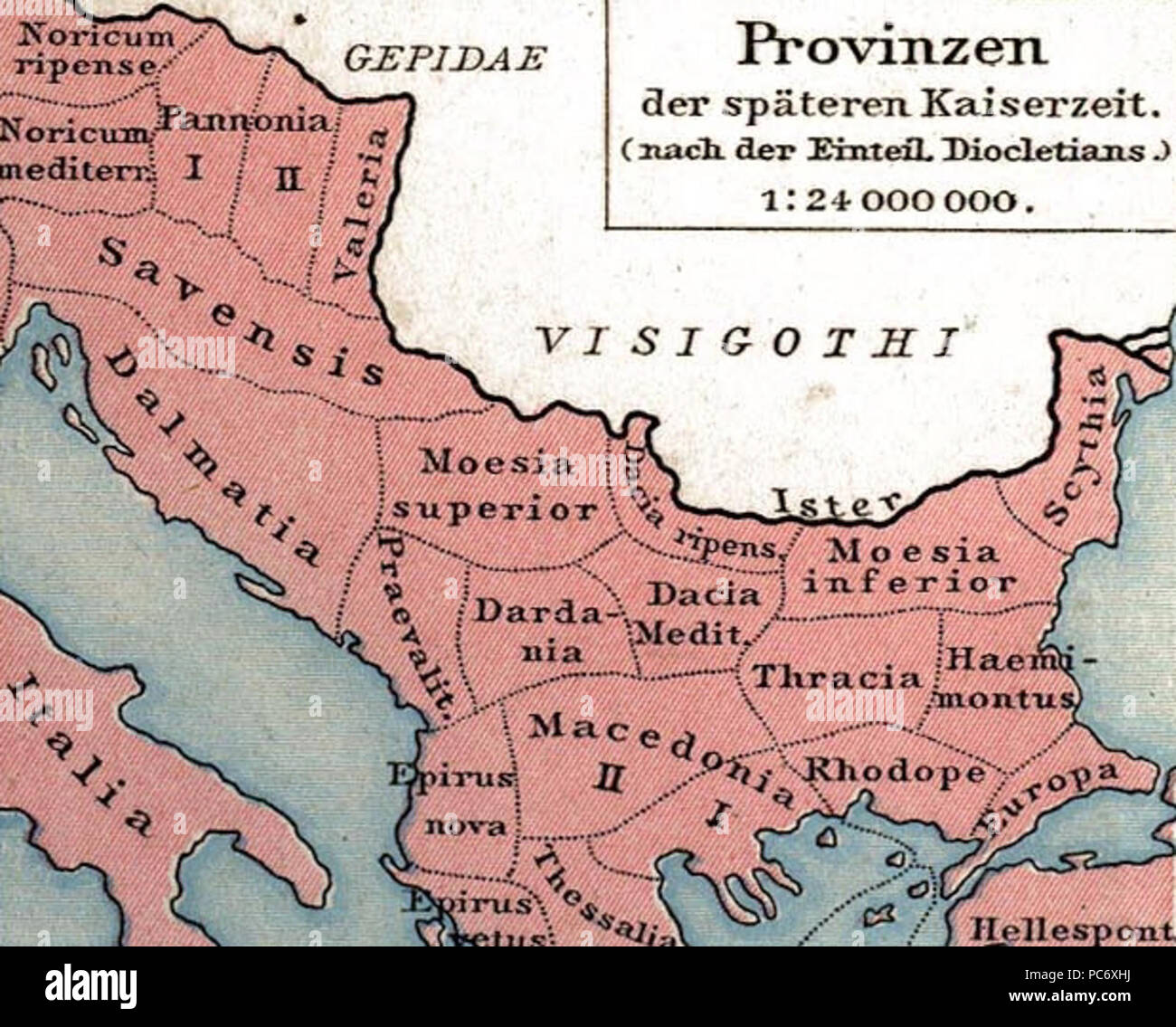
The reorganised provinces in the Late Roman period with the new, Southern Dacian provinces on the area of former Moesia:
360-late-roman-province-thracia-outcut-from-roman-provinces-of-illyricum-macedonia-dacia-moesia-pannonia-and-thracia-PC6XHJ.jpg


https://c8.alamy.com/comp/PC6XHJ/36...-dacia-moesia-pannonia-and-thracia-PC6XHJ.jpg
 
First, Monterou and Encrusted Pottery has nothing to with Balkan-Carpathian groups from East Serbia-West Bulgaria and South Carpathians like Tei, Verbicoara and other related groups, also the sampling for these related groups is near zero, since they cremated their death.

Secondly, now you went too far by even saying couple of V13 in Balkans might not be Slavic, if not an exaggeration then what is it?

You can freely check any independent databse and V13 doesn't exceed 2-3% in any Central-North Slavic countries. Likely in Ukraine/Russia they were Byzantine traders/priests/mercenaries etc, etc, etc.
 
Status
Not open for further replies.
Back
Top