I agree with that part. Mtdna C and D are on the East Asian “M” branch of the mtdna tree. However, I suspect y-dna Q (and R) probably originated in Northern Asia as well and were originally caucasoid, or at least mostly caucasoid. The dna of the 24,000-year-old boy from Mal’ta, South-Central Siberia is more closely related to western Eurasians than eastern Eurasians, and belongs to haplogroup R*, which is close to the base of Q on the y-dna tree.
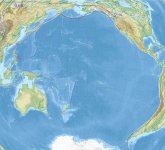
We can speculate as to when mtdna C entered Europe. My view is that mtdna C probably entered Europe with the proto-Solutreans, and from there crossed the North Atlantic to North America, but I’m expecting many people to disagree with that. I think the best evidence I have for that is contained in the book “Across Atlantic Ice” by Stanford and Bradley.
To anyone who’s interested, Stanford gives an overview of the book in a lecture broken down into 6 videos on youtube. In the fourth part here:
http://www.youtube.com/watch?v=kl3t4rRo3SM he talks about haplogroup X from around 4:00 on. From Wikipedia, Dennis Stanford is an archaeologist and director of the Paleoindian/Paleoecology program at the National Museum of Natural History at the Smithsonian Institution.


 Possible trajectory
