Introduction

Liège is the easternmost province of Wallonia and of Belgium. It is predominantly French speaking, with a German speaking minority along the border with Germany to the east. It borders on (clockwise from the North) the Netherlands, Germany, Luxembourg and the Belgian provinces of Luxembourg, Namur, Walloon Brabant, Flemish Brabant and Limburg. Its capital is Liège.
It has a surface area of 3844 km², a population of 1,024,000 inhabitants, and is divided into four administrative districts (arrondissements in French) which contain 84 municipalities.
Famous people born in the province of Liège include (chronologically): Carolingian leader , Frankish King , Emperor , the , the writer , the , the , and the player .
- Charles Martel (c.688–741), de facto ruler of Francia. He defeated an Umayyad invasion of Aquitaine at the Battle of Tours, thus stopping the Muslim advance into Europe.
- Pepin the Short (714–768), first Carolingian King of the Franks.
- Charlemagne (748–814), founder of the Carolingian Empire (which would evolve into the Holy Roman Empire).
- Louis De Geer(1587–1652), considered by many as the father of Swedish industry for introducing Walloon blast furnaces in Sweden.
- César Franck (1822–1890), Romantic composer.
- Paul Delvaux (1897–1994), Surrealist painter.
- Georges Simenon (1903–1989), writer who published nearly 500 novels. He is best known as the creator of the fictional detective Jules Maigret.
- Jean-Pierre and Luc Dardenne (born in 1951 and 1954), filmmakers and winners of Palme d'Or at the 1999 Cannes Film Festival.
- Marie Gillain (born in 1975), actress.
- Justine Henin (born in 1982), tennis champion (winner of seven Grand Slam singles titles).
History

Settled by the Eburones (a Celto-Germanic tribe), then the Romans in ancient times, in the 3rd century the region saw one of the earliest migration of the Franks crossing into the Roman Empire from the east of the Rhine. They settled mostly along the Meuse River, around Liège and Huy. The Basilica of St Georges in Amay (a suburb of Huy) was founded by the Franks in 634 on the remains of a Roman villa. Merovingian necropolises were found north of Huy, in the area of Verlaine, Warnant, Vaux-Borset, Harduémont and Bodegnée.
The area comprised within the modern city of Liège and its suburbs (notably Herstal and Jupille) was the cradle of the Carolingian dynasty. These is where Pepin of Herstal (635-714), Charles Martel (686-741), Pepin the Short (714-768) and Charlemagne (742-814) where all born and raised, and where the real centre of power lied within the Frankish kingdom during the 7th and 8th centuries.
The history of the province of Liège is intertwined with that of the Principality of Liège, but also that of the smaller Duchy of Limburg and Principality of Stavelot-Malmedy.
Prince-Bishopric of Liège

Liège became a bishopric in the 7th century. Its domain originally extended through most of modern Belgium. After the break-up of Charlemagne's empire, the region remained part of the Holy Roman Empire (i.e. Germany). A bishop of Liège, Notger (972-1008), secured for his see the feudal authority of the countship of Huy and became himself a sovereign prince. The Prince-Bishopric of Liège had been created. It would remain an independent state within the Holy Roman Empire until 1792, when the Low Countries were annexed to the French Republic. (=> see Liège history for more details).
The Prince-Bishopric spread from the south of the modern province of Namur, to the north of the province of Limburg. It also included parts of the province of Luxembourg (notably the Duchy of Bouillon), Hainaut, Walloon Brabant and of the Dutch province of Limburg.
In 1066, Huy, a major city of the principality, became the first city to obtain a charter of rights north of the Alps.
Duchy of Limburg

The north-east of the province of Liège formed the Duchy of Limburg, named after the town of Limbourg halfway between Verviers and Eupen. It was comprised between the Imperial City of Aachen and the Duchy of Jülich to the East and the Principality of Liège to the West. The duchy was a vassal state of the Duchy of Brabant, and became part of the Habsburgian Netherlands in 1494. The modern provinceof Limburg has no historical connection to the homonymous duchy, apart from the Fourons (Voeren) region, which used to belong to the duchy, as was the city of Maastricht, in the Dutch province of Limburg.

Principality of Stavelot-Malmedy
The centre-east of the province of Liège constituted the tiny Principality of Stavelot and Malmedy, ruled by the Prince-Abbots of Malmedy. After Napoleon's defeat in 1815, the area went to Prussia, then Germany, and was only ceded to Belgium in 1918 as a compensation for WWI. The "East Cantons" redeemed by Germany to Belgium also included Eupen and St. Vith.
Selected beers from the province of Liège
- Bellevaux
- Curtius
- Jupiler
- La Botteresse
- Légia
- Léopold 7
- Lienne
- Piedbœuf
- Sainte Nitouche
- Val-Dieu Abbey
- Warsage
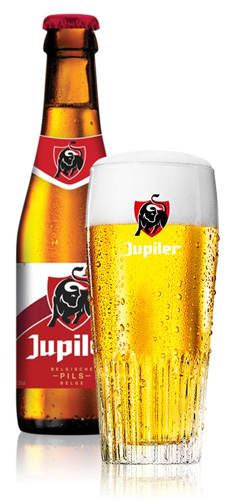
Liège's Jupiler is the the best-selling beer within Belgium.
Attractions
Other attractions
 Monde Sauvage d'Aywaille
Related pages
Travel Community
Ask your travel questions on the Benelux Travel Forum




 Liège
Liège


 Aigremont Castle


 Franchimont Castle (ruins)


