• Don't want to see ads? Install an adblocker like uBlock Origin or use a Europe-based privacy-friendly browser like Vivaldi or Mullvad.

Palasgians, pre Ancient Greeks...would their DNA be E-V13?

No offense,the above post was not addressed to you.As far as I know,you are a European.
I don't hate Serbs,on the contrary,you misunderstood me.
 
The Vlachs were sheepherders,mountanious tribes,like the Albanians, would rather suppose them some Dacian origin.

They BECAME shepherds,indeed,but if we rewind further back...
Romanian inherited plenty of agricultural words(regarding farming) from Latin.


In this case,"Dacians" and "Bessi" are geographic,not ethnic,notions:

https://books.google.ro/books?id=YI...age&q=kekaumenos vlachs dacians bessi&f=false


"Latin dominance along the Lower Danube, in the military bases, towns and extramural settlements near legionary fortresses and auxiliary forts, is unquestionable for the entire period of Roman rule. The rapid Romanization of this zone in the 1st century AD was due to the army and veterans settling in the region, but also civil colonists originating from Italy. Greek-speaking newcomers appearing with time in ever larger numbers from the Greek-language provinces in the Balkans and the East adopted Latin out of necessity. This was apparently the case of the poorly or not at all Hellenized Thracians (Lai and Bessi) moved to Dobrogea from Thrace, as well as of the Getai resettled from beyond the Danube and the craftsmen and traders flowing into Moesia in more or less unorganized fashion, mainly from the eastern, but sometimes also the western reaches of the Empire.

Attested in this group are, for example, stonemasons, shoe-makers, fullers, also eye specialists among the physicians. Latin-speaking veterans were also strongly rooted in the area, having started to stream in already in the end of the 1st century and settling in the vicinity of army camps, but also in well watered areas with good quality soils in the hinterland of the Roman limes, chiefly around the later town of Nicopolis ad Istrum. The situation continued in the 2nd century with veterans of local origin joining in once local recruitment into the army took on greater importance under Hadrian and later."


http://www2.rgzm.de/Transformation/Bulgaria/GriechenInBulgarien/GriechenBulgarienVIIIEN.htm


"Miracula testifies, hundreds of thousands of refugees, who had escaped from the teeth of death, left their fertile lands in Moesia, Panonnia, Mediterranian Dacia and Naissus to settle
in Dardania and the mountainous regions of Prevalitania, in the mounts. "

http://www.network54.com/Forum/415923/message/1135550894/Contemporaneous+Proof+of+Slavic+Invasion


I can assure you that,even as shepherds,they weren't fairy-queens:

https://books.google.ro/books?id=tM...Q6AEwAQ#v=onepage&q=ivanko vlach lamb&f=false
 
They BECAME shepherds,indeed,but if we rewind further back...
Romanian inherited plenty of agricultural words(regarding farming) from Latin.


In this case,"Dacians" and "Bessi" are geographic,not ethnic,notions:

https://books.google.ro/books?id=YI...age&q=kekaumenos vlachs dacians bessi&f=false


"Latin dominance along the Lower Danube, in the military bases, towns and extramural settlements near legionary fortresses and auxiliary forts, is unquestionable for the entire period of Roman rule. The rapid Romanization of this zone in the 1st century AD was due to the army and veterans settling in the region, but also civil colonists originating from Italy. Greek-speaking newcomers appearing with time in ever larger numbers from the Greek-language provinces in the Balkans and the East adopted Latin out of necessity. This was apparently the case of the poorly or not at all Hellenized Thracians (Lai and Bessi) moved to Dobrogea from Thrace, as well as of the Getai resettled from beyond the Danube and the craftsmen and traders flowing into Moesia in more or less unorganized fashion, mainly from the eastern, but sometimes also the western reaches of the Empire.

Attested in this group are, for example, stonemasons, shoe-makers, fullers, also eye specialists among the physicians. Latin-speaking veterans were also strongly rooted in the area, having started to stream in already in the end of the 1st century and settling in the vicinity of army camps, but also in well watered areas with good quality soils in the hinterland of the Roman limes, chiefly around the later town of Nicopolis ad Istrum. The situation continued in the 2nd century with veterans of local origin joining in once local recruitment into the army took on greater importance under Hadrian and later."


http://www2.rgzm.de/Transformation/Bulgaria/GriechenInBulgarien/GriechenBulgarienVIIIEN.htm


"Miracula testifies, hundreds of thousands of refugees, who had escaped from the teeth of death, left their fertile lands in Moesia, Panonnia, Mediterranian Dacia and Naissus to settle
in Dardania and the mountainous regions of Prevalitania, in the mounts. "

http://www.network54.com/Forum/415923/message/1135550894/Contemporaneous+Proof+of+Slavic+Invasion
Vlad Draculesti is my hero :cool-v:
 
You are completely wrong. You don't know about socialist Yugoslavia. It was state of six republics. Serbs didn't have hegemony, president was not Serb, and all institutions were in favor of idea brotherhood and unity of Yugoslav nations. Serbian nationalists say that Yugoslavia was a dungeon of Serbian people. Yes, and Croatian nationalists didn't love SFR Yugoslavia, and other. But Yugoslav communists fought with nationalistic aspirations with a lot of success.


Yes all were in favour of idea of brotherhood unity except Serbian state (propaganda) (am not saying all population), they brainwashed their own people....now you are telling me Serbian state favoured brotherhood?.....you are blaming Croatia now?

These are undoubtedly facts from international Hague Tribunal - (all high rank state officials and not individuals) - list for only high level state officials.
Ethnic cleansing in Croatia, Bosnia, and Kosovo.


[TABLE="width: 0"]
[TR]
[TD]Died before trial complete[/TD]
[TD]Slobodan Milošević[/TD]
[TD]Serb, president of Serbia, president of Yugoslavia[/TD]
[TD]Indicted for genocide; deportation; murder; persecutions; extermination; on political, racial or religious grounds in Kosovo, Bosnia, Croatia[/TD]
[TD]Died in detention on 11 March 2006.[66][/TD]
[/TR]
[/TABLE]

President of Serbia from 26 December 1990 (He was the main head Commander of all), read more below
http://www.icty.org/x/cases/slobodan_milosevic/cis/en/cis_milosevic_slobodan_en.pdf

[TABLE="width: 0"]
[TR]
[TD]Sentenced by ICTY[/TD]
[TD]Vlastimir Đorđević[/TD]
[TD]Serb, army general[/TD]
[TD]Deportation, persecution and murder of Kosovo Albanians[/TD]
[TD]Sentenced to 27 years' imprisonment on 23 February 2011. Upon appeal, in 2014, his sentence was reduced to 18 years.[36][/TD]
[/TR]
[/TABLE]

[TABLE="width: 0"]
[TR]
[TD]Sentenced by ICTY[/TD]
[TD]Nikola Šainović[/TD]
[TD]Serb, Prime Minister of Serbia[/TD]
[TD]Charges of war crimes, deportation and forcible transfer, murder and persecution.[/TD]
[TD]Sentenced to 22 years' imprisonment on 26 February 2009.[57][/TD]
[/TR]
[/TABLE]

[TABLE="width: 0"]
[TR]
[TD]Sentenced by ICTY[/TD]
[TD]Sreten Lukić[/TD]
[TD]Serb, Serbian police general[/TD]
[TD]Command authority for crimes against humanity in Kosovo[/TD]
[TD]Sentenced to 22 years' imprisonment on 26 February 2009; appeal filed.[57][/TD]
[/TR]
[/TABLE]

[TABLE="width: 0"]
[TR]
[TD]At trial[/TD]
[TD]Vojislav Šešelj[/TD]
[TD]Serb, President of the Serbian Radical Party(SRS)[/TD]
[TD]Three counts of crimes against humanity; six counts of violations of the laws or customs of war[/TD]
[TD]At trial.[89][/TD]
[/TR]
[/TABLE]

[TABLE="width: 0"]
[TR]
[TD]Sentenced by ICTY[/TD]
[TD]Ljubiša Beara[/TD]
[TD]Bosnian Serb, colonel of Military Police[/TD]
[TD]Srebrenica massacre; also war crimes in Žepa[/TD]
[TD]Sentenced to life imprisonment.[17][/TD]
[/TR]
[/TABLE]

[TABLE="width: 0"]
[TR]
[TD]Sentenced by ICTY[/TD]
[TD]Milan Babić[/TD]
[TD]Croatian Serb, prime minister of Republika Srpska Krajina[/TD]
[TD]For his part in ethnic cleansing in Croatia[/TD]
[TD]Sentenced to 13 years' imprisonment on 18 July 2005.[8] He was found dead in his prison cell in The Hague in March 2006, an apparent suicide.[/TD]
[/TR]
[/TABLE]

[TABLE="width: 0"]
[TR]
[TD]Sentenced by ICTY[/TD]
[TD]Vidoje Blagojević[/TD]
[TD]Bosnian Serb, Bosnian Serb Army officer[/TD]
[TD]Srebrenica massacre[/TD]
[TD]Sentenced to 15 years' imprisonment on 9 May 2007.[18] On 3 February 2012, Blagojević was granted early release, effective 22 December 2012.[/TD]
[/TR]
[/TABLE]

[TABLE="width: 0"]
[TR]
[TD]Sentenced by ICTY[/TD]
[TD]Ljubomir Borovčanin[/TD]
[TD]Bosnian Serb, Commander of the Republika Srpska Ministry of Interior Special Police[/TD]
[TD]Srebrenica massacre[/TD]
[TD]Sentenced to 17 years on 10 June 2010.[17][/TD]
[/TR]
[/TABLE]

[TABLE="width: 0"]
[TR]
[TD]Sentenced by ICTY[/TD]
[TD]Radoslav Brđanin[/TD]
[TD]Bosnian Serb, president of the crisis staff of theAutonomous Region of Krajina[/TD]
[TD]Indicted in connection with deportations, murders, torture, and persecution in theAutonomous Region of Krajina[/TD]
[TD]Sentenced to 32 years originally, his sentence was reduced to 30 years on appeal in 2007, which he is serving in Denmark.[24][/TD]
[/TR]
[/TABLE]

[TABLE="width: 0"]
[TR]
[TD]Sentenced by ICTY[/TD]
[TD]Ranko Ćešić[/TD]
[TD]Bosnian Serb, member of the Intervention Squad in the Reservist Corps of the Bosnian Serb police force[/TD]
[TD]Murder and sexual abuse in the Luka camp[/TD]
[TD]Sentenced to 18 years' imprisonment on 11 March 2004; granted early release on 30 April 2014 (effective 25 May 2014).[27][/TD]
[/TR]
[/TABLE]

[TABLE="width: 0"]
[TR]
[TD]Sentenced by ICTY[/TD]
[TD]Miroslav Deronjić[/TD]
[TD]Bosnian Serb, president of theBratunac Crisis Staff[/TD]
[TD]For attack on the village of Glogova[/TD]
[TD]Sentenced to 10 years' imprisonment on 25 July 2005.[32] While serving his sentence, Deronjić died in hospital in 2007, aged 52, from cancer.[/TD]
[/TR]
[/TABLE]

[TABLE="width: 0"]
[TR]
[TD]Sentenced by ICTY[/TD]
[TD]Damir Došen[/TD]
[TD]Bosnian Serb, shift commander at the Keraterm prison camp[/TD]
[TD]Keraterm camp[/TD]
[TD]Sentenced to 5 years' imprisonment on 13 November 2001.[34][/TD]
[/TR]
[/TABLE]

[TABLE="width: 0"]
[TR]
[TD]Died before trial complete[/TD]
[TD]Đorđe Đukić[/TD]
[TD]Bosnian Serb, member of the Main Staff of the Bosnian Serb army[/TD]
[TD]Indicted for shelling civilian targets in Sarajevo[/TD]
[TD]Died on 18 May 1996 during provisional release.[37][/TD]
[/TR]
[/TABLE]

[TABLE="width: 0"]
[TR]
[TD]Transferred to national courts[/TD]
[TD]Dušan Fuštar[/TD]
[TD]Bosnian Serb, shift commander at Keraterm prison camp[/TD]
[TD]Persecution, inhumane acts and murder of non-Serb Bosnians around Prijedor[/TD]
[TD]Case transferred to Bosnia and Herzegovina on 9 May 2006. Sentenced by the Bosnian Court to 9 years' imprisonment.[9][/TD]
[/TR]
[/TABLE]

[TABLE="width: 0"]
[TR]
[TD]Died before trial complete[/TD]
[TD]Dragan Gagović[/TD]
[TD]Bosnian Serb, chief of police in Foča[/TD]
[TD]For his role in persecutions in Partizan Sports Hall detention centre[/TD]
[TD]Died before transfer to the Tribunal.[40][/TD]
[/TR]
[/TABLE]

[TABLE="width: 0"]
[TR]
[TD]Sentenced by ICTY[/TD]
[TD]Stanislav Galić[/TD]
[TD]Bosnian Serb, commander of Sarajevo Romanija Corps[/TD]
[TD]Indicted for shelling and sniping of Sarajevo[/TD]
[TD]Sentenced to life imprisonment on 30 November 2006.[41][/TD]
[/TR]
[/TABLE]

[TABLE="width: 0"]
[TR]
[TD]At trial[/TD]
[TD]Goran Hadžić[/TD]
[TD]Croatian Serb, president of Republic of Serbian Krajina[/TD]
[TD]Persecution, murder, torture deportation and wanton destruction in Serbian Krajina[/TD]
[TD]At trial.[42][/TD]
[/TR]
[/TABLE]

[TABLE="width: 0"]
[TR]
[TD]Died before trial complete[/TD]
[TD]Janko Janjić[/TD]
[TD]Bosnian Serb, sub-commanders of the military police[/TD]
[TD]Gang rape, torture and enslavement at Foča prison camp[/TD]
[TD]Died before transfer to the Tribunal.[40][/TD]
[/TR]
[/TABLE]

[TABLE="width: 0"]
[TR]
[TD]Transferred to national courts[/TD]
[TD]Gojko Janković[/TD]
[TD]Bosnian Serb[/TD]
[TD]Gang rape, torture and enslavement at Foča prison camp[/TD]
[TD]Transferred to the State Court of Bosnia and Herzegovina on 8 December 2005. Sentenced by the Bosnian Court to 34 years' imprisonment on 19 November 2007.[44][/TD]
[/TR]
[TR]
[TD]Sentenced by ICTY[/TD]
[TD]Goran Jelisić[/TD]
[TD]Bosnian Serb, held a position at Luka camp[/TD]
[TD]Indicted for genocide, murder, plunder, and inhumane acts at camps in Luka and Brcko[/TD]
[TD]Sentenced to 40 years' imprisonment on 5 July 2001.[45] His wife, Monika Karan-Ilić, a native of Brcko, she had been in custody since 21 December 2011. She was found guilty of having participated in torture, inhumane treatment and infliction of suffering on Bosniak and Croat civilians in the Luka camp and Brcko police station between May and June 1992, when she was a teenager. Her sentence was reduced to to two-and-a-half years of prison in 2013.[46][/TD]
[/TR]
[/TABLE]

[TABLE="width: 0"]
[TR]
[TD]Sentenced by ICTY[/TD]
[TD]Miodrag Jokić[/TD]
[TD]Serb, admiral in Yugoslav Navy[/TD]
[TD]Siege of Dubrovnik[/TD]
[TD]Sentenced to 7 years’ imprisonment on 30 August 2005.[47[/TD]
[/TR]
[/TABLE]

[TABLE="width: 0"]
[TR]
[TD]At trial[/TD]
[TD]Radovan Karadžić[/TD]
[TD]Bosnian Serb, former President of Republika Srpska[/TD]
[TD]Genocide, Crimes against humanity, Violations of the laws or customs of war and Grave breaches of the Geneva conventions of 1949[/TD]
[TD]At trial.[48][/TD]
[/TR]
[/TABLE]

[TABLE="width: 0"]
[TR]
[TD]Transferred to national courts[/TD]
[TD]Vladimir Kovačević[/TD]
[TD]Montenegrin Serb, Yugoslav army commander[/TD]
[TD]Siege of Dubrovnik[/TD]
[TD]Case transferred to Serbia on 17 November 2006; initially ruled mentally unfit to stand trial.[52][/TD]
[/TR]
[/TABLE]

[TABLE="width: 0"]
[TR]
[TD]Sentenced by ICTY[/TD]
[TD]Momčilo Krajišnik[/TD]
[TD]Bosnian Serb, prime minister of Republika Srpska[/TD]
[TD]Genocide[/TD]
[TD]Sentenced to 20 years' imprisonment on 17 March 2009; granted early release on 1 September 2013.[53][/TD]
[/TR]
[/TABLE]

[TABLE="width: 0"]
[TR]
[TD]Sentenced by ICTY[/TD]
[TD]Milorad Krnojelac[/TD]
[TD]Bosnian Serb, Bosnian Serb prison commander[/TD]
[TD]Gang rape, torture and enslavement at Foča prison camp[/TD]
[TD]Sentenced to 15 years' imprisonment on 17 September 2003.[54][/TD]
[/TR]
[/TABLE]

[TABLE="width: 0"]
[TR]
[TD]Sentenced by ICTY[/TD]
[TD]Radislav Krstić[/TD]
[TD]Bosnian Serb, Bosnian Serb Army general[/TD]
[TD]Genocide[/TD]
[TD]Sentenced to 35 years' imprisonment on 19 April 2004.[55][/TD]
[/TR]
[/TABLE]

[TABLE="width: 0"]
[TR]
[TD]Sentenced by ICTY[/TD]
[TD]Vladimir Lazarević[/TD]
[TD]Serb, Army general[/TD]
[TD]Charges of war crimes, deportation and forcible transfer, murder and persecution.[/TD]
[TD]Sentenced to 15 years' imprisonment on 26 February 2009.[57][/TD]
[/TR]
[/TABLE]

[TABLE="width: 0"]
[TR]
[TD]Sentenced by ICTY[/TD]
[TD]Milan Lukić[/TD]
[TD]Bosnian Serb, commander of a paramilitary group called "Avengers" or "White Eagles"[/TD]
[TD]Indicted for killing of up to 100 Muslims in vicinity of Višegrad[/TD]
[TD]Sentenced to life imprisonment on 20 July 2009.[58][/TD]
[/TR]
[/TABLE]

[TABLE="width: 0"]
[TR]
[TD]Sentenced by ICTY[/TD]
[TD]Milan Martić[/TD]
[TD]Croatian Serb, prime minister of Republika Srpska Krajina[/TD]
[TD]Attacks on Zagreb; see Prosecutor v. Milan Martić[/TD]
[TD]Sentenced to 35 years' imprisonment on 8 October 2008.[62][/TD]
[/TR]
[/TABLE]

[TABLE="width: 0"]
[TR]
[TD]At trial[/TD]
[TD]Ratko Mladić[/TD]
[TD]Bosnian Serb, Bosnian Serb Army commander of the main staff[/TD]
[TD]Genocide, complicity in genocide, crimes against humanity, and violations of the laws and customs of war[/TD]
[TD]At trial.[67][/TD]
[/TR]
[/TABLE]

[TABLE="width: 0"]
[TR]
[TD]Sentenced by ICTY[/TD]
[TD]Darko Mrđa[/TD]
[TD]Bosnian Serb, Bosnian Serb police unit commander[/TD]
[TD][/TD]
[TD]Sentenced to 17 years' imprisonment on 31 March 2004; granted early release on 10 October 2013.[68][/TD]
[/TR]
[/TABLE]

[TABLE="width: 0"]
[TR]
[TD]Sentenced by ICTY[/TD]
[TD]Mile Mrkšić[/TD]
[TD]Croatian Serb, Yugoslav Army colonel, laterRepublika Srpska KrajinaArmy commander[/TD]
[TD]Indictment in relation to Vukovar[/TD]
[TD]Sentenced to 20 years' imprisonment on 5 May 2009.[69][/TD]
[/TR]
[/TABLE]

[TABLE="width: 0"]
[TR]
[TD]Sentenced by ICTY[/TD]
[TD]Dragan Nikolić[/TD]
[TD]Bosnian Serb, Bosnian Serb prison commander[/TD]
[TD]Sušica camp[/TD]
[TD]Sentenced to 20 years' imprisonment on 4 February 2005.[70][/TD]
[/TR]
[/TABLE]

[TABLE="width: 0"]
[TR]
[TD]Sentenced by ICTY[/TD]
[TD]Drago Nikolić[/TD]
[TD]Bosnian Serb, Bosnian Serb Army officer[/TD]
[TD]Srebrenica massacre[/TD]
[TD]Sentenced to 35 years' imprisonment on 10 June 2010.[17][/TD]
[/TR]
[/TABLE]

[TABLE="width: 0"]
[TR]
[TD]Sentenced by ICTY[/TD]
[TD]Momir Nikolić[/TD]
[TD]Bosnian Serb, Assistant Commander of VRS Bratunac brigade[/TD]
[TD]Srebrenica massacre[/TD]
[TD]Sentenced to 20 years' imprisonment on 8 March 2006.[71][/TD]
[/TR]
[/TABLE]

[TABLE="width: 0"]
[TR]
[TD]Sentenced by ICTY[/TD]
[TD]Dragan Obrenović[/TD]
[TD]Bosnian Serb, VRS lieutenant colonel[/TD]
[TD]Srebrenica massacre[/TD]
[TD]Sentenced to 17 years' imprisonment on 10 December 2003.[72][/TD]
[/TR]
[/TABLE]

[TABLE="width: 0"]
[TR]
[TD]Sentenced by ICTY[/TD]
[TD]Dragoljub Ojdanić[/TD]
[TD]Serb, Chief of the General Staff of theYugoslav Army, Federal Defence minister of Yugoslavia[/TD]
[TD]Charges of war crimes, deportation and forcible transfer, murder and persecution.[/TD]
[TD]Sentenced to 15 years' imprisonment on 26 February 2009.[57][/TD]
[/TR]
[/TABLE]

[TABLE="width: 0"]
[TR]
[TD]Sentenced by ICTY[/TD]
[TD]Vinko Pandurević[/TD]
[TD]Bosnian Serb, Bosnian Serb Army general[/TD]
[TD]Srebrenica massacre[/TD]
[TD]Sentenced to 13 years' imprisonment on 10 June 2010; granted early release on 9 April 2015.[17][/TD]
[/TR]
[/TABLE]

[TABLE="width: 0"]
[TR]
[TD]Sentenced by ICTY[/TD]
[TD]Nebojša Pavković[/TD]
[TD]Serb, Chief of the General Staff of theYugoslav Army[/TD]
[TD]Charges of war crimes, deportation and forcible transfer, murder and persecution.[/TD]
[TD]Sentenced to 22 years' imprisonment on 26 February 2009.[57][/TD]
[/TR]
[/TABLE]

[TABLE="width: 0"]
[TR]
[TD]Sentenced by ICTY[/TD]
[TD]Biljana Plavšić[/TD]
[TD]Bosnian Serb, former President of Republika Srpska[/TD]
[TD]Crimes against humanity [clarification needed][/TD]
[TD]Sentenced to 11 years' imprisonment on 27 February 2003; released after serving two thirds of her sentence.[75][/TD]
[/TR]
[/TABLE]

[TABLE="width: 0"]
[TR]
[TD]Sentenced by ICTY[/TD]
[TD]Vujadin Popović[/TD]
[TD]Bosnian Serb, Bosnian Serb Army lieutenant colonel[/TD]
[TD]Srebrenica massacre[/TD]
[TD]Sentenced to life imprisonment on 10 June 2010.[17][/TD]
[/TR]
[/TABLE]

[TABLE="width: 0"]
[TR]
[TD]Died before trial complete[/TD]
[TD]Željko "Arkan" Ražnatović[/TD]
[TD]Serb, paramilitary leader[/TD]
[TD][/TD]
[TD]Died before transfer to the Tribunal.[78][/TD]
[/TR]
[/TABLE]

[TABLE="width: 0"]
[TR]
[TD]Sentenced by ICTY[/TD]
[TD]Duško Sikirica[/TD]
[TD]Bosnian Serb, Bosnian Serb prison commander[/TD]
[TD]Keraterm camp[/TD]
[TD]Sentenced to 15 years' imprisonment on 13 November 2001.[34][/TD]
[/TR]
[/TABLE]

[TABLE="width: 0"]
[TR]
[TD]Sentenced by ICTY[/TD]
[TD]Milomir Stakić[/TD]
[TD]Bosnian Serb, former mayor ofPrijedor in northern Bosnia[/TD]
[TD]Persecution, inhumane acts and murder of non-Serb Bosnians around Prijedor[/TD]
[TD]Sentenced to 40 years' imprisonment on 22 March 2006.[84][/TD]
[/TR]
[/TABLE]

[TABLE="width: 0"]
[TR]
[TD]Sentenced by ICTY[/TD]
[TD]Mićo Stanišić[85][/TD]
[TD]Bosnian Serb, former Bosnian Serb interior minister[/TD]
[TD]Crimes against humanity; violations of the laws or customs of war [clarification needed][/TD]
[TD]Sentenced to 22 years' imprisonment[86][/TD]
[/TR]
[/TABLE]

[TABLE="width: 0"]
[TR]
[TD]Died before trial complete[/TD]
[TD]Vlajko Stojiljković[/TD]
[TD]Serb, former Serbian interior minister[/TD]
[TD]Indicted with Slobodan Milošević[/TD]
[TD]Died before transfer to the Tribunal.[57][/TD]
[/TR]
[/TABLE]

[TABLE="width: 0"]
[TR]
[TD]Sentenced by ICTY[/TD]
[TD]Pavle Strugar[/TD]
[TD]Montenegrin, Yugoslav Army general[/TD]
[TD]Siege of Dubrovnik[/TD]
[TD]Sentenced to 7.5 years' imprisonment on 17 July 2008.[87][/TD]
[/TR]
[/TABLE]

[TABLE="width: 0"]
[TR]
[TD]Sentenced by ICTY[/TD]
[TD]Veselin Šljivančanin[/TD]
[TD]Montenegrin, Yugoslav army battalion commander[/TD]
[TD]Ovčara massacre after the Battle of Vukovar[/TD]
[TD]Sentenced to 10 years' imprisonment on 8 December 2010.[69][/TD]
[/TR]
[/TABLE]

[TABLE="width: 0"]
[TR]
[TD]Sentenced by ICTY[/TD]
[TD]Duško Tadić[/TD]
[TD]Bosnian Serb,Serbian Democratic Party leader in Kozarac and member of paramilitary force[/TD]
[TD]Omarska camp[/TD]
[TD]Sentenced to 20 years' imprisonment on 26 January 2000; granted early release from prison on 17 July 2008.[21][/TD]
[/TR]
[/TABLE]

[TABLE="width: 0"]
[TR]
[TD]Sentenced by ICTY[/TD]
[TD]Miroslav Tadić[/TD]
[TD]Bosnian Serb, chairman of the Bosanki Šamac "Exchange Commission"[clarification needed][/TD]
[TD]Bosanski Šamac war crimes[/TD]
[TD]Sentenced to 8 years' imprisonment on 17 October 2003.[64][/TD]
[/TR]
[/TABLE]

[TABLE="width: 0"]
[TR]
[TD]Died before trial complete[/TD]
[TD]Momir Talić[/TD]
[TD]Bosnian Serb, general of 1st Krajina Corps[/TD]
[TD]Genocide in the Krajina case[/TD]
[TD]Died on 28 May 2003 during provisional release.[90][/TD]
[/TR]
[/TABLE]

[TABLE="width: 0"]
[TR]
[TD]Sentenced by ICTY[/TD]
[TD]Stevan Todorović[/TD]
[TD]Bosnian Serb, Bosnian Serb police head for the municipality of Bosanski Šamac[/TD]
[TD]Bosanski Šamac war crimes[/TD]
[TD]Sentenced to 10 years' imprisonment on 31 July 2001.[64][/TD]
[/TR]
[/TABLE]

[TABLE="width: 0"]
[TR]
[TD]Transferred to national courts[/TD]
[TD]Savo Todović[/TD]
[TD]Bosnian Serb, prison commander[/TD]
[TD]Gang rape, torture and enslavement at Foča prison camp[/TD]
[TD]Transferred to the State Court of Bosnia and Herzegovina on 3 October 2006; sentenced by the Bosnian Court to 12.5 years' imprisonment on 28 February 2008.[77][/TD]
[/TR]
[/TABLE]

[TABLE="width: 0"]
[TR]
[TD]Sentenced by ICTY[/TD]
[TD]Zdravko Tolimir[/TD]
[TD]Bosnian Serb, Bosnian Serb Army assistant commander[/TD]
[TD]Crimes against humanity; violations of the laws or customs of war[/TD]
[TD]Sentenced to life imprisonment on 12 December 2012. Appeals court dismissed several counts of extermination and genocide, but left sentence of life imprisonment in place.[92][/TD]
[/TR]
[/TABLE]

[TABLE="width: 0"]
[TR]
[TD]Transferred to national courts[/TD]
[TD]Milorad Trbić[/TD]
[TD]Bosnian Serb, Captain in military police[/TD]
[TD]Srebrenica massacre[/TD]
[TD]Transferred to the State Court of Bosnia and Herzegovina on 11 June 2007. Sentenced by the Bosnian Court to 30 years' imprisonment.[93][/TD]
[/TR]
[/TABLE]

[TABLE="width: 0"]
[TR]
[TD]Sentenced by ICTY[/TD]
[TD]Mitar Vasiljević[/TD]
[TD]Bosnian Serb, Bosnian Serb paramilitary[/TD]
[TD]Murder and crimes against humanity in vicinity of Višegrad[/TD]
[TD]Sentenced to 15 years' imprisonment on 25 February 2004. On 6 July 2004, Vasiljević was transferred to Austria to serve his sentence. Credit was given for time served since 25 January 2000. On 12 March 2010, he was granted early release.[94][/TD]
[/TR]
[/TABLE]

[TABLE="width: 0"]
[TR]
[TD]Sentenced by ICTY[/TD]
[TD]Simo Zarić[/TD]
[TD]Bosnian Serb, former major ofŠamac[/TD]
[TD]Bosanski Šamac war crimes[/TD]
[TD]Sentenced to 6 years' imprisonment on 17 October 2003.[64][/TD]
[/TR]
[/TABLE]

[TABLE="width: 0"]
[TR]
[TD]Sentenced by ICTY[/TD]
[TD]Stojan Župljanin[/TD]
[TD]Bosnian Serb, senior police official in the Autonomous Region of Krajina[/TD]
[TD]Indicted for persecution, wanton destruction, deportation, torture, murder in Krajina[/TD]
[TD]Sentenced to 22 years imprisonment[86][/TD]
[/TR]
[/TABLE]
 
Yes all were in favour of idea of brotherhood unity except Serbian state (propaganda) (am not saying all population), they brainwashed their own people....now you are telling me Serbian state favoured brotherhood?.....you are blaming Croatia now?

Do not put words that I did not say. I didn't blame Croatia or any other Yugoslav nation. SFR Yugoslavia was respectable country. I'm Tito's fan, I appreciate Yugoslav nations. Croatia is very beautiful country and I wrote about beauty of Istria, of course I will write about other parts of Croatia, I toured the whole country, including some islands. Serbs, Croats, Bosniacs, have similar genetics, and the language is practically same, we understand each other.
 
guys plz stop

You are right 100%, I am trying to stop.

We here waste time, because connection between Albanians comparing to Pelasgians doesn't exist, how member who set this thread tried to suggest in introduction.
 
Do not put words that I did not say. I didn't blame Croatia or any other Yugoslav nation. SFR Yugoslavia was respectable country. I'm Tito's fan, I appreciate Yugoslav nations. Croatia is very beautiful country and I wrote about beauty of Istria, of course I will write about other parts of Croatia, I toured the whole country, including some islands. Serbs, Croats, Bosniacs, have similar genetics, and the language is practically same, we understand each other.


How can you say than Serbian State (not all population) was for the brotherhood in SFR when you saw above all those high level Serb state officials sentenced by International Hague Tribunal?
 
0% relevant information about topic.
Close this thread at once.
 
No offense,the above post was not addressed to you.As far as I know,you are a European.
I don't hate Serbs,on the contrary,you misunderstood me.

Serbs are Europeans, they fought for European interests over the centuries

According to Eupedia haplogroup I, Old European, in Serbia is 42%, according some studies even 48%.

Serbs and Romanians are close people, genetic similarities are significant.
 
You are completely wrong. You don't know about socialist Yugoslavia. It was state of six republics. Serbs didn't have hegemony, president was not Serb, and all institutions were in favor of idea brotherhood and unity of Yugoslav nations. Serbian nationalists say that Yugoslavia was a dungeon of Serbian people. Yes, and Croatian nationalists didn't love SFR Yugoslavia, and other. But Yugoslav communists fought with nationalistic aspirations with a lot of success.


FYI, i didn't start this (cause its of the topic), i told you before no political discussion PLEASE when you said Slobodan Miloshevic has E-V13 etc....but you started with your later funny propaganda. (at least if you put international transparent sources it would be ok)

Ok so i guess you don't have an answer, cause you don't need to, international war crimes tribunal already sentenced all the key figures of Serbian state. At least you should deny and note that everything what happened after 1985 in Yugoslavia was definitely not an approach to brotherhood by an Serbian State official (not saying about the population).

And we agreed not to place sources of say (only of you country or neighbours) but rather international because they are usually more transparent and we learn more this way.....about the turkish defter 1445 and bosnian/Serbian i have an answer....next post...

and for The Dečani chrysobulls from 1321-1331 by Stephen Uroš III Dečanski of Serbia, i don't even want to go through cause it's pure only serbian and serbian sources....
 
Turkish defter of Brankovics land

95.88% of all names were of Serbian origin,
1.90% of Roman origin, (Vlachs or Aromanians)
1.56% of uncertain origin,
0.26% of Albanian origin,
0.25% of Greek origin, etc.

The mostly names in defter are:
Radislav (male name)1.478
Bogdan (male name) 1.209 and
Radica (female name) 1.204.
But everyone who knows Serbian or Slavic names for him or her it is clear that they are Serbs.

  • 13,693 adult Serb males,


Although the source is Serb and Bosnian source in SFR period, i will represent you how you have completely misrepresented the source yet again (apart from the other one when said Albanian language came from Beluchi indic/Iranian)


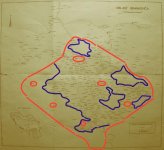
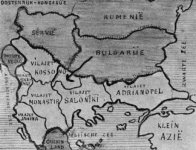
You can see from the map below the approximate current Kosovo borders, and as seen that other parts were taken into account (south east Serbia, south west Serbia, South central Serbia, North Montenegro), we can say its very close to all Kosovo Vilajet 1400 (excluding the Bulgarian part/inhabitants in south easter part of the map)


map brankovic.jpg
(red circles major cities), far western part (close to Albania left uncounted)


13,600 males in overall 480 villages
13,600 males (you can see all the peoples names are typical Serbian up to 98%) — Therefore it only represents ethnic serb demography (not others ethnicities)

you can see Balaban, Banja etc villages - 4 people only each (on whole Village) (all Serbian only)
278-810ad48977.jpg


lets say we double up males females, 27,000 Serbs overall

you claim total population of 480 villages is 28,000 and in all of them are Serbs 27,000?,

This means for every village only 56 inhabitants?….is that even possible?…its as for an average house (5 people), 11 houses for one village?


Lets say a village would have at least 900 people (male female) - 180 houses (5 average)
We have overall 432,000 inhabitants (excluding Bulgarians see map in black lines)

373,000 Albanians
27,000 Serbs
32,000 others, Bulgarians, turks vallachen, greeks.


This is actually consistent with the Danish source of Kosovo Vilajet Population
very close to the below (they even gave more % of Serbs)

Vilajet Kossowo:

[TABLE="class: t1"]
[TR]
[TD="class: td1"]418.000[/TD]
[TD="class: td2"]Mahomedaansche Albaneezen[/TD]
[/TR]
[TR]
[TD="class: td1"]9.000[/TD]
[TD="class: td2"]Mahomedaansche Turken[/TD]
[/TR]
[TR]
[TD="class: td1"]14.000[/TD]
[TD="class: td2"]Mahomedaansche Bulgaren[/TD]
[/TR]
[TR]
[TD="class: td1"]250.000[/TD]
[TD="class: td2"]Christene Bulgaren[/TD]
[/TR]
[TR]
[TD="class: td1"]113.000[/TD]
[TD="class: td2"]Orthodoxe Serviërs[/TD]
[/TR]
[TR]
[TD="class: td1"]900[/TD]
[TD="class: td2"]Orthodoxe Wallachen[/TD]
[/TR]
[TR]
[TD="class: td1"]200[/TD]
[TD="class: td2"]Orthodoxe Grieken[/TD]
[/TR]
[TR]
[TD="class: td1"]22.000[/TD]
[TD="class: td2"]Gemengd[/TD]
[/TR]
[/TABLE]


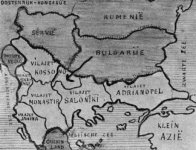
KaartGodsdBalkan.jpg


The data (you have given) consist of only one ethnic background (serbian), (and this is why it would make pretty much sense)


Therefore it does not represent all other ethnic populations: as Albanian Bulgarian Serbian Greek Romanian etc....


https://www.scribd.com/doc/98035320/Oblast-Brankovica-Opsirni-Katastarski-Popis-Iz-1455-Godine
http://users.skynet.be/ovo/GodsdBalkan.html
 

Attachments

  • map brankovic.jpg
    map brankovic.jpg
    57 KB · Views: 363
and for The Dečani chrysobulls from 1321-1331 by Stephen Uroš III Dečanski of Serbia, i don't even want to go through cause it's pure only serbian and serbian sources....

What did you expect? Albanian or British sources of 14th century Kosovo?

This is actually consistent with the Danish source of Kosovo Vilajet Population
very close to the below (they even gave more % of Serbs)

Vilajet Kossowo:

[TABLE="class: t1"]
[TR]
[TD="class: td1"]418.000[/TD]
[TD="class: td2"]Mahomedaansche Albaneezen[/TD]
[/TR]
[TR]
[TD="class: td1"]9.000[/TD]
[TD="class: td2"]Mahomedaansche Turken[/TD]
[/TR]
[TR]
[TD="class: td1"]14.000[/TD]
[TD="class: td2"]Mahomedaansche Bulgaren[/TD]
[/TR]
[TR]
[TD="class: td1"]250.000[/TD]
[TD="class: td2"]Christene Bulgaren[/TD]
[/TR]
[TR]
[TD="class: td1"]113.000[/TD]
[TD="class: td2"]Orthodoxe Serviërs[/TD]
[/TR]
[TR]
[TD="class: td1"]900[/TD]
[TD="class: td2"]Orthodoxe Wallachen[/TD]
[/TR]
[TR]
[TD="class: td1"]200[/TD]
[TD="class: td2"]Orthodoxe Grieken[/TD]
[/TR]
[TR]
[TD="class: td1"]22.000[/TD]
[TD="class: td2"]Gemengd[/TD]
[/TR]
[/TABLE]

Yes, this is correct, but this is 1912. which is 600 years later.


Now let me ask you another thing. According to Danish chart there was total of 827.000 inhabitants in 1912. of which:

Albanians - 418.000 (51%)
Others - 409.000 (49%)


Today we have (http://www.beinkosovo.com/en/kosovo-population):

Albanians - 88%
Others - 12 %


What did you do with all the Christene Bulgaren, Orthodoxe Servies and others? Why did we have 53% Muslims just 100 years ago, and now we have 90% of them? What are the magic conditions in which number of Albanians had risen from 418.000 to approximately 1.800.000 in a hundred of years? And please open a separate thread if you intend to reply, because this has absolutely nothing to do with Ancient Balkan population.
 
noUseForAname

You're trying to confuse readers, you putting data from 1912, Kosovo and Metohija: 51% Albanians (1% more than 1/2).

Can you compute time difference between 1455 (and earlier) and 1912.

In Middle time there are no Albanians in the Kosovo and Metohija, it is Serbian land.

Due to terrible retribution made by Turks and Muslim Balkan allies Serbs had to leave their lands, small numbers of Serbs converted to Islam.

Albanians in greater numbers began to settle in Kosovo and Metohija in 17th century, it is history and Albanian historians know it.

You can't stop disscussion about things which that has nothing to do with the thread.

And the reason is because new scientific findings are not what you want.

E-V13 is spread all over Europe
little is known how and when this happened
there are no deep subclades of E-V13 known
the best I could find is here : http://www.yfull.com/tree/E-V13/
3 subclades are listed here each with a different expansion time : 4300, 3800 and 1850 years ago
because these subclades are very shallow, the expansion time of E-V13 is estimated at only 4300 years ago

When I first tried to answer this question in 2009, before the first ancient Y-DNA test was performed, I thought that all Neolithic cultures in Europe would be a blend of G2a, E1b1b, J1 and T. But Cucuteni-Tripolye was different as it clearly had a stronger Mesolithic European influence, which is why I stated from the beginning that I2 would be a major haplogroup, if not the dominant one of this culture. As for the Near Eastern haplogroups, it has since transpired that G2a was the main lineage of Near Eastern Neolithic farmers. But I am still convinced that E1b1b, J1 and T1a were also present among Neolithic farmers.

The only thing that changed in my views is that I now believe that E-M78, and more specifically E-V13, arrived in Mediterranean Europe in the late glacial period or during the Mesolithic, crossing directly from North Africa. That implies that E-M78 was found in Neolithic Europe, but as assimilated hunter-gatherers like haplogroups C1a2, F and I. The reason that E1b1b was only found in Neolithic Spain so far is that it was really confined to Mediterranean Europe at least until the Bell Beaker expansion from Iberia to western Europe. E-V13 would have expanded from Italy and Greece to the Balkans only during the Copper or Early Bronze Age, perhaps after a few lineages were assimilated by the Indo-European invaders. Therefore I doubt that E-V13 was already present in Romania, Moldova and Ukraine during the Neolithic period.

As for R1a and R1b, this is more difficult. There surely could be some of them in the eastern Cucuteni-Tripillian, especially in the later phase when they started advancing into the Pontic steppe, due to the proximity and possible intermingling with Yamna people. But I seriously doubt that they would more than occasional trace lineages. The way I see it is that the Corded Ware expansion, which started in the northern forest-steppe zone of the Yamna horizon, absorbed the remnant of the Cucuteni-Tripillian culture. So as soon as R1a and R1b Corded Ware people moved en masse to western Ukraine, the Cucuteni-Tripillian culture collapsed.


One possible alternative scenario is that the Cucuteni-Tripillian culture was really an almost purely R1a or R1b culture. This is very unlikely based on archaeological evidence, but we could imagine two possible scenarios in which the Cucuteni-Tripillian is one of the cradles of Proto-Indo-European people :

1) In the first one, Cucuteni-Tripillians are essentially R1a people who adopted agriculture upon contact with the Balkanic G2a neighbours. When they moved into the steppe from 3500 BCE, they encountered R1b Yamna people and the merger created the Corded Ware.

2) The Cucuteni-Tripillians were actually R1b-L51 people related to Yamna R1b-Z2103 people. In this most unlikely scenario, the Proto-Italo-Celtic and Proto-Germanic speakers descend from the Cucuteni-Tripillian instead of the Yamna people, while Yamna spawned only the Greek, Albanian, Armenia, Anatolian and Tocharians branches of IE languages.


In conclusion, I think that the most likely possibility is that the Cucuteni-Tripillian culture will be predominantly I2 (over 50% of the lineages, and probably lots of I2a1b-M423 among them), followed by G2a (20-30%), while other haplogroups (C1a2, F, I*, I1, J1, T1a) fill up what's left.


If Maciamo and Bicicleur are right E-V13 carriers arrived in Europe from North Africa (Berber land) via Gibraltar. They came to the Balkans very late.
 
If Maciamo and Bicicleur are right E-V13 carriers arrived in Europe from North Africa (Berber land) via Gibraltar. They came to the Balkans very late.

So far I only read Maciamo with this theory :). After scanning the internet I did not find it anywhere else. Of course everything is possible and never say never, but its obvious that the mainstream understanding at present is the below. If you do find reliable sources to state something different I will appreciate to pass on link or post. Many thanks.

However, in 2010, researchers have studied the genetic diversity of modern populations to throw light on the processes involved in these ancient events. The new study, funded by the Wellcome Trust, examines the diversity of the Y chromosome. Mark Jobling, who led the research, said: "We focused on the commonest Y-chromosome lineage in Europe, carried by about 110 million men, it follows a gradient from south-east to north-west, reaching almost 100% frequency in Ireland. We looked at how the lineage is distributed, how diverse it is in different parts of Europe, and how old it is." The results suggested that the lineageR1b1b2 (R-M269), like E1b1b or J lineages, spread together with farming from the Near East. Priorarchaeological[23][24][25][26][27][28] and metrological[29][30] studies had arrived at similar conclusions in support of the migrationist model.

https://en.wikipedia.org/wiki/Neolithic_Europe

 
So far I only read Maciamo with this theory :). After scanning the internet I did not find it anywhere else. Of course everything is possible and never say never, but its obvious that the mainstream understanding at present is the below. If you do find reliable sources to state something different I will appreciate to pass on link or post. Many thanks.


However, in 2010, researchers have studied the genetic diversity of modern populations to throw light on the processes involved in these ancient events. The new study, funded by the Wellcome Trust, examines the diversity of the Y chromosome. Mark Jobling, who led the research, said: "We focused on the commonest Y-chromosome lineage in Europe, carried by about 110 million men, it follows a gradient from south-east to north-west, reaching almost 100% frequency in Ireland. We looked at how the lineage is distributed, how diverse it is in different parts of Europe, and how old it is." The results suggested that the lineageR1b1b2 (R-M269), like E1b1b or J lineages, spread together with farming from the Near East. Priorarchaeological[23][24][25][26][27][28] and metrological[29][30] studies had arrived at similar conclusions in support of the migrationist model.

https://en.wikipedia.org/wiki/Neolithic_Europe


Maleth, I am only trying to get back to the thread. You can see pages and pages nothing to do with thread. I hope we have materials to discuss about thread now.
 
Maleth, I am only trying to get back to the thread. You can see pages and pages nothing to do with thread. I hope we have materials to discuss about thread now.

The original title of the thread has been worn out and exhausted over and over again, and nothing new is coming out. Just repetitions. I think Yetos explained it good. All there is left now the usual arguments that we have been hearing ad naseum Albania vs Serbia. Its just going round in circles. But I feel you are both having lots of fun and enjoying it. Apparently looking into old posts, its not even a recent thing but an ongoing venture. Im happy for you both. I would still would be interested in papers with links and posts in regards to Maciamos theory that E-V13 migrated from North Africa. I would highly appreciate it as Im quite interested in the subject, but I cannot locate the North African crossing to the Balkans anywhere.

you can reply here http://www.eupedia.com/forum/threads/30814-Where-did-E-V13-originate

Many thanks :)
 
. All there is left now the usual arguments that we have been hearing ad naseum Albania vs Serbia.

This has nothing to do with Albania vs. Serbia, but it is indoctrinated Albanians against history and common sense. It is a shame that more other nationalities don't stand against them. It seems like most of the people just don't care about it, and maybe even Serbians wouldn't pay much attention if it wasn't about Kosovo for which they have strong cultural and historical relations.

I can't guess instead of Serbians, but if it was about some other part of Serbia, they probably wouldn't be bothered as much, and cultural propaganda of Albanians would prevail the facts. In order to manipulate these facts more, they are polluting all the history threads since the beginning of internet. They have no written records older then ~100 years, they had no schools, history books, absolutely nothing at all, but they claim nonsense all over internet. If they are so convinced in that story, why are they too lazy to grab a shovel and dig some evidence? Is it so hard?
 
Now let me ask you another thing. According to Danish chart there was total of 827.000 inhabitants in 1912. of which:
Albanians - 418.000 (51%)
Others - 409.000 (49%)
Today we have

Albanians - 88%
Others - 12 %


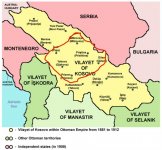
Today Kosovo borders are at least 3 times smaller than Kosovo Vilajet, have a closer look....

ks.jpg


12.jpg


You can see Bulgarians are at the south east of Kosovo Vilajet thats why they have 250,000, and Serbs 113,000 probably at the north side of Montenegro (see the map)
 

Attachments

  • KaartGodsdBalkan.jpg
    KaartGodsdBalkan.jpg
    37.6 KB · Views: 316
Back
Top